Arizona Homeowners Are Replacing Block Walls With Ocotillo Fences For These 8 Reasons
Arizona block walls can turn a backyard into a toaster by midafternoon in July.
The sun hits them for hours. The concrete stores that heat. Then the wall gives it all back, right when you were hoping the patio might feel usable.
Very generous. Deeply annoying.
That is why ocotillo fences are getting a second look across desert neighborhoods. They do not sit there like heavy masonry boxes.
They stand open, spiny, sculptural, and unmistakably Southwest, letting air move through instead of trapping the whole yard in a baked little corner.
The surprise is how practical they can be.
Ocotillo canes create privacy without the sealed-in feeling, take up less visual weight than block, and bring a rugged desert look that feels at home from Tucson to Scottsdale. Spring blooms can even turn the fence line into a hummingbird stop.
So why are more Arizona homeowners choosing thorny desert canes over another hot wall?
The answer starts with heat, airflow, wildlife, and a yard that finally breathes properly again.
1. Ocotillo Brings A Living Desert Look
A block wall painted beige or tan tries hard to blend into the desert, but it never quite gets there.
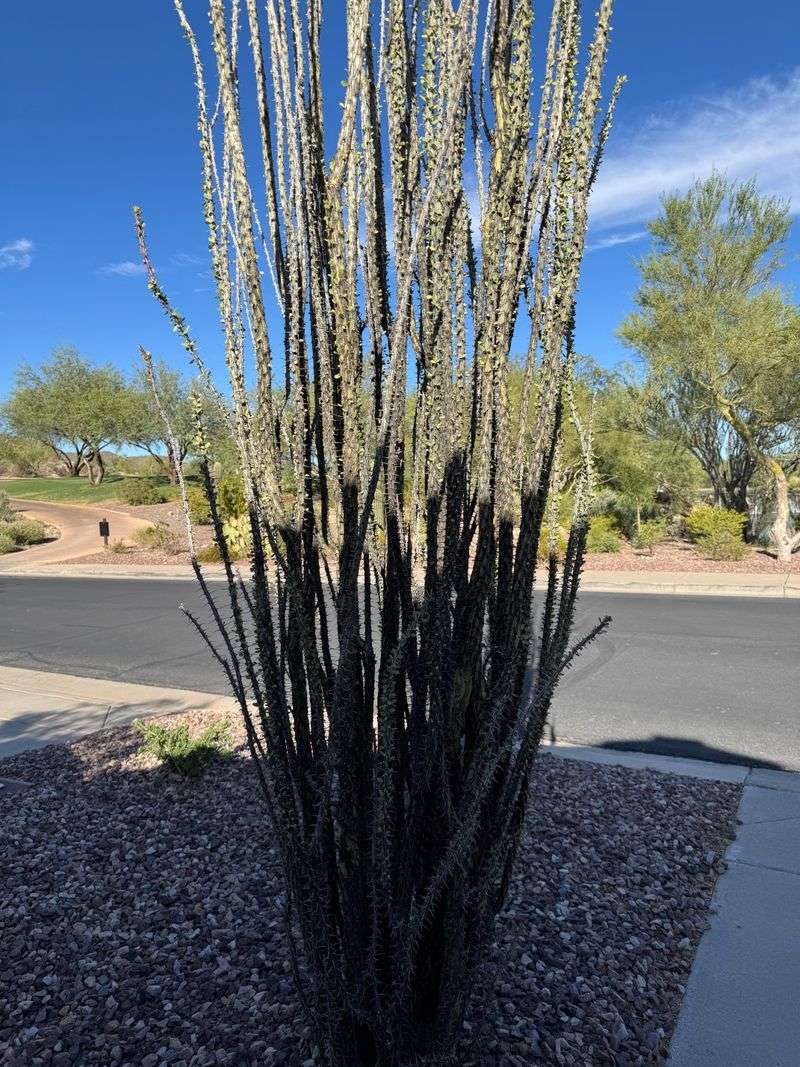
Ocotillo canes, on the other hand, belong here. They are long, thorny, reddish-brown stalks that shoot upward in natural curves, and they look like they grew straight out of the Sonoran landscape because they did.
Ocotillo, known botanically as Fouquieria splendens, is native to the Chihuahuan and Sonoran deserts of the American Southwest.
Its rangy silhouette has defined the desert horizon for centuries. When you use those canes as a fence, you are not decorating your yard with a desert theme. You are bringing the actual desert into your design, and that distinction shows.
Block walls communicate enclosure. Ocotillo fences communicate place.
Visitors from out of state stop and look. Neighbors ask questions. The visual contrast between a rigid concrete wall and a row of organic, slightly irregular canes is dramatic in the best possible way.
Desert curb appeal has shifted in recent years.
Water-wise landscaping, native plants, and materials that reflect the regional environment have become genuine selling points.
A yard that looks like it belongs in Arizona, rather than fighting against it, stands out on any street. Ocotillo fences deliver that regional authenticity without requiring a landscape architect or a large budget.
2. Spiny Canes Add Natural Privacy
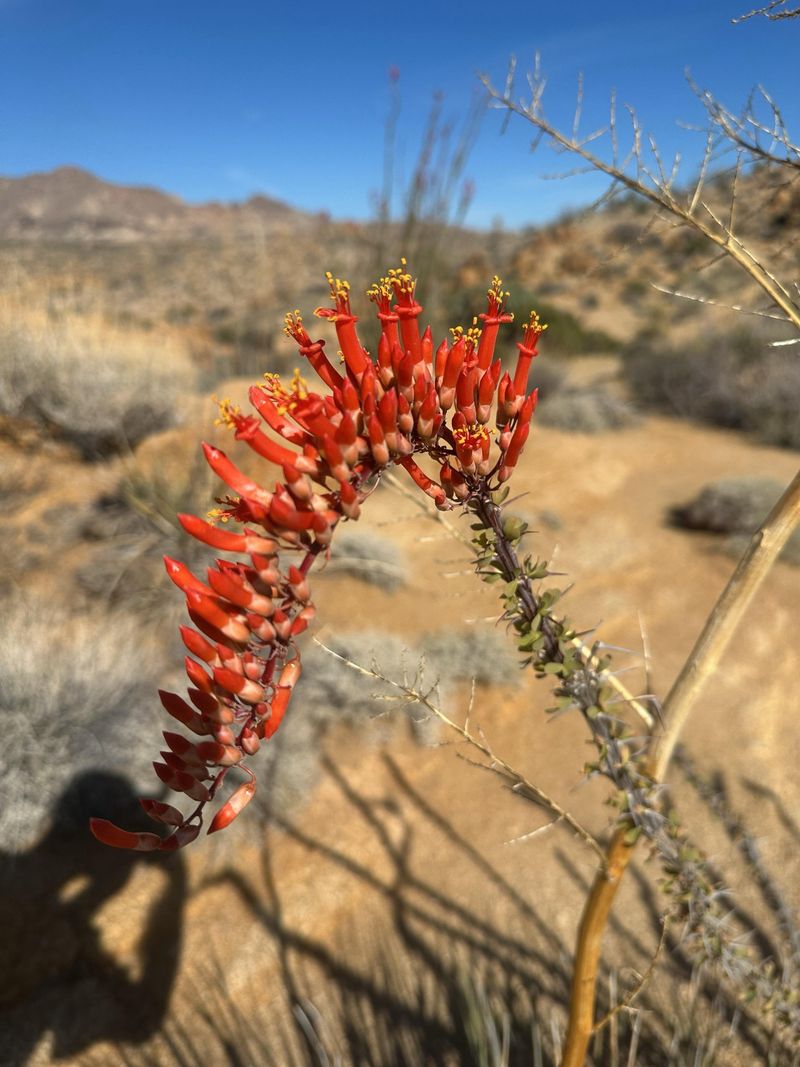
Run your eye along a row of ocotillo canes and you will notice something right away.
Those spines are not decorative. They are serious, pointing outward in every direction, and they create a barrier that most people and animals have zero interest in testing.
Ocotillo fences do not replace a locked gate or a solid masonry wall for true security.
But as a deterrent, a visual boundary, and a privacy screen, they punch well above their weight. The dense vertical canes, when installed correctly, block sightlines from the street and from neighboring yards at eye level.
The texture itself sends a message.
A smooth block wall says boundary. A wall of upright thorny canes says boundary, and please do not try it. Foot traffic from casual passersby, wandering dogs, and curious wildlife tends to go around rather than through.
Your Arizona Garden Changes Every Week. Your Plan Should Too.
Gardening in Arizona changes quickly throughout the season. Every Friday you’ll receive a simple weekly plan showing exactly what to plant, prune, fertilize, harvest, and protect so you never miss the right timing.
For side yards, garden beds, or areas where you want separation without total enclosure, the spiny cane fence works beautifully.
You get enough screening to feel private while still allowing light and air to reach the space.
Some homeowners pair ocotillo sections with a gate or a short stretch of solid wall at entry points, getting the best of both materials where each one actually excels.
3. Airflow Beats Heat Trapping Blocks
That block wall along your south or west property line is doing something you might not have considered.
All day long it absorbs solar radiation. By late afternoon it becomes a radiant heat source, pumping warmth back into your outdoor living area long after the sun has shifted.
Patios, play areas, and garden beds located near block walls can feel noticeably hotter than open desert ground nearby.
Ocotillo fences work completely differently.
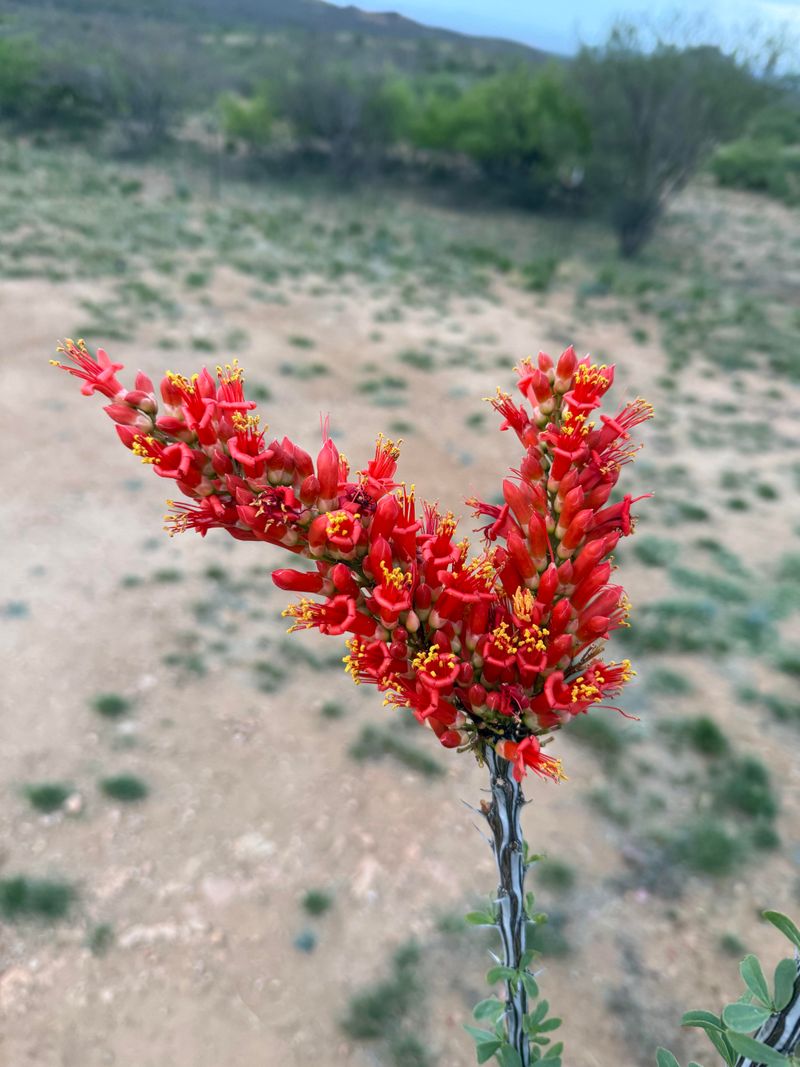
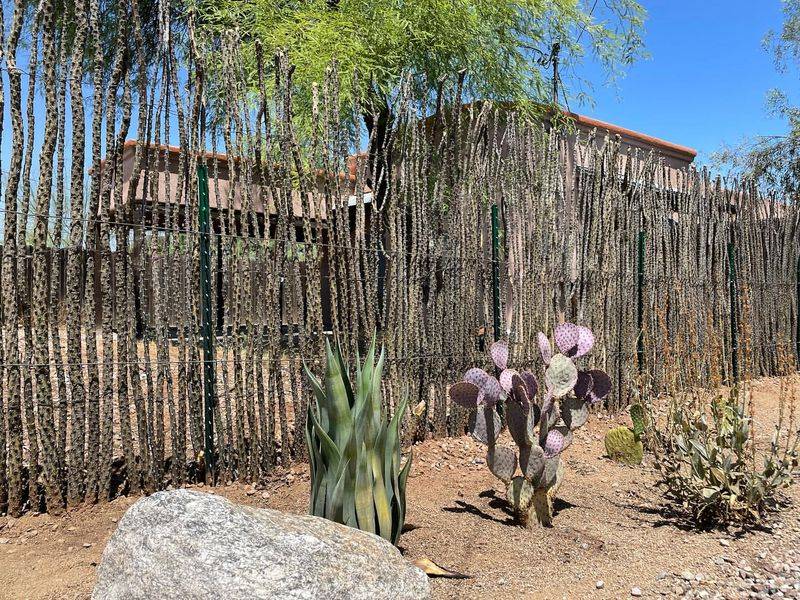
The open structure of vertical canes tied to horizontal rails allows air to move through freely. Desert breezes, even the modest ones that come through in the evening, can pass across your yard rather than hitting a wall and stopping.
That airflow makes a measurable difference in how comfortable your outdoor spaces feel.
The University of Arizona Cooperative Extension has long emphasized passive cooling strategies in desert landscaping.
Reducing solid surface areas that absorb and re-emit heat is one of the most effective approaches. Swapping a stretch of block wall for an ocotillo fence directly supports that goal.
You are removing a heat sink and replacing it with a breathable, open structure.
This matters most on west-facing property lines where afternoon sun is most intense.
Homeowners who have made the switch often report that their patios feel more usable in the late afternoon. A few degrees of difference in perceived temperature can turn a space you avoid into one you actually enjoy.
4. Flowers Feed Hummingbirds In Spring
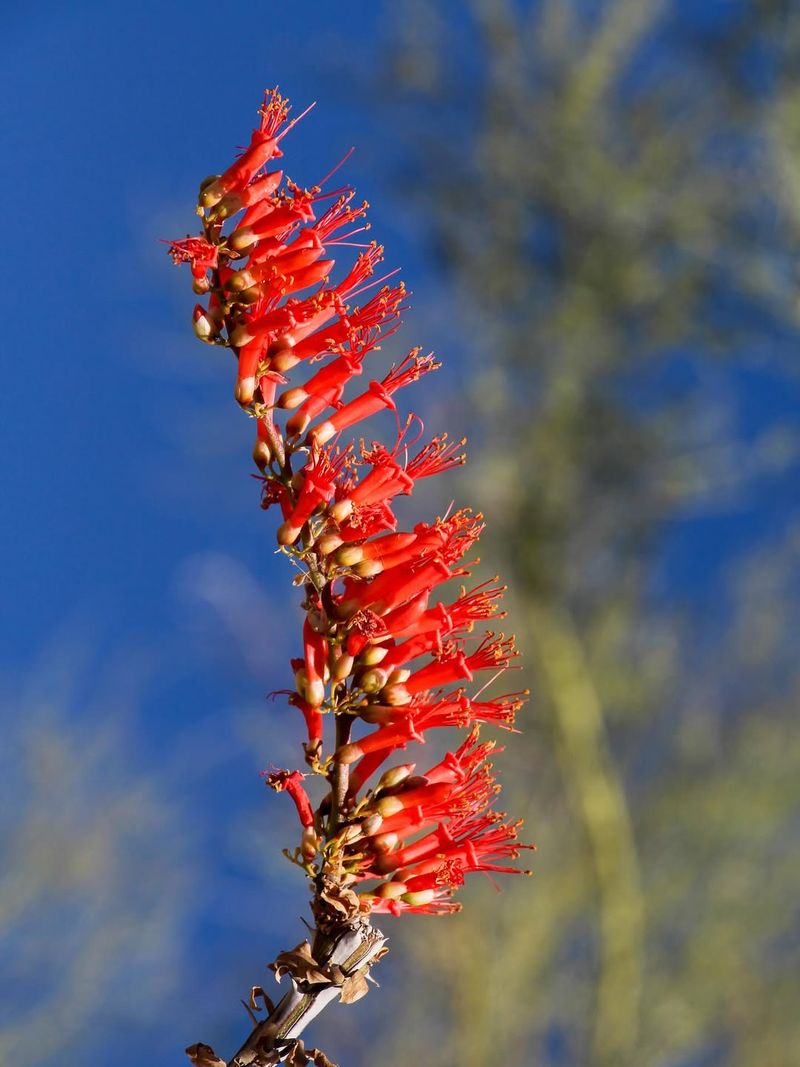
Somewhere around March, something remarkable happens on an ocotillo fence.
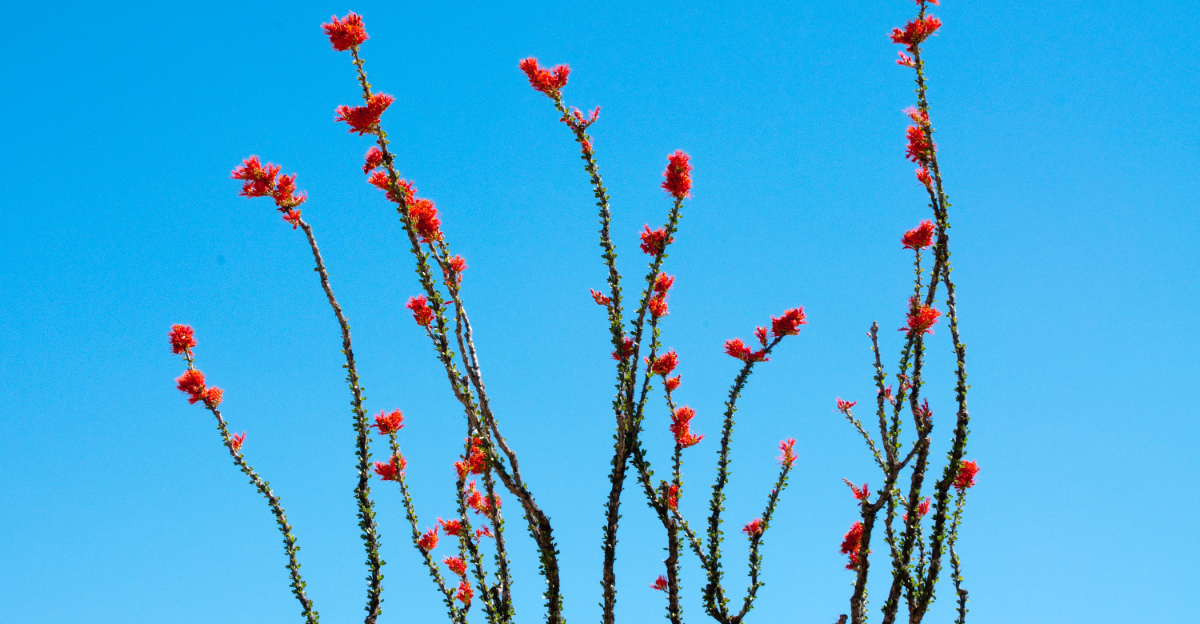
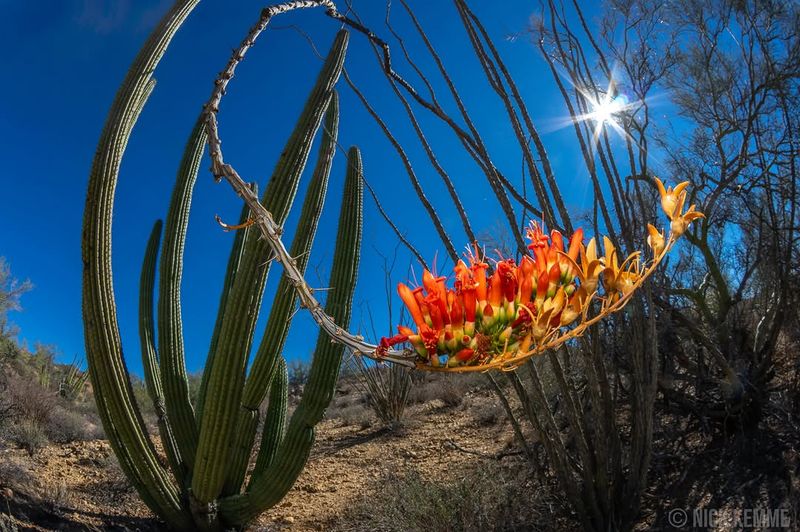
Clusters of bright scarlet flowers burst open at the tips of each cane, turning the entire fence into a vivid red border that looks almost painted against the blue desert sky.
The bloom is short but spectacular, and it arrives right on time for one of the most important events in the desert calendar.
Rufous and black-chinned hummingbirds migrate through Arizona in spring, and ocotillo blooms are one of their most reliable food sources along the route.
The tubular red flowers are essentially shaped for hummingbird bills. Plant a row of ocotillo canes along your fence line and you have just created a feeding station that requires no electricity, no sugar water, and no maintenance.
Costa’s hummingbirds, which are year-round Sonoran Desert residents, visit the blooms as well. So do orioles, verdins, and a range of native bees.
The ecological value of ocotillo in a yard setting is genuinely high for such a simple, low-water plant. You are not just putting up a fence. You are adding a wildlife corridor to your property.
Gardeners who have spent years hanging plastic hummingbird feeders often find that a planted ocotillo fence makes the feeders feel unnecessary.
The birds know the difference between artificial nectar and the real thing, and they will find your yard every spring without any extra effort on your part.
5. Rooted Canes Can Leaf Out
Here is something that surprises most people the first time they hear it.
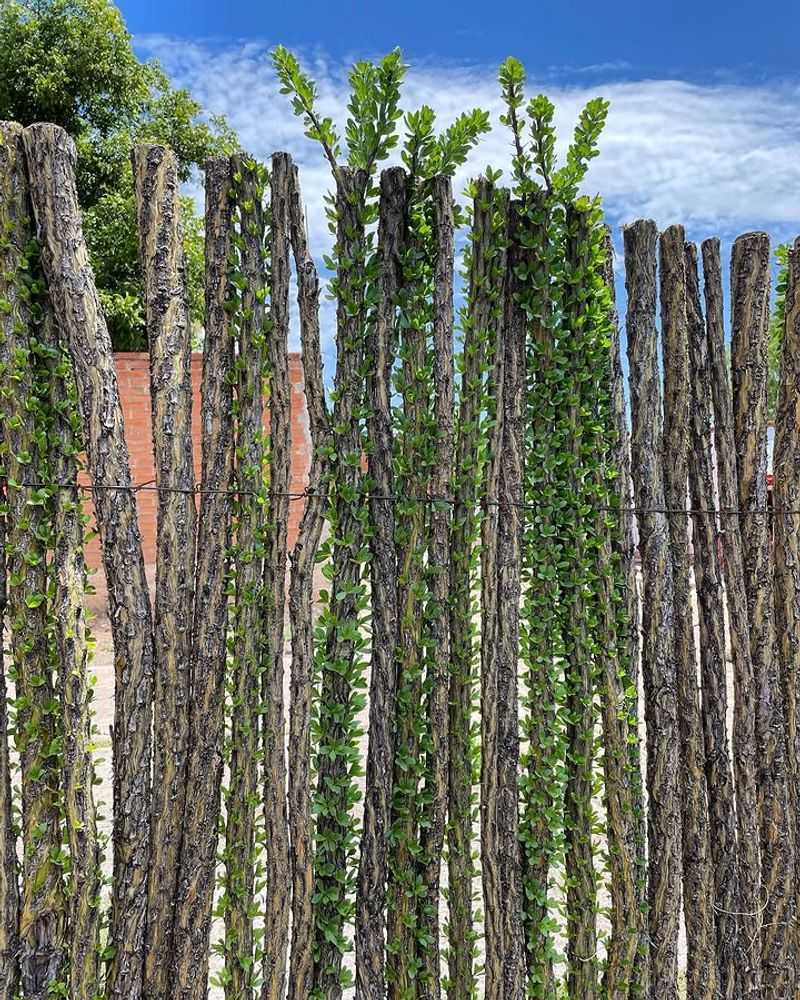
Ocotillo canes used in fencing have a genuine chance of rooting in the ground and leafing out on their own.
It does not happen with every cane or in every installation, but when conditions are right, those dry-looking stalks can push out small green leaves and even establish a root system in the soil below.
Canes need to be set deep enough into the ground, ideally 12 to 18 inches, to have any real shot at rooting.
The surrounding soil should drain well, as ocotillo has no tolerance for standing water. Overwatering newly installed canes is one of the most common mistakes and will work against rooting rather than helping it.
Timing helps too.
Canes installed before the monsoon season have access to warm soil temperatures and reliable summer moisture that can encourage root development.
Some experienced installers recommend a light, infrequent watering schedule for the first summer to give canes the best chance without overwhelming them.
When canes do leaf out, the fence takes on a whole new personality.
Green leaves appear after rain and during warm months, then drop again during dry spells.
A fence that goes from bare canes to leafy green after a monsoon storm is one of those small desert magic moments that makes you glad you made the switch.
6. Narrow Fences Save Yard Space
Side yards in Arizona subdivisions can be tight.
Sometimes you are working with four feet of space between your house and the property line, and every inch counts.
Block walls, even standard six-inch-wide CMU construction, eat into that clearance. Add the footing width below grade and you are losing more space than the wall face suggests.
Ocotillo fences have a remarkably slim profile.
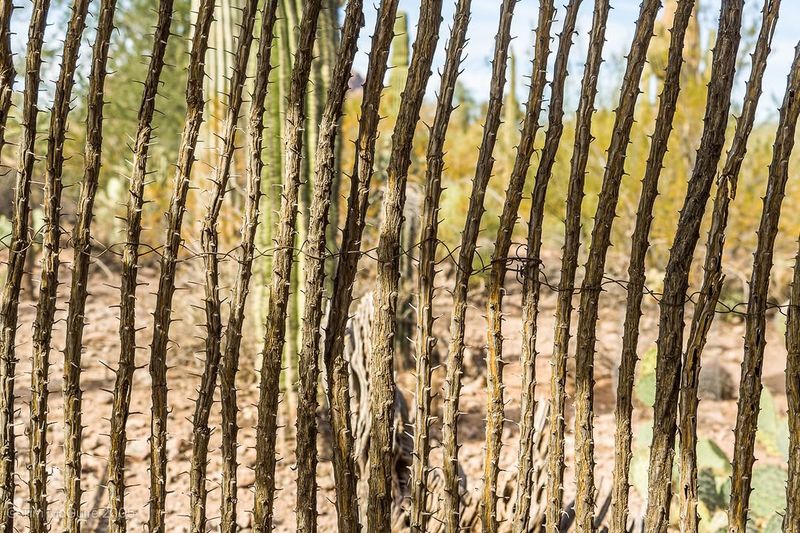
The canes themselves are typically one to two inches in diameter, and the posts or wire framework that holds them add only a few more inches.
The total depth of the fence from front face to back is usually under six inches. In a narrow side yard, that difference is not trivial.
For homeowners trying to maintain a walkable path, fit in a drip irrigation line, or simply keep a side yard from feeling completely cramped, the slim footprint of an ocotillo fence is a practical advantage.
You get a defined boundary and a visual barrier without surrendering usable ground to thick masonry.
The same logic applies along property lines in the backyard where you want to separate zones without building a wall that dominates the space.
Ocotillo fences are tall enough to provide real screening, often reaching six to eight feet, while staying narrow enough to leave room for plants, paths, or equipment on either side.
7. Desert Style Keeps Getting Stronger
Something has shifted in how Arizona homeowners think about their yards.
For decades the goal was to make desert properties look like anywhere else in the country, with green lawns, traditional hedges, and block walls painted to match the stucco.
That era is fading fast, and the design direction replacing it is rooted in the landscape itself.
Desert style is not a trend borrowed from somewhere else. It is a response to where people actually live.
Low-water plants, decomposed granite, natural boulders, native trees like palo verde and ironwood, and fencing materials like ocotillo canes all signal the same thing: this yard belongs to the Sonoran Desert, and that is something to be proud of.
Real estate professionals in the Phoenix and Tucson markets have noted that water-wise, native-plant landscapes are increasingly attractive to buyers.
A yard that communicates low maintenance, regional character, and environmental awareness checks boxes that matter to a growing segment of the market. An ocotillo fence is a visible, immediate statement of that design philosophy.
Beyond resale value, there is the daily experience of living in a yard that feels right for its place.
Hummingbirds visit in spring. The breeze moves through. The fence blooms. The whole property breathes in a way that concrete simply does not allow.
Desert style keeps getting stronger because it keeps delivering, season after season, without asking for much in return.
8. Maintenance Stays Simple Once Installed
Block walls crack, effloresce, get tagged with graffiti, and eventually need repainting or patching. Ocotillo fences have almost none of those problems.
Once installed correctly, an ocotillo fence requires very little ongoing attention. The canes do not rot the way wood does, do not rust the way metal does, and do not absorb graffiti the way painted concrete does.
In a region where outdoor maintenance competes with triple-digit summer temperatures, a fence that largely takes care of itself is a genuine quality-of-life improvement.
The main maintenance task is checking the wire or hardware that binds canes to the frame.
Arizona’s UV exposure and temperature swings can degrade certain wire types and fasteners over time. Galvanized or stainless steel wire holds up far better than standard wire in the desert climate.
A slow walk along the fence once or twice a year to check for loose canes or corroded fasteners is usually enough.
Replacing individual canes is straightforward when necessary.
If a cane splits or weathers poorly over years, it can be removed and a new one tied in without disturbing the rest of the fence. That kind of modular repair is simply not possible with block walls.
The canes also weather gracefully, silvering slightly over time and developing a patina that looks more at home in the Sonoran landscape with each passing season.
A block wall shows its age through cracks and staining. An ocotillo fence shows its age through character.