The Meaning Behind Seeing A Red-Bellied Woodpecker In Your Florida Yard
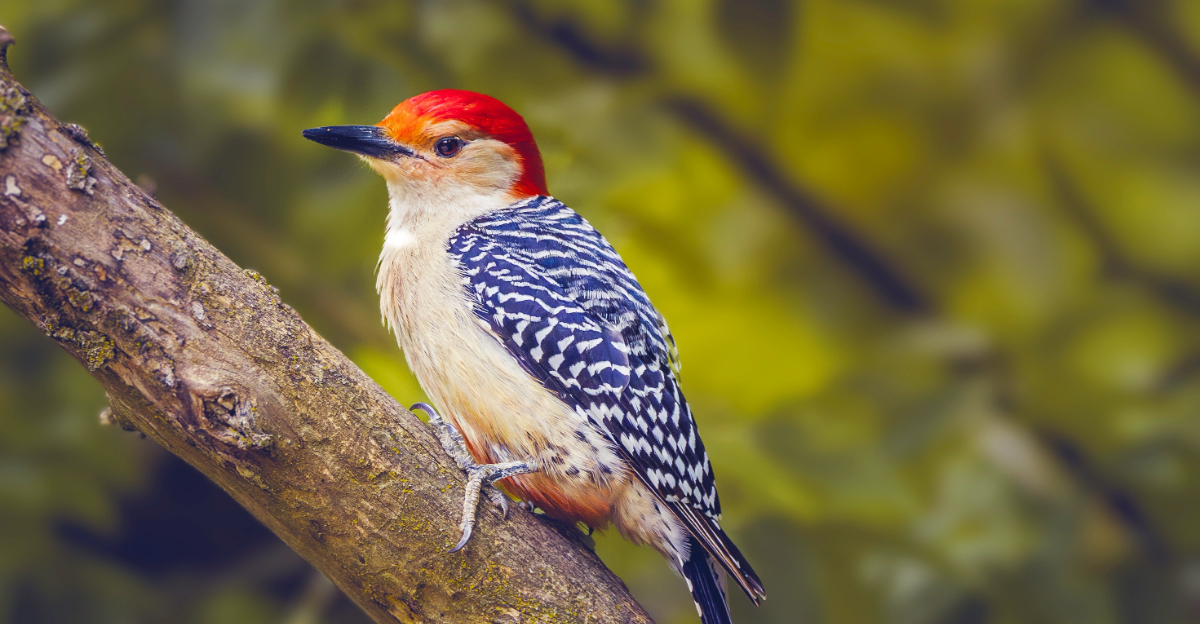
A red-bellied woodpecker announces itself before you see it. That sharp, rolling call cuts through everything, and then the bird appears.
Bold, deliberate, completely unbothered by whoever is watching. Most Florida homeowners enjoy the sighting and move on.
The ones who look closer find a more interesting story underneath it. Red-bellied woodpeckers are not random visitors.
They show up where specific conditions are met, and a yard they return to consistently is telling you something real about what is growing there and what it supports. The meaning behind a sighting pulls from more than one direction.
The ecological story is grounded and specific. The cultural layer, drawn from Indigenous tradition across Florida and the Southeast, adds depth that a field guide never covers.
This bird has been read as a signal by people in this region for a very long time. What it signals in your yard is worth knowing.
1. A Bold Visitor Usually Means Trees Are Working
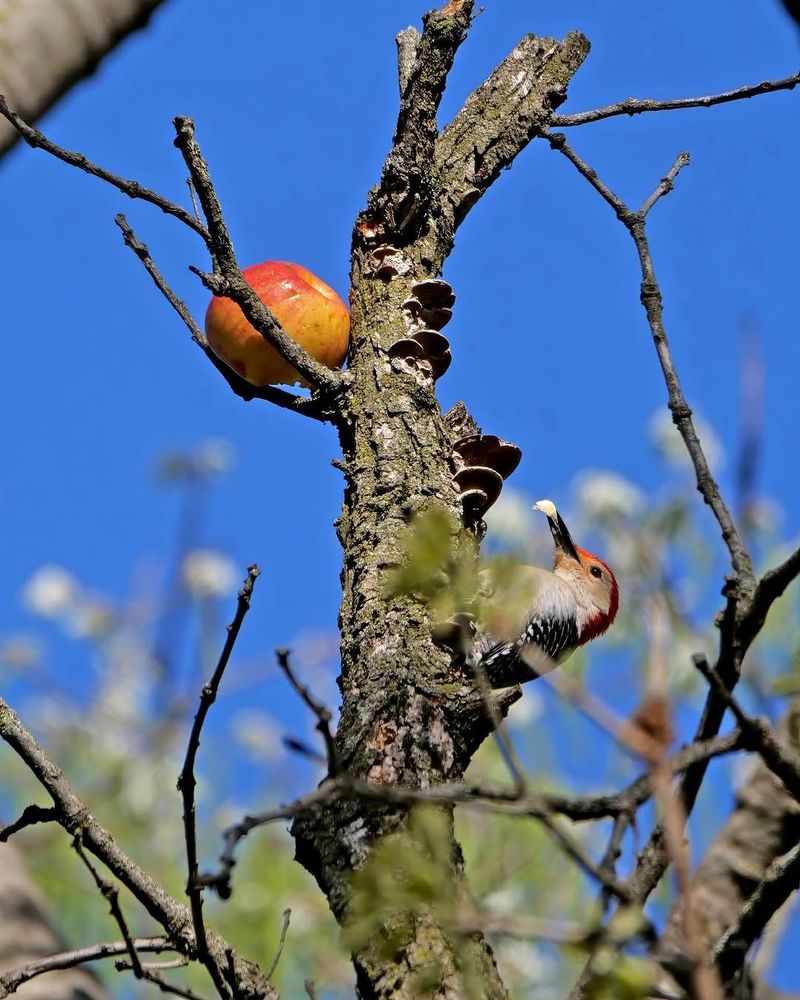
Hearing a sharp call from the tree line and spotting a flash of red on the bark is one of the most satisfying backyard moments in any wooded Florida neighborhood.
When a red-bellied woodpecker shows up, the first and most accurate explanation usually starts with the trees.
Yards that have mature oaks, palms, pines, or fruiting trees offer exactly what this bird needs to survive.
Trees provide bark insects, acorns, cavities, and shelter. A woodpecker does not choose a yard randomly.
It follows food, cover, and structure. If one lands in your oak or pecks along a fence post near the garden, it likely found something worth investigating.
Symbolically, some people see the woodpecker as a nudge to pay attention to what is quietly active around the home. That interpretation is a human one, but it is not a bad one.
Noticing which trees attract wildlife, which shrubs produce berries, and which corners of the yard stay busy with birds is a form of environmental awareness. It can deepen your connection to the living landscape around you.
The woodpecker is simply doing its job. The yard, in this case, earned the visit.
2. That Red Cap Is Easier To See Than The Belly
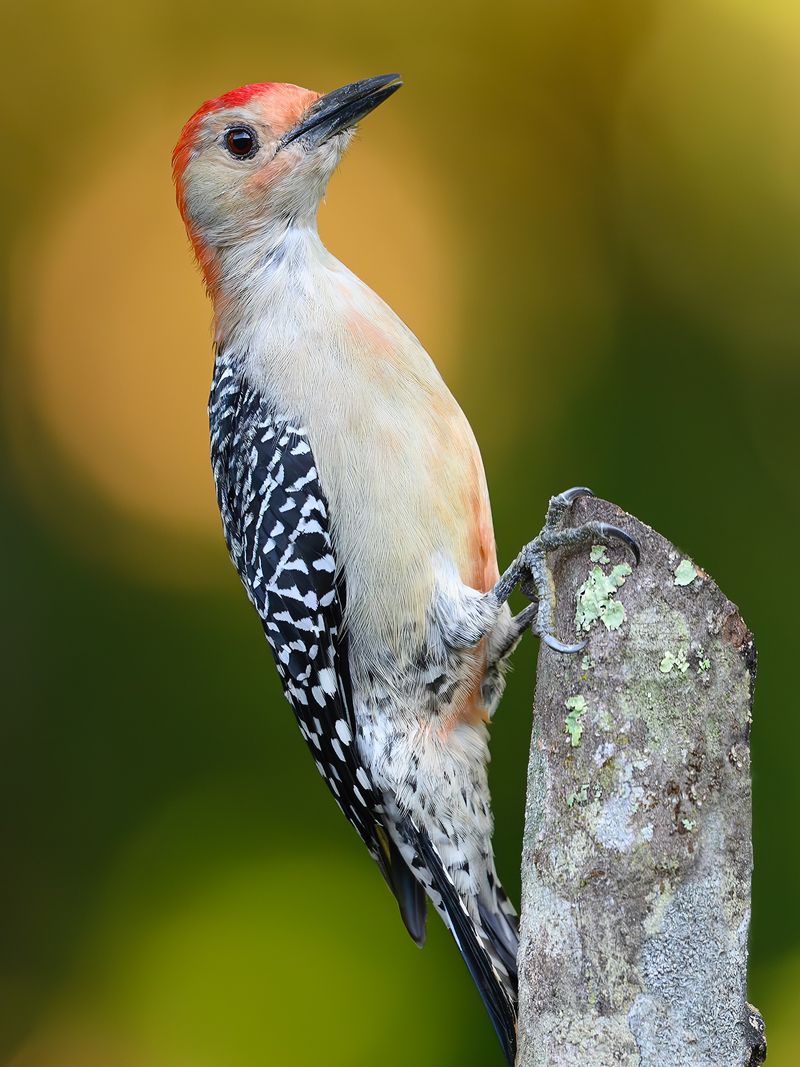
One of the first things new birders notice is that the red-bellied woodpecker does not look like its name suggests. The belly is not bright red.
It has a faint pinkish or reddish wash that can be hard to spot unless the bird is very close and the light is just right. The name can throw people off, especially when they are trying to confirm what they saw.
The head is where the color really stands out. Males have a full red cap that runs from the base of the bill all the way to the back of the neck.
Females have red only on the back of the head, not the top. Both sexes have bold black-and-white barred backs that look almost like a ladder pattern.
Cornell Lab of Ornithology describes this species as medium-sized with a sturdy bill and a pale face. If you saw a bird with a red head, a striped back, and heard a rolling “churr” call, there is a good chance you spotted a red-bellied woodpecker.
Your Florida Garden Changes Every Week. Your Plan Should Too.
Gardening in Florida changes quickly throughout the season. Every Friday you’ll receive a simple weekly plan showing exactly what to plant, prune, fertilize, harvest, and protect so you never miss the right timing.
Knowing what the bird actually looks like helps you identify it with confidence rather than guessing from the name alone.
3. Drumming Can Signal Territory Not Trouble
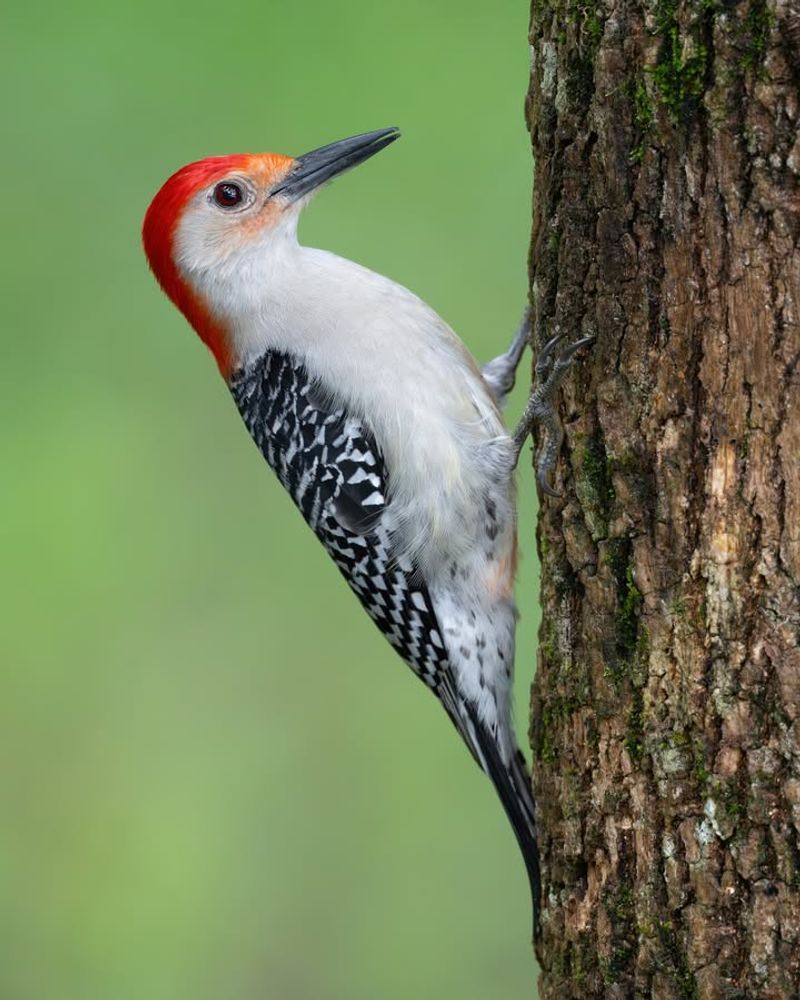
That steady, rhythmic tapping you hear from outside is hard to ignore. It can sound urgent, almost like a signal.
In many ways, it is. Woodpeckers drum for several reasons, and feeding is only one of them.
Territory, courtship, and communication are just as common. A bird drumming on a resonant surface is often making itself known to other birds in the area.
Drumming on metal gutters, wooden siding, or hollow tree limbs produces louder sounds that carry farther. The bird is not trying to get inside your house.
It is often choosing a surface that amplifies its message. This behavior tends to peak during late winter and early spring when territorial instincts and breeding activity ramp up.
Some people find meaning in the rhythm itself. Persistence, being heard, showing up consistently even when the environment pushes back.
Those are human interpretations layered onto natural behavior, and they are not wrong if they resonate with you. Just understand that the bird is not sending a personal message to the homeowner.
If the drumming is happening on the house itself, the next section on house pecking is worth reading carefully. Most drumming on trees or wooden posts is harmless and will ease off on its own once the season shifts.
4. Your Yard May Offer Insects Fruit Or Nuts
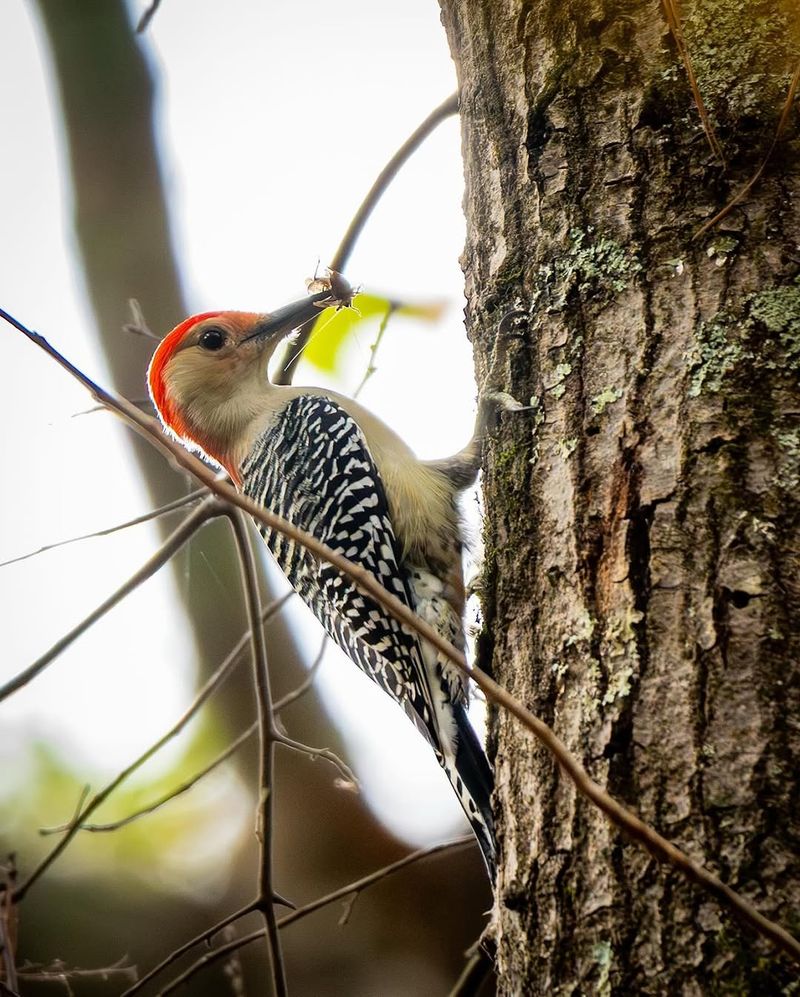
Food is one of the most direct reasons any bird returns to a specific yard. Red-bellied woodpeckers eat a surprisingly varied diet.
Insects make up a big part of what they forage for, but they also eat acorns, wild berries, seeds, and fruits depending on the season. In yards with live oaks, palms, or native fruiting shrubs, there can be a steady supply of options throughout the year.
According to the Cornell Lab of Ornithology, this species uses its long, sticky tongue to extract insects from bark crevices. It also stores food in bark cracks and crevices for later, a behavior called caching.
A woodpecker returning to the same tree multiple times may be checking a food cache, not just hunting fresh insects.
Spotting one in the yard does not mean there is a serious pest problem. Insects are a natural part of any healthy tree environment.
If the bird keeps returning to one particular spot on a tree, it may have found a reliable food source, but that is worth noting rather than panicking over.
Yards with native plants, mature trees, and minimal pesticide use tend to attract more wildlife, including this woodpecker. Food availability is often seasonal, so visits may come and go with the calendar.
5. Withered Limbs Can Become Valuable Nest Sites
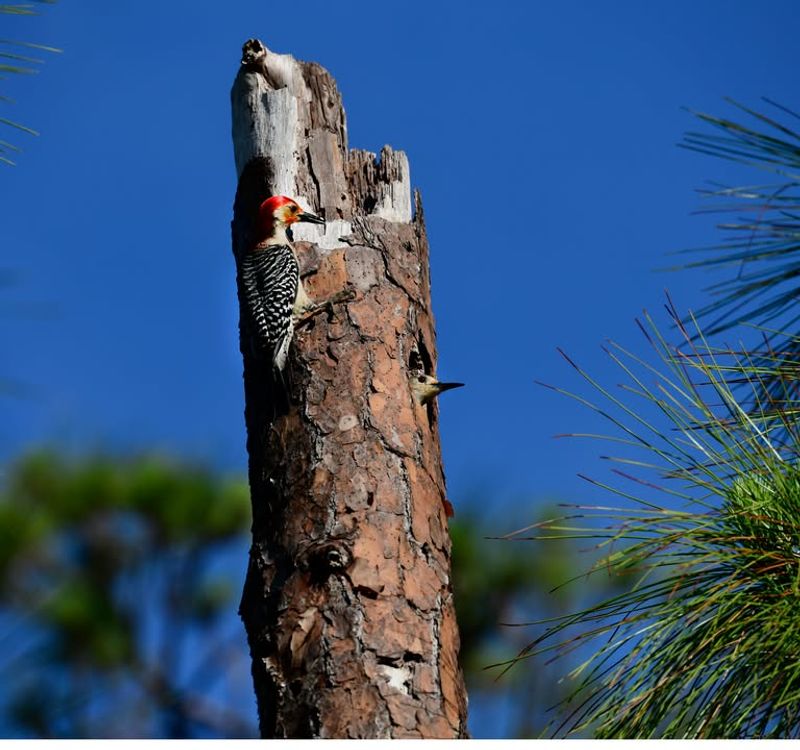
Not every withered limb in the yard is a problem. For woodpeckers, a standing lifeless tree or a decaying branch can be prime real estate.
Red-bellied woodpeckers are cavity nesters, meaning they excavate holes in softer wood to create nesting and roosting spaces. Deceased wood is easier to carve into than living hardwood, which makes snags and aging limbs genuinely useful to them.
The Florida Fish and Wildlife Conservation Commission notes that cavity-nesting birds depend on withered and decaying wood for shelter and reproduction. Removing every withered branch eliminates habitat that several species rely on.
Secondary cavity users like owls, bluebirds, and squirrels may also move into holes that woodpeckers create and later abandon.
Safety, however, always comes first. A withered limb hanging over a roof, walkway, driveway, or power line should be evaluated by a certified arborist.
A professional can tell you whether a limb is structurally sound enough to leave or whether it poses a real risk. The goal is not to keep every piece of deceased wood but to make thoughtful decisions rather than clearing everything automatically.
Leaving a safe withered limb or snag in a low-traffic corner of the yard can quietly support more wildlife than most homeowners expect.
6. A Feeder Visit Means Suet Or Seeds Caught Its Eye
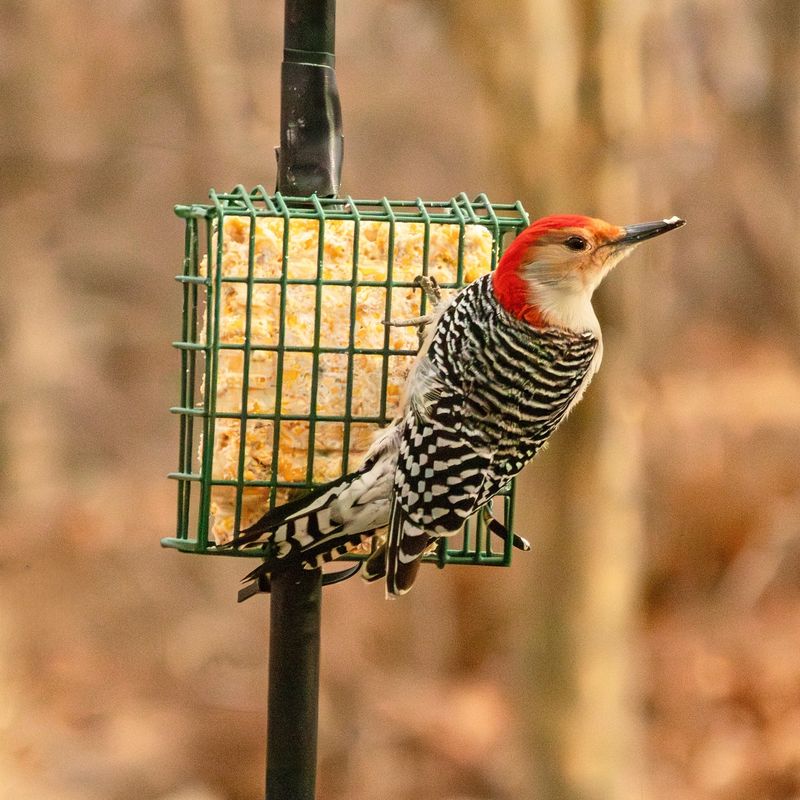
Watching a woodpecker land on a Florida backyard feeder is one of those moments that makes you glad you put one up. Red-bellied woodpeckers are reliable feeder visitors when the right food is offered.
Suet is the most commonly recommended option. Peanuts, sunflower seeds, and peanut butter-based products also attract them, according to bird feeding resources from the Cornell Lab of Ornithology.
A feeder visit usually means the bird noticed an easy food source and decided it was worth the trip. It does not mean the bird has become dependent on you or that it will stop foraging naturally.
Woodpeckers continue to forage in trees and shrubs even when feeders are available. The feeder is a supplement, not a replacement.
Feeder placement matters. Positioning feeders away from windows helps reduce collision risk.
Keeping feeders clean prevents mold and bacteria from building up in suet or seed mixes. Old or spoiled suet can make birds sick, so checking regularly is a simple habit that protects your visitors.
If a woodpecker starts showing up at the feeder consistently, enjoy it. It means the yard is on its mental map of reliable spots.
That kind of repeat visit is one of the quiet rewards of thoughtful backyard bird feeding.
7. Repeated Pecking May Point To A House Problem
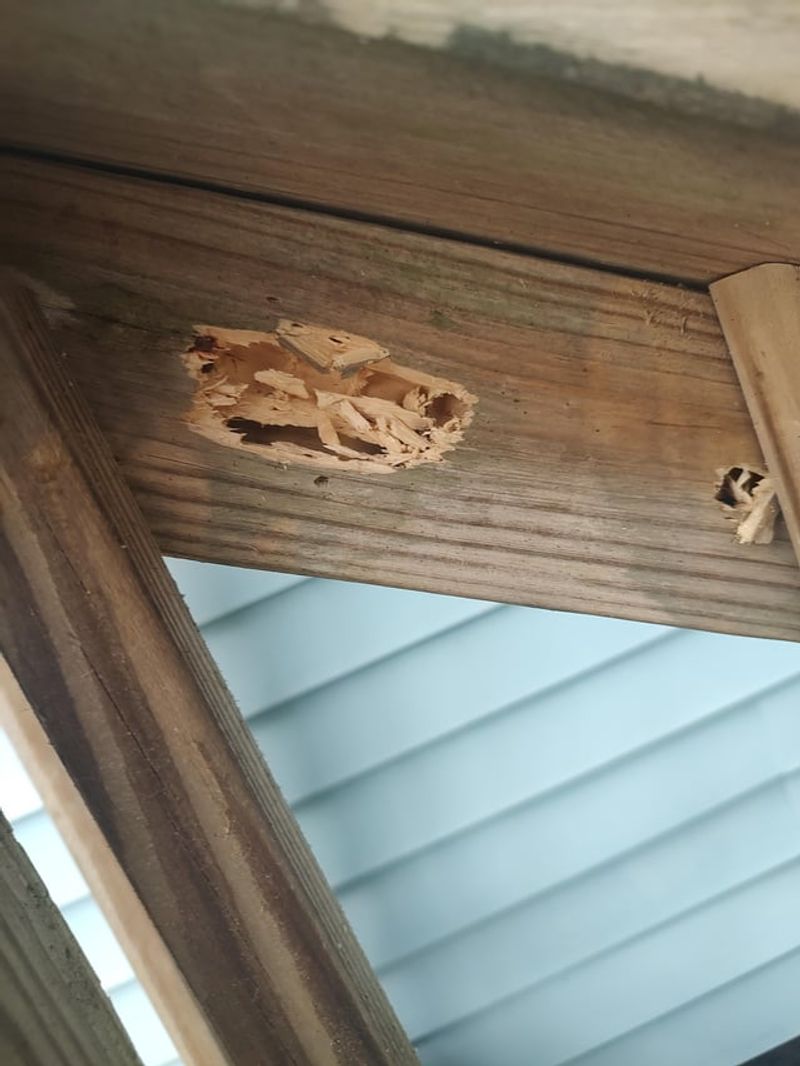
Finding fresh peck marks on the siding, trim, or eaves of the house is a different situation than watching a woodpecker work a tree.
Repeated pecking on structures deserves a careful look, but it does not automatically mean there is a serious infestation inside the walls.
Several explanations are possible, and jumping to the worst-case scenario too quickly can lead to unnecessary repairs.
Territorial drumming is one common cause. Some surfaces, especially hollow siding or metal gutters, carry sound well and attract woodpeckers that are trying to broadcast their presence.
Nesting attempts are another possibility, particularly in spring. Insects inside the wall cavity, such as carpenter bees or wood-boring beetles, can also draw a woodpecker to a specific spot repeatedly.
Inspect the area carefully. Look for actual insect activity, soft or damaged wood, or signs that the bird is trying to excavate rather than just drum.
If you find evidence of insects, consult a licensed pest professional. If the issue seems territorial or seasonal, humane deterrents like reflective tape, hardware cloth over entry points, or visual scare devices can discourage the behavior.
These methods can help without harming the bird.
Red-bellied woodpeckers are federally protected under the Migratory Bird Treaty Act. Harming or trapping them is not a legal option.
Patience and prevention are the right approach.
8. The Real Meaning Is Habitat Close To Home
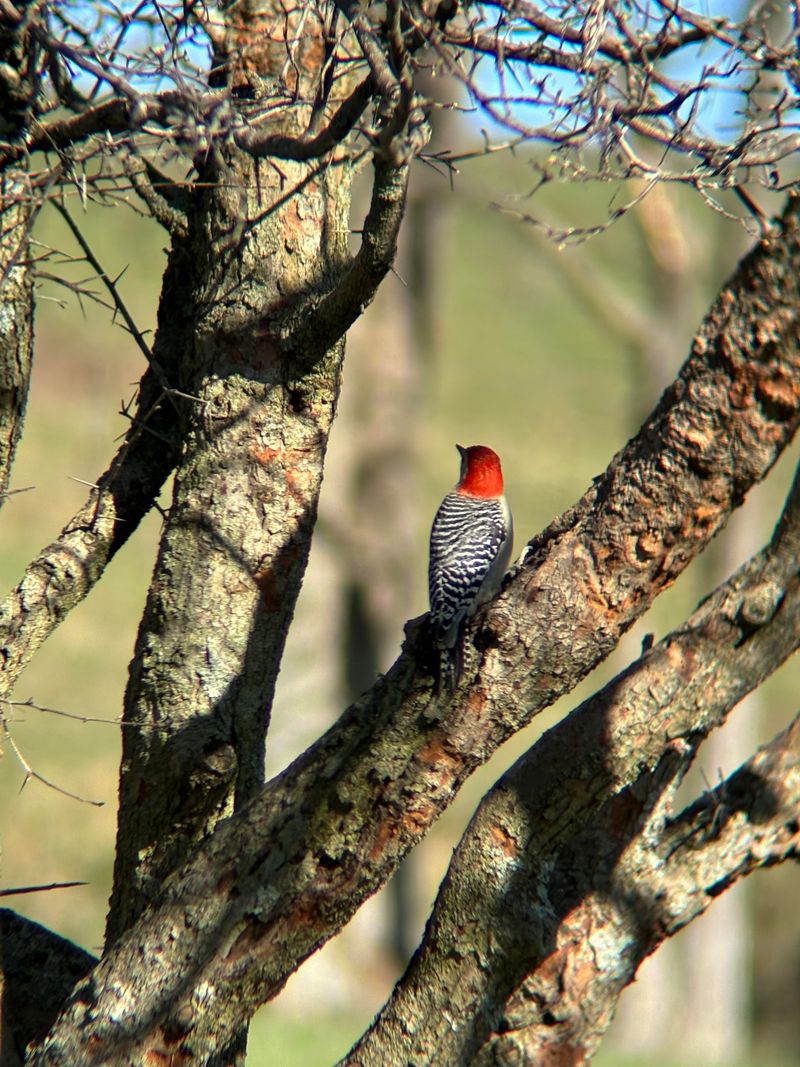
Step back from the symbolic and look at the full picture. A red-bellied woodpecker choosing your Florida yard is a reflection of the habitat around your home.
Trees, food sources, safe nesting spots, and reduced disturbance are what bring this bird in. If one showed up today, something in the neighborhood is working in its favor.
Mature trees are the foundation. Native plants that produce berries or attract insects add more layers.
A suet feeder positioned safely away from windows gives the bird another reason to return. Leaving a safe withered limb in a low-traffic area of the yard offers nesting potential that few other features can match.
Symbolically, the woodpecker has been associated with persistence, rhythm, and awareness across many cultures. Whether or not those meanings resonate with you, the practical message is the same.
Pay attention to what is alive and active in the yard. Notice which trees the bird visits, which time of day it appears, and what it seems to be after.
That kind of observation builds a real understanding of the local ecosystem right outside the door.
Seeing this bird is not a guaranteed sign or a warning. It is a signal that the yard has something worth coming back to.
That is meaningful in its own right, and it starts with the trees.