This Florida Border Plant Helps Keep Squirrels And Aphids From Taking Over
Florida garden pests are rude enough to work in shifts.
Squirrels dig at the bed edge like they misplaced treasure. Aphids crowd soft new growth like a tiny green committee. Meanwhile, you stand there wondering why the prettiest plants never seem interested in helping.
Then one overlooked border plant changes the mood.
It brings cheerful purple blooms, grassy leaves, and a sharp onion-like scent that makes some pests think twice. It will not turn the garden into a fortress, and it should not be treated like magic in a pot.
But it does add a useful layer.
In Florida heat, sandy soil, and humid weather, a plant that looks good, blooms often, and supports beneficial insects deserves more attention than it gets.
So why do so many gardeners walk right past it when the bed edge needs protection and color?
The answer starts with scent, flowers, toughness, and a border that quietly helps instead of just sitting there looking pretty.
Society Garlic Sets The Border
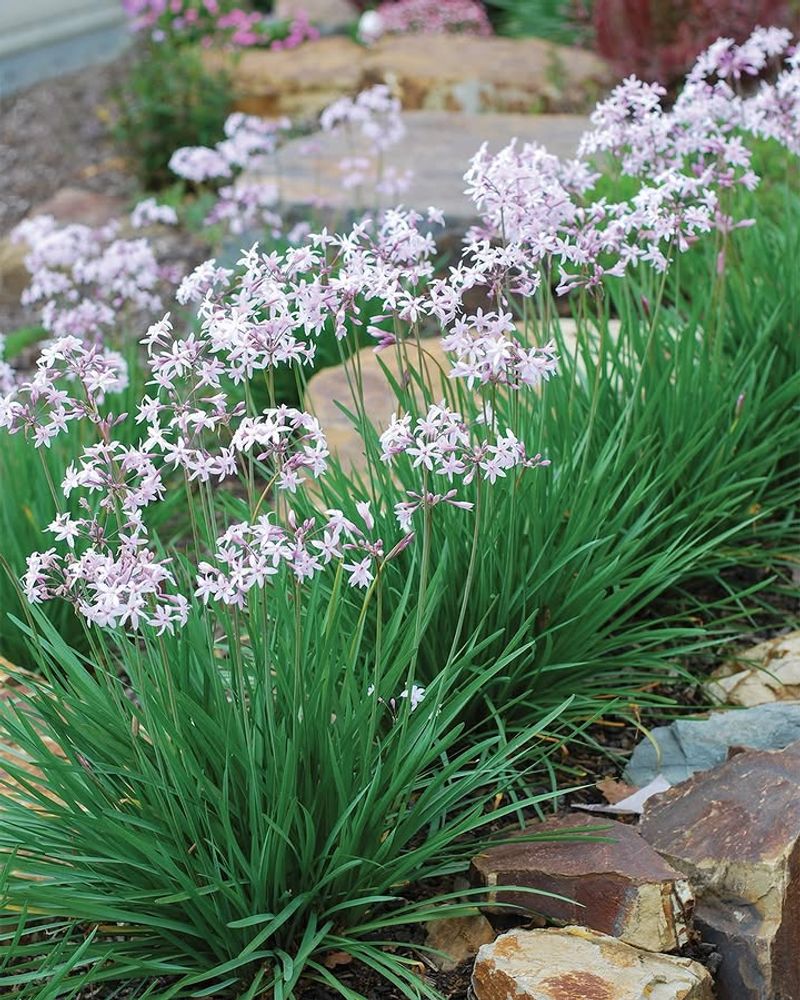
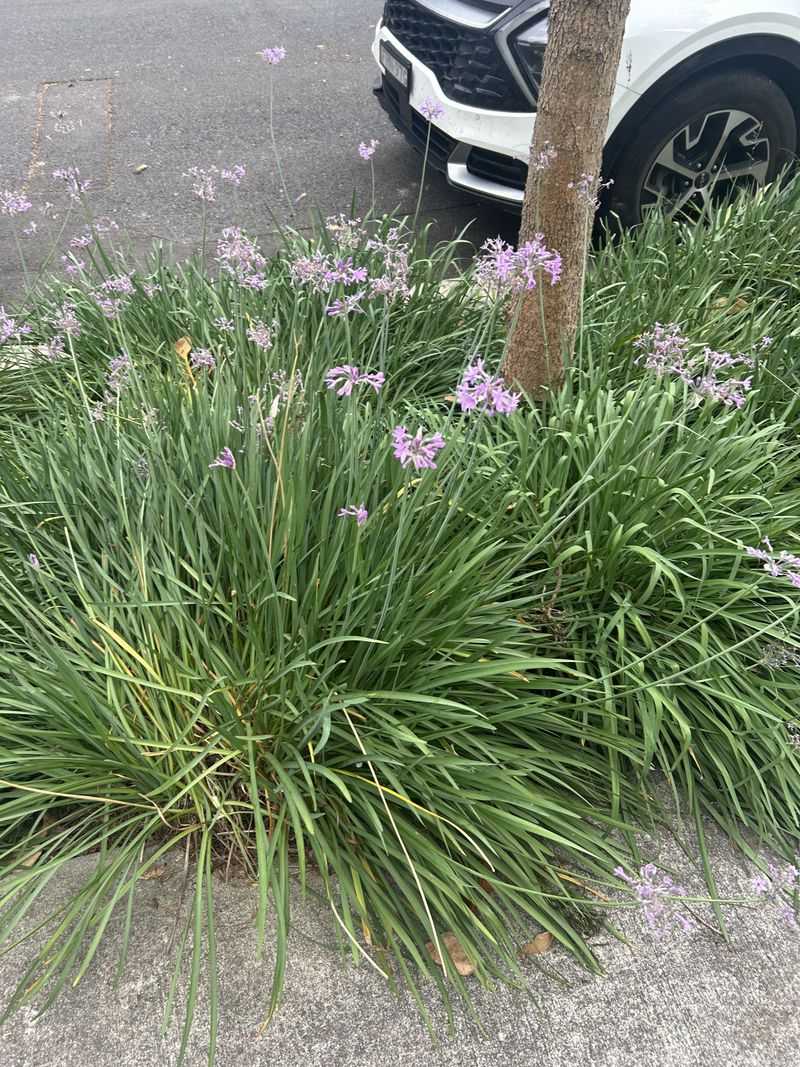
Walk past a clump of society garlic on a warm Florida morning and you will notice it right away.
That sharp, onion-like scent rising from the narrow, strappy leaves is your first clue that this plant means business.
Tulbaghia violacea, commonly called society garlic, is a South African native that has settled into Florida landscapes like it has always belonged there.
According to UF IFAS Extension, society garlic thrives in USDA hardiness zones 8 through 11, which covers most of Florida.
It handles heat, humidity, and sandy soils without much complaint. That kind of toughness makes it a practical choice for Florida gardeners who want a border plant that earns its spot.
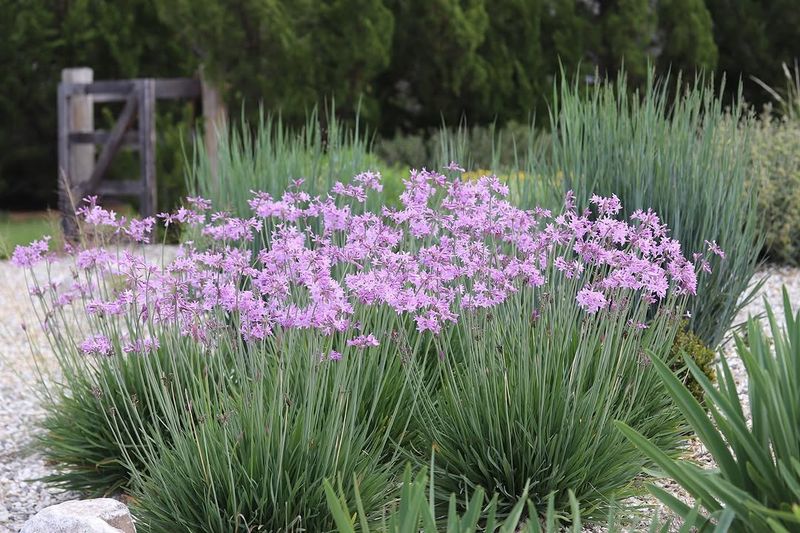
The plant grows in tidy clumps reaching about one to two feet tall and wide.
Its upright habit and soft purple flower clusters give beds a clean, finished look without a lot of fuss. Gardeners who want low-maintenance structure along a walkway, fence line, or vegetable bed edge will find society garlic fits the role well.
The same scent that makes it interesting to humans seems to make it a lot less interesting to certain pests.
Planting it as a defined border is a smart first step toward a bed that is slightly less inviting to unwanted visitors.
Onion Scent Makes Digging Less Appealing
Squirrels are curious and persistent diggers.
They will root through a freshly mulched bed looking for buried seeds, bulbs, or just a good spot to stash an acorn.
Florida gardeners with raised beds or ornamental borders know how frustrating it is to find a freshly dug mess where a plant used to be.
Society garlic may help discourage that digging habit along bed edges.
The plant releases a strong sulfur-based, onion-like odor from its leaves and roots when disturbed.
Many animals, including squirrels, tend to avoid areas with sharp, pungent scents because those smells can signal something unappealing or unfamiliar in their environment.
UF IFAS Extension notes that strong-smelling plants in the Allium family and related genera are sometimes used in companion planting strategies to reduce animal browsing and digging pressure.
Your Florida Garden Changes Every Week. Your Plan Should Too.
Gardening in Florida changes quickly throughout the season. Every Friday you’ll receive a simple weekly plan showing exactly what to plant, prune, fertilize, harvest, and protect so you never miss the right timing.
Society garlic belongs to the Amaryllidaceae family and shares similar volatile compounds that produce that characteristic smell.
Planting society garlic as a continuous border around a bed creates a scented perimeter that squirrels may find less appealing to cross.
Results can vary depending on squirrel pressure, the size of your yard, and how bold the local squirrel population happens to be.
Think of it as making your bed the least interesting option on the block rather than building an impenetrable wall.
Purple Blooms Bring Helpful Visitors
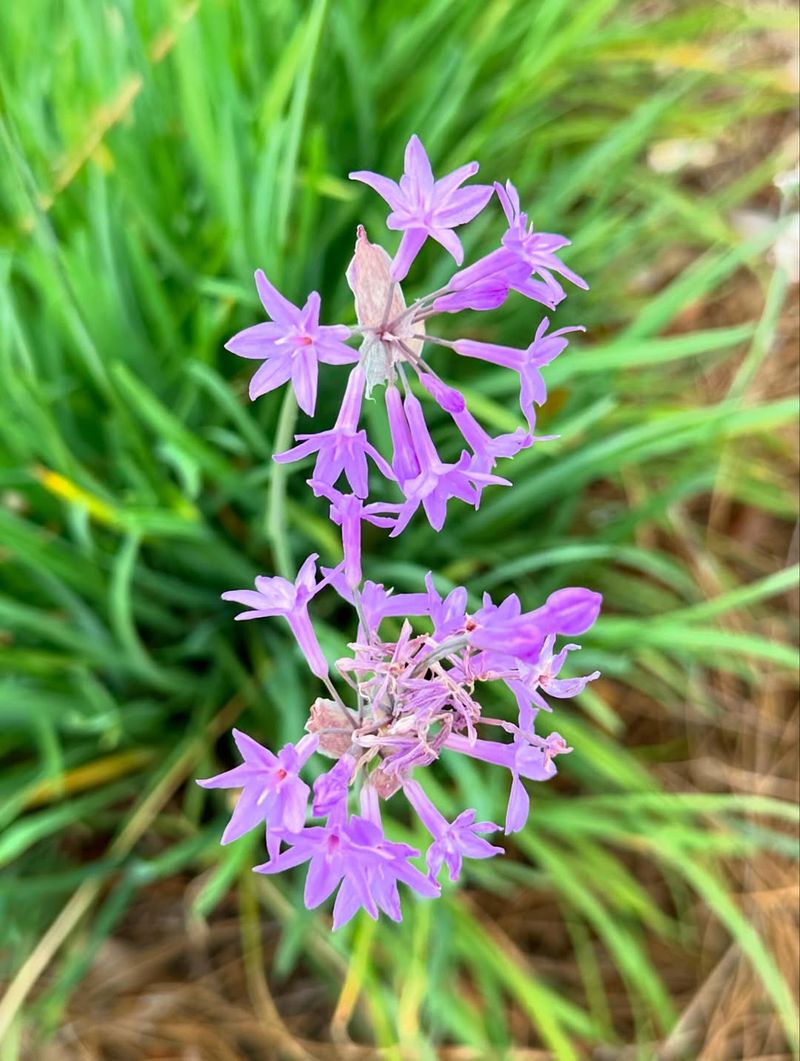
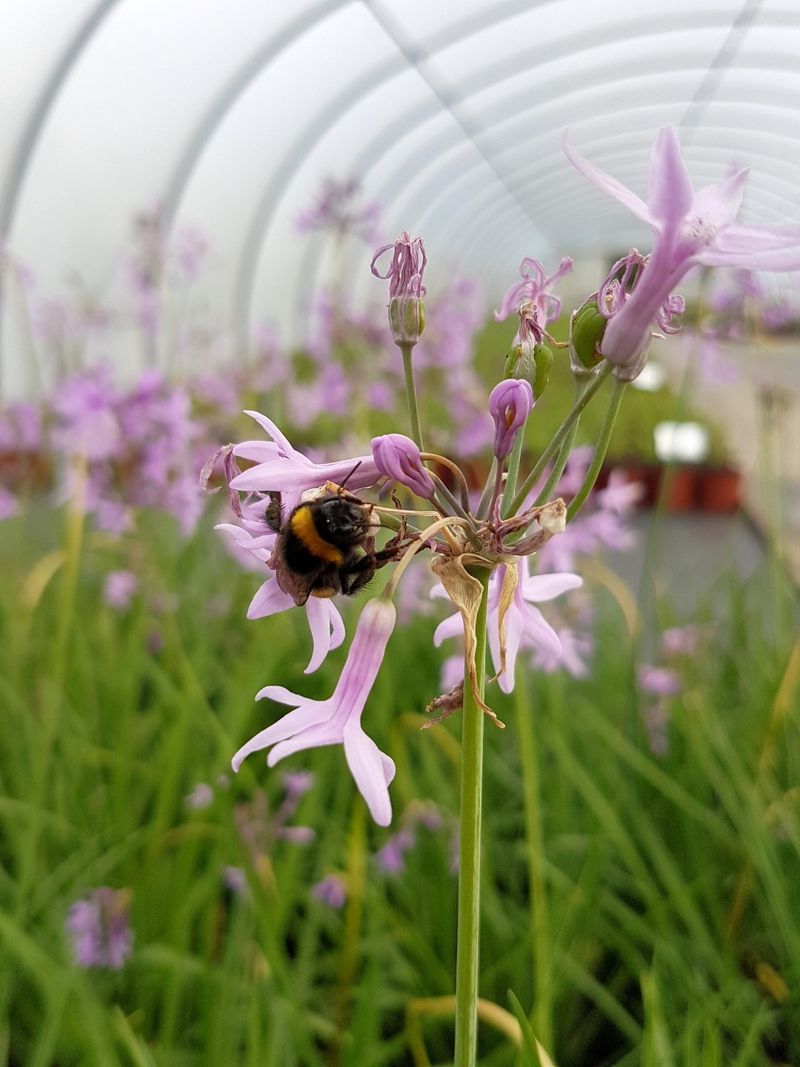
Those soft lavender-purple flower clusters are not just decorative. They are open invitations to some of the most useful insects in your Florida garden.
Society garlic blooms reliably through much of the year in Florida, often producing flowers from spring through fall with minimal encouragement.
Bees, butterflies, and hoverflies are frequent visitors to society garlic blooms.
Hoverflies deserve special attention because their larvae are voracious aphid predators.
Adult hoverflies need nectar and pollen to survive and reproduce, so planting flowers that support them is a practical way to build up a natural pest control crew in your yard.
UF IFAS Extension and Florida-Friendly Landscaping guidelines both emphasize the value of supporting beneficial insects through diverse plantings.
Society garlic fits neatly into that strategy. Its long bloom period means it keeps attracting helpful visitors even when other flowers have faded in the summer heat.
Parasitic wasps, another group of natural aphid enemies, also visit small open flowers for nectar.
By keeping a steady supply of blooms along your border, you are essentially running a bed-and-breakfast for the insects that will help patrol your plants for pests.
The purple flowers do double duty: looking good and working hard at the same time.
Clumping Growth Guards Bed Edges
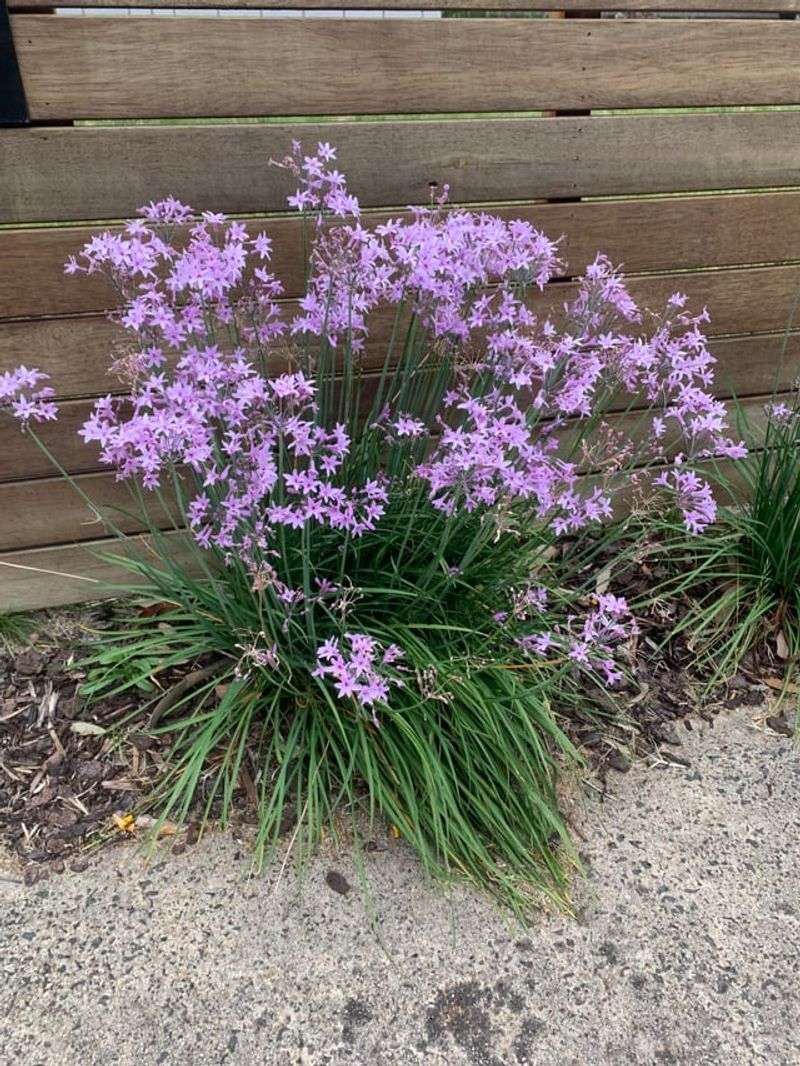
Some border plants start out neat and end up everywhere.
Runners creep into the lawn, seedlings pop up in inconvenient spots, and before long the border has become the problem. Society garlic does not play that game. It grows in tidy, well-mannered clumps that stay where you put them.
That clumping habit is one of the reasons UF IFAS Extension recommends it as a low-maintenance landscape plant for Florida.
The plant spreads slowly by offsets, meaning new shoots grow close to the parent plant rather than sending roots racing across the bed.
You can divide clumps every few years to multiply your plants or share them with neighbors, but you will not spend weekends pulling escapees out of your lawn.
A defined, continuous clump border also creates a physical and sensory barrier along bed edges.
Squirrels and other small animals tend to approach garden beds from the perimeter. A dense row of society garlic clumps along that edge adds one more reason to look for a less complicated entry point elsewhere in the yard.
From a design standpoint, the clean lines of society garlic clumps give beds a polished look that works well with Florida native plantings, vegetable gardens, and ornamental beds alike.
Aphids Lose The Easy Landing Zone
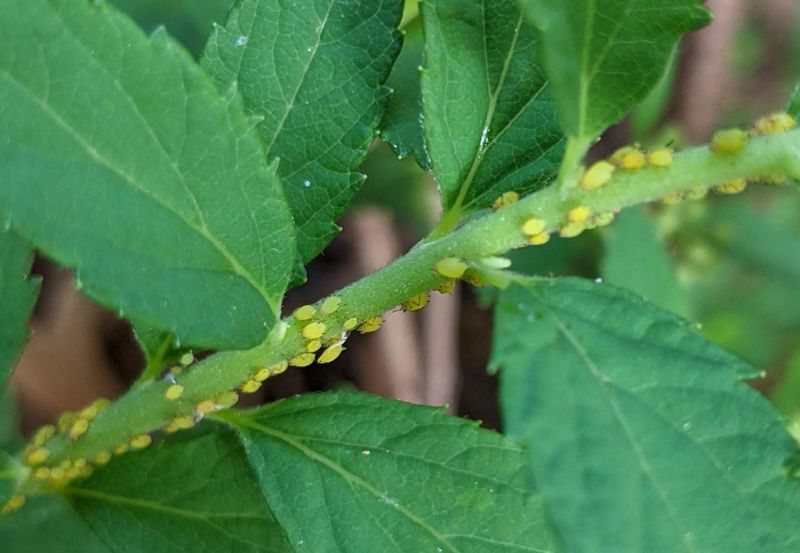
Aphids are opportunists. They seek out soft, tender new growth and cluster quickly once they find a suitable host.
A monoculture bed, where only one type of plant grows, is essentially a buffet with no competition and no natural enemies nearby. Mixed borders change that equation in meaningful ways.
Companion planting research, including guidance from UF IFAS Extension, suggests that diverse plantings can reduce pest pressure by confusing pests, masking host plant scents, and supporting the beneficial insects that prey on pests like aphids.
Society garlic contributes to that diversity with its strong scent and its ability to attract beneficial insects to the border.
The theory is that aphids locate host plants partly through scent and visual cues.
A border rich with varied plants, including strongly scented ones like society garlic, may make it harder for aphids to zero in on their preferred targets.
Mixing society garlic with flowering annuals, herbs, and vegetables creates a more complex environment that works against the simple math of pest explosions.
When beneficial insects like ladybugs, lacewings, and hoverfly larvae are already present because the border supports them, aphid populations have a harder time building up unchecked.
Companion Planting Adds Pest Pressure
Tucking society garlic into a planting plan alongside vegetables or ornamentals is a classic companion planting move.
The idea behind companion planting is that certain plant combinations can benefit each other by attracting helpful insects, repelling pests, or improving growing conditions.
Society garlic brings the scent and the blooms; its neighbors bring other strengths.
Pairing society garlic with plants like tomatoes, peppers, roses, or flowering annuals creates a layered border that pests have to work harder to navigate.
UF IFAS Extension supports the use of diverse plantings as part of an Integrated Pest Management approach, which combines multiple strategies rather than relying on any single fix.
Society garlic works best in this role when planted consistently along the outer edge of a bed rather than scattered randomly.
A continuous scented border is more effective than a few isolated clumps because it creates a more consistent sensory barrier.
Spacing plants about 12 to 18 inches apart gives them room to clump up while maintaining a fairly solid line.
Gardeners who combine society garlic with other pest-discouraging plants, such as marigolds or basil, add even more layers to the strategy.
Think of it as building a pest management team where society garlic is a solid starting player, not the whole roster.
Gaps Still Need Regular Scouting
A gardener who planted society garlic along every bed edge and then never looked at the plants again would eventually get a surprise.
No border plant, no matter how helpful, replaces the habit of regular scouting. Catching a pest problem early is almost always easier than managing a full infestation later.
Aphids in particular can build up fast.
A small cluster on new growth can multiply into a heavy infestation within days under warm Florida conditions.
Checking the undersides of leaves, the tips of new shoots, and the base of stems at least once a week gives you a chance to spot trouble before it spreads across the bed.
UF IFAS Extension recommends scouting as a core part of any Integrated Pest Management program.
Knowing what is normal on your plants makes it much easier to notice when something is off. Carry a hand lens if your eyes need a little help catching tiny insects on small leaves.
When you do find aphids, a strong spray of water from a hose can knock many of them off without any chemicals at all.
For heavier pressure, insecticidal soap or neem oil applied carefully according to label directions can help manage populations while minimizing harm to beneficial insects.