The Green Beetles Ruining Texas Fig Harvests This July And What Actually Stops Them
Growing figs in Texas in July is a genuinely exciting thing, right up until you walk out to check on your ripening fruit and find a party happening that you definitely did not organize.
Green beetles have a talent for showing up at exactly the wrong moment.
In Texas summer heat, where figs soften fast, split open, and start fermenting on the branch before you have had a chance to blink, those beetles move in quickly and make themselves very comfortable.
What starts as a minor nuisance can turn into a damaged, sticky harvest situation faster than most gardeners expect. The encouraging part is that managing this problem does not require reaching for a spray bottle and crossing your fingers.
Observation, good sanitation habits, and knowing exactly when to harvest are the tools that actually make a difference here.
1. Green June Beetles Feeding On Ripe Or Damaged Figs
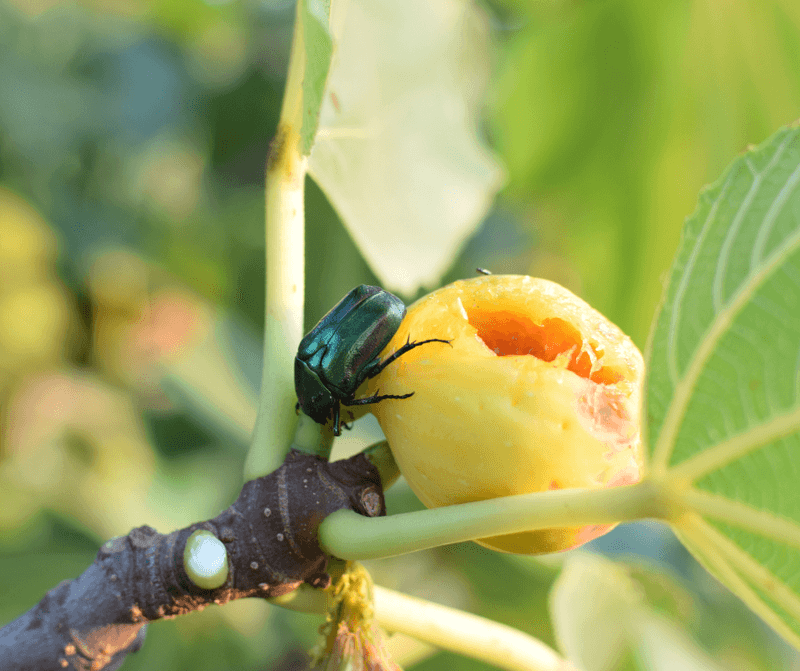
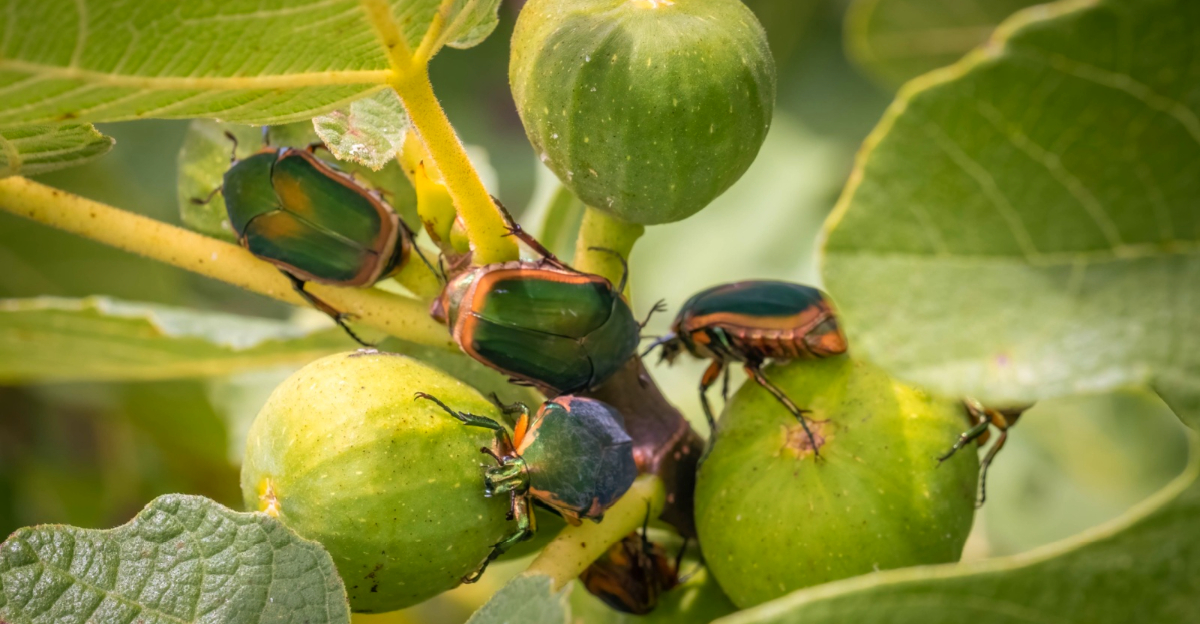
Spotting a shiny, metallic green beetle crawling across a soft fig is one of those moments that stops a Texas gardener cold. That beetle is most likely a Green June Beetle, a large, velvety green insect that becomes especially active during the hottest weeks of summer.
In Texas, July is prime time for these beetles, and fig trees loaded with ripening fruit can become a real target.
Green June Beetles are not subtle feeders. They chew into soft or already-damaged figs, leaving behind ragged wounds that invite mold and other insects.
A single damaged fig can draw more beetles, turning a small problem into a much bigger one within a day or two. The beetles are most active during daylight hours, which makes them easier to spot than some other fruit pests.
Not every green beetle on your fig tree is a Green June Beetle, though. Other fruit-feeding beetles can also show up around ripening figs, so taking a close look before deciding on a response is always a smart first step.
Green June Beetles are roughly three-quarters of an inch long, have a dull green back, and often make a loud buzzing sound in flight.
If you are seeing beetles in Texas this July, getting a correct identification helps you choose the most useful response rather than guessing and possibly wasting time on the wrong approach.
2. Why Ripening And Fermenting Fruit Attracts Them
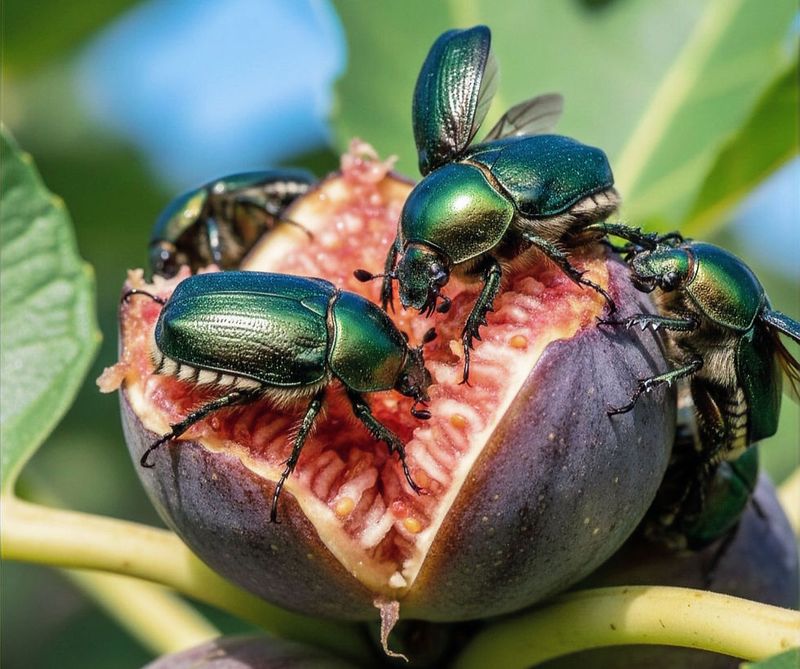
A sweet, slightly sour smell near your fig tree on a hot Texas afternoon is a signal worth paying attention to. That scent often means figs are fermenting on the branch or on the ground below, and to a Green June Beetle, that smell is basically an invitation.
These beetles are strongly attracted to ripe, overripe, and fermenting fruit because the sugars and yeasts involved in that process are exactly what draws them in.
Texas summer heat speeds everything up. A fig that is perfectly ripe on Monday morning can be split, soft, and beginning to ferment by Tuesday afternoon.
Once the skin breaks open, the fruit releases volatile compounds that travel surprisingly far on a warm breeze. Beetles pick up on these signals quickly, and once a few arrive, others tend to follow.
Your Texas Garden Changes Every Week. Your Plan Should Too.
Gardening in Texas changes quickly throughout the season. Every Friday you’ll receive a simple weekly plan showing exactly what to plant, prune, fertilize, harvest, and protect so you never miss the right timing.
Fermenting fruit on the ground is often even more attractive than fruit still on the tree. Fallen figs that sit in the sun go through rapid fermentation, and the resulting smell can pull beetles in from a wider area.
Understanding this helps explain why sanitation matters so much around fig trees in Texas. Removing attractants reduces the draw, even if it does not eliminate beetle pressure entirely.
Keeping a close eye on fruit ripeness and acting before figs reach that fermenting stage gives you a meaningful advantage during the busy July harvest season.
3. Damage That Often Starts On Soft Or Split Figs
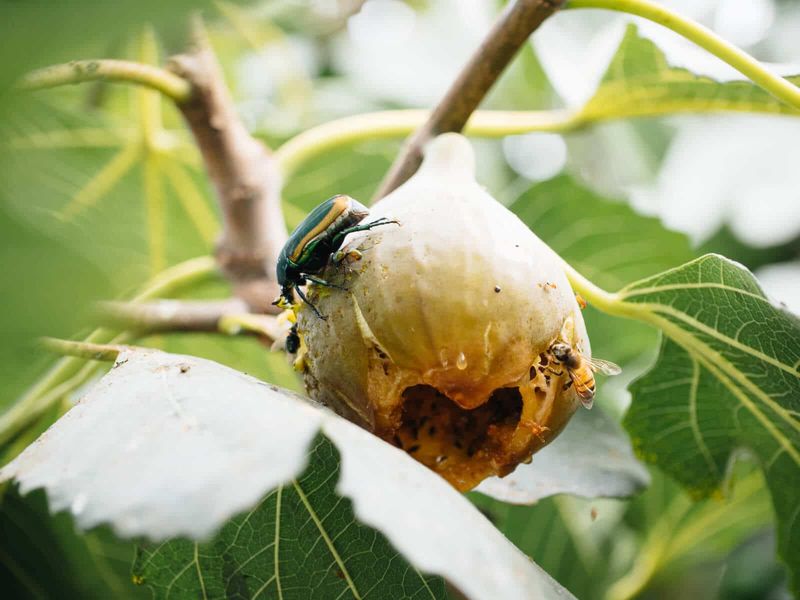
Fig skin is not thick, and during Texas July heat, it does not take much for a fig to split. A sudden rain after a dry spell, a stretch of extreme heat, or simply reaching peak ripeness can cause figs to crack open.
Once that happens, the soft, sugary interior is exposed, and that is where beetle damage tends to begin.
Green June Beetles and other fruit-feeding beetles are opportunistic. They are more likely to move in on fruit that is already compromised rather than attacking perfectly firm, intact figs.
A split or soft fig offers an easy entry point, and once feeding starts, the wound enlarges quickly. Secondary problems like mold and fruit flies often follow, making the damage look much worse than what the beetles alone caused.
Checking your fig tree regularly during July lets you catch damage early. Look for figs that feel unusually soft when gently pressed, figs with visible splits or cracks, and any fruit showing discoloration or small entry wounds near the eye or skin.
In Texas backyards and small home orchards, catching these early signs means you can harvest those figs immediately rather than leaving them on the tree to attract more beetles.
Even figs with minor damage can sometimes still be used if caught soon enough, so frequent observation during peak ripening is genuinely one of the most useful habits a Texas fig grower can build.
4. Why Spraying Near Harvest Is Usually The Wrong Move
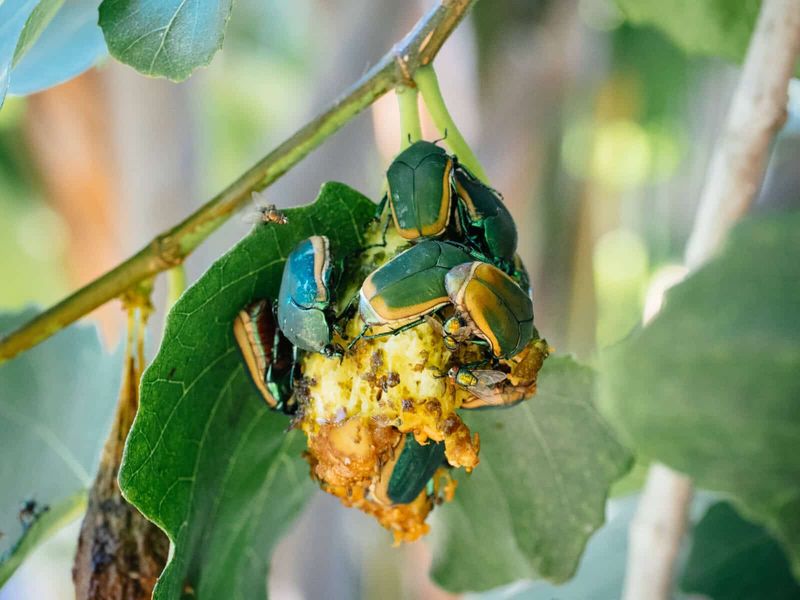
When beetles show up on your figs, the instinct to grab a spray and treat the tree is completely understandable. The problem is that spraying near harvest rarely solves the actual issue and can create new ones.
Most insecticide labels carry pre-harvest intervals, meaning you have to wait a specific number of days after spraying before the fruit is safe to eat. With figs ripening fast in Texas July heat, that waiting period can mean losing the harvest entirely.
Beyond timing, spraying for Green June Beetles on ripe figs is often not very effective anyway. These beetles are mobile and fly in from surrounding areas, so treating the tree itself does not stop new beetles from arriving.
Pollinators and beneficial insects can also be harmed by broad-spectrum sprays applied to a fruiting tree, which creates problems that last well beyond the current beetle season.
A more practical approach focuses on why the beetles are there in the first place.
Ripe, damaged, and fermenting fruit is the main draw, and addressing that draw through harvesting and sanitation tends to produce better results than spraying on assumption.
Consulting your local Texas A&M AgriLife Extension office before applying any product near harvest is a reasonable step if you feel chemical intervention is genuinely necessary.
In most backyard Texas fig situations, though, the spray bottle is not the most useful tool you have available during peak July harvest time.
5. Harvesting Ripe Figs More Often
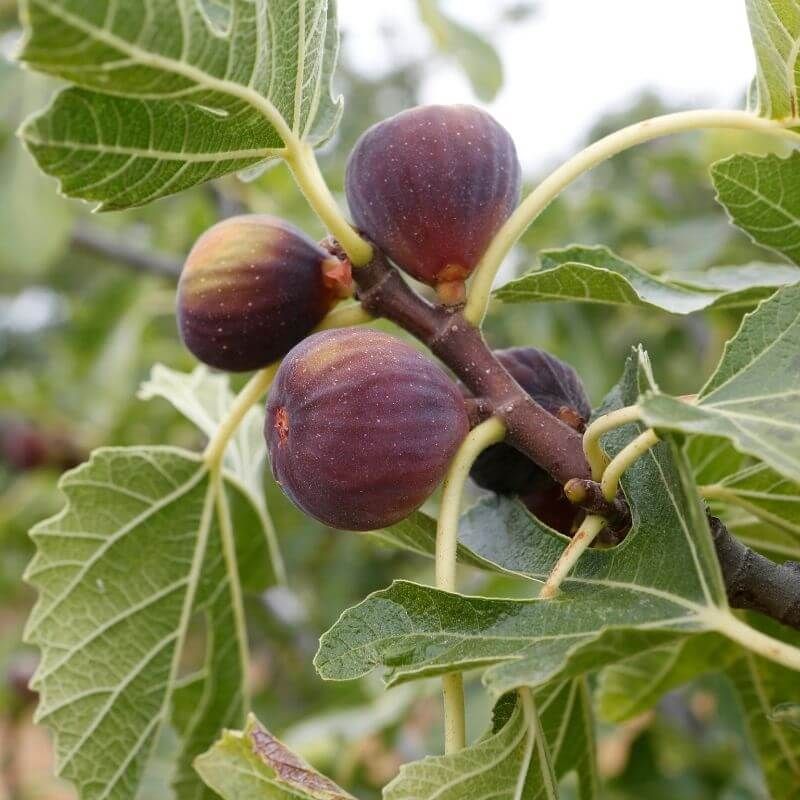
One of the most effective things a Texas fig grower can do in July is simply pick more often. Figs do not hold on the tree for long once they ripen, and in Texas summer heat, that window gets even shorter.
Leaving ripe figs on the branch for an extra day or two during peak season gives beetles more time to find them and more opportunity to cause damage.
Harvesting every day or every other day during peak ripening might sound like a lot of effort, but it pays off. Ripe figs pulled from the tree before they soften too much or split are figs that beetles never get a chance to reach.
It also means you are getting the best quality fruit rather than racing to salvage what the beetles left behind.
Morning harvesting is often recommended because cooler temperatures make the work more comfortable and beetles tend to be less active in early hours.
Knowing when a fig is ready to pick makes frequent harvesting much easier. A ripe fig usually droops slightly on the branch, feels soft but not mushy when gently squeezed, and may show a small drop of nectar at the eye.
Skin color depends on variety, so color alone is not always a reliable guide in Texas gardens where many different fig varieties are grown.
Getting familiar with how your specific tree behaves during July helps you build a harvesting rhythm that keeps beetles from getting the upper hand.
6. Removing Fallen And Overripe Fruit Quickly
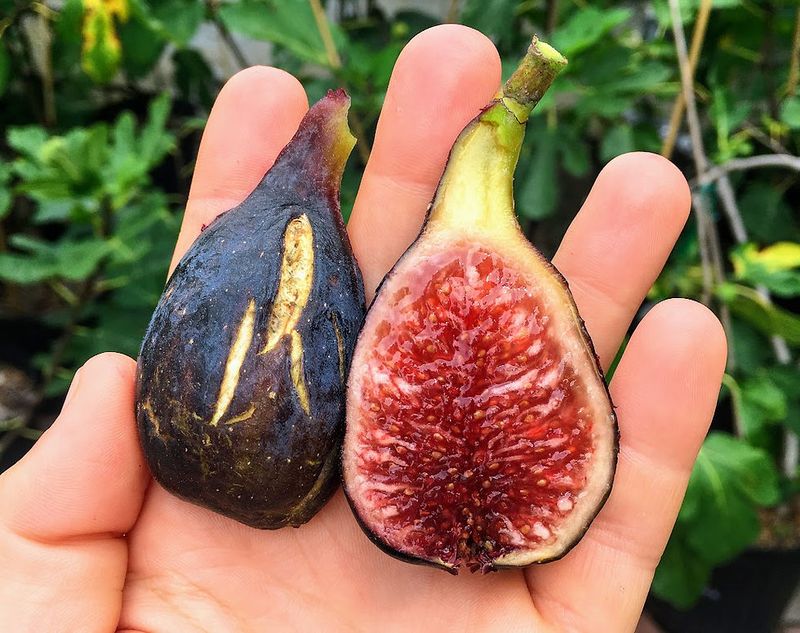
Fallen figs on the ground are easy to overlook when you are focused on what is still hanging on the tree, but they are often the biggest attractant in the whole yard.
A fig that drops to the ground in Texas July heat begins fermenting within hours, and that fermented smell pulls beetles in fast.
Letting fallen fruit accumulate under a fig tree essentially creates a beetle feeding station right next to your harvest.
Making ground cleanup part of your regular fig-tree routine during July can noticeably reduce beetle pressure over time. Picking up fallen figs every day or two and disposing of them away from the tree removes the scent signal that beetles follow.
Composting fallen figs right beneath the tree is worth reconsidering during peak beetle season, since the decomposing fruit in a nearby pile can attract just as many beetles as the fallen figs themselves.
Overripe figs that are still on the tree but clearly past their prime should also come down during each harvest pass. Figs that have gone soft, begun to split, or show signs of fermentation while still attached are just as attractive to beetles as fallen fruit.
Pulling those off during your regular harvesting rounds keeps the tree cleaner and reduces the number of entry points beetles can exploit.
In Texas backyards, this simple habit of ground cleanup and overripe fruit removal often makes a more meaningful difference than any single product applied to the tree.
7. Managing Compost And Organic Debris Nearby
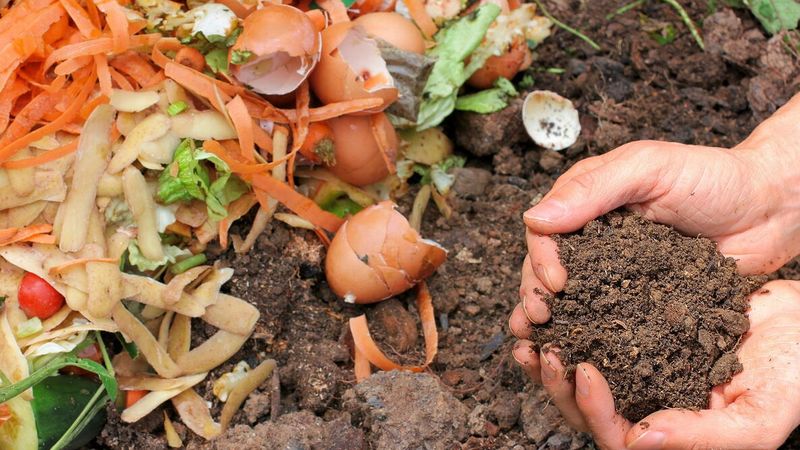
Compost bins and piles of organic debris sitting close to a fig tree can quietly make a beetle problem much worse.
Green June Beetle larvae develop in soil rich with decaying organic matter, so a compost pile near your fig tree in Texas is potentially providing both a breeding area and a food source close to your harvest.
Moving compost farther from the tree is one of those background changes that can reduce beetle pressure over a full season.
Organic debris like leaf piles, grass clippings, and mulch that is allowed to build up and heat near the tree also creates conditions that beetles find appealing.
Well-managed compost that is turned regularly and kept properly active tends to be less hospitable than a pile that just sits and slowly breaks down on its own.
Texas gardeners who compost actively and keep their piles away from fruit trees tend to see fewer issues than those with large, undisturbed organic piles near the garden.
Checking the area around your fig tree for any fermenting or rotting organic material is a useful habit during July. Old mulch that has gone sour, buried fruit scraps, or piles of yard waste can all add to the overall attractant load in your yard.
None of these changes will eliminate Green June Beetles entirely since they range widely, but reducing attractants near the tree makes your fig harvest less of a target and gives your other management efforts a better foundation to work from.
8. Using Traps Or Barriers As Part Of The Plan
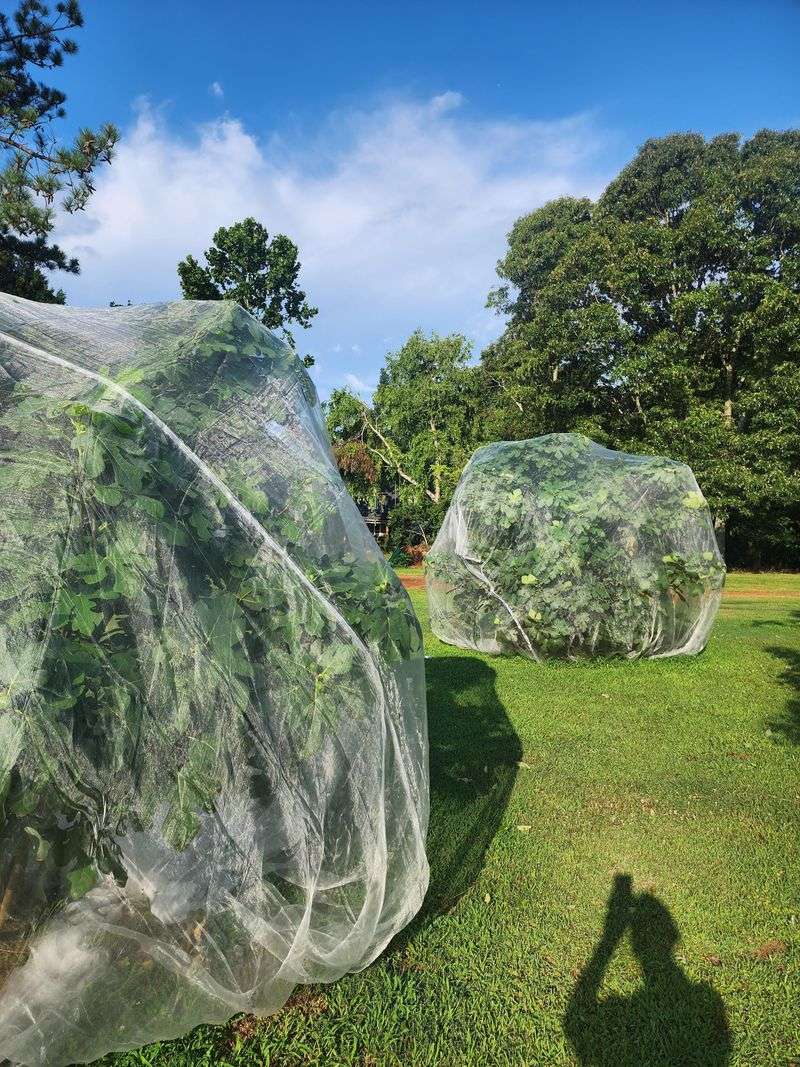
Traps and physical barriers are tools worth knowing about, even though they work best as part of a broader management plan rather than as standalone fixes.
Some Texas gardeners use bait traps designed to attract fruit-feeding beetles away from the tree, placing them at a distance to draw beetles toward the trap rather than toward the figs.
Whether this approach reduces damage significantly depends on beetle pressure, trap placement, how consistently the traps are maintained, and other factors specific to each yard and season.
Physical barriers like fine mesh netting placed over individual clusters of figs or over small container fig trees can provide meaningful protection during the final ripening stage.
Netting works best when it is secured snugly so beetles cannot find gaps, and it needs to go on before beetles arrive rather than after damage has already started.
For patio figs or small container trees in Texas, netting is often practical and reasonably effective when used correctly.
Row cover fabric is another option some Texas gardeners use on smaller fig plants, though managing airflow and heat in Texas July conditions requires some attention.
The main value of traps and barriers is that they address the problem without requiring any chemical applications near harvest.
Combining traps or barriers with frequent harvesting, fallen fruit cleanup, and compost management gives you a layered approach that is more effective than relying on any one method alone.
That layered thinking is what tends to produce the best results for Texas fig growers during the height of summer.