These Signs Mean Your Georgia Marigolds Need A Trim Right Now
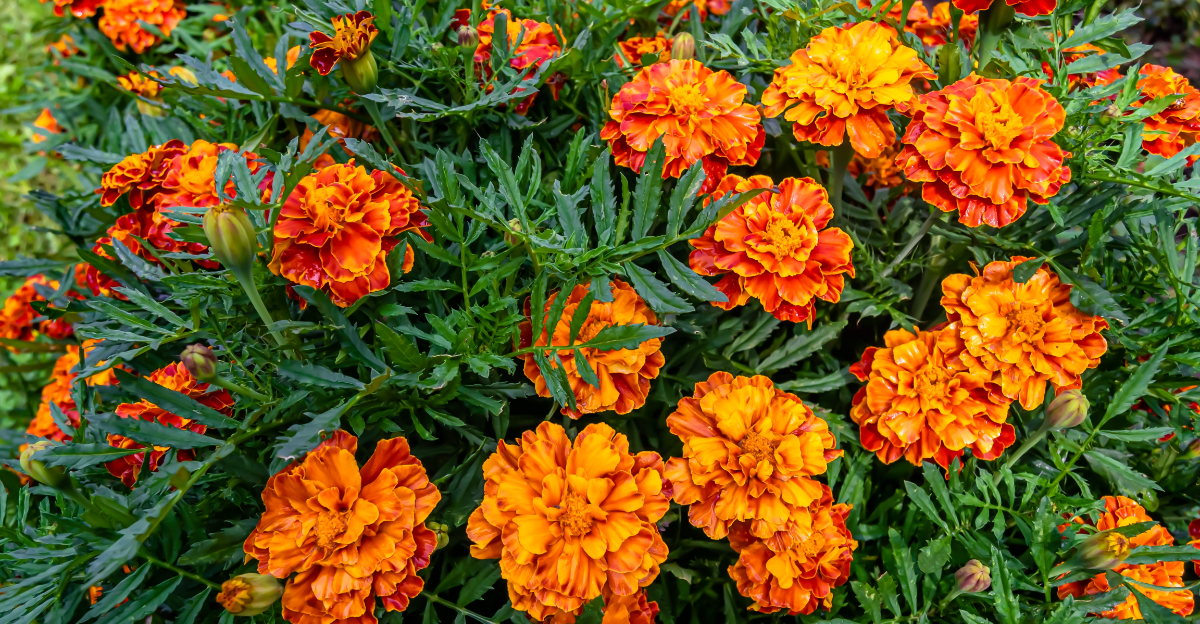
It is easy to assume a plant is doing just fine when it is still covered with green leaves. Weeks go by, you keep watering, and everything seems to be growing without much trouble.
Then something starts feeling different. The bright display that made the flowers stand out begins to fade, even though the plant still looks full and healthy.
That change often happens so gradually that most people do not notice it right away. By the time the difference becomes obvious, the plant has already been asking for a little attention.
A small delay can leave it looking tired during the busiest part of the season.
Marigolds growing in Georgia often give clear signals before they need a trim.
Spotting those signs at the right time can help keep fresh blooms coming and the plants looking colorful for much longer through the summer.
1. Fewer New Flowers Are Starting To Appear
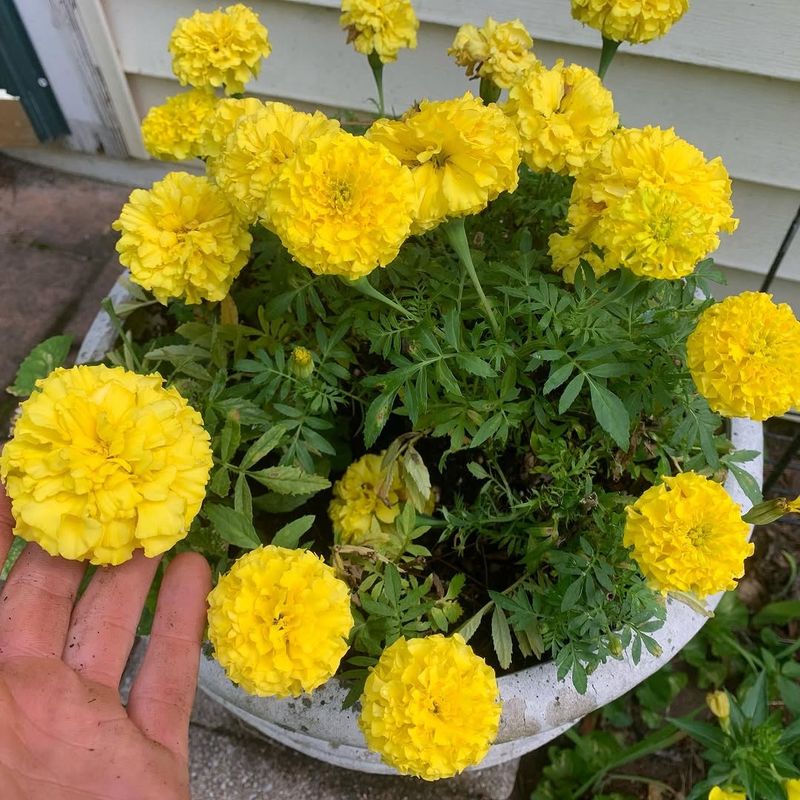
Bloom count dropping fast? That’s one of the clearest signals your marigolds are ready for attention.
When a plant starts putting out fewer flowers than it did a few weeks ago, it usually means energy is getting stuck in old growth instead of moving toward new buds.
Marigolds bloom in cycles. Each flush of flowers needs the last one to finish before the next round kicks in.
If spent blooms stay on the plant too long, the whole cycle slows down noticeably.
Check the tips of your stems. If you see mostly brown or dried flower heads with very little new bud activity, that’s a sign the plant needs help resetting.
A light trim removes those finished flowers and clears the way for fresh ones.
Hot July weather in Georgia can also stress plants enough to slow blooming on its own. So it helps to separate heat stress from pruning needs by looking at both factors together.
If the plant looks green and healthy but flowers are scarce, trimming is likely the fix. If leaves look wilted or yellowed, check your watering first before reaching for the shears.
Either way, fewer blooms in midsummer is a sign worth acting on. Catching it early gives your marigolds a better shot at recovering and pushing out another round of color before the season winds down.
2. Long Stems Make The Plant Look Leggy

Leggy marigolds are hard to miss. Stems stretch way out, leaves thin out along the length, and the whole plant starts looking more like a stick arrangement than a flowering bush.
It’s not a great look, and it’s a signal the plant needs reshaping.
Legginess happens when marigolds reach for light or simply grow unchecked through the early summer weeks. By July, stems that started short can be surprisingly long, especially if no trimming has happened since planting.
Long stems also make plants less stable. Wind and heavy rain can knock them over or cause stems to bend and crack.
Trimming back those extended stems gives the plant a more compact, sturdy shape that holds up better through the rest of summer.
Your Georgia Garden Changes Every Week. Your Plan Should Too.
Gardening in Georgia changes quickly throughout the season. Every Friday you’ll receive a simple weekly plan showing exactly what to plant, prune, fertilize, harvest, and protect so you never miss the right timing.
Cut leggy stems back by about a third of their length. You don’t need to be overly precise, but avoid cutting into the woody lower portion of the stem.
Focus on the green, flexible growth near the top.
After trimming, most marigolds respond within a week or two with fresh side shoots. Those new branches are what eventually carry the next flush of blooms.
Legginess is common in warm climates where plants grow quickly. Staying on top of it through July keeps your plants looking full and intentional rather than wild and overgrown.
A small amount of effort here goes a long way through the rest of the season.
3. New Growth Starts Slowing Down
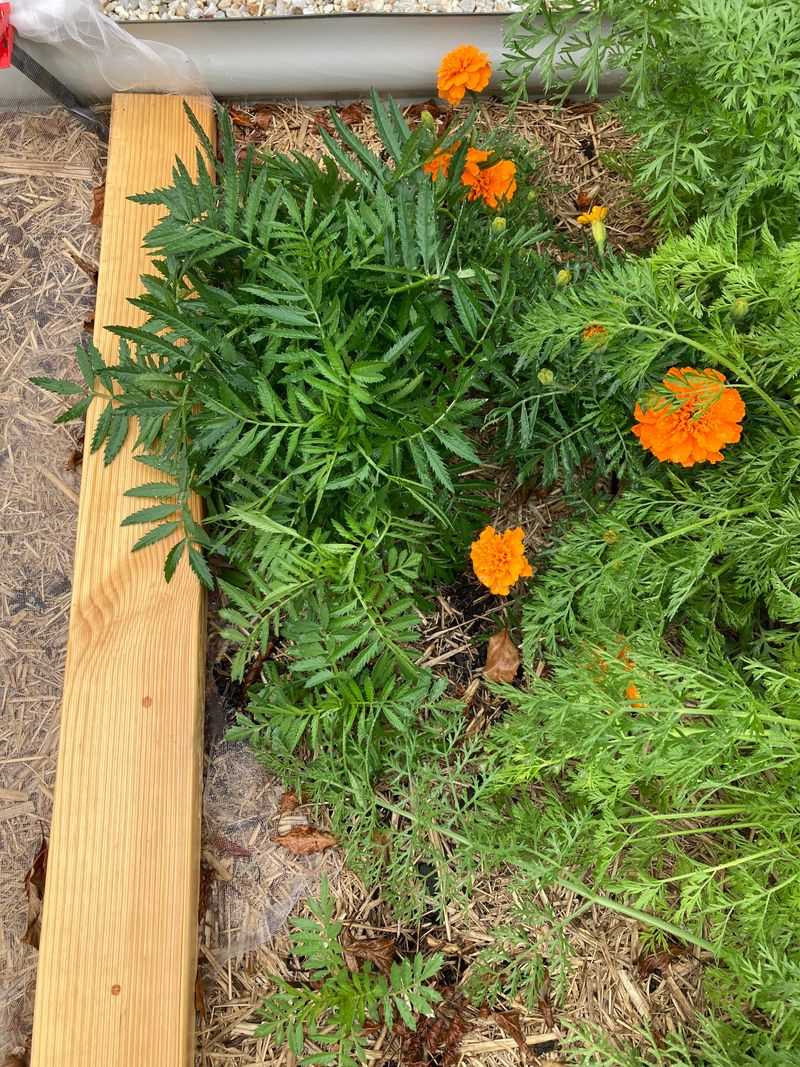
Slow growth in midsummer isn’t something to brush off. When marigolds stop pushing out fresh leaves and stems, it usually means something is holding the plant back.
Sometimes it’s heat, but often it’s a buildup of old growth that hasn’t been cleared away.
Plants prioritize finishing what they’ve already started. If old stems, spent blooms, and fading foliage are still attached, the plant keeps sending energy there instead of generating new shoots.
Trimming removes that burden and redirects the plant’s resources.
Look at the tips of your stems closely. Active, healthy marigolds show small new leaves or tight buds forming at the ends.
When those tips look stalled or dried out, growth has likely paused and a trim can help restart things.
Timing matters here. Trimming during a heat wave can add stress to a plant that’s already struggling.
If temperatures have been extreme, wait for a slightly cooler morning and trim gently rather than aggressively.
Watering habits also affect growth speed. Inconsistent moisture during July in the Southeast can stall plants just as much as old growth buildup.
Confirm your watering schedule is steady before assuming trimming is the only solution.
When both watering and trimming are addressed together, marigolds tend to respond well. Growth often picks back up within a couple of weeks, and the plant moves into its next blooming phase with noticeably more energy.
4. Thin Growth Leaves Empty Spaces

Empty gaps in your marigold plant are a visual clue worth paying attention to. When stems spread out but leaves and buds don’t fill in the space between them, the plant starts looking patchy and uneven.
That open look usually means branching has stalled somewhere along the way.
Marigolds branch naturally when their growing tips are trimmed back. Without that stimulus, plants tend to grow straight up rather than spreading outward.
Over time, that vertical growth creates a sparse, hollow-looking structure with lots of visible empty space.
Thinning out often starts in the lower and middle sections of the plant. Upper stems may still carry blooms while the base looks bare.
Trimming helps redirect energy to those underdeveloped areas and encourages a fuller overall shape.
It’s worth noting that some thinning is normal in extreme heat. Plants naturally drop lower leaves when temperatures stay high for extended periods.
So if you’re seeing some thinning at the base during a hot July stretch, that alone doesn’t mean the plant is struggling.
But if the whole plant looks sparse from top to bottom, a light trim combined with consistent watering can make a real difference. Focus cuts on the longer, leggier stems and leave shorter growth intact.
Fuller plants aren’t just about looks. Dense foliage helps shade the soil, reduce moisture loss, and keep roots a bit cooler during the hottest weeks of the growing season.
5. Light Trimming Encourages New Branches
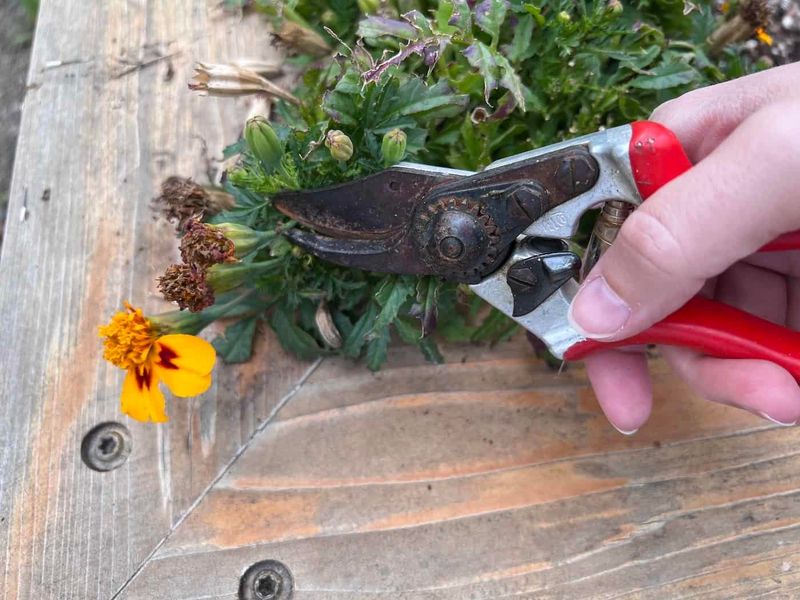
Sometimes trimming isn’t a reaction to a problem. It’s a proactive move that keeps plants performing at their best.
A light trim in July can push marigolds to branch out more, which means more stems and, eventually, more blooms.
When you cut back a stem tip, the plant responds by sending out two or more new shoots from just below the cut. It’s a reliable response in most healthy marigolds, though timing and plant condition both affect how strong that response is.
Light trimming means removing about a third of each stem’s length, not cutting back hard into old or woody growth. Gentle cuts on green, flexible stems give the best results with the least stress on the plant.
July is a reasonable time for this kind of trim in many parts of the South. Plants are well-established by now and can handle light pruning without a significant setback, assuming they’re getting enough water and aren’t already under heavy heat stress.
Use clean, sharp scissors or small pruning shears. Dull or dirty tools can bruise stems and create entry points for disease.
After trimming, keep the soil consistently moist. New branch growth needs reliable moisture to get started.
A layer of mulch around the base can help hold that moisture in during warm afternoons.
6. Remove Faded Flowers To Keep Blooms Coming
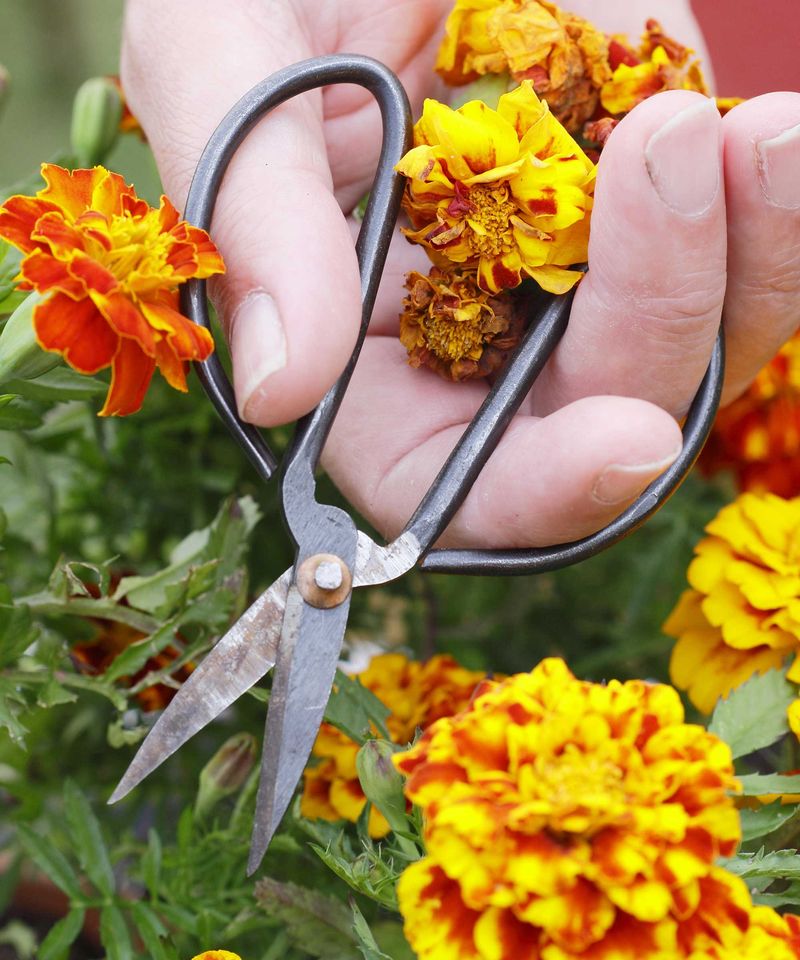
Faded flowers left on the plant send a quiet but clear message to the roots: the job is done. Once a marigold bloom finishes and begins forming seeds, the plant shifts its focus toward completing that seed cycle rather than making new flowers.
Deadheading, which is simply removing spent blooms, interrupts that process. It signals the plant to keep producing flowers instead of winding down.
It’s one of the most effective and low-effort ways to extend a marigold’s blooming period well into late summer.
Look for blooms that have turned brown, papery, or dull in color. Those are the ones to remove.
Pinch or snip them off just below the flower head, or cut back to the nearest set of healthy leaves for a cleaner result.
In humid climates, faded blooms can also trap moisture against the stem. That moisture creates conditions where mold or rot can develop.
Removing spent flowers regularly reduces that risk during the wetter stretches of summer.
Check your plants every few days instead of waiting for faded blooms to accumulate. Frequent, small removals keep the plant tidier and tend to produce a steadier stream of new flowers compared to occasional heavy cleanups.
Marigolds are generous bloomers when managed well. Staying on top of deadheading through July and into August gives them a real chance to keep putting on a show even as the heat stays high.
7. Avoid Cutting Back More Than One Third
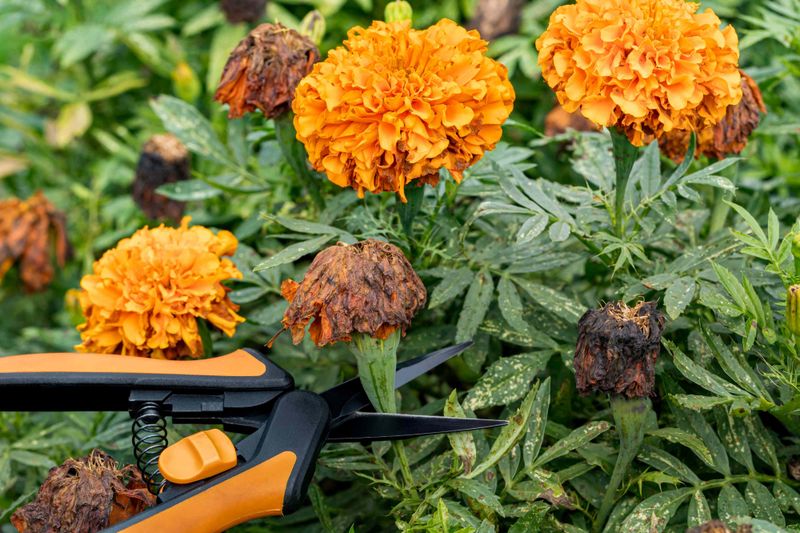
Cutting too much at once is one of the most common trimming mistakes gardeners make in summer. It feels productive in the moment, but removing more than a third of the plant at one time can set it back significantly, especially during hot weather.
Plants need foliage to photosynthesize and produce energy. Cutting away too much leaf surface too quickly leaves the plant struggling to recover while also managing heat and humidity.
That combination can stall growth for weeks.
Stick to the one-third rule as a general guideline. If stems are very long and overgrown, it may take two or three separate trims spaced a couple of weeks apart to get the plant to the shape you want without shocking it.
Marigolds are fairly resilient, but resilience has limits. A plant that gets cut back too hard in peak summer heat may take much longer to rebound than one that receives careful, gradual trimming over time.
After any trim, watch the plant for signs of stress over the next several days. Wilting that doesn’t recover after evening watering, yellowing new growth, or a complete pause in development can indicate the cut was too aggressive.
If you’re unsure how much to take off, err on the side of less. You can always trim again in a week or two.
Patience with the process tends to produce better results than trying to fix everything in a single session.