Gravel Paths Vs Mulched Paths In North Carolina Yards And Which Stays Cleaner After Summer Storms
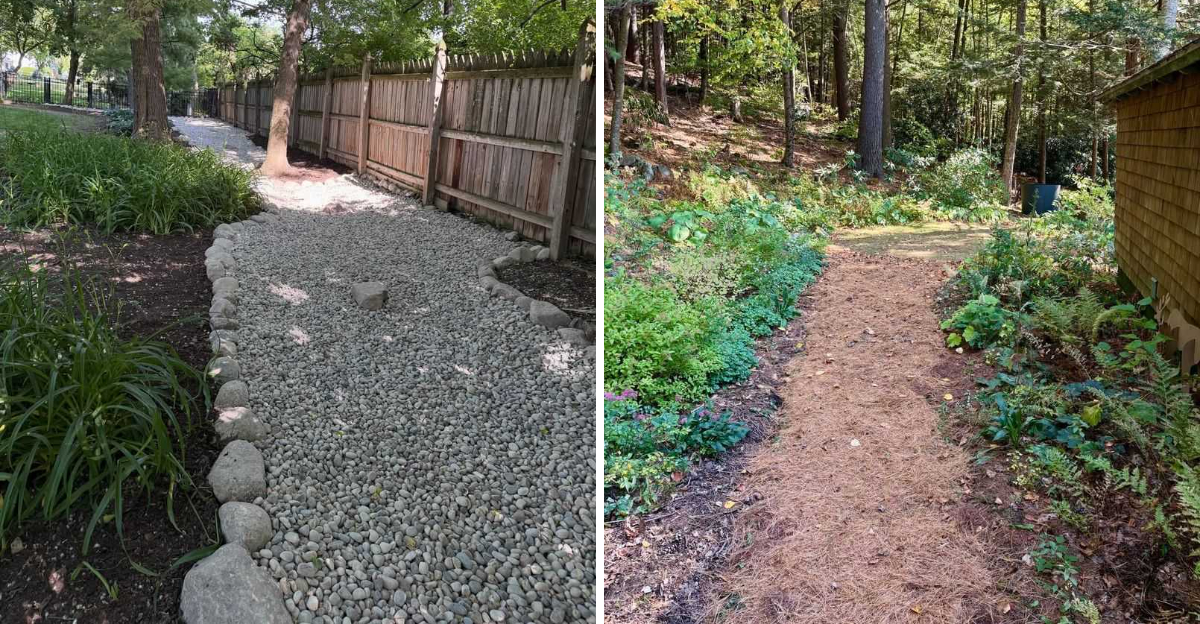
North Carolina summer storms do not test garden paths gently.
The combination of high-volume rainfall, runoff from sloped beds, and the debris that moves through a yard during a serious storm event reveals the limitations of both path materials in ways that dry weather completely hides.
Gravel migrates, compacts unevenly, and becomes a weeding challenge once organic matter settles into it through a rainy season.
Mulch floats, displaces into beds and lawn edges, and requires replenishment more often than most homeowners budget for at installation.
Each material has a specific set of yard conditions where it performs significantly better than the other, and knowing which situation matches which material saves a lot of ongoing maintenance frustration.
1. Gravel Usually Looks Cleaner After Storms
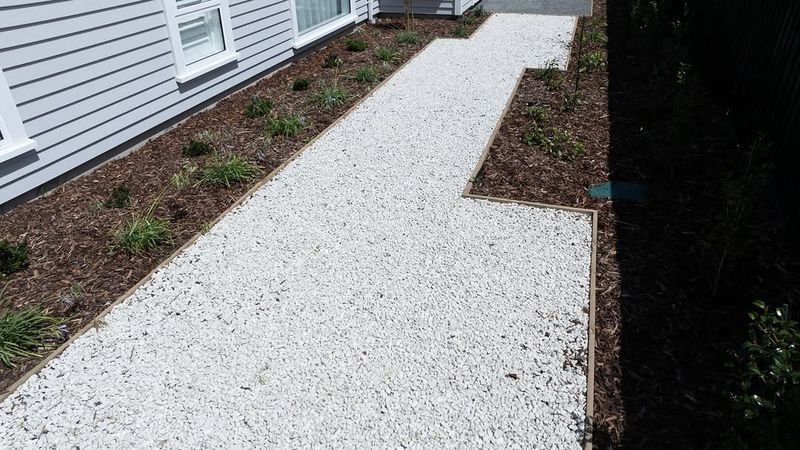
After a fierce North Carolina summer storm rolls through, gravel paths tend to bounce back faster than just about any other path material.
Rain water moves through and around the stones quickly, which means puddles drain away and the surface looks tidy again in a short amount of time.
Gravel simply does not absorb water the way organic materials do, so it rarely turns soggy or slimy.
Unlike wood chips or pine straw, gravel does not break down or decompose over time. That means it holds its shape and color even after repeated soakings throughout the summer season.
Mulch, on the other hand, can mat together and look patchy or dark after heavy rain, which makes the whole path feel unkempt.
Gravel paths perform best when they are built with a few key features in place. A compacted base underneath the stones keeps everything stable, while solid edging on both sides prevents the gravel from spreading into flower beds or grass.
A slight crown or gentle slope in the middle of the path helps rainwater run off to the sides rather than pooling in the center.
Flat, well-edged gravel paths on level ground stay the cleanest after storms. If your path has good drainage and a firm foundation, gravel is genuinely one of the most storm-resistant choices you can make for a North Carolina yard.
It is a reliable, low-fuss option that rewards a little upfront effort with years of cleaner-looking results after every summer shower.
2. Mulch Can Move In Heavy Rain
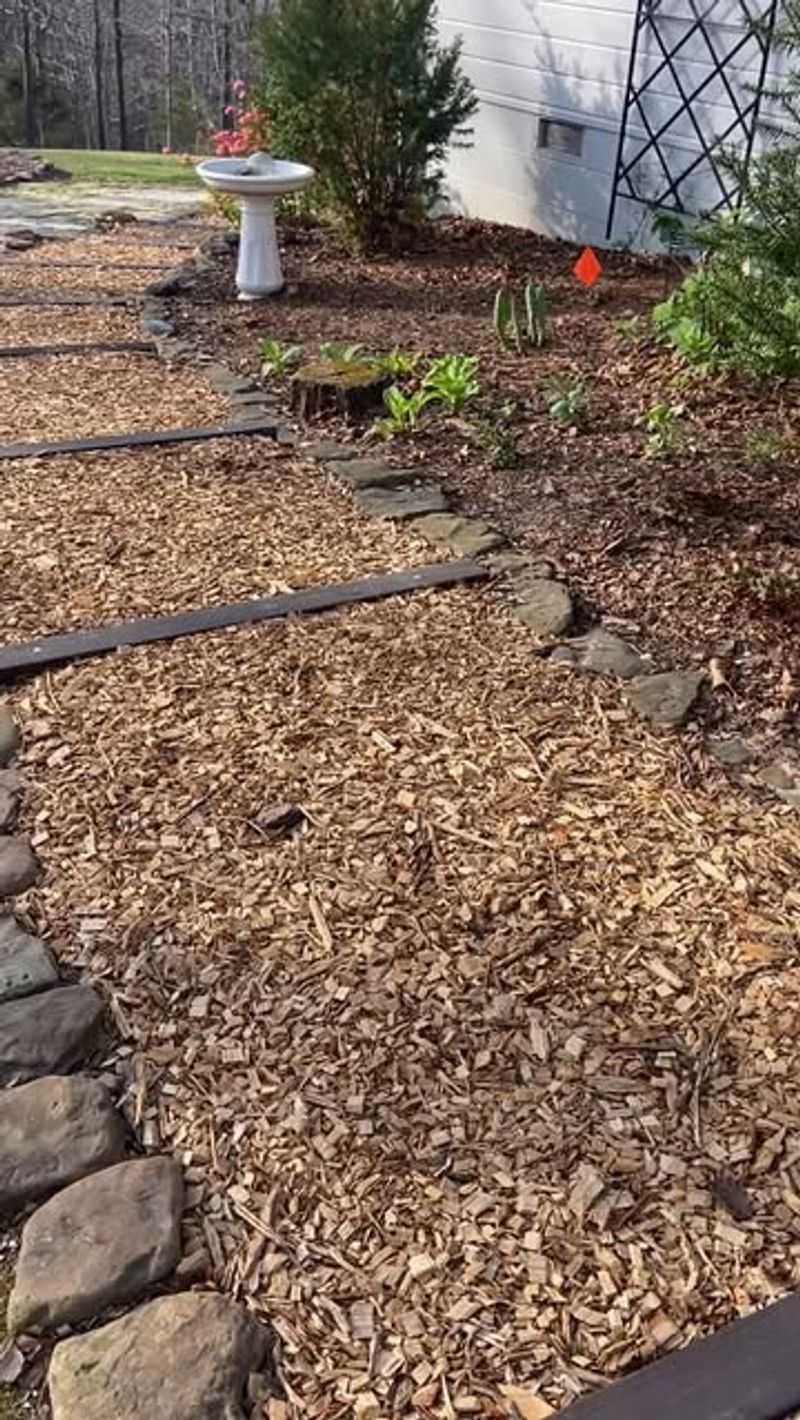
Picture this: you spend a Saturday afternoon laying down fresh wood chips along your garden path, and by Sunday evening a summer storm has pushed half of them into a soggy pile at the bottom of the slope.
That is one of the most common frustrations mulched path owners face in North Carolina, where summer storms can drop inches of rain in just a few hours.
Loose organic materials like wood chips, pine straw, bark, and shredded leaves are surprisingly lightweight when wet. Fast-moving water can float them right off a path and carry them across the yard.
The problem gets worse on any path that sits on a slope or runs in the direction that stormwater naturally travels across the yard.
Mulch works much better in spots where water slows down rather than rushes through.
Your North Carolina Garden Changes Every Week. Your Plan Should Too.
Gardening in North Carolina changes quickly throughout the season. Every Friday you’ll receive a simple weekly plan showing exactly what to plant, prune, fertilize, harvest, and protect so you never miss the right timing.
Flat paths tucked between raised garden beds, paths with edging that holds the material in place, or paths in sheltered spots under trees tend to hold their mulch far better after storms.
The key is reducing the speed and volume of water that crosses the surface.
Coarser mulch materials like large wood chips tend to move less than fine shredded bark or pine straw because they are heavier and interlock more easily.
If you love the look and feel of a mulched path, choosing a coarser material and adding solid edging on both sides can make a real difference in how the path looks after the next big storm rolls through your yard.
3. Gravel Still Needs A Good Base
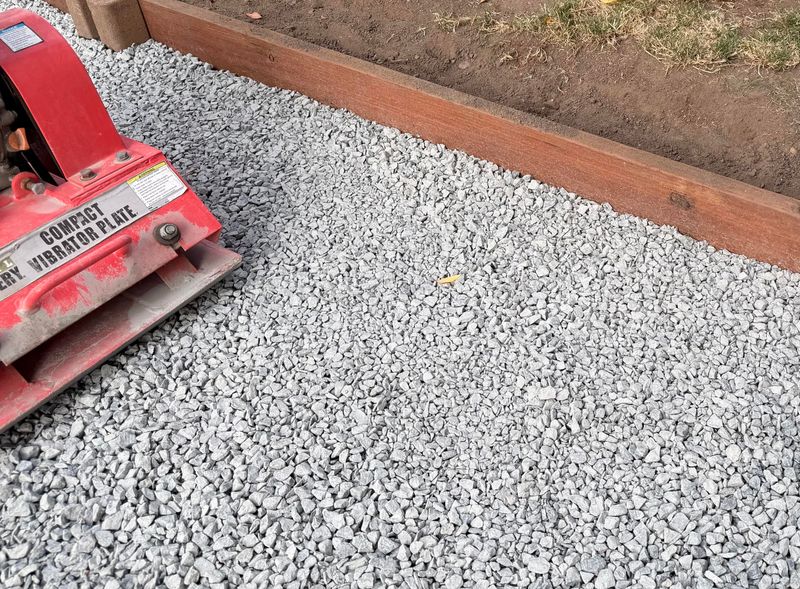
Gravel gets a reputation for being nearly maintenance-free, but that reputation is only partly earned. The truth is that a gravel path is only as good as the base it sits on.
Without proper preparation underneath, even the prettiest gravel path can turn into a muddy, uneven mess after a few hard summer storms.
A solid gravel path starts with compacted soil or a layer of crushed stone packed tightly beneath the surface gravel. This base layer prevents the stones from sinking into soft ground when heavy rain saturates the soil.
Skipping this step is one of the most common mistakes homeowners make, and the results show up quickly after the first major storm of the season.
Edging is just as important as the base. Without it, gravel slowly migrates outward into lawn areas and garden beds every time it rains.
Metal, plastic, or stone edging keeps the path defined and prevents that gradual spreading that makes a path look abandoned over time.
A slight crown or gentle slope along the center of the path also encourages water to drain to the sides rather than sitting on the surface.
Sediment and soil particles can wash into a gravel path and settle between the stones, making the path look muddy and eventually encouraging weeds to take root.
A layer of landscape fabric beneath the gravel helps block soil migration from below. Building a gravel path the right way takes a bit more effort upfront, but it makes a significant difference in how clean and stable the path looks all summer long.
4. Mulch Is Better For Soft Garden Paths
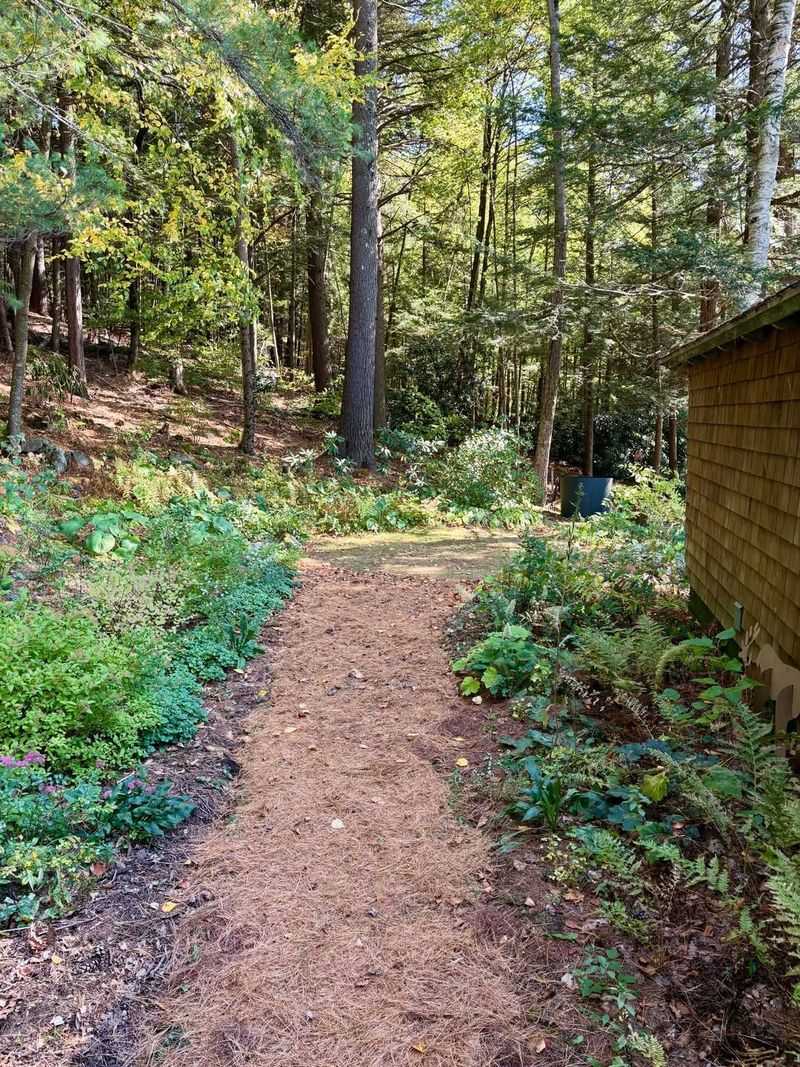
Not every path in a yard needs to look formal or perfectly polished. In fact, some of the most charming and practical garden spaces in North Carolina rely on mulched paths to create a soft, natural feel that gravel simply cannot match.
Mulch brings a warmth and organic character to a garden that fits beautifully with informal planting styles.
Walking on a mulched path is genuinely comfortable. The surface has a slight give underfoot, which makes it much easier on joints than hard stone or packed gravel.
For gardeners who spend long hours moving through vegetable rows or tending flower beds, that comfort adds up over a whole season of gardening work.
Mulched paths are also wonderfully easy to adjust. If you want to widen a bed, shift a row, or completely reroute a path, you just move the mulch.
There is no digging up stones or disturbing a compacted base. That flexibility makes mulch an ideal choice for vegetable gardens and cottage-style landscapes that change from season to season.
Coarse wood chips are the best mulch choice for paths that need to hold up through the summer. They last significantly longer than finer materials like shredded bark or pine straw, breaking down more slowly and holding their position better after rain.
A layer four to six inches deep provides good weed suppression and helps the path stay clearly defined between refreshings.
For gardeners who value a relaxed, natural aesthetic over a polished look, mulched paths offer a practical and appealing solution that fits right into the North Carolina landscape.
5. Gravel Can Collect Weeds And Soil
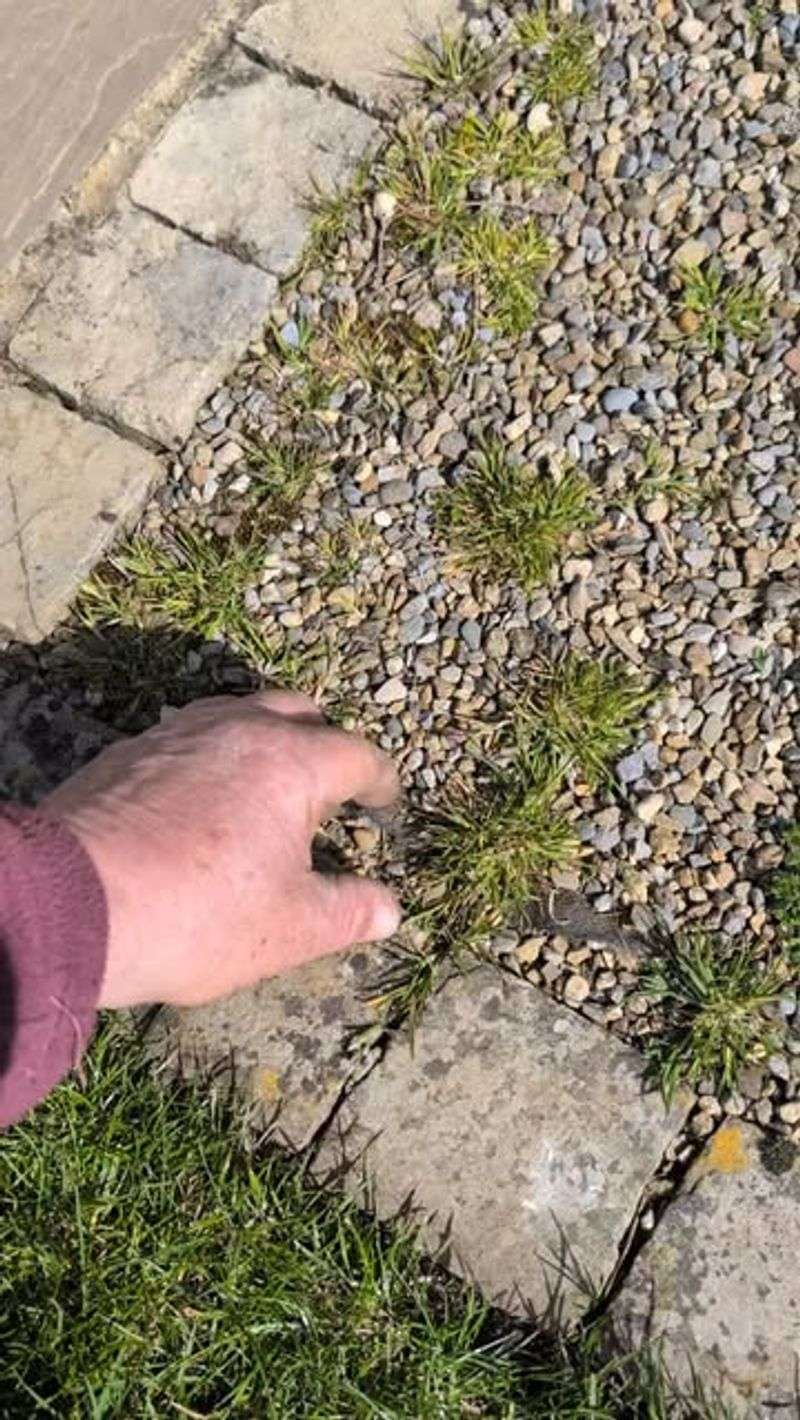
Gravel might look sharp and clean right after a storm, but give it a few weeks and a couple more rain events, and a different story starts to unfold.
Soil particles, leaf debris, and wind-blown seeds have a way of settling into the spaces between stones, and once they do, weeds are not far behind.
Gravel paths require more regular attention than most people expect when they first install them.
Every time it rains hard, stormwater carries fine soil particles across the yard and deposits them wherever the water slows down. Gravel paths are a perfect collection point for this sediment because the stones slow the water and trap the particles between them.
Over time, that thin layer of soil builds up and creates exactly the growing conditions that weeds love.
Common North Carolina weeds like crabgrass, chickweed, and clover are fast to take advantage of any open ground, including gravel paths.
Without regular raking or occasional weeding, a gravel path can start to look more like an overgrown patch than a clean walkway.
Landscape fabric beneath the gravel helps slow weed growth from below, but it does not stop seeds that blow in from above and settle on top.
Keeping a gravel path looking its best means raking it after major storms to redistribute stones, pulling or spot-treating weeds when they appear, and occasionally topping up the gravel where it has thinned or migrated.
The good news is that these tasks are manageable with a simple routine. A little consistent attention keeps gravel paths looking clean and well-kept through the whole North Carolina summer.
6. Mulch Needs Refreshing More Often
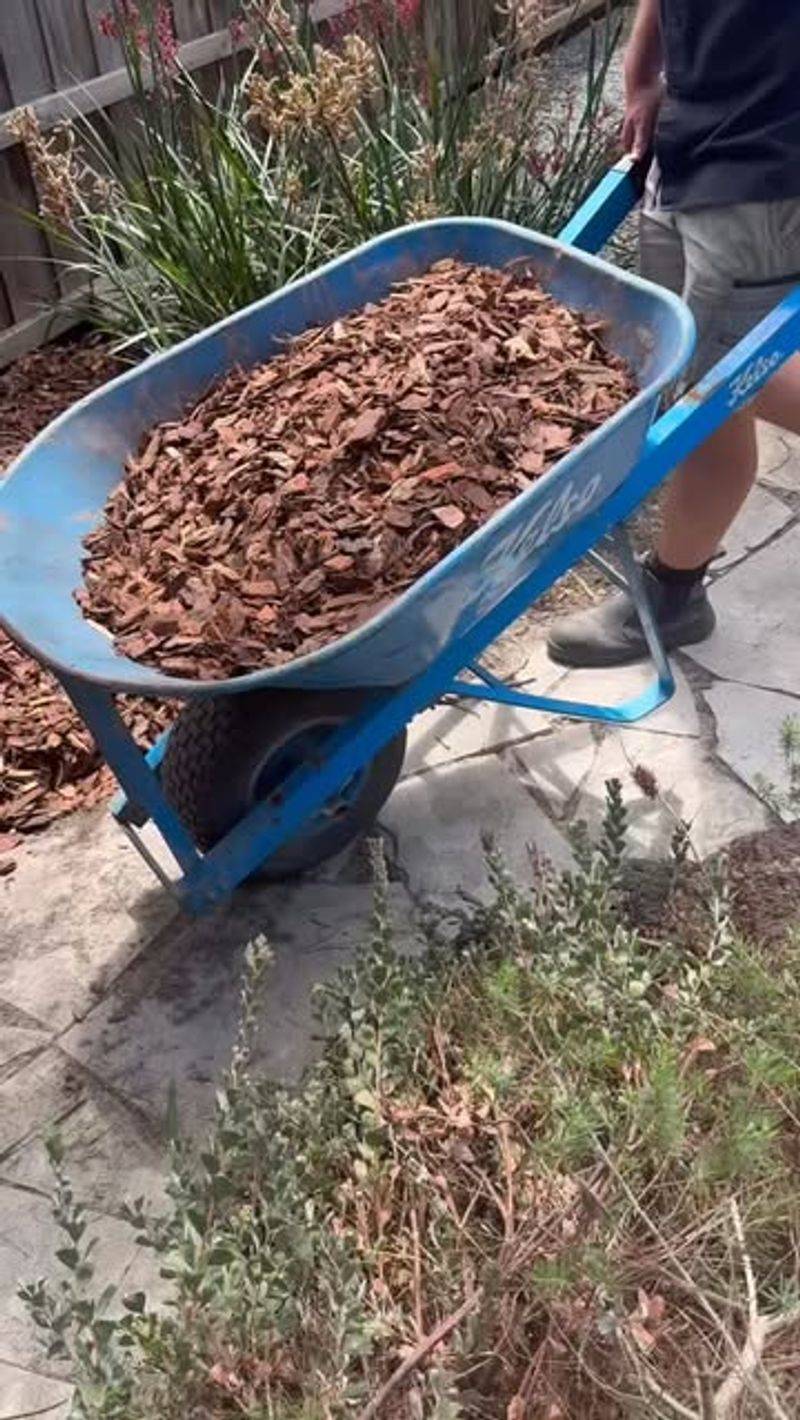
North Carolina summers are warm, wet, and long, which is wonderful for growing tomatoes and zinnias, but tough on organic mulch.
The same heat and moisture that makes gardens thrive also speeds up the natural breakdown of wood chips, bark, and pine straw.
Mulched paths tend to look great in spring and increasingly thin or patchy by late summer if they are not refreshed along the way.
Organic mulch breaks down through a natural process where microbes and moisture slowly turn the material into compost. That is actually great news for soil health, but it means the layer gets thinner over time.
A path that started the season with four inches of mulch might be down to two inches or less by August, which is often not enough to keep weeds suppressed or the path clearly visible.
Topping up a mulched path once a year is usually enough in most North Carolina yards, though paths in shadier spots with more moisture may need attention twice a year.
Adding a fresh two-inch layer on top of existing mulch is quick, affordable, and immediately restores the path’s appearance.
It also resets the weed suppression layer before seeds have a chance to establish themselves.
Thin mulch is especially vulnerable after summer storms. When the layer is already shallow, rain can shift it easily and leave bare patches where weeds sprint in.
Keeping the mulch layer consistently thick is the single most effective way to reduce cleanup after storms and keep the path looking tidy all season. Regular refreshing is a small investment that pays off in a much cleaner, better-defined garden path.
7. Drainage Matters More Than The Material
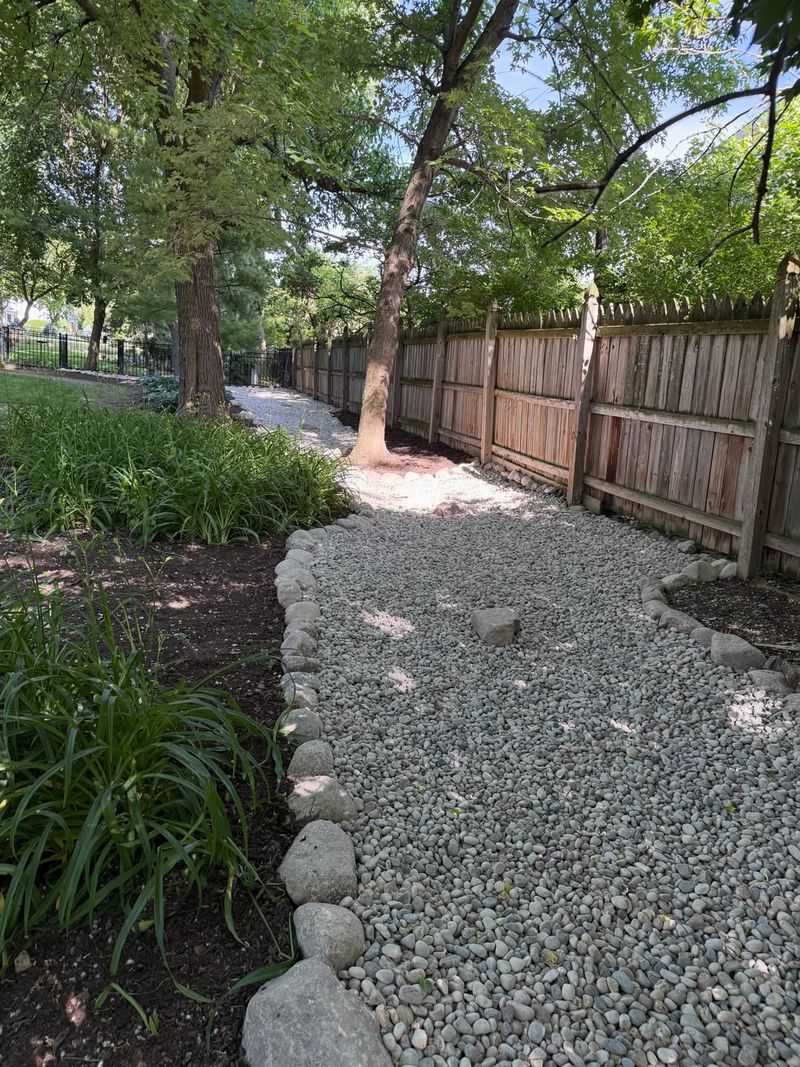
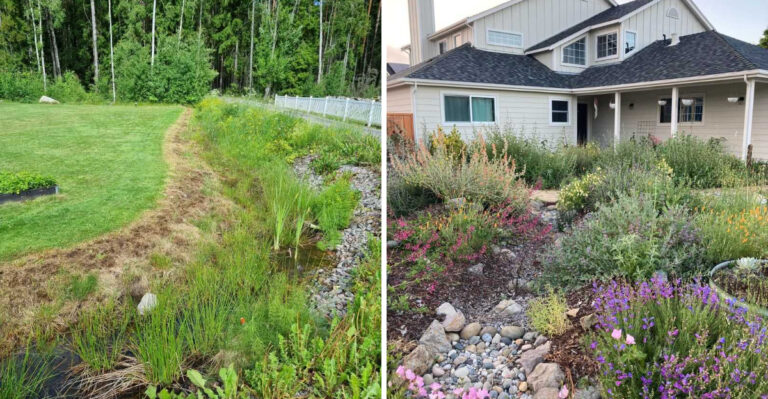
Here is something most gardening guides skip over: the single biggest factor in how clean your path looks after a summer storm has nothing to do with whether you chose gravel or mulch. It comes down to how well your yard manages water.
A poorly drained yard will wreck both gravel and mulched paths equally, while a yard with smart water management keeps both looking great.
Water should slow down, spread out, and soak into the ground rather than rushing across the surface in a concentrated stream.
When stormwater accelerates down a path, it carries whatever is on that path along with it, whether that is gravel stones, wood chips, or soil. The path essentially becomes a drainage channel, which is hard on any surface material.
Gentle curves in a path naturally slow water down by breaking up the straight-line momentum of runoff. Edging on both sides creates a defined channel but also helps keep materials in place.
Planted borders, grass strips, or low ground covers along the edges of a path absorb water before it builds up enough speed to cause damage. Raised beds beside a path also help by soaking up rain before it reaches the walking surface.
A slight crown in the center of the path, meaning the middle is just a bit higher than the edges, encourages water to drain outward to the sides rather than pooling in the middle. These design choices work for both gravel and mulched paths.
Getting the layout and drainage right before you lay any material is the smartest thing you can do to protect your path and reduce post-storm cleanup all season long.
8. Choose Gravel For Clean Lines And Mulch For Garden Flexibility
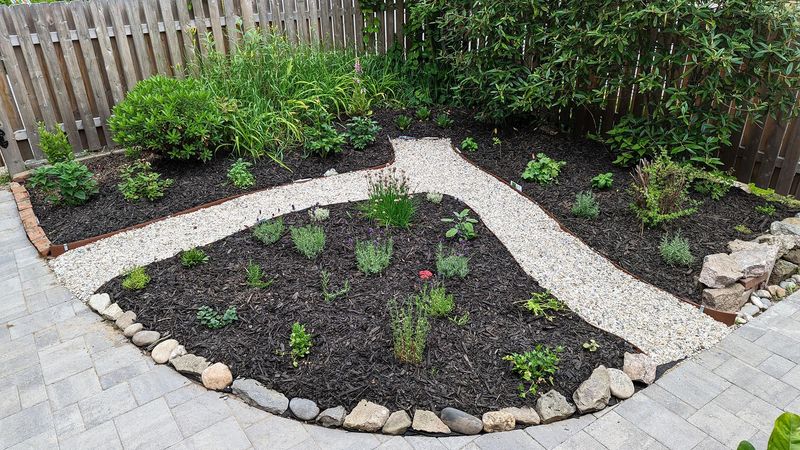
Choosing between gravel and mulch really comes down to what your yard needs and how much upkeep you want to take on each season.
Both materials have a genuine place in North Carolina gardens, and many homeowners actually use both, just in different spots around the yard.
Knowing where each one shines makes the decision a lot easier.
Gravel is the stronger choice for high-traffic routes that need to look sharp year-round. Paths near patios, front gates, main entrances, and areas where guests walk regularly benefit from gravel’s clean, defined appearance.
After a summer storm, gravel bounces back faster and requires less hands-on cleanup than organic mulch does in the same location. It also holds its shape better over several seasons without needing to be replaced.
Mulch makes far more sense in flexible garden spaces where the layout changes from year to year.
Vegetable gardens, cutting flower beds, and informal cottage-style plantings pair naturally with a mulched path because the material is easy to move, adjust, and refresh.
The softer surface is also kinder underfoot when you are spending hours working in the garden. And since mulch breaks down into organic matter, it actually improves the surrounding soil over time.
The bottom line is straightforward: gravel stays neater after summer storms and suits permanent, polished walkways, while mulch suits relaxed, evolving garden spaces where flexibility matters most.
Whichever material you choose, the real secret to a path that holds up through the whole North Carolina summer is good drainage, solid edging, and a simple routine of seasonal care.
Get those three things right, and your path will look great all season long.