What North Carolina Crape Myrtles Need In June After Their First Flush Of Blooms
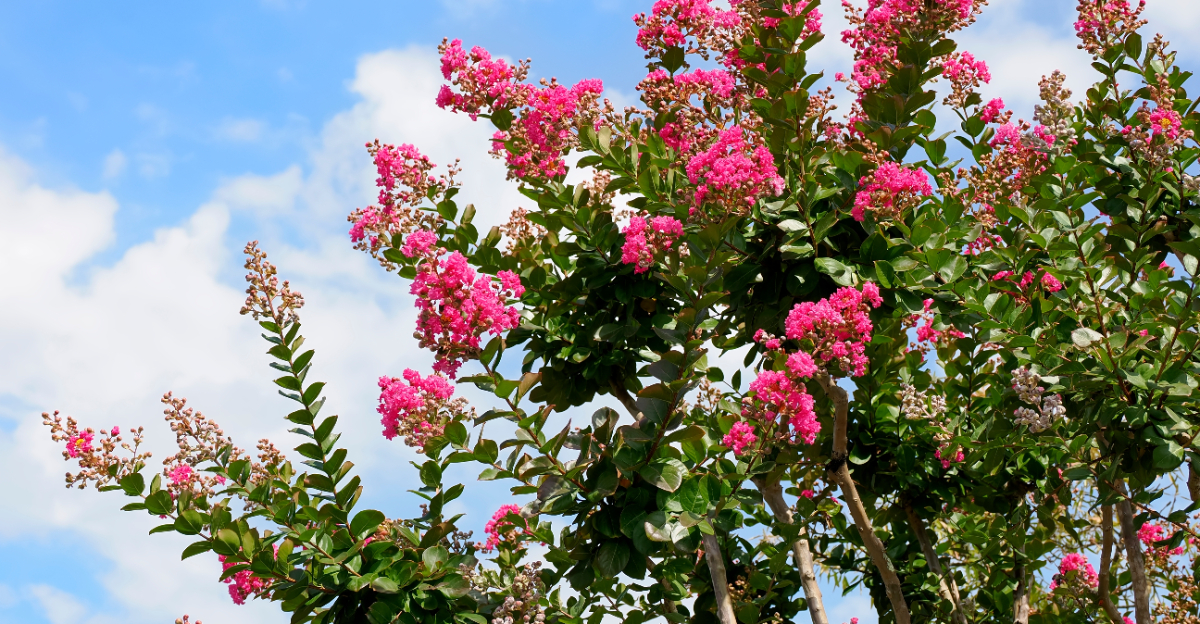
That first wave of crape myrtle blooms is genuinely one of the highlights of a North Carolina summer.
The color is bold, the show lasts longer than most flowering trees can manage, and then it winds down and leaves you wondering what comes next. Here’s what a lot of gardeners don’t realize: that first flush doesn’t have to be the best one.
Crape myrtles are capable of coming back with a second and even third round of blooms, but whether that actually happens depends on what you do with the plant in June right after those first flowers fade.
Most people do nothing, and the tree obliges with nothing much in return. A little targeted attention at exactly this point in the season changes the whole arc of summer and keeps the color going far longer than your neighbors’ trees manage.
1. Remove Spent Flower Clusters
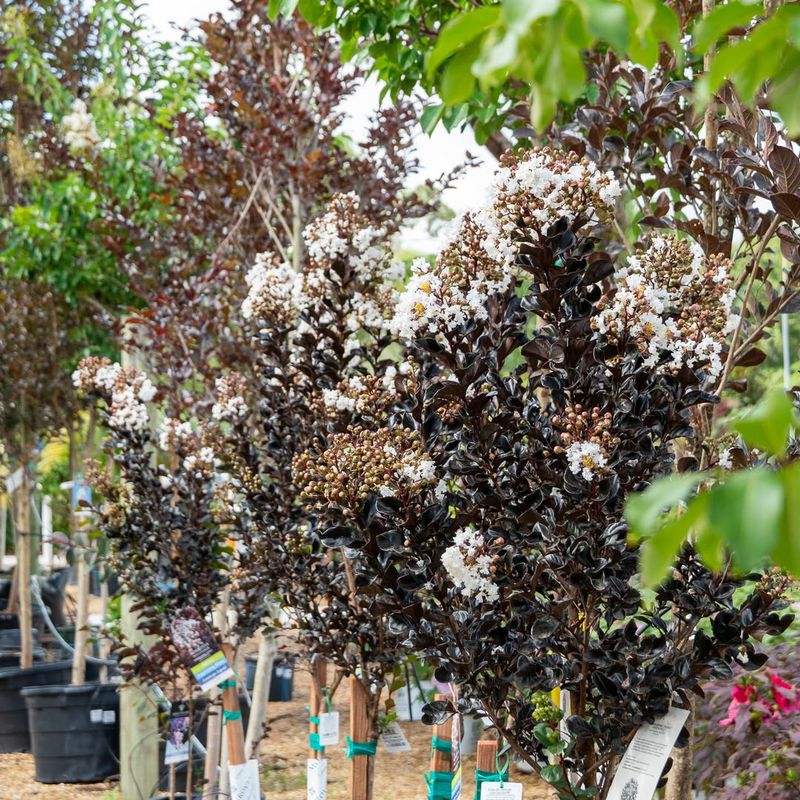
Those faded, brown flower clusters hanging on your crape myrtle might seem harmless, but leaving them in place can actually slow your tree down.
Spent blooms signal to the tree that its job is done for the season, which can reduce the energy it puts toward producing new flowers. Removing them gives your crape myrtle a clear message to keep going.
Grab a pair of clean, sharp pruners and get to work as soon as you notice the blooms turning brown. You do not need to be overly precise here.
Simply snip off the old flower heads and let the tree redirect its energy toward fresh bud development. It takes less time than you might expect, even on a larger tree.
North Carolina summers are long and warm, which works in your favor. Crape myrtles in this region have plenty of growing season left after June, so removing spent blooms early gives the tree maximum time to rebloom.
Many gardeners in the Piedmont and Coastal Plain regions report a noticeably fuller second flush when they stay on top of deadheading.
Make it a weekly habit throughout June and into July, and your tree will reward you with vibrant color well into August and beyond.
2. Removing Spent Blooms Can Encourage Additional Bloom Cycles
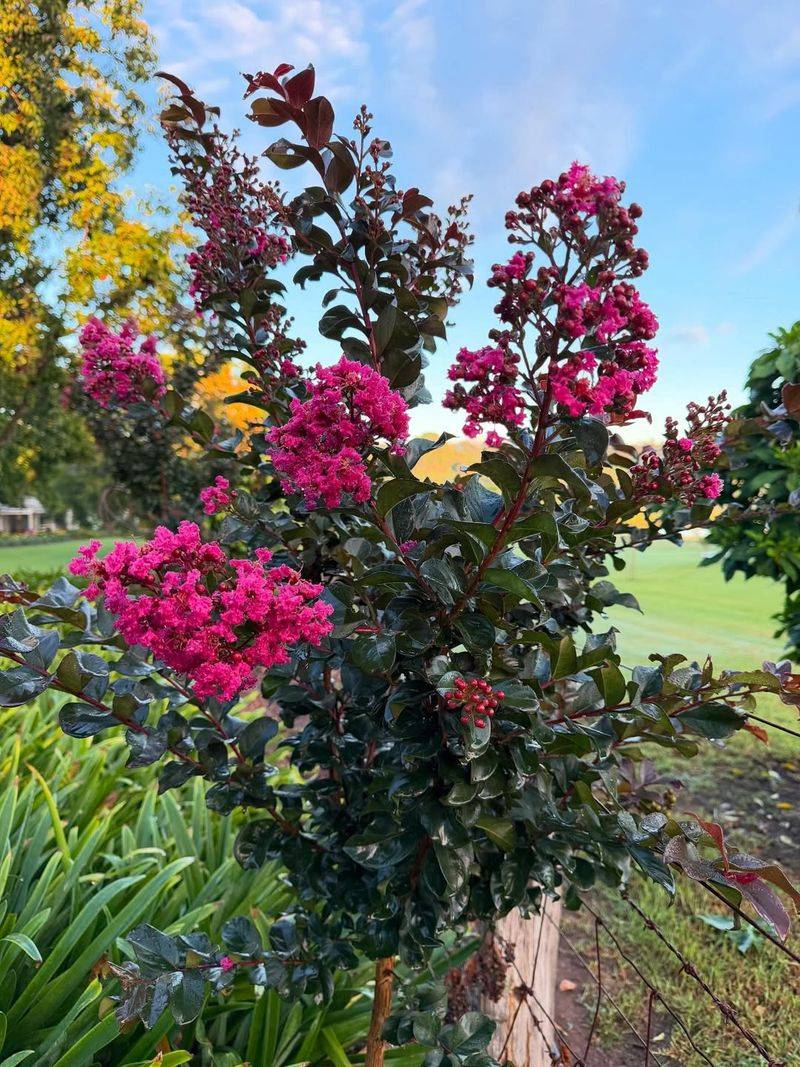
Here is something exciting that most people do not realize: crape myrtles are capable of blooming more than once in a single season. That first burst of color in early summer is just the beginning.
When you remove the old flower clusters promptly, the tree often responds by pushing out a second and sometimes even a third round of blooms before fall arrives.
The science behind it is straightforward. Crape myrtles produce flowers on new growth, so encouraging fresh growth after the first bloom is the key to unlocking more color.
Removing the spent clusters prevents the tree from putting energy into seed production and redirects it toward vegetative growth and new flower buds instead. It is one of the simplest and most rewarding things you can do in June.
Timing matters quite a bit here. The sooner you remove the old blooms after they fade, the more time the tree has to push out new growth before the season cools down.
Your North Carolina Garden Changes Every Week. Your Plan Should Too.
Gardening in North Carolina changes quickly throughout the season. Every Friday you’ll receive a simple weekly plan showing exactly what to plant, prune, fertilize, harvest, and protect so you never miss the right timing.
In North Carolina, where summers stretch deep into September, a crape myrtle that gets prompt deadheading in June can easily produce two or more additional bloom flushes.
Watching those fresh buds appear just a few weeks after you made your cuts is one of the most satisfying moments in summer gardening. Do not skip this step.
3. Make Cuts Below The Old Flower Cluster Above Healthy Leaves
Knowing where to make your cut is just as important as making it at all.
A lot of gardeners are not sure exactly where to snip when removing spent crape myrtle blooms, and that uncertainty sometimes leads to cuts that are too far back or too close to the branch tip.
The right spot is simpler than it sounds. Look for the point just below the base of the old flower cluster, right above a set of healthy, green leaves. That node, where the leaves attach to the stem, is where new growth will emerge after your cut.
Cutting there encourages the tree to branch out from that point and produce fresh stems that will eventually carry new flower buds. A clean cut with sharp pruners heals quickly and reduces the chance of any issues with the cut site.
Avoid cutting too far back into older, woodier growth just for the sake of removing more. That kind of unnecessary cutting can slow the tree down and delay reblooming.
The goal here is precision, not aggression. In North Carolina’s warm June climate, a correctly placed cut will typically produce noticeable new growth within a couple of weeks.
Once that new growth appears, you know the tree is on track for another round of blooms. Sharp, clean tools make this job faster and easier every time.
4. Avoid Topping Or Heavy Pruning
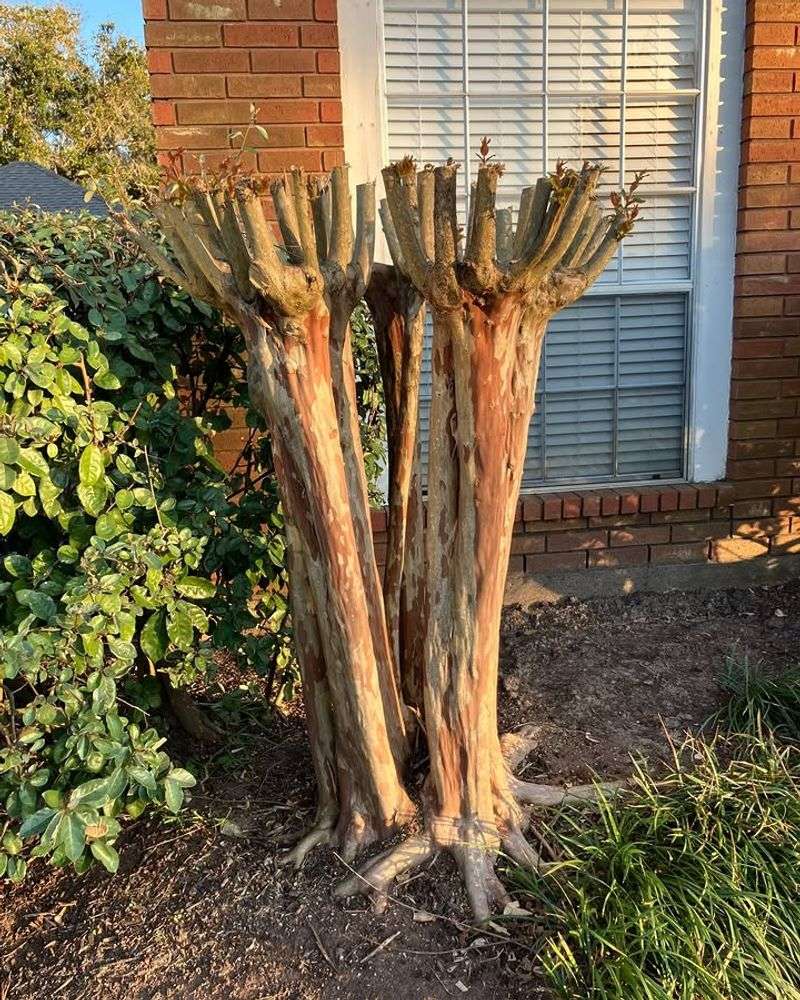
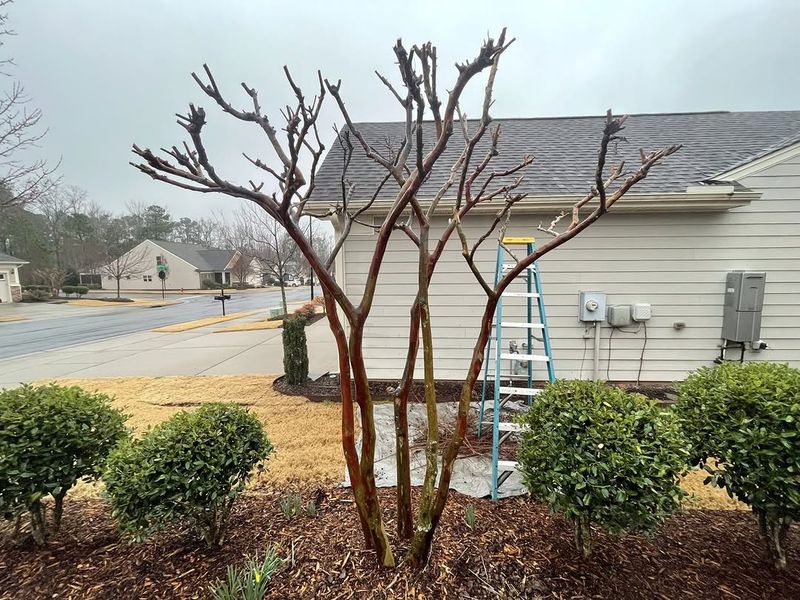
This refers to the practice of severely cutting back crape myrtles to thick stubs each year. It is unfortunately common in North Carolina neighborhoods, and June is sometimes the season when well-meaning gardeners reach for the saw after the first bloom fades.
Resist that urge entirely. Heavy topping does far more harm than good. It destroys the tree’s natural shape, weakens its branch structure over time, and forces it to produce a tangle of weak, fast-growing shoots from the cut ends.
Those shoots are more vulnerable to pests and less capable of supporting heavy flower clusters. The tree ends up looking worse and performing worse, even if it still blooms.
After the first flush of blooms in June, your crape myrtle does not need any heavy pruning at all. Light deadheading is all that is required to encourage reblooming.
If you feel the tree has grown too large for its space, the best time to address that through proper structural pruning is late winter before new growth begins, not in the middle of summer. Let the natural branching pattern do its job.
A crape myrtle allowed to grow with its full structure intact will develop into a stunning, multi-season specimen that adds real beauty and value to any North Carolina yard.
5. Water Deeply During Extended Dry Periods
North Carolina June weather can swing between soaking rain and stretches of dry heat that stress even established trees.
Crape myrtles are fairly tough once they settle in, but during an extended dry spell, deep watering makes a real difference in how well the tree rebounds after its first bloom cycle and how vigorously it pushes toward the next one.
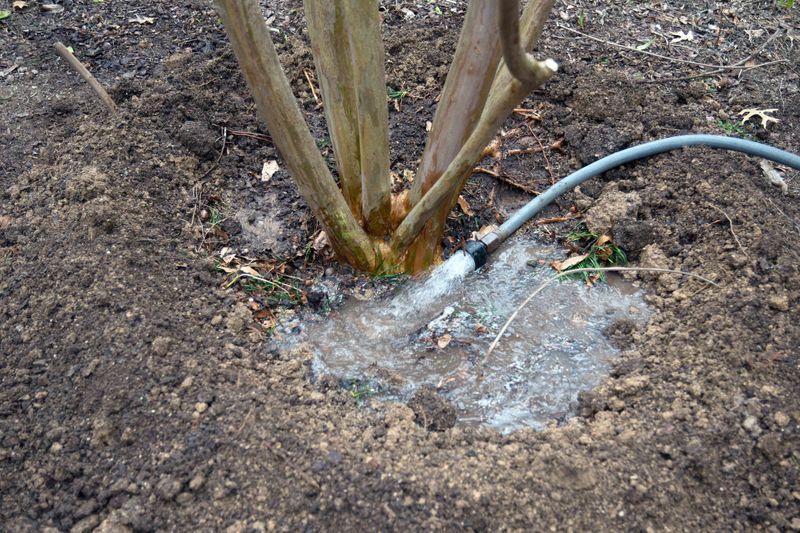
Shallow, frequent watering does not help much. What crape myrtles really need during dry periods is slow, deep watering that reaches down into the root zone, which can extend a foot or more below the soil surface.
A soaker hose or a slow trickle from a garden hose at the base of the tree for 30 to 45 minutes once or twice a week during dry stretches is far more effective than a quick spray from a sprinkler.
Watch the foliage for signs that the tree needs water. Slightly wilted or drooping leaves in the early morning, before the day heats up, are a reliable signal that the tree is running low on moisture.
Freshly bloomed trees that are pushing new growth after deadheading are especially responsive to consistent moisture. Giving the tree a good deep drink right after removing spent blooms can help fuel that next round of bud development.
Established crape myrtles in North Carolina rarely need daily watering, but they appreciate consistent attention during dry weeks.
6. Keep A Mulch Layer Around The Root Zone
Mulch might be the most underrated tool in the summer gardening toolkit.
A good layer of organic mulch around the base of your crape myrtle does several important jobs at once, and June is a great time to refresh or top off whatever you put down earlier in the spring.
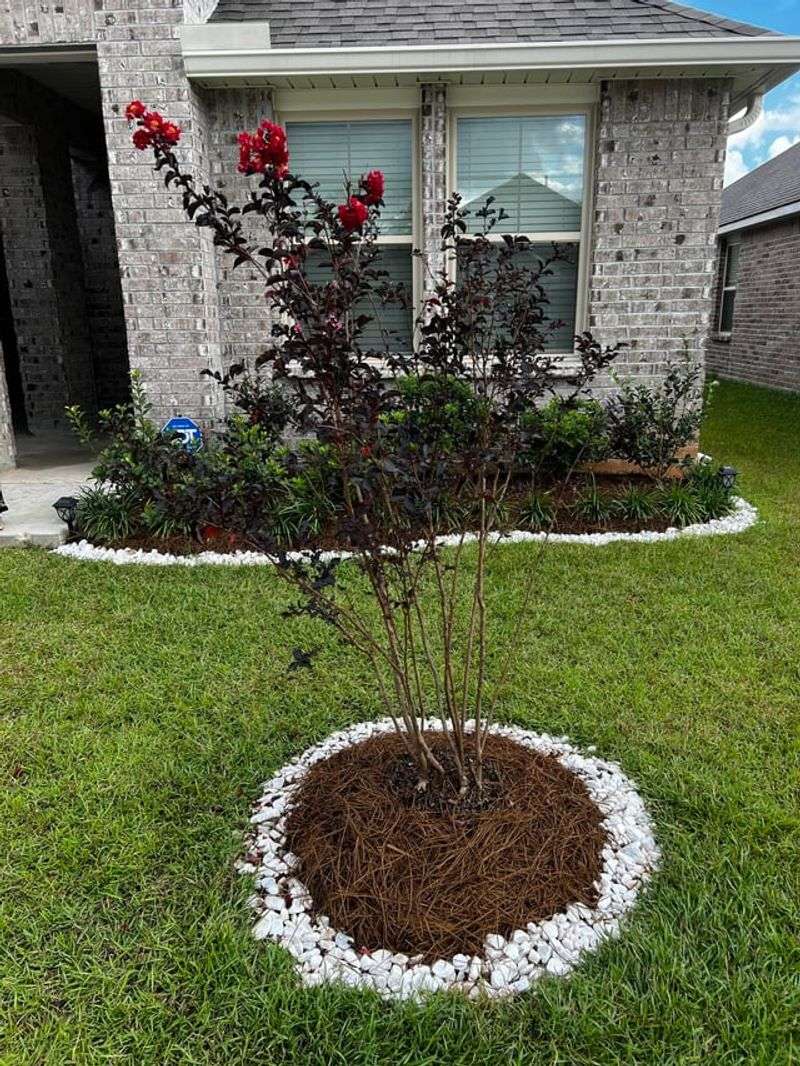
Pine bark, shredded hardwood, or pine straw all work well under crape myrtles in North Carolina. Spread a two to three inch layer starting a few inches away from the trunk and extending out to the drip line of the canopy if possible.
That mulch layer helps the soil hold onto moisture between rain events, keeps soil temperatures cooler during the hottest part of summer, and gradually breaks down to add organic matter to the soil over time.
One thing to avoid is piling mulch directly against the trunk of the tree, which is sometimes called volcano mulching. That practice traps moisture against the bark and can lead to long-term problems.
Keep the mulch pulled back a couple of inches from the base of the trunk so the bark can breathe. Beyond that, a well-mulched crape myrtle simply needs less attention overall.
It retains moisture more efficiently, stays cooler, and tends to push new growth more consistently after the first bloom. It is one of those small efforts that pays off in a big way throughout the summer season.
7. Watch For Aphids On New Growth
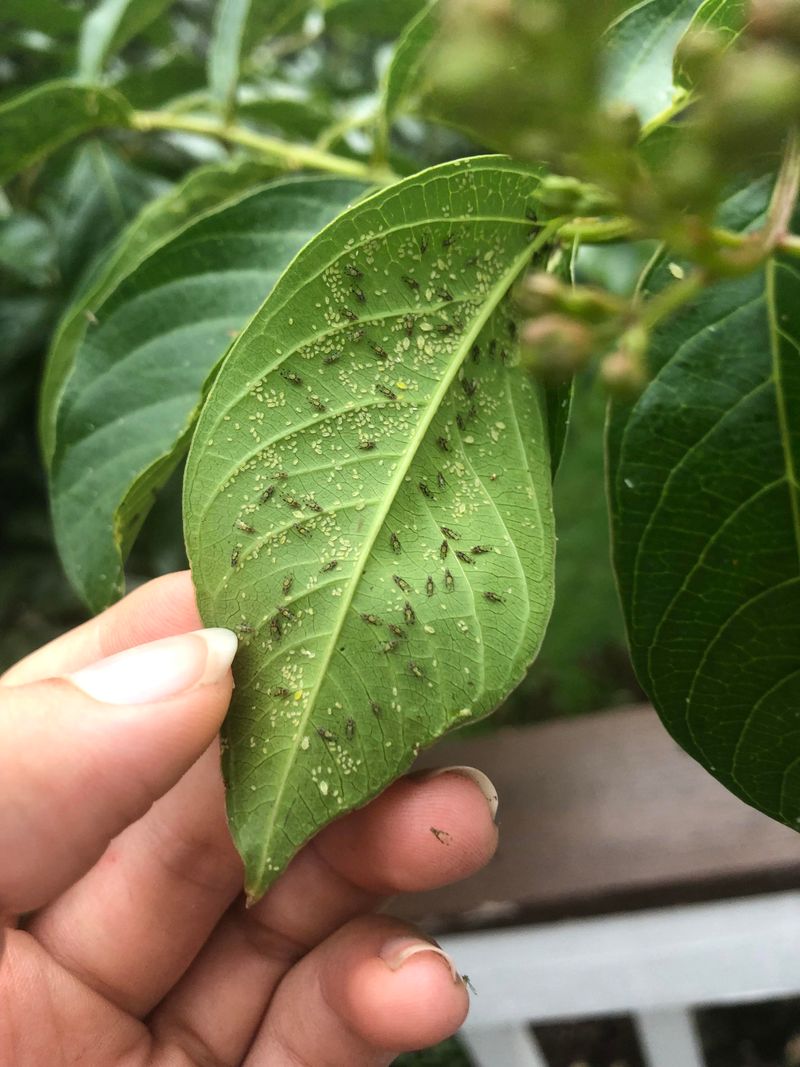
One of the most common issues crape myrtles face in June is a surge in aphid activity, especially on the tender new growth that emerges after the first bloom cycle.
Crape myrtle aphids are tiny, yellowish-green insects that cluster on the undersides of leaves and on soft new stems.
They are small enough to miss at a glance, which is why a close look at fresh growth is so important during this time of year.
Aphids feed by sucking sap from the plant, and a heavy infestation can slow down new growth and reduce the tree’s ability to produce a strong second flush of blooms. They also excrete a sticky substance called honeydew, which creates its own set of problems.
Checking new growth every few days during June gives you the chance to catch an infestation early, before it gets out of hand.
The good news is that crape myrtle aphids have natural enemies. Ladybugs, lacewings, and parasitic wasps all feed on aphids and can keep populations in check without any intervention from you.
If natural predators are not doing the job fast enough, a strong spray of water from a garden hose can knock aphids off the leaves effectively.
For more stubborn cases, insecticidal soap sprayed directly on the affected areas works well without harming beneficial insects in the surrounding garden. Early action always produces the best results.
8. Check Leaves For Sooty Mold
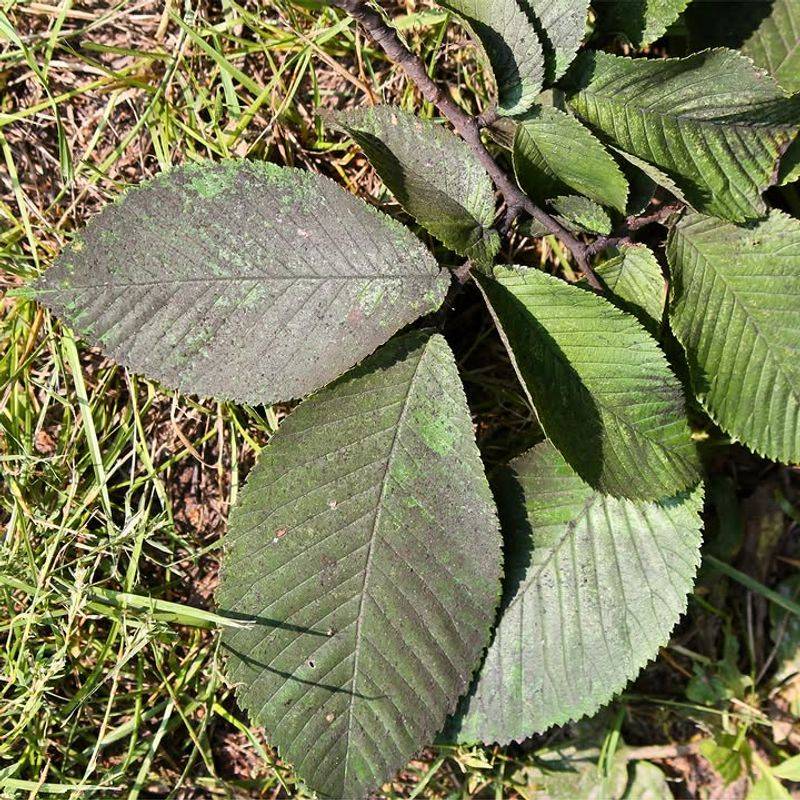
If you notice a dark, powdery coating on your crape myrtle leaves in June, you are most likely looking at sooty mold. It sounds alarming, but understanding what causes it makes the solution much clearer.
Sooty mold is a fungus that grows on the sticky honeydew residue left behind by aphids and other sap-feeding insects. The mold itself does not attack the tree directly, but it can interfere with the leaves’ ability to absorb sunlight effectively.
When sooty mold is present, it is almost always a sign that aphids or another pest have been active on the tree. Treating the underlying pest problem is the most important first step.
Once the aphids are gone and no new honeydew is being produced, the mold gradually fades on its own as rain and weathering clean the leaf surfaces. You can also rinse affected leaves with a gentle stream of water to speed up the process.
Heavily coated leaves may look alarming, but most established crape myrtles in North Carolina bounce back quickly once the pest source is addressed. Keep an eye on new growth after treatment to make sure the aphid population does not return.
Sooty mold is most commonly seen in shaded or crowded planting spots where air circulation is limited, so improving airflow around the tree through light thinning can help reduce future outbreaks.
Healthy, well-maintained trees tend to be far less attractive to the pests that start this whole chain of events.
9. Avoid High-Nitrogen Fertilizers
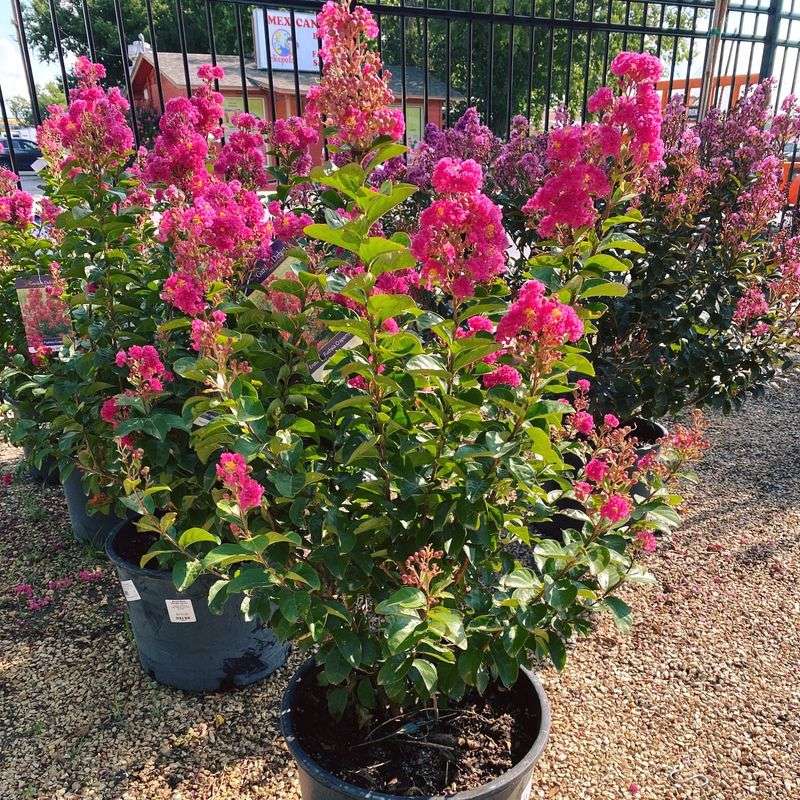
Fertilizing a crape myrtle right after its first bloom might seem like a helpful boost, but the type of fertilizer you choose matters enormously. High-nitrogen fertilizers push trees to produce lots of lush, dark green foliage, which sounds appealing.
The catch is that all that leafy growth often comes at the expense of flower production. A tree that is channeling most of its energy into leaves will put out fewer blooms, not more.
After the first flush of blooms in June, your crape myrtle does not need a heavy feeding at all. If you fertilized in early spring with a balanced, slow-release fertilizer, that application is likely still working through the soil and providing steady nutrition.
Adding more fertilizer on top of that, especially a high-nitrogen formula, can actually push the tree in the wrong direction at exactly the wrong time.
If you do feel the tree needs a boost, look for a fertilizer with a lower nitrogen number relative to the phosphorus and potassium numbers on the label.
Phosphorus supports flower development, while potassium strengthens the overall health and stress resistance of the tree.
Some gardeners in North Carolina skip the post-bloom fertilizer entirely and let the tree focus its existing resources on reblooming.
That approach often works just as well, especially for trees planted in reasonably fertile soil. Less really can be more when it comes to feeding crape myrtles mid-season.
10. Give Trees Full Sun For Best Reblooming
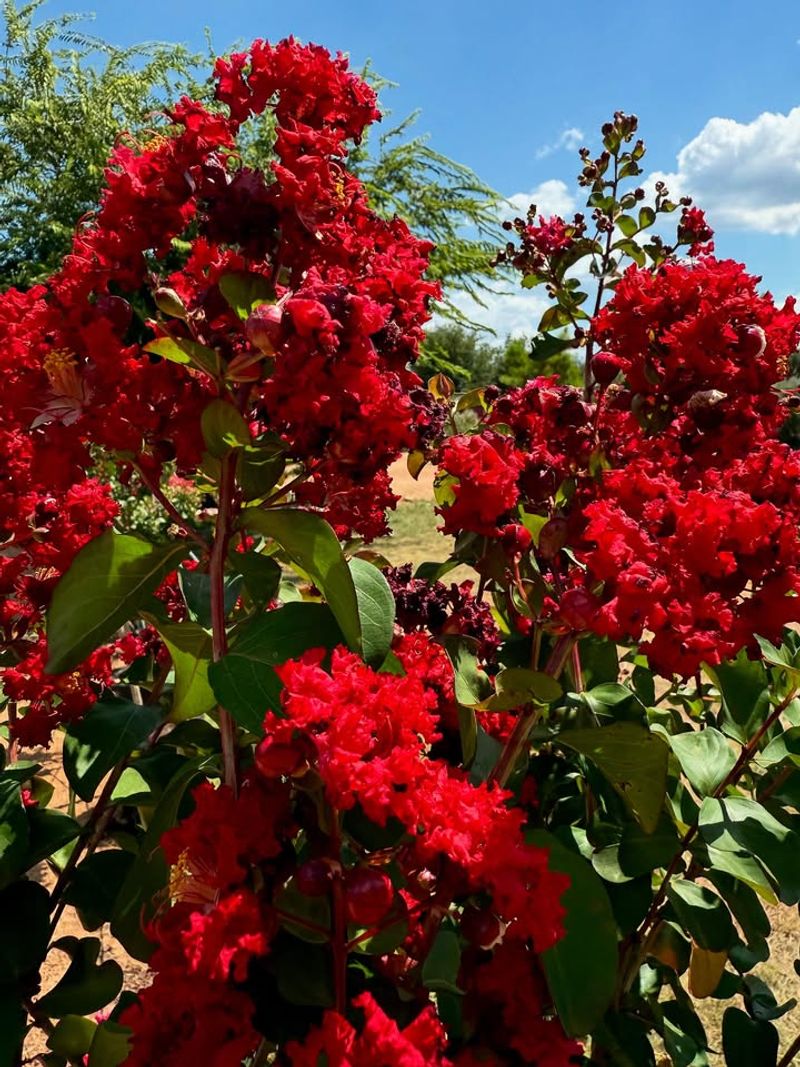
Crape myrtles are sun lovers through and through. They thrive with at least six hours of direct sunlight each day, and trees that receive eight or more hours consistently tend to produce the most impressive bloom displays.
If your crape myrtle sits in a spot that has become shadier over the years as surrounding trees have grown, that reduced light could be one of the main reasons the second flush of blooms is less impressive than you hoped.
June in North Carolina brings long, bright days that are ideal for crape myrtle reblooming, as long as the tree is positioned to take full advantage of that light. Shade from structures, fences, or nearby trees can significantly reduce flower production.
While you cannot always move an established tree, you can sometimes prune surrounding vegetation to open up more light to the canopy.
For gardeners planning new plantings, choosing an open, sunny location from the start sets the tree up for decades of spectacular performance.
Crape myrtles planted in full sun also tend to have better air circulation around their canopy, which reduces the likelihood of fungal issues during humid North Carolina summers.
The relationship between sunlight and bloom production in crape myrtles is one of the clearest in the gardening world. More sun almost always means more flowers, a fuller canopy, and a healthier, more vigorous tree from season to season.
11. Remove Root Suckers At Ground Level
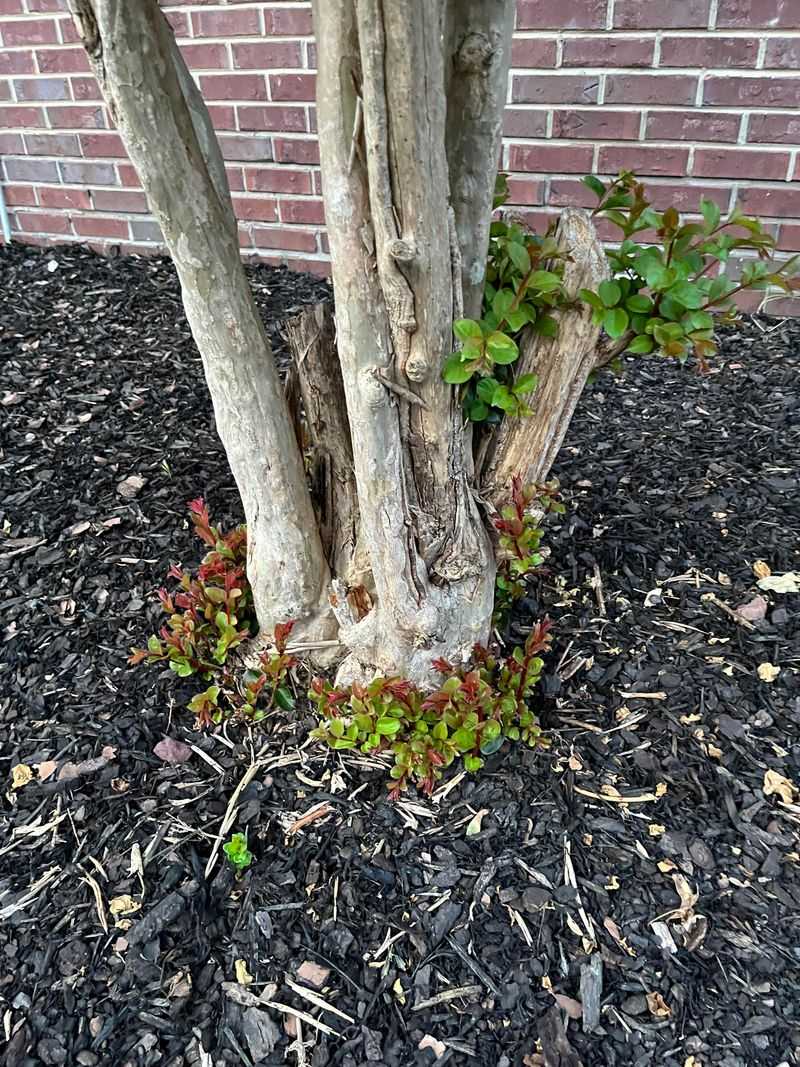
Crape myrtles have a habit of sending up fast-growing shoots from the base of the trunk and from the roots just below the soil surface. These shoots, called suckers, are the tree’s way of expanding its footprint, but they are not doing your landscape any favors.
Left unchecked, suckers can drain energy away from the main tree and create a cluttered, shrubby appearance that hides the beautiful trunk structure crape myrtles are known for.
June is a particularly active time for sucker growth, especially after a wet spring or following the energy surge that comes with the first bloom cycle. Getting out and removing them promptly is much easier than letting them grow thick and woody.
Grip each sucker as close to its base as possible and pull it firmly, or use a pair of pruners to cut it flush with the ground or the root it is emerging from.
Removing suckers regularly throughout the growing season keeps your crape myrtle looking clean, structured, and intentional in the landscape.
It also ensures the tree’s energy goes where you want it, up into the canopy and into producing new blooms rather than into unwanted ground-level growth.
Some gardeners check for suckers every two to three weeks during summer. Once you make it part of your routine, it only takes a few minutes per tree and the visual payoff is well worth the effort every single time.
12. Leave Healthy New Growth Intact
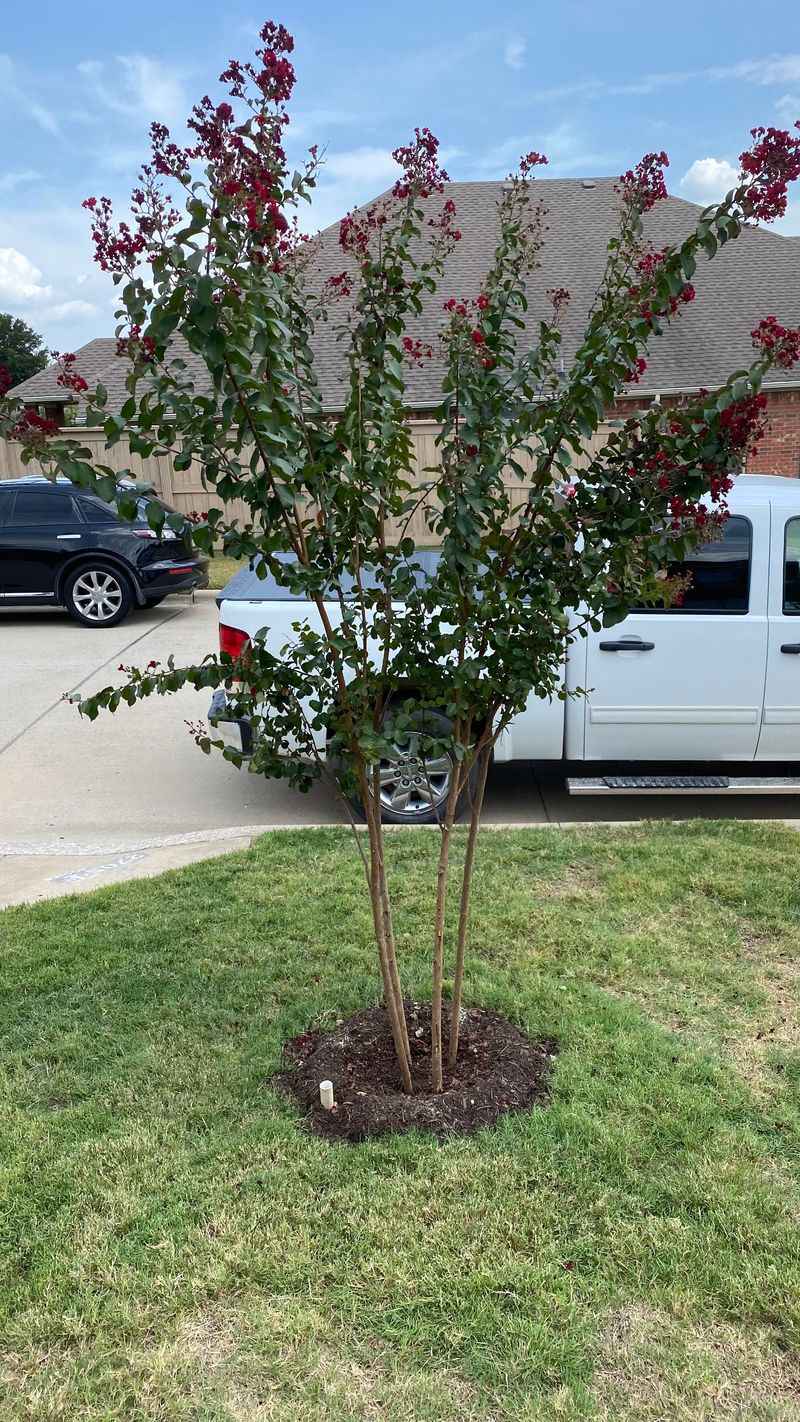
After you remove the spent blooms and tidy up the base of your crape myrtle, it can be tempting to keep trimming. The tree looks a little rough right after deadheading, and some gardeners want to clean it up further.
But the new growth emerging from those freshly cut stem tips is exactly what you want to protect, not remove.
Those small, soft shoots appearing just below your cuts are the future flower clusters. Each one has the potential to develop into a new bloom spike over the coming weeks.
Cutting them back or disturbing them in any way resets the clock and costs you precious bloom time during North Carolina’s already busy summer growing season. The best approach is to step back and let the tree do its thing.
Healthy new growth on a crape myrtle in June is a genuinely exciting sign. It means the tree responded well to deadheading and is actively working toward its next bloom cycle.
Resist the urge to over-manage. Trust the process and give the tree room to develop naturally.
Within three to five weeks after your initial deadheading, those small shoots will have grown into substantial stems carrying fresh flower buds.
By late July or early August, your crape myrtle can be in full bloom again, looking even better than it did during that first spectacular flush of the season.