Why California Citrus Trees Look Healthy But Barely Fruit
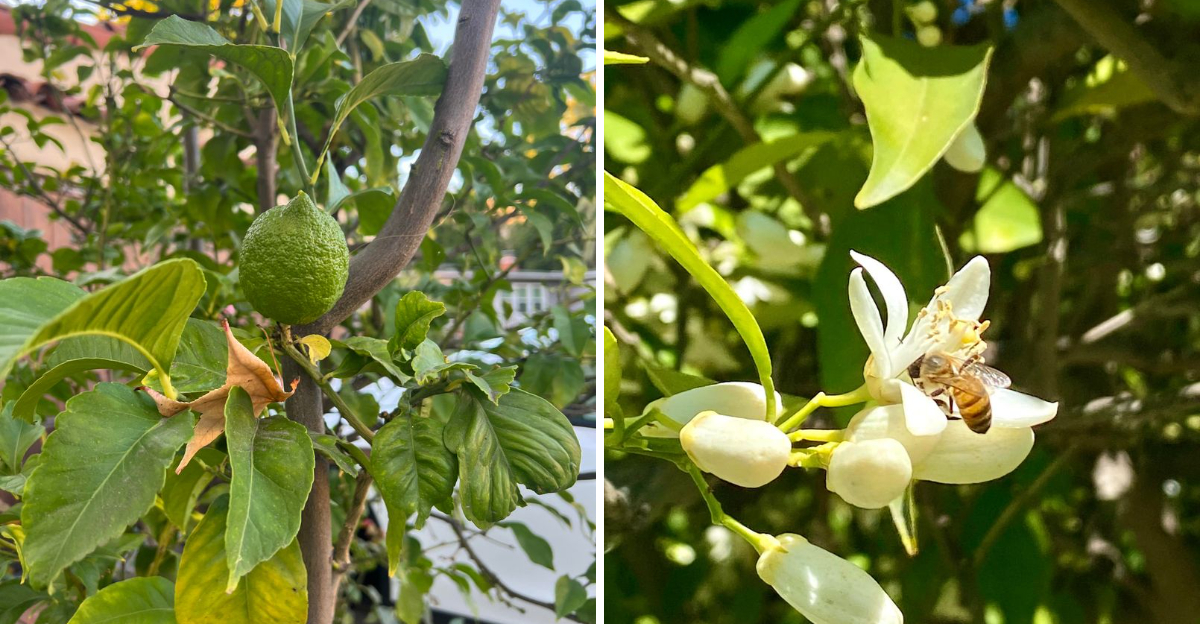
California citrus can look successful while refusing to cooperate. The leaves shine. The canopy fills out. The tree looks so healthy that bragging feels reasonable.
Then harvest season arrives with three lemons, one suspicious orange, and a lot of personal betrayal.
A leafy citrus tree is not always a fruitful citrus tree. Sometimes all that energy is racing into new growth instead of blooms, fruit set, or ripening.
Too much nitrogen, poor pruning timing, weak sunlight, irregular watering, cold snaps, young age, or container stress can all leave a tree looking gorgeous and producing almost nothing.
That is the maddening part. The tree is not failing. It is prioritizing the wrong thing.
So why does your California citrus look lush but barely fruit?
Start by following the energy. Once you understand where the tree is spending it, the fix becomes much clearer, and next season’s harvest has a much better chance of looking like something worth bragging about.
1. The Tree Is Still Too Young
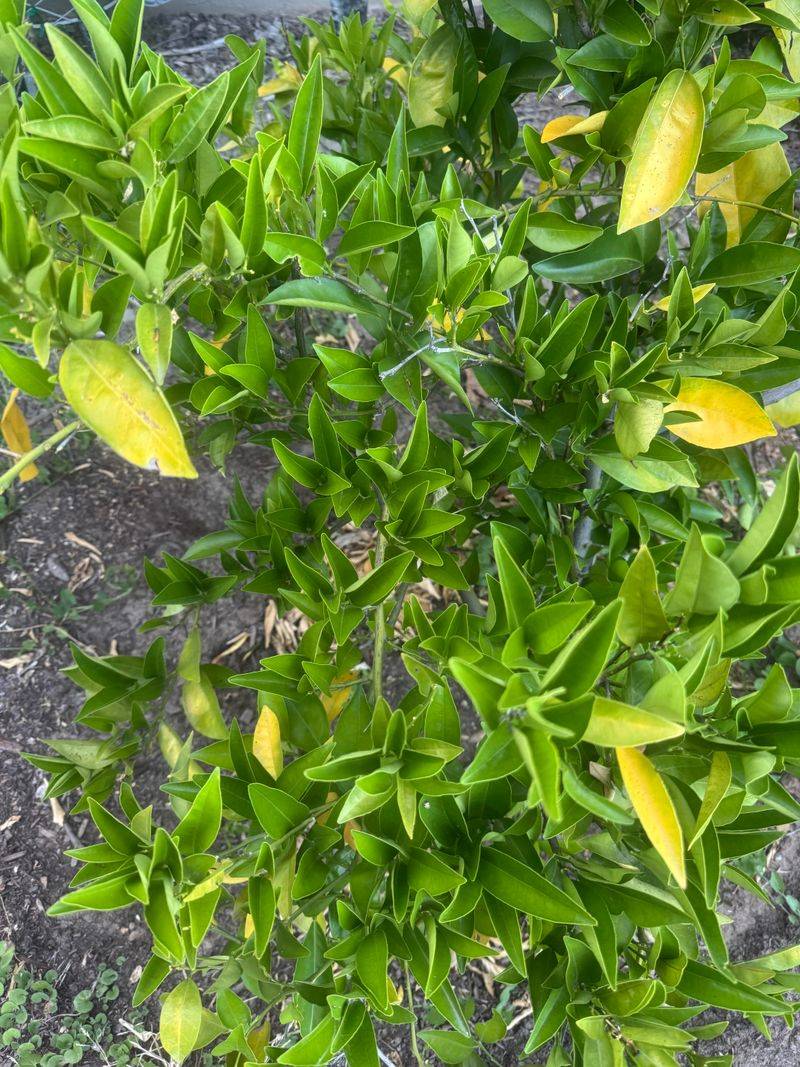
A brand-new citrus tree in the ground is a little like a teenager with big dreams.
It looks full of life, grows fast, and keeps you hopeful, but it is not quite ready to deliver the goods yet.
UC Cooperative Extension notes that most citrus trees need at least two to five years after planting before they produce fruit reliably.
Grafted trees tend to fruit sooner than seedlings, but even they need time to establish roots, build trunk strength, and develop enough energy reserves to support a full crop.
During those early years, the tree is not being lazy. It is quietly building the infrastructure it needs to fruit for decades.
The root system has to spread wide and deep. The canopy has to reach a size that can collect enough sunlight to power both growth and fruit production at the same time.
Pushing a young tree too hard with heavy fertilizing can make it grow faster in height and leaf count, but it often delays fruiting even more.
If your tree is under three years old and blooming poorly or not at all, patience is genuinely the best tool in your shed.
Give it proper water, light, and a balanced fertilizer with moderate nitrogen. Avoid stressing it with heavy pruning.
Many California gardeners are surprised to discover that a tree they nearly gave up on in year three becomes a prolific producer by year five.
2. Too Much Nitrogen Builds Leaves
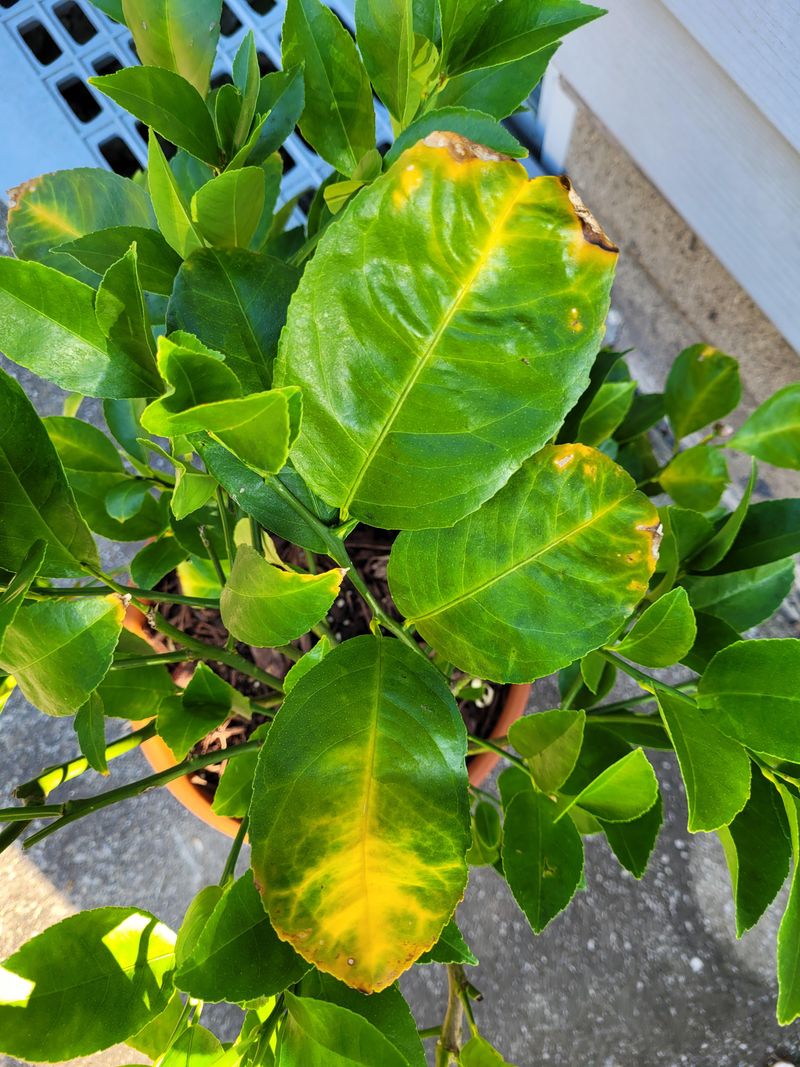
Grab a bag of fertilizer from the garage and check the first number on the label.
That number represents nitrogen, the nutrient most responsible for leafy, lush green growth.
Nitrogen is essential for citrus health, but too much of it sends a very clear signal to the tree: keep growing leaves, skip the fruit.
This is one of the most common reasons California citrus trees look spectacular and fruit terribly.
UC IPM guidelines recommend using a citrus-specific fertilizer and following the label rate carefully.
Applying high-nitrogen lawn fertilizer to a citrus tree is a recipe for a gorgeous green canopy with almost no blossoms. The tree puts all its energy into producing new shoots and leaves because nitrogen tells it that vegetative growth is the priority.
Your California Garden Changes Every Week. Your Plan Should Too.
Gardening in California changes quickly throughout the season. Every Friday you’ll receive a simple weekly plan showing exactly what to plant, prune, fertilize, harvest, and protect so you never miss the right timing.
Blossoms and fruit require a shift in energy that heavy nitrogen feeding actively discourages.
The timing of fertilizer applications matters just as much as the amount.
In California, most citrus should be fertilized in late winter or early spring before bloom, then again in late spring and midsummer if needed.
Feeding heavily in fall or winter can push new tender growth right before cold weather, which creates a separate set of problems.
If your tree looks like a glossy-leafed showstopper but hands you almost no fruit, put down the nitrogen-heavy fertilizer and switch to a balanced citrus blend.
Your tree will redirect its energy where you actually want it: toward blossoms and fruit that make the whole effort worthwhile.
3. Shade Cuts Fruit Energy
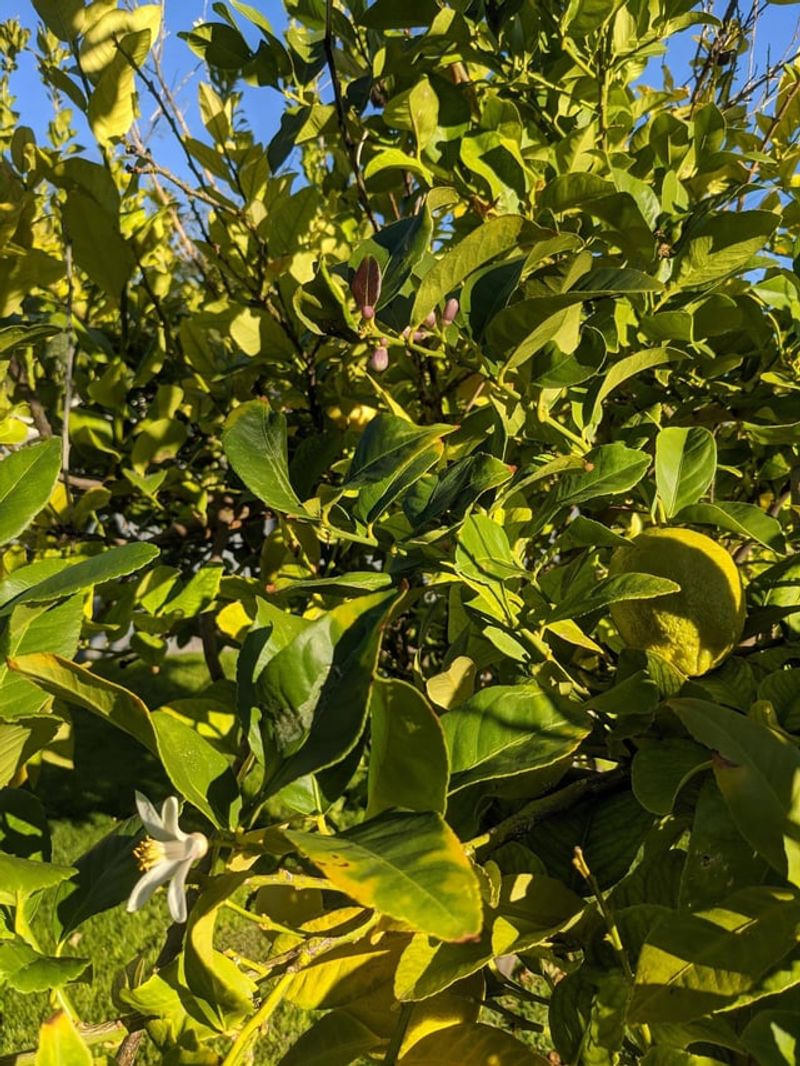
A shaded patio tree might look perfectly content, sitting there under the eaves or tucked beside a tall fence.
But citrus is a sun-hungry plant, and without enough direct light, it simply cannot produce the energy needed to push blossoms and fill out fruit.
UC Master Gardener resources consistently list insufficient sunlight as one of the top reasons citrus trees fail to produce in California home gardens.
Citrus trees need a minimum of six to eight hours of direct sunlight every day to fruit well.
Less than that and the tree will survive, grow leaves, and look reasonably healthy, but it will put nearly all of its limited energy into basic maintenance rather than reproduction.
Blossoms become sparse. Fruit that does set often drops early because the tree cannot sustain it.
The glossy leaves can actually fool you into thinking everything is fine when the tree is quietly struggling to collect enough light to do its job.
Walk around your yard on a sunny afternoon and watch where the shadows fall.
A tree that was planted in full sun five years ago may now be shaded by a neighbor’s mature tree, a new fence, or your own growing garden.
Pruning nearby plants to open up light is often the fastest fix. If the tree is in a container, moving it to a sunnier spot can make a noticeable difference within a single season.
4. Heavy Pruning Delays Production
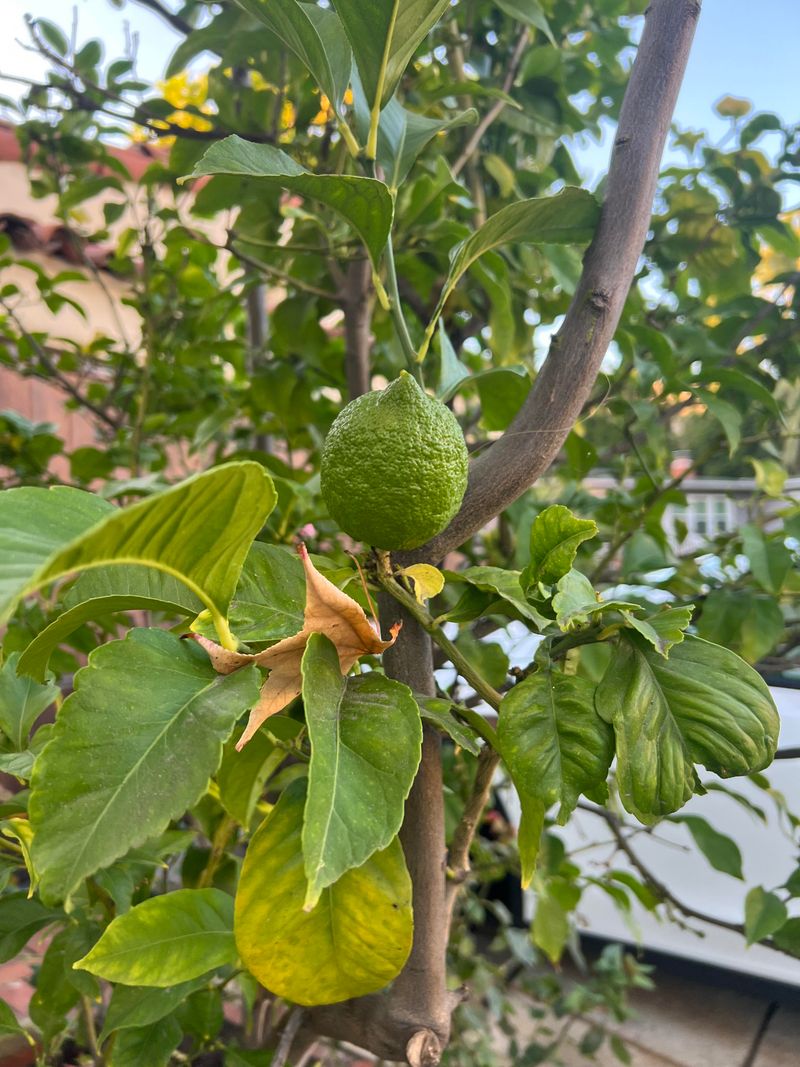
Pruning feels productive.
You step back, look at that freshly shaped tree, and feel like you have done something good for it.
But citrus trees are not like roses or fruit trees that reward aggressive cutting with better yields.
Heavy pruning at the wrong time, or in the wrong places, can set your fruit production back by an entire season or more.
Citrus blooms on mature wood, meaning the branches that grew in previous seasons are the ones that carry flowers.
When you cut those branches off, you are removing the wood the tree planned to bloom on.
UC Cooperative Extension advises that citrus generally needs very little pruning compared to other fruit trees.
Light shaping to remove crossing branches, dead wood, or shoots growing straight down is usually all that is needed.
Cutting back large healthy limbs to make the tree shorter or rounder often sacrifices the very wood that would have flowered.
Timing matters a great deal here. Pruning in late winter or early spring, right before bloom, removes flower buds before you even realize they were there.
If you want to prune, do it right after harvest when the tree has finished its fruiting cycle. Keep cuts minimal and focused.
A citrus tree with a little natural messiness is often a much more productive one.
5. Water Stress Drops Blossoms Early
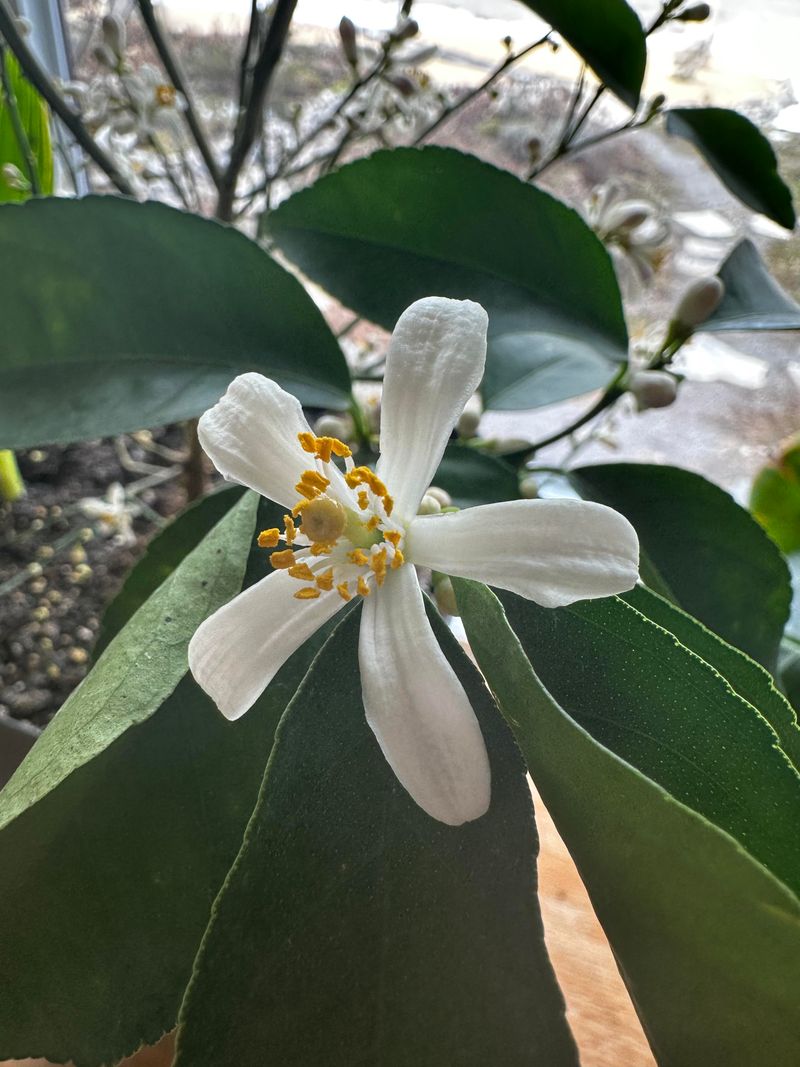
Blossom drop is one of the most disheartening things a citrus grower can watch.
The tree blooms beautifully, the air smells incredible, and then the flowers fall off before a single fruit sets.
Inconsistent watering during bloom and early fruit set is one of the leading causes of this problem, and it catches a lot of California gardeners off guard every spring.
Citrus trees need steady, even soil moisture during the bloom period and through the weeks right after petals fall.
If the soil dries out too much during this critical window, the tree drops its flowers and young fruit as a survival response.
It is essentially choosing to conserve resources rather than support developing fruit it may not be able to sustain.
Overwatering can cause similar problems by suffocating roots and reducing the tree’s ability to take up nutrients needed for fruit development.
In California’s dry climate, irrigation scheduling is everything.
Drip irrigation set on a consistent timer works far better than occasional deep soaks with long dry gaps in between.
Check soil moisture a few inches below the surface before watering. The goal is to keep the root zone consistently moist but never waterlogged.
Mulching around the base of the tree helps retain moisture between watering sessions and keeps soil temperature stable.
A tree that gets reliable water from first bloom through early summer is far more likely to hold onto its fruit and reward you with a satisfying harvest come fall or winter.
6. Cold Snaps Interrupt Bloom
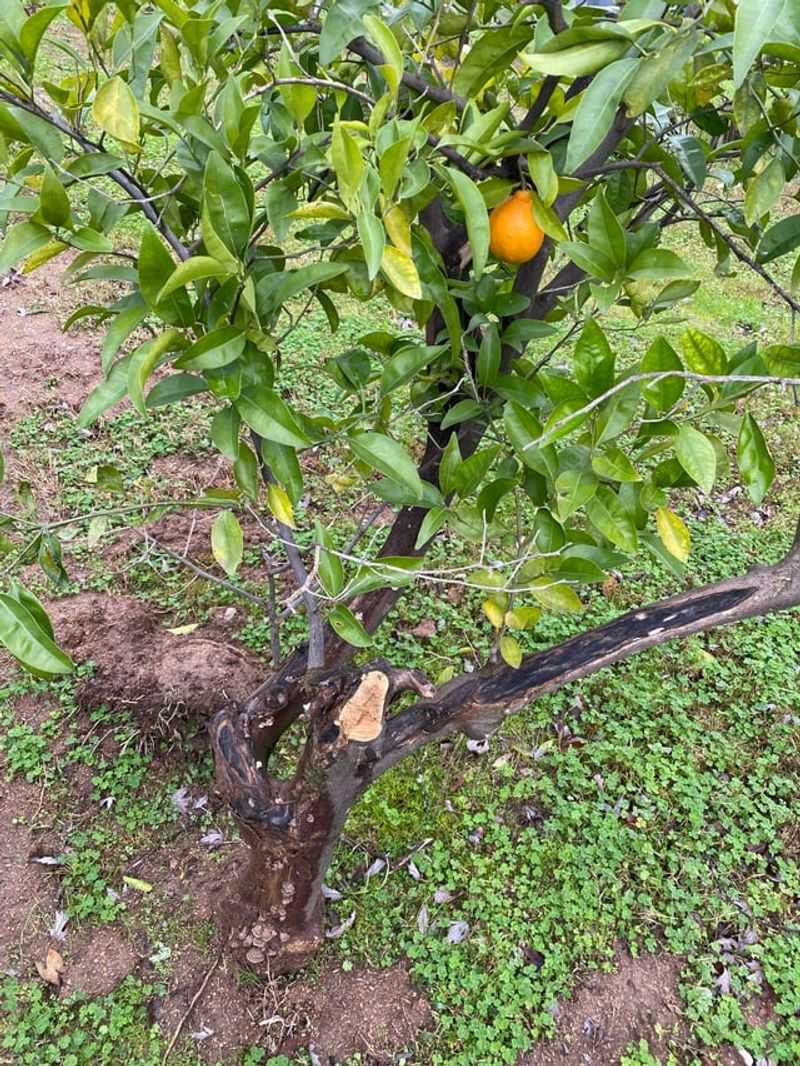
California winters can be sneaky.
One week feels like early spring, and the next brings a surprise cold snap that catches your citrus tree mid-bloom.
When temperatures dip below about 29 degrees Fahrenheit, citrus flowers suffer damage that prevents them from developing into fruit.
Even temperatures in the low 30s during bloom can reduce fruit set significantly, and most gardeners never connect the cold event to the empty tree they see months later.
Citrus trees in California’s inland valleys and higher elevations are especially vulnerable because those areas experience wider temperature swings than coastal zones.
A tree in Fresno or Riverside may bloom earlier in response to warm late-winter days, only to have those blossoms damaged by a late frost.
The tree often pushes a second, smaller flush of flowers afterward, but the crop potential for that year is already reduced.
The leaves survive just fine and the tree keeps looking healthy, which is why the connection to frost damage is easy to miss.
Covering your tree with frost cloth on nights when temperatures are expected to drop below 32 degrees can save a season’s worth of blossoms.
Planting citrus in a south-facing location near a wall or fence that holds daytime warmth also helps buffer against cold.
A little preparation before a cold snap pays off in a much fuller fruit set when spring finally settles in for good.
7. Rootstock Suckers Steal Strength
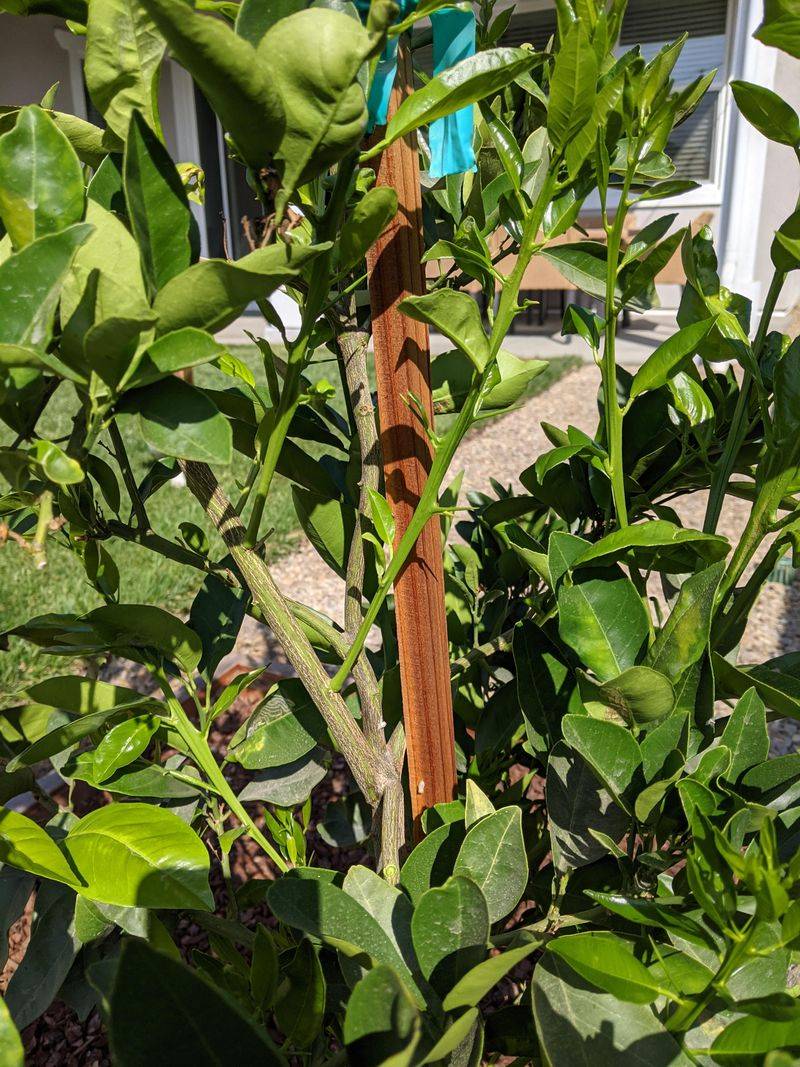
Below the graft line on nearly every citrus tree you buy from a nursery, there is a rootstock variety chosen for its vigor and disease resistance rather than its fruit quality.
That rootstock is alive and ambitious, and if it sends up shoots below the graft union, those shoots will compete directly with your fruiting tree for water, nutrients, and energy.
Rootstock suckers are easy to overlook because they often look like healthy new growth, and many gardeners encourage them by mistake.
Suckers from rootstock grow fast and strong because they are often more vigorous than the grafted variety above.
Left unchecked, they can gradually take over the tree, pushing the desirable fruiting portion into a weakened state.
You may notice the tree producing fewer blossoms and less fruit each year without understanding why.
Check the base of your tree regularly, especially after a wet winter or a heavy feeding, when suckers tend to appear most aggressively.
Removing suckers is straightforward but needs to be done correctly.
Pull them off by hand or cut them as close to the trunk or root as possible. Cutting them above the soil line and leaving a stub just encourages more regrowth.
UC Master Gardener guides recommend removing suckers as soon as they appear, before they have a chance to develop woody stems that are harder to remove cleanly.
A few minutes of sucker patrol every month or two during the growing season keeps your tree’s energy focused exactly where you want it: in the grafted fruiting canopy above.
8. Pollination Still Needs Attention
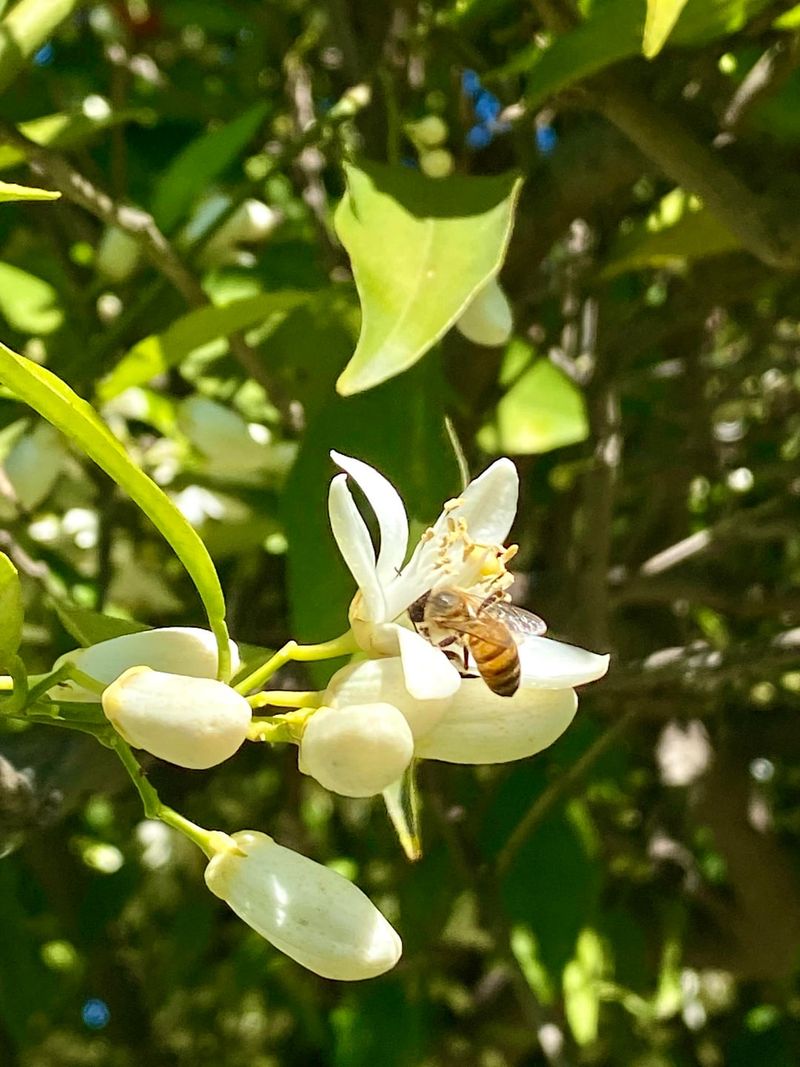
Most California home citrus varieties are self-fertile, meaning a single tree can pollinate its own flowers without needing a second tree nearby.
But self-fertile does not mean pollination is guaranteed.
Flowers still need bees and other pollinators to move pollen from the stamens to the pistil, and if bee activity is low during your tree’s bloom window, fruit set can be surprisingly poor even on a healthy, well-fed tree.
Bloom timing plays a big role here.
Citrus typically blooms in late winter through early spring in California, when cool temperatures and rain can keep bees less active than usual.
A rainy or cold bloom period means fewer pollinators visiting flowers, and fewer pollinated flowers means fewer fruit.
Attracting more pollinators to your yard makes a real difference.
Planting bee-friendly flowers like lavender, phacelia, and borage near your citrus tree gives local bees a reason to spend time in that part of the garden.
Avoiding pesticide applications during bloom protects the pollinators you are trying to attract.
If you want to give your tree a little extra help during a slow pollination year, you can transfer pollen between flowers using a small soft paintbrush.
It sounds fussy, but even a modest boost in pollination can translate into noticeably more fruit by the end of the season, which makes the effort absolutely worth it.