Why Florida Lawns That Looked Fine In June Go Patchy In July
Florida lawns have a talent for looking completely fine one month and genuinely concerning the next, and the June to July shift is one of the most dramatic examples of that.
The grass was green, the yard looked even and healthy, and then July arrived with heavier storms, hotter afternoons, and humidity that never really lets up, and suddenly something is clearly off.
Patches, thinning, yellowing, that general look of a lawn that has quietly hit a wall.
The tricky part is that several different problems can show up at the same time in July. Chinch bugs, fungal disease, soggy roots, hungry caterpillars, and over-watered soil all have a habit of arriving together like they planned it.
Figuring out what is actually going on before reaching for fertilizer or fungicide is really the most useful place to start.
1. Rainy Season Fungal Disease Starts Showing
Humid mornings in July create conditions that many lawn diseases genuinely thrive in, and Florida’s rainy season delivers exactly that combination of warmth, wetness, and overnight moisture that turf pathogens need to spread.
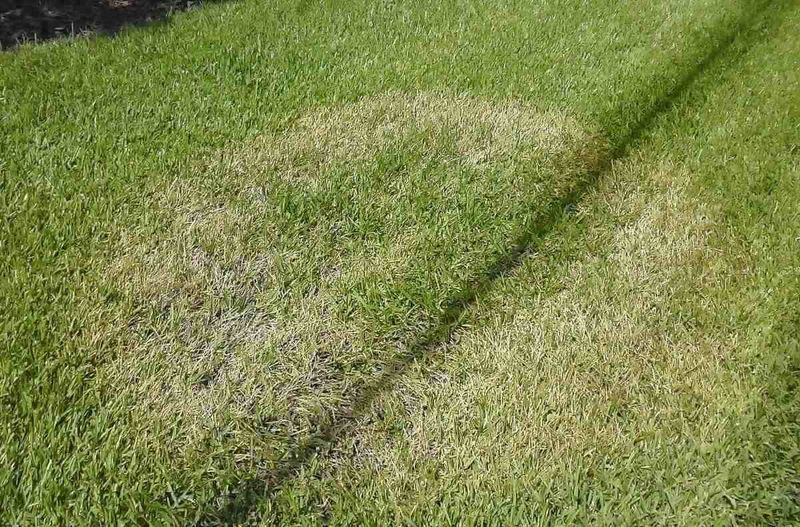
By the time brown or tan patches appear on a Florida lawn, the fungal activity causing them may have been quietly building for days.
Homeowners often assume the problem started when they first noticed it, but the visible symptoms usually lag behind the actual infection.
What makes summer fungal disease tricky in Florida is that the symptoms can look a lot like other problems.
A patch of thinning, discolored turf might be caused by disease, but it could just as easily point to insect feeding, drought stress, compacted soil, or even a short mowing event.
Jumping straight to a fungicide without confirming the cause can waste money and delay real recovery.
St. Augustinegrass lawns across Florida tend to be more vulnerable when they are already dealing with other stressors, such as excess moisture, low mowing, or recent heavy fertilization.
Bahiagrass and zoysiagrass can also develop disease pressure during wet summers, though symptoms and severity may differ.
Walking the lawn during dry morning hours, checking the edges of affected spots, and noting the pattern of damage can all help narrow down whether fungal disease is actually involved before any treatment is applied.
2. Gray Leaf Spot Thins St. Augustinegrass
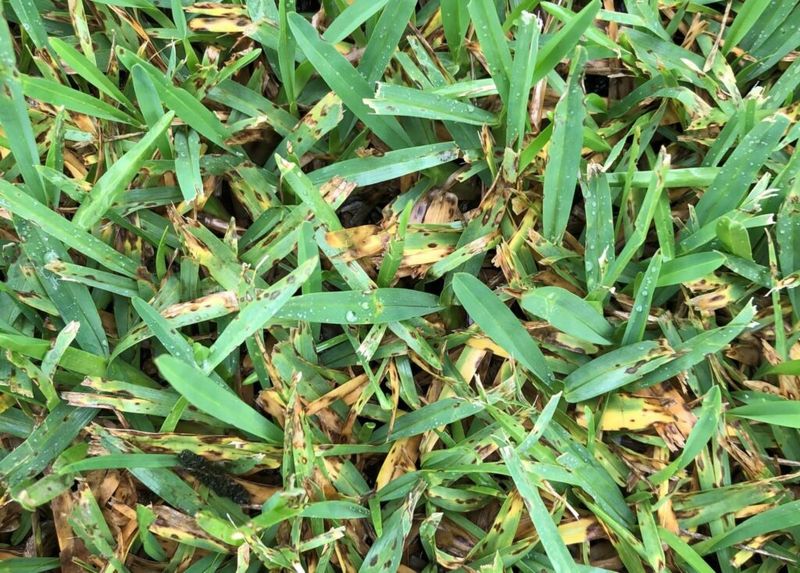
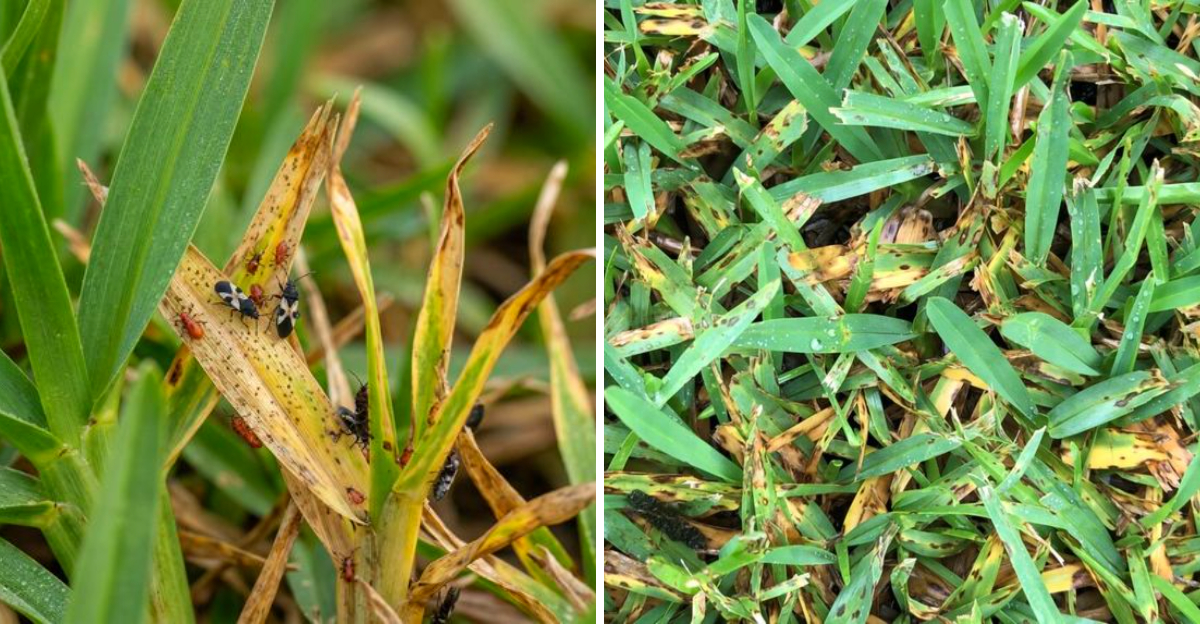
Small tan or brown spots edged with a darker border showing up on individual grass blades are one of the more telling signs that gray leaf spot may be at work in a Florida lawn.
This disease tends to appear during hot, humid, rainy stretches of summer, which describes most of July across Florida fairly well.
Affected turf can start looking thin, dull, or weak even when irrigation and rainfall have been regular.
Gray leaf spot primarily targets St. Augustinegrass, which is the most widely planted turf type across Florida home landscapes.
When conditions favor the disease, new growth is often hit hardest, meaning recently fertilized or fast-growing turf can show symptoms quickly.
Over-fertilizing with nitrogen during the rainy season is one of the more common mistakes that can make a gray leaf spot outbreak worse rather than better.
Your Florida Garden Changes Every Week. Your Plan Should Too.
Gardening in Florida changes quickly throughout the season. Every Friday you’ll receive a simple weekly plan showing exactly what to plant, prune, fertilize, harvest, and protect so you never miss the right timing.
Homeowners dealing with a suspected gray leaf spot issue should take a close look at individual blades rather than just the overall patch shape. The lesion pattern on the leaf itself is often more telling than the size or color of the affected area from a distance.
Avoiding excess nitrogen fertilizer during wet summer months, mowing at the right height for St. Augustinegrass, and not watering in the evening can all reduce the conditions that allow gray leaf spot to spread through a Florida lawn during July.
3. Wet Soil Triggers Root Problems
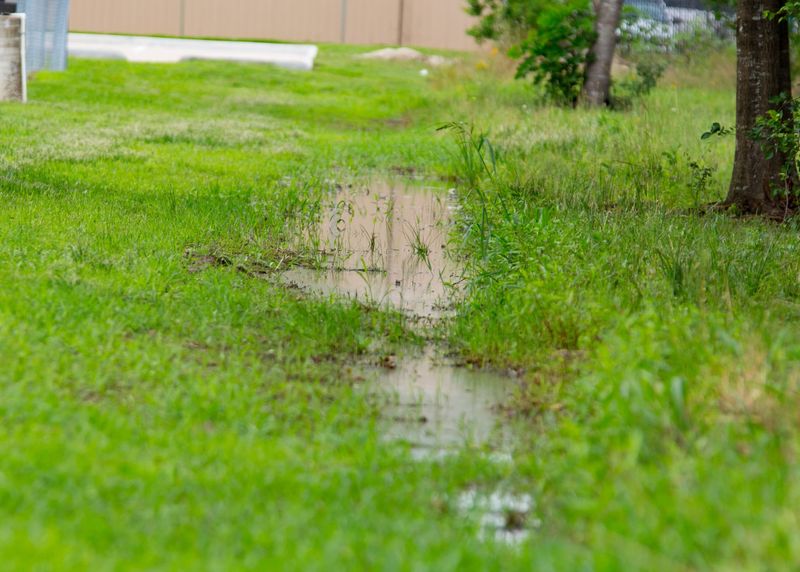
Soggy ground after back-to-back summer storms can do more damage to a Florida lawn than most homeowners expect.
When the root zone stays saturated for extended periods, turf roots are deprived of the oxygen they need to function, and the grass above ground starts to show signs of stress that can look surprisingly similar to drought.
Yellowing, thinning, or patchy areas in low spots or near downspout runoff zones are worth checking after heavy rain events.
Florida’s sandy soils drain relatively quickly in many yards, but areas with compacted soil, clay layers, or poor grading can hold water much longer.
Roots in those wet zones may become shallow, weak, or damaged without any obvious surface clue until July heat turns up the pressure.
A lawn that handled June rains just fine can start showing root stress once July brings multiple storms in a short window.
Before assuming a patchy wet-area lawn needs fertilizer or fungicide, checking the soil moisture level is a useful first step. Pushing a screwdriver or a thin probe into the soil can reveal whether the ground is still saturated several inches down.
Correcting drainage, adjusting irrigation run times, and avoiding heavy foot traffic on wet turf can all help the root zone recover.
Letting the soil partially dry between watering events gives Florida turf roots a better chance to stay healthy through the rest of the rainy season.
4. Chinch Bugs Spread In Hot Sunny Spots
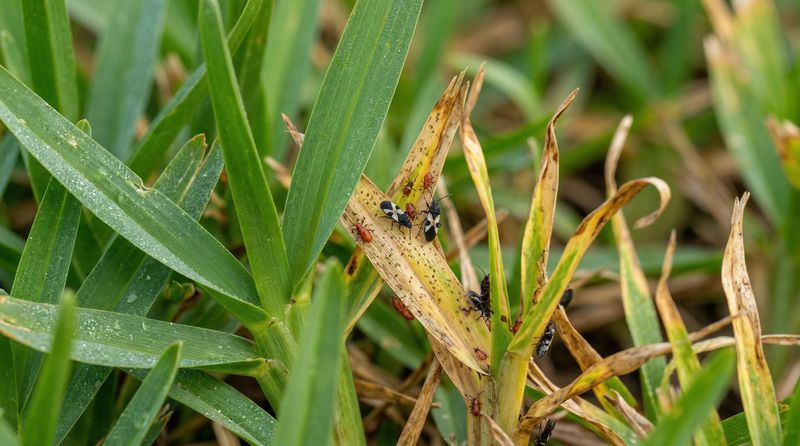
Along the sunny edges of a Florida lawn, near sidewalks, driveways, and open areas that bake in the afternoon heat, chinch bug damage often starts quietly and then spreads outward in an irregular pattern that can catch homeowners off guard.
These small insects feed on St. Augustinegrass by extracting plant fluids and introducing a substance that disrupts the grass’s ability to move water through its tissue.
The result looks a lot like the turf simply dried out.
Chinch bugs tend to be most active during hot, dry stretches, but they can remain a problem even during Florida’s rainy season when sunny, well-drained areas of the lawn dry out between storms.
One of the most common mistakes homeowners make is increasing irrigation in response to what looks like drought stress, without checking first whether chinch bugs are actually present.
Watering more when chinch bugs are the real cause does not help and may contribute to other problems.
A simple check involves parting the grass at the edge of a damaged area and looking at the thatch layer and soil surface near the base of the blades.
Chinch bugs are small but visible to the naked eye, and they tend to move when disturbed.
Checking several spots along the edge of the patchy area gives a more complete picture. Identifying the pest before treating is important, since chinch bug control and drought recovery require very different responses from a Florida homeowner.
5. Tropical Sod Webworms Chew Summer Turf
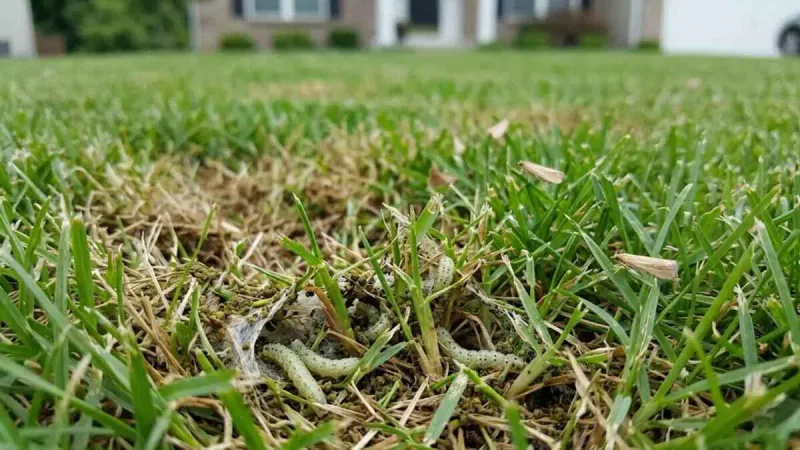
Moths lifting from the grass as you walk across a Florida lawn in the evening are one of the more noticeable signs that tropical sod webworms may be active nearby.
The moths themselves do not damage turf, but their larvae feed on grass blades at night, chewing the tissue down in ways that can leave the lawn looking thin, ragged, or unevenly mowed.
By the time visible damage appears, a population may already have been feeding for several nights.
Tropical sod webworm activity tends to pick up during Florida’s warm summer months, and July is often when feeding damage becomes more obvious. St. Augustinegrass is a common target, though other turf types can also be affected.
The damage pattern sometimes resembles a lawn that was mowed too short in spots, which can lead to confusion about whether the cause is pests, mowing stress, or something else entirely.
Checking for larvae is more useful than relying on damage appearance alone. Looking at the soil surface and thatch layer near the base of affected grass, particularly in the evening or early morning, can reveal small greenish caterpillars if they are present.
Bird activity on the lawn can sometimes hint at larval presence as well.
Confirming that the pest is actually there before applying any control product keeps treatment targeted and avoids unnecessary chemical use on a Florida lawn that may be dealing with a different problem altogether.
6. Mole Crickets And Grubs Damage Roots
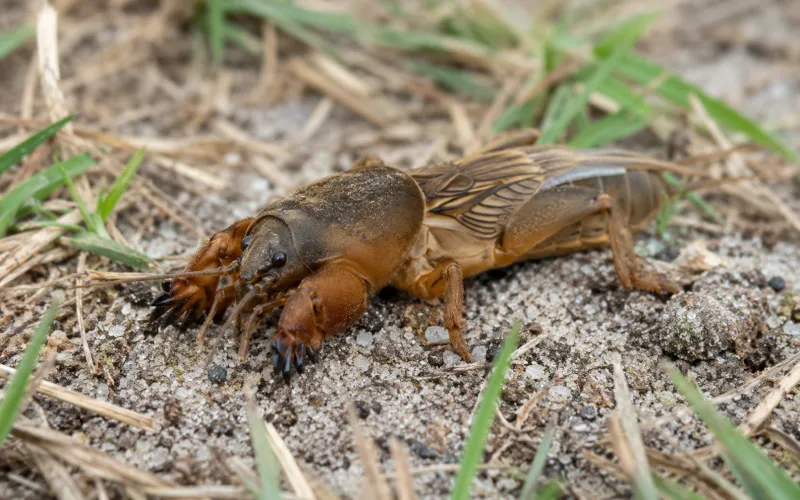
Spongy, uneven turf that feels loose underfoot or lifts away from the soil more easily than it should can point to root-zone damage happening below the surface.
Both mole crickets and white grubs work underground in ways that disrupt the connection between turf roots and soil, and the visible results above ground often show up as irregular thinning or browning that does not match the pattern of disease or surface insect damage.
Mole crickets tunnel through the upper soil layer, loosening the ground and severing roots as they move. Their activity tends to be more noticeable in bahiagrass and bermudagrass areas of Florida, though they can affect other turf types as well.
White grubs, the larvae of various beetles, feed on turf roots and can cause significant damage in sandy Florida soils before homeowners notice anything unusual on the surface.
July is a relevant time to check for both pests because grub populations from spring egg-laying may be actively feeding, and mole cricket activity can increase during humid summer conditions.
A soap flush, which involves mixing a small amount of dish soap with water and pouring it over a square foot of turf, can bring mole crickets to the surface if they are present.
Pulling back loose or spongy turf sections to inspect the soil for grubs is another practical step. Identifying which pest is involved, or whether either is actually present, matters before any soil treatment is chosen.
7. Irrigation Stays On After Rain
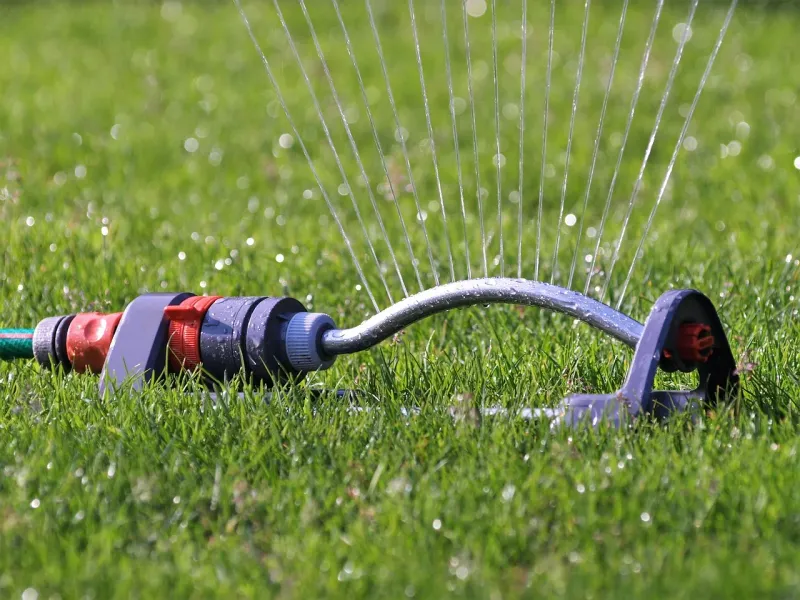
Automatic sprinkler systems are convenient, but they can become a source of lawn stress during Florida’s rainy season if the schedule is not adjusted to account for regular summer storms.
A system set to run three or four days per week in May may be delivering far more water than the lawn needs once July afternoon storms are dropping an inch or more of rain several times per week.
Too much water over time can weaken turf in ways that show up as patchy, yellowing, or disease-prone areas.
Excess irrigation during the rainy season can contribute to shallow root development, since roots have less reason to grow deeper when water is consistently available near the surface. Shallow-rooted turf is more vulnerable to heat stress, drought between storms, and disease pressure.
Nutrient leaching is also a factor in Florida’s sandy soils, where frequent watering can wash fertilizer past the root zone before the grass has a chance to use it.
Florida law requires that automatic irrigation systems have functioning rain sensors or soil moisture sensors, and checking that these devices are working correctly is a reasonable July maintenance step.
Manually overriding the system after significant rainfall events, or switching to a smart controller that responds to local weather data, can help keep the watering schedule in line with actual lawn needs.
Not every patchy area in a Florida summer lawn is caused by too little water, and adding more irrigation to a wet root zone can make several problems worse at the same time.
8. Mowing Too Low Adds Extra Stress
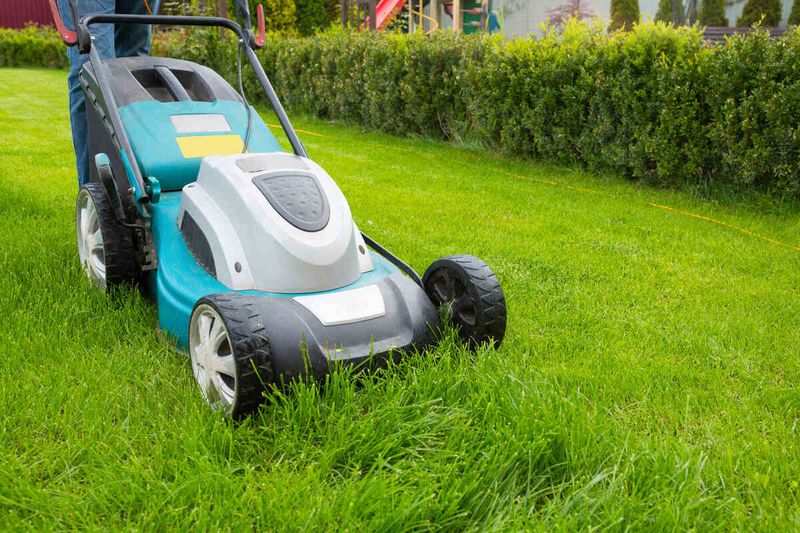
Fast summer growth in Florida can push homeowners to mow more aggressively, especially after a stretch of rain delays or missed mowing windows when the grass has gotten noticeably tall.
Cutting off too much leaf tissue at once, sometimes called scalping, removes the green surface that the grass uses to capture sunlight and produce energy.
A lawn that looks reasonably healthy before a short mow can appear stressed, pale, or patchy within a day or two afterward.
Each turf type in Florida has a recommended mowing height range, and staying within that range matters more during the stress of summer than at any other time of year.
St. Augustinegrass generally performs better when kept at a moderate height rather than cut very short, and zoysiagrass also benefits from not being mowed too aggressively during periods of heat and humidity.
Bahiagrass is somewhat more tolerant of varied mowing heights but still responds to excessive removal of leaf tissue.
A good habit for Florida summer mowing is to follow the one-third rule, which means removing no more than one-third of the total blade height in a single mowing session.
If the lawn has gotten tall between mowings, gradually stepping down the height over two or three sessions is easier on the turf than taking it all off at once.
Keeping mower blades sharp also reduces the tearing and browning of blade tips that can make a July lawn look worse than it actually is and slow down recovery from other stresses.