Signs Michigan Pepper Plants Are Thriving And 4 Signs They’re Struggling In The Summer Heat
Pepper plants in Michigan are better at hiding stress than almost any other vegetable in the garden, which is exactly what makes mid-season problems so easy to miss until they have already affected the harvest.
A thriving pepper plant sends out specific signals that are easy to read once you know what genuine health looks like in this climate, and those signals make struggling plants easier to identify by comparison.
The four stress signs that show up most consistently in Michigan summers are subtle enough to dismiss as normal variation but specific enough to diagnose correctly when examined closely.
Catching them early and responding appropriately keeps peppers producing through the back half of the season rather than limping toward a frost with half the harvest potential they started with.
1. Leaves Look Upright And Evenly Green
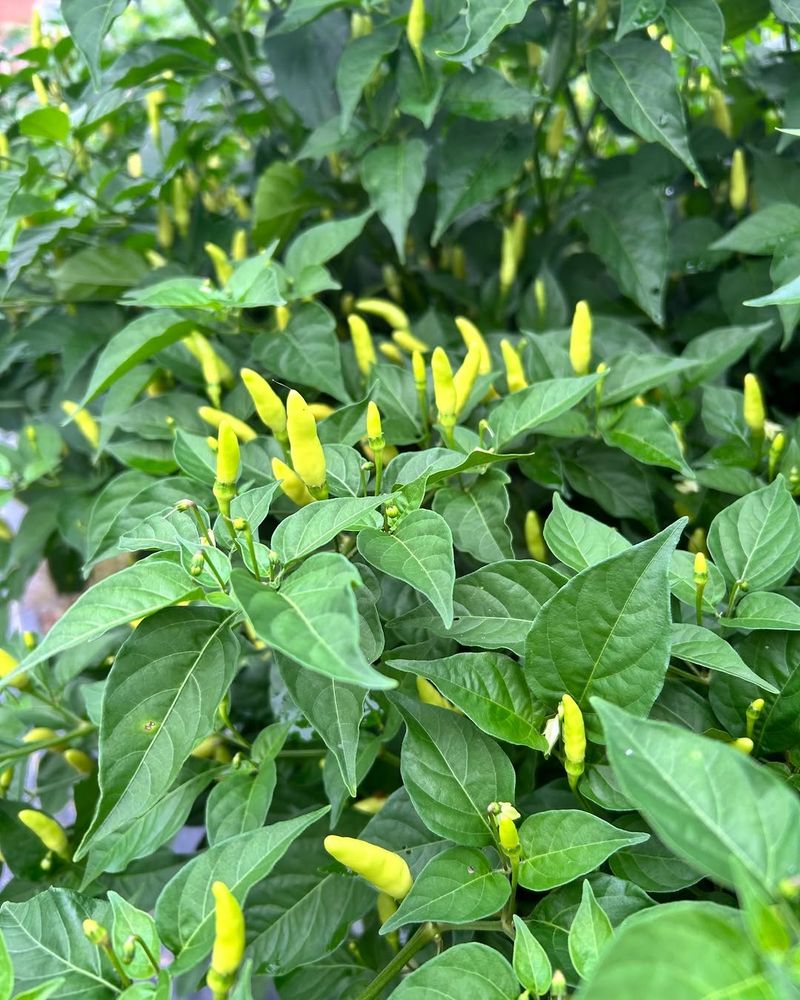
There is something quietly satisfying about walking through your garden and spotting pepper plants standing tall with full, evenly green leaves. That upright posture is not just good looks.
It is one of the clearest signals that your plant is well-fed, well-watered, and genuinely happy in the summer heat.
Healthy pepper leaves tend to feel firm to the touch rather than soft or papery. The color should be consistent across the whole plant, a rich, steady green without blotchy pale patches or dark spots pulling your eye in different directions.
When you see that kind of evenness, the plant is telling you that its root system is pulling in nutrients and moisture at a reliable rate.
Michigan summers can bring intense afternoon sun, and a plant with a full canopy of upright leaves actually uses that foliage to protect its own developing fruit.
The leaves create natural shade, which keeps young peppers from getting scorched during the hottest part of the day.
That built-in protection only works when there are enough leaves and they are healthy enough to stay open and upright.
If your pepper plants have reached this point, you are doing something right. Keep your watering schedule steady, continue feeding with a balanced fertilizer every couple of weeks, and resist the urge to over-prune.
Too much trimming removes the very canopy that shields your peppers. A thriving plant with strong, upright, green leaves is well on its way to producing a generous summer harvest worth waiting for.
2. Flowers Keep Opening And Staying On The Plant
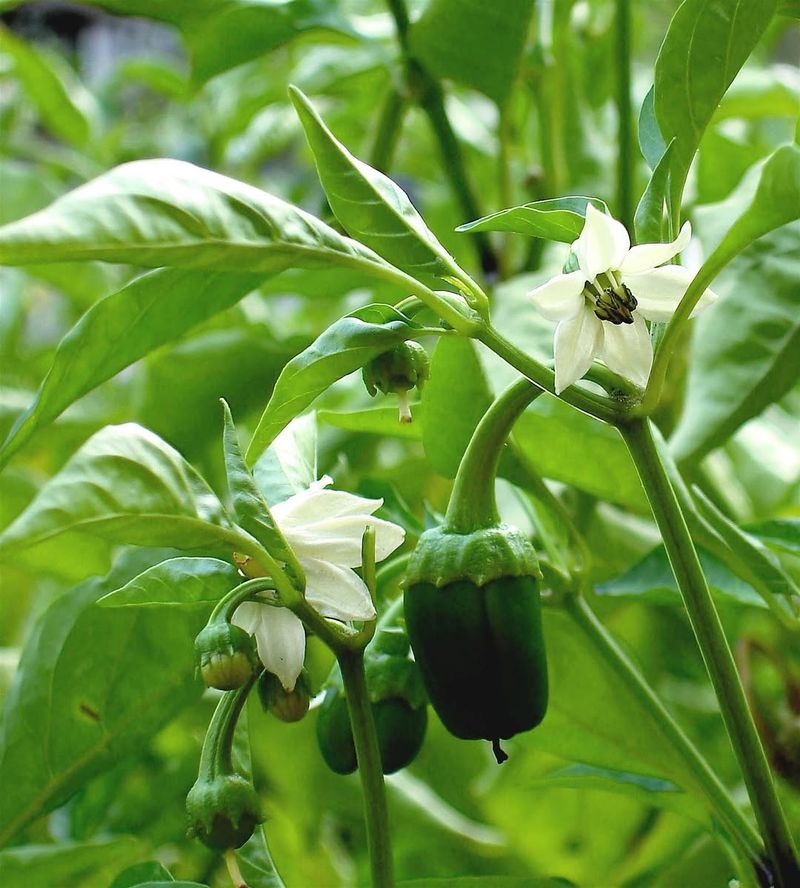
Pepper flowers are small, delicate, and easy to overlook, but they are one of the most reliable indicators of how your plant is really doing.
When flowers open steadily and stay attached to the plant for several days, that is a strong sign your pepper is handling Michigan’s summer temperatures with confidence.
Steady flowering usually means a few good things are happening all at once. Soil moisture is consistent, the plant is not overheating at the root level, and nighttime temperatures are staying in a range that supports healthy reproduction.
In Michigan, summer nights tend to cool down nicely compared to states further south, and that cooler overnight air actually helps pepper plants hold their flowers longer and set fruit more reliably.
Your Michigan Garden Changes Every Week. Your Plan Should Too.
Gardening in Michigan changes quickly throughout the season. Every Friday you’ll receive a simple weekly plan showing exactly what to plant, prune, fertilize, harvest, and protect so you never miss the right timing.
You might notice the flowers nodding slightly downward on their small stems, which is completely normal for peppers. What you want to avoid seeing is flowers that open one day and fall off the next without any fruit beginning to form behind them.
Flowers that stay put, even for just a few days after opening, give the plant enough time to pollinate and start building a tiny pepper behind the bloom.
Encouraging good airflow around your plants by spacing them properly helps pollinators reach the flowers more easily. A light shake of the plant on calm days can also help distribute pollen when bees are not as active.
Consistent flowers that hold on are a green light that your pepper garden is headed in exactly the right direction this season.
3. Small Peppers Keep Growing Larger
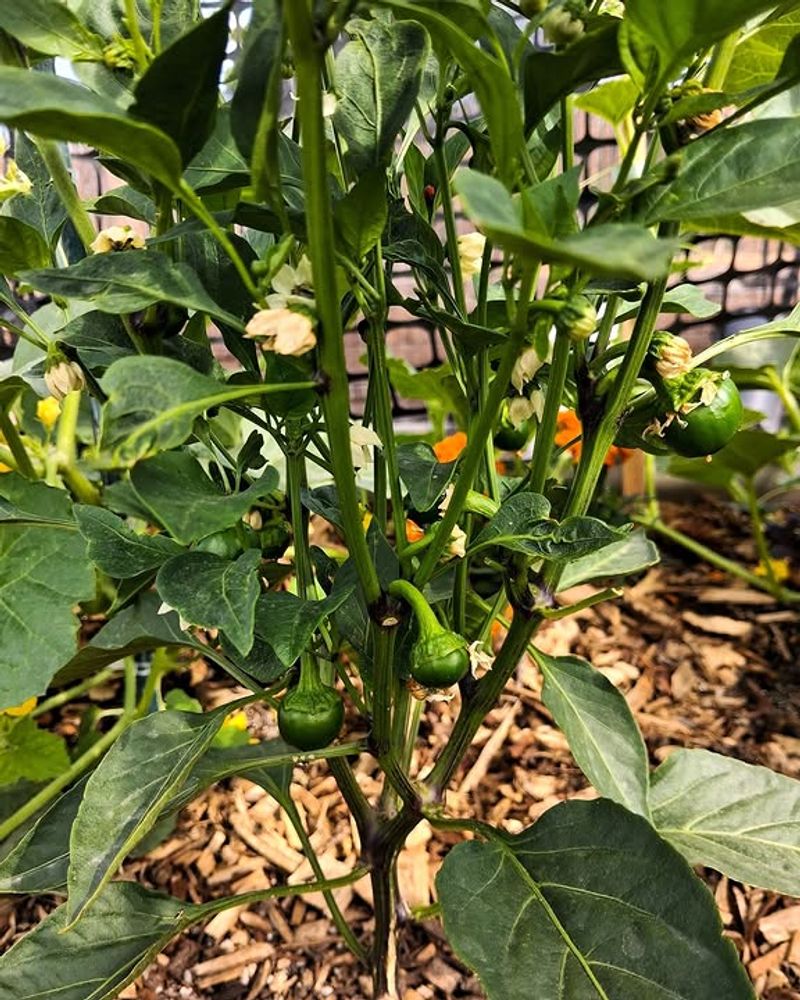
Watching tiny peppers swell into full-sized fruit is one of the most rewarding parts of summer gardening.
When your pepper plants are holding onto their young fruit and those peppers are visibly getting bigger week by week, you can feel confident that the plant’s roots, leaves, and water supply are all working together the way they should.
Healthy fruit development depends heavily on consistent soil moisture. Peppers that experience irregular watering, soaking one week and bone-dry the next, are far more likely to drop young fruit or develop misshapen peppers.
But when moisture stays steady in the root zone, the plant can channel its energy directly into swelling those small peppers into smooth, firm, well-shaped fruit without interruption.
Michigan’s warm summer days give pepper plants plenty of sunlight energy to fuel fruit growth, and as long as the roots are comfortable, the plant stays focused on production. You can track progress by checking your smallest peppers every few days.
Even subtle growth, a little extra length or a bit more firmness under your fingers, tells you the plant is actively investing in its crop.
One helpful tip is to avoid removing too many leaves near developing fruit. Those leaves are solar panels feeding energy straight into the growing peppers.
Also, side-dressing your plants with a low-nitrogen, higher-phosphorus fertilizer during fruiting encourages the plant to keep building fruit rather than pushing out extra foliage.
Steady growth on your young peppers is one of the clearest thriving signals a Michigan gardener can spot all summer long.
4. Soil Stays Evenly Moist Below The Surface
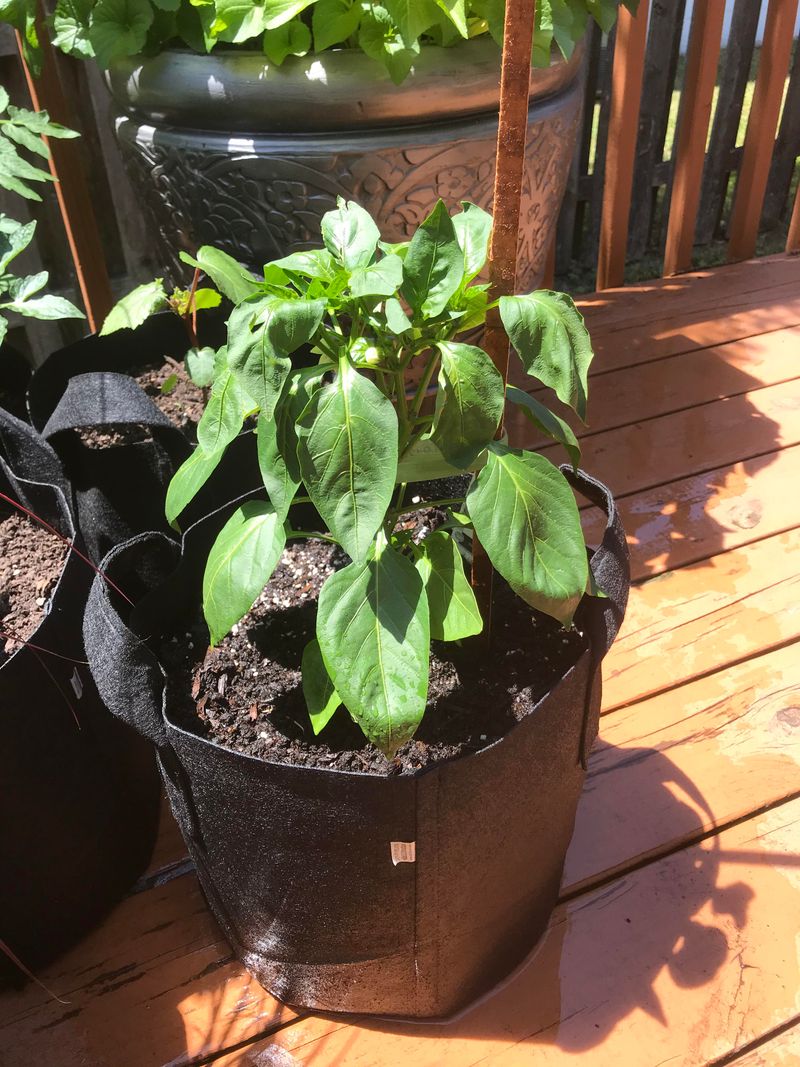
Here is something that surprises a lot of first-time pepper growers: the surface of the soil can look completely dry while the root zone just a few inches below is still nicely moist.
Michigan summer heat dries out the top layer of soil quickly, especially on sunny afternoons, but that surface dryness does not always mean your plants need water right away.
The best way to check is simple. Push your finger about two to three inches into the soil near the base of your pepper plant.
If the soil at that depth feels cool and slightly damp, your plant is in good shape and does not need more water yet. Watering before the root zone actually needs it can lead to oversaturation, which causes its own problems for pepper roots over time.
Evenly moist soil throughout the root zone is a sign that your watering routine is well-matched to your local conditions.
In Michigan, summer rain can sometimes do part of the job for you, but during hot dry stretches, you may need to water every two to three days depending on your soil type.
Sandy soils drain faster and need more frequent attention, while clay-heavy soils hold moisture longer.
Mulching around your pepper plants is one of the smartest moves you can make to maintain that even moisture.
A two to three inch layer of straw, wood chips, or shredded leaves slows evaporation dramatically and keeps the root zone cooler on the hottest days.
Consistent soil moisture below the surface is a quiet but powerful sign that your pepper plants have everything they need to thrive through a Michigan summer.
5. Leaves Stay Limp After The Day Cools Down
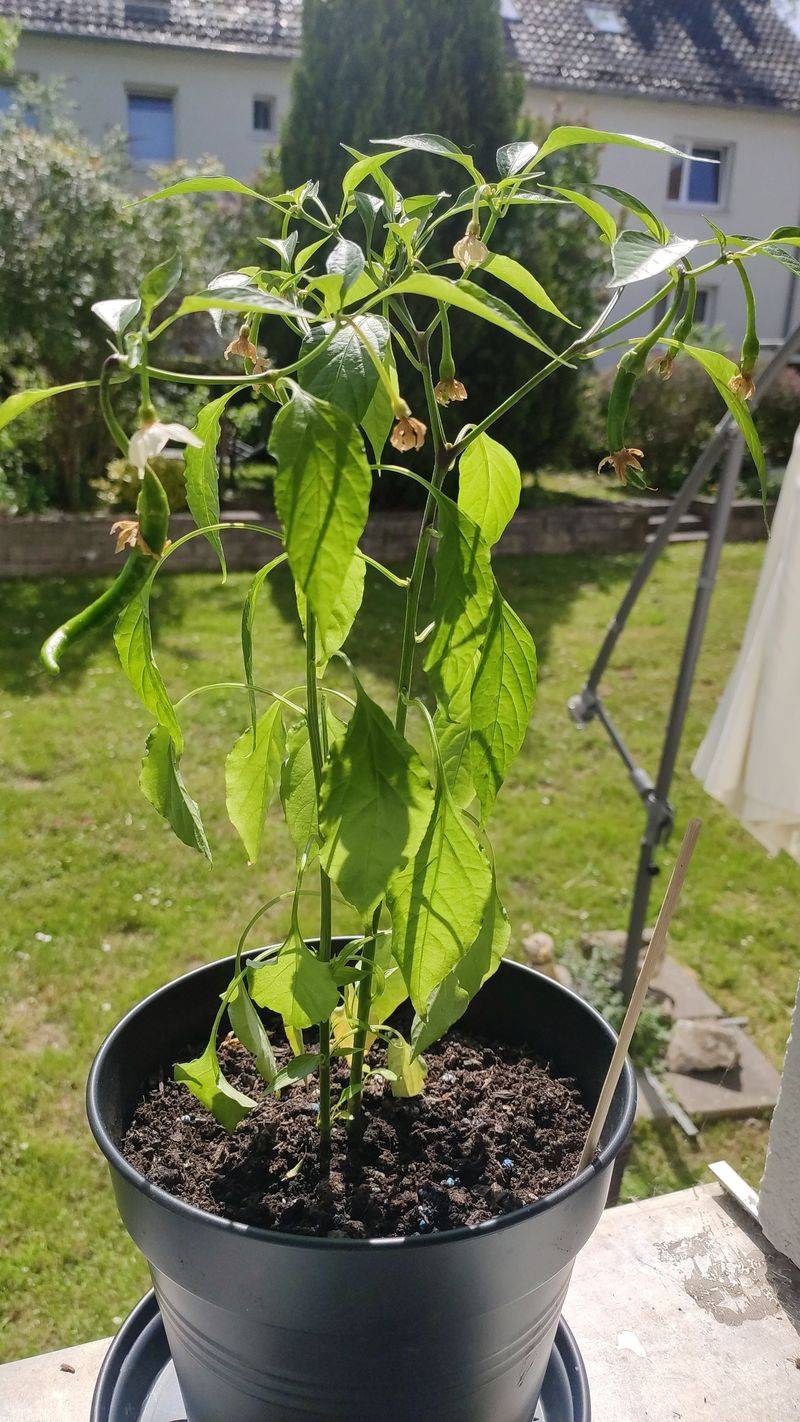
Pepper plants can look a little droopy during the hottest part of a summer afternoon, and that is not always a reason to panic. On extremely hot Michigan days, temporary afternoon wilting is a normal response as the plant conserves moisture.
The real concern starts when you check your plants in the evening, after the temperature has dropped, and the leaves are still hanging soft and limp.
Evening limpness that does not recover as the air cools down is a signal worth taking seriously. The most common cause is dry soil at the root level.
Even if you watered recently, shallow watering that only wets the top inch or two of soil leaves the deeper roots without access to moisture. Those roots cannot pull up enough water to keep the leaves firm once the plant is under heat stress.
Compacted soil is another factor that shows up frequently in Michigan gardens, especially in beds that have been worked for several seasons without fresh organic matter added.
When soil compacts, roots struggle to spread and reach moisture evenly, which creates dry pockets even when you think you are watering enough.
Loosening the soil around your plants and adding compost can make a noticeable difference.
Uneven watering patterns, soaking one day and skipping two or three, can also cause this kind of stress. Pepper roots prefer a steady supply rather than a flood-and-drought cycle.
If your leaves are staying limp into the evening, check your soil depth, adjust your watering schedule, and consider adding mulch to help the ground hold moisture more reliably between waterings.
6. Flowers Keep Dropping Before Peppers Form
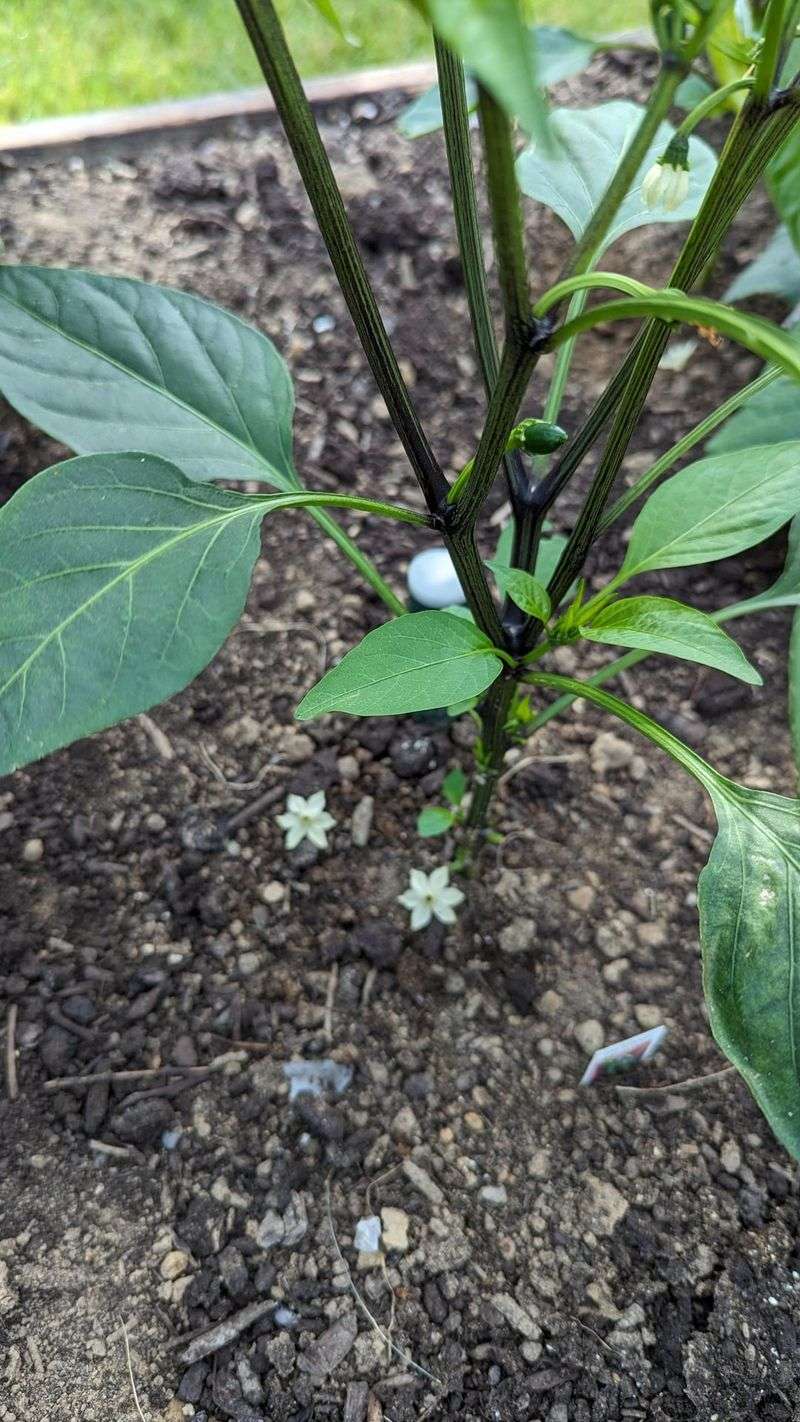
Blossom drop is one of the most frustrating things a pepper gardener can experience.
You watch your plant fill up with flowers, feel excited about the coming harvest, and then one morning you find a scatter of tiny fallen blooms on the soil below the plant with no fruit forming behind them.
This is a classic sign that your pepper plant is under stress of some kind.
Heat is one of the biggest triggers for blossom drop in Michigan summers. When daytime temperatures climb above 90 degrees Fahrenheit and stay there, pepper plants often respond by dropping flowers rather than attempting to set fruit.
The plant essentially decides that conditions are not right for successful reproduction, which is a self-protective response but a frustrating one for gardeners hoping for a big harvest.
Soil moisture plays a big role too. Dry soil during the flowering stage puts the plant under stress that often results in flower drop even before temperatures reach extreme levels.
Low humidity, which can happen during hot dry Michigan stretches, also makes it harder for pollen to stick and fertilize properly, reducing the chance that any given flower will turn into a pepper.
Night temperatures matter more than many gardeners realize. Peppers prefer nights between 60 and 75 degrees Fahrenheit for the best fruit set. Nights that stay too warm can interfere with the process just as much as daytime heat.
Keeping your soil consistently moist, providing afternoon shade during heat waves, and waiting out the hottest stretch of summer usually brings flowers back and fruit set resumes naturally.
7. Peppers Show Pale Sunken Sunscald Patches
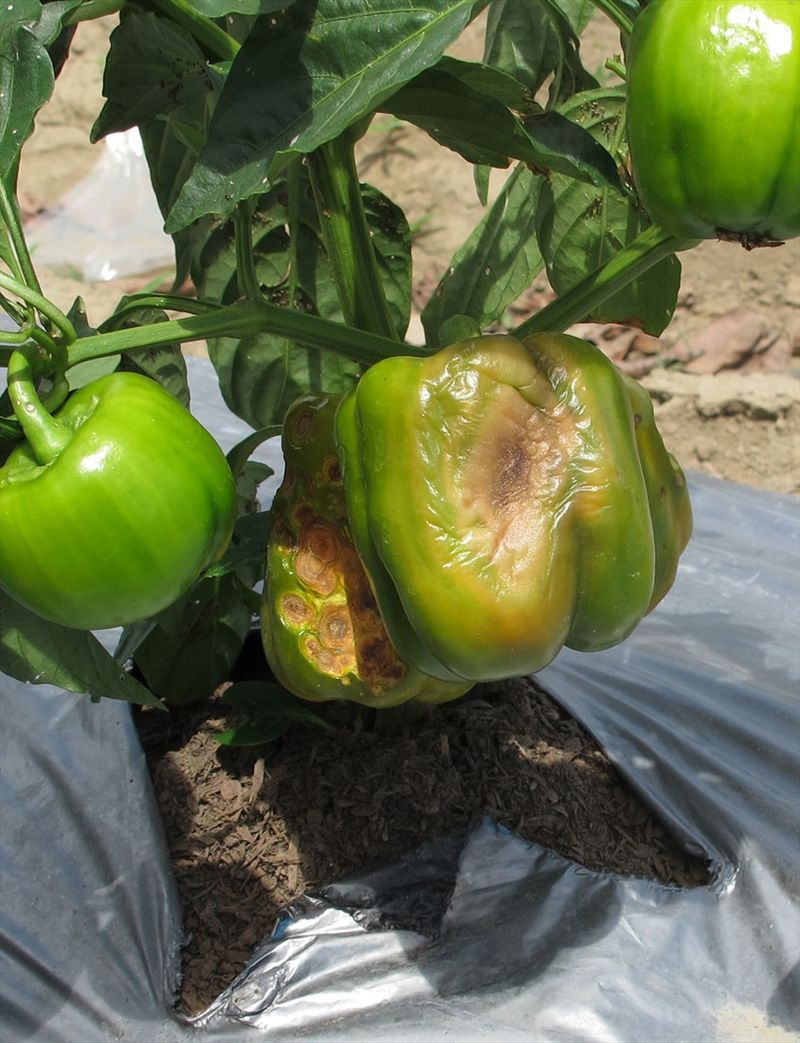
Spotting a pale, papery, slightly sunken patch on the side of a pepper can be confusing the first time you see it. It does not look like a bug problem, and it does not look quite like a disease.
What you are most likely seeing is sunscald, a form of sun damage that happens when pepper fruit gets exposed to strong direct sunlight for too long without enough leaf coverage to protect it.
Sunscald typically shows up on the side of the pepper that faces the strongest afternoon sun.
The affected area turns pale white or tan, feels slightly soft compared to the rest of the fruit, and sometimes develops a papery texture as it dries out.
The pepper is still edible if you cut away the damaged section, but the overall quality takes a hit and the affected area can become an entry point for other issues over time.
The root cause is usually a thin leaf canopy. When pepper plants lose leaves due to stress, pruning, or pest damage, the fruit that was previously shaded suddenly finds itself in direct sun.
Michigan’s summer sun, especially between noon and four in the afternoon, is strong enough to scorch exposed fruit fairly quickly during a heat wave.
Protecting your plants starts with keeping foliage healthy and full throughout the season. Avoid heavy pruning during peak summer heat.
If a plant has already lost significant leaf coverage, you can drape lightweight row cover or shade cloth over the most exposed plants during the hottest part of the day.
Catching this early and restoring shade can prevent further fruit damage before the season ends.
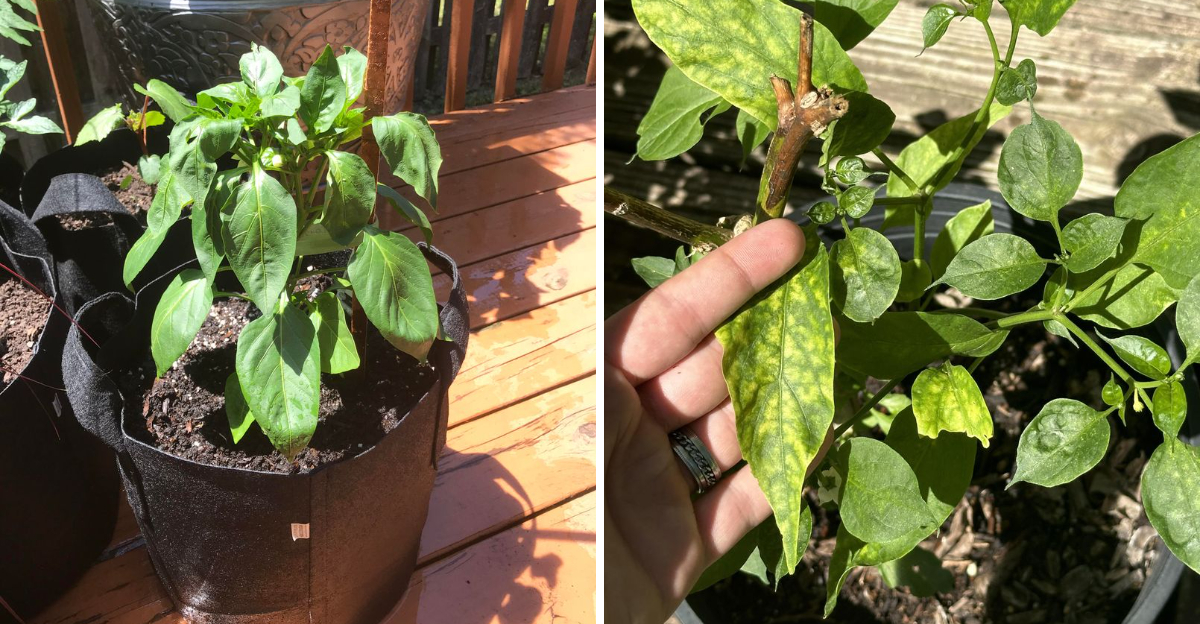
8. Leaves Look Spotted, Curled, Sticky, Or Yellow
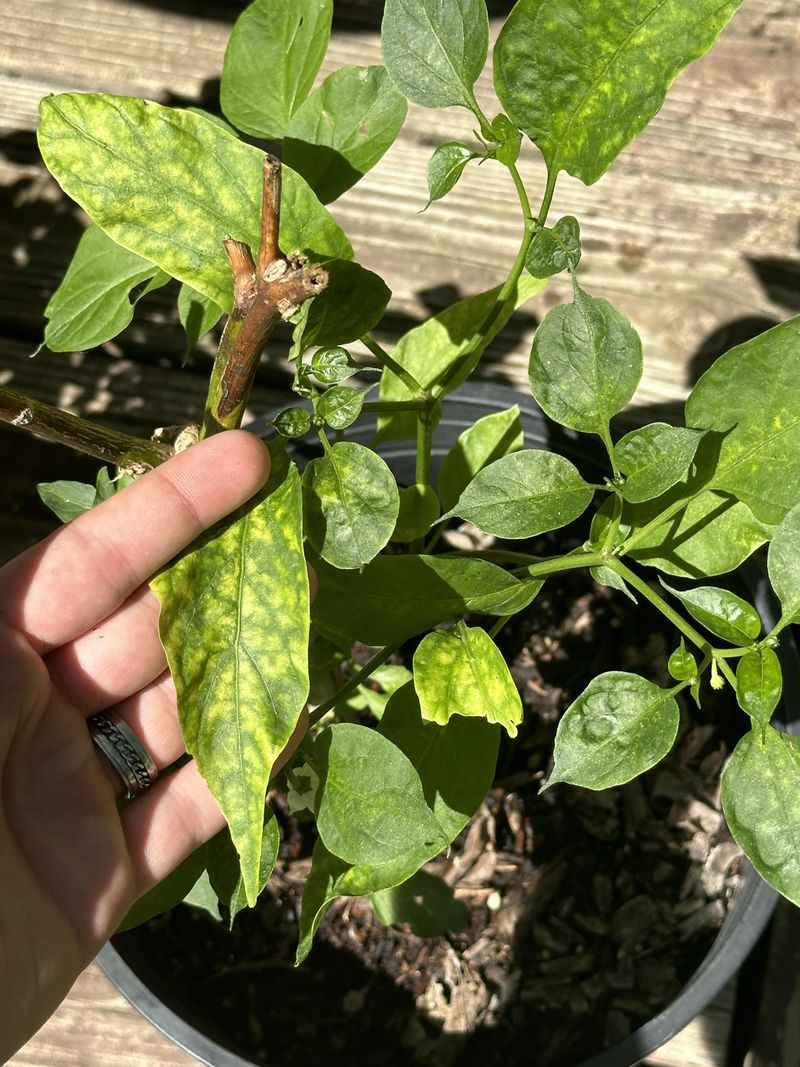
When pepper leaves start looking spotted, curled, sticky, or yellow, the plant is waving a flag that something has gone wrong and needs your attention soon. These symptoms rarely appear together by accident.
Each one points toward a specific type of problem, and identifying which symptom you are dealing with first helps you figure out the right fix faster.
Sticky leaves almost always signal an insect problem. Aphids and whiteflies are common in Michigan summer gardens, and both produce a sticky residue called honeydew as they feed on plant sap.
Flip a few leaves over and check the undersides carefully. Tiny clusters of soft-bodied insects, small white powdery bugs, or fine webbing are all signs that pests have moved in and need to be addressed before the population grows larger.
Curling leaves can point to a few different causes. Heat stress causes leaves to curl inward as the plant tries to reduce moisture loss through its surface area. Inconsistent watering, too much one day and too little the next, can also cause curling.
Some viral issues spread by insects cause distinctive downward or upward curling patterns that do not improve with watering, which is a sign to look more closely at what might be feeding on the plant.
Yellow leaves, especially on the lower part of the plant, often come from nutrient issues or overwatering. Spotted leaves with defined edges can point toward fungal or bacterial problems that spread through water splash or humid conditions.
Always water at soil level rather than overhead to reduce moisture on the foliage, and remove any heavily affected leaves to slow the spread of any potential disease through the plant.