Native Michigan Ground Covers That Survive Under Pine Trees Where Nothing Else Will Grow
The ground beneath a pine tree is one of the most hostile planting environments in a Michigan yard.
Acidic soil, dense surface roots competing for every drop of moisture, deep shade, and a layer of fallen needles that most plants cannot push through combine to create conditions that defeat almost everything gardeners try there.
Most people eventually stop planting under pines and accept the bare ground as permanent. Native Michigan ground covers that evolved in woodland conditions tell a different story.
Several of them are specifically adapted to acidic, dry, needle-covered soil and establish in spots where introduced plants never stood a chance.
Once they take hold under a pine canopy, they spread steadily and transform one of the most frustrating spots in the yard into something that actually looks intentional.
1. Pennsylvania Sedge
Most gardeners have stared at that bare ring of dirt beneath a pine tree and wondered if anything could ever grow there. Pennsylvania Sedge, known botanically as Carex pensylvanica, is one of the most reliable answers to that frustrating problem.
This native sedge has spent thousands of years adapting to exactly the kind of dry, acidic, root-filled woodland soil that pines create.
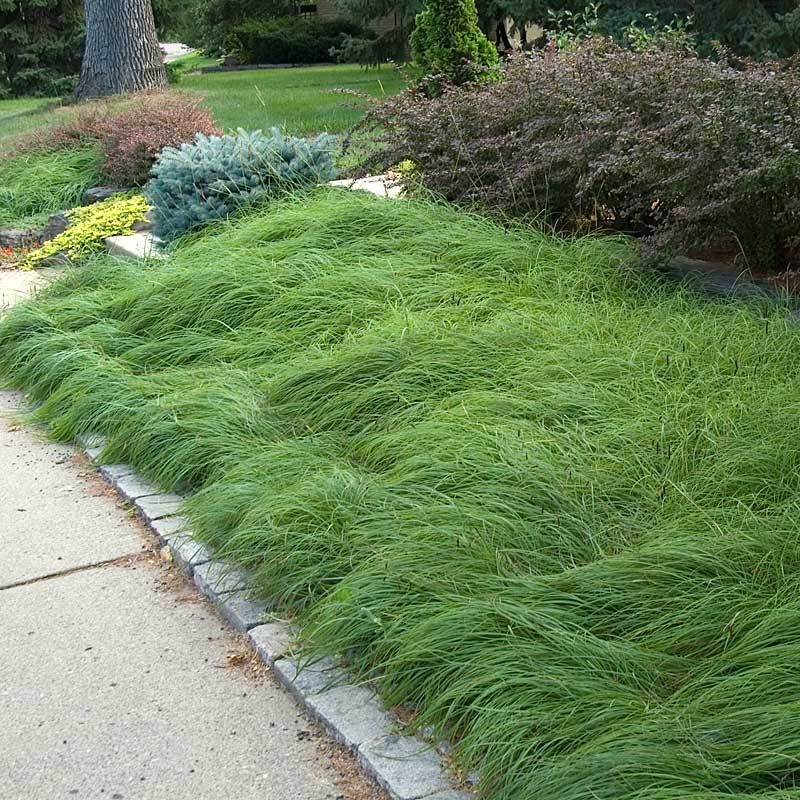
Unlike traditional lawn grasses that struggle and fade in deep shade, Pennsylvania Sedge forms a soft, low, grass-like carpet that stays green through much of the year.
It typically grows just six to ten inches tall, giving your garden a neat, natural appearance without constant mowing.
The blades are fine-textured and gently arching, which adds a calm, flowing look to any shaded bed.
Spreading slowly through underground rhizomes, this sedge gradually fills in open ground over two to three growing seasons. Patience really pays off here.
Water it regularly during the first year to help roots establish, and then it becomes surprisingly self-sufficient once settled in.
Pennsylvania Sedge tolerates both dry shade and moderate moisture, making it flexible enough for many Michigan landscapes. Adding a light layer of pine needle mulch around new plantings helps retain moisture and keeps weeds at bay while the sedge fills in.
For anyone wanting a low-maintenance lawn alternative under pines, this native plant is a genuinely smart starting point.
2. Partridgeberry
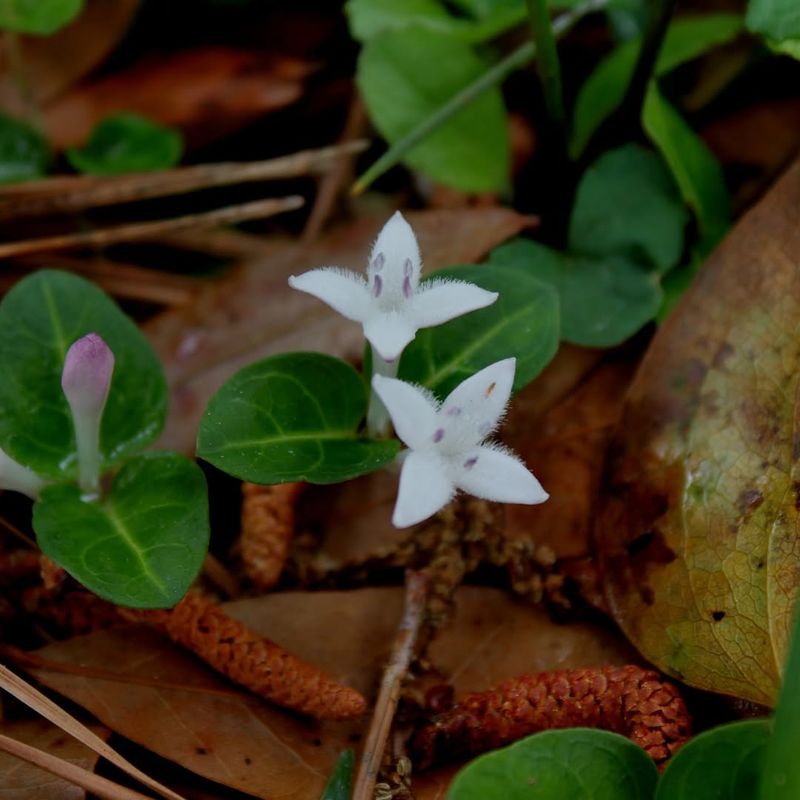
Tucked quietly along woodland trails across Michigan, Partridgeberry is one of those plants that makes you stop and look twice. Mitchella repens is its botanical name, and this tiny evergreen creeper has a charm that far outpaces its small size.
Paired white tubular flowers bloom in early summer, and by fall, cheerful red berries appear right where those flowers were, adding color to the forest floor well into winter.
Beneath pine trees, Partridgeberry performs best where soil is acidic, cool, and enriched with organic matter like decomposed leaves or pine needle mulch. It genuinely thrives in these woodland conditions rather than just tolerating them.
However, extremely dry and compacted soil will challenge this plant, so sites with at least some moisture retention work much better than bone-dry sandy spots.
Growth is slow and steady, spreading through trailing stems that root at nodes as they creep along the ground. Do not expect quick coverage.
Your Michigan Garden Changes Every Week. Your Plan Should Too.
Gardening in Michigan changes quickly throughout the season. Every Friday you’ll receive a simple weekly plan showing exactly what to plant, prune, fertilize, harvest, and protect so you never miss the right timing.
Think of it as a long-term investment that rewards patience with a beautiful, low evergreen mat that stays attractive year-round.
Wildlife absolutely love the berries, so Partridgeberry brings ecological value along with visual appeal. Keeping a thin layer of pine needle mulch around plantings helps maintain the cool, moist, acidic conditions this plant prefers.
For a shaded Michigan garden bed that feels authentically natural, Partridgeberry adds real woodland character.
3. Wintergreen
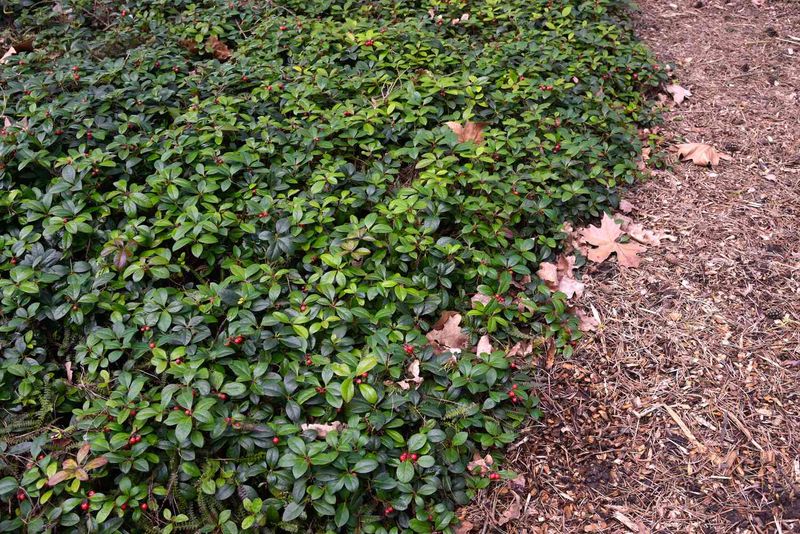
Scratch a Wintergreen leaf and you immediately recognize that sharp, familiar scent that inspired countless candies and chewing gums.
Gaultheria procumbens is the real source of that classic aroma, and it happens to be a tough little native evergreen that grows beautifully in Michigan pine woodlands.
There is something genuinely satisfying about planting something both fragrant and functional.
Wintergreen suits cool, shaded, acidic sites where pine needles have been building up organic matter over many years.
Small white bell-shaped flowers appear in summer, followed by bright red berries that persist through winter and provide food for birds and small mammals.
The glossy, leathery leaves stay green all year, giving the garden floor color and texture even in the coldest months.
This plant spreads through underground stems at a gradual pace, slowly building a low mat that rarely exceeds six inches in height. It looks tidy and natural without needing any trimming or fuss.
Wintergreen genuinely struggles in hot, dry, compacted, or poorly aerated soil, so realistic site assessment before planting saves a lot of disappointment later.
Adding pine needle mulch or leaf litter around new plants helps keep roots cool and soil moisture consistent during establishment. Once rooted into suitable ground, Wintergreen becomes a remarkably self-reliant plant that rewards low-maintenance gardeners.
For northern Michigan pine gardens with slightly moist, humus-rich soil, few native ground covers match its combination of beauty and resilience.
4. Canada Mayflower
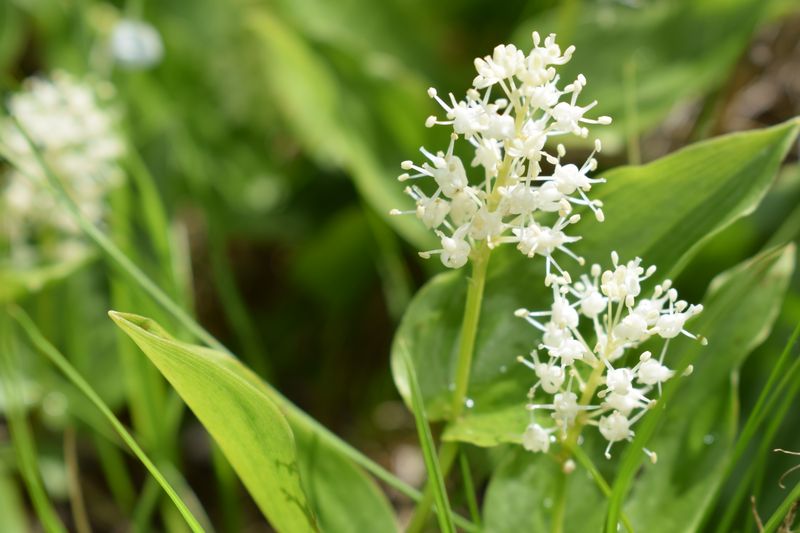
Walk through almost any cool Michigan forest in May and you will likely step right over Canada Mayflower without realizing it.
Maianthemum canadense forms dense, low colonies across the forest floor, its small heart-shaped leaves creating a fresh green carpet that emerges reliably each spring.
The tiny clusters of white flowers that appear in late spring are delicate and sweet, adding a quiet charm to shaded woodland beds.
Under pine trees, Canada Mayflower performs well when soil has decent organic content from accumulated needles, leaves, or other natural debris.
It naturally grows in cool forest shade, so pine canopy suits it perfectly as long as the ground does not stay bone dry for extended periods.
Moisture-retaining soil rich in humus gives this perennial the foundation it needs to spread confidently.
Colony formation happens gradually through creeping rhizomes, and over several seasons a single small planting can expand into a satisfying sweep of green. Patience is essential because this plant moves on its own timeline.
Very dry, heavily compacted, or nutrient-poor soil will limit its spread significantly.
Keeping a light layer of pine needle mulch or leaf litter over the planting area mimics the natural woodland floor conditions Canada Mayflower prefers. Supplemental watering during dry summer stretches helps young plantings establish faster.
For Michigan gardeners wanting a genuinely native, low-growing perennial that fills shaded pine beds with natural grace, this little plant is worth every bit of the wait.
5. Bunchberry
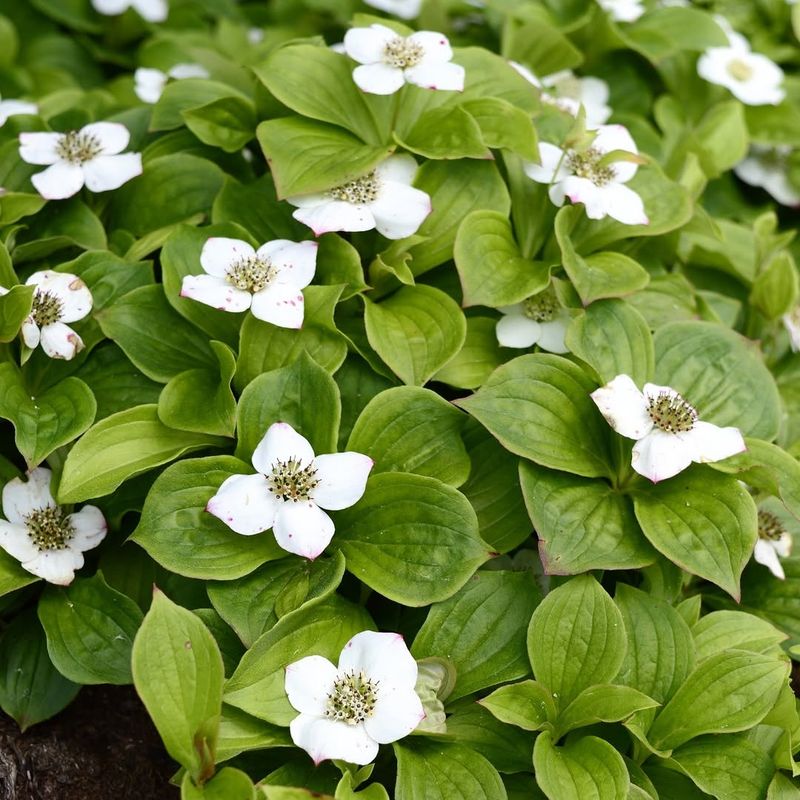
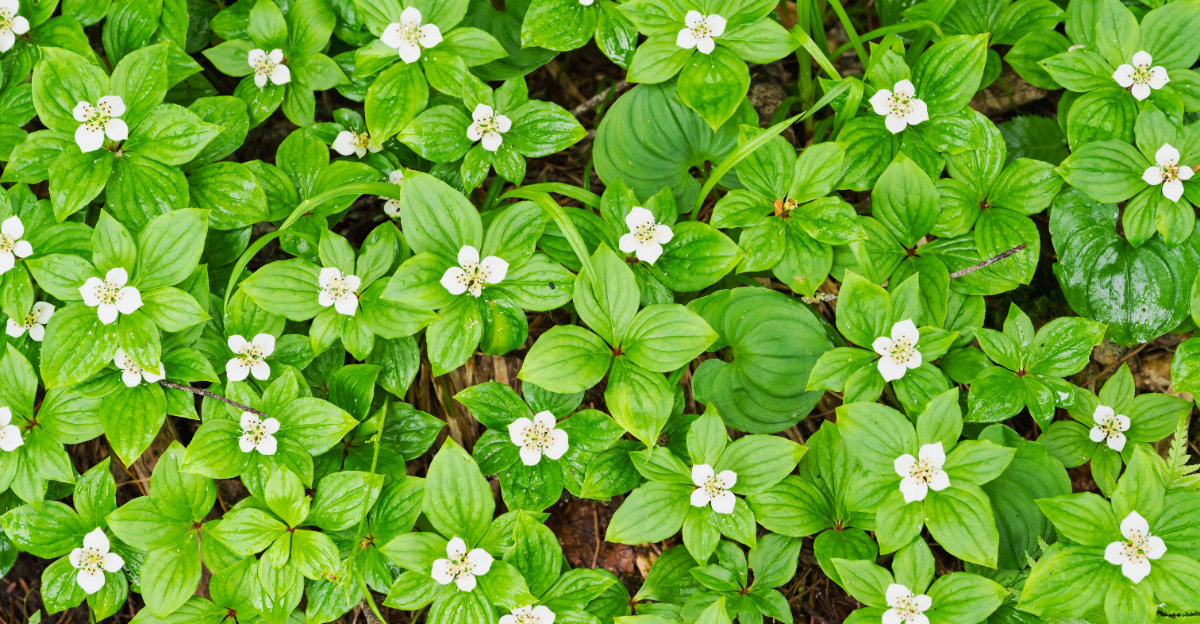
Bunchberry is essentially a miniature dogwood that hugs the ground instead of reaching for the sky. Cornus canadensis grows just four to six inches tall but produces the same elegant white-bracted flowers that make full-sized dogwoods so beloved in spring.
Those flowers give way to tight clusters of brilliant red berries by late summer, creating a striking display that birds find absolutely irresistible.
In Michigan, Bunchberry performs best in the cooler northern Lower Peninsula and Upper Peninsula, where conditions more closely match its preferred habitat.
It needs acidic, humus-rich soil that stays consistently moist, and it genuinely thrives beneath pine trees in these cooler regions where organic matter accumulates and temperatures stay reasonable.
Warmer, drier southern Michigan sites with compacted or sandy soil are not a great fit for this particular plant.
Spreading through underground rhizomes, Bunchberry slowly builds a dense, attractive mat over several growing seasons.
It contributes real ecological value beyond its visual appeal, supporting pollinators with its spring flowers and feeding wildlife with its late-season berries.
That combination of beauty and function makes it a favorite among Michigan native plant enthusiasts.
Consistent soil moisture is non-negotiable for success with Bunchberry. Mulching with pine needles or shredded leaves helps maintain the cool, moist, acidic environment it craves.
For northern Michigan gardeners with shaded, organically rich pine beds, Bunchberry rewards careful planting with one of the most visually striking native ground covers the state has to offer.
6. Wild Ginger
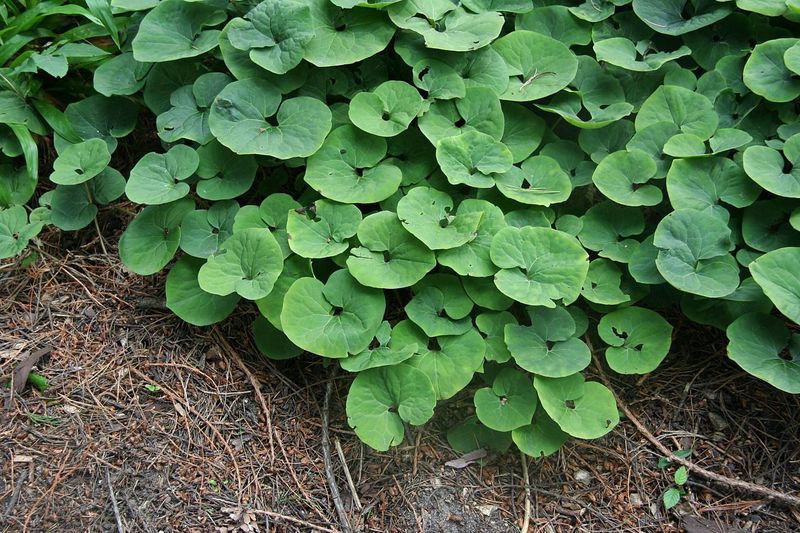
Few native ground covers create the kind of bold, lush visual impact that Wild Ginger delivers in a shaded garden. Asarum canadense produces large, velvety, heart-shaped leaves that overlap generously to form a thick, weed-suppressing carpet.
The leaves are soft to the touch and a rich, deep green that brightens even the darkest corner beneath a pine canopy.
Wild Ginger hides its flowers brilliantly. Small brownish-purple blooms appear right at soil level in spring, tucked beneath the foliage where most people never notice them.
It is one of those charming botanical secrets that makes native plant gardening feel like a treasure hunt. Spreading through shallow rhizomes, this perennial gradually expands its colony at a moderate pace, filling in shaded beds with satisfying density over a few seasons.
Beneath pine trees, Wild Ginger works well when soil contains enough organic matter to retain some moisture. It handles shade beautifully but struggles when pine roots and poor soil combine to create extremely dry conditions for prolonged periods.
Enriching planting areas with compost or leaf mold before planting gives roots a much better start.
Maintaining a layer of leaf litter or organic mulch around plantings helps keep moisture consistent and soil temperatures cool, which this plant genuinely appreciates.
Supplemental watering during hot, dry stretches supports healthy growth, especially in the first two seasons.
For Michigan gardeners wanting bold texture and reliable coverage in difficult shaded spots, Wild Ginger is a standout choice.