The Meaning Behind Seeing A Steller’s Jay In Your Oregon Yard
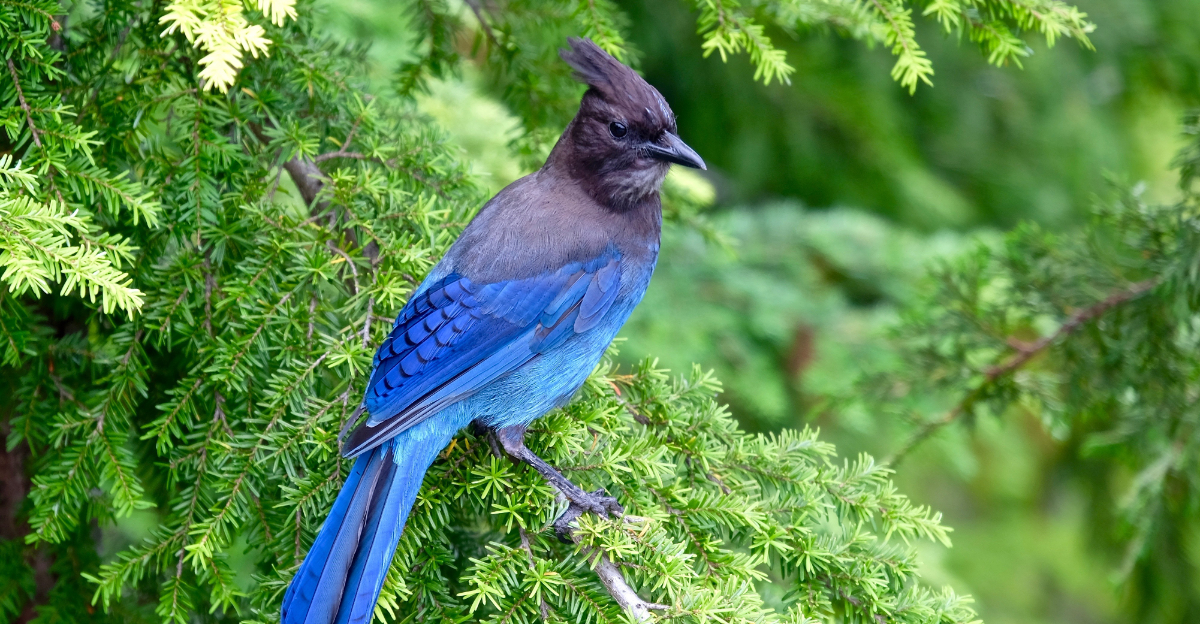
A Steller’s jay showing up in your Oregon yard feels like nature sent over a loud, stylish little messenger. With that bold crest and bossy blue-black attitude, this bird is hard to ignore.
For some homeowners, spotting one feels like a sign of curiosity, confidence, adaptability, or a reminder to pay attention. For others, it simply means your yard has the shelter, food, or trees this clever bird likes.
Either way, a visit from a Steller’s jay brings instant woodland drama. They are smart, vocal, and not shy about making their presence known.
Before you read too much into the moment, it helps to understand both sides of the sighting.
There is the symbolic meaning people love, and then there is the practical backyard reason this flashy Oregon visitor may have stopped by.
1. A Steller’s Jay Means Your Yard Has Cover
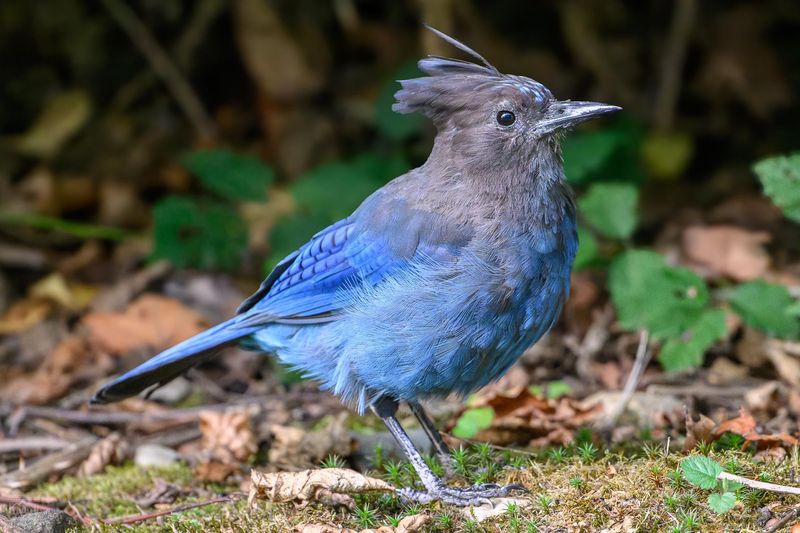
Good cover is one of the first things a Steller’s Jay looks for before settling into a yard. These birds feel safe when there are trees, shrubs, or dense plants nearby.
A yard with lots of green layers gives them places to rest, watch for threats, and move around freely.
When a Steller’s Jay shows up, it usually means your yard already has something working in its favor. Tall conifers like Douglas firs or pines are especially appealing to these birds.
They like spaces where they can stay partially hidden while still keeping an eye on everything around them.
Many Oregon homeowners don’t realize that their natural landscaping is doing a lot of quiet work. Every cluster of shrubs or row of trees is sending a signal to local wildlife.
A Steller’s Jay picking your yard is basically a vote of confidence in your green space.
If you want to keep attracting these birds, try to avoid over-pruning your trees and shrubs. Letting some areas grow a little wilder creates the kind of layered habitat these jays prefer.
Even a single large conifer near a fence can make a big difference in making your yard feel safe and welcoming to them.
2. That Loud Call Is Part Of The Message
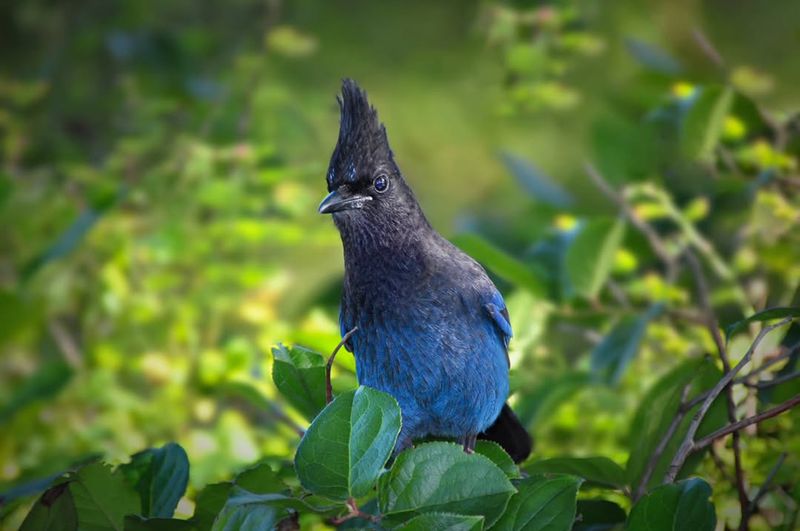
Few birds in Oregon are as vocal as the Steller’s Jay. Its call is sharp, loud, and hard to ignore.
When you hear it in your yard, the bird is doing more than just making noise.
Steller’s Jays use their calls to communicate with other birds, mark their presence, and even warn of nearby threats. If you hear a series of loud, repeated calls, there may be a hawk, cat, or other predator nearby.
The jay is basically sounding an alarm for every creature in the area.
What makes these birds even more interesting is their ability to mimic other birds. They can copy the calls of hawks so well that smaller birds scatter instantly.
This trick helps them clear a feeder or a food spot without having to chase anyone away directly.
Paying attention to the type of call you hear can actually tell you a lot about what is happening in your yard. A soft, low chatter often means the bird feels relaxed and comfortable.
Your Oregon Garden Changes Every Week. Your Plan Should Too.
Gardening in Oregon changes quickly throughout the season. Every Friday you’ll receive a simple weekly plan showing exactly what to plant, prune, fertilize, harvest, and protect so you never miss the right timing.
A sharp, rapid call usually signals some kind of disturbance nearby. Once you start listening closely, the Steller’s Jay becomes a surprisingly useful alarm system for your whole outdoor space.
3. They Visit Where Trees Feel Close
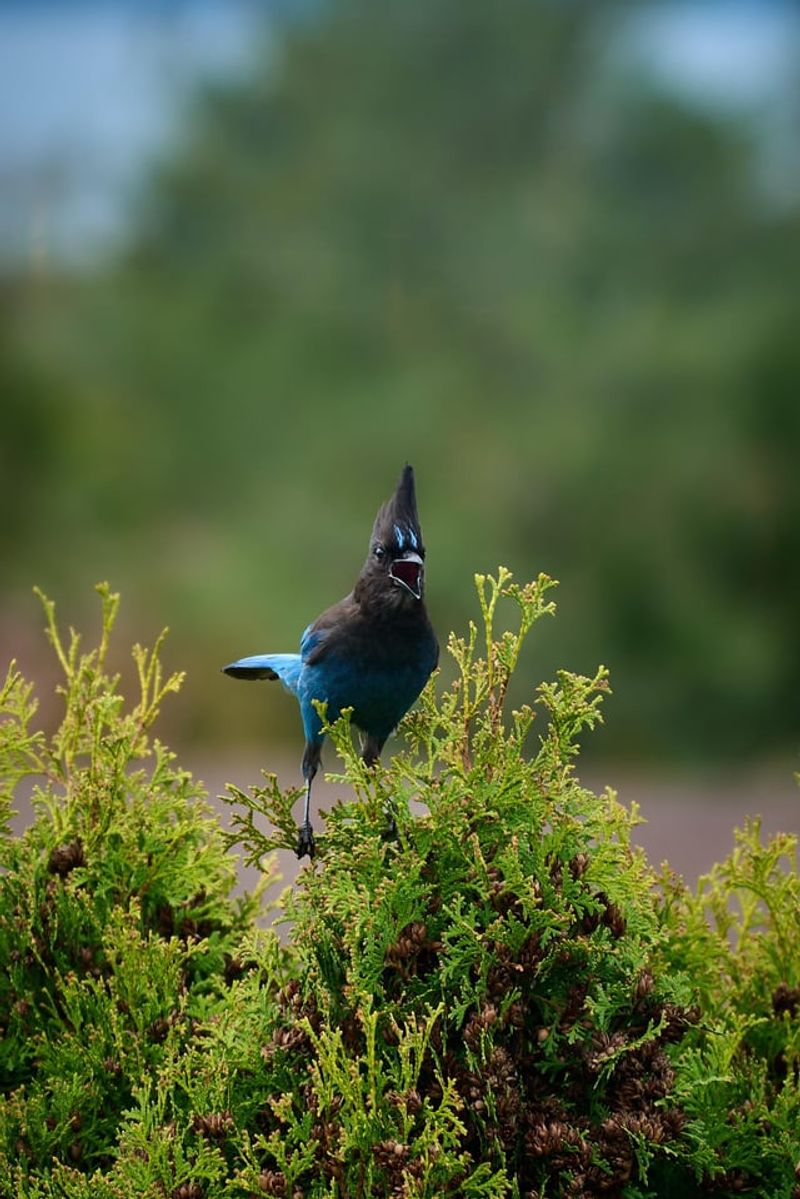
Steller’s Jays are forest birds at heart. They thrive in areas where tall trees are nearby or where a yard blends naturally into a wooded edge.
If your property sits near a forest, a tree line, or even a large park with mature trees, you are already on their radar.
In Oregon, many neighborhoods are surrounded by patches of forest or large green corridors. These connections between wild areas and residential yards make it easy for Steller’s Jays to move through and explore.
They follow tree canopies like roads, hopping from one shaded spot to the next.
A yard that feels open and bare rarely attracts these birds for long. But a yard with mature trees, especially conifers, gives them the comfort of feeling close to their natural habitat.
Even a few large trees can bridge the gap between your space and the wild areas beyond your fence.
Planting native conifers or allowing existing trees to grow tall is one of the best things you can do to welcome these jays consistently. They are loyal to spots that meet their needs over time.
Once a Steller’s Jay finds a yard it likes, it tends to return regularly, especially during the cooler months when food becomes harder to find in the wild.
4. Food Scraps Can Bring Them In Fast
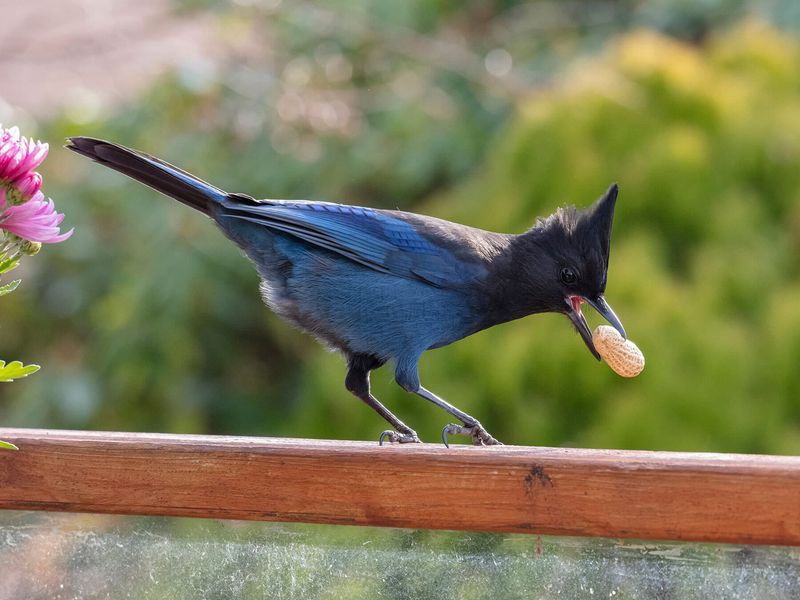
Steller’s Jays are opportunistic eaters, which means they will investigate almost anything that looks like food.
If you have a compost area, an open trash bin, or leftover food scraps near your deck, there is a good chance a jay has already noticed.
These birds are smart and have excellent memories. Once they find a reliable food source in a yard, they come back again and again.
They also cache food, which means they hide bits of food in different spots and return for them later. Finding a yard with easy snacks is a big deal to them.
You do not have to leave out junk food to attract them. Small bits of unsalted nuts, leftover grains, or even dried fruit can catch their attention.
They are not picky, and they are quick to figure out where the good stuff is kept.
Just be mindful that leaving too many food scraps out can attract other wildlife you may not want, like raccoons or rodents. A simple platform feeder with a small amount of food is a cleaner and more controlled way to offer them a snack.
Keeping the feeding area tidy also helps reduce competition and keeps the space safer for the jays and other yard birds that may visit alongside them.
5. Acorns, Seeds, And Insects Keep Them Looking
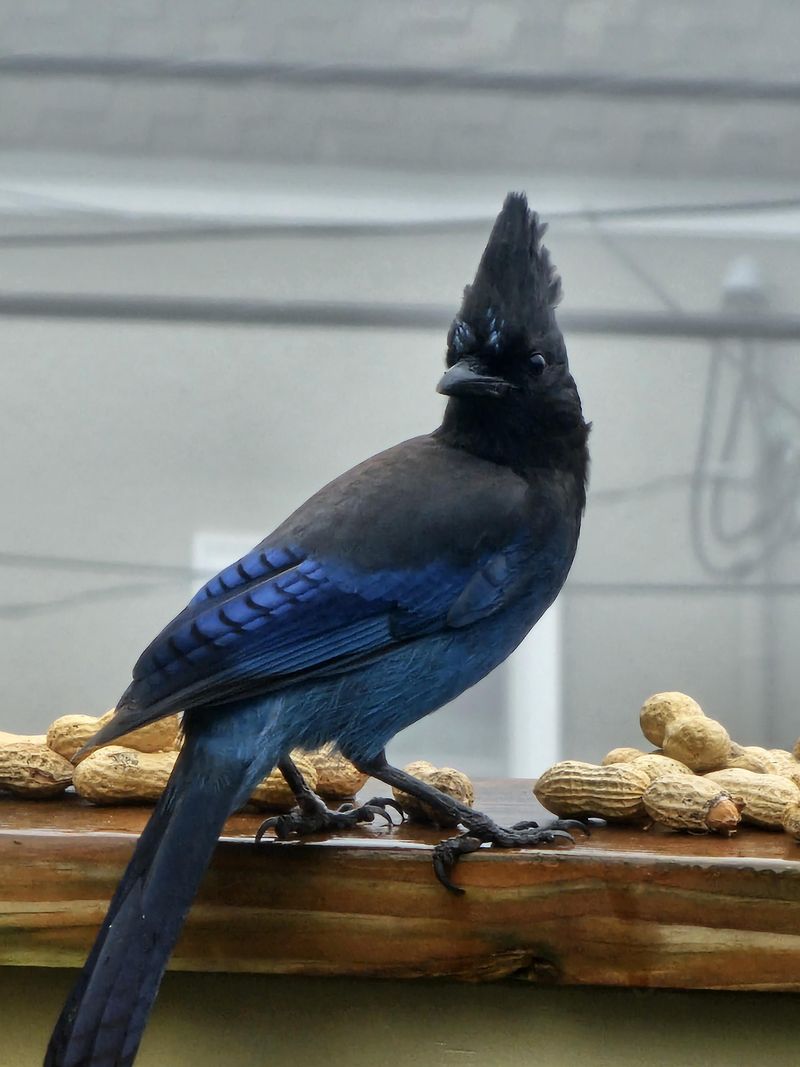
One of the biggest reasons a Steller’s Jay spends time in a yard is the food variety available there. Acorns are a top favorite, and if you have an oak tree nearby, these birds will show up regularly to collect and cache them.
They can carry multiple acorns at once in their throat pouch, which is a handy trick most people never notice.
Seeds from native plants are another strong draw. Sunflower seeds, pine seeds, and berry-producing shrubs all make your yard more attractive to these birds.
A yard with a mix of plants that offer different food types throughout the year gives the jay multiple reasons to return across all seasons.
Insects are also a key part of their diet, especially during warmer months. Steller’s Jays will flip leaves, probe bark, and dig through leaf litter to find beetles, caterpillars, and other small bugs.
A yard that has not been heavily treated with pesticides tends to support more insect life, which in turn supports more bird visits.
If you want your Oregon yard to serve as a natural pantry for these jays, focus on planting a mix of native oaks, berry shrubs, and seed-producing flowers. Letting leaf litter stay in garden beds also helps by giving insects a place to live.
A yard rich in variety is a yard that a Steller’s Jay will keep coming back to.
6. They Notice Feeders Before Shy Birds Do
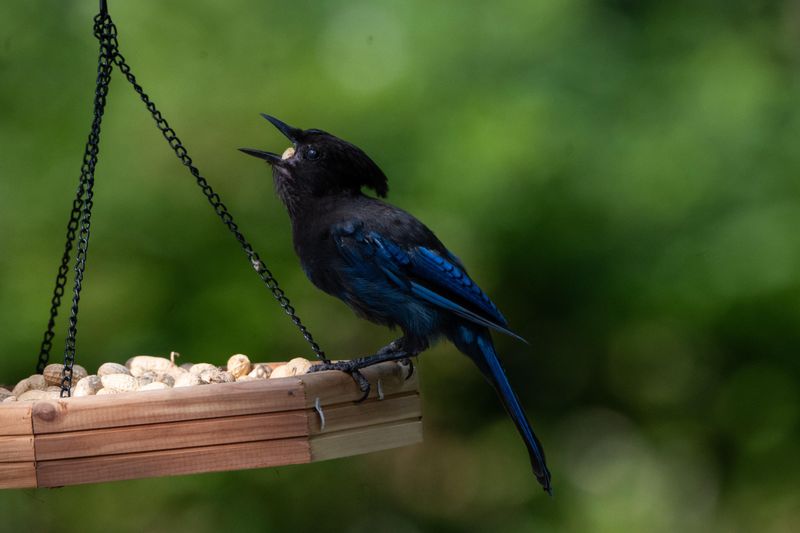
Put up a bird feeder in your yard, and the Steller’s Jay will likely be one of the first birds to find it. These birds are bold, curious, and not easily scared off by new objects in the yard.
While shyer birds like chickadees or nuthatches may take days to approach a new feeder, a Steller’s Jay might check it out the same afternoon you hang it up.
Their confidence around feeders is both impressive and a little amusing to watch. They often arrive with a swagger, land heavily on the feeder, and start grabbing seeds without hesitation.
Sunflower seeds are a particular favorite, but they will also go after peanuts, corn, and mixed seed blends.
Having a Steller’s Jay visit your feeder regularly is actually a good sign for the overall health of your yard’s bird community. Their presence signals that the area feels safe enough for active, aware birds to visit openly.
Over time, their comfort at the feeder can help other birds feel more at ease too.
To keep them coming back without letting them dominate the feeder, try using a platform feeder with a generous surface area. This gives multiple birds space to eat at once.
Offering peanuts in a separate spot can also distract the jays and give smaller birds a chance to eat from the main feeder without too much competition.
7. A Jay Visit Can Signal A Lively Habitat
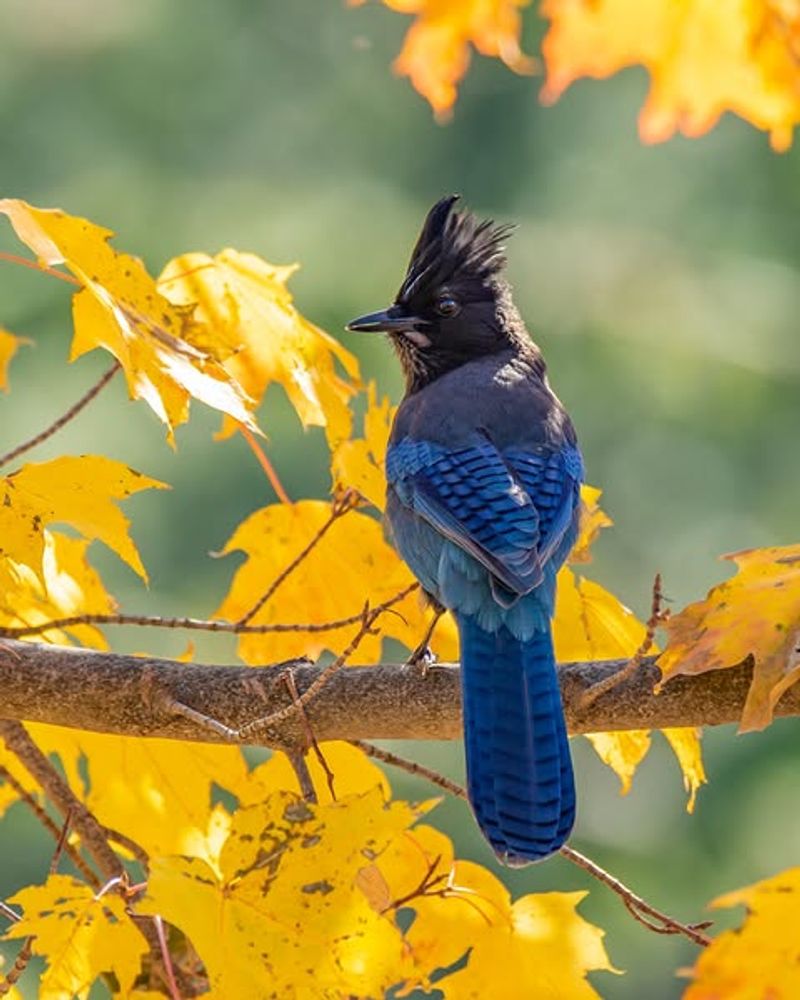
When a Steller’s Jay shows up in your yard, it is often a sign that your outdoor space is doing something right. These birds do not tend to hang around in sterile, lifeless spaces.
They look for yards that have movement, food, water, and shelter all working together.
A yard that attracts Steller’s Jays is usually also attracting other wildlife. You might notice squirrels, smaller songbirds, and even the occasional deer or raccoon in the same general area.
The jay’s presence is often a clue that a whole network of life is using your yard as part of its daily routine.
Ecologically speaking, Steller’s Jays play an important role in spreading seeds, especially acorns. By caching food in the ground and sometimes forgetting where they buried it, they accidentally plant trees.
A yard visited by these birds is participating in a larger ecological cycle without the homeowner having to do a thing.
Celebrating a Steller’s Jay visit is more than just enjoying a pretty bird. It means your yard has reached a level of natural richness that supports real wildlife activity.
Simple steps like adding a birdbath, reducing lawn area, and planting native species can push your yard even further in this direction. The more your space mimics a natural habitat, the more vibrant and alive it will feel all year long.
8. Their Boldness Is Not Aggression
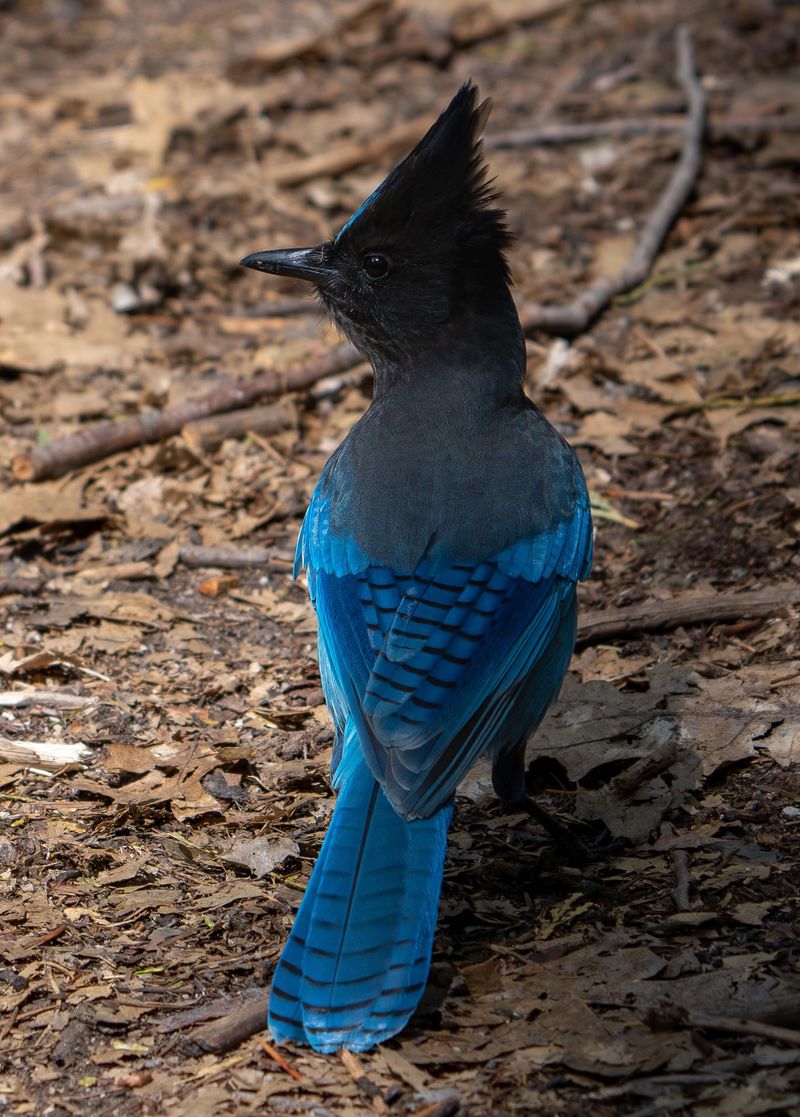
A lot of people see a Steller’s Jay up close for the first time and feel a little startled by how bold it is. These birds do not back away when you step outside.
They hold their ground, tilt their crested head, and stare right back at you with sharp, intelligent eyes. It can feel intense, but it is not a threat.
Steller’s Jays are simply confident birds. They have learned that humans are often sources of food or at least not serious dangers.
Their willingness to stay close is a form of curiosity, not hostility. They are reading the situation and deciding whether you are worth sticking around for.
This boldness is actually one of the things that makes them so enjoyable to observe. You can get much closer to a Steller’s Jay than to most other backyard birds.
If you move slowly and avoid sudden gestures, some individuals will come within a few feet of you without flinching.
Over time, a Steller’s Jay that visits your Oregon yard regularly may even begin to recognize you. Research on corvids, the bird family that includes jays, shows they can remember human faces and associate specific people with positive or negative experiences.
Being consistently calm and offering food now and then can turn a bold stranger into a surprisingly familiar yard companion that greets you on a regular basis.