The Michigan Flower Bed Habit That Makes Powdery Mildew Spread Faster In August
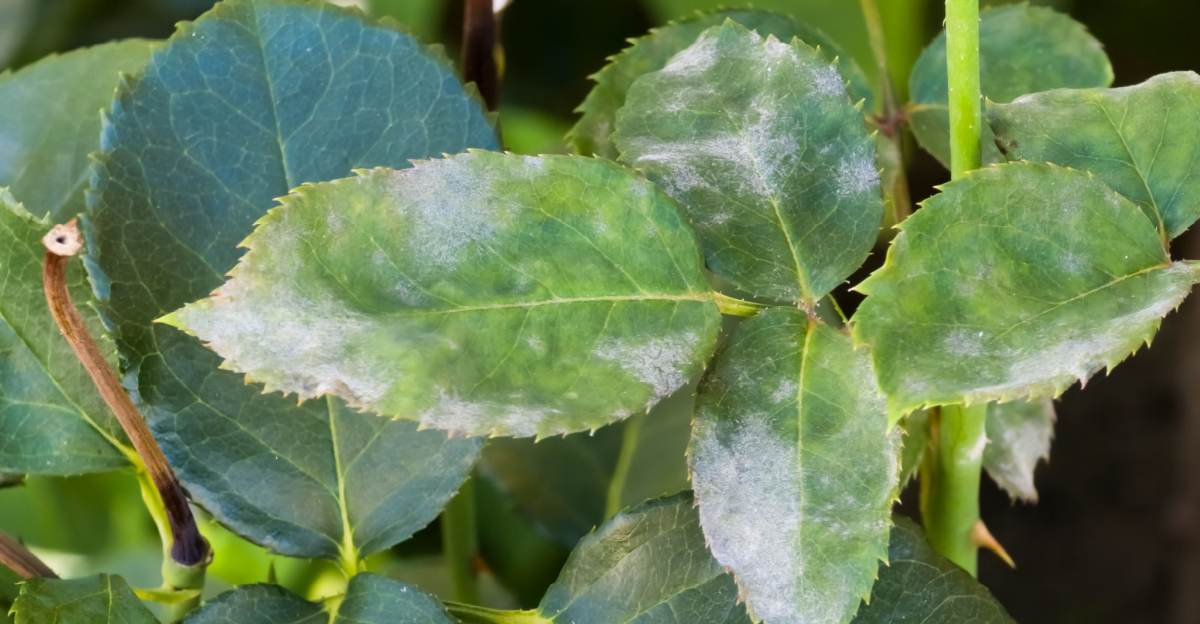
Powdery mildew in a Michigan garden has impeccable timing. It waits for late summer, when the flower beds are at their most impressive, and then moves in with the kind of confidence that makes a gardener genuinely annoyed.
Those white powdery patches on phlox, bee balm, and zinnias are not random bad luck. They are the predictable result of warm days, cool nights, humid Michigan air, and a handful of garden habits that quietly set the whole thing up.
Crowded plants, trapped moisture, overhead watering, and heavy fertilizing are the usual accomplices, and they tend to work together in ways that make the problem spread faster than expected.
Knowing which habits contribute most is the first step toward keeping those white patches from taking over the best weeks of the garden season.
1. Crowded Plants Trap Humid Air
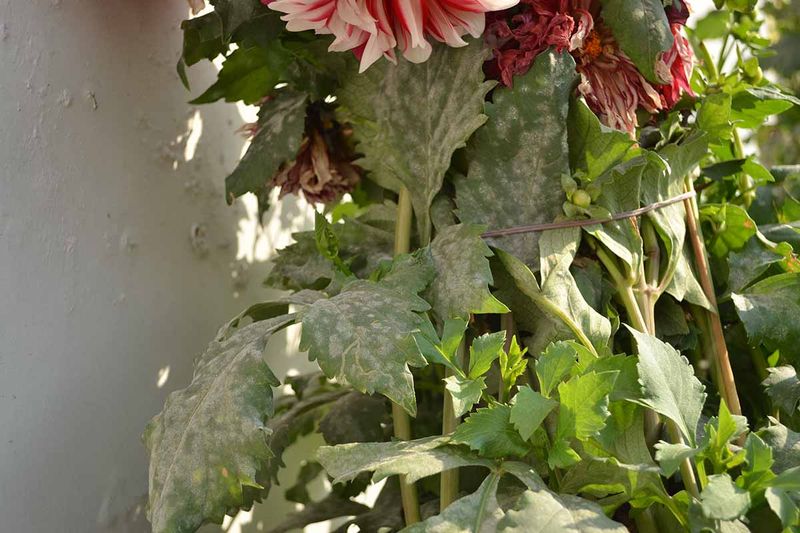
Walk past a packed flower bed on a warm August morning in Michigan and you can almost feel the moisture hanging between the plants.
When stems and leaves press against each other without any breathing room, humid air gets trapped inside the canopy rather than drifting away.
That stagnant moisture creates exactly the kind of environment where powdery mildew pressure builds up quickly.
Powdery mildew does not need standing water on leaves the way some other plant diseases do. It actually thrives when humidity stays high around foliage, especially during the warm days and cooler nights that Michigan experiences through much of August.
Crowded plants hold that humidity close to the leaf surface for hours longer than well-spaced plants would.
Many Michigan homeowners plant generously in spring because the beds look sparse early in the season. By late July or early August, those same plants have filled in dramatically, and what seemed like smart planting has become a dense tangle of foliage.
Perennials like bee balm and garden phlox can double or triple in spread from their spring size.
Thinning out some of that growth in early to mid-summer can reduce how much humid air gets trapped later. Even removing a few stems from the center of a clump improves air movement noticeably.
Giving plants a little more room to breathe is one of the most practical steps a Michigan gardener can take before powdery mildew pressure peaks.
2. Dense Growth Blocks Airflow
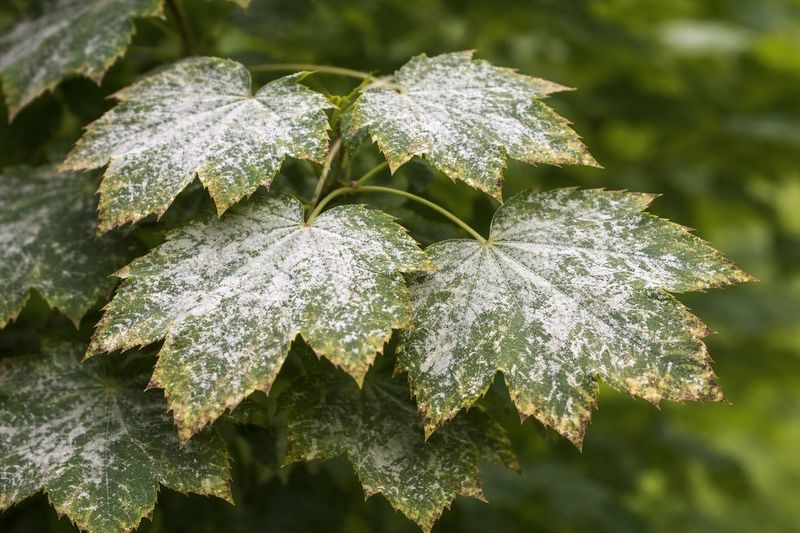
By the middle of August, many Michigan flower beds have grown into something almost unrecognizable compared to how they looked in May.
Perennials that started out small have pushed out thick clusters of stems, and annuals have branched into wide, leafy mounds.
That lush growth is satisfying to see, but it can quietly set the stage for powdery mildew to gain a foothold.
Good airflow through a flower bed matters because moving air carries moisture away from leaf surfaces and keeps the humidity around foliage lower. When growth becomes dense enough to block that movement, air stalls between stems and leaves.
The longer moisture lingers near foliage in that still air, the more favorable conditions become for powdery mildew spores to land and establish.
Your Michigan Garden Changes Every Week. Your Plan Should Too.
Gardening in Michigan changes quickly throughout the season. Every Friday you’ll receive a simple weekly plan showing exactly what to plant, prune, fertilize, harvest, and protect so you never miss the right timing.
Michigan gardens that sit in naturally sheltered spots, like beds tucked against a fence, a wall, or a row of shrubs, tend to have less natural airflow to begin with.
Dense plant growth on top of that shelter can make the situation noticeably worse during the humid stretches that Michigan often sees in late summer.
Selectively removing some inner stems or leaves from crowded clumps can open up the canopy without ruining the look of the bed. Cutting back plants that have already finished blooming also helps.
Gardeners who stay attentive to how their beds are filling in through July often find themselves dealing with far less powdery mildew pressure once August arrives and conditions shift.
3. Shade Makes Mildew Pressure Worse
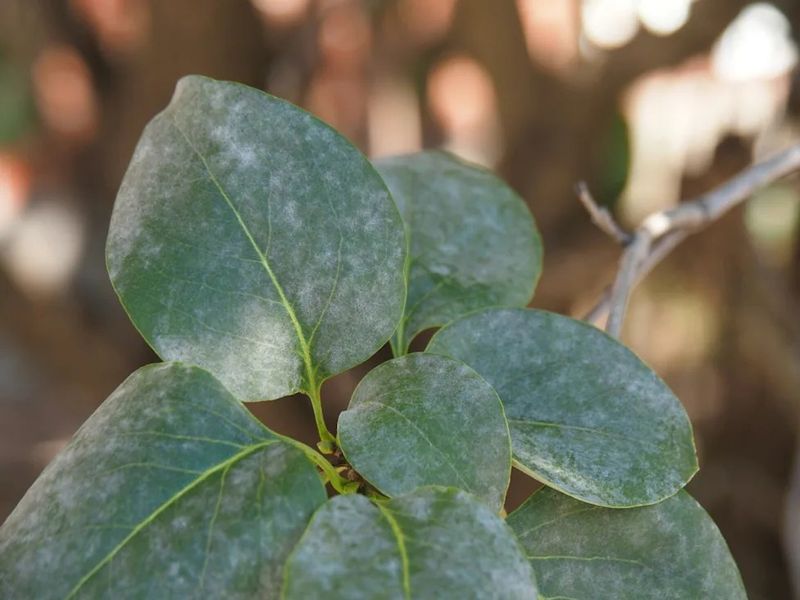
Shaded sections of a Michigan flower bed can look cool and inviting during the hottest weeks of summer, but that shade comes with a trade-off most gardeners do not always consider.
Foliage that spends much of the day out of direct sunlight stays damp longer after morning dew or an evening watering session.
That extended dampness on and around leaves creates an environment where powdery mildew can establish and spread more easily.
Many popular flowering perennials, including bee balm and garden phlox, are often planted in spots that receive partial shade in Michigan landscapes.
As nearby trees grow larger over the years and summer canopies fill in, beds that once got decent sun may end up much shadier than expected.
Homeowners sometimes notice that powdery mildew seems to show up in the shadier sections of a bed well before it appears in sunnier spots.
Shade also slows down how quickly plant tissue dries after watering or heavy dew. Even without overhead irrigation, shaded leaves in a crowded bed can stay moist for hours into the morning, giving powdery mildew spores more time to establish on the surface.
This is especially relevant in yards near Michigan lakes or in areas where morning fog tends to linger.
Thinning out overhead tree branches occasionally, or simply choosing mildew-resistant plant varieties for shadier sections, can reduce how much shade-related pressure builds up.
Pairing shade with crowding and still air makes powdery mildew pressure noticeably worse in August.
4. Late-Day Overhead Watering Adds Humidity

Watering a flower bed on a warm Michigan afternoon feels like a kindness to the plants, but the timing and method can quietly make powdery mildew conditions worse.
When overhead sprinklers or a garden hose sprays water across foliage late in the day, that moisture often stays on leaves through the evening and into the night.
Damp foliage combined with the cooler nighttime temperatures Michigan experiences in August creates a prolonged period of high humidity right at the leaf surface.
Powdery mildew is somewhat unusual among fungal plant diseases because it does not require leaves to be soaking wet to spread.
However, high relative humidity around foliage, especially in a crowded bed where air movement is already limited, does support spore germination and spread.
Late-day overhead watering adds extra humidity on top of what is already present in a dense August flower bed.
Watering earlier in the day, ideally in the morning, gives foliage a chance to dry before temperatures drop in the evening. Switching to drip irrigation or soaker hoses can deliver moisture directly to the root zone without wetting leaves at all.
Both adjustments are relatively simple to make and can reduce how much humidity lingers around plant foliage during the most vulnerable hours of the night.
Michigan gardeners with established perennial borders or mixed annual beds often find that changing their watering routine makes a meaningful difference when powdery mildew pressure is already building in late summer.
5. Heavy Nitrogen Encourages Soft Growth
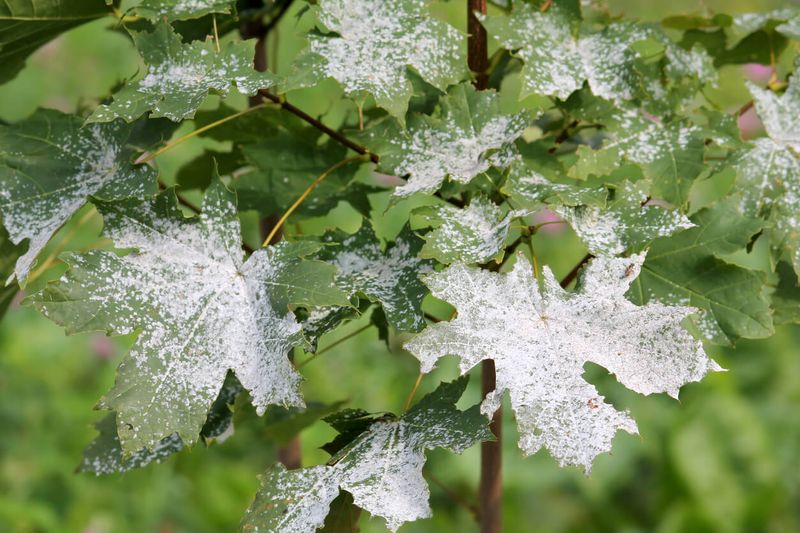
Lush, deep-green flower beds are satisfying to look at, and many Michigan gardeners add fertilizer through the growing season to keep plants looking their best.
However, applying heavy doses of nitrogen fertilizer in mid to late summer can encourage a flush of soft, tender new growth at exactly the wrong time of year.
That soft tissue is more vulnerable to powdery mildew than older, more established growth.
Powdery mildew tends to establish most easily on young, actively growing plant tissue.
When nitrogen pushes out a wave of soft new stems and leaves in late July or August, those tender surfaces are available for mildew spores to colonize just as humidity and crowding conditions are already building.
The combination can lead to noticeably faster spread across a flower bed that might otherwise have managed the pressure reasonably well.
Perennials like garden phlox, bee balm, and zinnias that are already filling in densely by August do not generally need heavy nitrogen feeding at that stage of the season.
A lighter touch with fertilizer, or switching to a balanced or lower-nitrogen formula, can help reduce the amount of soft growth produced during the most vulnerable weeks of late summer.
Michigan gardeners who fertilize heavily through the summer sometimes notice that their most fertilized plants are also the ones that show powdery mildew earliest.
Moderating nitrogen applications as summer progresses is a straightforward adjustment that can support healthier plants through the end of the growing season without encouraging the kind of soft growth that mildew tends to favor.
6. Early White Patches Should Not Be Ignored
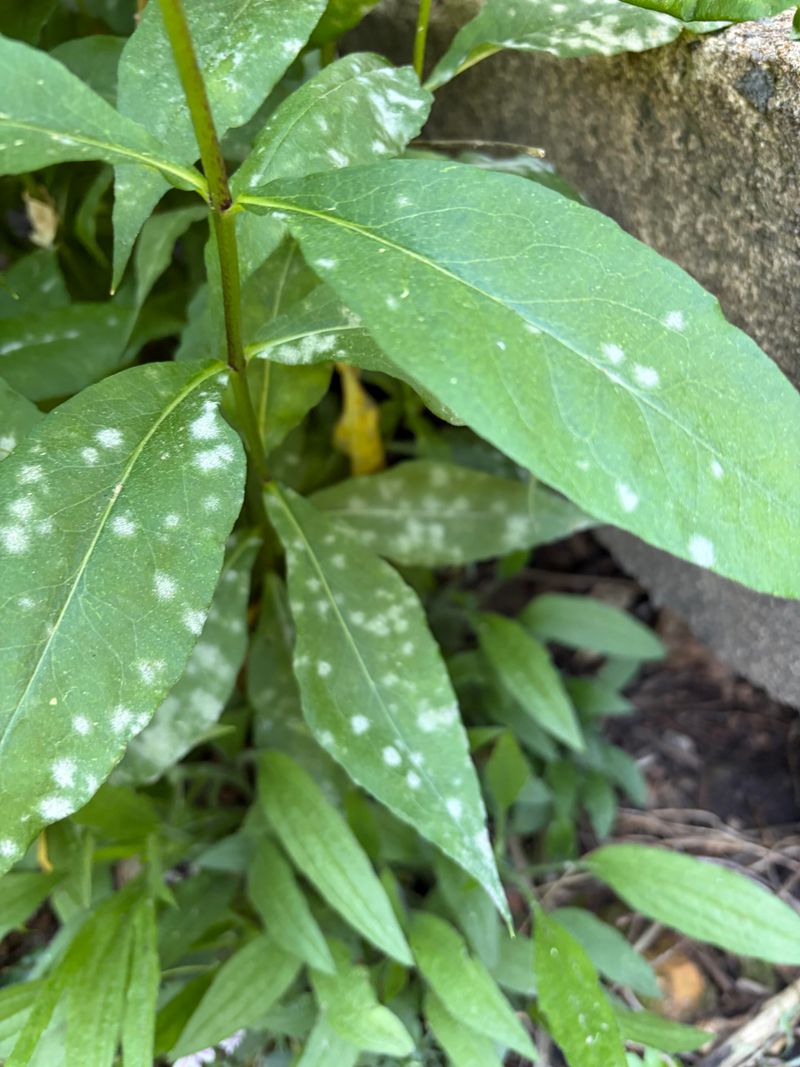
Spotting the first faint white dusty patches on a leaf or two in a Michigan flower bed is easy to brush off, especially when the rest of the planting looks healthy and full.
Those early signs, however, often indicate that powdery mildew spores are already active and spreading through the bed.
Waiting to respond gives the disease more time to move from plant to plant while conditions in August remain favorable.
Powdery mildew spreads through airborne spores that travel easily from leaf to leaf and plant to plant, particularly in crowded beds where foliage is touching.
Once established on a few leaves, it can expand across an entire clump of phlox or bee balm surprisingly quickly during a stretch of warm, humid Michigan weather.
The earlier a gardener notices and responds, the more manageable the situation tends to be.
Removing affected leaves promptly and disposing of them away from the garden bed can reduce how many spores are available to spread further.
Avoiding overhead watering once white patches appear and improving airflow by thinning crowded growth are both practical early responses.
Some gardeners also find that organic options like diluted neem oil or potassium bicarbonate-based sprays can help slow spread when applied at the first sign of infection.
Checking susceptible plants like phlox, zinnias, and black-eyed Susans carefully once or twice a week through August helps catch early patches before they expand.
A few minutes of attentive observation can make a real difference in how the rest of the season plays out in a Michigan flower bed.
7. Susceptible Flowers Need Extra Space

Some flowers are simply more prone to powdery mildew than others, and knowing which ones are susceptible can help Michigan gardeners plan their beds more thoughtfully.
Garden phlox, bee balm, zinnias, black-eyed Susans, and tall garden phlox are all popular choices in Michigan landscapes, and all of them are known to be relatively susceptible to powdery mildew pressure under the right conditions.
Planting these flowers with extra space around them is one of the most practical ways to reduce risk.
When susceptible varieties are planted close together or mixed in tightly with other dense-growing plants, any mildew that develops has an easy path to spread. Leaves and stems that touch neighboring plants essentially create a bridge for spores to cross.
Giving susceptible flowers a bit more room than the plant tag suggests is a reasonable precaution in Michigan yards where late-summer humidity tends to build.
Mildew-resistant cultivars of popular flowers are widely available and worth seeking out when replacing or adding to a Michigan flower bed.
Breeders have developed resistant versions of garden phlox, bee balm, and zinnias that perform noticeably better under humid conditions.
Combining resistant varieties with thoughtful spacing makes a meaningful difference over the long run.
Conditions vary quite a bit across Michigan, from shady urban yards to sunny lakeside borders to clay-heavy soils that hold moisture longer.
Gardeners who pay attention to which plants in their specific yard tend to show mildew first can adjust spacing and variety choices over time to build a bed that handles late-summer pressure more gracefully each year.