The Texas Trees That Handle Tornado Winds Better Than Any Others
Tornado season in Texas is a serious thing. When those winds pick up and the sky turns that particular shade of green, what’s growing in your yard suddenly matters in a very practical way.
The wrong trees become projectiles, structural hazards, and expensive disasters. The right ones bend, hold their ground, and come through with significantly less damage than anyone might expect given what they just endured.
Not all trees handle extreme wind equally. Tree selection in tornado prone Texas regions is one of those landscaping decisions that most homeowners never think about until after something goes wrong.
But the structural integrity of a tree, the depth of its root system, the flexibility of its wood, and the way its canopy responds to extreme wind loads all determine whether that tree becomes part of the problem or part of what holds your yard together.
Texas has some excellent options for wind resilient trees that are also beautiful, native, and well suited to the local climate.
1. Live Oak
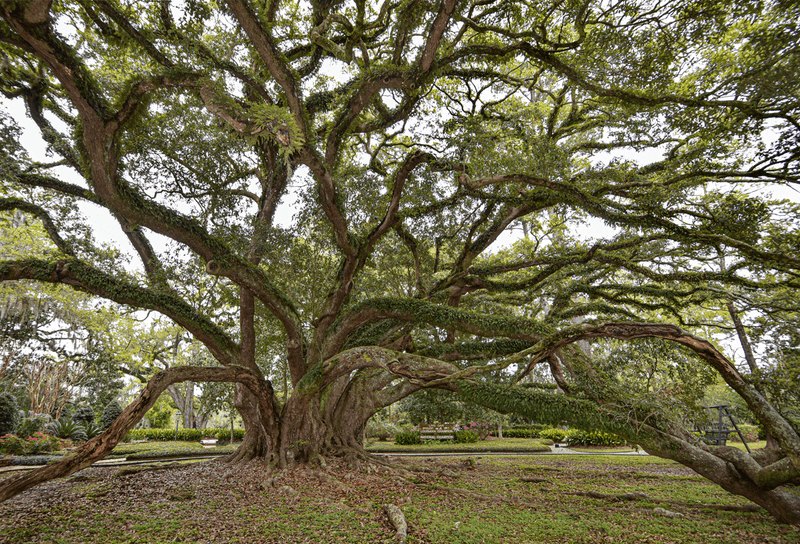
Few trees in Texas have earned as much respect as the live oak. Walk through any old Texas neighborhood, ranch, or historic property, and you will almost always find at least one of these broad, sprawling giants anchoring the landscape.
There is a reason they have been planted for generations, and it goes far beyond good looks.
Live oaks are recognized in wind-resistance research as some of the strongest performers among landscape trees. Their secret is a combination of factors working together.
The wood is incredibly dense and hard. The canopy grows low and wide, which lowers the center of gravity and reduces the amount of wind force the tree catches.
The root system spreads far and deep, giving the tree a firm grip in the soil even during powerful gusts.
Another advantage is that live oaks are semi-evergreen, meaning they hold their leaves through most of the year.
During storms, leaves can act like sails, but the live oak’s small, thick leaves create less drag than the large, flat leaves of other species. That small detail makes a real difference when a tornado-strength wind hits your yard.
Live oaks do need space to grow properly. A mature tree can spread 60 to 100 feet wide, so they are not ideal for small urban lots.
But if you have room, planting a live oak is one of the best long-term investments you can make. Give it good drainage, full sun, and minimal interference, and it will reward you with decades of tough, reliable shade that stands up to whatever Texas weather delivers.
2. Bald Cypress
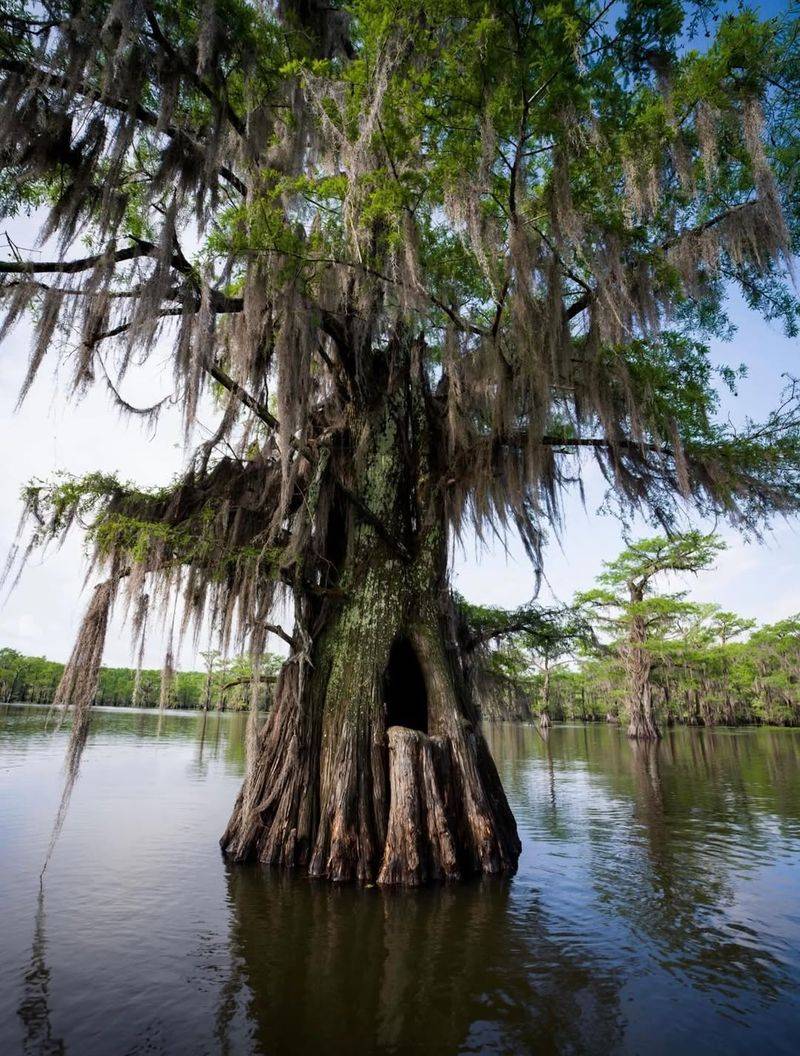
Bald cypress trees have been around for millions of years, and they look like they know it. There is something ancient and unshakeable about the way they stand, especially along Texas rivers, lakes, and flood-prone lowlands.
They have survived ice ages, floods, and countless storms, and they are not about to let a Texas tornado ruin their day.
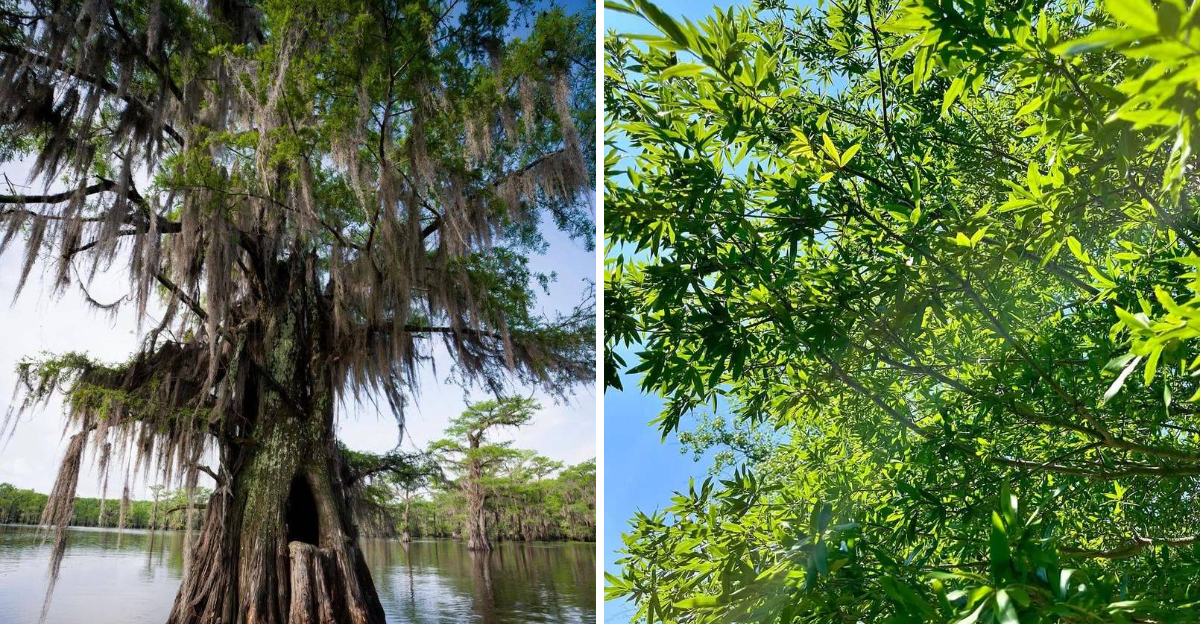
What makes bald cypress so tough in high winds is its structure. The trunk flares dramatically at the base, creating a wide, stable anchor point in the soil.
Your Texas Garden Changes Every Week. Your Plan Should Too.
Gardening in Texas changes quickly throughout the season. Every Friday you’ll receive a simple weekly plan showing exactly what to plant, prune, fertilize, harvest, and protect so you never miss the right timing.
The wood is naturally rot-resistant and flexible enough to absorb wind energy without snapping. Unlike brittle trees that crack under pressure, bald cypress bends and sways just enough to release tension without losing structural integrity.
Bald cypress thrives in wet, low-lying areas where other trees struggle. If you have a soggy corner of your yard, a drainage swale, or a property near a creek or pond, bald cypress is one of the best choices available.
It handles standing water, seasonal flooding, and heavy rain with ease. That makes it especially valuable in parts of Texas that get soaked during storm season.
In drier sites, bald cypress can still grow well with some supplemental watering while it gets established. Once its roots are deep and wide, it becomes surprisingly drought-tolerant for a tree that loves water.
Give it full sun and enough room to develop its natural form, and you will have a long-lived, storm-hardy landmark tree that can anchor your landscape for a century or more.
3. Cedar Elm
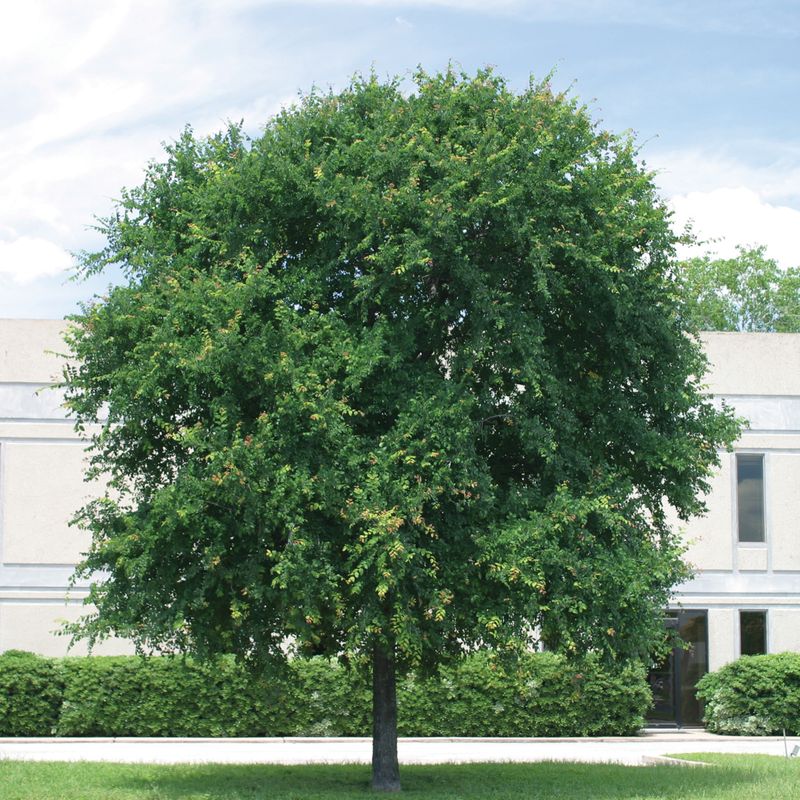
Cedar elm does not always get the spotlight it deserves. It is not as dramatic as a live oak or as distinctive as a bald cypress, but ask any experienced Texas arborist which native tree holds up best in tough conditions and cedar elm is almost always near the top of the list.
It is the quiet workhorse of the Texas tree world. One of the biggest advantages cedar elm has in storm situations is its leaf size.
The leaves are small and somewhat leathery, which means the canopy does not catch as much wind as trees with large, flat leaves.
Less wind resistance in the canopy means less stress on the branches and trunk when a strong storm moves through. That simple design feature helps cedar elm stay standing when other trees are losing limbs.
Cedar elm is also native to a huge portion of Texas, which means it is already adapted to the local climate, soils, and rainfall patterns. It handles summer heat, extended drought, clay soils, and rocky limestone terrain without complaint.
That adaptability makes it a low-maintenance option for homeowners who want a tough native tree without a lot of fuss.
The tree grows to a medium-large size, typically 50 to 70 feet tall, with a rounded to vase-shaped canopy. It does well in full sun and a wide range of soil types.
Young trees benefit from structural pruning to develop a strong central leader and well-spaced branches. Invest a little care early on, and cedar elm will become one of the most dependable trees on your property for wind resistance and shade.
4. Bur Oak
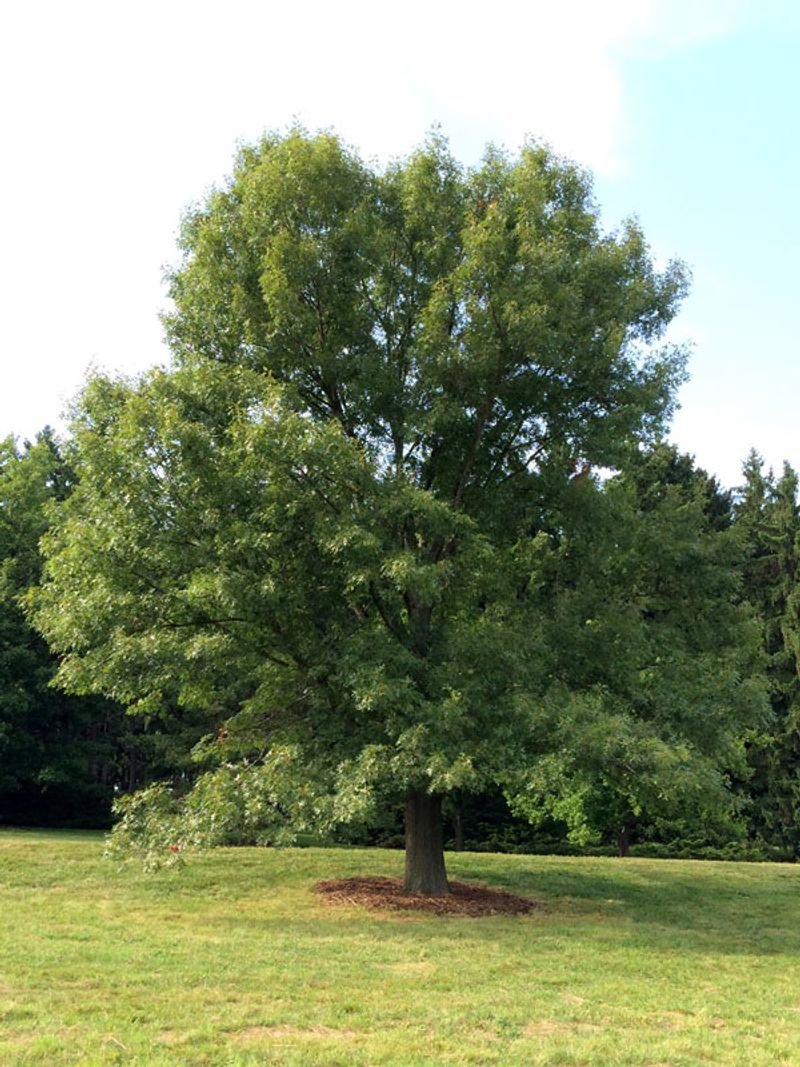
If trees had personalities, the bur oak would be the strong, silent type. It does not grow fast.
It does not demand attention. It just puts its energy into building one of the most structurally sound root systems and trunk structures of any tree in North America. Over time, that patience pays off in a tree that is almost impossible to knock down.
Bur oaks are native to Texas and are especially common in the Cross Timbers region and the eastern portion of the state. They are built for extremes.
Their bark is thick and corky, which historically helped them survive wildfires on the open prairie. That same thick bark also adds structural strength and protects the vascular tissue of the tree during physical stress events like storms.
The root system of a mature bur oak is massive. Taproots can reach deep into the soil, and lateral roots spread far beyond the canopy edge.
That underground network gives the tree incredible anchoring power. During high winds, when shallow-rooted trees are getting toppled, bur oaks hold firm because their grip on the ground goes far deeper than most people realize.
Bur oak does need space. A fully grown specimen can reach 60 to 80 feet tall with an equally wide spread.
It is not a good fit for tight urban lots or small suburban backyards. But for rural properties, large lots, or open Texas landscapes, it is one of the most rewarding long-term plantings you can make.
Plant one now, and future generations will benefit from its shade and strength for hundreds of years.
5. Southern Magnolia
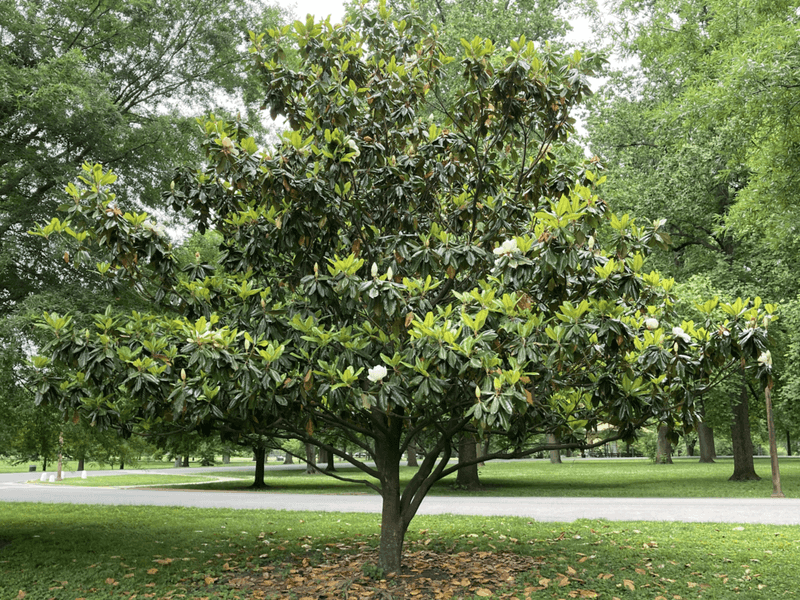
Southern magnolia gets a lot of attention for its gorgeous white flowers and glossy evergreen leaves, but there is more to this tree than beauty.
Research on hurricane and storm wind damage has consistently placed southern magnolia among the most wind-resistant trees available in the South.
That combination of good looks and toughness makes it a standout choice for Texas homeowners.
The reason southern magnolia handles high winds so well has a lot to do with its form. When allowed to grow naturally without heavy pruning, it develops a dense, conical to oval canopy that is aerodynamically efficient.
Wind moves around and through it rather than slamming into a flat wall of branches. The wood is also moderately strong and flexible, which helps absorb gusts without fracturing. Southern magnolia is an evergreen, which means it holds its leaves year-round.
In winter storms, that can sometimes increase wind load, but in warm-season tornado events, the dense canopy actually helps the tree manage wind pressure more effectively than open-canopied deciduous trees.
The thick, leathery leaves are also less likely to shred or strip away in high winds compared to thinner-leaved species.
For best results in Texas, plant southern magnolia in well-drained soil with full to partial sun. It prefers slightly acidic soil and does not love heavy clay without amendment.
Give it room to develop its natural form, ideally 30 to 40 feet of clearance from structures, and avoid heavy pruning that disrupts its balanced shape.
A well-sited southern magnolia can grow for well over a century, becoming a reliable and beautiful storm-resistant anchor for your yard.
6. Willow Oak
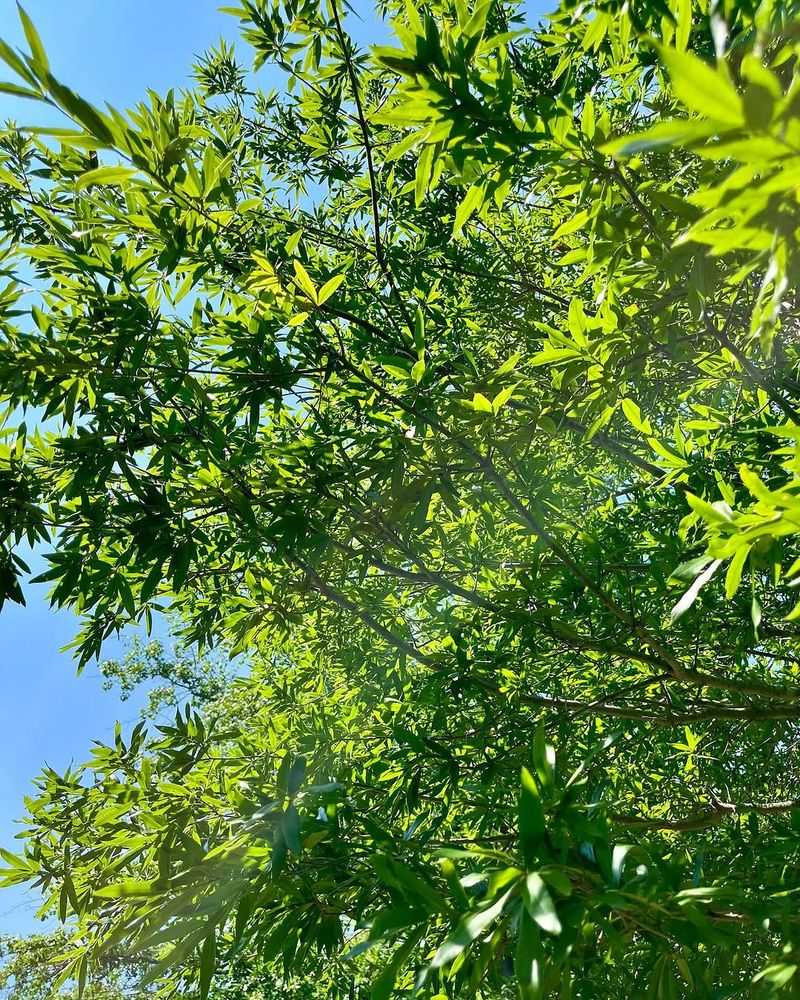
Willow oak has a look that surprises a lot of people when they first encounter it. The leaves are long, narrow, and fine-textured, looking almost like willow leaves, but make no mistake, this is a true oak with all the structural strength that comes with it.
That unusual leaf shape is actually one of the reasons willow oak handles wind so well. Because the leaves are narrow and lightweight, the canopy creates far less wind resistance than oaks with large, broad leaves.
During a storm, those fine leaves allow air to pass through more easily, reducing the overall force pushing against the tree.
The branch structure beneath those leaves is strong and well-organized, with a naturally rounded canopy that distributes wind load evenly across the tree.
Willow oak prefers moist, well-drained sites and does especially well in low spots, near drainage areas, or in yards with heavier clay soils that retain moisture.
It is more tolerant of wet feet than many other oaks, which makes it a smart pick for Texas properties that experience seasonal flooding or slow-draining soils after heavy rains. It also adapts reasonably well to urban conditions.
In terms of size, willow oak typically reaches 40 to 60 feet tall with a rounded crown. It grows at a moderate pace, faster than bur oak but still steady enough to develop strong wood.
Street tree programs in many Texas cities have used willow oak successfully for years, which is a good sign of its durability and adaptability. If you want shade, wind resistance, and fine-textured beauty, willow oak is well worth considering for your yard.
7. Texas Red Oak
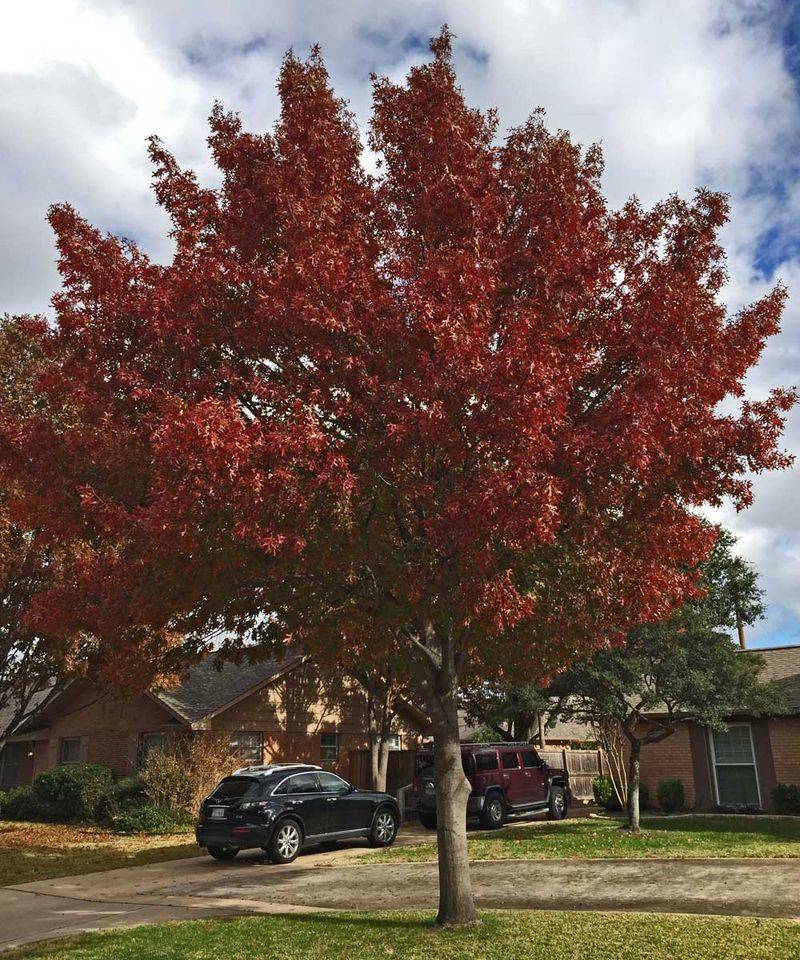
Texas red oak brings something special to the table that most wind-tough trees cannot offer: stunning fall color. In a state not exactly famous for dramatic autumn foliage, watching a Texas red oak turn deep red and orange in the fall is genuinely exciting.
But beyond the seasonal show, this tree earns its place on this list through solid structure and native toughness.
As a medium-sized native oak, Texas red oak typically reaches 30 to 50 feet tall with a rounded, spreading canopy. That moderate size actually works in its favor during high winds.
Smaller canopies catch less wind force overall, and because the tree is native to Texas, its wood density and root development are well-suited to the local soil and climate conditions it will face throughout its life.
The key to getting the most wind resistance out of a Texas red oak is early pruning. Young trees should be pruned to develop a strong central leader and well-spaced scaffold branches.
Removing crossing branches, co-dominant stems, and weak attachments early in the tree’s life sets it up for a structurally sound future. Skipping this step can lead to problems when major storms arrive decades later.
Texas red oak grows best in well-drained soils and does not tolerate heavy clay or consistently wet conditions as well as some other trees on this list. It prefers full sun and slightly acidic to neutral soil.
Avoid planting it in compacted urban sites without soil improvement. When sited and pruned correctly, Texas red oak becomes a reliable, beautiful, and storm-tougher native tree that outperforms many faster-growing but weaker alternatives planted across Texas yards every year.