The Native Texas Vine That Covers Entire Fences In Color And Asks Nothing In Return
Most vines that cover a Texas fence with impressive color come with a list of conditions attached.
They need supplemental water through summer, careful pruning to stay in bounds, or the kind of rich amended soil that a Texas fence line almost never naturally provides.
There is a native Texas vine that throws out all of those requirements and still delivers one of the most striking fence-covering performances in the state.
It blooms with color that hummingbirds seek out from a distance, returns reliably each season with more presence than the year before.
It also andles drought and poor soil without missing a beat, and spreads across a fence structure without the aggressive takeover behavior that makes so many vigorous vines a long-term regret.
Texas heat is not a challenge for this plant. It is simply the condition it was shaped by over generations, and it shows in the way this vine performs through the exact months when everything else along the fence is struggling.
1. Meet Coral Honeysuckle
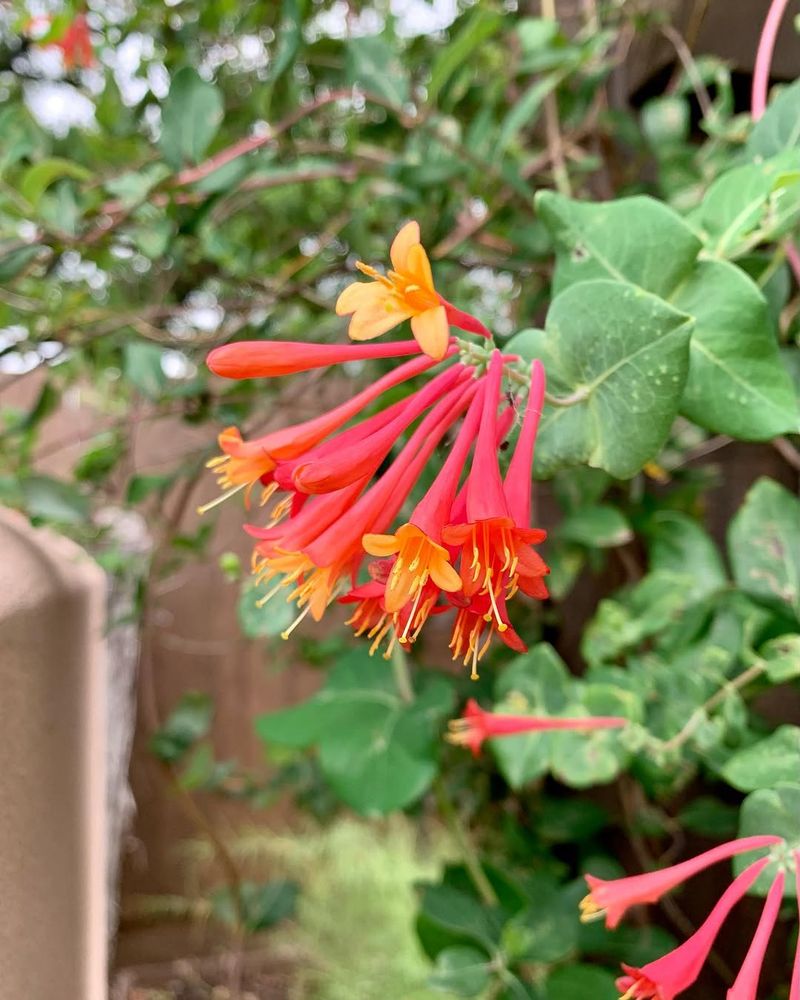
Walk through almost any Texas neighborhood in spring, and you might spot a fence completely draped in clusters of vivid red and coral blooms.
That is Coral Honeysuckle, also known by its scientific name Lonicera sempervirens, and it is one of the most rewarding native vines you can grow in the Lone Star State. Unlike its invasive Japanese cousin, this vine plays nicely with the surrounding landscape.
Coral Honeysuckle is a fast-growing, semi-evergreen vine that can reach anywhere from 10 to 20 feet long when given the right support. It wraps and twines naturally around fences, trellises, arbors, and pergolas without needing much encouragement.
Gardeners love it because it fills in bare spaces quickly and creates a lush, layered look that looks intentional and polished.
One of the biggest reasons this vine stands out is its ecological value. Hummingbirds absolutely love the tubular flowers, and you will often see them hovering nearby from early spring through summer.
Butterflies and bees also visit regularly, making your yard feel like a living, buzzing garden sanctuary.
Native plants like Coral Honeysuckle are adapted to local conditions, which means they do not need constant watering, heavy fertilizing, or fussy soil prep. Once established, they handle Texas summers with ease.
Planting a native vine is one of the smartest moves a Texas gardener can make, both for beauty and for the health of the local ecosystem. If you want big color with very little effort, Coral Honeysuckle is ready to deliver exactly that.
2. Stunning Color Display
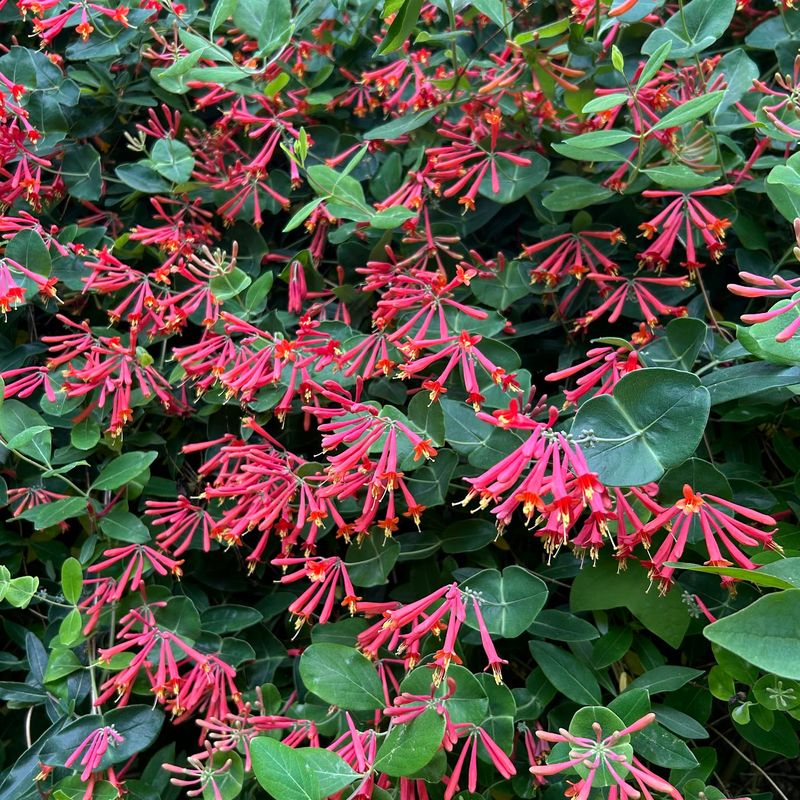
Few sights in a Texas garden are as eye-catching as a fence draped in Coral Honeysuckle flowers in full bloom.
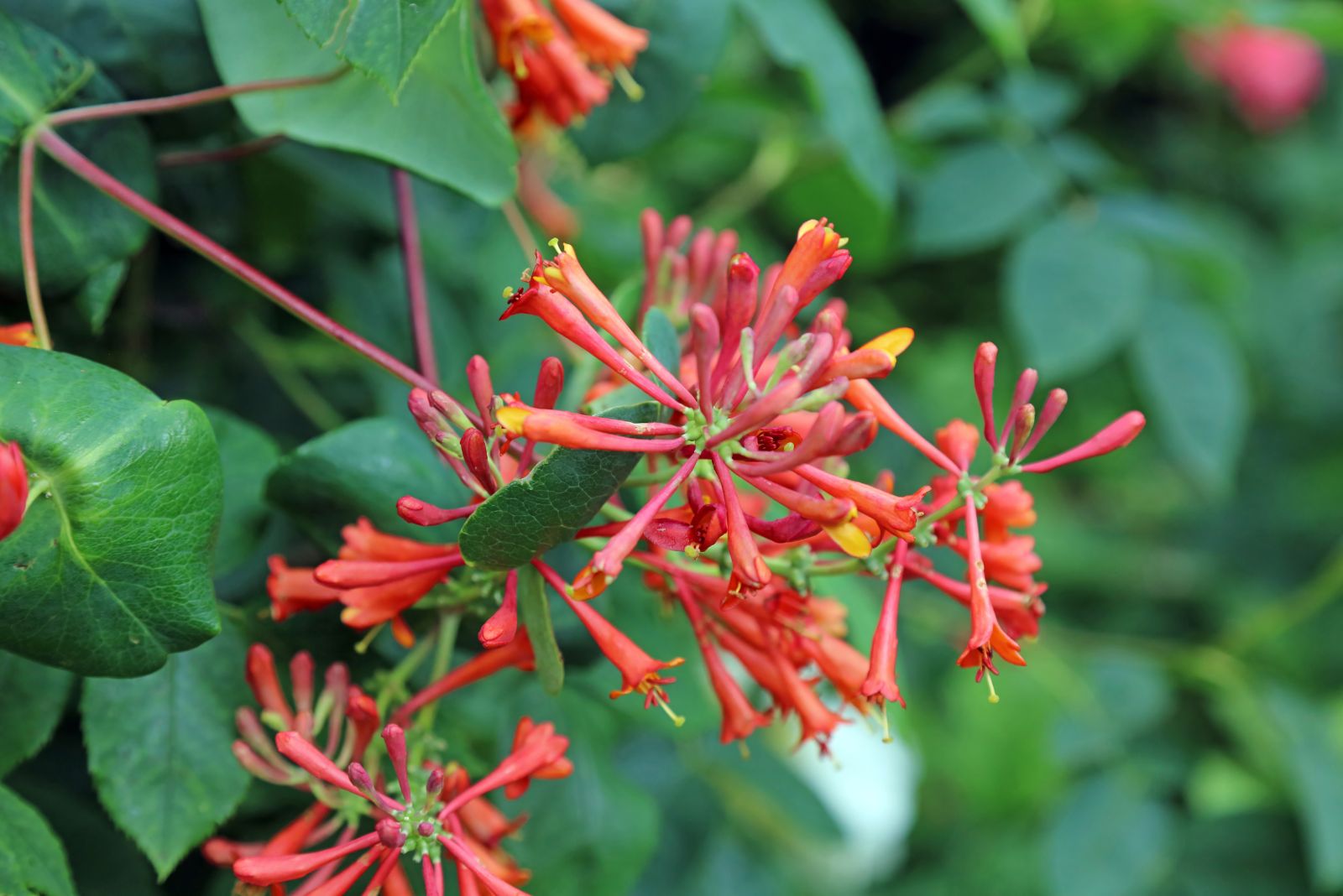
The tubular blossoms come in shades ranging from deep scarlet red to soft coral orange, and they appear in clusters that practically glow against the green foliage.
When the morning sun hits them just right, the whole fence looks like it is on fire in the best possible way.
Blooming typically begins in early spring and can continue through late summer, especially when the vine is well-established and gets adequate sunlight.
Your Texas Garden Changes Every Week. Your Plan Should Too.
Gardening in Texas changes quickly throughout the season. Every Friday you’ll receive a simple weekly plan showing exactly what to plant, prune, fertilize, harvest, and protect so you never miss the right timing.
Some gardeners report sporadic blooms even into early fall, which means you get months of color rather than just a few fleeting weeks. That kind of long-lasting display is hard to beat with most other flowering plants.
The color contrast between the bright flowers and the deep green leaves makes Coral Honeysuckle a natural focal point in any yard. It draws the eye along the length of a fence, creating a dynamic, flowing look that feels both wild and intentional at the same time.
Neighbors will stop and stare, and you will get plenty of questions about what you are growing.
Beyond pure beauty, the color display also serves a functional purpose. The vivid red hues are specifically designed by nature to attract hummingbirds, which are drawn to red tubular flowers more than almost any other shape or color.
So every time you admire the blooms, you are also setting the stage for a regular hummingbird show right outside your window. That combination of beauty and wildlife activity is truly hard to match in a single plant.
3. Growth And Coverage
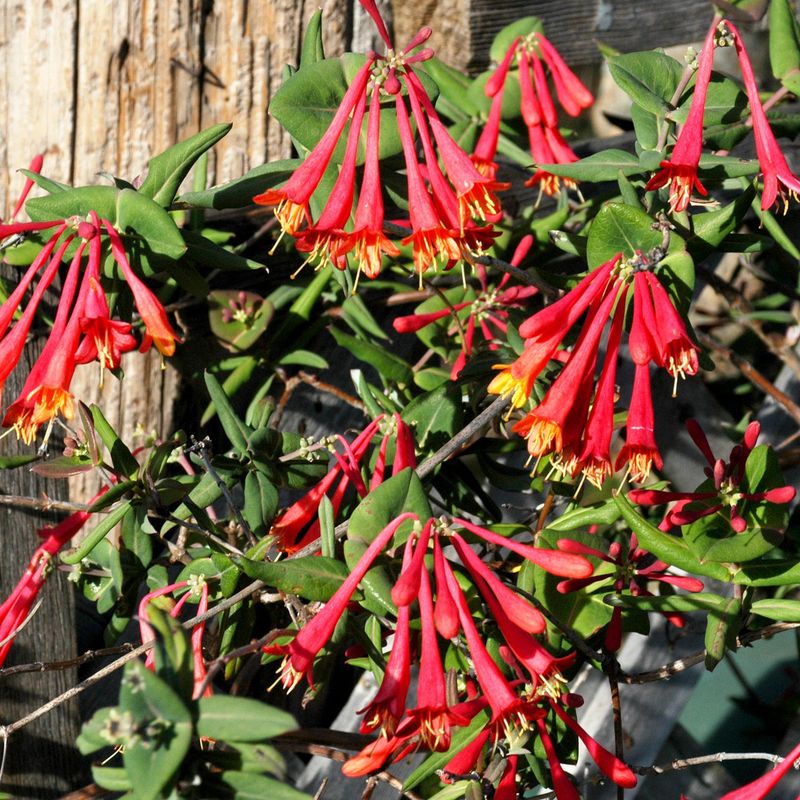
Speed is one of Coral Honeysuckle’s most impressive qualities. Under good conditions, this vine can grow several feet in a single season, quickly transforming a bare fence or plain trellis into a lush green wall of color.
If you have ever stared at an ugly chain-link fence and wished it would just disappear, Coral Honeysuckle is basically your solution.
The vine climbs by twining its stems around whatever structure is nearby. It works well on wooden fences, wire trellises, metal arbors, and even rough brick or stone walls with added support.
For best coverage along a fence line, plant individual vines about 5 to 8 feet apart. This spacing gives each plant enough room to spread without crowding, while still filling in the gaps within a season or two.
Adding a simple wire trellis or attaching horizontal support wires along a wooden fence gives the vine something to grab onto as it grows. Without some kind of support structure, the stems can flop or tangle messily.
A little bit of early guidance goes a long way toward training the vine to spread evenly across the full width and height of your fence.
Once Coral Honeysuckle finds its footing, it grows with real determination. You will notice new shoots reaching outward and upward almost weekly during the growing season.
The semi-evergreen foliage stays on the vine through most Texas winters, meaning your fence gets year-round coverage rather than going bare in the cold months.
For gardeners who want privacy screening along with beauty, this vine checks both boxes at once without requiring constant attention or special care.
4. Low Maintenance Requirements
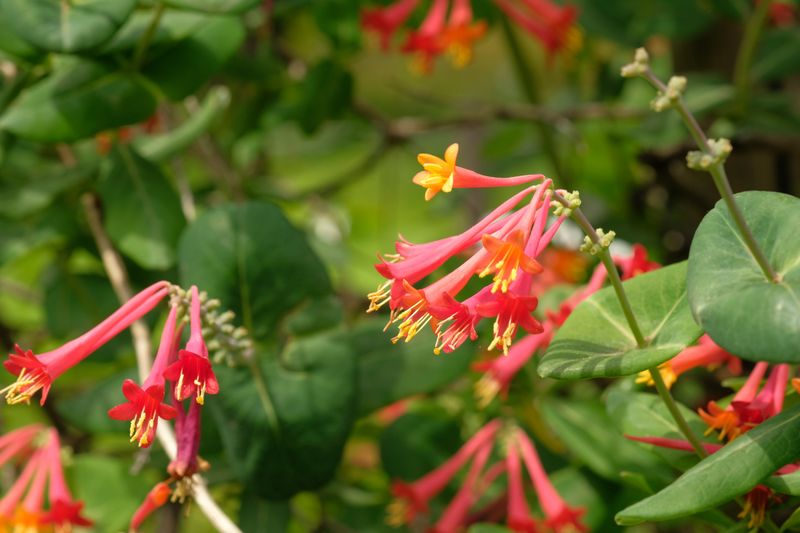
Honestly, one of the best things about Coral Honeysuckle is how little it asks of you once it gets settled. Most flowering vines demand regular feeding, frequent watering, and constant pruning just to look decent.
Coral Honeysuckle flips that script entirely. After the first growing season, it largely takes care of itself and keeps on blooming year after year.
Pruning is optional rather than mandatory. If the vine starts growing in a direction you do not want, a quick trim after the main bloom period in late summer keeps things tidy.
Cutting back any dry or crossing stems once a year is really all the shaping it needs. Heavy pruning is not recommended because it can reduce the number of blooms in the following season.
Fertilization is rarely needed and can actually cause problems if overdone. Too much nitrogen encourages leafy growth at the expense of flowers, which defeats the whole purpose.
If your soil is very poor, a light application of a balanced slow-release fertilizer in early spring is plenty. Most Texas soils already have enough nutrients to keep this vine happy without any added help.
Drought tolerance is another huge advantage for Texas gardeners. Once established, Coral Honeysuckle handles dry spells remarkably well.
It is adapted to the region’s natural rainfall patterns and does not need supplemental irrigation during normal weather conditions. During extended droughts, a deep watering every couple of weeks keeps it going strong.
Compared to thirsty exotic plants that need babying through every hot Texas summer, this native vine feels like a breath of fresh air for gardeners who want results without the constant work.
5. Wildlife And Ecological Benefits
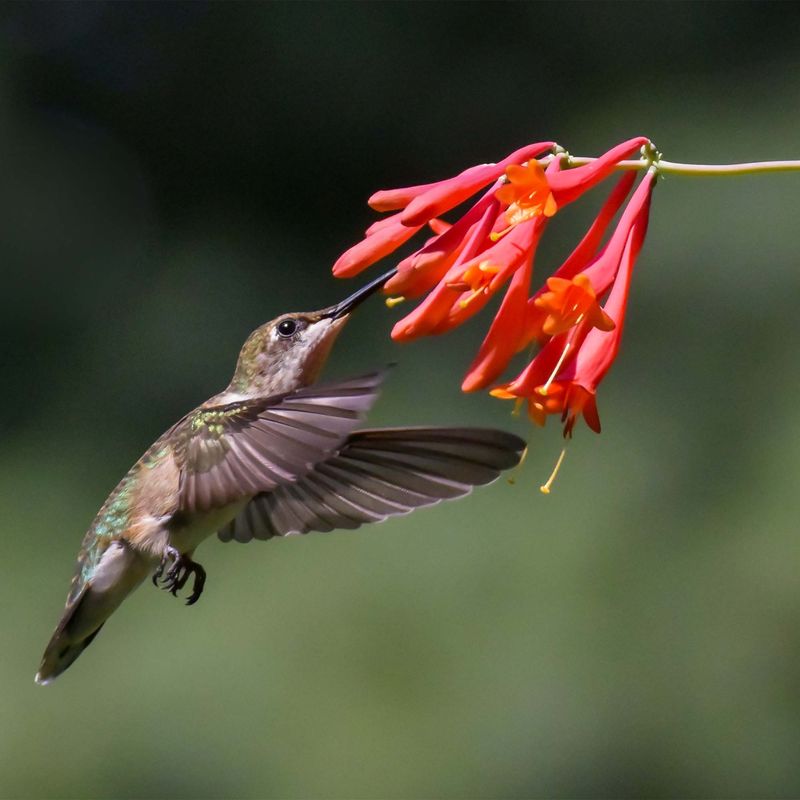
Plant Coral Honeysuckle and your yard becomes a wildlife destination almost overnight. Hummingbirds are the most famous visitors, and they show up reliably once the flowers open in spring.
The long tubular shape of the blossoms is perfectly designed for hummingbird beaks, making it one of the top native plants for attracting these tiny, fast-moving birds to your outdoor space.
Beyond hummingbirds, the flowers draw in a steady parade of pollinators. Bumblebees, native bees, and various butterfly species all visit the blooms throughout the growing season.
Supporting pollinators has become increasingly important as many native bee populations face pressure from habitat loss and pesticide use.
Planting natives like Coral Honeysuckle is a direct and meaningful way to help rebuild pollinator-friendly habitat right in your own backyard.
The dense foliage also provides valuable cover for small birds and beneficial insects. Songbirds sometimes nest within the tangled stems, using the thick growth as shelter from predators and harsh weather.
In late summer, small red berries appear on the vine after the flowers fade, and birds eagerly eat them as a natural food source. Watching birds pick at the berries on a quiet afternoon is genuinely one of the simple joys of having this vine in your yard.
From an ecological standpoint, native plants like Coral Honeysuckle support the entire food web in ways that non-native plants simply cannot replicate.
Native insects evolved alongside these plants over thousands of years, and they depend on them for food and reproduction.
By choosing native vines for your fence, you are doing something genuinely good for the local environment while also making your yard look absolutely beautiful. That is a rare and wonderful combination.
6. Planting And Care Tips
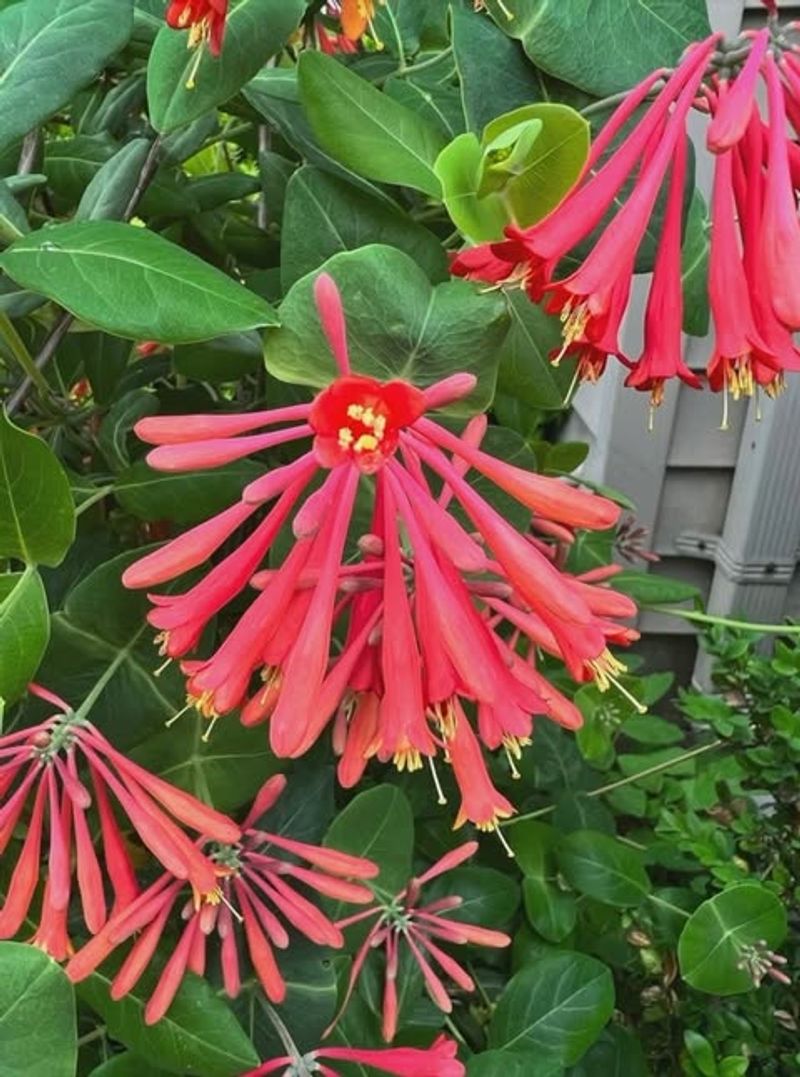
Getting Coral Honeysuckle off to a strong start is easier than you might expect. Choose a location that receives full sun to partial shade.
Full sun produces the most abundant blooms, but the vine handles afternoon shade well, which is a real benefit during brutal Texas summers when the sun can be overwhelming for many plants.
Soil preparation does not need to be complicated. Coral Honeysuckle tolerates a wide range of soil types, including the heavy clay and rocky soils common across Texas.
Loosening the soil about 12 inches deep before planting helps the roots establish faster. Adding a layer of compost to the planting hole gives the young vine a nutritional boost during that critical first growing season when strong root development matters most.
Water the newly planted vine deeply and consistently for the first few months. Keeping the root zone moist but not soggy encourages fast establishment.
Once you see strong new growth, you can begin tapering off watering and letting the vine adapt to natural rainfall patterns. Mulching around the base of the plant helps retain soil moisture and keeps the roots cooler during summer heat.
For companion planting, consider pairing Coral Honeysuckle with native Texas perennials like Black-eyed Susans, Salvia, or Turk’s Cap. These plants share similar growing conditions and together create a layered, colorful planting that looks professionally designed.
The combination also maximizes the ecological benefits by providing multiple bloom types for pollinators across different seasons.
A simple wire trellis or wooden lattice attached to your fence gives the vine immediate climbing support and sets it up for years of beautiful, effortless coverage you will genuinely love looking at every single day.