Why Georgia Crape Myrtles Suddenly Develop Black Leaves In Summer
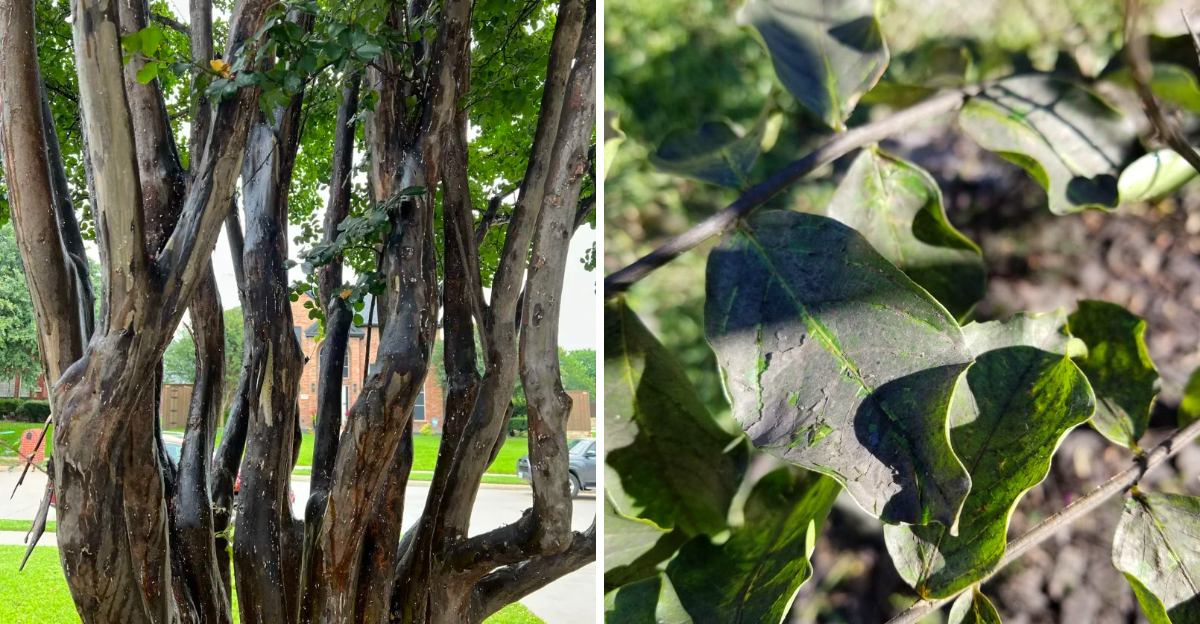
Walking out to find your crape myrtle coated in what looks like a layer of dark, powdery grime is not exactly the summer garden moment most Georgia homeowners are hoping for.
It’s alarming enough to stop you mid-coffee and start wondering what went wrong overnight.
The reassuring part is that this black coating, almost always sooty mold, is a surface problem rather than a disease working its way through the plant from the inside.
What you’re actually looking at is a fungus growing on sticky honeydew left behind by sap-feeding insects, most commonly crape myrtle aphids or crape myrtle bark scale, both of which thrive in Georgia’s hot, humid summers.
The mold itself isn’t the root of the problem, it’s a sign that something else is going on, and identifying that something else is where the real fix begins.
1. Sooty Mold Is Growing On Honeydew
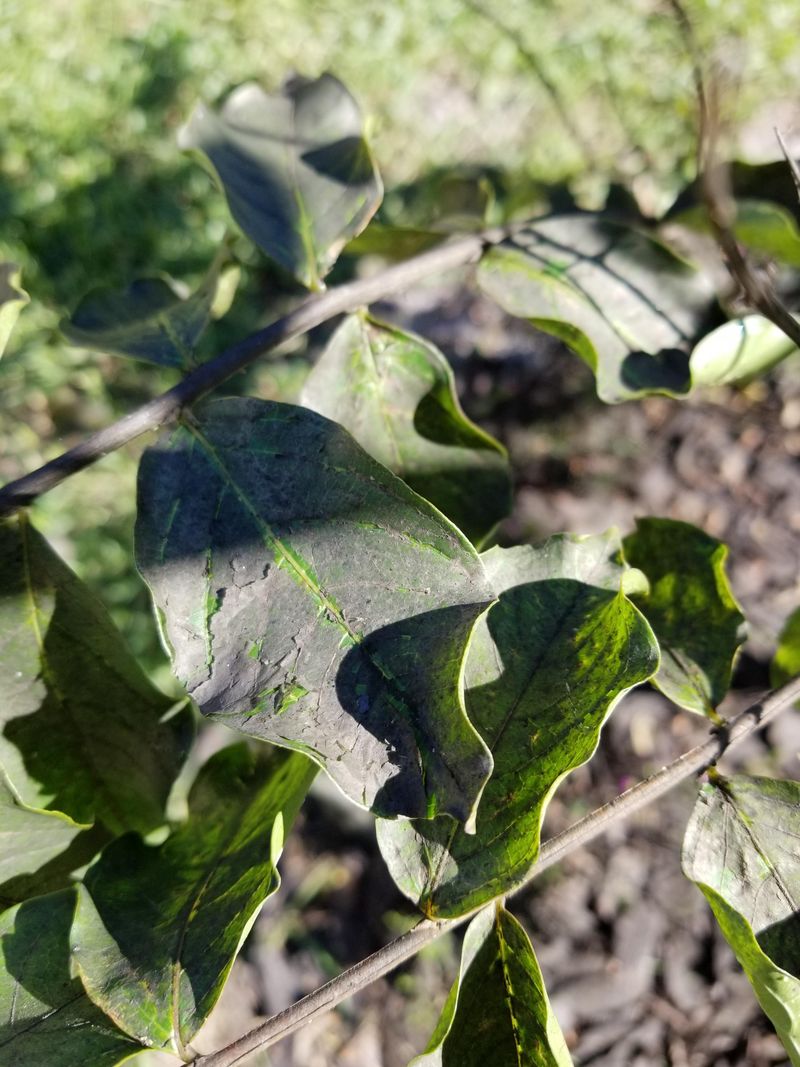
That black coating you see on your crape myrtle leaves is not paint, and it did not come from the soil. Sooty mold is a dark fungus that grows on a sugary, sticky substance called honeydew, which sap-feeding insects deposit on leaves, stems, and bark as they feed.
The mold itself does not infect the plant tissue from the inside, but it does coat the surface enough to block sunlight and slow down photosynthesis over time.
In Georgia, summer heat and humidity create excellent conditions for sooty mold to spread quickly once honeydew is present.
You might notice the black film appearing on upper leaf surfaces first, then spreading down to branches, trunks, and even the mulch or hardscape below the tree.
Leaves that were shiny and slightly sticky a few days earlier often turn fully black within a short time.
Washing the mold off with a gentle stream of water can improve the look of the tree temporarily. However, if the insects producing the honeydew are still active on the crape myrtle, the mold tends to return.
Sooty mold in Georgia gardens is almost always a signal that something is feeding on the tree, so treating the visible mold without addressing the insect source rarely gives lasting results. Identifying which insect is responsible makes a real difference in how you respond.
2. Crape Myrtle Aphids May Be Feeding On Leaves
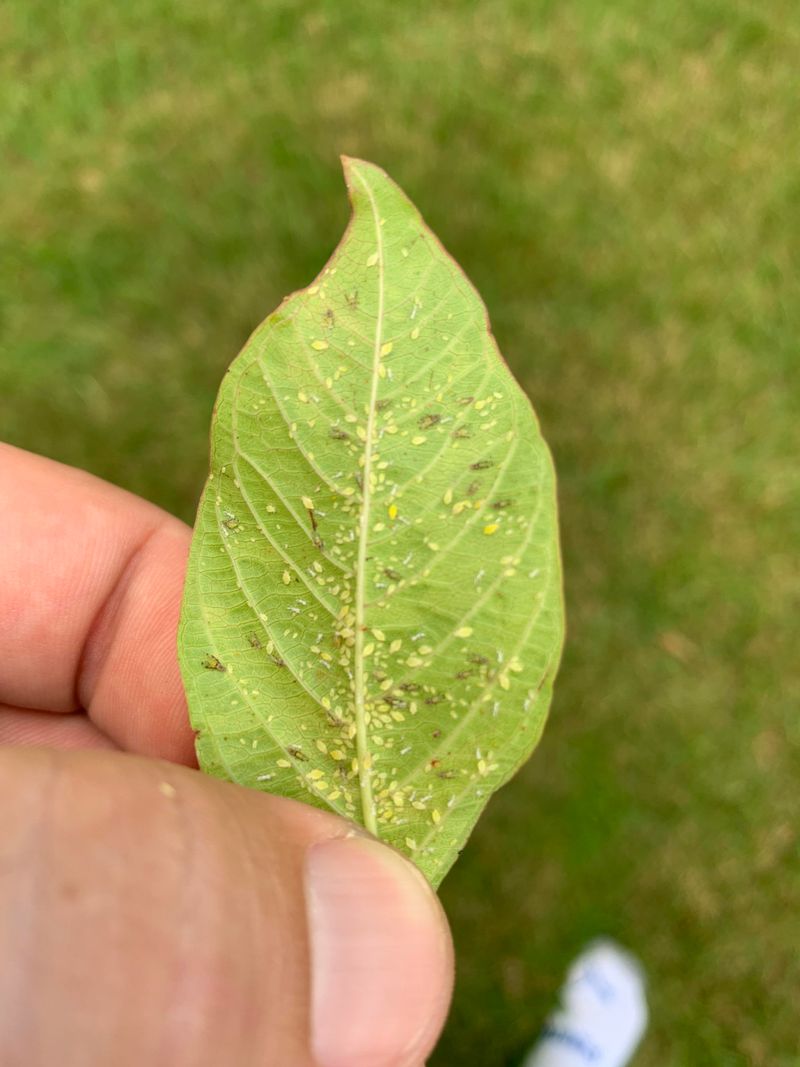
Flip over a blackened crape myrtle leaf in a Georgia garden and you may find a colony of small, pale yellow-green insects clustered along the veins. Crape myrtle aphids are one of the most common reasons sooty mold appears on these trees during summer.
These soft-bodied insects use piercing mouthparts to extract sap from tender leaves and shoots, and they release honeydew as a byproduct of that feeding activity.
A small aphid population may not cause noticeable problems right away, but populations can build up fast during warm Georgia summers. As more aphids feed, more honeydew drips onto lower leaves, branches, and surfaces below the tree.
That sticky residue then becomes the food source for sooty mold spores already present in the environment, and the black coating spreads from there.
Your Georgia Garden Changes Every Week. Your Plan Should Too.
Gardening in Georgia changes quickly throughout the season. Every Friday you’ll receive a simple weekly plan showing exactly what to plant, prune, fertilize, harvest, and protect so you never miss the right timing.
Crape myrtle aphids tend to favor the undersides of leaves and the soft new growth at the tips of branches. Natural predators such as ladybugs and lacewings can help reduce aphid numbers without any intervention from you.
Encouraging those beneficial insects by avoiding broad-spectrum insecticides is a reasonable first step. For heavier infestations, a strong spray of water directed at the undersides of leaves can dislodge many aphids.
Horticultural oils or insecticidal soaps are also used when populations are high enough to warrant treatment.
3. Crape Myrtle Bark Scale May Be On Branches And Trunks
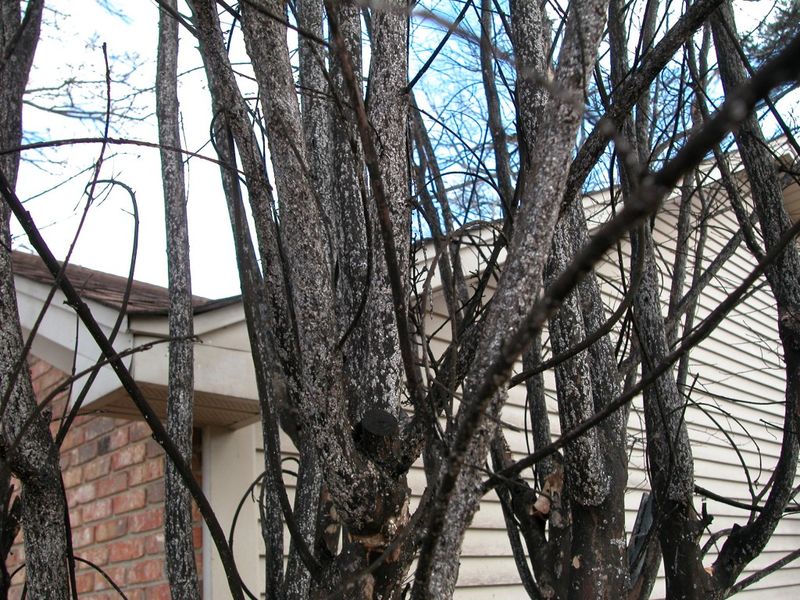
White or grayish crusty patches on the trunk and lower branches of a crape myrtle are often the first sign that crape myrtle bark scale has arrived.
This invasive pest, which has been spreading through Georgia and other Southern states, attaches itself to bark and feeds on the plant’s sap much like aphids do.
As it feeds, it also produces honeydew, which then supports the growth of sooty mold on the bark surface.
Unlike aphids, which tend to stay on leaves and soft shoot tips, crape myrtle bark scale settles into the rougher bark of trunks and branches. The scale insects look like small waxy bumps or felt-like clusters, and when you press one, a pinkish fluid may be visible.
The sooty mold that follows makes the entire trunk look blackened, which can be startling when you notice it on a crape myrtle you have had in your Georgia yard for years.
Management of crape myrtle bark scale often involves a systemic insecticide applied as a soil drench around the base of the tree, which the roots then absorb and carry through the plant’s tissue.
Scrubbing visible scale from accessible bark with a soft brush and diluted solution can also reduce populations on the outer surface.
Because bark scale can spread from tree to tree through contact or movement, checking nearby crape myrtles in your Georgia landscape is a smart precaution.
4. Sticky Leaves Often Come Before Black Leaves
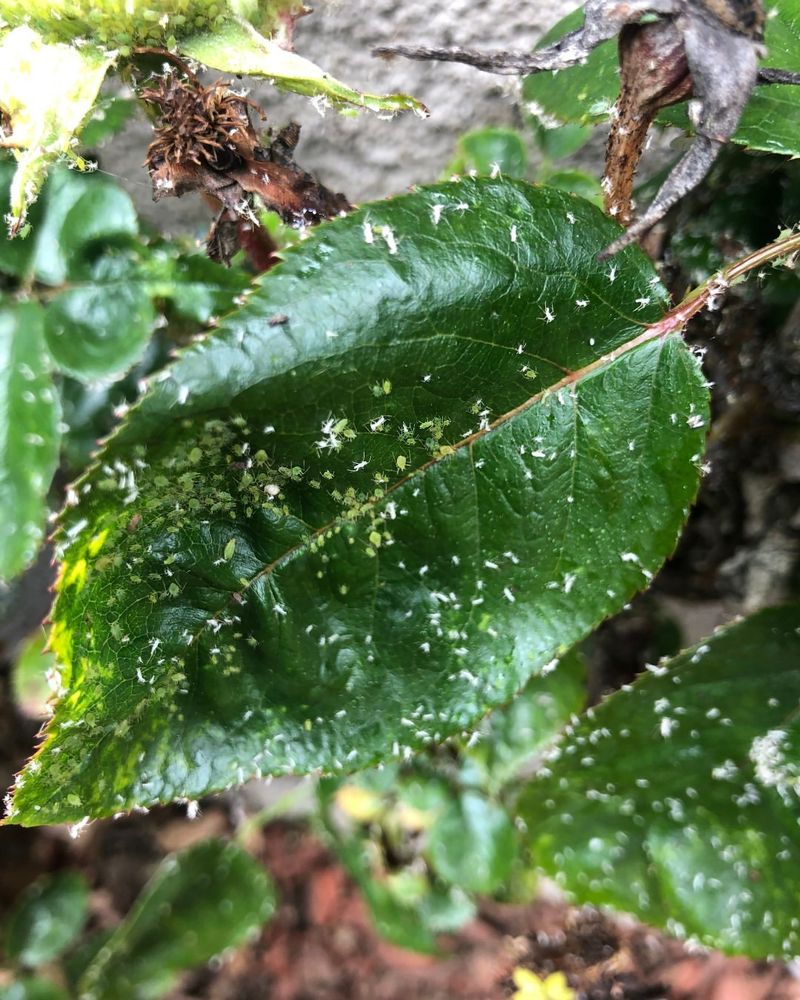
Sticky leaves are one of the earliest warning signs that something is feeding on your crape myrtle. Before the black mold appears, many Georgia homeowners notice a shiny, almost lacquered look to the foliage, and the leaves feel slightly tacky when touched.
That stickiness is honeydew, the sugary waste product left by aphids or scale insects actively feeding on the tree.
Catching this stage early gives you more options. If you notice sticky leaves before the sooty mold has had a chance to develop, you can inspect the tree closely for insects and take action before the black coating spreads.
A good look at the undersides of leaves and along the bark can tell you whether aphids, bark scale, or both are present. Knowing which pest you are dealing with helps you choose the right response rather than guessing.
In Georgia’s warm, humid summer conditions, honeydew can attract other insects too, including ants. Ants are actually drawn to honeydew as a food source, and they sometimes protect aphid colonies from natural predators in exchange for access to it.
If you see ants traveling up and down your crape myrtle trunk, that can be another clue that a honeydew-producing insect is active somewhere on the tree.
Addressing the ant activity along with the insect source can make your overall management effort more effective and longer lasting.
5. Nearby Surfaces Can Turn Black Too
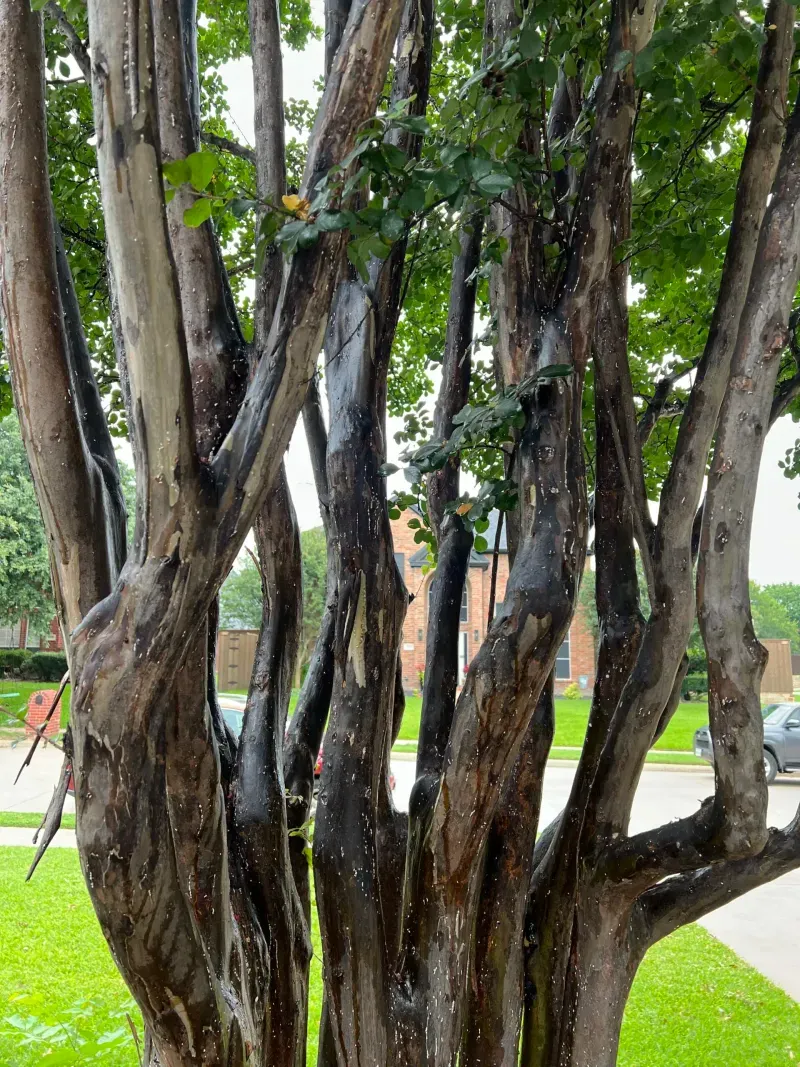
Sooty mold does not limit itself to the crape myrtle tree. In Georgia gardens, the black coating often shows up on whatever sits or grows beneath the canopy of an affected tree.
Patio furniture, concrete pavers, driveways, parked cars, and even other plants growing in the shade of a crape myrtle can end up with a dark, grimy residue after honeydew drips down and mold follows.
This spread to nearby surfaces can actually help you figure out what is happening before you even look at the tree closely.
If you notice your patio furniture has a sticky film that eventually turns black, or if the mulch beneath the tree looks unusually dark and sooty, those are strong clues that a honeydew-producing insect is active overhead.
The mold on hard surfaces can sometimes be scrubbed away with water and a mild cleaning solution, though it may return if the insect source remains untreated.
For Georgia homeowners with crape myrtles planted near entertaining areas, outdoor kitchens, or carports, managing the pest source becomes especially practical because the mess extends well beyond the tree itself.
Parking a vehicle under a heavily infested crape myrtle during peak aphid season can result in a sticky, sooty residue on the paint and windows.
Addressing the insect population on the tree reduces honeydew production, which in turn reduces the mold buildup on surrounding surfaces over time.
6. The Mold Itself Is Usually A Surface Problem
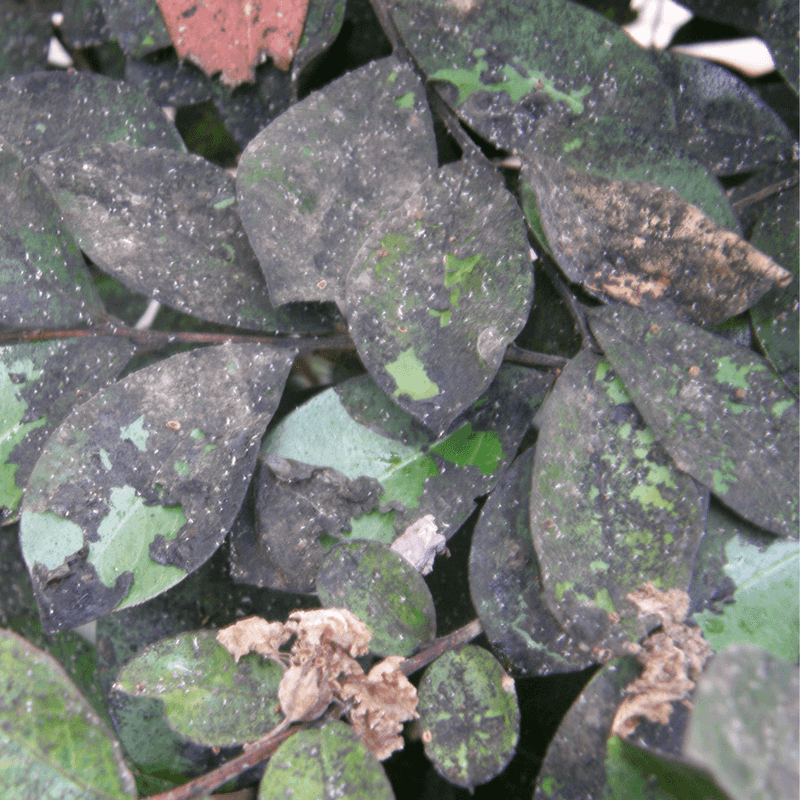
One reassuring fact about sooty mold is that it grows on the outside of the leaf, not inside the plant tissue. Unlike fungal diseases that infect leaves from within and cause spotting or lesions, sooty mold simply colonizes the sticky honeydew sitting on the surface.
This means the leaf itself is not diseased in the traditional sense, even though it may look alarming from a distance.
If you wipe a blackened crape myrtle leaf with a damp cloth, you will often find a healthy green surface underneath the mold layer. That is a good visual reminder that the mold is coating the leaf rather than consuming it.
In Georgia’s rainy periods, heavy rainfall can sometimes wash enough mold away to temporarily improve the tree’s appearance without any manual effort on your part.
That said, a heavy coating of sooty mold over a long stretch of Georgia’s hot summer can reduce the amount of sunlight reaching the leaf surface, which may slow photosynthesis and affect the overall vigor of the tree.
Leaves that stay coated for extended periods may yellow and drop earlier than normal.
Removing the insect source is the most effective way to stop new honeydew from forming and give the mold no fresh food to grow on. Once honeydew production stops, existing mold gradually weathers away with rain and wind over the following weeks.
7. Over-Pruning Can Make Pest Problems Worse
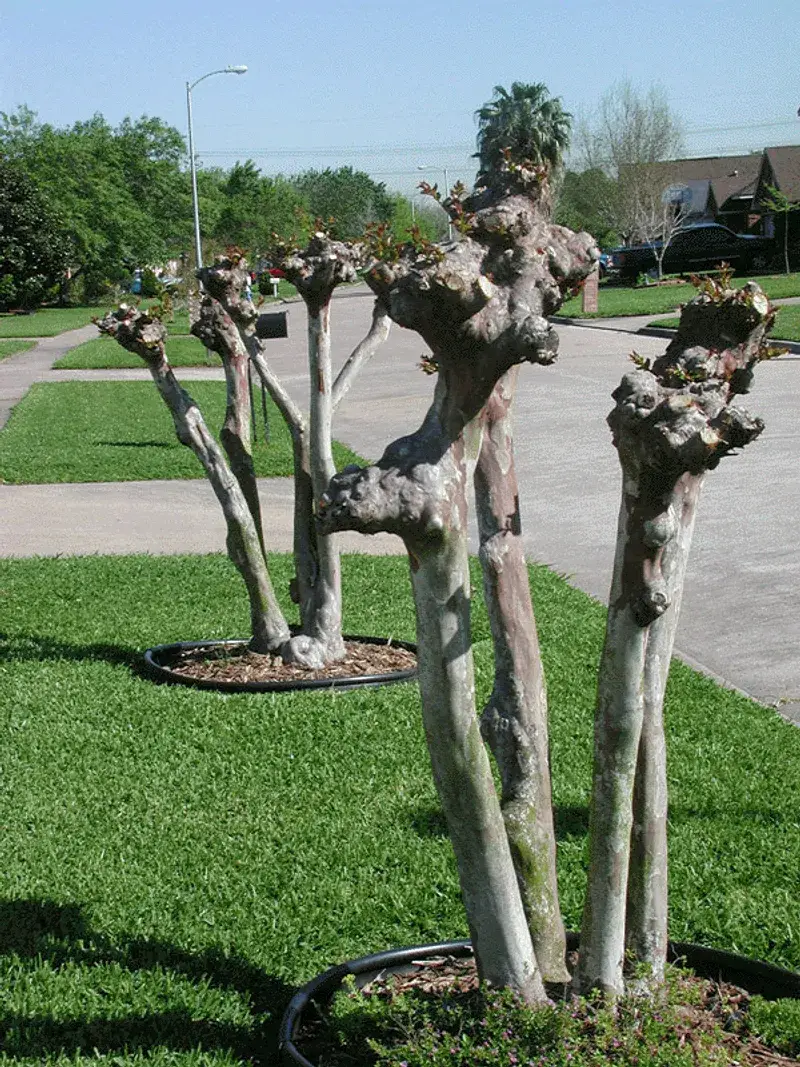
Heavy pruning of crape myrtles, sometimes called crape murder in gardening circles, is a widespread practice across Georgia neighborhoods.
Cutting the main branches back to thick stubs each winter or spring triggers a flush of very tender, fast-growing new shoots.
Those soft, succulent shoots are exactly what crape myrtle aphids prefer, and a heavily pruned tree can end up hosting a much larger aphid population than one that was pruned lightly or not at all.
The connection between over-pruning and pest pressure is worth understanding because many homeowners prune aggressively with good intentions, hoping to shape the tree or encourage blooms.
The resulting dense clusters of weak new growth create ideal feeding conditions for aphids, which in turn produce more honeydew and more sooty mold.
A tree that was already struggling with bark scale or aphids before pruning may see those problems intensify after a heavy cut.
Proper pruning of crape myrtles focuses on removing crossing branches, suckers from the base, and small twiggy growth from the interior canopy. Cuts should be made just above a branch junction rather than at an arbitrary point along a limb.
Allowing the tree to develop its natural form reduces the volume of tender new growth and makes the tree a less attractive target for sap-feeding insects.
In Georgia’s long growing season, this approach supports a healthier tree with fewer pest-related headaches through summer.
8. Correct Identification Guides The Right Response
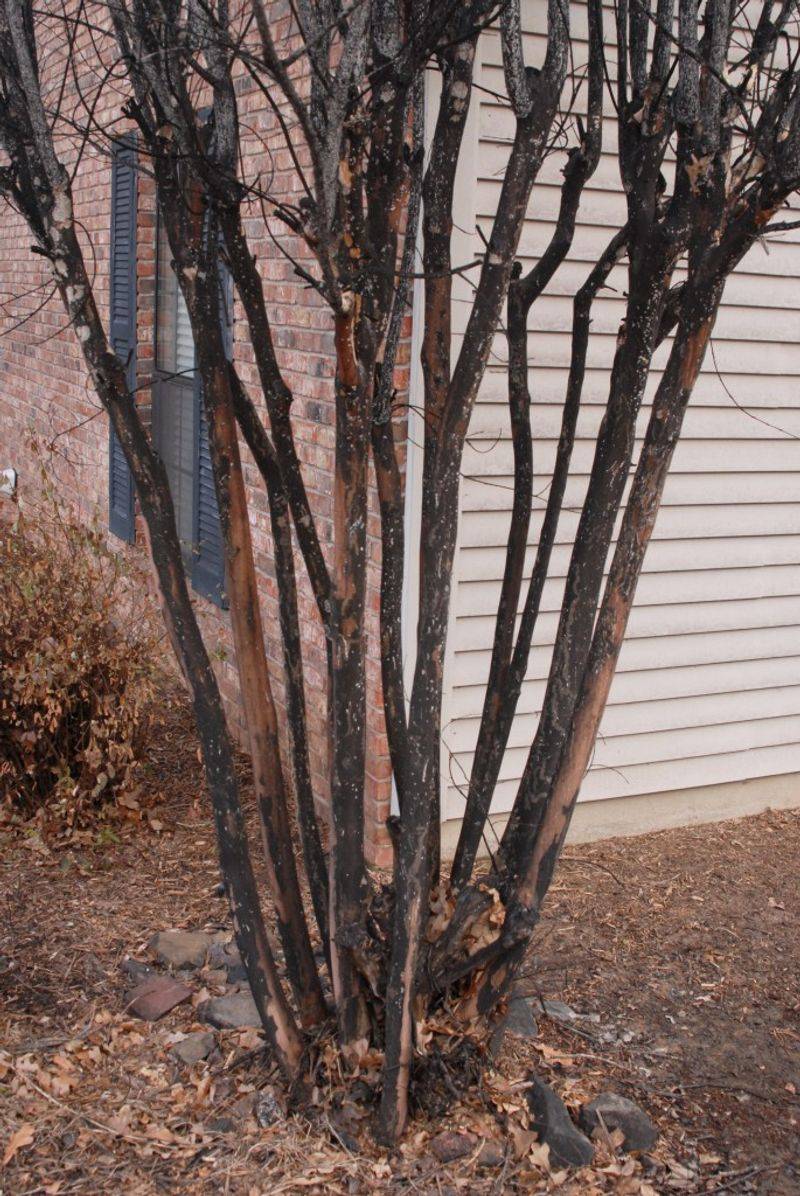
Walking up to a blackened crape myrtle and immediately reaching for a fungicide is a common mistake. Because sooty mold is a symptom of an insect problem rather than a primary disease, spraying for fungus alone rarely resolves the issue.
The mold returns as long as honeydew-producing insects are still active on the tree, so figuring out which insect is responsible shapes the entire management approach.
Crape myrtle aphids and crape myrtle bark scale require somewhat different responses. Aphids on leaves may respond well to a strong water spray, insecticidal soap, or horticultural oil.
Bark scale on trunks and branches often calls for a systemic soil drench treatment because the insects are tucked into protected areas of the bark where surface sprays may not reach them as effectively.
Applying the wrong treatment wastes time and money and leaves the real problem unaddressed.
In Georgia, where crape myrtles grow in front yards, foundation beds, mixed borders, street plantings, and sunny open spaces, taking a few minutes to inspect the tree carefully before acting makes a meaningful difference.
Look at the undersides of leaves for aphids, check the bark closely for white or gray scale clusters, and note whether the sticky residue is coming from above or from the bark itself.
That simple observation step leads to a more targeted and effective response, and it helps protect beneficial insects that may already be working to reduce the pest population naturally.