Why Oakleaf Hydrangea Is The Most Underrated Pennsylvania Native Shrub For Four Season Interest
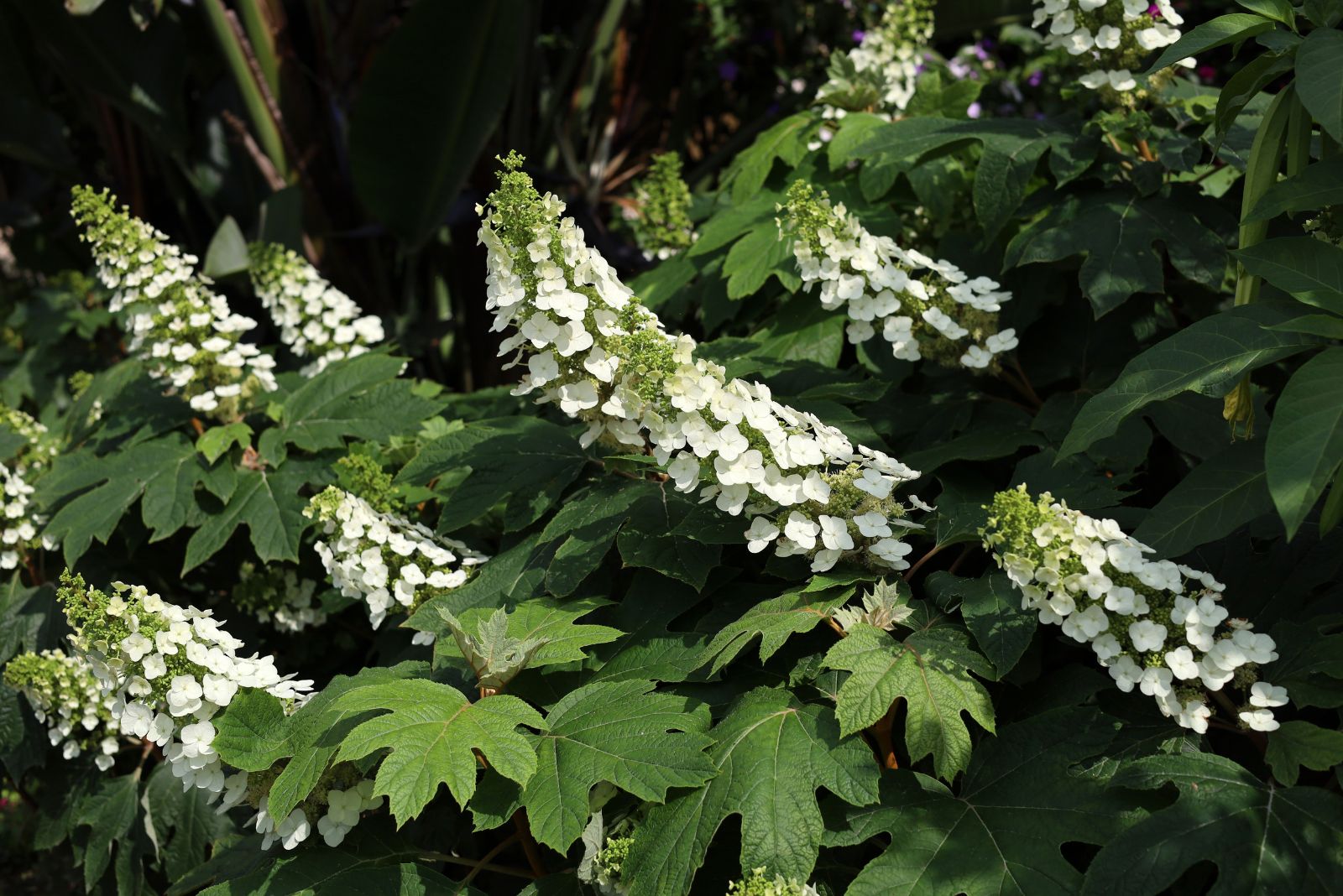
Most Pennsylvania gardeners know oakleaf hydrangea exists. Fewer of them are actually growing it.
And that gap between awareness and action is one of the most puzzling things in native plant gardening, because this shrub delivers something that very few plants of any kind can honestly claim. Genuine four season interest.
Not just one good moment and a long forgettable stretch. Every single season. Spring brings large white blooms that develop slowly and hold beautifully. Summer deepens those flowers into a parchment tan that looks deliberately designed.
Fall delivers some of the most spectacular foliage color of any native shrub in Pennsylvania, followed by cinnamon peeling bark that makes the plant worth looking at all winter long.
It’s native, it supports wildlife, it handles shade better than most hydrangeas, and it comes back reliably in Pennsylvania’s climate without demanding much in return. If you’ve been overlooking oakleaf hydrangea, here’s exactly why that needs to change.
1. It Gives You Big Summer Flowers
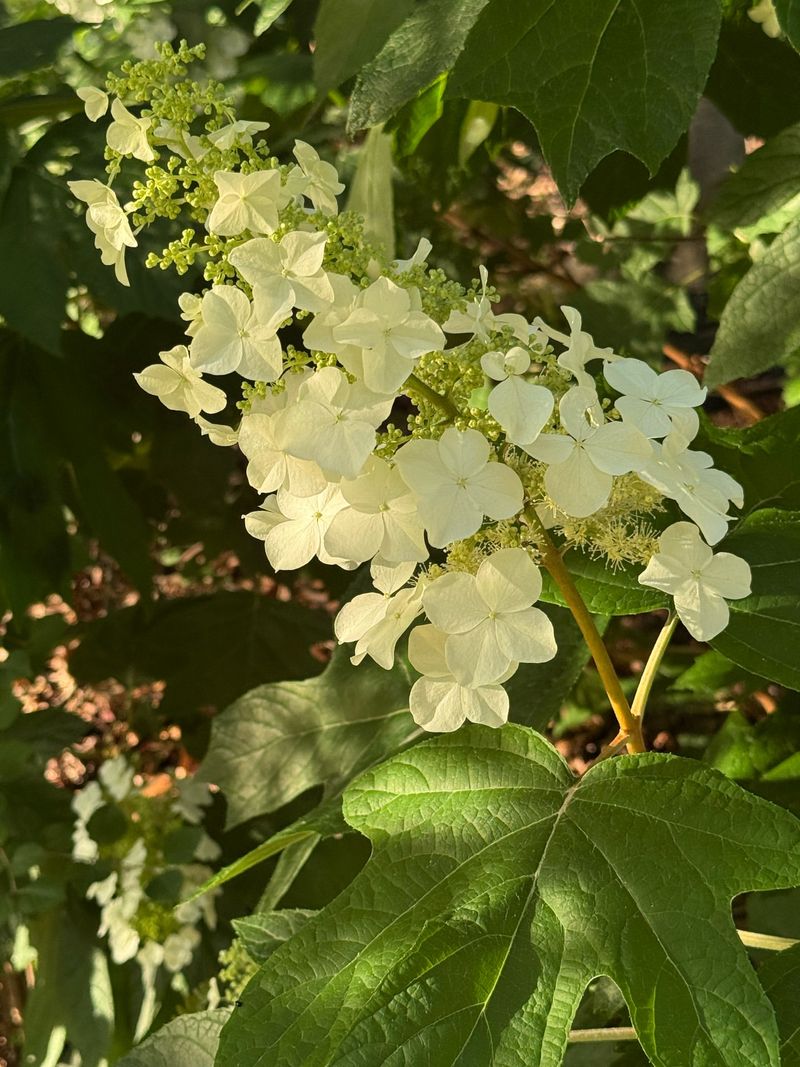
Few shrubs stop people in their tracks the way oakleaf hydrangea does when it is in full bloom. The flowers are not small or delicate.
They come in big, bold, cone-shaped clusters called panicles, and they can grow up to twelve inches long. That is roughly the size of a large ear of corn, which gives you a sense of just how impressive this shrub looks in midsummer.
Blooming starts in late spring and stretches well into summer, which is longer than many flowering shrubs can manage. As the season moves along, the white blooms slowly shift toward soft pink and then deeper rosy or purplish tones.
That color change happens gradually, so the shrub keeps looking interesting for weeks instead of just a few days.
The blooms also dry beautifully right on the plant. Instead of dropping off and leaving bare stems, the flower heads turn papery and tan as fall approaches.
Many gardeners love this look and even cut the dried clusters to use in indoor arrangements. You get fresh flowers and dried decor from the same plant without doing anything extra.
For Pennsylvania gardeners who want a shrub that makes a real visual statement, oakleaf hydrangea delivers in a way that feels almost effortless. Plant it where you can see it from a window or a patio so you can enjoy the show all summer long.
Pair it with ferns or hostas at its base for a layered look that feels lush and well-planned. The flowers alone are reason enough to grow it.
2. Its Leaves Look Interesting Even Without Blooms
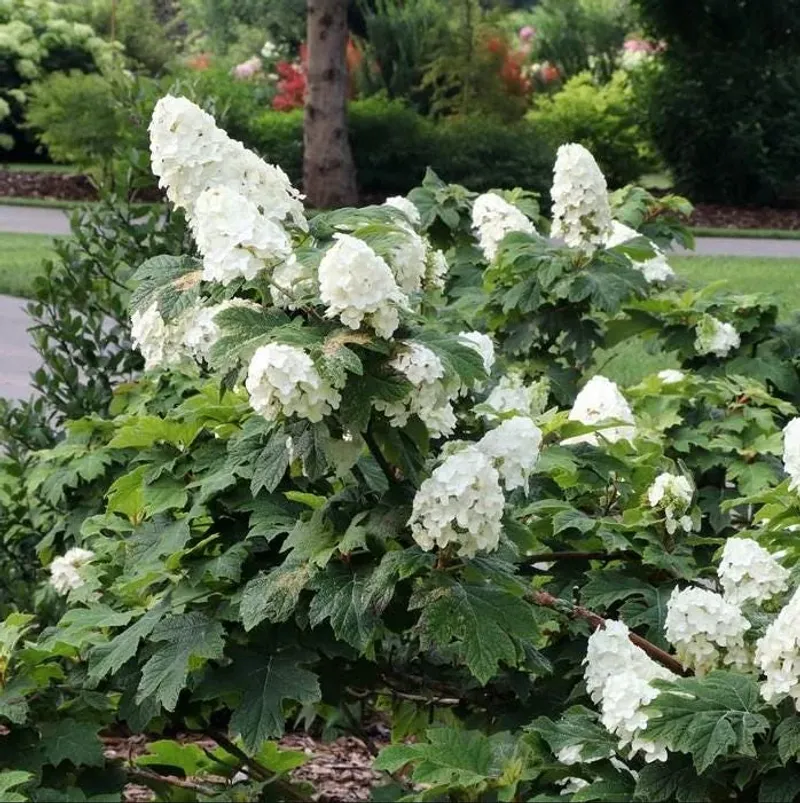
Plenty of shrubs look great for two or three weeks when they are flowering and then just sort of fade into the background for the rest of the year. Oakleaf hydrangea refuses to do that.
Even when it is not producing a single flower bud, the foliage alone is worth the space it takes up in your yard.
The leaves are large, deeply lobed, and shaped remarkably like the leaves of an oak tree, which is exactly where the shrub gets its name.
Your Pennsylvania Garden Changes Every Week. Your Plan Should Too.
Gardening in Pennsylvania changes quickly throughout the season. Every Friday you’ll receive a simple weekly plan showing exactly what to plant, prune, fertilize, harvest, and protect so you never miss the right timing.
Each leaf can span six to eight inches across, giving the plant a bold, almost tropical texture that most other Pennsylvania native shrubs simply do not have.
When you plant it alongside smaller-leafed plants, the contrast is striking and really elevates the whole garden bed.
Shaded spots in Pennsylvania yards can feel a little dull, especially when most shade-tolerant plants offer nothing but flat green leaves. Oakleaf hydrangea solves that problem with its chunky, textured foliage that catches light even in low-sun conditions.
Foundation plantings, woodland edges, and shaded borders all benefit from the visual weight it brings.
The leaves also have a slightly fuzzy or velvety texture on the underside, which adds another layer of interest up close. Kids especially love touching them, which makes oakleaf hydrangea a fun plant for family gardens.
Throughout spring and into summer, the foliage stays fresh and full, keeping the shrub looking polished and purposeful. You never have to wait for bloom time to appreciate it. The leaves do plenty of the work all on their own.
3. It Has Excellent Fall Color
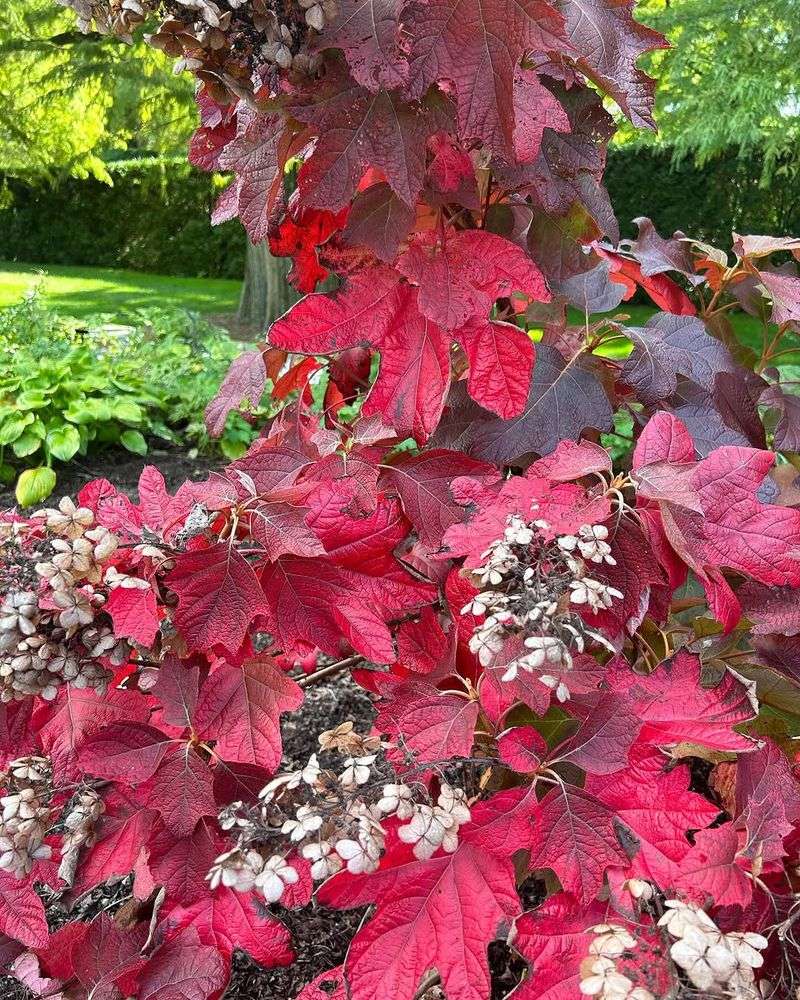
Here is something that surprises a lot of gardeners the first time they grow oakleaf hydrangea: it turns absolutely stunning in the fall. Most people plant it for the summer flowers and then get a bonus they were not expecting.
When temperatures drop and days get shorter, the leaves transform into some of the richest colors you will see in any garden.
Depending on the growing conditions and the specific variety, the foliage can shift to shades of red, burgundy, deep purple, or warm bronze. Sometimes a single shrub shows multiple colors at once, which gives it an almost painted quality.
That kind of fall display puts it in the same league as ornamental trees, not just shrubs. Most flowering shrubs in Pennsylvania have a very short window of interest. They bloom, they green out, and then they just sit there looking plain until winter.
Oakleaf hydrangea breaks that pattern in a meaningful way. The fall color extends the shrub’s decorative season by weeks, and since the dried flower heads are still hanging on at the same time, the whole plant looks layered and rich rather than tired and fading.
Planting oakleaf hydrangea near other fall-interest plants like native asters or ornamental grasses can create a late-season garden scene that genuinely rivals a spring border for impact.
It works especially well along property edges or at the back of a mixed border where the full height of the shrub can be appreciated.
Fall is when oakleaf hydrangea quietly reminds everyone that they made a very smart planting choice.
4. It Adds Winter Interest With Peeling Bark
Winter is the season when most shrubs completely check out. They drop their leaves, their stems turn gray and unremarkable, and they basically disappear into the background until spring.
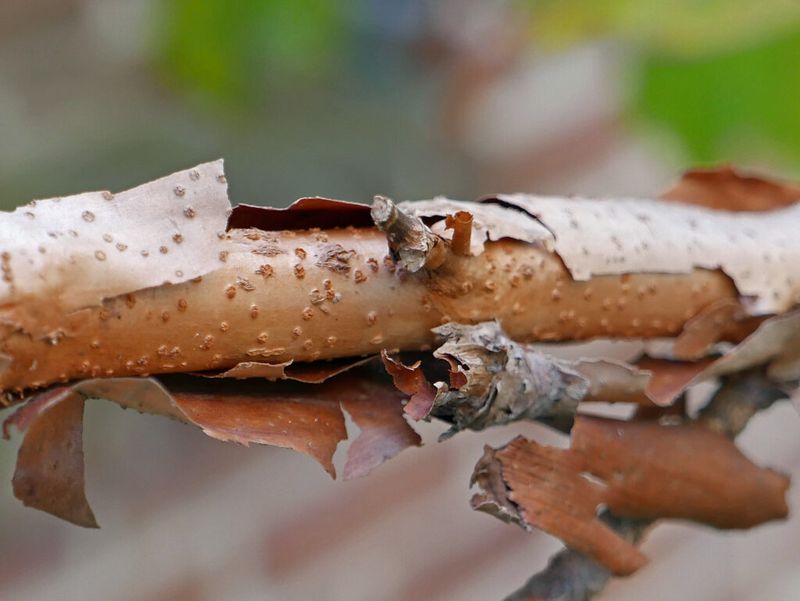
Oakleaf hydrangea plays by different rules. Once the plant matures, its stems develop something genuinely eye-catching: exfoliating bark that peels away in thin, papery strips to reveal warm cinnamon and chestnut-brown tones underneath.
That peeling bark gives the shrub a sculptural quality that is hard to find in most landscape plants. On a gray January morning in Pennsylvania, when the garden is quiet and bare, those warm-toned stems stand out in a way that feels almost artistic.
The dried flower heads often cling to the branches well into winter too, adding even more texture to the overall silhouette.
Gardeners who design for four-season interest know how valuable a plant with good winter structure can be. Most of the time, achieving that look requires planting multiple different species.
Oakleaf hydrangea handles it all by itself. The combination of dried blooms, peeling bark, and strong branching structure gives it a presence that many ornamental shrubs never develop.
To make the most of the winter display, plant oakleaf hydrangea where it can be seen from inside the house. A spot near a kitchen window or along a walkway you use every day lets you enjoy the bark detail without bundling up and heading outside.
You can also resist the urge to cut the plant back in fall and let it carry its full winter character through to spring. Patience with the pruning shears really pays off here.
5. It Handles Part Shade Beautifully
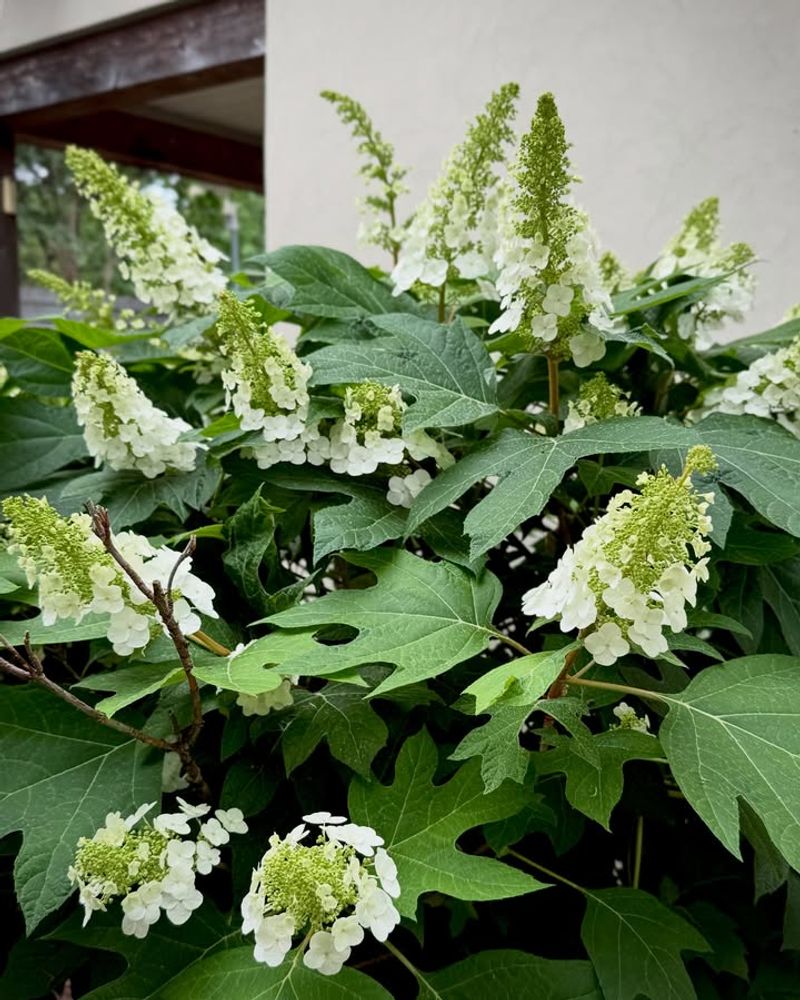
Finding a shrub that genuinely thrives in part shade is one of the most common challenges Pennsylvania gardeners face. Lots of plants tolerate shade in a grudging, half-hearted way.
They survive, but they never really look their best. Oakleaf hydrangea is different. Part shade is actually where it performs most comfortably, and in the right spot, it looks like it was born to be there.
Morning sun with afternoon shade is the sweet spot for this shrub. That light pattern is extremely common in Pennsylvania yards where trees create filtered light or buildings block the western sun.
Woodland edges, north-facing foundation beds, and the shaded side of a fence are all places where full-sun shrubs struggle but oakleaf hydrangea settles in and thrives.
Soil moisture matters too. This shrub prefers moist, well-drained soil with good organic matter, which is often exactly what you find in shaded areas near trees or along the edges of wooded properties.
If your soil tends to dry out quickly, adding a thick layer of mulch around the base helps the roots stay comfortable between rain events. Consistent moisture during the first growing season is especially important while the plant gets established.
Once it is settled in, oakleaf hydrangea is surprisingly resilient. It handles Pennsylvania summers and winters without a lot of fuss, and it does not need constant watering or fertilizing to look good.
For gardeners who have struggled to fill shaded spots with something that actually looks attractive, this shrub is a genuinely exciting solution. It turns one of the trickiest planting challenges into one of the most rewarding corners of the yard.
6. It Looks High-End Without Being Overly Fussy
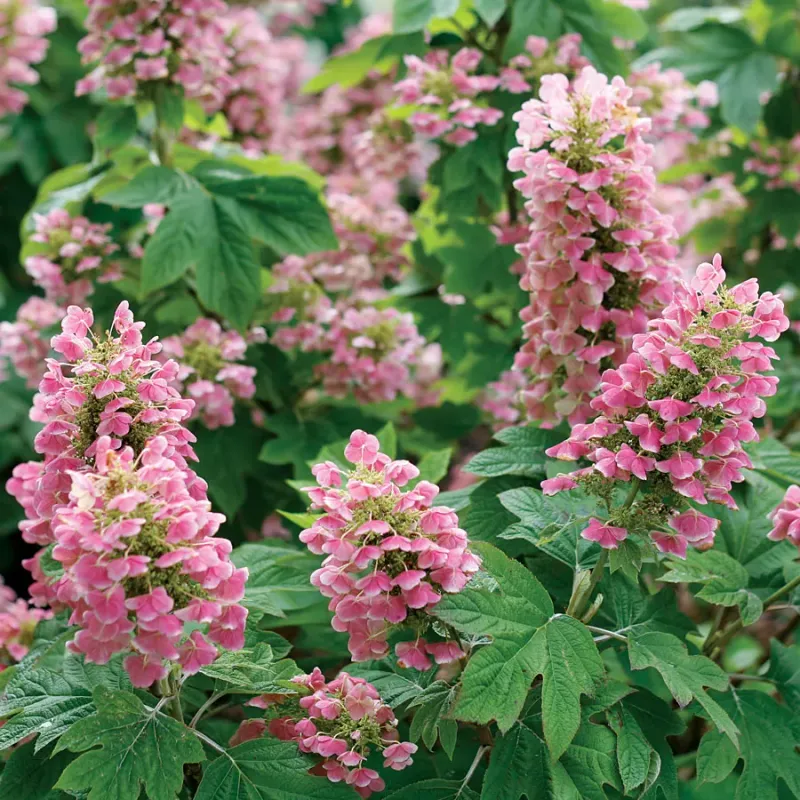
Some plants look expensive and complicated because they actually are expensive and complicated. Oakleaf hydrangea pulls off the same high-end look without demanding much in return.
Walk past a well-grown specimen in a yard and it looks like someone put serious thought and money into the landscaping. The reality is that oakleaf hydrangea does most of the heavy lifting on its own once it is planted in the right spot.
The combination of features it brings to a landscape is what makes it feel so polished. Big summer flowers, bold textured leaves, rich fall color, and sculptural winter bark all come from a single plant.
Most homeowners would need four or five different shrubs to achieve the same layered, year-round effect. With oakleaf hydrangea, you get it all in one package, which simplifies both the planting plan and the maintenance routine.
Pruning is minimal. Unlike some high-maintenance flowering shrubs that need careful shaping to perform well, oakleaf hydrangea has a naturally attractive arching form.
It grows between four and eight feet tall depending on the variety, which makes it useful as a specimen plant, a foundation anchor, or part of a mixed shrub border.
Dwarf varieties like Pee Wee or Sike’s Dwarf work well in smaller spaces where a full-sized shrub would feel overwhelming.
For Pennsylvania homeowners who want a yard that looks thoughtfully designed without spending every weekend on upkeep, this shrub is a smart investment. It asks for good soil, reasonable moisture, and occasional pruning after it blooms.
Give it those basics and it rewards you with four full seasons of something worth looking at. Not many plants can honestly say the same.