The Georgia Wasp Most Homeowners Mistake For A Dangerous Lawn Pest
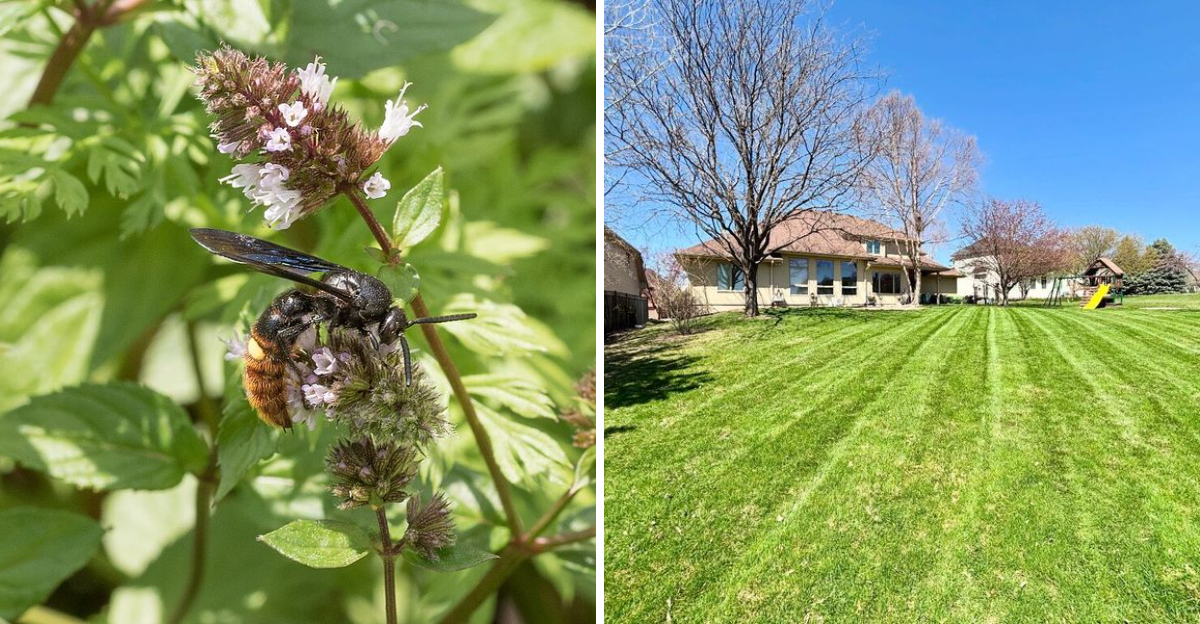
Do not rush to grab the bug spray every time a large wasp lands in the yard. Looks can be surprisingly misleading, especially when an insect has bold colors and an intimidating size.
It only takes a quick glance for harmless visitors to earn a bad reputation. That mistake happens more often than most people realize.
Taking a closer look before reacting can save unnecessary worry and help you understand what is actually sharing your outdoor space.
One wasp causes this confusion more than many others. It regularly gets mistaken for a dangerous lawn pest, even though its behavior tells a very different story.
That misunderstanding happens in Georgia every summer. Knowing how to recognize this familiar visitor can completely change the way you see it the next time it appears.
1. The Blue-Winged Wasp Is Usually Not Aggressive
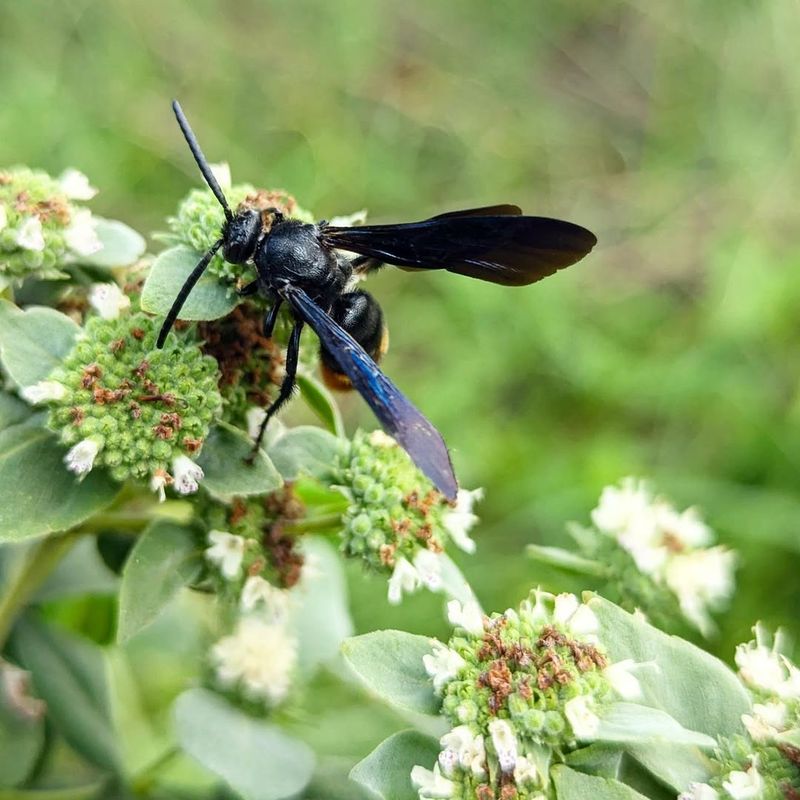
Spotting a large wasp in your yard feels alarming, but calm down before you react. Blue-winged wasps are solitary insects.
Unlike yellow jackets or hornets, they do not defend a shared nest with a large colony.
Solitary wasps rarely sting unless directly handled or stepped on barefoot. A female may sting if she feels trapped, but unprovoked attacks are uncommon.
Males cannot sting at all since they lack a stinger entirely.
Most of the activity you notice in your lawn involves females searching for grubs underground. Watching one dig into your soil might look alarming, but she is focused on finding food for her offspring, not on you.
Keeping pets and children from disturbing active digging areas reduces the chance of any contact. Shoes help too, especially in late summer when activity peaks.
Respecting the wasp’s space goes a long way.
Homeowners who observe rather than react often find the wasps move on within a few weeks. Patience pays off.
Reaching for a spray can without understanding what you are dealing with often causes more harm than the insect ever would.
2. Its Bold Markings Often Cause Confusion
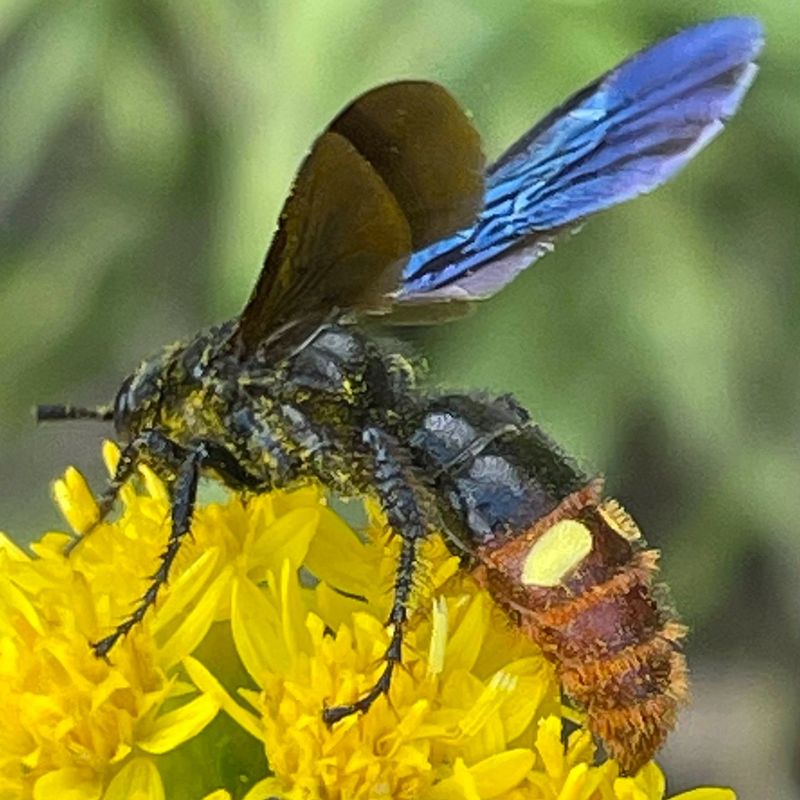
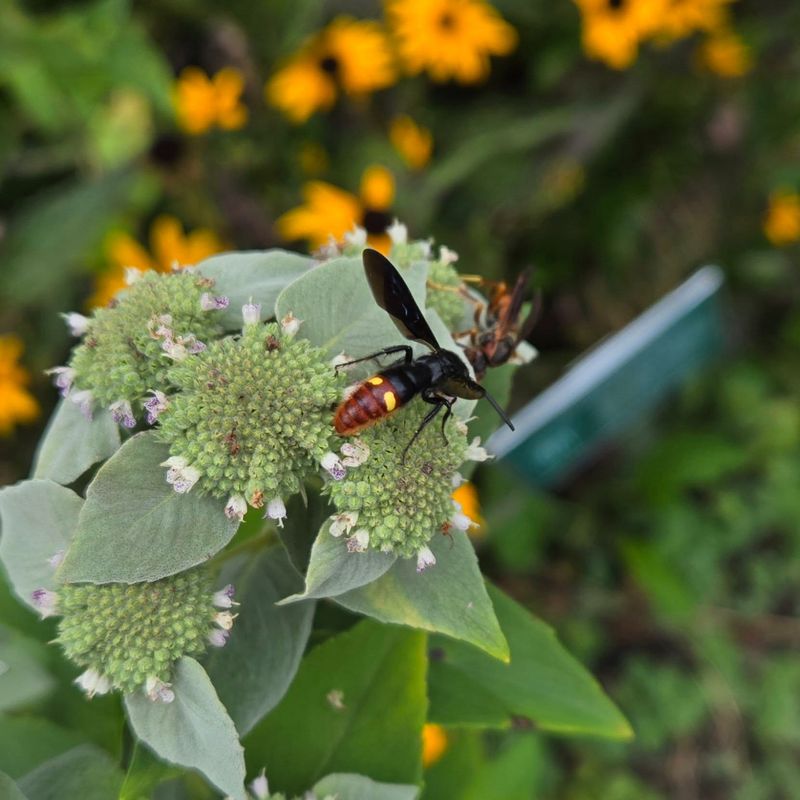
Bright colors on an insect almost always trigger a fear response in people, and blue-winged wasps wear some eye-catching patterns. An orange-yellow abdomen paired with dark blue or black wings creates a striking look that screams danger to most homeowners.
Many people mistake it for a yellow jacket or another large wasp. Because those insects are often seen as more aggressive, people may react before identifying it correctly.
Misidentification can lead to unnecessary pesticide use.
Blue-winged wasps belong to the Scolia family. They are larger than many common backyard wasps, which adds to the intimidation factor.
Size alone makes people assume the worst without checking further.
A closer look reveals the metallic sheen on the wings, which separates them from most other species. That blue tint catches sunlight in a way that is hard to miss.
Once you learn to recognize it, identification becomes much easier.
Sharing what these markings look like with neighbors helps reduce neighborhood-wide panic. Posting a photo in a local community group or yard care forum often sparks useful conversations.
Your Georgia Garden Changes Every Week. Your Plan Should Too.
Gardening in Georgia changes quickly throughout the season. Every Friday you’ll receive a simple weekly plan showing exactly what to plant, prune, fertilize, harvest, and protect so you never miss the right timing.
Accurate identification is the first step toward making a smart decision.
3. Beetle Grubs Are Its Main Target
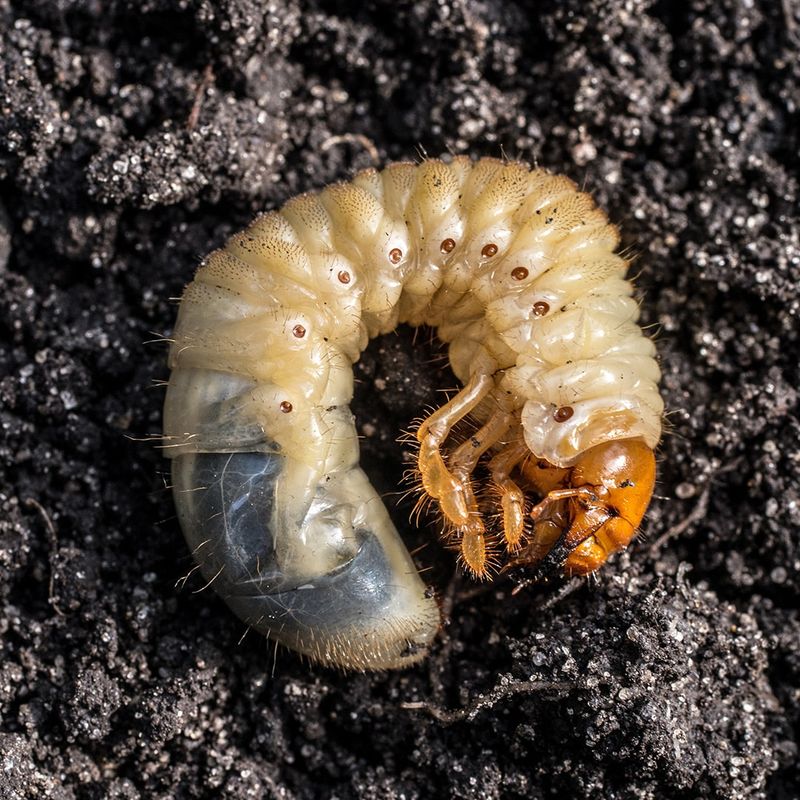
Few lawn pests cause as much damage as beetle grubs, and blue-winged wasps target them directly. Japanese beetle grubs are a primary food source for this wasp’s larvae.
Lawns across Georgia deal with grub damage every season, and this insect helps keep populations in check.
A female wasp locates a grub underground using vibration and scent. She digs down, paralyzes the grub with a sting, and lays a single egg on it.
Her larva hatches and feeds on the grub as it develops.
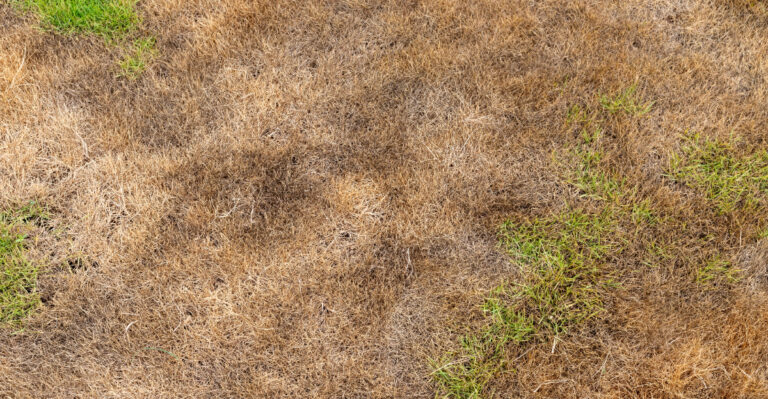
Grubs chew through grass roots from below, causing brown patches that look like drought stress. Homeowners often water more or apply fertilizer without realizing the real problem is underground.
Blue-winged wasps address the actual source of the damage.
One wasp can parasitize multiple grubs across a single season. While that does not eliminate a grub population on its own, it contributes to natural population control.
Combining this with healthy lawn practices produces better results over time.
Chemical grub treatments often reach only the soil surface and may not target deep-feeding larvae effectively. Natural predators like this wasp work at the same depth where grubs actually live.
That makes them a genuinely useful part of lawn management.
4. Adult Wasps Feed On Flower Nectar
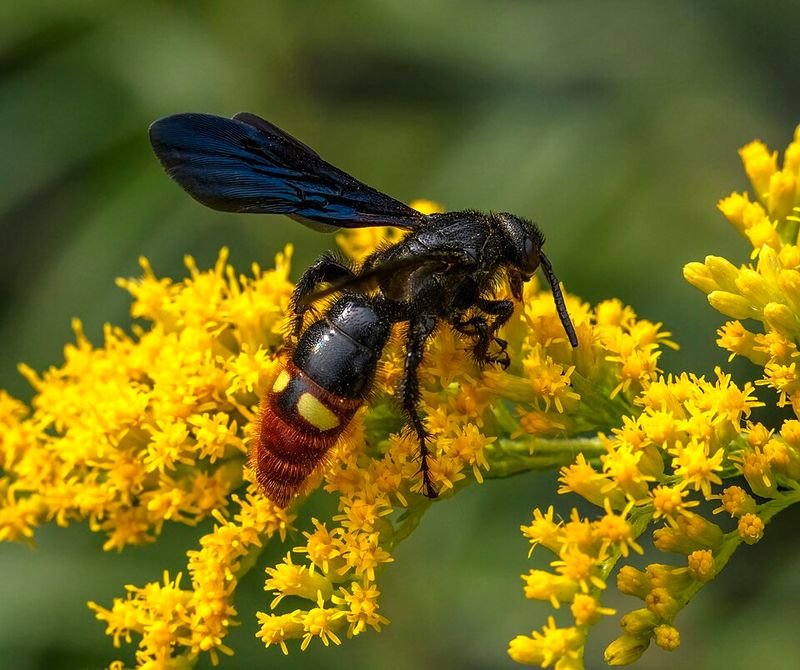
Adult blue-winged wasps do not eat grubs at all. Grubs feed only the larvae.
Adult wasps rely on flower nectar and occasionally pollen to fuel their own activity. That detail surprises most homeowners who assume wasps are purely predatory insects.
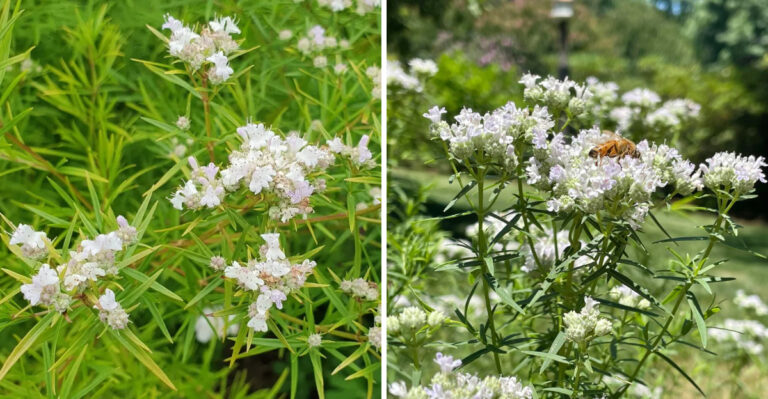
Planting native flowering plants in your yard actually supports this wasp’s presence. Goldenrod, wild bergamot, and other late-summer bloomers are particularly attractive to them.
A diverse planting strategy creates habitat that benefits multiple beneficial insects at once.
Watching a blue-winged wasp move across flowers looks almost identical to watching a bee forage. Both are visiting for nectar, and both contribute to pollination in small but meaningful ways.
Wasps are underappreciated pollinators in most home landscapes.
Nectar feeding keeps adult wasps active and reproductive. Without accessible food sources, females have less energy to search for and parasitize grubs.
Supporting their nectar needs indirectly supports the grub control benefit they provide.
Reducing or eliminating flowering plants in favor of purely grass-based lawns removes this food source. Yards with more plant diversity tend to support richer insect communities overall.
Balance matters more than a perfectly manicured look in many cases.
5. Late Summer Is Peak Activity Season
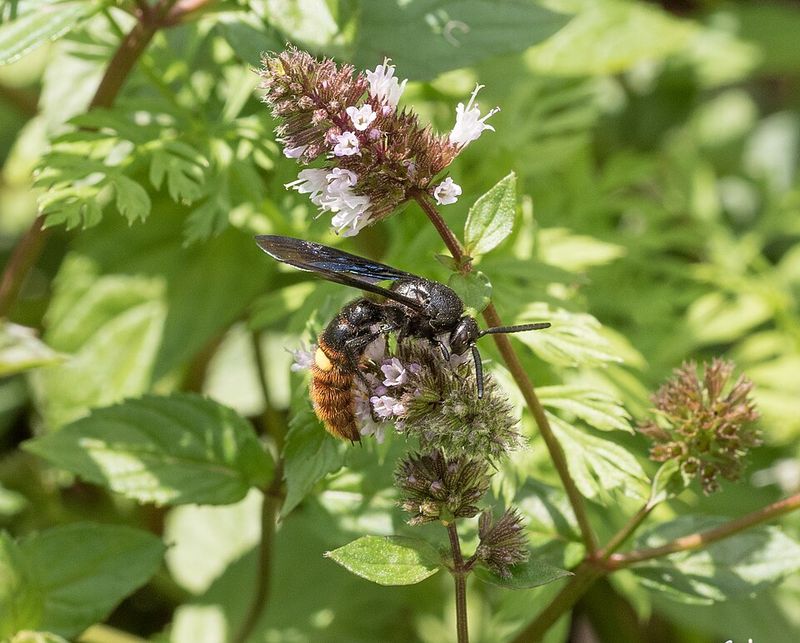
August and September bring the highest blue-winged wasp activity in most parts of the Southeast. Beetle grub populations peak below ground during this same window, which drives the wasps to search more actively.
Timing is not a coincidence.
Homeowners in Georgia often notice more lawn digging and buzzing activity during these weeks. Bare or thin patches in the grass make it easier for females to access the soil.
Lawns under stress from summer heat become more visible hunting grounds.
Grubs that hatched earlier in the season are now large enough to be worth targeting. Wasps are efficient hunters and prefer grubs at a specific size.
Smaller or older grubs are less frequently targeted.
Activity slows significantly as temperatures drop into fall. Cooler soil makes grubs move deeper, and wasp populations begin to decline naturally.
Most homeowners stop noticing them by mid-October in most years, though this can vary by location and weather patterns.
Knowing this seasonal window helps you plan your response. Seeing a surge of wasps in August does not mean you have an infestation.
It means peak foraging season has arrived and will pass on its own schedule.
Resisting the urge to spray during this period preserves the natural grub control happening in your soil.
6. Avoid Broad-Spectrum Insecticides
Reaching for a broad-spectrum insecticide might feel like the logical response when you see wasps in your lawn, but it creates problems that outlast the ones you were trying to solve.
Products designed to eliminate a wide range of insects do not discriminate between harmful and helpful species.
Broad-spectrum sprays can reduce populations of ground beetles, parasitic wasps, and other insects that naturally suppress lawn pests. Removing those populations often leads to stronger rebounds of the pest species you originally targeted.
Lawns treated heavily with insecticides sometimes experience worse grub damage the following season.
Soil health also takes a hit. Some insecticide compounds persist in the soil and affect microbial activity.
Healthy soil biology supports stronger grass root systems, so disrupting it has downstream consequences.
Spot treatments for specific, confirmed pest problems cause less collateral impact than blanket applications. Identifying the actual problem before treating is always worth the extra step.
Spraying out of caution or habit rarely produces the best results.
If grub damage is genuinely severe, targeted biological controls like beneficial nematodes or milky spore offer more precise options. Neither approach harms blue-winged wasps or other beneficial insects when applied correctly.
Consulting a local extension service can help you choose the right method for your specific situation.
7. Healthy Lawns Benefit From Its Presence
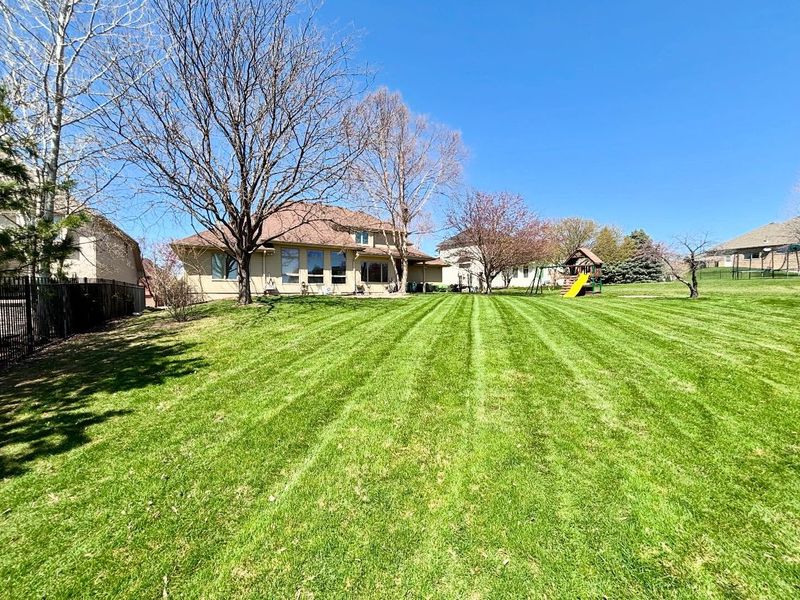
A lawn that supports blue-winged wasps is usually a lawn that handles grub pressure better over time. Natural predation does not eliminate grubs entirely, but it helps keep populations at levels where visible damage is less likely.
That kind of balance is worth protecting.
Grub damage weakens grass roots, making lawns more vulnerable to drought stress and weed invasion. Patches that brown out in summer often trace back to root loss caused by feeding larvae.
Reducing grub numbers reduces that chain of problems.
Diverse, well-maintained lawns tend to attract more beneficial insects naturally. Mixing in native groundcovers or border plants around lawn edges gives wasps and other helpful species the habitat they prefer.
Monoculture turf alone offers less support for a balanced insect community.
Soil health plays a role too. Compacted or nutrient-depleted soil supports fewer beneficial organisms at every level.
Aerating, topdressing with compost, and watering deeply but infrequently all contribute to a lawn environment where natural pest control can function.
Homeowners across the Southeast who shift toward ecological lawn care often report fewer recurring pest problems over several seasons. Results vary depending on lawn size, soil type, and regional conditions, but the general trend holds.
Encouraging natural systems tends to outperform repeated chemical intervention in the long run.