The Meaning Behind Seeing A Red-Bellied Woodpecker In Your Indiana Yard
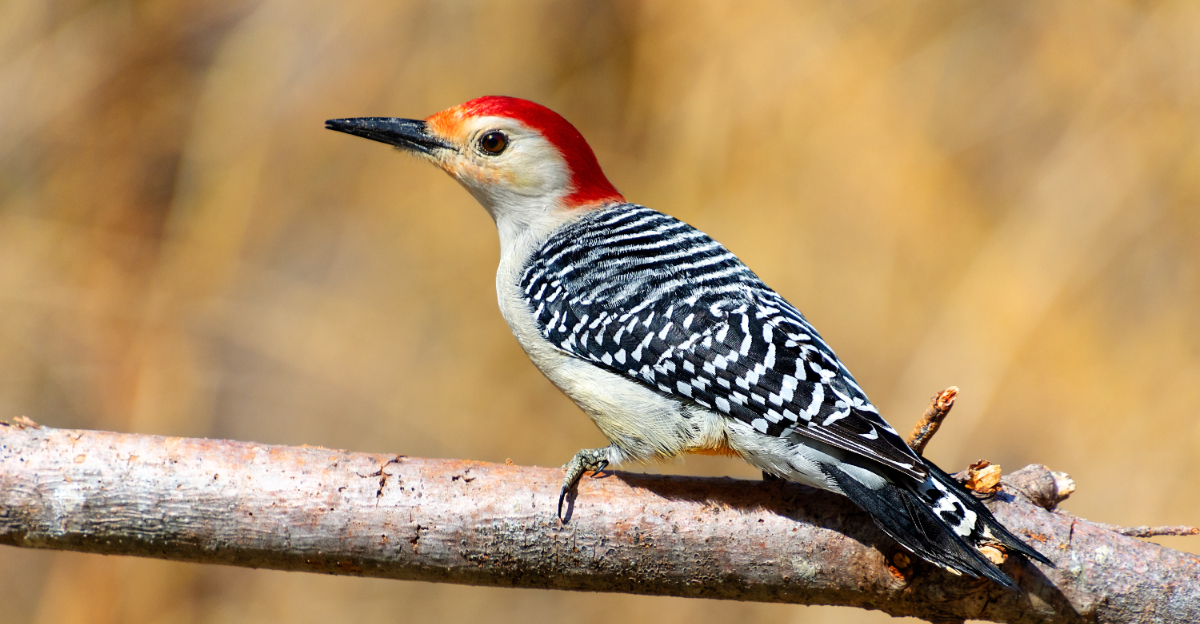
You’re halfway through your coffee when a streak of red and black drums against the old oak, and just like that, your whole yard gets more interesting. That’s a red-bellied woodpecker at work, and it’s not just showing off its colors, it’s telling you something.
Most people clock the bird and move on. But that quick visit ties into more than you’d guess, old folklore, insect activity under the bark, even weather shifts you haven’t noticed yet.
Watch it long enough and you’ll notice it’s not random. It’s checking specific trees, working specific angles, following food that’s already there before you noticed it. That hammering sound isn’t background noise. It’s a clue.
Next time you hear it, don’t just glance up and go back inside. Stick around for a minute. There’s more happening in that oak than you think.
Red-Bellied Woodpeckers Are Common Indiana Yard Visitors
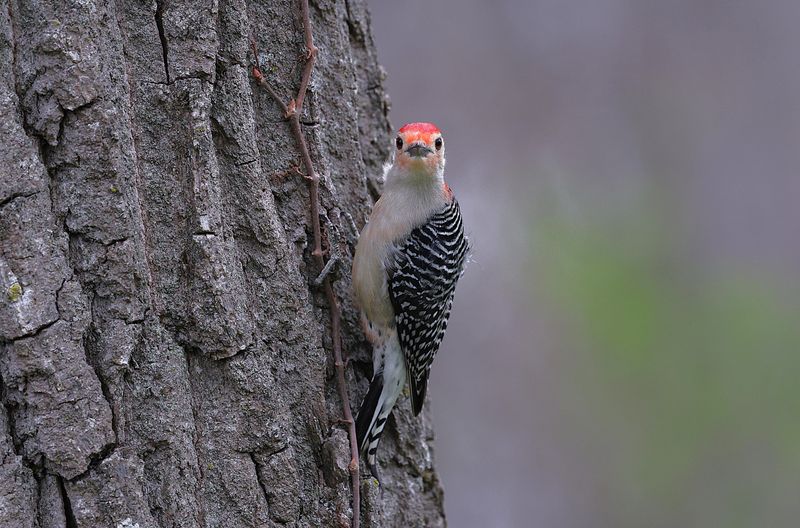
That rhythmic knocking sound coming from your backyard oak? That is almost certainly a red-bellied woodpecker announcing its presence.
These birds are year-round residents throughout most of the state, meaning you can spot them in January snowstorms or August heat waves.
Red-bellied woodpeckers are medium-sized birds, roughly the size of a robin but stockier and louder. Their bold black-and-white barred backs and bright red caps make them easy to identify even from a distance.
Despite their name, the red belly is actually pretty faint and hard to see unless the bird is right in front of you. Most people notice the red head first, which sometimes causes confusion with other species.
These birds love mature hardwood trees like oaks, maples, and hickories, which are abundant across the Hoosier landscape. Suburban yards with older trees offer ideal conditions for them.
Their population has been steadily growing across the eastern United States over the past few decades. Warmer winters and backyard feeders have helped them thrive in places they rarely visited before.
Seeing one in your yard is not unusual, but it is always a treat. Once you learn to recognize their rolling churr call, you will start noticing them much more often.
What Folklore Says About Woodpecker Sightings
Long before bird guides existed, people watched woodpeckers and built stories around them. Across many Native American traditions, woodpeckers were seen as guardians and communicators between the human world and the spirit world.
Some tribes believed a woodpecker sighting signaled that change was coming, often in a positive direction. The persistent drumming was thought to be a message worth paying attention to.
In European folk traditions, woodpeckers were tied to good luck and protection of the home. Seeing one near your house was considered a sign that your dwelling was safe and blessed.
Some older Midwestern farming families believed a woodpecker drumming on your home meant news was coming soon. Whether that news was good or bad depended on which direction the bird was facing.
Your Indiana Garden Changes Every Week. Your Plan Should Too.
Gardening in Indiana changes quickly throughout the season. Every Friday you’ll receive a simple weekly plan showing exactly what to plant, prune, fertilize, harvest, and protect so you never miss the right timing.
Modern spiritual communities often interpret red-bellied woodpecker sightings as a nudge to stay persistent. The bird never stops hammering, so its presence is seen as encouragement to keep working toward your goals.
Others connect the red coloring on the head to passion, energy, and vitality. Spotting one is sometimes interpreted as a sign to reignite something you have been putting off.
Whether you follow folklore or prefer pure science, there is something undeniably stirring about watching this bird work. The meaning behind seeing a red-bellied woodpecker in your Indiana yard may be whatever you need it to be right now.
Why This Bird Chooses Your Yard Specifically
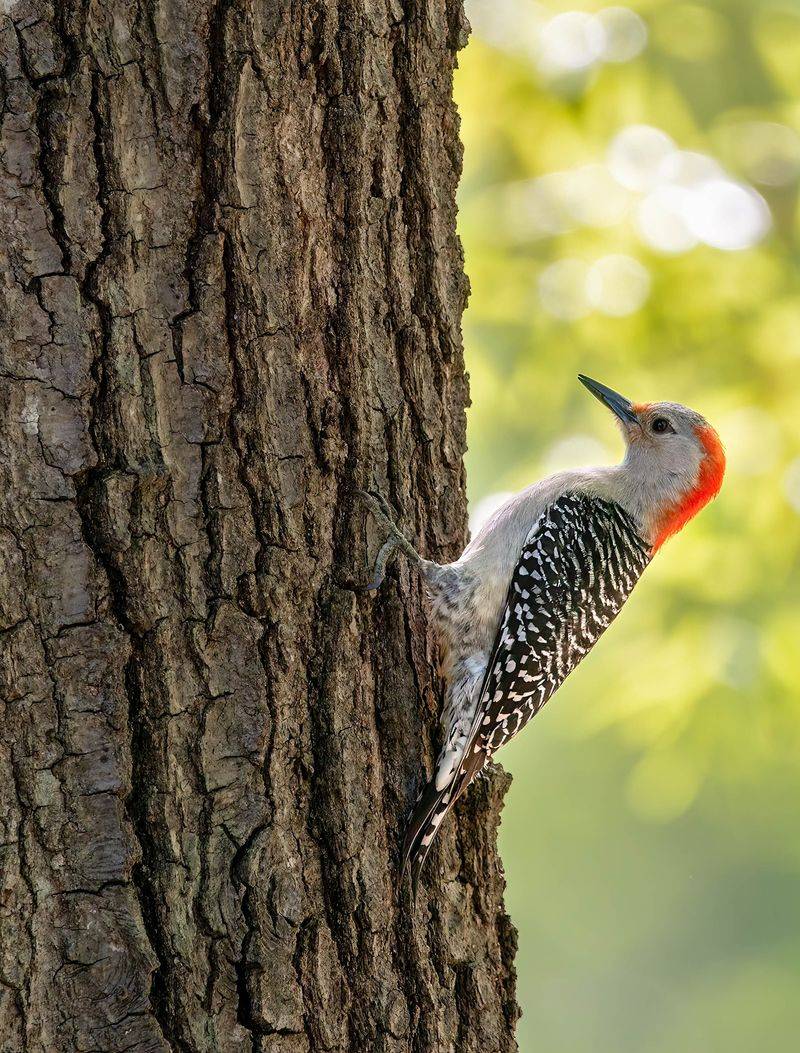
Not every yard gets a visit, so if one shows up at yours, something specific attracted it. These birds are selective, and your property is offering something they need.
Mature trees are the number one draw. A yard with old oaks, hickories, or decaying snags is basically a grocery store for a red-bellied woodpecker hunting for insects and larvae.
Decaying wood is not an eyesore to this bird; it is a treasure chest. Loose bark and soft rotting wood hide the beetles, ants, and grubs that make up a large part of their diet.
Water sources also play a big role in attracting these birds. A birdbath or shallow pond gives them a reliable place to drink and bathe, especially during dry summers.
Yards with berry-producing shrubs like holly, dogwood, or viburnum are especially appealing in the fall and winter months. Red-bellied woodpeckers will cache berries and nuts in bark crevices for later snacking.
Dense tree canopy also provides shelter from hawks and other predators. A yard that feels safe and well-covered is far more likely to get repeat visits than an open, exposed space.
Your yard is essentially passing a habitat checklist that many neighboring properties are not. That is worth celebrating, and it gives you real motivation to keep those older trees standing.
Telling It Apart From Other Indiana Woodpeckers
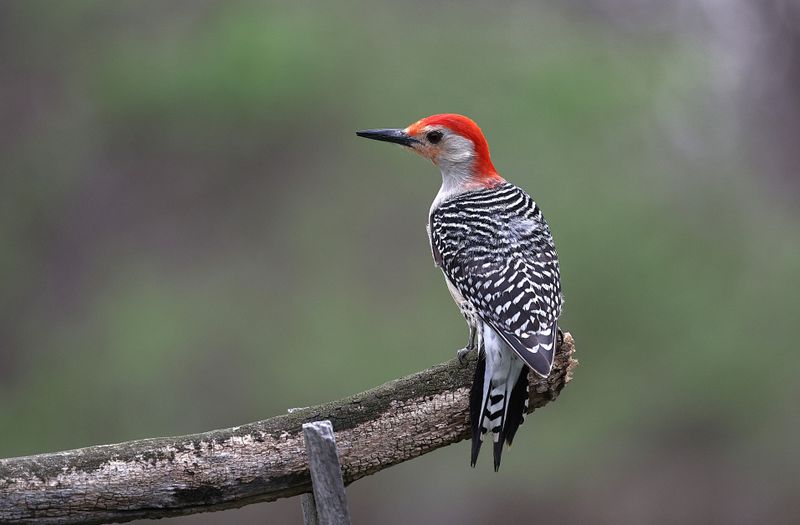
Indiana is home to several woodpecker species, and telling them apart can feel tricky at first glance. Knowing what makes each one unique saves a lot of confusion at the feeder.
The red-bellied woodpecker is often confused with the red-headed woodpecker, but they look quite different up close. The red-headed has a fully red head and neck, while the red-bellied only has red on the crown and nape.
Size is another helpful clue when comparing species. The red-bellied is noticeably larger than the downy woodpecker, which is the smallest and most common backyard species in the state.
The hairy woodpecker looks almost identical to the downy but is larger, closer in size to the red-bellied. Checking the bill length relative to head size quickly separates these two lookalikes.
Pileated woodpeckers are the giants of Indiana woodpeckers, nearly crow-sized with a dramatic red crest. You are unlikely to mix one up with a red-bellied once you see them side by side.
Behavior also helps with identification. Red-bellied woodpeckers are vocal and bold, frequently visiting feeders and calling loudly from treetops throughout the day.
Once you lock in the red-bellied woodpecker’s barred back pattern and rolling call, you will rarely misidentify it again. Recognizing it confidently makes every future sighting feel like running into an old friend.
What Attracts Red-Bellied Woodpeckers To Feeders
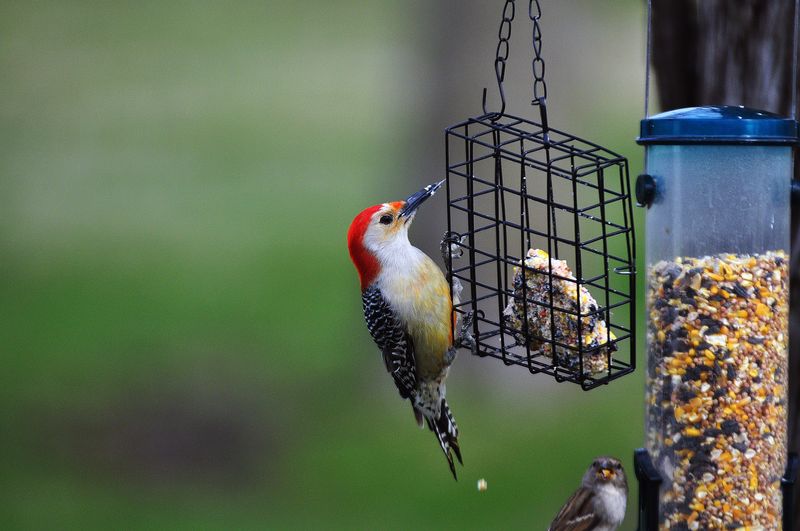
Suet is one of the most effective foods for bringing red-bellied woodpeckers to your feeders. This high-fat cake mimics the energy-dense insects they naturally hunt in tree bark.
Plain suet works well, but blends with peanuts, sunflower chips, or berries tend to attract them faster. Woodpeckers have strong flavor preferences, and peanut-based suet is particularly hard for them to resist.
Peanuts in the shell are another great option, especially if you use a cage-style feeder designed for larger birds. Red-bellied woodpeckers are smart and persistent, and they will figure out how to extract the nut quickly.
Sunflower seeds placed in a large hopper feeder also draw them in regularly. They prefer feeders with a solid perching surface, since their feet and body shape are built for clinging to vertical surfaces.
Feeder placement matters more than most people realize. Mounting a suet cage directly on a tree trunk or a nearby wooden post gives the bird a natural, comfortable position to feed from.
Avoid placing feeders in wide-open areas with no nearby cover. These birds feel vulnerable in exposed spaces and will skip a feeder that forces them into the open for too long.
The meaning behind seeing a red-bellied woodpecker at your feeder is simple: your setup is working. Keep the suet fresh, stay patient, and you will be rewarded with regular visits all winter long.
Encouraging More Visits Without Overfeeding
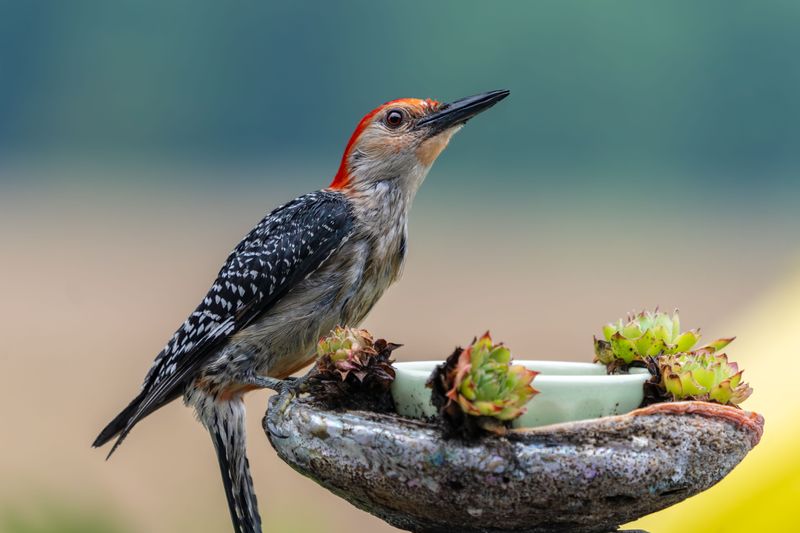
More is not always better when it comes to feeding backyard birds. Overloading feeders can lead to spoiled food, mold, and an unhealthy dependence on artificial food sources.
A better approach is creating a yard that supports the bird naturally while supplementing with feeders in moderation. Native plantings do most of the heavy lifting with very little ongoing effort from you.
Here’s where to start if you want your yard on this bird’s regular route:
Plant native oaks, hickories, or serviceberry trees if you have space. These trees produce food and shelter that benefit red-bellied woodpeckers across every season of the year.
Leave standing tree limbs in place when it is safe to do so. Snags provide nesting cavities and foraging opportunities that no feeder can fully replace.
A shallow birdbath with fresh water changed every two to three days is one of the best investments you can make. Clean water draws more birds than almost any food source, especially during hot or dry stretches.
Limit suet to one or two feeders rather than scattering multiple stations around the yard. This keeps the feeding area manageable and reduces the chance of attracting pests like squirrels or raccoons.
Seeing a red-bellied woodpecker means more when you know you helped create that space. A few small changes can turn a sighting into a lasting relationship.