The Rat-Repelling Porch Plants Texas Gardeners Are Adding Along Their Foundations
Rats near a Texas home foundation are one of those problems that feel deeply uncomfortable the moment you realize you have them.
The foundation zone is exactly where you don’t want rats exploring, and once they get comfortable in that sheltered space along your house, moving them along becomes a real project.
Most homeowners go straight for traps or call pest control. But a growing number of Texas gardeners have been quietly adding certain plants along their foundations that rats consistently want nothing to do with.
These aren’t exotic or hard to find plants. Several of them are beautiful additions to any foundation planting in their own right.
But they produce scents and compounds that overwhelm a rat’s highly sensitive sense of smell, making the area around your foundation a much less inviting place for them to investigate.
Low maintenance, effective, and genuinely attractive in the landscape. Here’s what Texas gardeners are planting along their foundations and why it’s working.
1. Society Garlic
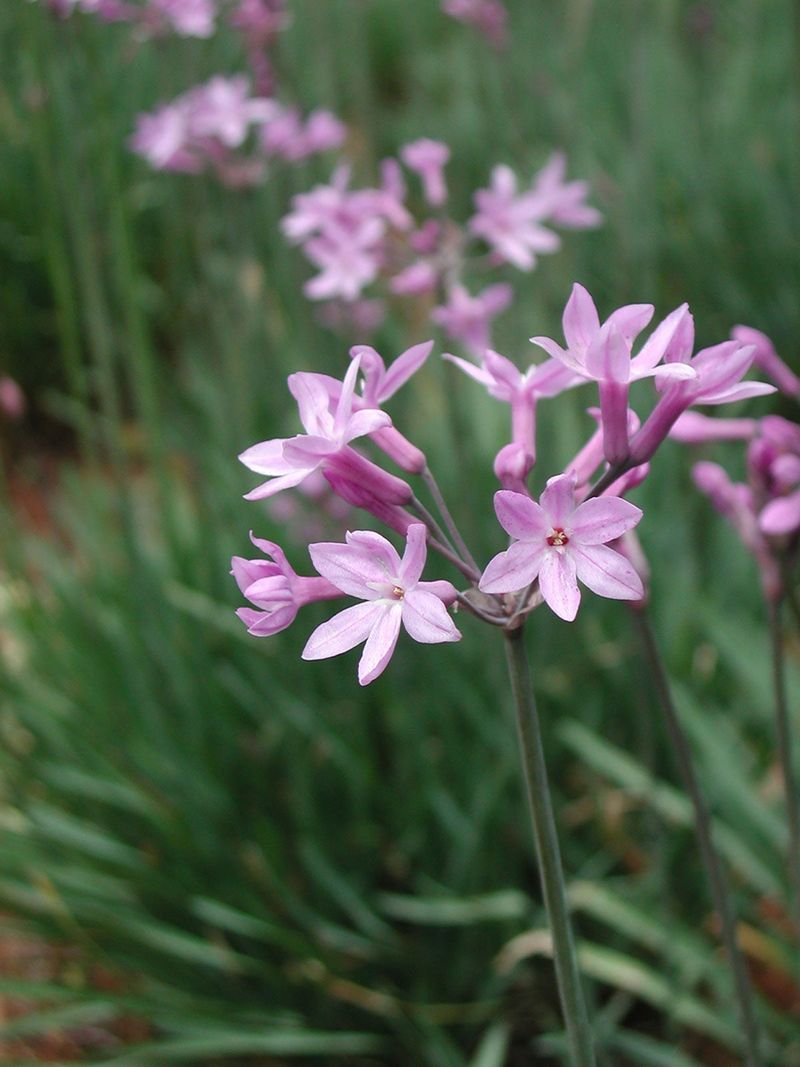
Most people have never heard of society garlic, but Texas gardeners are quickly falling in love with it.
Run your hand along its slender leaves and you will immediately catch a sharp, unmistakable garlic scent. That smell is exactly what makes rodents want to look elsewhere for a home base.
Society garlic is a tough, low-growing perennial that handles the brutal Texas summer heat without much fuss. It produces clusters of small, pretty purple flowers that look great lining a porch or foundation edge.
The plant stays tidy, which is a big deal when you want your yard to look clean and cared for.
Plant it in well-drained soil along your foundation bed for the best results. It does not like soggy roots, so avoid spots where water tends to pool after rain. Full sun or partial shade both work well for this plant in most parts of Texas.
One great thing about society garlic is that it multiplies slowly over time, filling in gaps along your foundation without becoming invasive. You can divide clumps every few years to keep growth manageable and share extras with neighbors.
It is also deer-resistant, which is a bonus for Texas yards where deer pressure can be a problem.
Pair it with mulch that is kept thin and dry to avoid giving rodents a cozy nesting spot. Keep the bed edges clean and free of debris.
Society garlic rewards low-maintenance gardeners with long-lasting fragrance, tidy borders, and a natural line of aromatic defense right where you need it most.
2. Rosemary
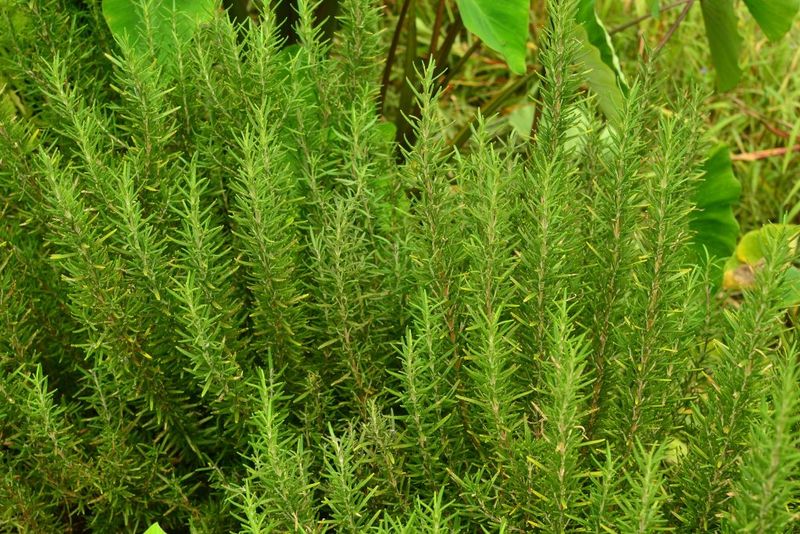
Walk past a rosemary bush on a warm Texas afternoon and the sharp, piney fragrance hits you immediately. Rats, however, do not share our appreciation for that smell.
That strong herbal scent is one reason more Texas homeowners are tucking rosemary along their sunny foundation beds.
Rosemary is practically built for Texas conditions. It loves full sun, thrives in dry, well-drained soil, and handles heat that would flatten softer plants.
Once established, it barely needs watering, making it one of the lowest-maintenance foundation plants you can choose.
Your Texas Garden Changes Every Week. Your Plan Should Too.
Gardening in Texas changes quickly throughout the season. Every Friday you’ll receive a simple weekly plan showing exactly what to plant, prune, fertilize, harvest, and protect so you never miss the right timing.
One important rule: do not overwater rosemary near your house. Keeping the soil too wet creates moisture problems that attract pests rather than repel them.
Let the soil dry out between waterings and make sure your foundation bed has good drainage before planting.
Rosemary grows into a dense, upright or trailing shrub depending on the variety you choose. Upright types like Tuscan Blue work well as small anchor plants at porch corners.
Trailing varieties can cascade beautifully over raised beds or low retaining walls along the house.
Beyond its rat-deterring reputation, rosemary is incredibly useful in the kitchen. Having it right outside your door means fresh herbs are always within reach when you are cooking.
It also attracts pollinators like bees, which is good news for any nearby garden beds or vegetable patches.
Prune it lightly after it blooms to keep the shape neat and encourage fresh, fragrant growth. A well-maintained rosemary plant along your foundation looks intentional, smells amazing, and sends a clear message to rodents that your porch is not the place for them.
3. Mint In Pots
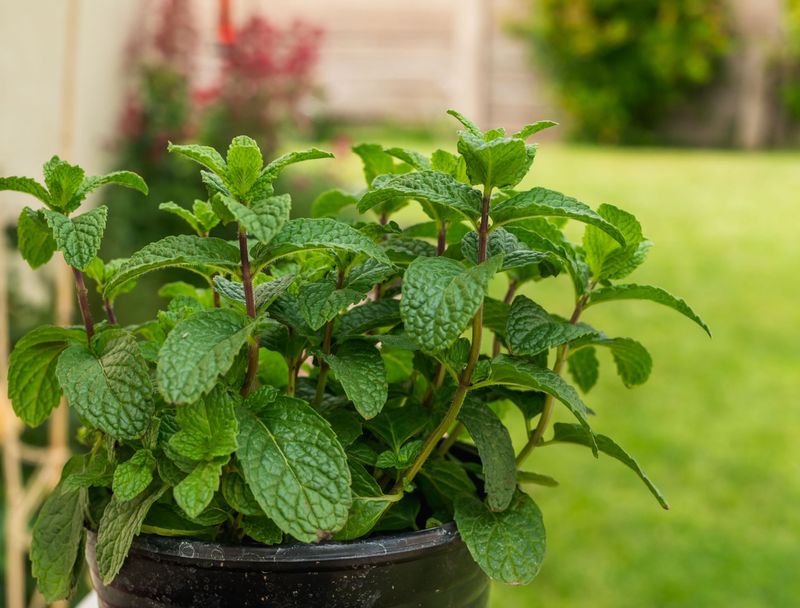
Mint is bold, fast-growing, and carries a scent so sharp it can clear a room. Homeowners have long used it as a natural scent-based deterrent around porches and entryways, and for good reason.
Rodents find the intense minty smell overwhelming and tend to avoid areas where it is strong.
Here is the catch: mint is an aggressive spreader. Plant it directly in a foundation bed and it will take over every inch of soil within a season or two.
That is why the golden rule for using mint as a rat deterrent is simple: always grow it in containers.
Place pots of mint near porch corners, steps, and outdoor seating areas where the scent will circulate naturally. Terra cotta pots work great because they breathe well and help prevent overwatering.
Choose a pot that is at least 12 inches wide to give the roots enough room to stay productive.
Spearmint and peppermint are the two most popular options for scent-based deterrence. Peppermint tends to have a stronger, more intense fragrance, which may make it slightly more effective near problem areas.
Both varieties are easy to find at most Texas nurseries or garden centers. Keep the plants trimmed regularly so they stay bushy and full rather than leggy and sparse. A full, leafy mint plant releases more scent than a scraggly one.
Pinch off flower buds as they appear to keep the plant focused on leaf production rather than blooming.
Refresh your mint containers every season or two for the best results. Older plants can lose some of their fragrance intensity over time, so starting fresh keeps the scent strong right where you need it most.
4. Lavender
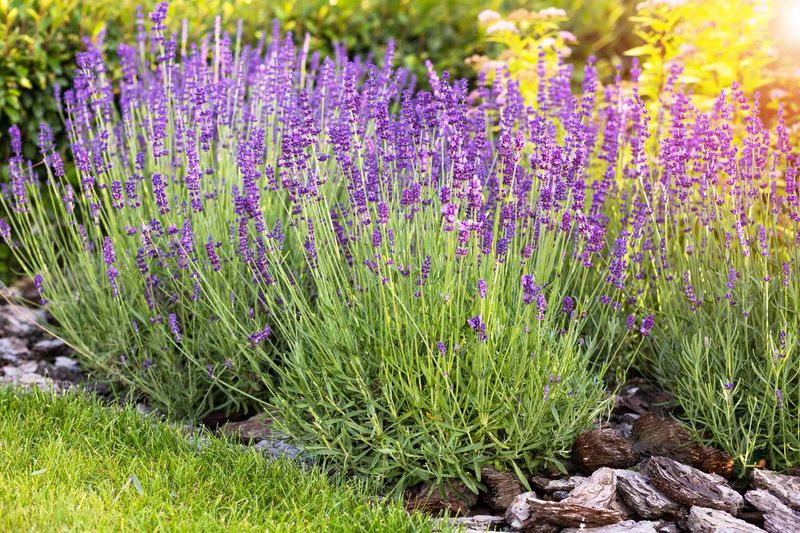
There is something almost magical about the way lavender smells on a warm evening. Humans adore it.
Rats, on the other hand, strongly disagree. That calming floral fragrance contains compounds that rodents find unpleasant, making lavender one of the most pleasant-smelling deterrents you can add near your home.
For Texas gardeners, lavender works best in spots that get full sun for most of the day. It absolutely needs well-drained soil, and that part is non-negotiable.
Soggy roots will quickly cause the plant to struggle, which defeats the whole purpose of using it as a long-term foundation planting.
Spanish lavender and Phenomenal lavender are two varieties that tend to hold up especially well in Texas heat and humidity. Spanish lavender blooms earlier and has those distinctive bunny-ear petal tips.
Phenomenal lavender is more heat-tolerant and stays fragrant longer through the summer months.
Avoid planting lavender in low spots near your foundation where rainwater collects. If your soil is heavy clay, consider building up a small raised bed or mixing in gravel to improve drainage before planting.
Getting the soil conditions right from the start saves a lot of frustration later. Once lavender is established, it needs very little care. Light pruning after each bloom cycle keeps the plant compact and encourages fresh, fragrant growth.
Skip the heavy fertilizing because too much nitrogen pushes leafy growth at the expense of the oils that create that signature scent.
Tuck lavender between other foundation plants for a layered look that smells wonderful. It pairs beautifully with rosemary and society garlic to create an aromatic barrier that is as attractive as it is functional.
5. Lemongrass
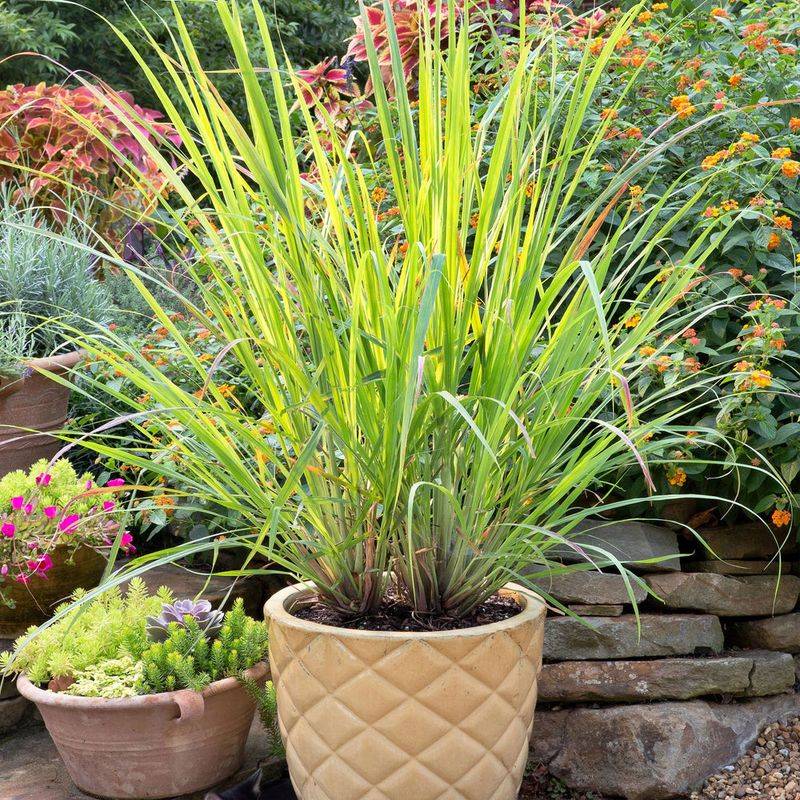
If you want a plant that makes a bold statement on your porch while also doing double duty as a rodent deterrent, lemongrass is your answer.
Its bright citrus scent comes from citronella oil, which is the same compound used in many commercial insect and pest repellents.
That fresh, lemony fragrance is strong enough to make rodents reconsider getting close to your porch.
Lemongrass grows into a large, dramatic clump of tall, arching green blades. In a big container on a sunny porch, it looks tropical and lush without requiring a lot of fuss.
Full sun is a must, and it appreciates consistent watering during the hottest Texas summer months.
Growing lemongrass in containers gives you a big advantage in Texas: you can move it indoors or to a sheltered spot when hard freezes threaten.
In the warmer southern parts of the state, it may survive winter in the ground, but in areas that get hard freezes, containers make replanting much easier when spring rolls around.
The plant grows fast and can get quite large, so choose a container that is at least 15 to 20 gallons to give it enough room.
Divide the clump every couple of years to keep it from getting root-bound and to maintain strong, healthy growth. Divisions also make great gifts for neighbors who want to try it themselves.
As a bonus, lemongrass leaves can be used in cooking, especially in soups and teas. Having a fresh, fragrant, and useful plant right on your porch is a genuine win on every level. It looks good, smells amazing, and earns its spot in any Texas porch garden.
6. Catmint
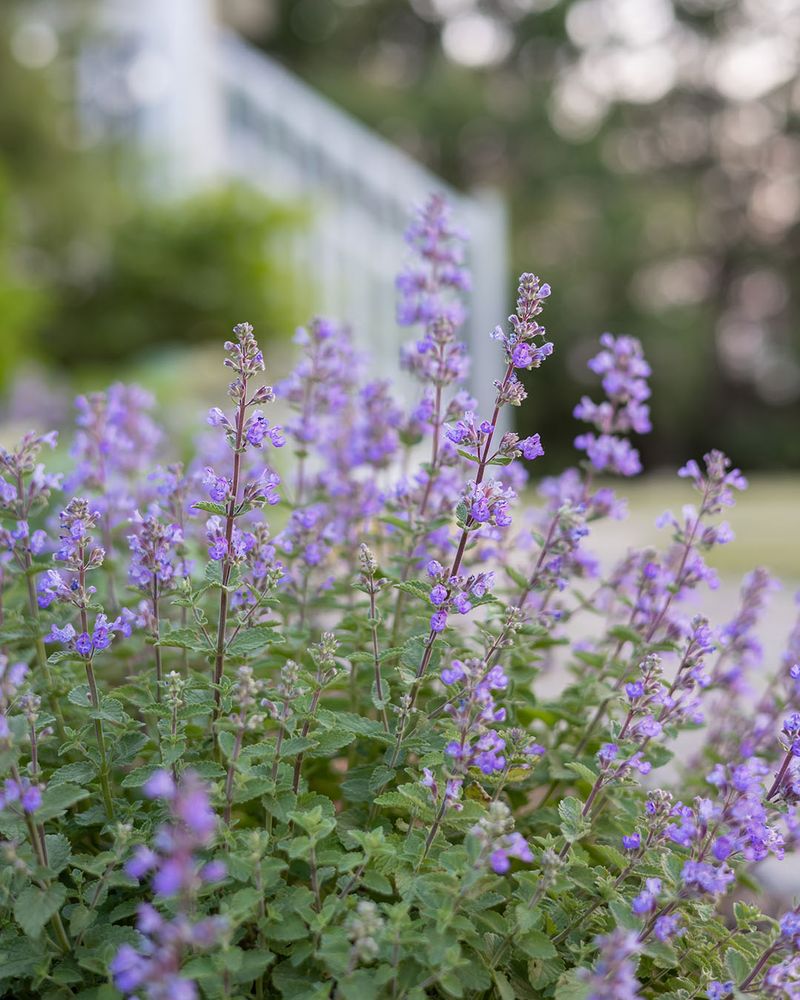
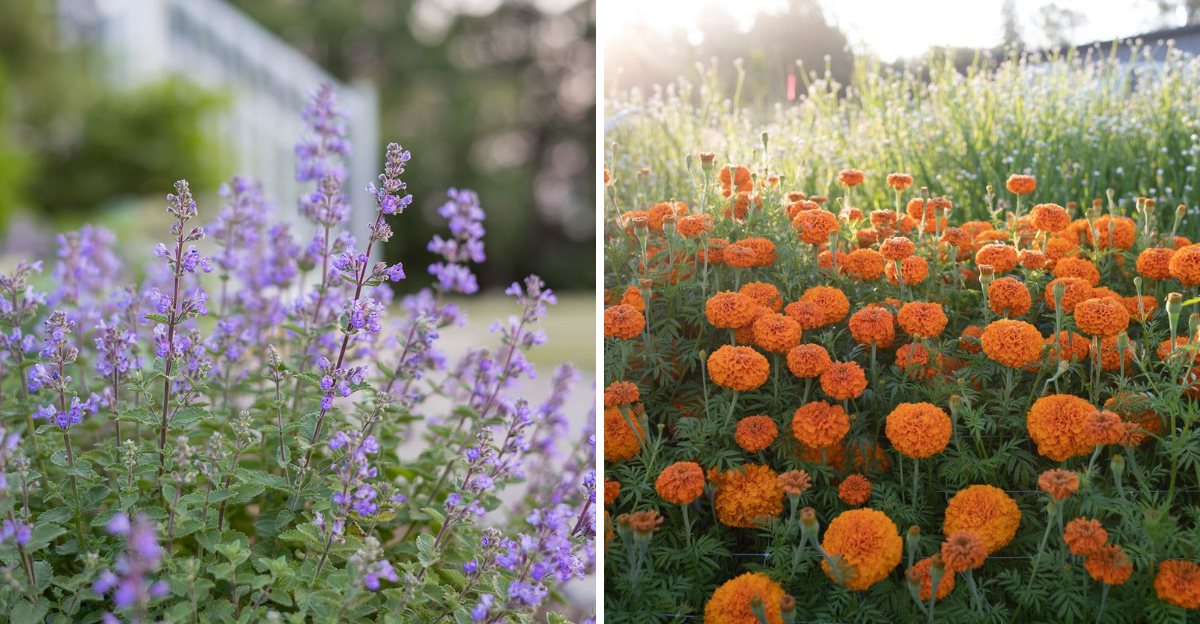
Catmint has a reputation for being the plant that cats go crazy over, but there is a lot more to it than that. It produces a steady wave of soft lavender-purple flowers and releases a minty, slightly herbal fragrance that rodents tend to avoid.
As a low-growing border plant along a sunny porch edge, it checks a lot of boxes at once. One of the best things about catmint is how little it demands from you.
Plant it in a sunny spot with well-drained soil and it will basically take care of itself through most of the Texas growing season.
It is drought-tolerant once established, which is a huge plus when summer temperatures start climbing past 100 degrees.
Use catmint as a tidy aromatic border rather than letting it sprawl loosely across your foundation bed.
A neat, defined planting edge looks intentional and attractive, while also avoiding the dense, tangled groundcover that could create sheltered spots where rodents might feel comfortable hiding.
Shear it back by about one-third after the first big bloom flush and it will rebound with a fresh round of flowers and fragrance.
That second bloom often carries the plant well into fall, giving you months of fragrance and color along your foundation. Few plants offer that kind of seasonal value with so little effort.
Walker’s Low is one of the most popular catmint varieties and works especially well in Texas landscapes. It grows to about 18 to 24 inches tall and wide, making it a great mid-sized border option.
Pair it with marigolds or lavender for a fragrant, colorful, and rodent-unfriendly foundation planting that looks professionally designed without the professional price tag.
7. Marigolds
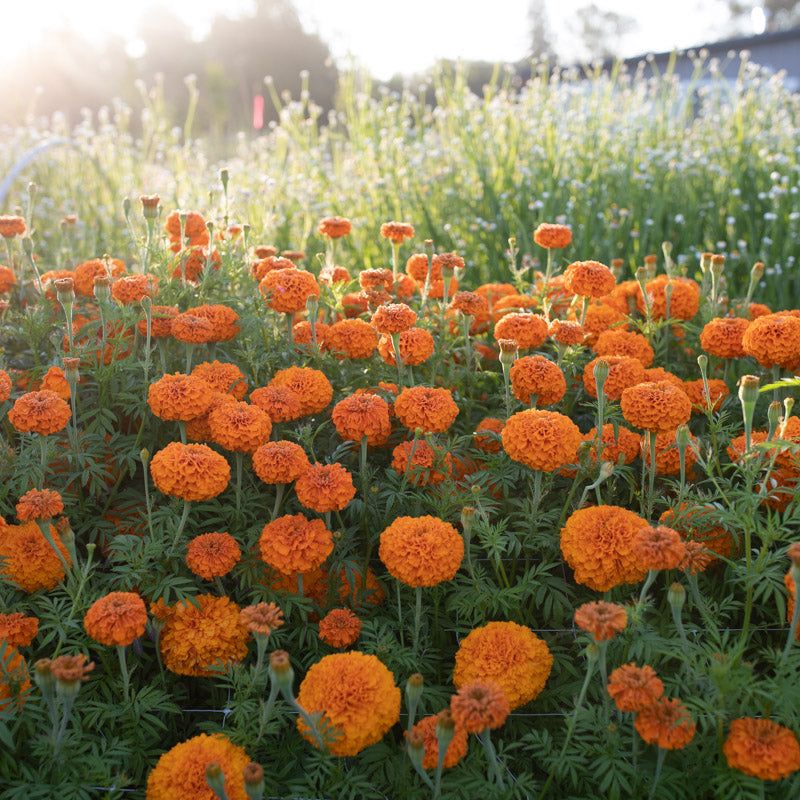
Few flowers are as cheerful and hardworking as the marigold. Those bright orange and yellow blooms have been a garden staple for generations, and for good reason.
Beyond their good looks, marigolds produce a strong, distinctly herbal smell that many gardeners swear keeps unwanted pests away from their foundation beds.
Marigolds are one of the easiest plants to grow in Texas. They are affordable, widely available, and start blooming quickly after planting.
French marigolds tend to stay compact and tidy, making them a great choice for neat foundation beds. African marigolds grow taller and produce bigger blooms if you want more visual impact.
Planting them along foundation gaps where other plants have not filled in yet is a smart, budget-friendly move.
They fill empty spaces with color quickly, which also means fewer bare soil patches where rodents might feel comfortable digging or nesting. A full, planted bed is simply less inviting than an empty one.
To get the most out of marigolds as a deterrent, keep the surrounding area clean. Remove spilled birdseed, pet food bowls, and fallen fruit from nearby trees promptly.
Marigolds can help discourage rodents, but they cannot overcome the attraction of a reliable food source sitting nearby.
Use thin mulch rather than thick layers around your marigold bed. Deep mulch creates warm, hidden pockets that rodents love. A thin layer of about one inch keeps moisture in without creating cozy nesting material.
Deadhead spent blooms regularly to keep the plants producing fresh flowers all season long. A well-maintained marigold border looks bright and intentional while quietly doing its job as a fragrant, natural deterrent along your home’s foundation.