These Are The North Carolina Perennials That Get More Beautiful Every Single Week Of August
August in North Carolina gets a bad reputation and honestly it is not entirely undeserved. The heat is brutal, the humidity is relentless, and a lot of garden beds start looking like they have simply given up on the whole thing.
But here is what makes this month genuinely exciting for anyone paying close attention: certain perennials are just now hitting their absolute stride.
While everything else is winding down, native plants and tough garden favorites are taking over sunny borders, moist edges, and pollinator beds with yellow daisies, purple clusters, and bold blue flowers that seem to get more eye-catching with every passing week.
August is not the end of the show in a North Carolina garden. For the right plants it is more like the opening of a seriously good second act.
1. Garden Phlox Keeps Borders Colorful
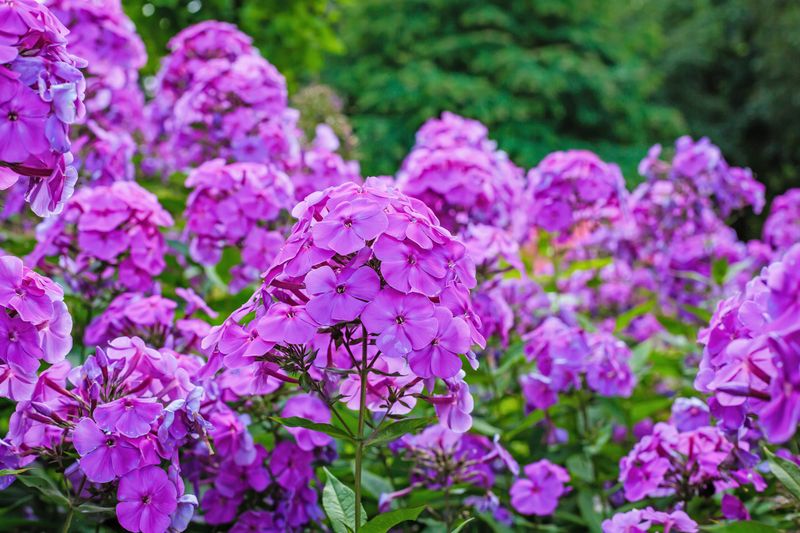
Few sights in a late-summer border stop people in their tracks quite like a well-grown clump of Garden Phlox loaded with fragrant blooms.
In North Carolina, this perennial tends to reach its fullest, most colorful display right around the time August heat is at its most intense.
The flower clusters can range from soft lavender and rosy pink to bold magenta and crisp white, giving gardeners plenty of options to work with depending on their border style.
One thing North Carolina gardeners quickly learn is that airflow matters a lot with Garden Phlox.
Powdery mildew can show up in humid conditions, so choosing mildew-resistant cultivars and planting with enough spacing between stems goes a long way toward keeping the foliage looking clean through the season.
Thinning stems in spring can also help improve air circulation around the base.
Pollinators absolutely flock to these blooms, and on warm August mornings, the flowers can be buzzing with butterflies and bees. Garden Phlox works well in cottage-style beds, mixed perennial borders, and even as a backdrop for shorter plants.
It tends to do best in full sun with consistently moist, well-drained soil. In established plantings, the color display can become more generous each year as the clumps fill in and the root system matures across the growing season.
2. Black-Eyed Susan Holds Summer Color
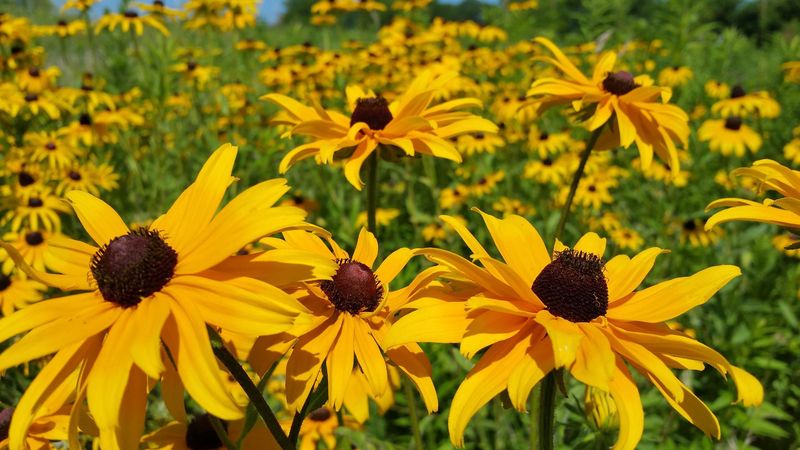
Walk past almost any sunny roadside or residential garden in North Carolina during August, and chances are you will spot the cheerful yellow petals of Black-Eyed Susan holding strong while everything else around them starts to fade.
This native perennial has a reliability that gardeners genuinely appreciate, especially during the stretch of summer when keeping color in the border feels like a challenge.
The golden-yellow ray flowers surrounding that deep brown center are unmistakable and surprisingly bold in the landscape.
Black-Eyed Susan thrives in full sun and tolerates the kind of dry, hot spells that North Carolina summers are known for delivering.
Once established, it does not need much fussing over, which makes it a solid choice for low-maintenance pollinator gardens and sunny cottage beds alike.
It tends to self-seed freely, so gardeners who want to keep things tidy may want to deadhead spent blooms before seeds fully mature.
Your North Carolina Garden Changes Every Week. Your Plan Should Too.
Gardening in North Carolina changes quickly throughout the season. Every Friday you’ll receive a simple weekly plan showing exactly what to plant, prune, fertilize, harvest, and protect so you never miss the right timing.
Goldfinches are known to visit the seed heads later in the season, which adds another layer of wildlife interest to an already hardworking plant.
The blooms attract bees and butterflies throughout August, making it a reliable anchor in any pollinator-focused planting.
Rudbeckia hirta, the common species, behaves more like a short-lived perennial or biennial in some gardens, while Rudbeckia fulgida tends to be more reliably perennial and spreads steadily to fill in gaps over time.
3. Joe-Pye Weed Adds Tall August Blooms
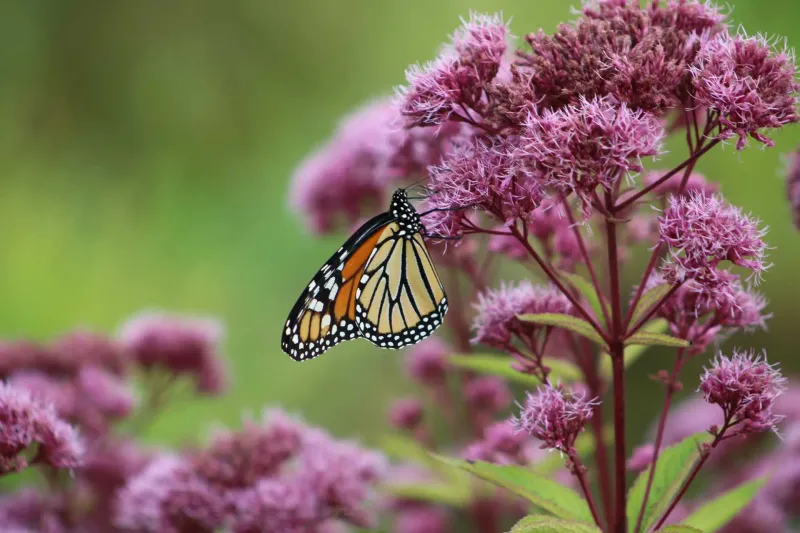
Standing anywhere from four to seven feet tall in favorable conditions, Joe-Pye Weed commands attention in a way that shorter perennials simply cannot match.
By the time August rolls around in North Carolina, those large, domed clusters of dusty mauve-pink flowers are fully open and drawing in an impressive variety of pollinators.
Swallowtail butterflies seem especially fond of it, and on a warm afternoon, the blooms can look like a butterfly landing strip.
This native plant is well suited to moist or average garden soils and tends to perform best in full sun to light shade.
Along stream edges, rain gardens, and low-lying spots in North Carolina yards where water tends to linger after heavy rains, Joe-Pye Weed can settle in and grow into an impressive late-season focal point.
It is a plant that rewards patience, as established clumps tend to put on a bigger show each year.
The sheer height of Joe-Pye Weed means it works best toward the back of a border or in a naturalistic planting where its scale feels appropriate rather than overwhelming.
Compact cultivars like ‘Little Joe’ offer a more manageable size for smaller yards without sacrificing the flower display.
Gardeners in the Piedmont and mountain regions may find it particularly well adapted, though it can perform across much of the state when given reasonably moist, organically rich soil and room to spread.
4. Cardinal Flower Brightens Moist Spots
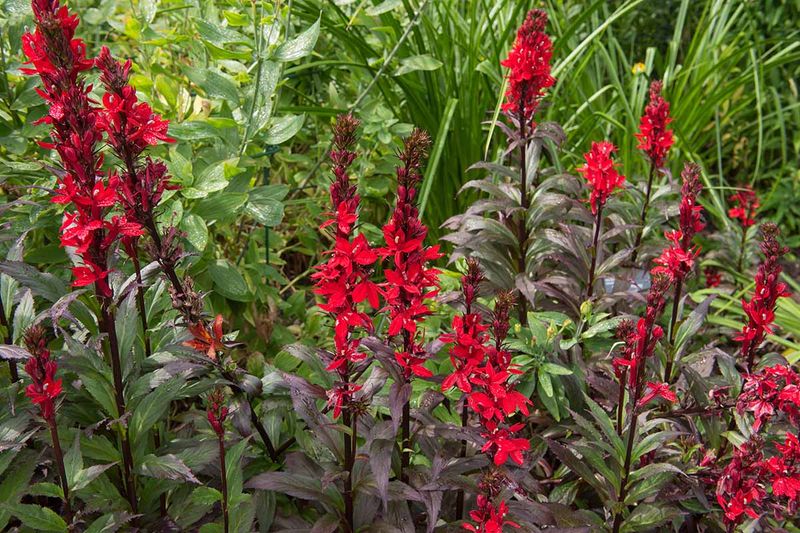
There is something almost electric about the red of Cardinal Flower. In the right setting, a clump of Lobelia cardinalis in full bloom can stop you mid-stride, especially when the flowers catch afternoon light along a shaded stream bank or moist garden edge.
August is typically when this native perennial reaches its peak in North Carolina, sending up tall spikes of brilliant scarlet blooms that seem almost too vivid to be real.
Ruby-throated hummingbirds are strongly attracted to Cardinal Flower, and gardeners who plant it near a window or patio are often rewarded with regular hummingbird visits through late summer.
The tubular flower shape is particularly well matched to hummingbird feeding, and the two seem almost made for each other in native plant circles.
Butterflies and long-tongued bees also visit the blooms with some frequency.
Moist to wet soil is genuinely important for Cardinal Flower to thrive. It tends to struggle in dry, sandy conditions and does best along pond edges, rain gardens, boggy areas, or spots that stay consistently damp.
Partial shade to full sun works depending on how reliably moist the soil stays throughout the season. In North Carolina, where summer rainfall can be unpredictable, supplemental watering during dry stretches helps keep Cardinal Flower looking its best.
It may self-seed and naturalize in favorable spots, slowly expanding its presence along moist garden edges over several seasons.
5. Great Blue Lobelia Brings Cool Color
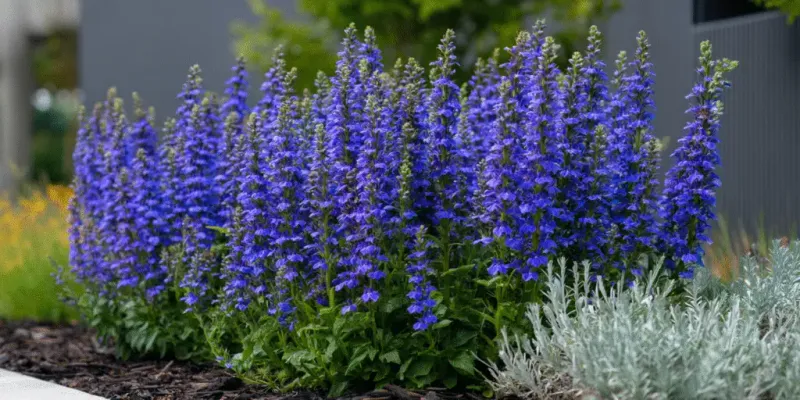
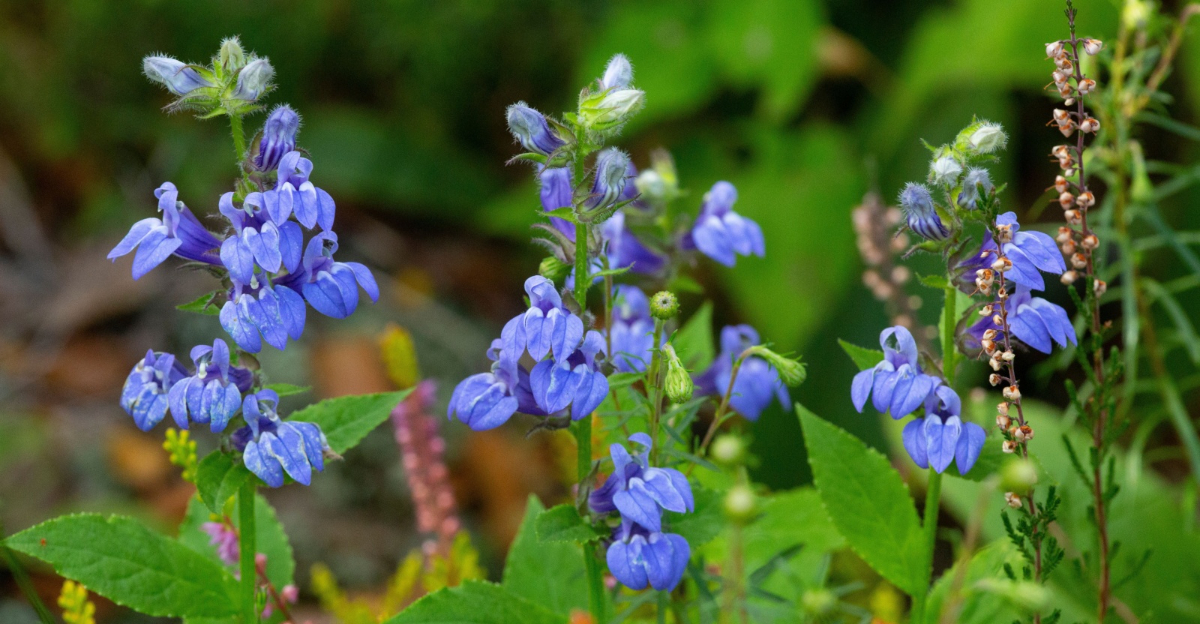
When most of the garden is leaning toward yellows and oranges in August, Great Blue Lobelia arrives with a refreshing dose of blue-violet that feels genuinely different from what surrounds it.
Lobelia siphilitica is a native perennial that tends to bloom from mid to late summer in North Carolina, and the upright flower spikes can reach two to three feet tall in good growing conditions.
The color is cool and distinctive, making it a standout in naturalistic plantings and shaded borders alike.
Like its relative Cardinal Flower, Great Blue Lobelia has a strong preference for moist soil. It performs well along stream banks, in rain gardens, and in low spots where soil stays reliably damp through the growing season.
Partial shade is often where it looks its most lush, though it can handle more sun if moisture levels stay consistent.
In North Carolina gardens where Cardinal Flower is already growing, Great Blue Lobelia makes a natural companion since they share similar habitat preferences and bloom at overlapping times.
Bumblebees are particularly drawn to the flowers, and the combination of blue blooms and buzzing bees creates a lively late-summer scene in the garden.
Great Blue Lobelia may self-seed in conditions it finds comfortable, gradually spreading into a small colony over time.
Gardeners looking for native plants that bring cool-toned late-summer interest to moist or shaded spots will find this one genuinely rewarding once it gets established and settles in.
6. Ironweed Adds Bold Purple Flowers
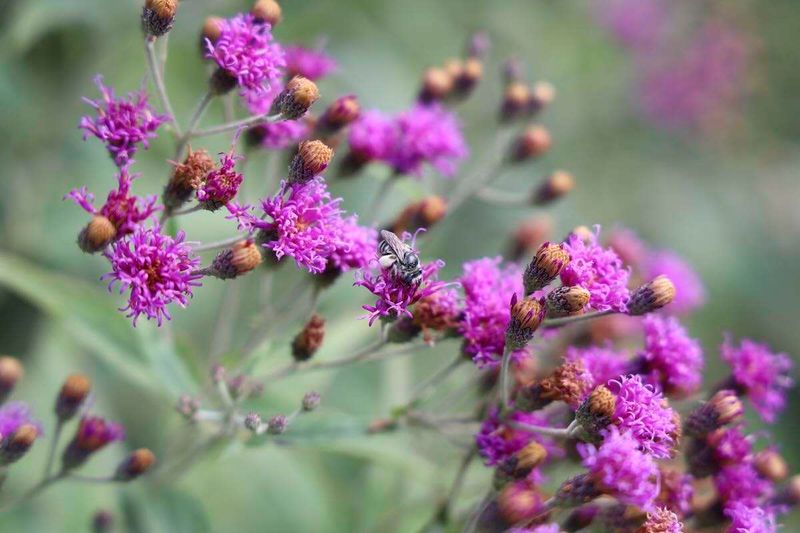
Bold is the right word for Ironweed.
Vernonia species produce some of the most intensely purple flowers of any native perennial in the late-summer garden, and by August in North Carolina, those flat-topped clusters of deep violet blooms are fully open and drawing in pollinators from what feels like a considerable distance.
The color is not subtle or pastel. It is rich, saturated purple that holds its own even in a border full of competing late-season plants.
Ironweed is native to much of North Carolina and tends to thrive in full sun with average to moist soil.
It can grow quite tall, sometimes reaching five or six feet in favorable conditions, so placing it toward the back of a border or in a naturalistic meadow-style planting gives it room to show off without crowding shorter neighbors.
The stems are sturdy and rarely need staking, which is a practical advantage in gardens that experience summer storms.
Butterflies, especially monarchs and swallowtails, visit Ironweed blooms with notable enthusiasm during August migration periods.
This makes it a genuinely valuable addition to pollinator gardens across the Piedmont, Coastal Plain, and mountain regions of North Carolina.
The seed heads that follow the blooms have their own quiet texture and interest as the season transitions into fall.
Ironweed can spread by both seed and root, so gardeners in smaller yards may want to monitor its spread and remove unwanted seedlings before they get established.
7. Rough Goldenrod Starts Its Late Show
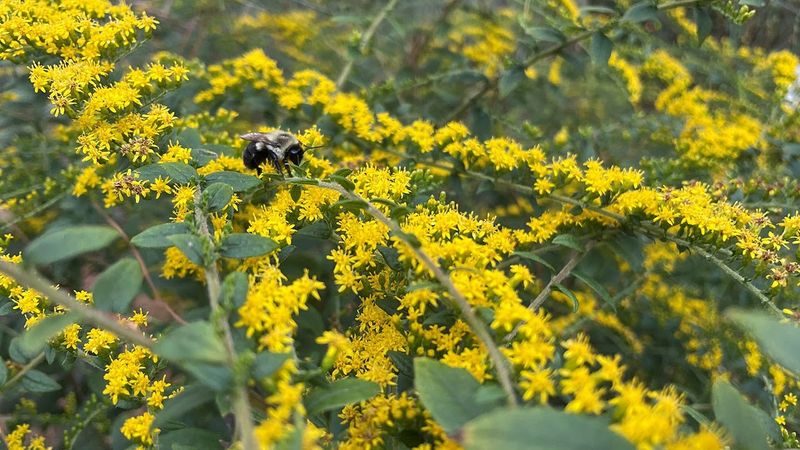
Goldenrod gets a bad reputation it does not deserve. Many people blame it for hay fever symptoms that are actually caused by ragweed, which blooms at the same time but releases its pollen into the wind rather than relying on insects.
Rough Goldenrod, Solidago rugosa, is pollinated by insects and poses little allergy risk to most people.
By late August in North Carolina, its arching sprays of bright yellow flowers are just beginning to open, marking the start of one of the season’s most reliable late shows.
This native perennial is well adapted to a wide range of conditions, including average to moist soils and full sun to partial shade.
It tends to be more tolerant of moisture than some other goldenrod species, making it a practical option for rain gardens, low spots, and woodland edges in North Carolina yards.
The foliage is slightly rough to the touch, which gives the plant its common name and makes it a bit less appealing to deer than some other goldenrods.
The pollinator value of goldenrod in late summer and early fall is significant. Bees, wasps, and butterflies all visit the flowers, and the plant serves as a late-season nectar source when other blooms are winding down.
In gardens focused on supporting native pollinators through the full growing season, Rough Goldenrod earns its place near the back of the border where its spreading habit has room to develop naturally over time.
8. New England Aster Bridges Summer And Fall
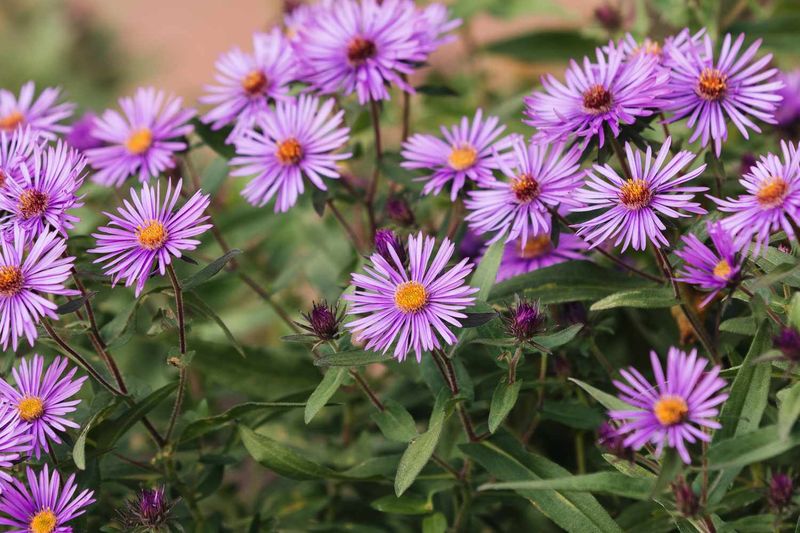
By the time late August arrives, the garden can start to feel like it is winding down, but New England Aster seems to have other ideas.
Symphyotrichum novae-angliae begins opening its purple, pink, or sometimes white daisy-like flowers with bright yellow centers right as summer starts to loosen its grip.
That bloom timing creates a visual bridge between the two seasons that feels genuinely satisfying in a well-planned North Carolina perennial bed.
The blooms have a wildness to them that suits naturalistic plantings especially well.
New England Aster can grow quite tall, sometimes reaching four to six feet without any intervention, though pinching the stems back in early summer encourages bushier growth and more blooms without sacrificing the late-season show.
Full sun and average to moist, well-drained soil tend to produce the best results in North Carolina gardens.
It is adaptable across the Piedmont, mountain regions, and parts of the Coastal Plain, though bloom timing can shift slightly depending on elevation and local conditions.
Monarchs passing through North Carolina during their fall migration are known to visit New England Aster blooms, making this perennial especially meaningful for gardeners interested in supporting migratory pollinators.
Native bees also rely on it heavily as other nectar sources become scarce.
The plant can spread by seed and rhizomes over time, gradually filling in a border with late-season color. Gardeners who give it room to grow are often rewarded with one of the most striking displays the garden offers all year.