Things You Should Never Do To Texas Lawns During A Heatwave No Matter What You Read Online
When a Texas heatwave sets in and your lawn starts showing stress, the internet becomes a very dangerous place.
There is no shortage of well meaning advice out there, some of it confidently wrong, and following the wrong tip at the wrong time during extreme heat can turn a stressed lawn into a genuinely damaged one faster than you’d expect.
Some of the most common lawn care instincts that feel completely reasonable actually make things significantly worse during a heatwave. Extra watering at the wrong time, aggressive mowing, fertilizing through the heat, aerating because the soil looks compacted.
These all sound like proactive, responsible lawn care moves. But during a Texas heatwave, several of them cause real harm to grass that is already working hard just to survive.
Knowing what not to do is just as important as knowing what to do, and right now it might actually matter more. Here’s what you should never do to your Texas lawn during a heatwave, no matter how logical it might seem in the moment.
1. Do Not Scalp The Grass Short
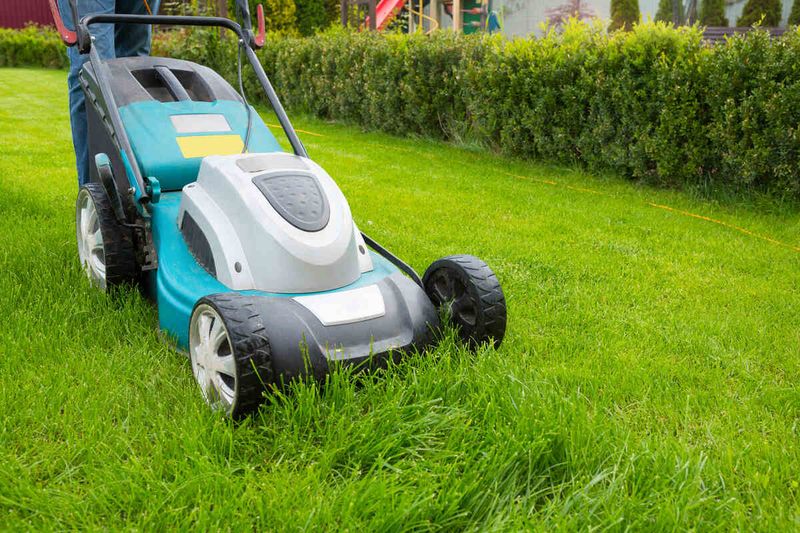
Grab your mower, lower the blade as far as it goes, and buzz the lawn down to the dirt. Sounds efficient, right?
Wrong. Scalping your grass during a heatwave is one of the fastest ways to turn a struggling lawn into a crispy mess.
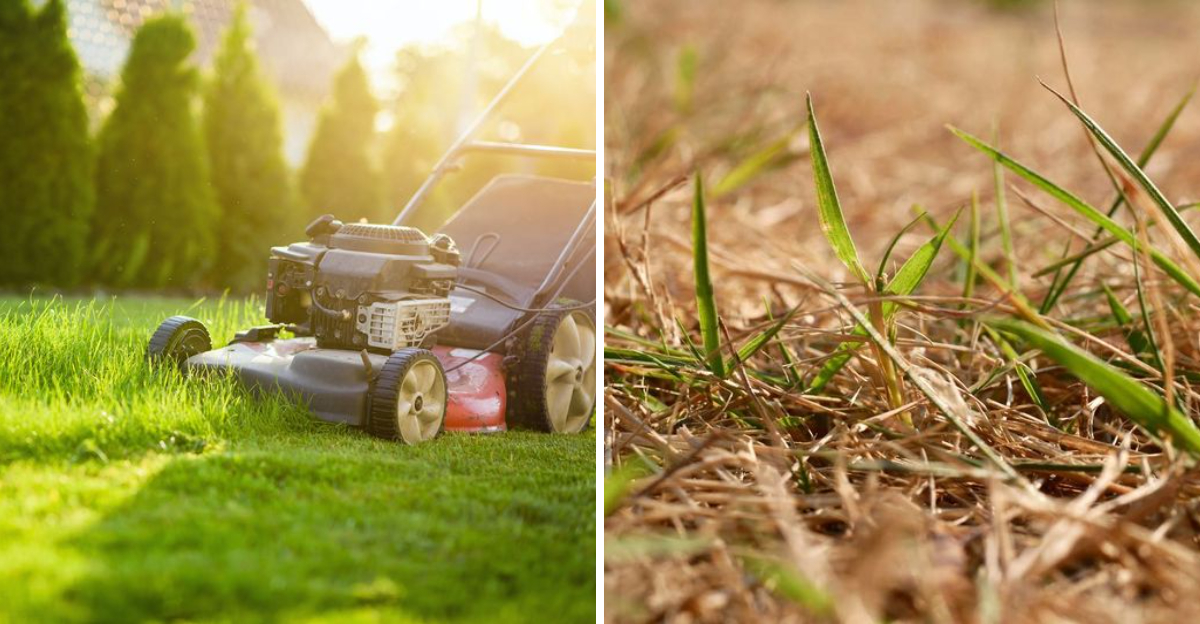
When you cut grass too short, you strip away the leaf blades that shade the soil. Without that shade, the ground heats up fast.
Hot soil dries out faster, and roots that are already under stress from the heat have even less moisture to work with. The exposed surface also bakes under direct sunlight, making it harder for the grass to recover even after temperatures cool down.
Most Texas turf varieties do best when kept at a higher mowing height during summer. St. Augustine, for example, should be kept at about 3.5 to 4 inches tall when it is hot.
Bermuda grass can handle a lower cut, but even it benefits from being left a little taller during extreme heat. The extra height acts like a natural umbrella for the root zone.
Raise your mower deck before every summer cut. A good rule to follow is the one-third rule: never remove more than one-third of the grass blade in a single mowing.
Cutting too much at once shocks the plant and slows recovery. Taller grass stays cooler, holds moisture longer, and looks healthier even when rain is nowhere in sight.
Give your lawn a little breathing room, and it will reward you with better color and stronger roots all season long.
2. Do Not Fertilize A Stressed Lawn
Fertilizer seems like a logical fix when your lawn starts looking rough. If the grass looks weak, feed it, right?
Not during a heatwave. Applying fertilizer to a heat-stressed lawn is a bit like forcing someone who is already exhausted to run a marathon.
Fertilizers, especially nitrogen-heavy ones, push the plant to grow. Growth takes energy and water.
Your Texas Garden Changes Every Week. Your Plan Should Too.
Gardening in Texas changes quickly throughout the season. Every Friday you’ll receive a simple weekly plan showing exactly what to plant, prune, fertilize, harvest, and protect so you never miss the right timing.
When your lawn is already struggling to survive extreme temperatures, asking it to put out new growth on top of that is too much. The grass simply cannot handle the extra demand.
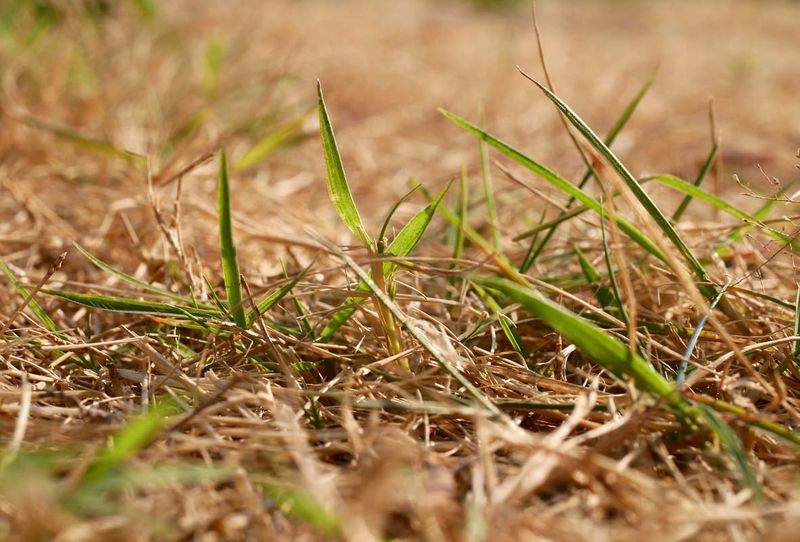
In many cases, fertilizer applied during peak summer stress will scorch the blades, making brown patches even worse than before.
There is also the salt factor to consider. Fertilizers contain salts that draw moisture away from the soil.
During a drought or heatwave, when moisture is already limited, adding more salt stress to the equation can seriously damage root systems.
You might not see the full effect right away, but over time, the lawn will show signs of decline in ways that are hard to reverse quickly.
Wait until temperatures drop and the lawn shows signs of active recovery before reaching for the fertilizer bag. A good time to fertilize warm-season Texas grasses is in late spring or early fall, when the turf is growing well and temperatures are manageable.
If you are not sure whether your lawn needs feeding, do a simple soil test first. Feeding at the right time makes a huge difference, and patience during a heatwave is always the smarter move.
3. Do Not Water Lightly Every Day
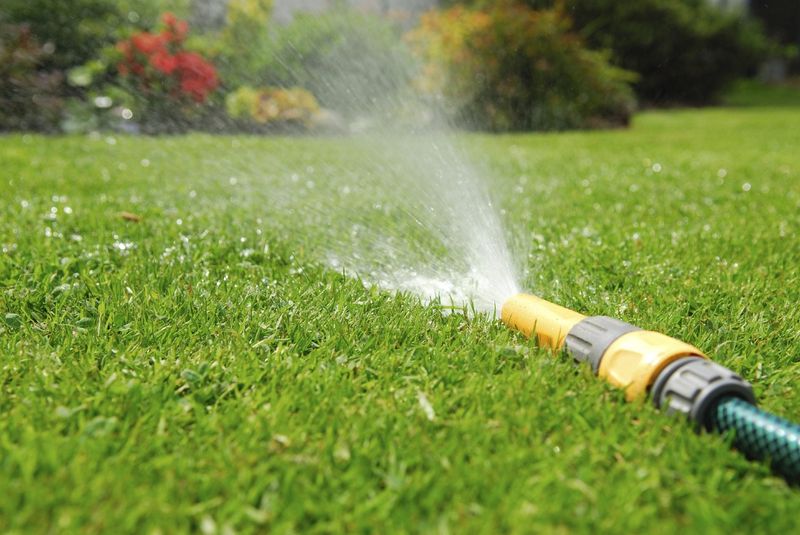
Picture this: a sprinkler flicks on every morning for about ten minutes, barely wetting the surface of the lawn. It feels responsible.
It feels consistent. But for Texas grass during a heatwave, light daily watering is actually one of the worst habits you can get into.
When water only penetrates the top inch or two of soil, grass roots have no reason to grow deeper. They stay shallow, right near the surface, where heat and evaporation hit the hardest.
Shallow roots make the lawn more vulnerable to drought stress, not less. The grass becomes dependent on that daily sprinkle and struggles the moment you miss a day or two.
Deep, infrequent watering is the method that actually works. Watering deeply two to three times per week encourages roots to chase moisture further down into the soil profile, where temperatures stay cooler and water lingers longer.
Most Texas lawns need about one inch of water per week during summer, and delivering that in fewer, longer sessions is far more effective than daily quick hits.
To check if you are watering deeply enough, push a screwdriver or a long stick into the soil after watering. If it slides in easily to about six inches, the water reached the right depth. If it stops at one or two inches, you need to water longer. Also, check your water bill.
Light daily watering often uses more water overall while doing less good for the lawn. Switching to a deep-watering schedule saves money and builds a much tougher, more resilient root system over time.
4. Do Not Water In The Heat Of The Afternoon
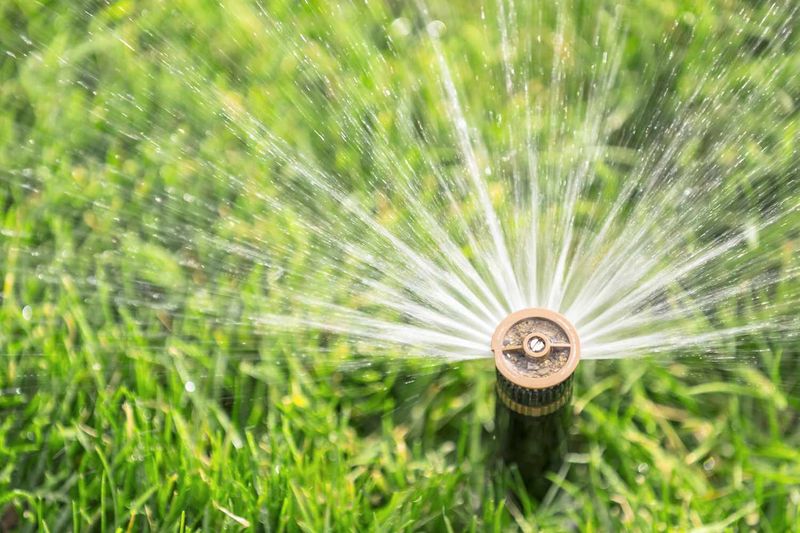
Midday watering feels like the most obvious time to cool things down. The sun is blazing, the lawn looks wilted, and turning on the sprinklers seems like instant relief. But afternoon watering during a Texas heatwave is mostly a waste, and here is why.
When you water at noon or in the early afternoon, the heat and wind cause a large portion of that water to evaporate before it ever reaches the root zone.
Studies from Texas A&M AgriLife Extension have shown that up to 30 percent more water is lost to evaporation during midday irrigation compared to early morning watering.
That means you are running your system longer and spending more money while your lawn gets less of what it actually needs.
There is also a common myth that watering in the sun will scorch or burn grass blades. That part is not actually true.
Water droplets on grass do not act like magnifying glasses. The real problem is simply efficiency.
The water evaporates too fast to soak deep into the soil, leaving roots still thirsty even after a full watering cycle.
Early morning is the best window for watering your Texas lawn, ideally between 4 a.m. and 9 a.m. At that hour, temperatures are lower, wind is calmer, and water has time to soak into the ground before the heat of the day arrives.
Watering in the evening is a second option, but it can leave grass wet overnight, which sometimes encourages fungal issues in humid conditions. Set your irrigation timer for early morning and let the clock do the work for you.
5. Do Not Use Herbicide On Heat-Stressed Turf
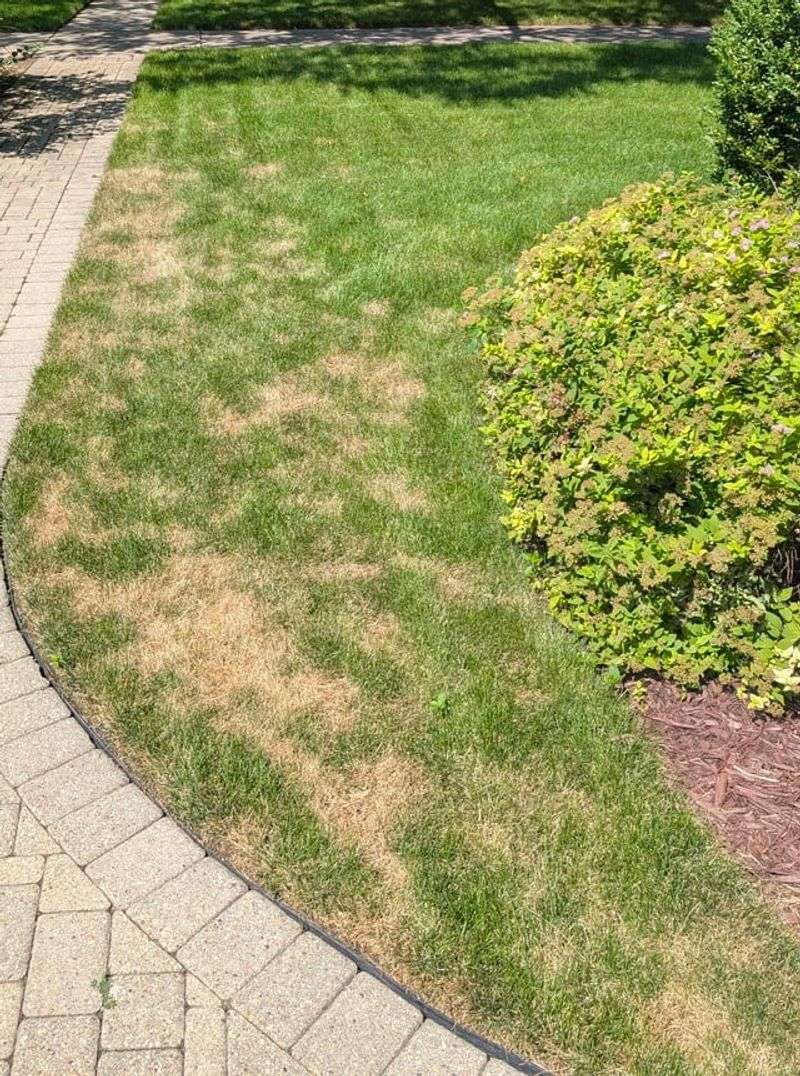
Weeds popping up in a struggling lawn are incredibly frustrating. The temptation to grab a bottle of herbicide and spray everything in sight is real.
But applying herbicides to heat-stressed turf is a recipe for making a bad situation a whole lot worse.
Most herbicides, especially post-emergent types, work by entering the plant through its leaves and disrupting internal processes. When grass is already stressed from heat and drought, its natural defenses are lowered.
The chemical does not just target the weeds. It can also be absorbed more aggressively by weakened turf, causing bleaching, tip burn, or large dry patches that look far worse than the original weed problem.
High temperatures also affect how herbicides behave chemically. Some products become more volatile in extreme heat, meaning they can drift as a vapor and damage nearby plants, garden beds, or even neighboring lawns.
Always check the product label for temperature restrictions. Many common herbicides specifically warn against application when temperatures exceed 85 or 90 degrees Fahrenheit.
If weeds are a serious problem during a heatwave, pull them by hand or spot-treat only the worst offenders using a targeted approach. Wear gloves, get down low, and remove the weed root and all when the soil is slightly moist.
Once temperatures cool and the lawn starts recovering actively, that is the right time to apply a proper weed control product.
Healthy, dense turf is also the best long-term defense against weeds, so focus on lawn recovery first and weed control second when the heat is on.
6. Do Not Mow During The Hottest Part Of The Day
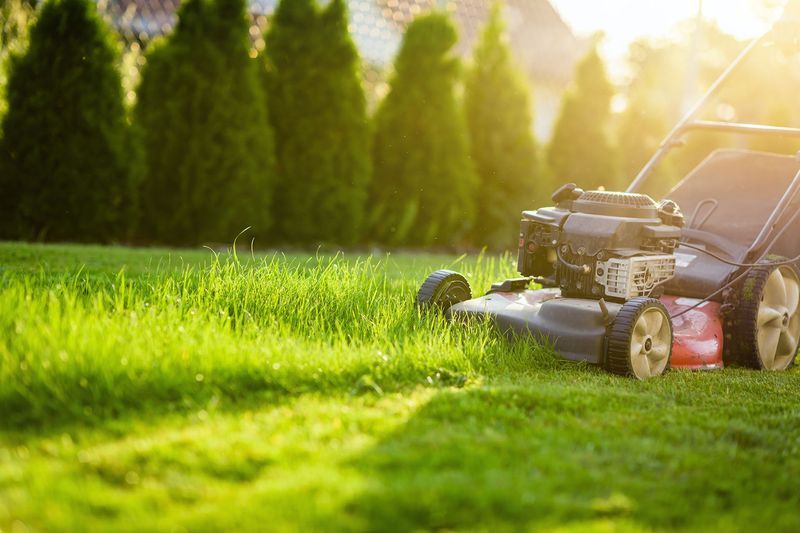
Mowing the lawn at noon on a 105-degree Texas afternoon might seem like a great way to check something off your weekend list. But that midday timing puts stress on both you and your grass in ways that are easy to overlook until the damage is already done.
Grass blades lose moisture quickly in extreme heat. By midday, turf that has not been watered recently is already wilted and brittle.
Running a mower over dry, stressed blades causes more tearing than cutting. Torn grass tips turn brown faster and create entry points for disease and pests. The lawn can end up looking rougher after mowing than it did before you started.
There is also the physical reality of mowing in extreme heat. Heat exhaustion is a serious risk for anyone spending time outdoors in Texas summers, especially when doing physical work.
Protecting yourself matters just as much as protecting the lawn. Early morning or evening mowing keeps both the turf and the person behind the mower in much better shape.
Aim to mow before 10 a.m. or after 6 p.m. when temperatures are lower and the grass has had time to either absorb morning moisture or cool down slightly in the evening shade. Also, make sure your mower blades are sharp.
Dull blades shred grass instead of making clean cuts, which increases moisture loss and stress on already struggling turf.
A sharp blade, the right mowing height, and the right time of day together make a big difference in how well your lawn holds up through the hottest weeks of summer.
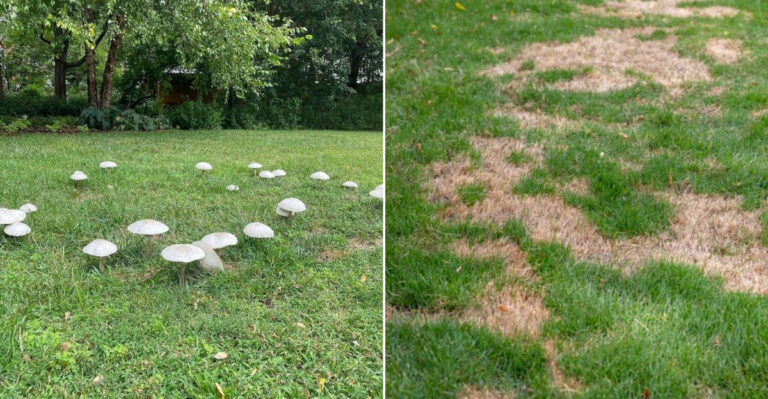
7. Do Not Ignore Brown Spots And Assume The Lawn Is Gone
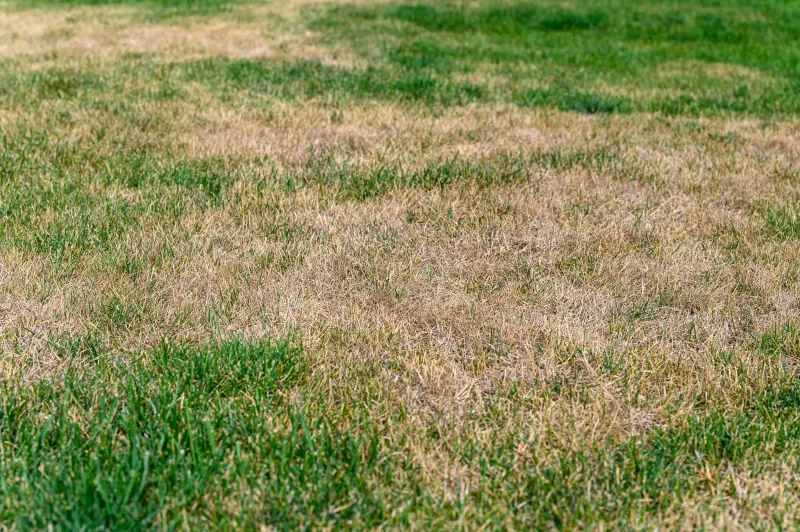
Brown grass in a Texas summer can send even experienced homeowners into a panic. It looks bad. It feels like failure. And the internet is full of advice telling you to rip it out and start over. Slow down before you do anything drastic.
Many warm-season Texas grasses, including Bermuda and Buffalo grass, are built to go dormant during extreme heat and drought. Dormancy is a survival strategy, not a sign that the lawn is beyond saving.
The grass essentially pauses growth and conserves energy until conditions improve. From the surface, dormant turf looks very similar to grass that has truly given up, but the difference matters enormously when it comes to deciding what to do next.
Before writing off any section of your lawn, do a simple tug test. Grab a handful of brown grass and pull gently.
If the blades pull free easily with no resistance, there may be a pest problem like grubs eating the roots underneath. If the grass holds firm and the roots are still intact, dormancy is likely the explanation, and recovery is very possible once rain returns or temperatures drop.
Also check your irrigation system for gaps in coverage. Brown spots in specific patterns often point to sprinkler heads that are clogged, misaligned, or not reaching certain areas.
Fix those issues first before assuming the worst. Give dormant grass time, consistent deep watering when possible, and avoid heavy foot traffic on stressed areas.
Most Texas lawns are far more resilient than they look during a brutal summer, and a little patience goes a long way toward a full recovery.