The Native Grape Vine More Georgia Gardens Should Be Growing
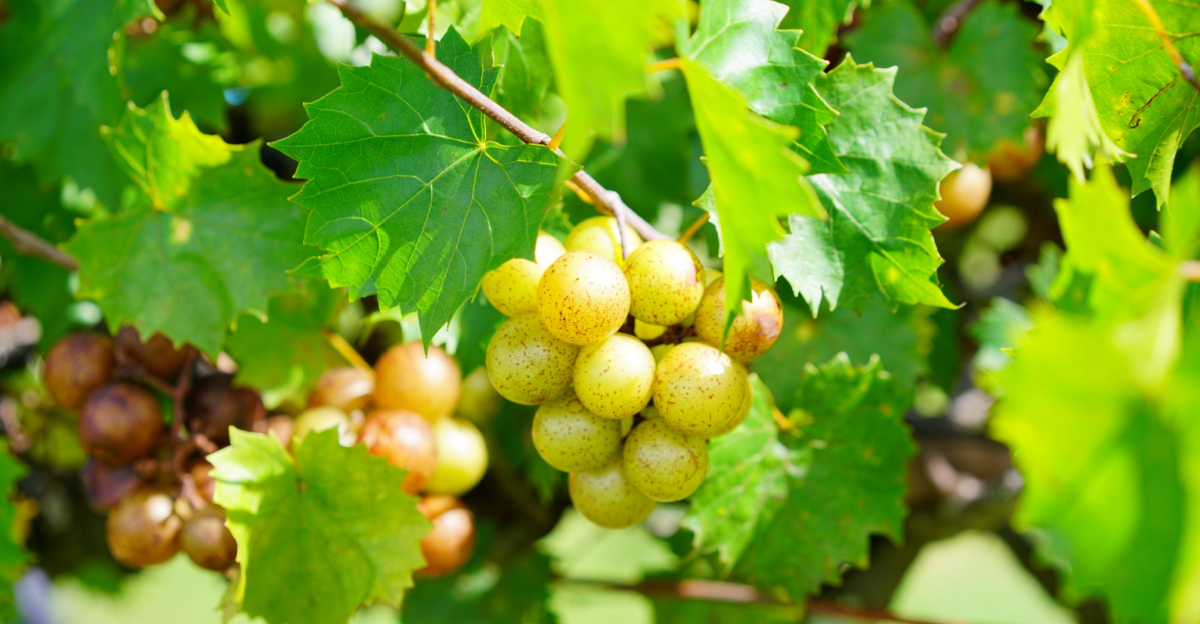
Muscadines are one of those plants that feel like they were made specifically for this state, and in many ways they were.
These native grape vines have been climbing trees and fencing across Georgia for centuries, long before anyone thought to plant them intentionally, and they thrive here in ways that imported bunch grapes simply cannot match.
Summer heat, thick humidity, and a long growing season are exactly the conditions muscadines are built for, which makes them one of the more rewarding backyard fruit options any home gardener can choose.
A sunny spot, a sturdy trellis, some basic annual pruning, and the right variety for your space are really all it takes to get started.
Get those pieces in place and a muscadine vine can fill that trellis with fruit every Georgia summer for decades. Not a bad return on the investment at all.
1. Muscadine Grapes Are Naturally Suited To Georgia
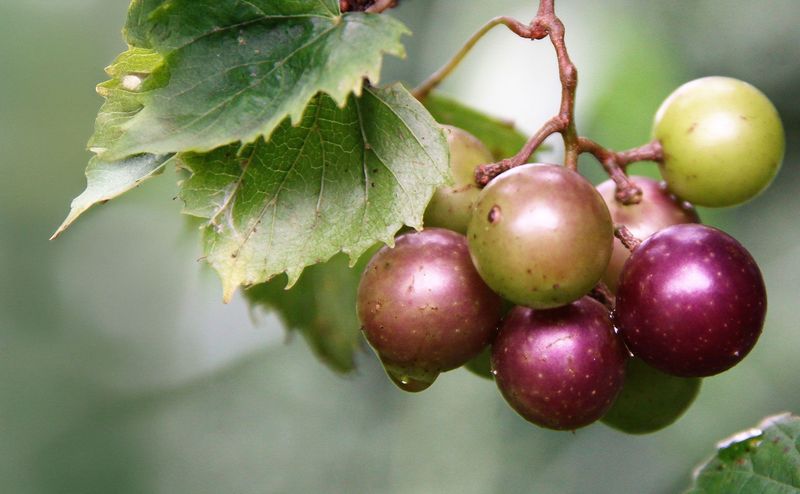
Walk through almost any rural part of Georgia in late summer and you might spot wild muscadine vines tangled through the trees, heavy with dark clusters of fruit. That sight is not an accident.
Muscadines are native to the southeastern United States, and Georgia sits right in the heart of their natural range. They have adapted over thousands of years to the soils, rainfall patterns, and seasonal temperatures found across the state.
That long history of growing here means muscadines are not fighting against Georgia’s climate the way some imported fruit plants do. They are comfortable in it.
The thick, tough skin on each grape berry helps the fruit hold up through humid summers without cracking or rotting as quickly as thinner-skinned varieties might. Roots that are well established can handle dry spells that would stress other fruit plants considerably.
Home gardeners often find that muscadines need less coaxing to get established than many other fruiting plants. Once a young vine settles in, it tends to grow with real energy.
Choosing a site that matches what the vine naturally prefers, meaning good drainage, reasonable soil, and plenty of open space, gives it the best start.
Georgia’s long growing season also works in muscadine’s favor, providing enough warm days for the fruit to ripen fully before fall arrives.
2. This Native Vine Handles Heat And Humidity
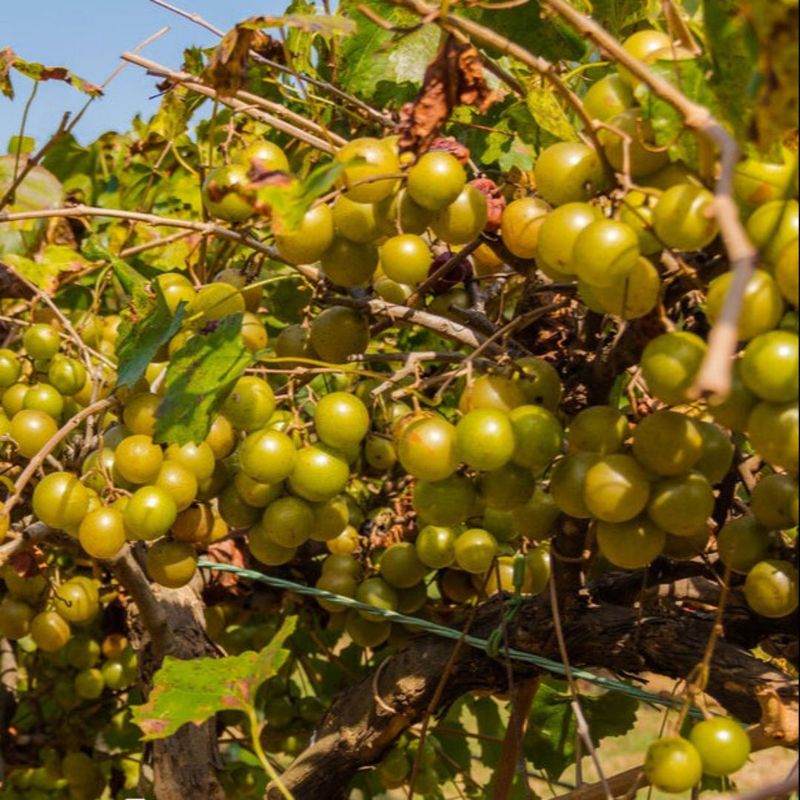
Thick summer leaves shade the fruit clusters as temperatures climb into the upper nineties across much of Georgia, and muscadine vines barely seem to notice.
That kind of heat tolerance is one of the main reasons these native grapes stand out in a region where summers can feel punishing.
Most bunch grape varieties that do well in cooler, drier climates begin to struggle when Georgia’s combination of heat and heavy humidity sets in around June and holds through September.
Fungal diseases are one of the biggest challenges for bunch grapes grown in humid southeastern conditions. Powdery mildew, black rot, and downy mildew can move through a planting quickly when warm nights and wet leaves create the right environment.
Your Georgia Garden Changes Every Week. Your Plan Should Too.
Gardening in Georgia changes quickly throughout the season. Every Friday you’ll receive a simple weekly plan showing exactly what to plant, prune, fertilize, harvest, and protect so you never miss the right timing.
Muscadines carry natural resistance to several of these common fungal problems, which reduces how much spraying and monitoring a home gardener needs to do through the season.
That built-in toughness does not mean muscadines are entirely care-free. Good air circulation around the vine helps reduce disease pressure even further, so spacing plants properly and keeping growth from becoming too dense matters.
Watering at the base rather than overhead also helps keep foliage drier. Still, compared to many other fruit options, muscadines offer a level of heat and humidity tolerance that genuinely fits the region’s growing conditions rather than working against them.
3. Full Sun Helps Vines Produce Better Fruit
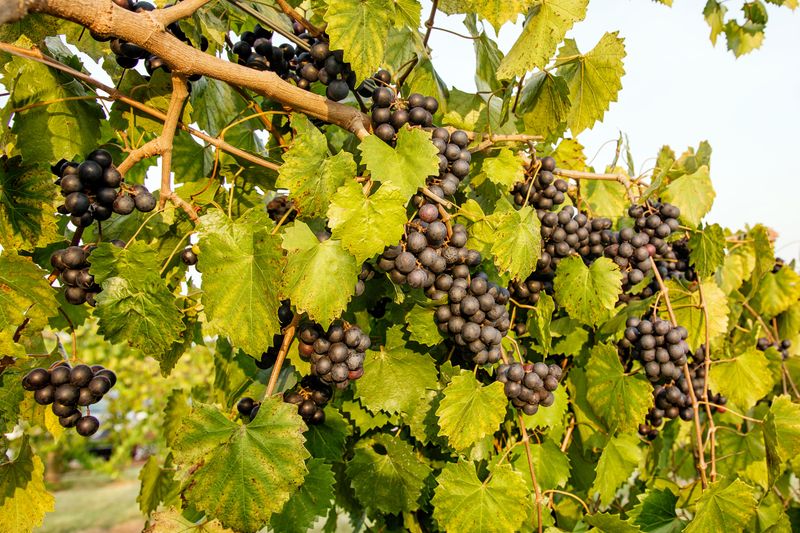
Grapes ripening in a sunny Georgia yard have a noticeably different quality than those struggling in partial shade. Sunlight drives the sugar development inside each berry, and muscadines are no different from other grapes in that regard.
A vine planted where it receives at least six to eight hours of direct sun each day has a much better chance of producing a satisfying crop than one tucked beneath a tree or along a shaded fence line.
Beyond fruit quality, sun exposure also affects vine health in a more general way. Foliage that dries quickly after morning dew or rain is less likely to develop disease problems.
A shaded vine stays damp longer, which creates conditions where fungal issues can take hold more easily. Positioning the trellis or support structure in an open, sunny part of the yard addresses both fruit production and basic plant health at the same time.
Homeowners sometimes underestimate how much sun a muscadine vine actually needs. A spot that looks sunny in early spring, before nearby trees leaf out, may end up shaded for much of the growing season once summer arrives.
Checking the site through late May and June before planting gives a more accurate picture of actual sun exposure.
South-facing and west-facing locations often provide the most consistent sunlight through the long Georgia summer, making them worth prioritizing when choosing where to put a new vine.
4. A Strong Trellis Keeps Growth Manageable
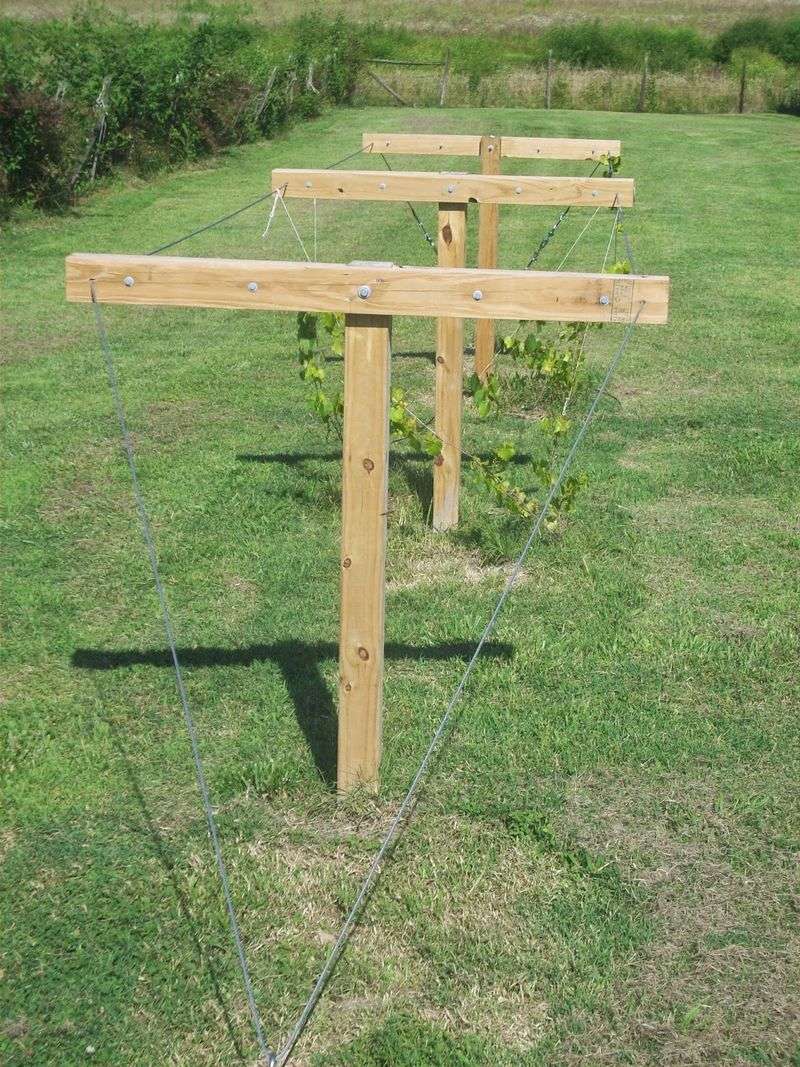
A backyard trellis covered in muscadine growth looks impressive by midsummer, and that vigorous spread is part of what makes the vine so productive. However, that same energy means the support structure holding the vine has to be genuinely strong.
A lightweight stake or a flimsy wire fence will not hold up to years of muscadine growth, especially once the vine matures and the canes become thick and heavy.
The most commonly recommended setup for home muscadine plantings uses sturdy wooden or metal posts set firmly in the ground, with heavy-gauge wire stretched between them.
Posts are typically spaced around fifteen to twenty feet apart, and the wire runs at a height that allows the main trunk to grow upward before spreading lateral arms along the wire.
This structure, sometimes called a bilateral cordon system, makes annual pruning much more straightforward because the vine’s framework stays organized and easy to follow.
Georgia gardeners who plan the trellis before planting save themselves considerable effort later. Trying to retrofit a stronger support system around an already-established vine is awkward and can disturb roots or damage canes.
Building the trellis first, even before the young vine arrives, means the structure is ready to guide growth from the very beginning.
Arbors work well too, offering a decorative option that provides shade beneath the canopy while still giving the vine the overhead space it needs to spread and fruit well through the season.
5. Self-Fertile Varieties Make Small Gardens Easier
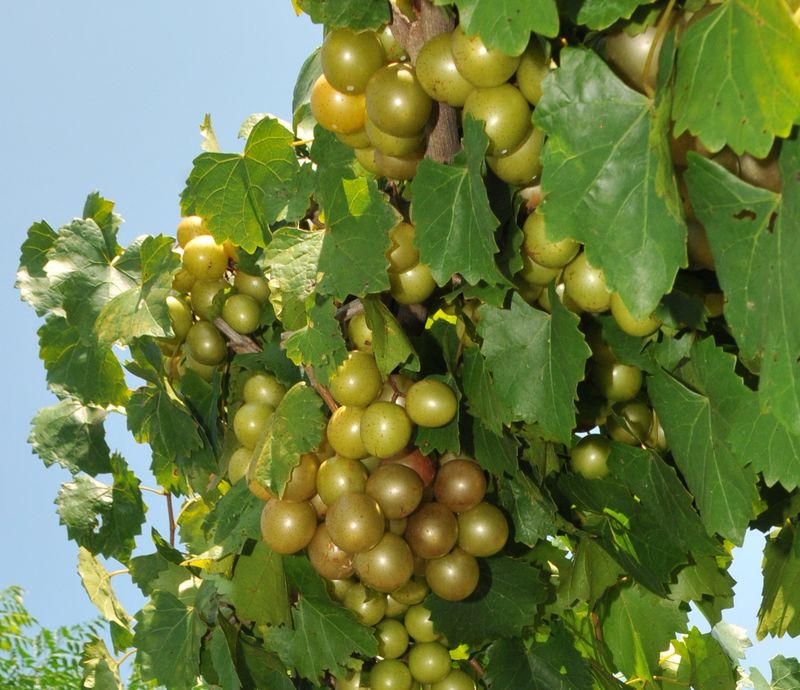
A small garden with room for only one vine can still produce a real muscadine harvest, as long as the gardener chooses a self-fertile variety.
Self-fertile muscadines, sometimes called perfect-flowered varieties, carry both male and female flower parts on the same plant.
That means they can set fruit without needing a second vine nearby to provide pollen, which is a genuine advantage when space is limited.
Varieties like Carlos, Cowart, and Summit are examples of self-fertile types that have performed well in Georgia home gardens over the years.
Each has slightly different fruit characteristics in terms of size, color, flavor, and ripening time, so reading variety descriptions before buying helps match the choice to what the gardener actually wants from the harvest.
A bronze-fruited self-fertile variety might suit one homeowner while a black-fruited type appeals more to another.
One thing worth knowing is that even self-fertile muscadines tend to produce more fruit when another compatible vine grows nearby. The presence of additional pollen sources in the area can improve fruit set noticeably.
However, for gardeners who have one sunny fence, one arbor post, or one small corner of the yard to work with, a self-fertile variety removes the requirement of planting two vines just to get any crop at all.
That flexibility makes muscadines a practical choice for urban lots, narrow side yards, and other situations where planting space in Georgia gardens is genuinely limited.
6. Female Varieties Need A Pollinating Partner
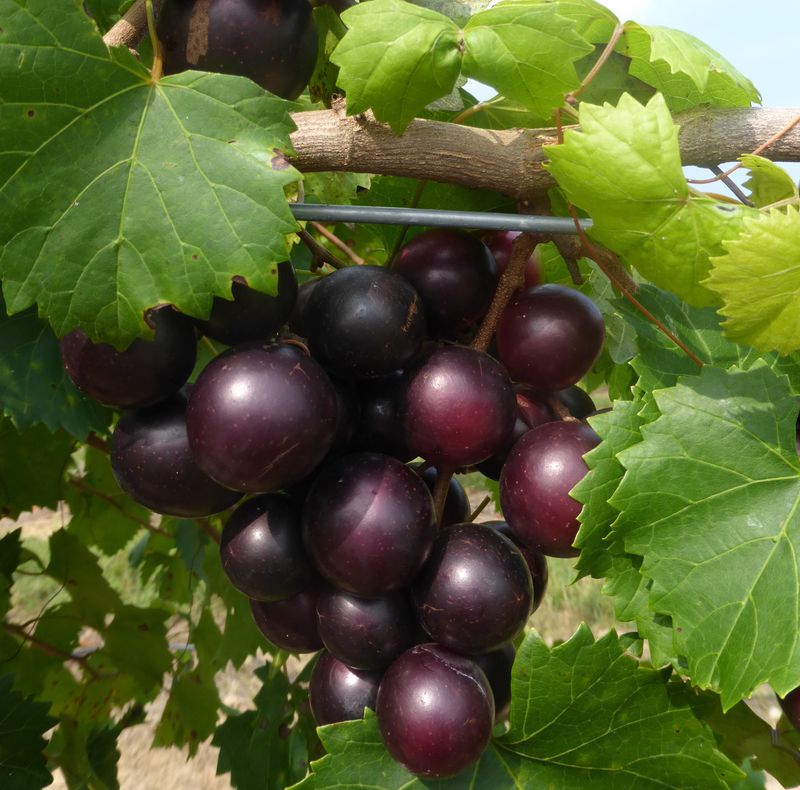
Gardeners choosing between bronze and black muscadine varieties sometimes discover mid-research that certain types are listed as female.
Female muscadine varieties produce only pistillate flowers, meaning they can receive pollen but cannot generate it themselves.
Without a compatible pollen source growing nearby, a female vine may bloom without setting any fruit at all, which can be a frustrating surprise for someone who planted expecting a harvest.
The solution is straightforward once the pollination requirement is understood. Planting a self-fertile variety within a reasonable distance of the female vine provides the pollen needed for fruit set.
One self-fertile vine can typically serve as a pollinator for several female vines in the same planting area, so a mixed planting with one self-fertile and two or three female varieties is a common approach in larger Georgia home gardens and backyard orchards.
Female varieties are not without their appeal. Some of the most flavorful and highly regarded muscadine selections are female types, so passing them over entirely just to avoid pollination planning would mean missing out on some excellent fruit.
The key is going into the purchase with accurate information rather than assuming every muscadine on the nursery shelf will fruit on its own.
Checking the plant tag or asking the nursery staff whether a variety is self-fertile or female before buying saves a lot of uncertainty and helps Georgia gardeners set up their planting for real success from the start.
7. Annual Pruning Keeps Vines Productive
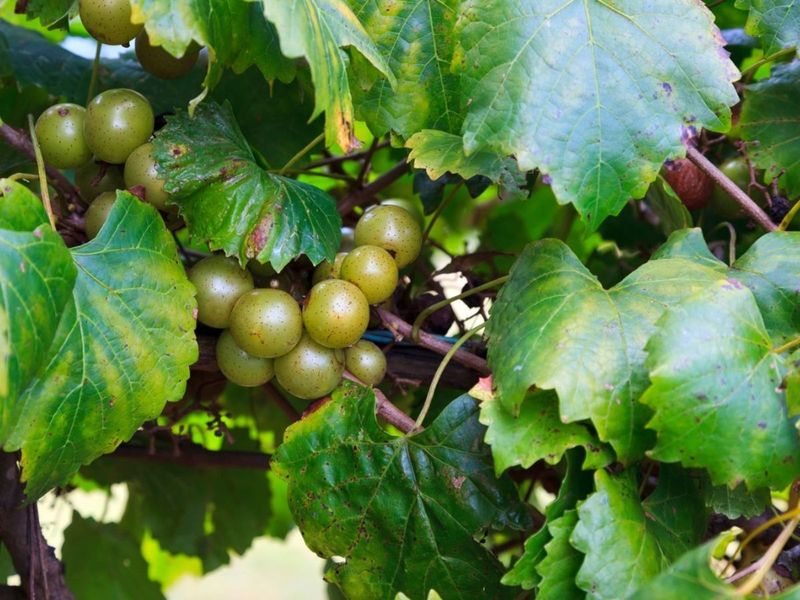
Pruning long canes in winter is one of those tasks that feels almost counterintuitive the first time a gardener does it. Cutting back a vine that spent all summer growing vigorously seems like it would set the plant back, but with muscadines the opposite is true.
Annual pruning is one of the most important habits that keeps a vine productive year after year rather than slowly becoming a tangled mass of old wood that fruits less and less over time.
Muscadines fruit on new growth that emerges from one-year-old canes, so the goal of pruning is to manage how much of that new growth the vine produces and where it comes from.
A vine left unpruned for several seasons puts energy into growing more wood rather than ripening fruit.
The canopy becomes dense, air circulation drops, and fruit production can decline noticeably. Getting back on a regular pruning schedule after a vine has been neglected takes a season or two of more aggressive cutting.
Late winter, after the coldest weather has passed but before new buds begin to swell, is the typical pruning window for muscadines in Georgia.
Removing most of the previous season’s lateral growth back to short spurs along the main cordon arms is the standard approach for home growers.
Leaving a few buds per spur gives the vine enough starting points for the coming season’s growth without overwhelming the trellis from the very beginning of spring.
8. Muscadines Are Easier Than Many Bunch Grapes In Georgia
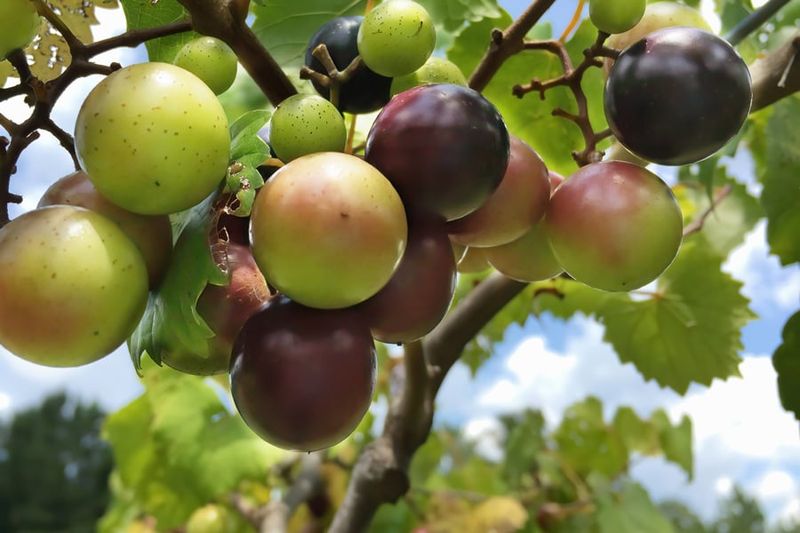
A homeowner who has tried growing European or hybrid bunch grapes in Georgia and watched them struggle through summer disease pressure often arrives at muscadines with a sense of relief.
Bunch grapes like Concord or many wine-style varieties were developed for cooler, less humid climates, and keeping them healthy through summer can require regular fungicide applications, careful canopy management, and still uncertain results in some years.
Muscadines sidestep many of those challenges simply by being native to the region.
Their natural disease resistance, heat tolerance, and comfort with southeastern humidity means the baseline care they need is lower than what bunch grapes often demand in the same conditions.
That does not mean muscadines are entirely hands-off, but the level of effort involved is generally more manageable for a typical home gardener who wants fruit without a complicated spray program.
Harvest timing is also more forgiving with muscadines. The thick-skinned berries can hang on the vine for a period after ripening without splitting or fermenting as quickly as thinner-skinned bunch grapes might.
Georgia’s long warm fall gives muscadines time to ripen fully, and some varieties mature in stages, which spreads the harvest out rather than delivering everything at once.
For a backyard fruit grower looking for a native vine that fits the landscape naturally, offers genuine fruit production, and does not require expert-level management to succeed, muscadines are a strong and practical starting point.