Native North Carolina Ground Covers That Smother Weeds Better Than The Mulch You Rebuy Every Year

You haul another six bags of mulch out of the trunk in the July heat, sweat running down your back, and you already know the truth. By next spring the weeds will punch right through it and you will be doing this all over again. There is a better way, and it grows itself. Across North Carolina, from the red clay of the Piedmont to the sandy soil down on the Coastal Plain, native ground covers spread into a living carpet that blocks weeds, feeds pollinators, and never once shows up on your shopping list again.
1. Green and Gold Carpets Shade Where Weeds Sneak In
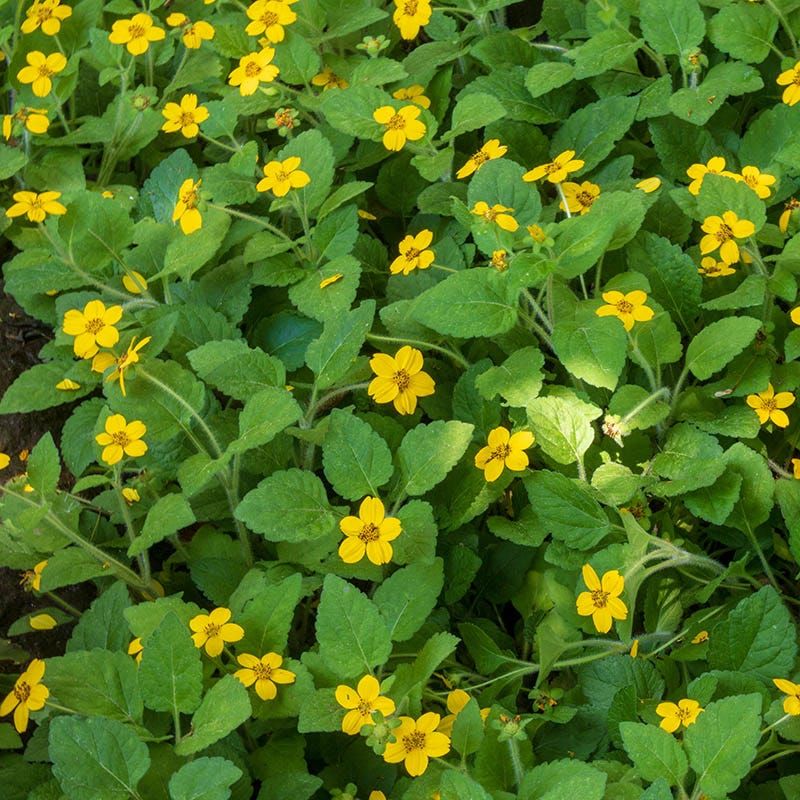
Picture the strip along the north side of your house, the spot that stays damp and shady and grows nothing but chickweed no matter how much bark you dump on it. Green and gold (Chrysogonum virginianum) treats that exact spot like prime real estate.
It hugs the ground at 4 to 8 inches tall and knits together into a low mat, with small yellow star flowers that open in spring and keep flashing through fall. That dense mat is the whole trick. Weed seeds need light and open dirt to sprout, and this plant hands them neither.
Set plants about 12 inches apart in spring and water them through their first summer, since North Carolina afternoons can go three weeks without a real soaking rain. By the second year they close the gaps on their own. NC State Extension lists it as a solid native choice for shady beds, and it handles Piedmont clay without complaint.
It is not a magic solution for a boggy spot that never drains, so fix drainage first. But for ordinary shade, this quiet spreader does the job mulch keeps failing at. And you get flowers instead of a fresh pile of chips.
2. Creeping Phlox Turns A Bare Slope Into A Purple Blanket
Erosion is a scheming little thief on a North Carolina slope. Every summer storm carries your topsoil and your mulch straight down the hill and into the ditch, and you keep replacing both.
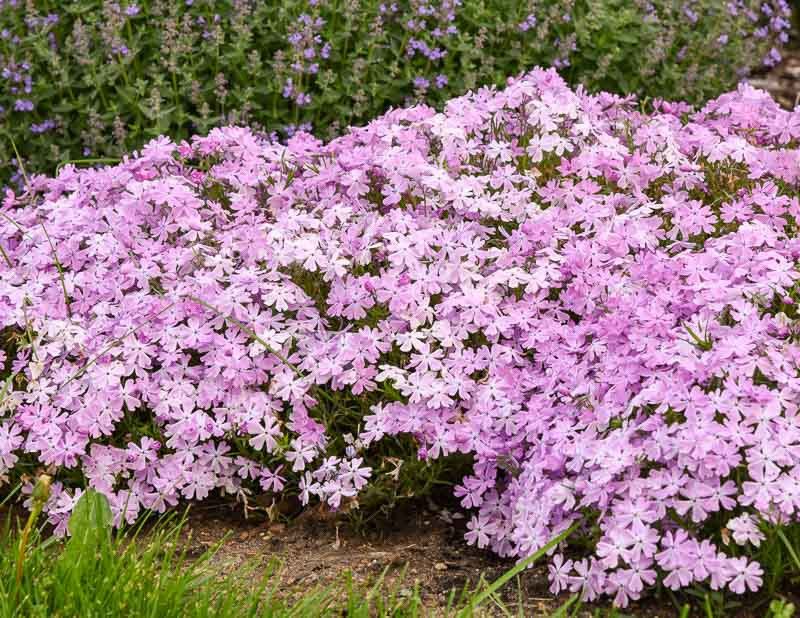
Creeping phlox (Phlox subulata) stops that raid cold. Its wiry stems root as they crawl, stitching the soil in place, and in April it erupts into a solid sheet of pink or lavender so thick you cannot see the ground underneath. Weeds simply have nowhere to land.
Give it full sun and well drained soil, which makes it a natural fit for a sandy bank or a rocky Piedmont edge. Space plants 12 to 18 inches apart and they will grow together within a season or two. It stays low, around 4 to 6 inches, so it never needs shearing to look tidy.
Here is where it gets tricky. Creeping phlox sulks in soggy shade, so keep it out of the low wet corners. Give it the hot, exposed slope everyone else avoids and it genuinely thrives, holding the hillside together while your neighbors reorder mulch by the pallet.
3. Wild Ginger Fills Deep Shade Nothing Else Will Touch
Under the big oaks and the old dogwoods, where the light barely reaches the ground, most plants throw up their hands. Wild ginger (Asarum canadense) walks right into that gloom and settles in.
Your North Carolina Garden Changes Every Week. Your Plan Should Too.
Gardening in North Carolina changes quickly throughout the season. Every Friday you’ll receive a simple weekly plan showing exactly what to plant, prune, fertilize, harvest, and protect so you never miss the right timing.
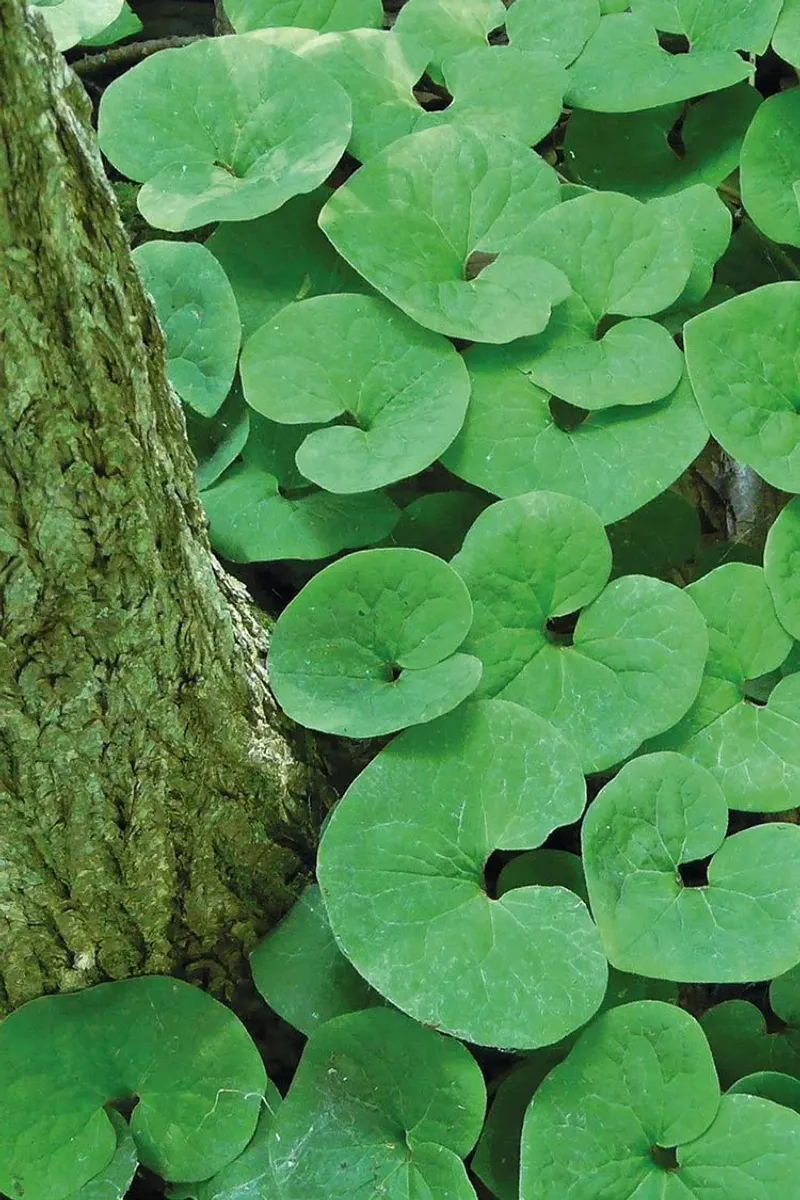
Its heart shaped leaves overlap into a lush green quilt about 6 inches tall, so dense that a weed seed landing on it never sees the sun again. The flowers are odd little maroon cups that hide down at soil level, but you grow this one for the leaves, not the show.
Plant it 12 inches apart in the rich, moist, leafy soil found on shaded Piedmont and mountain lots. It spreads by slow underground runners, filling in a little more each year, patient as a Sunday afternoon.
One honest note. Wild ginger drinks water, so a bone dry bed under a thirsty maple will fight you. Add leaf litter or compost first and keep it watered its first year. After that it becomes the ground cover that finally solves your darkest, most stubborn corner, and it does it for free every season after.
4. Golden Ragwort Blooms Bright While Choking Out Chickweed
Most weed-blocking plants are quiet team players. Golden ragwort (Packera aurea) wants an audience.
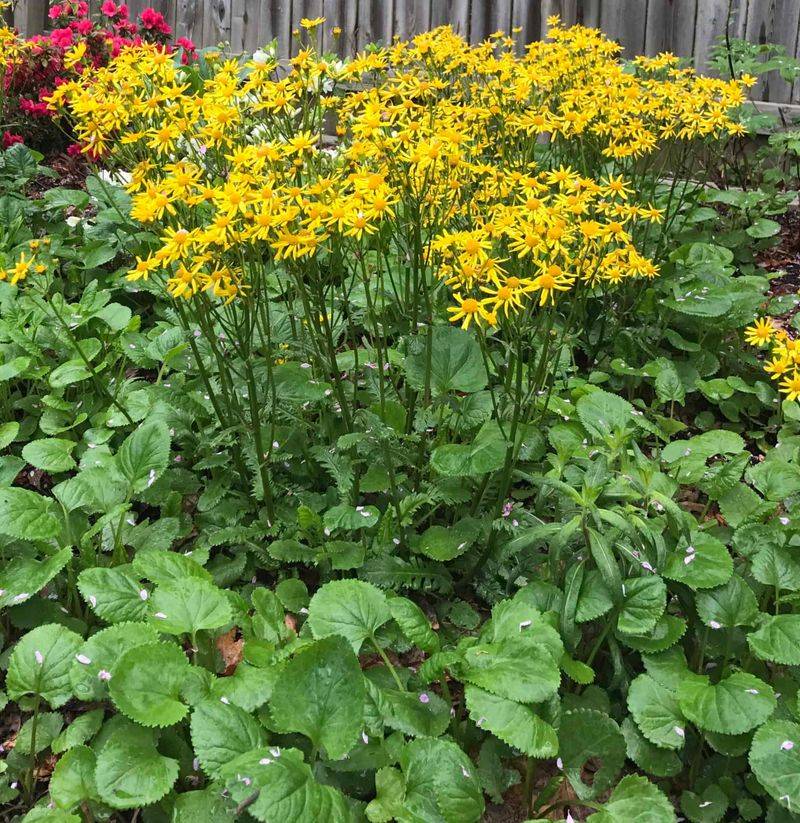
In early spring it sends up clouds of cheerful yellow daisy flowers on stems around 1 to 2 feet tall, but the real work happens below, where a low rosette of rounded green leaves stays evergreen through North Carolina mild winters. That basal mat shades the soil year round, so cool season weeds like chickweed and henbit never get their winter head start.
It thrives in the moist, part shade conditions common along the edges of Piedmont yards and near downspouts and rain gardens. Set plants about 12 to 18 inches apart and they will seed and spread into a colony faster than most natives, so give it room to roam.
Pollinators cash in too. Early bees and small native flies work those yellow blooms when little else is open, which matters after a surprise March cold snap sets the rest of the yard back.
Fair warning, it spreads with enthusiasm, so it is not for a tight formal border. Turn it loose on a wet, weedy problem area and it earns its keep.
5. Pennsylvania Sedge Gives You A Lawn You Never Mow
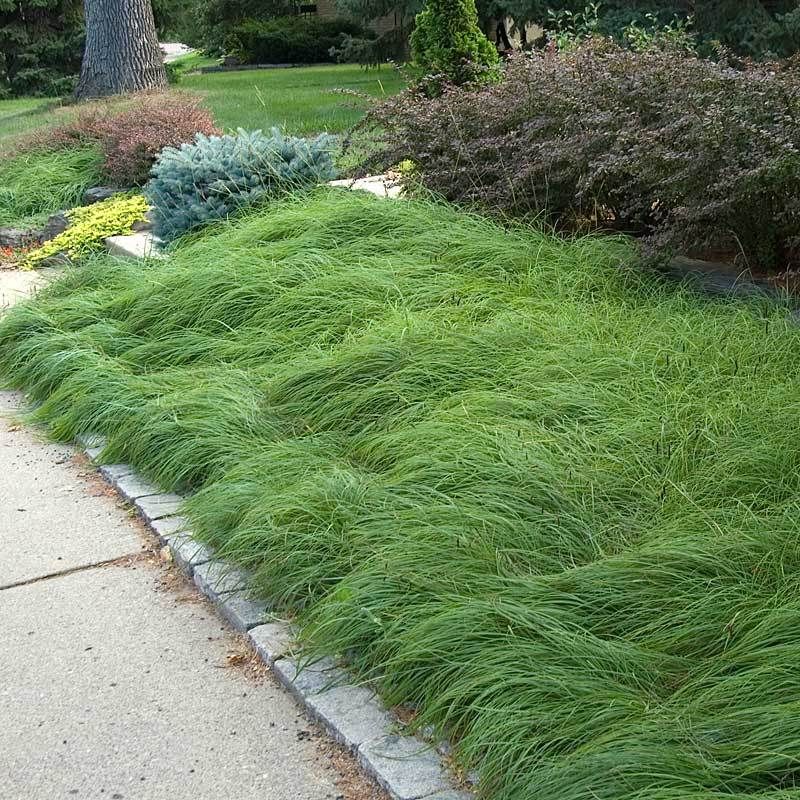
You stand at the window on a Saturday, listening to every mower in the neighborhood roar to life, and you wonder why you signed up for this. Pennsylvania sedge (Carex pensylvanica) is the quiet way out.
It grows into a soft, flowing carpet of fine green blades about 6 to 8 inches tall, arching over so it reads like a shaggy lawn that never needs cutting. Grown thick enough, it shades out weeds the way turf grass pretends to but rarely does under trees.
Dry shade is its home turf, which describes half the ground under North Carolina hardwoods. Plant plugs 6 to 12 inches apart for a solid cover within two seasons. Once established it shrugs off the summer dry spells that turn fescue brown and crunchy.
It will not take a football game or the dog running laps, so it is a look-at lawn, not a play-on one. But for a shady front strip or a woodland path edge, it hands you green ground with no gas, no blade, and no weekly chore. That is a trade a lot of tired Piedmont homeowners would take in a heartbeat.
6. Creeping Foamflower Spreads Runners That Seal The Soil
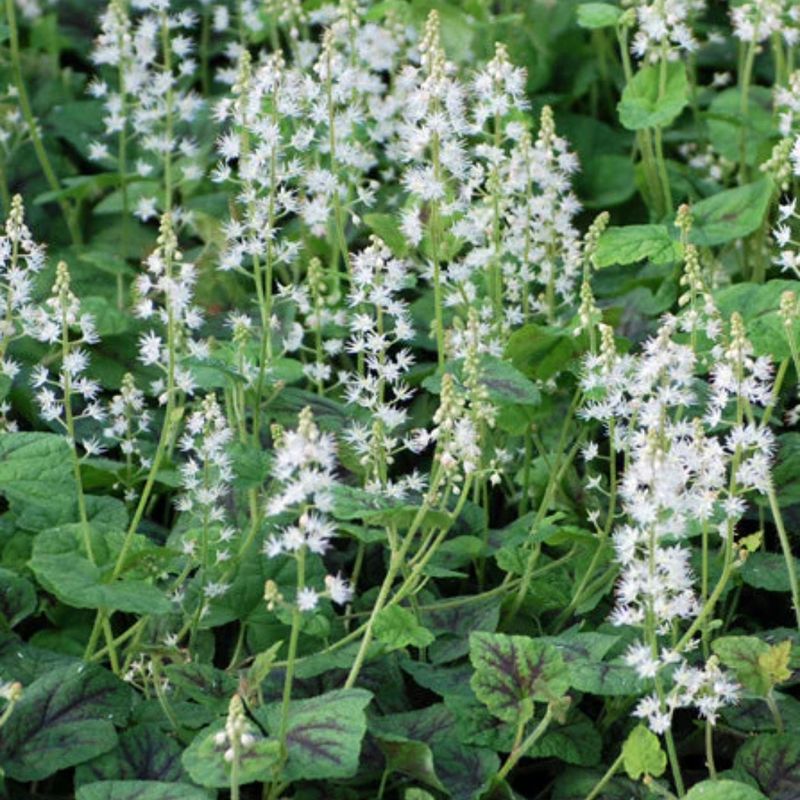
Some plants inch along. Creeping foamflower (Tiarella cordifolia) sprints, sending out runners like a strawberry patch and rooting new plants everywhere they touch down.
That habit is exactly why it beats weeds. In a single season one plant throws out several runners, and each becomes a new leafy anchor, so the bed knits shut fast. The maple shaped leaves stay low and often hang on through the mild coastal and Piedmont winters, keeping the soil covered when weeds like to sneak in.
In spring it lifts frothy white flower spikes about 8 to 12 inches tall, a soft haze above the foliage that early pollinators visit. Plant it in moist, humus rich shade and space starts 12 to 18 inches apart. The runners close the rest.
Foamflower does ask for consistent moisture, so a hot dry bank is not its scene. But tuck it into a shaded, decent soil and it becomes one of the fastest natives to blanket bare ground, saving you from that second and third mulch run before summer even hits.
7. Woodland Stonecrop Shrugs Off Drought On Rocky Ground
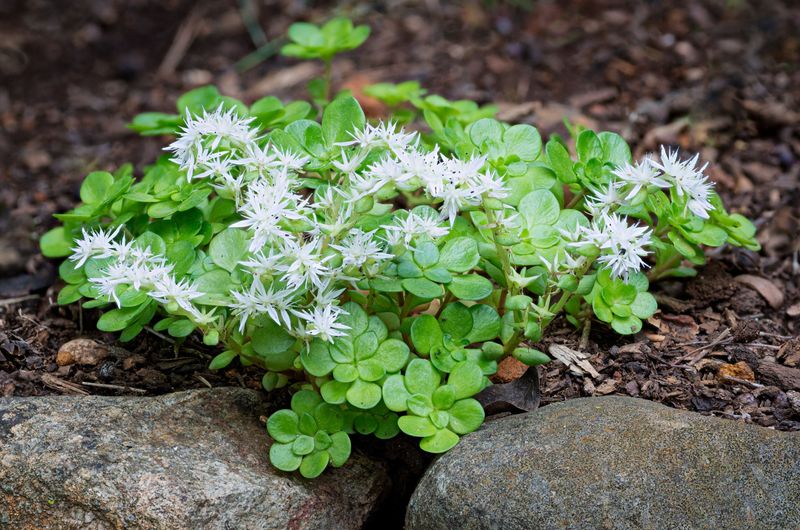
Down in the Sandhills and along dry rocky ledges, the soil bakes and the rain drains away in minutes. Most ground covers wilt and quit. Woodland stonecrop (Sedum ternatum) treats that hardship like a spa day.
As a native succulent, it stores water in fat little leaves, so it stays plump and green while the weeds around it fry. It creeps low, only 3 to 6 inches tall, forming a tight mat studded with tiny white star flowers in spring that draw in early bees.
Give it the spots that defeat everything else, the thin soil over rock, the dry edge of a stone path, the strip beside a hot walkway. Space plants 8 to 12 inches apart. It roots readily wherever a stem touches down, so it fills in without fuss and with almost no watering after the first month.
Unlike some pushy imported sedums, this one is a native that plays nice with the local scene. It will not survive standing water, so keep it high and dry. On the tough dry ground where mulch just blows away, woodland stonecrop finally makes the bare spot green.
8. Partridgeberry Weaves A Tiny Evergreen Mat With Red Berries
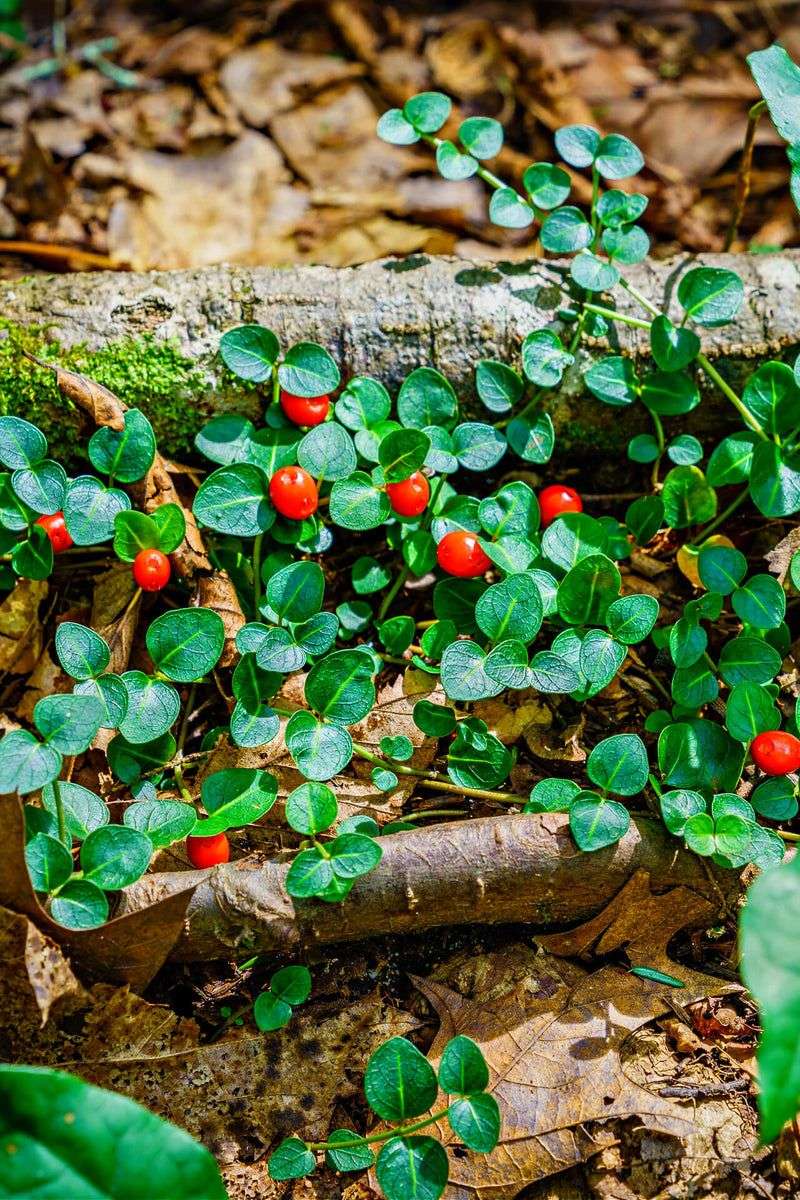
Walk a mountain trail in the North Carolina high country in December and look down. That thread of glossy green leaves and bright red berries running across the forest floor is partridgeberry (Mitchella repens), and it has been holding that ground all winter.
It is the smallest hero on this list, barely 2 inches tall, but it weaves stems into a fine evergreen web that covers soil where taller plants cannot get a foothold. The paired white flowers in early summer turn into scarlet berries that hang on through the cold, feeding birds and giving your winter woodland a spark of color.
It wants cool, moist, acidic shade, the kind found under pines and rhododendrons in the mountains and shaded Piedmont slopes. Plant it 8 to 10 inches apart and be patient, because it spreads slowly and steadily rather than fast.
Patience is the catch. Partridgeberry will not cover a big bed in one season, so use it for smaller shaded pockets and let it thicken over the years. What you get is a permanent, self-tending carpet that looks alive in January when everything else is asleep.
9. Common Blue Violet Feeds Butterflies While Filling Gaps Fast
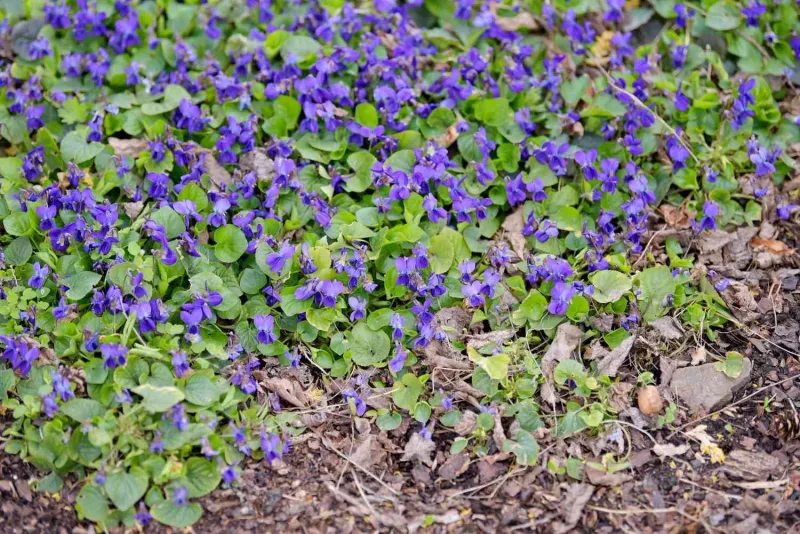
Half the gardeners in the Piedmont yank common blue violet (Viola sororia) out as a weed, and that is genuinely a shame. The same toughness that lets it pop up everywhere is exactly what makes it a champion ground cover.
It forms low clumps of heart shaped leaves about 4 to 6 inches tall that spread by seed and root to fill bare gaps quickly, shading out the truly troublesome weeds. In spring it studs the green with purple flowers, and it takes sun or shade, wet or dry, clay or sand, which is rare for anything this pretty.
Here is the part worth bragging about at the cookout. Blue violet is the host plant for fritillary butterflies, meaning their caterpillars eat nothing else. Let it colonize a bed and you are running a butterfly nursery instead of buying mulch.
Plant it 8 to 12 inches apart, or just let existing patches spread where you want them. It can wander into a lawn, so edge it if you like neat lines. Once you stop fighting it and start using it, this so-called weed does the work of three store-bought plants for nothing.