The Native North Carolina Perennial Built For The Baking Hot Strip Against A South-Facing Foundation
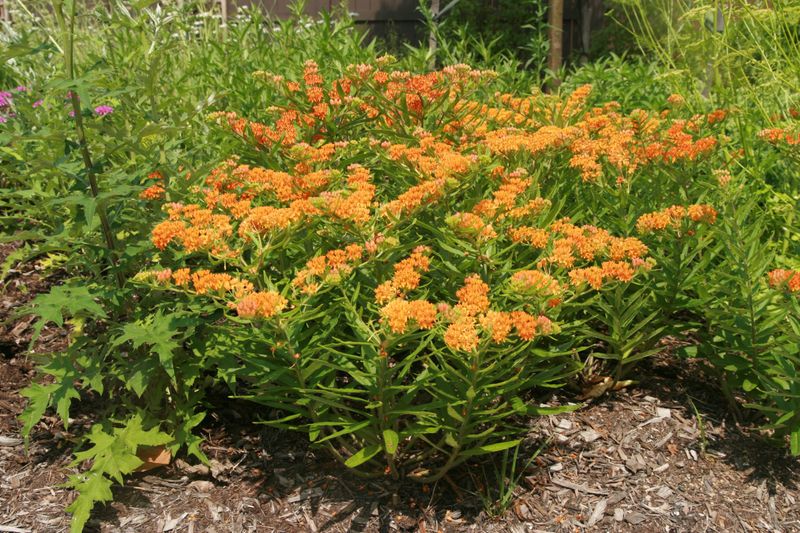
That narrow strip of soil pressed against a south-facing brick foundation is one of the hardest spots in a North Carolina yard to keep anything alive. The sun hammers it from above, the brick radiates stored heat from behind, and most plants give up by July. But one native perennial was built for exactly this kind of punishment, and it grows wild from the mountains to the coast.
Butterfly Weed Fits Many North Carolina Ovens
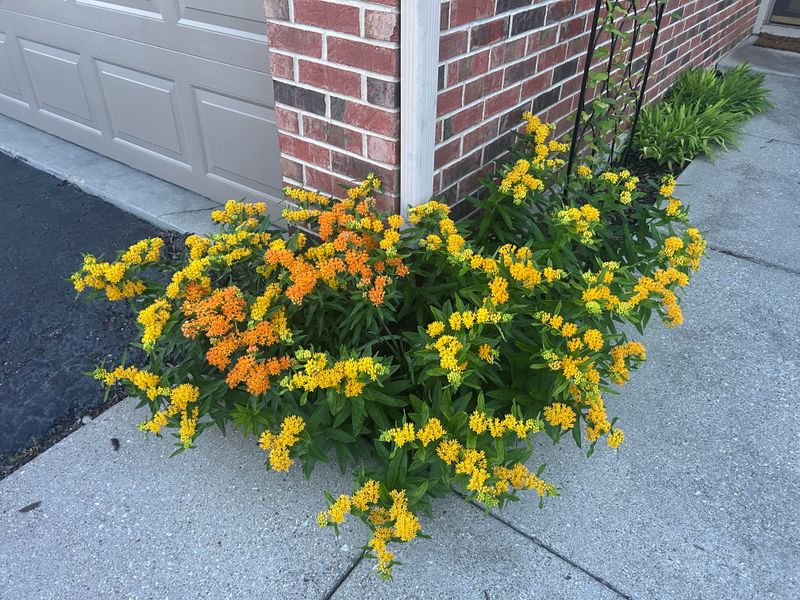
Butterfly weed, Asclepias tuberosa, is not a compromise plant. NC State Extension lists it as a native perennial found across North Carolina’s Mountains, Piedmont, and Coastal Plain, suited to full sun, average to dry well-drained soil, poor clay, sand, and rocky ground, with solid drought resistance once it settles in. That checklist lines up almost perfectly with what a south-facing foundation bed actually delivers.
Picture the plant: roughly 1 to 3 feet tall and 1 to 1.5 feet wide, growing as an upright clump rather than a sprawling mound. That narrow footprint matters when you are working with a tight strip between the foundation and the sidewalk. You can fit it in without blocking access to the wall or crowding out every other plant in the bed.
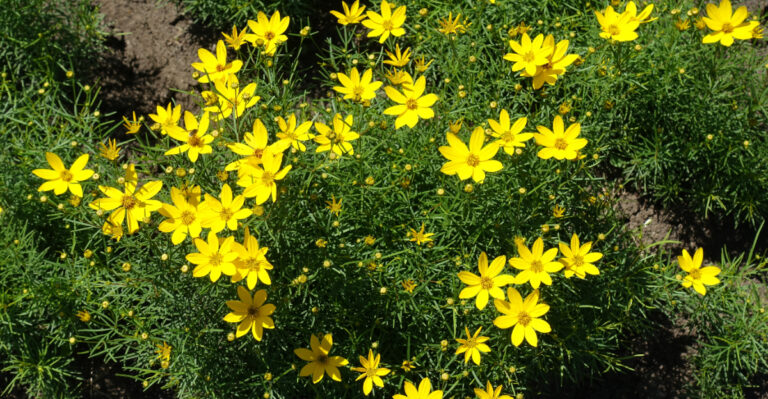
The honest qualifier is worth saying plainly. Butterfly weed is an especially strong native choice for this kind of hot, dry, well-drained site, not the only perennial that can work there. NC State’s wildflower guidance for North Carolina names other full-sun natives, including purple coneflower, coreopsis, rattlesnake master, goldenrod, mountain mint, and black-eyed Susan, that can handle comparable dry conditions. Butterfly weed earns the spotlight here because its combination of drought tolerance, compact size, native status, and pollinator value makes it a particularly well-supported match for the described conditions.
The site still has to deliver two things: adequate drainage and enough soil volume for the roots to expand. A hot wall alone does not make a bed appropriate if runoff or compacted soil keeps the crown wet. Get those basics right, and butterfly weed genuinely has a strong chance of thriving where other plants have quit.
Brick Stores Heat And Steals Moisture
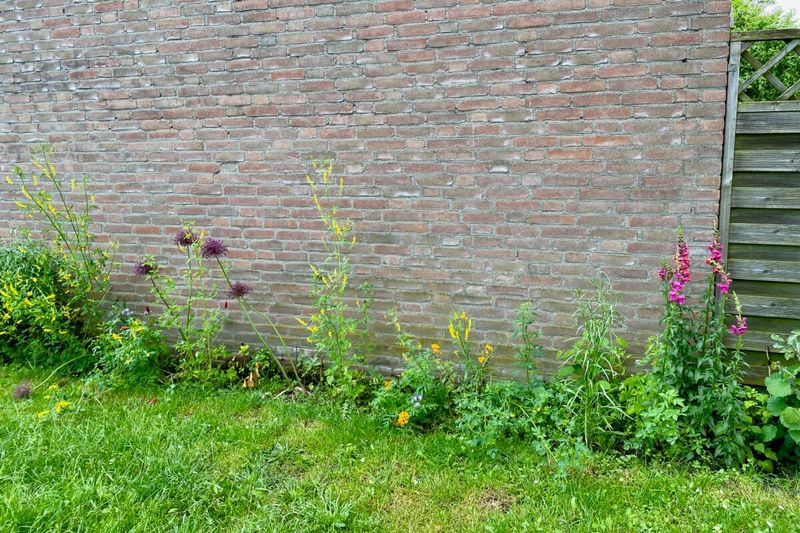
A south-facing brick wall does two things at once, and neither one is gentle on plants. During the day it reflects sunlight directly into the bed, raising the temperature of the air and soil near the foundation well above what a freestanding border would experience. After the sun goes down, the masonry releases the heat it stored all afternoon, so the soil never fully cools overnight the way an open garden bed does.
UGA Extension’s microclimate guidance describes how walls and paved surfaces create pockets of concentrated heat and accelerated moisture loss, conditions that can stress plants adapted to cooler, evenly moist soil. Colorado State Extension’s mountain microclimate research reinforces that south-facing exposures consistently run hotter and drier than north or east-facing counterparts, a pattern that holds true in North Carolina’s Piedmont red clay just as much as in the Sandhills or along the coast.
Your North Carolina Garden Changes Every Week. Your Plan Should Too.
Gardening in North Carolina changes quickly throughout the season. Every Friday you’ll receive a simple weekly plan showing exactly what to plant, prune, fertilize, harvest, and protect so you never miss the right timing.
Here is where it gets tricky. The same wall that cooks a moisture-loving hydrangea can actually help a dryland plant push through a late cold snap, because stored masonry heat moderates overnight temperatures in late winter and early spring. Low-water native plant guidance from CSU Extension consistently recommends matching dryland species to these reflected-heat locations rather than fighting the microclimate with irrigation.
What the wall does not fix is a drainage problem. Roof eaves can shed rain away from the bed entirely during a summer storm, leaving the soil bone dry. A downspout aimed at the corner of the house can do the opposite, flooding the crown repeatedly. Wind patterns, nearby pavement, and overhanging structures all shift the picture.
Every south-facing foundation bed in North Carolina is its own small climate, and heat alone does not tell the whole story.
Check Drainage Before You Plant
Before you spend money on plants, spend twenty minutes with a shovel and a bucket of water. Dig a hole about 12 inches deep in the planting area, fill it with water, and watch. If the water drains away within an hour or two, the site is workable for butterfly weed. If it is still sitting there several hours later, you have a drainage problem that no amount of sun or heat will fix.
NC State Extension notes that crown rot can occur in poorly drained soil, which means a wet crown is a real threat even in a blazing hot bed. Walk the foundation after a heavy rain and look for gutter discharge, downspout flow, irrigation overspray, and any low spots where water pools against the wall. Those are the places to fix before planting, not after.
Improving drainage in a foundation bed usually means loosening compacted soil and working in coarse organic matter, not adding fertilizer. A soil test through NC State’s lab is a far better starting point than routine feeding, especially in Piedmont red clay or a bed that previous owners heavily amended. NC State’s plan-before-you-plant guidance recommends preparing the site carefully before installation rather than trying to correct problems after the plant is in the ground.
Once the bed is ready, apply 2 to 3 inches of coarse organic mulch to reduce weeds and slow surface moisture loss during North Carolina’s hot, dry spells. Pull the mulch back from the plant crown and keep it away from the foundation itself.
NC State’s herbaceous ornamentals handbook cautions against exceeding 4 inches of mulch depth in perennial beds, and piling it over the crown is exactly the kind of persistent moisture that can trigger the rot you were trying to avoid.Water New Plants Until Roots Settle
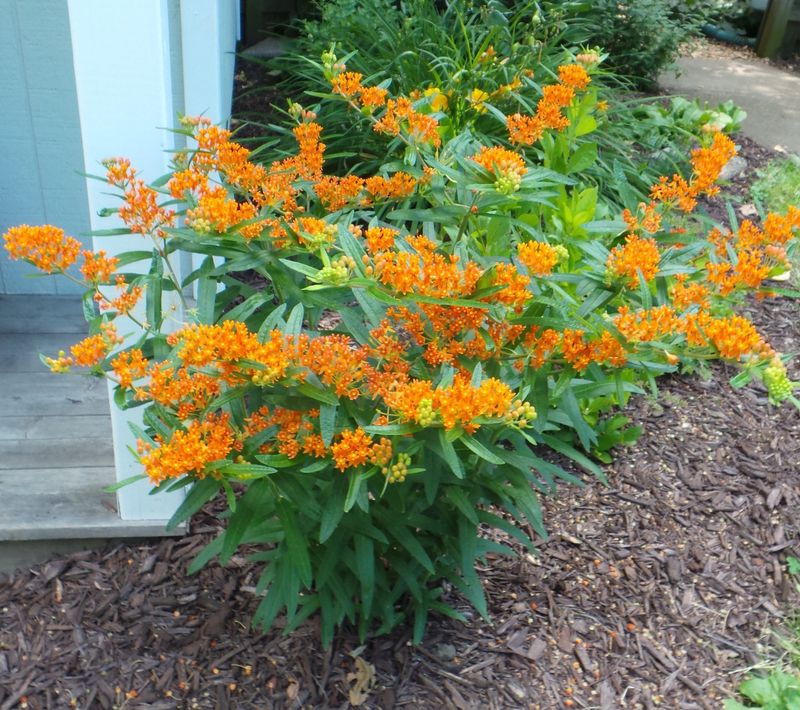
Drought tolerance is earned, not instant. A butterfly weed you plant in May does not have the root system yet to shrug off a two-week dry stretch in July, and treating it like a self-sufficient plant from day one is the most common way to lose it in the first season.
Penn State Extension specifically notes that butterfly weed needs regular attention while its root system establishes, particularly during hot, dry weather. In the Sandhills or along the Coastal Plain where sandy soil drains fast and a south-facing wall sheds rainfall away from the bed, that first growing season is the riskiest period of the plant’s life. Plan on watering the root zone thoroughly whenever the top 2 inches of soil feel dry, roughly once or twice a week during a dry stretch, until you see steady new growth that tells you the roots have found their footing.
The payoff for that patience is a deep tuberous root system that genuinely improves drought tolerance over time. NC State Extension describes butterfly weed as drought resistant once established, and that resistance comes directly from those deep roots reaching moisture that surface-level plants cannot access. Water thoroughly when needed but avoid keeping the crown soggy, because that tuberous root is just as vulnerable to persistent wetness as it is capable of handling dry spells.
One more thing to know before spring: butterfly weed dies back completely in winter and resprouts slowly in late spring, sometimes not showing above ground until May in the North Carolina Piedmont. Do not assume a late-emerging plant has died and dig it up. Mark the spot in fall, give it until late May, and let it come up on its own schedule.
Place The Taprooted Plant Carefully
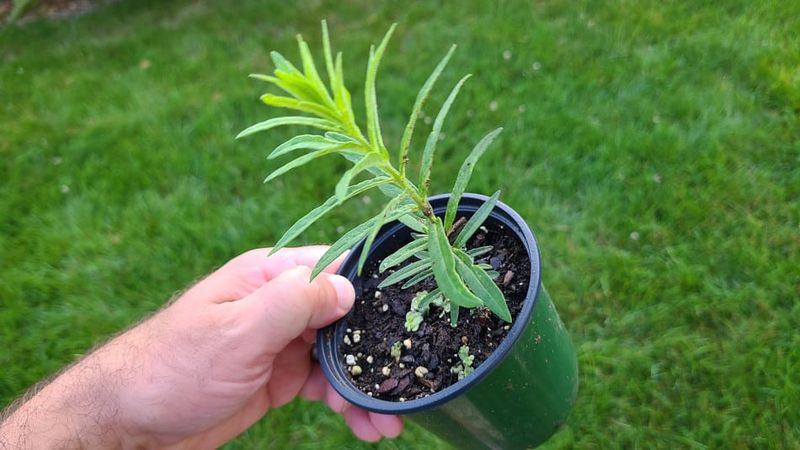
Choosing the right spot matters more with butterfly weed than with most perennials, because once that taproot goes deep, moving the plant is not a realistic option. Transplanting an established specimen almost always fails. Pick the permanent location before you put it in the ground, not after it has been growing for two seasons.
Aim for the brightest part of the bed, a spot that receives at least 6 hours of direct sun. NC State Extension confirms the plant’s full-sun preference and its mature spread of roughly 1 to 1.5 feet wide. That width means you can tuck it into a narrow foundation strip, but leave enough clearance from the wall itself to allow air movement, access for inspecting the foundation, and room to reach in for maintenance. Sealing the plant directly against the brick traps moisture and makes it harder to spot problems with the wall behind it.
Keep it away from downspout discharge zones and any spot where irrigation overspray lands regularly. Those are the two fastest ways to undermine a plant that genuinely prefers dry conditions. NC State’s site preparation guidance emphasizes matching the plant to the actual conditions of the spot, not the conditions you wish the spot had.
Penn State Extension notes that seed-grown butterfly weed plants may take 2 to 3 years to reach full flowering size. If you start from seed, expect a quiet first year while the root system develops underground. Container-grown transplants from a native plant nursery will establish faster, but they still need that first-season watering attention described earlier. Either way, the plant is building toward something worth waiting for.
Orange Blooms Support More Than Aesthetics

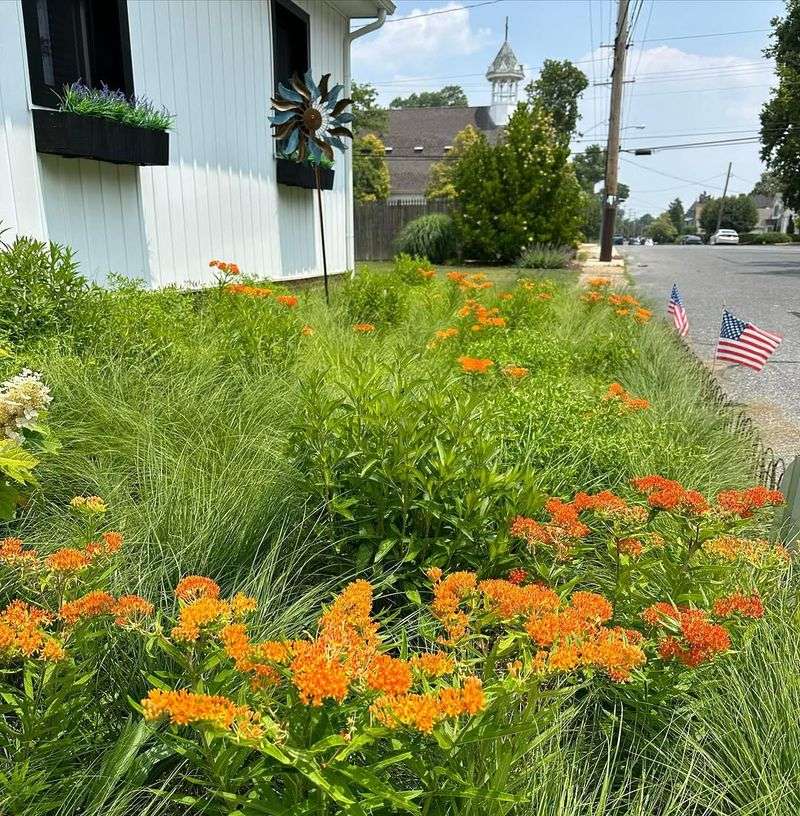
From May through August, butterfly weed carries clusters of small, intensely orange to yellow-orange flowers that stop people in their tracks. NC State Extension lists the bloom period as May through August, which covers the heart of North Carolina’s brutal summer season and gives the foundation bed genuine color during the months when most plants look exhausted.
The flowers do real work beyond looking good. NC State notes that butterfly weed provides nectar for bees, butterflies, moths, and other pollinators, while its leaves serve as larval food for monarch caterpillars and several other moth and butterfly species. That two-part role, nectar source and host plant, is what separates it from purely ornamental plants in the same conditions.
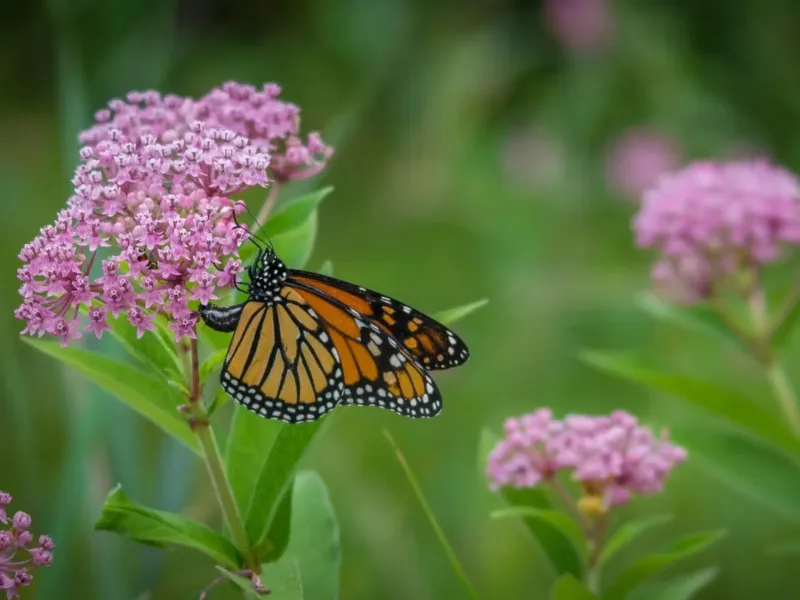
The monarch connection deserves an honest explanation. Monarch caterpillars need plants in the genus Asclepias to complete their development, and butterfly weed qualifies as a genuine host plant.
The Monarch Joint Venture explains that adult monarchs also need nectar plants throughout the growing season, especially during fall migration through North Carolina. One plant in a foundation bed makes the site available for monarch reproduction.Whether monarchs actually show up depends on regional migration patterns, the surrounding habitat, plant maturity, and seasonal weather. The Monarch Joint Venture recommends pairing milkweed with nectar plants if supporting the full monarch life cycle is the goal.
Think of the plant as opening a door rather than guaranteeing visitors. A healthy, established butterfly weed in a sunny North Carolina foundation bed creates a real opportunity for pollinators. What walks through that door is up to the broader landscape around it.
Plan For Pests, Seedlings, And Safety
Butterfly weed is tough, not perfect. Knowing its ordinary problems ahead of time keeps a minor nuisance from turning into a reason to pull the plant.
Aphids are the most common visitor you will not want. They cluster on the stems in dense orange or yellow groups, sometimes appearing almost overnight during warm weather. NC State Extension recommends responding with a strong spray of water aimed directly at the colonies, repeated every few days for about a week. That approach disrupts the population without harming the beneficial insects that share the plant.
Reaching for an insecticide first risks killing the pollinators you planted butterfly weed to support. Crown rot, rust, and leaf spot can also occur, particularly when drainage is poor or the crown stays wet after rain.
Self-seeding is worth thinking about before the seed pods split open in late summer. The long, narrow pods dry out and release silky-tailed seeds that drift on the breeze, and a single plant can produce several pods in a good year. In a naturalistic pollinator bed that kind of spread feels like a bonus. In a tightly controlled foundation border beside a brick walkway, it may produce seedlings in places you did not plan for.
Removing pods before they open gives you control over where the next generation lands.
Safety is a short but necessary conversation. Poison Control warns that milkweed plants contain cardiac glycosides capable of causing gastrointestinal symptoms, weakness, and heart-rhythm changes if enough plant material is swallowed. NC State also flags that the sap can cause contact dermatitis on bare skin. Wear gloves when handling the plant, keep children and pets that chew vegetation away from it, and do not consume any part of it.
NC State gives butterfly weed a medium flammability rating, so it is not a fireproof plant beside the house, just a small herbaceous perennial that behaves like one.
Match Every Foundation Bed To Its Conditions

Butterfly weed earns its place at the top of the list for a hot, dry, well-drained foundation strip, but that recommendation comes with a real condition attached. The site has to deliver full sun, adequate drainage, enough soil volume for the roots, and a crown that does not stay wet. Change any of those variables and the calculus changes too.
Other native full-sun perennials can work in comparable dry conditions along a North Carolina foundation. NC State’s wildflower guidance names purple coneflower, coreopsis, rattlesnake master, goldenrods, and black-eyed Susan as candidates for full-sun native plantings in North Carolina. Not every one of those fits every foundation bed, but they are worth considering if your specific site has partial shade, slightly more moisture, or more horizontal space than butterfly weed’s 1 to 1.5-foot spread allows.
Not all milkweeds are interchangeable, and that matters when you are shopping at a native plant sale. NC State Extension is clear that butterfly weed prefers dry, well-drained conditions, while other milkweed species have their own distinct site requirements. Check each species’ preferences before buying, because planting the wrong milkweed for the conditions produces failure even when the plant is technically native to North Carolina.
The practical decision sequence is straightforward. Assess sun first, then drainage, then soil type, then mature spread, then maintenance access. Choose plants that fit those actual conditions rather than the conditions you hope the bed will eventually have. If supporting monarch habitat is part of the goal, the Monarch Joint Venture recommends pairing milkweed with nectar plants for a more complete habitat.
The right plant in the right spot rarely needs rescuing, and that is a pretty good feeling for a strip of soil most people have given up on.