Native North Carolina Ground Covers That Hold A Steep Slope And Smother Weeds Better Than Vinca
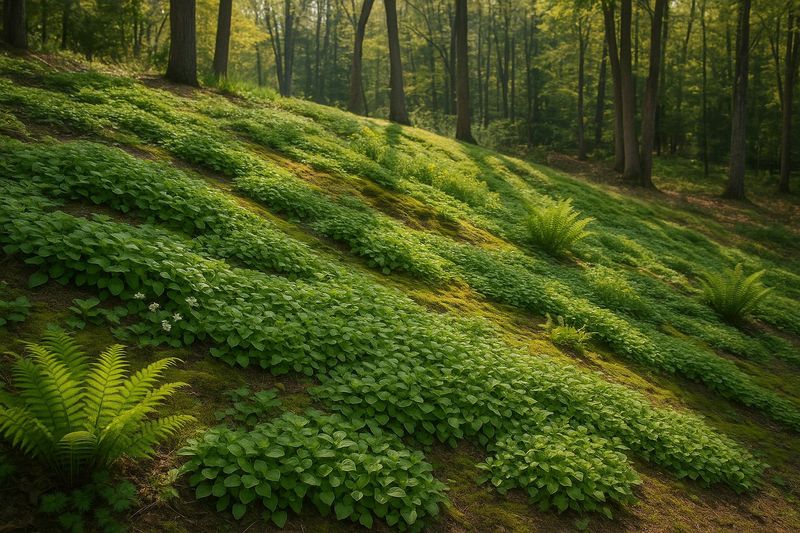
You stand at the top of your backyard slope on a muggy July morning, watching red clay wash toward the fence line after last night’s storm. Someone once told you to plant vinca, that glossy green blanket, and now it has crept into the woods and choked out everything native. Here is the good news. North Carolina grows its own tough ground covers, plants that grip a hillside, smother weeds, and feed the bees and birds that vinca never could.
These seven natives do the heavy lifting without turning into the next backyard bully.
1. Green and Gold (Chrysogonum virginianum)
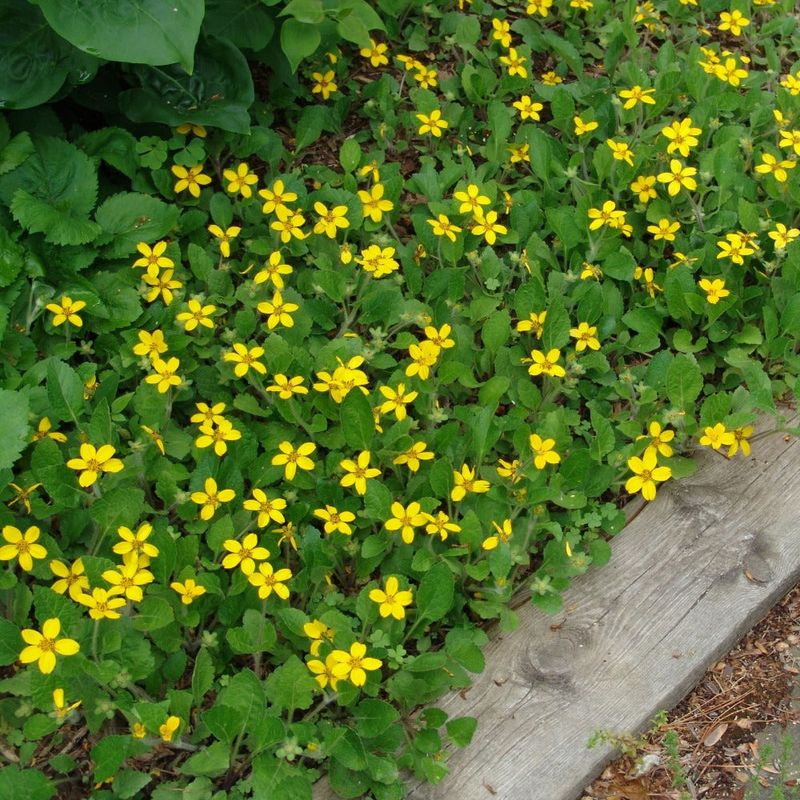
Picture a low mat of soft green leaves lit up with little yellow star flowers in April, right when your slope still looks bare and beat up from winter. Green and gold, or Chrysogonum virginianum, does the one thing vinca cannot. It stays put and still behaves like a gentleman.
Many Piedmont gardeners plant it under dogwoods and along shaded banks where red clay wants to slide. The roots knit into a dense carpet only 4 to 8 inches tall, which shades out the weed seeds waiting for their chance. It spreads by short runners, so it fills a bank in two or three seasons without launching itself into the woods.
Here is where it gets easy. Set plants 12 inches apart in spring, give them part shade, and water weekly the first summer until the roots grab hold. NC State Extension lists it as native across the state, hardy from the mountains through the coast. It even blooms on and off into fall.
You get a hillside that holds, a spring show of gold, and pollinators drifting in for the nectar. And you never have to yank it out of your azaleas.
2. Creeping Phlox (Phlox stolonifera)
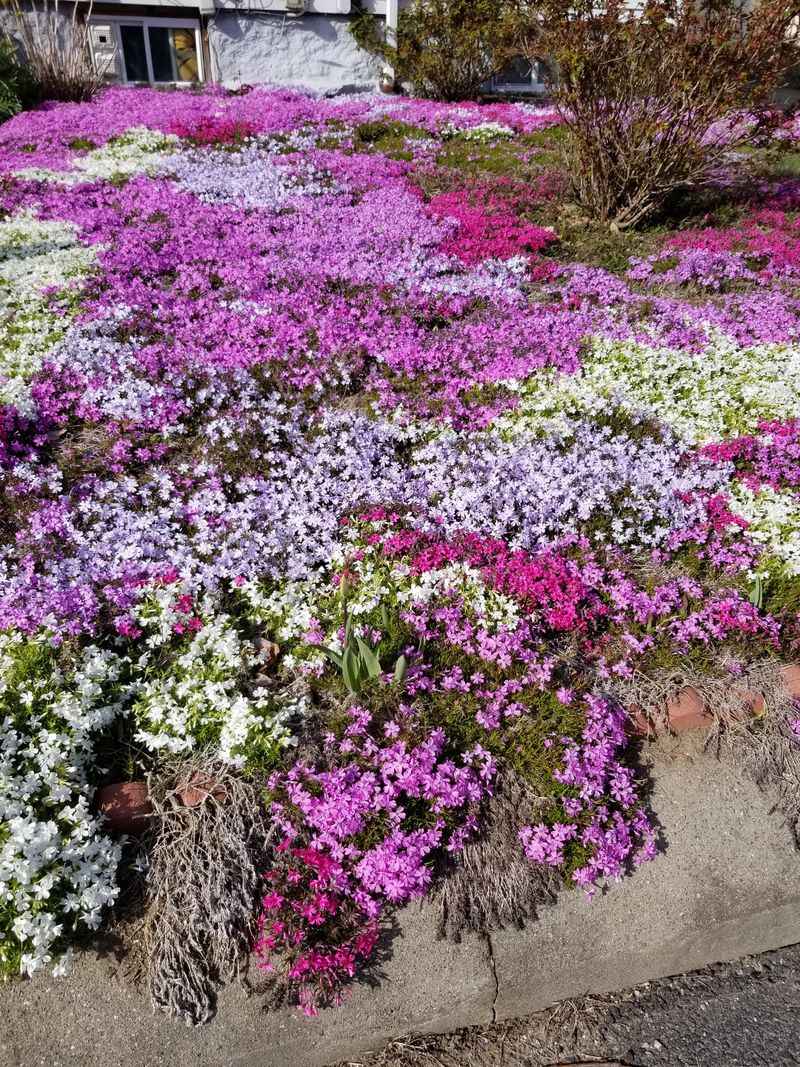
Come mid-April, a bank planted in creeping phlox looks like someone spilled a bucket of pink and lavender down the hill. Phlox stolonifera is the woodland kind, not the sun-loving moss phlox, and it thrives on the shady slopes so many NC homes have along the north side of the house.
Vinca gives you a flat green sheet and nothing else. Creeping phlox gives you a spring flood of blooms that honeybees and early butterflies mob, then settles into a tidy evergreen mat maybe 6 inches tall the rest of the year.
The trick is the stems, called stolons, that creep along the ground and root as they go. That habit locks soil in place on a slope and crowds out chickweed and henbit before they get a foothold. Space plugs about 12 inches apart in early spring in humusy soil.
Mountain and Piedmont gardeners have the easiest time here, since the plant loves the cooler, moister ground of USDA zones 6a through 7b. Add a two inch layer of leaf mulch the first fall and it will thicken up fast.
You end up with a hillside that stops eroding and a porch view worth sitting with your coffee for.
3. Golden Ragwort (Packera aurea)
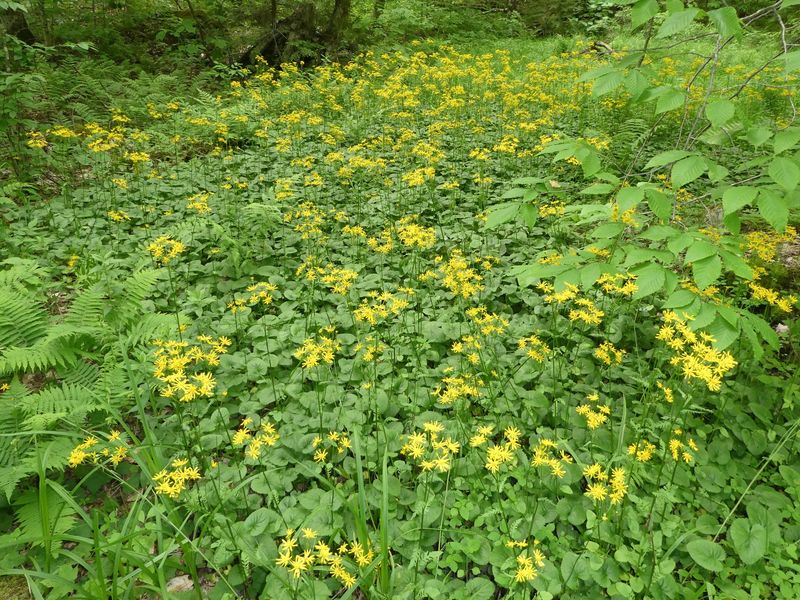
If your slope stays soggy at the bottom where the downspout dumps, most ground covers rot and sulk. Golden ragwort laughs at wet feet. Packera aurea is the native that actually wants that damp, shady spot nothing else will fill.
Your North Carolina Garden Changes Every Week. Your Plan Should Too.
Gardening in North Carolina changes quickly throughout the season. Every Friday you’ll receive a simple weekly plan showing exactly what to plant, prune, fertilize, harvest, and protect so you never miss the right timing.
Through winter it holds a flat rosette of rounded, purple-backed leaves that shade the soil and block weeds even in the cold months. Then in spring it throws up 1 to 2 foot stems topped with clouds of yellow daisy flowers that small native bees adore.
Here is the surprise. It spreads two ways, by seed and by underground runners, so it colonizes a wet bank fast, sometimes in a single season. On a raw eroding slope in the Coastal Plain or Piedmont, that speed is exactly what you want.
Plant it 12 to 18 inches apart in spring or fall, and let it run. NC State Extension notes it handles a range of soils from clay to sand as long as moisture is steady. It is not a plant for a bone-dry Sandhills ridge, so match it to the wet spots.
You gain a green mat where you used to have a muddy gully, and the bees show up for free.
4. Allegheny Spurge (Pachysandra procumbens)
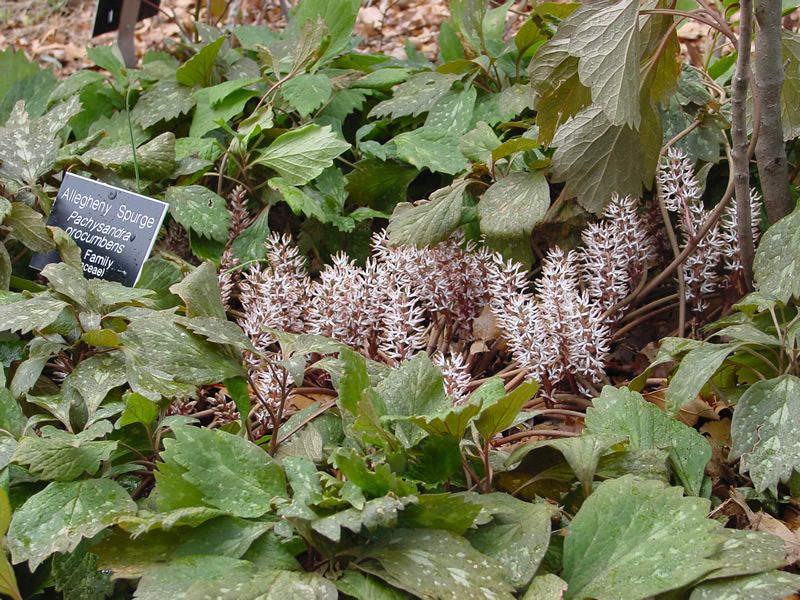
Everybody knows the Japanese pachysandra from old subdivision plantings, the one that spreads into a boring green mass and skips out on wildlife. Meet its native cousin. Allegheny spurge, Pachysandra procumbens, brings the same dense weed-smothering carpet with mottled leaves and a faint sweet scent in early spring.
The foliage turns a soft silver-green with purple marbling by fall, so a shaded mountain or Piedmont bank keeps some interest right through a mild NC winter. Bottlebrush spikes of pale flowers open low to the ground before the leaves fully expand.
What makes it a slope hero is the way it clumps and slowly spreads by underground stems, forming a mat about 8 to 12 inches tall that shades weed seeds into giving up. It is slower than its invasive relative, which is genuinely a good thing, because it will not overrun your beds.
Set plants 12 inches apart in rich, well-drained shade and mulch with shredded leaves. Give it steady moisture the first year in zones 6a through 7b.
You trade a tired, sterile pachysandra patch for a native version that looks better and actually earns its keep.
5. Woodland Stonecrop (Sedum ternatum)
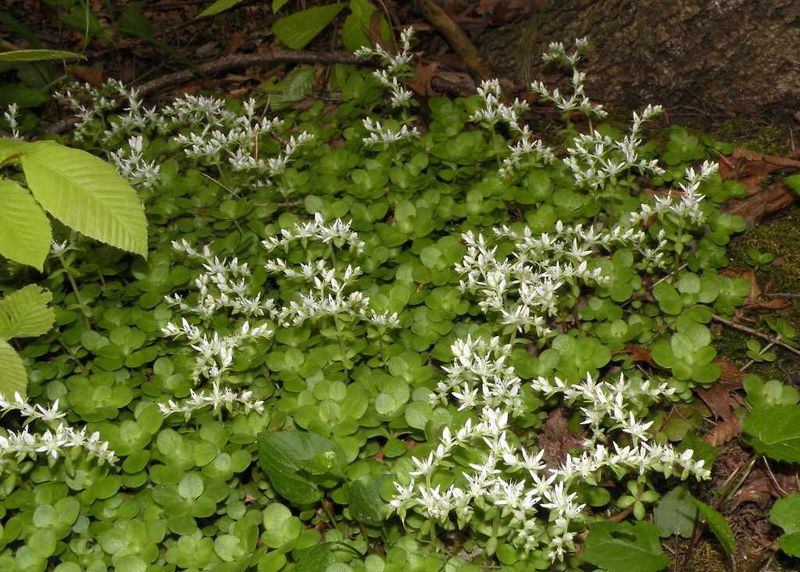
Try growing anything on a dry, rocky bank in full afternoon sun and you learn fast which plants quit. Woodland stonecrop does not quit. Sedum ternatum is a native succulent that hugs shallow, gritty soil and holds it in place where richer plants starve.
Fleshy little green leaves store water, so this ground cover shrugs off the dry spells between North Carolina’s summer storms. In April and May it covers itself in tiny white star flowers that early pollinators work over. The whole mat stays under 6 inches tall.
Here is the part slope-owners love. It roots wherever a stem touches down, so it stitches a thin-soiled hillside together and creeps into the cracks between rocks and steps. Space starts about 8 to 10 inches apart in spring, and skip the heavy watering, since soggy ground rots it.
It handles part shade to filtered sun best, and it is happy from the mountains into the Piedmont. Not a magic fix for deep shade, but on a bright, lean, difficult bank it is one of your best native bets.
You get living green stitching on ground that used to shed nothing but gravel.
6. Green Woodland Sedge (Carex woodii)
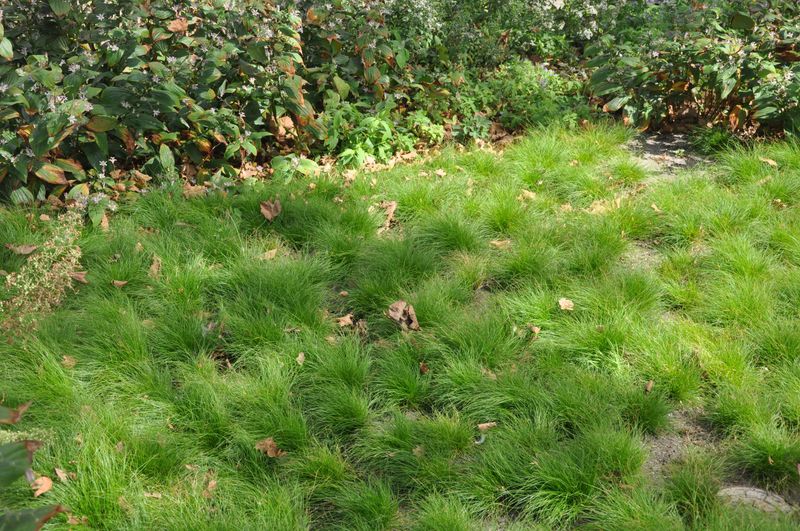
Grass on a slope sounds like a mowing nightmare, but this one you never mow. Native sedges like Carex woodii and its cousins grow in soft, flowing mounds that need no fertilizer, no blade, and almost no attention once settled.
The fine green blades arch over and knit together into a dense turf that holds red clay against a downpour better than mulch ever will. Sedges also have fibrous, wide-spreading root systems, which is exactly what erosion control books tell you to plant on a bank.
Many NC gardeners now use native sedges as a lawn alternative on shaded hillsides where fescue struggles and vinca used to take over. They stay roughly 8 to 12 inches tall and green up early. Space plugs 12 inches apart in spring or fall for a mat that closes in about two years.
Sedges feed native bees with early pollen and shelter ground-nesting insects, so your slope becomes habitat, not just cover. NC State Extension recommends matching the specific sedge species to your light and moisture, since the genus is huge.
You wind up with a soft, low-work carpet that holds the hill and never once needs a mower.
7. Barren Strawberry (Geum fragarioides)
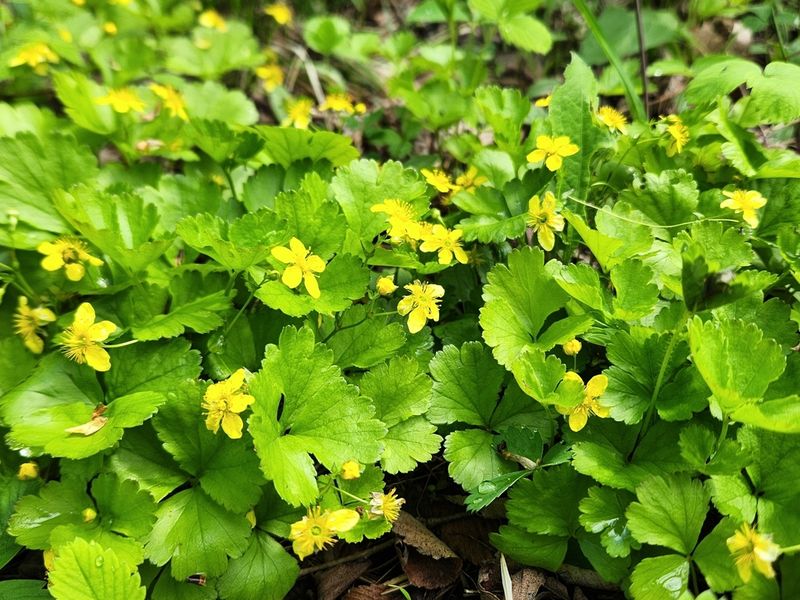
The name promises fruit and then hands you none, which sounds like a letdown until you see what it does for a slope. Barren strawberry, Geum fragarioides, mimics a strawberry plant right down to the three-part glossy leaves, but it puts all its energy into covering ground instead of making berries.
Bright yellow five-petal flowers open in spring above semi-evergreen foliage that stays presentable through a mild Piedmont winter. The leaves lie low, around 4 to 6 inches, and pack together so tightly that weed seedlings barely see daylight.
It spreads by runners much like a true strawberry, rooting as it travels down a bank and locking loose soil in place. That creeping habit is precisely why it beats vinca for a native slope, since it fills fast without jumping the fence into the woods.
Plant it 12 inches apart in spring in part shade and average, well-drained soil, then water through the first summer. It settles happily across zones 5 through 7, so mountain and Piedmont slopes suit it well.
You get a strawberry look, a spring gold glow, and a hillside that finally holds together. No berries, but honestly, the birds will forgive you.