What Drooping Eggplant Leaves In North Carolina Mean When The Soil Still Feels Moist
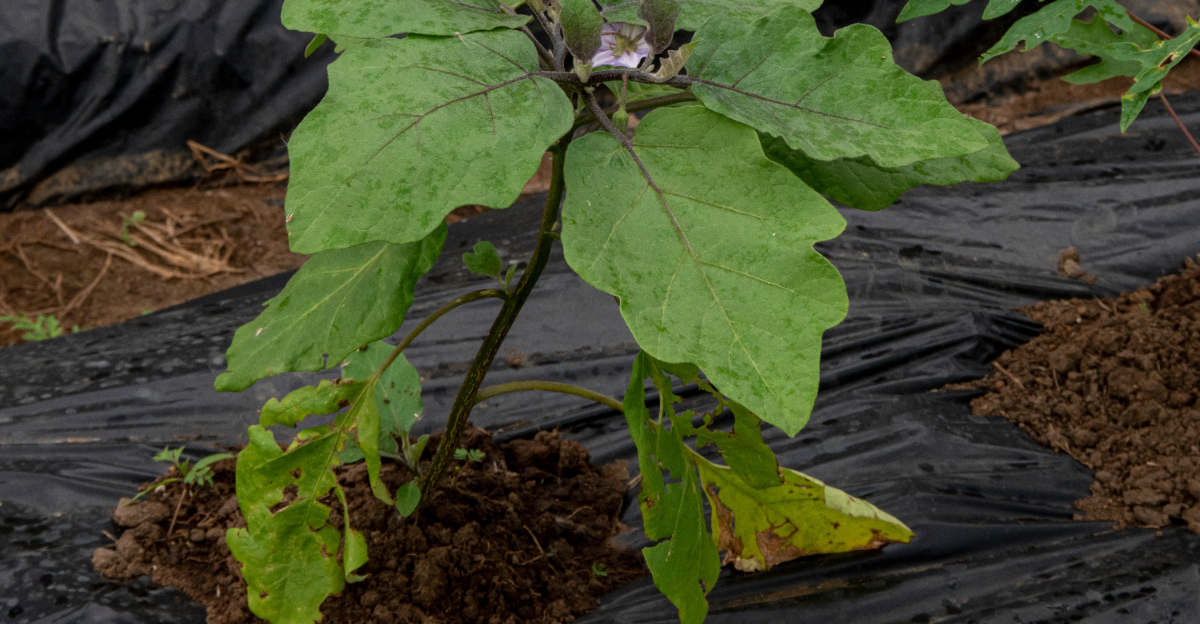
Drooping eggplant leaves can be confusing when the soil clearly isn’t dry, and North Carolina’s humid summers often make the mystery worse.
Heat stress alone can cause temporary wilting, even in well watered plants, especially during the hottest parts of the day.
Root rot from overly saturated soil is another possibility, since too much moisture actually suffocates roots and prevents proper water uptake. Verticillium wilt, a soil borne fungal issue, can also cause drooping despite adequate moisture levels.
Checking the stem near the soil line for soft or discolored spots can help identify rot early. Eggplants also react poorly to sudden temperature swings, drooping as a stress response rather than a moisture problem.
Improving drainage and avoiding overwatering often solves the issue faster than adding more water. Sometimes the soil is fine, and the real problem lies elsewhere.
1. Afternoon Heat Is Outpacing Root Uptake
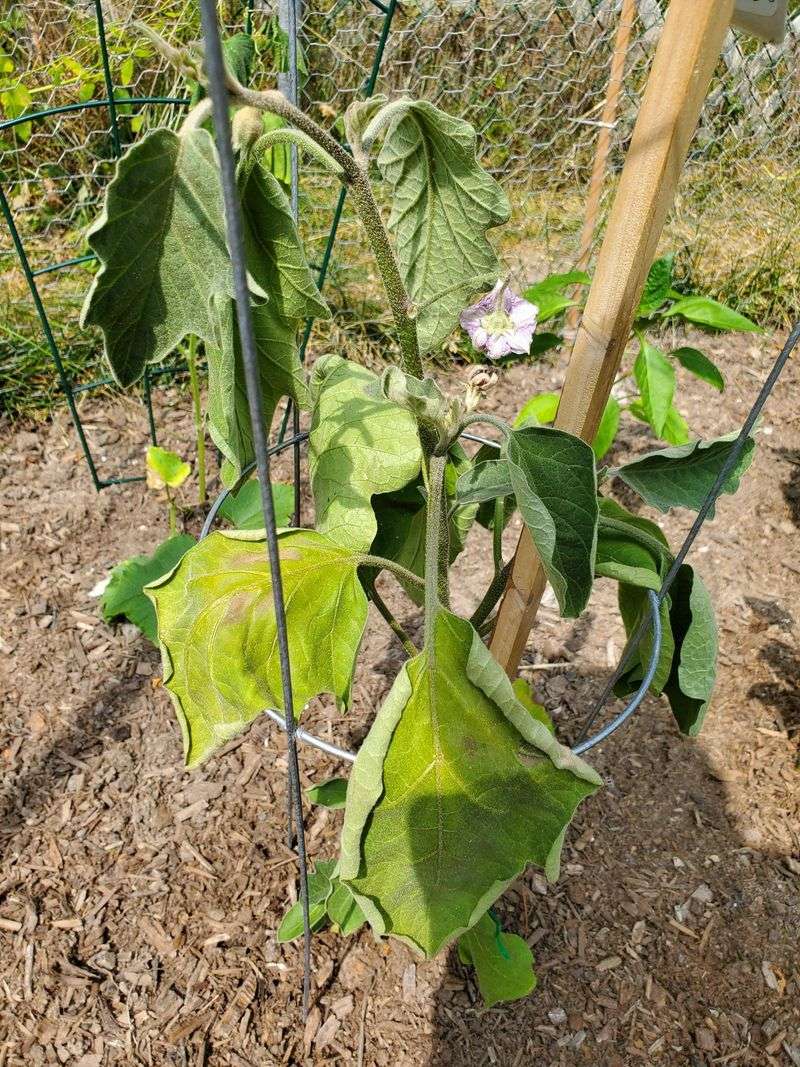
Picture your eggplant standing tall in the morning, then suddenly looking exhausted by two in the afternoon. That dramatic change is not always a crisis.
On hot North Carolina summer days, leaves can release water through a process called transpiration much faster than roots can pull it back up from the soil. The result is drooping leaves even when the ground feels perfectly moist to the touch.
Temperatures regularly climb above 90 degrees Fahrenheit across much of North Carolina during summer, and direct sun combined with dry or gusty winds pushes that water loss even further.
If you check your plant after sunset or early the next morning and the leaves have perked back up, that is a strong sign that temporary heat stress was the cause. Healthy leaf color and continued flowering also support this conclusion.
The best response is to check soil moisture in the morning rather than reacting during peak afternoon heat. Deep watering two to three times per week encourages roots to grow further down where soil stays cooler and holds moisture longer.
Applying a three to four inch layer of organic mulch like straw or wood chips around the base of the plant helps the soil retain that moisture through the hottest part of the day.
During extreme heat waves, a shade cloth that filters around thirty percent of sunlight can give your plant a real break without cutting off the light it needs to produce fruit.
Small adjustments like these can make a big difference in keeping your eggplant productive and comfortable throughout the season.
2. The Surface Is Moist But The Main Root Zone Is Dry
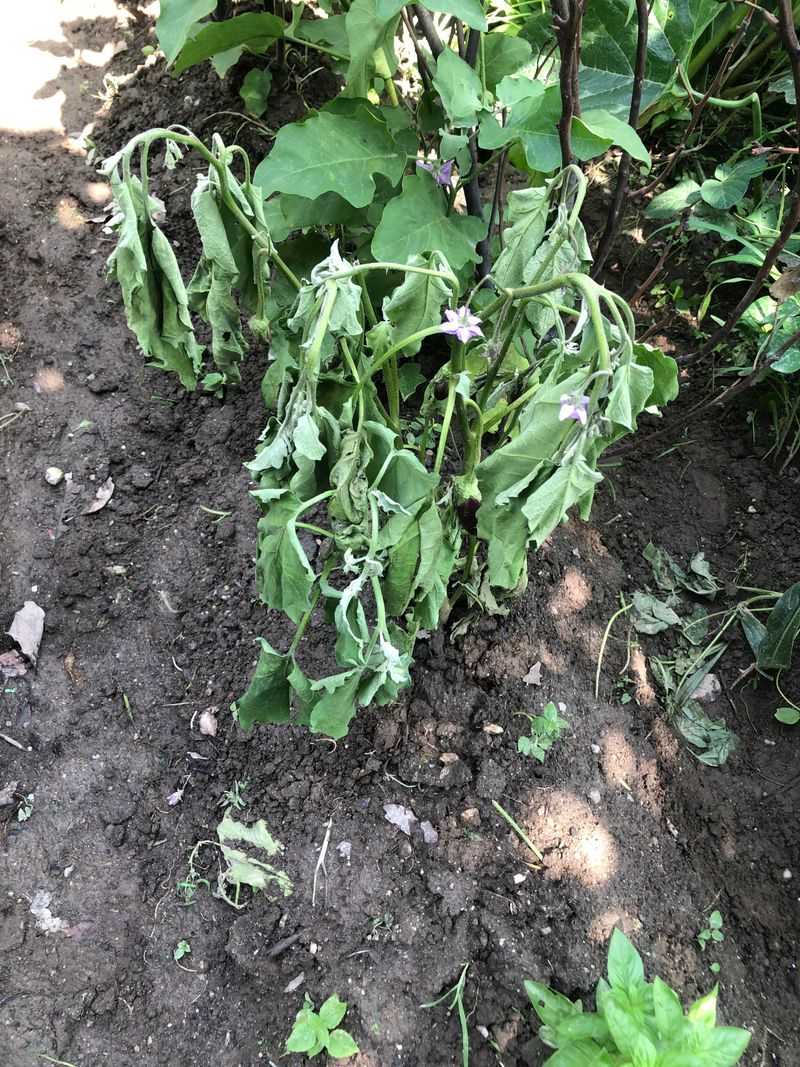
Soil can be a bit deceptive. Just because the top inch or two feels damp does not mean the water has reached the roots that actually matter.
Eggplant roots typically extend several inches below the surface, and that deeper zone is where the plant does most of its drinking.
A light afternoon shower, a quick pass with a garden hose, or even thick mulch can leave the surface feeling moist while the root zone below stays surprisingly dry.
Drip irrigation lines sometimes get clogged or placed too shallow, and uneven water distribution can create dry pockets that are invisible from above.
Your North Carolina Garden Changes Every Week. Your Plan Should Too.
Gardening in North Carolina changes quickly throughout the season. Every Friday you’ll receive a simple weekly plan showing exactly what to plant, prune, fertilize, harvest, and protect so you never miss the right timing.
In raised beds or sandy soils common in parts of North Carolina, water drains quickly and the surface dries out even faster after watering stops.
Gardeners who water by feel at the surface can end up consistently underwatering without realizing it.
The fix is simple and satisfying once you try it. Push a trowel or your finger four to six inches into the soil near the plant and feel what is happening down there.
If the lower root zone feels dry and crumbly, that plant genuinely needs a deep, slow watering session. Running a drip line or soaker hose for a longer period encourages water to move downward rather than spread sideways along the surface.
When the entire root zone already feels saturated, adding more water would cause a different set of problems entirely.
Checking deeper before watering is one of the simplest habits that separates thriving eggplant gardens from struggling ones all summer long.
3. Saturated Soil Is Limiting Oxygen Around The Roots
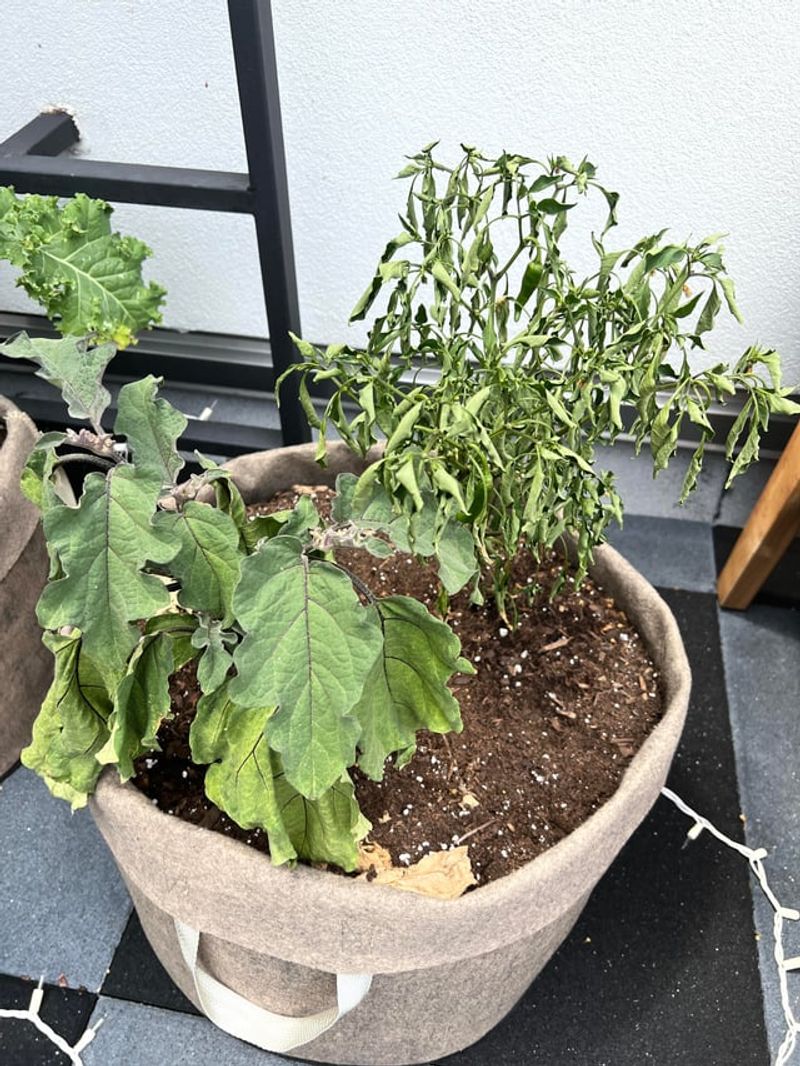
More water is not always the answer, and eggplant will tell you that pretty clearly when roots start suffering from too much of it.
Roots need oxygen just as much as they need water, and when soil pores fill completely with water and stay that way, the root system begins to struggle.
Oddly enough, a plant drowning in wet soil can look almost identical to one that is thirsty.
Heavy North Carolina rain events, overly frequent irrigation, dense clay soils, low-lying planting spots, and containers with blocked drainage holes are all common culprits.
When the root zone stays saturated for more than a day or two, roots begin losing their ability to absorb water and nutrients efficiently.
The plant droops not because it lacks water, but because its roots can no longer do their job properly in an airless environment.
Beyond drooping, watch for yellowing leaves that start at the bottom of the plant and move upward, unusually slow growth, and soft or discolored tissue near the base of the stem.
A plant suffering from saturated soil often does not recover fully overnight the way a heat-stressed plant does, which is a meaningful clue worth paying attention to.
Pausing all irrigation immediately is the right first step. Check that containers have clear drainage holes and that garden beds are not collecting water after rain. Raised beds or mounded rows improve drainage significantly in heavy clay soils.
Adding compost over time also improves soil structure and helps water move through more freely, giving roots the balanced environment they need to support a productive plant.
4. Restricted Roots Cannot Supply The Growing Plant
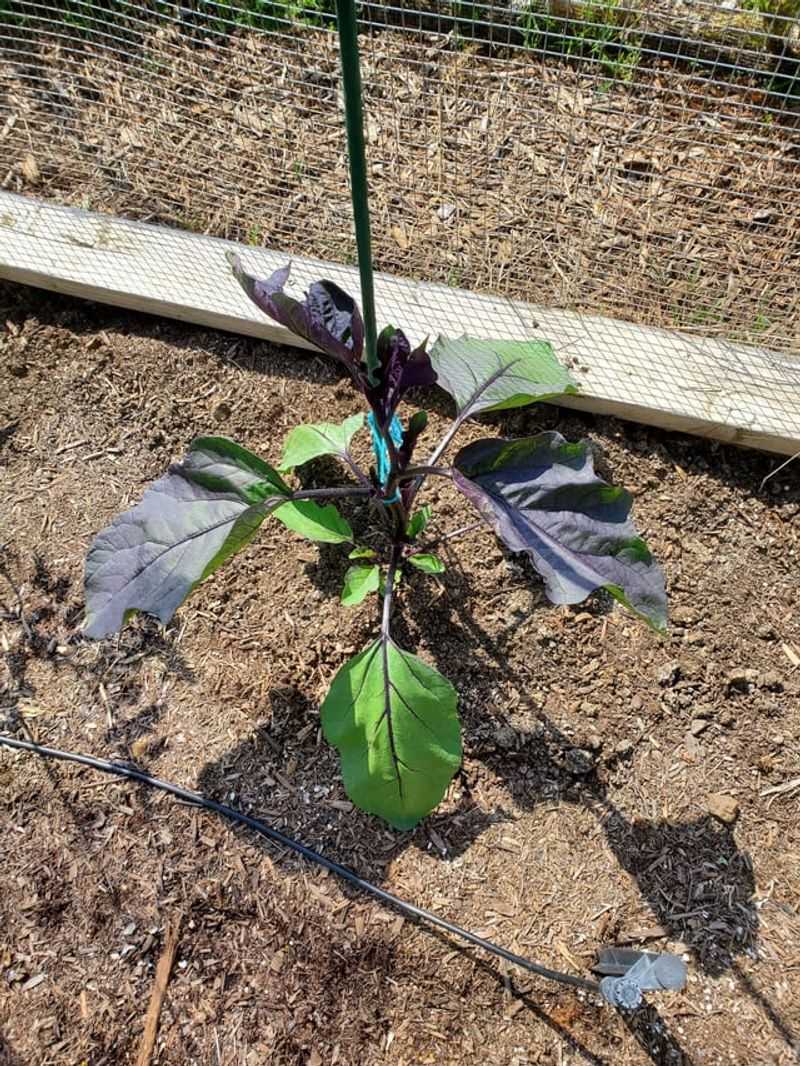
Roots need room to grow, and when they run out of space, the whole plant pays the price. A newly purchased eggplant from a nursery sometimes arrives in a small container with roots that have been circling for weeks, forming a dense, tightly packed mass.
Even after transplanting into moist soil, those compressed roots may struggle to expand outward quickly enough to supply a plant that is actively growing and fruiting.
Compacted garden soil creates a similar problem. When the surrounding soil is too dense for roots to penetrate, the plant is essentially stuck in a small zone even if it looks like it has plenty of room.
Deep cultivation close to the base of the plant can also sever important feeder roots and temporarily reduce the plant’s ability to absorb water, causing drooping that feels confusing when the soil seems perfectly fine.
Container gardeners in North Carolina should use pots that hold at least five gallons for a single eggplant, and containers with multiple drainage holes allow excess water to escape while keeping moisture available at root level.
Before transplanting, gently loosen any tightly circled roots at the base of the root ball to encourage outward growth into the new soil.
Keeping moisture consistent during the first few weeks after transplanting is especially important because new roots are still establishing their reach.
Gradual improvement in leaf firmness and new growth appearing at the tips are encouraging signs that roots are settling in well.
If drooping continues without any improvement over several weeks, a closer look at the root zone and soil conditions is definitely worth the effort.
5. Southern Bacterial Wilt Is Blocking Internal Water Flow
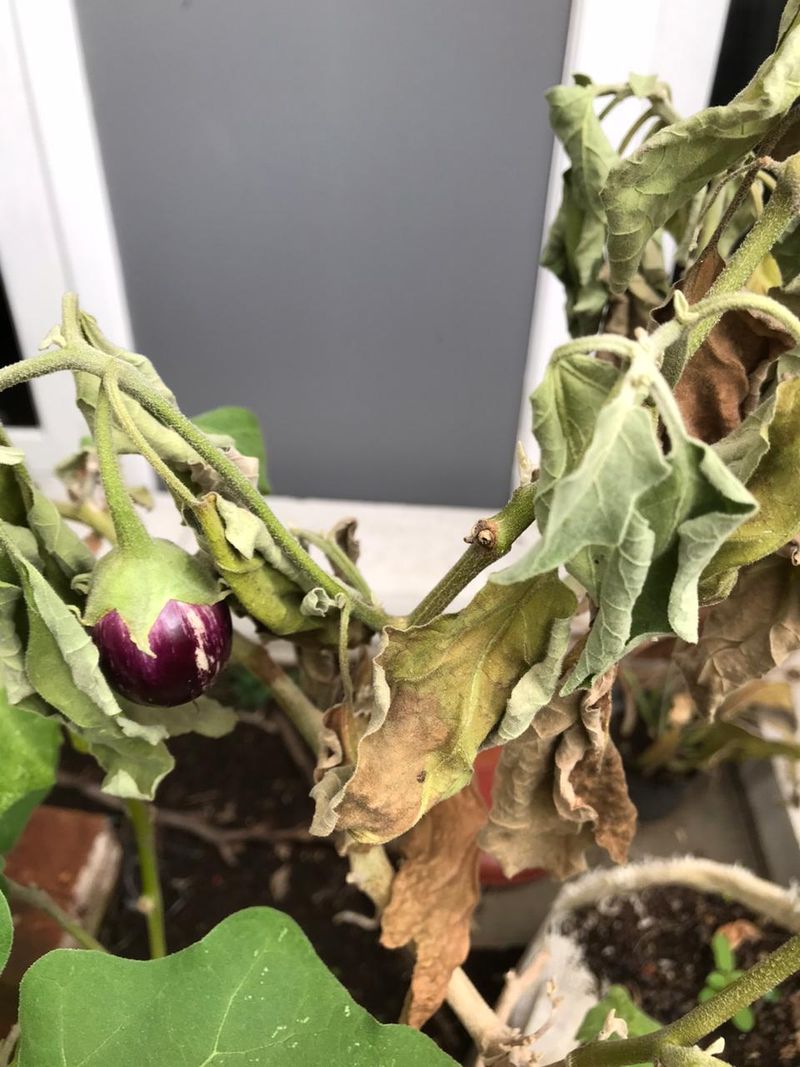
Sometimes drooping has nothing to do with the soil at all.
Southern bacterial wilt is a serious disease caused by the bacterium Ralstonia solanacearum, and it thrives in exactly the conditions North Carolina summers are known for: warm temperatures and moist soil.
What makes this disease especially tricky is that the leaves often stay green even as the plant wilts suddenly and dramatically.
The organism colonizes the plant’s internal water-conducting tissue, physically blocking the flow of water from roots to leaves.
Early in the infection, a plant may recover somewhat overnight when temperatures cool down, which can make it look like simple heat stress at first.
As the disease progresses, that overnight recovery disappears and wilting becomes permanent even during cooler morning hours.
Cutting the lower stem and looking at the cross-section can reveal brownish discoloration inside the vascular tissue, which is a notable clue.
Another field test involves placing a cut stem piece in a glass of clear water and watching for a milky, thread-like bacterial ooze after a minute or two.
However, visual confirmation alone is not always reliable enough to make a firm diagnosis.
North Carolina gardeners dealing with suspected bacterial wilt should avoid moving soil from the affected area to other parts of the garden, since the bacterium can persist in soil for extended periods.
Reaching out to your county Cooperative Extension office or submitting a sample to the NC State Plant Disease and Insect Clinic is the most reliable way to confirm what you are dealing with and plan the best path forward for future seasons.
6. Verticillium Wilt Is Gradually Affecting The Vascular Tissue
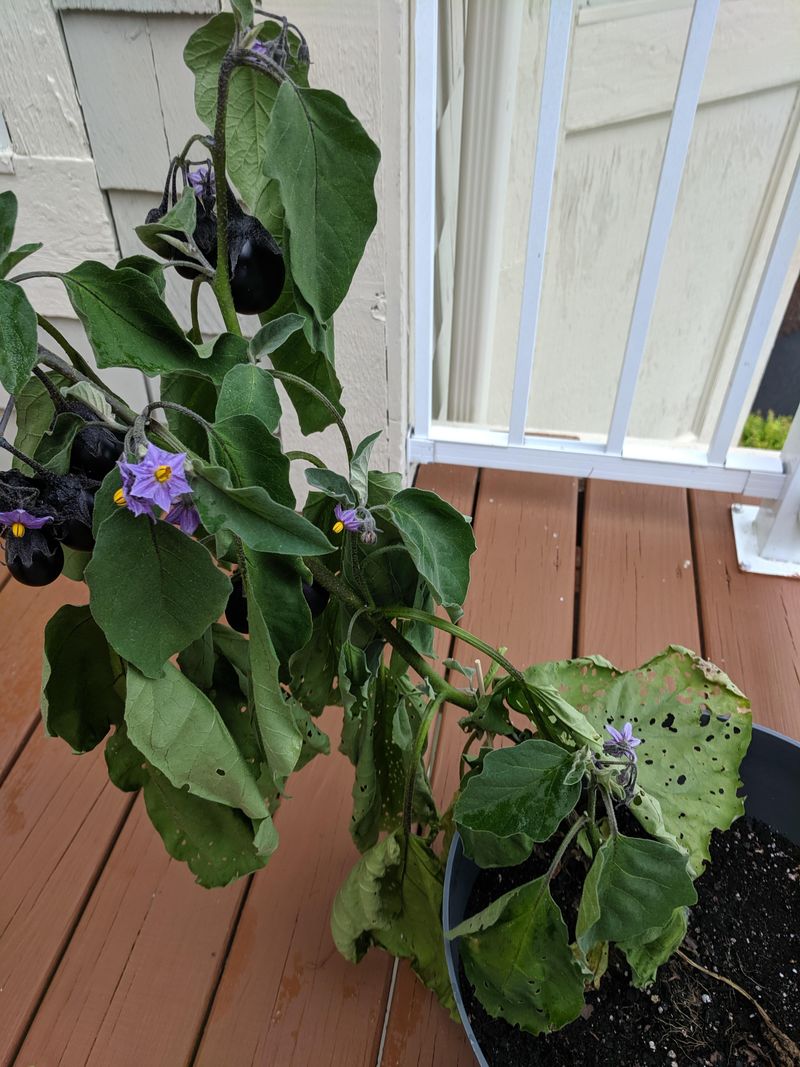
Unlike the sudden dramatic collapse caused by bacterial wilt, Verticillium wilt tends to creep in slowly and quietly.
Caused by the soil-dwelling fungus Verticillium dahliae, this disease affects eggplant by colonizing the vascular tissue that carries water upward through the plant.
Early on, leaves may droop noticeably during the afternoon and then appear firmer again by morning, which makes it easy to mistake for everyday heat stress or inconsistent watering.
One of the most distinctive clues is the pattern that appears on affected leaves. Look for V-shaped areas of yellowing or browning that start at the leaf margins and extend inward toward the center vein.
These symptoms typically begin on the older, lower leaves first and gradually work their way up the plant over days or weeks.
Peeling back the outer tissue of the lower stem often reveals light brown or cream-colored streaking inside, which reflects the fungal activity within the vascular system.
Growth tends to slow noticeably as the season progresses, and fruit production may drop off even when the plant continues to look partially healthy.
Because Verticillium lives in the soil, it can survive for many years and affect future crops in the same bed if rotation is not practiced.
Symptoms of Verticillium wilt overlap significantly with moisture stress and several root-related issues, which is why professional identification matters before drawing conclusions.
Sending a sample to the NC State Plant Disease and Insect Clinic or consulting your local Cooperative Extension agent gives you accurate information to work with and helps you make smarter decisions about soil management and crop planning going forward.
7. Root Knot Nematodes Are Reducing Root Efficiency
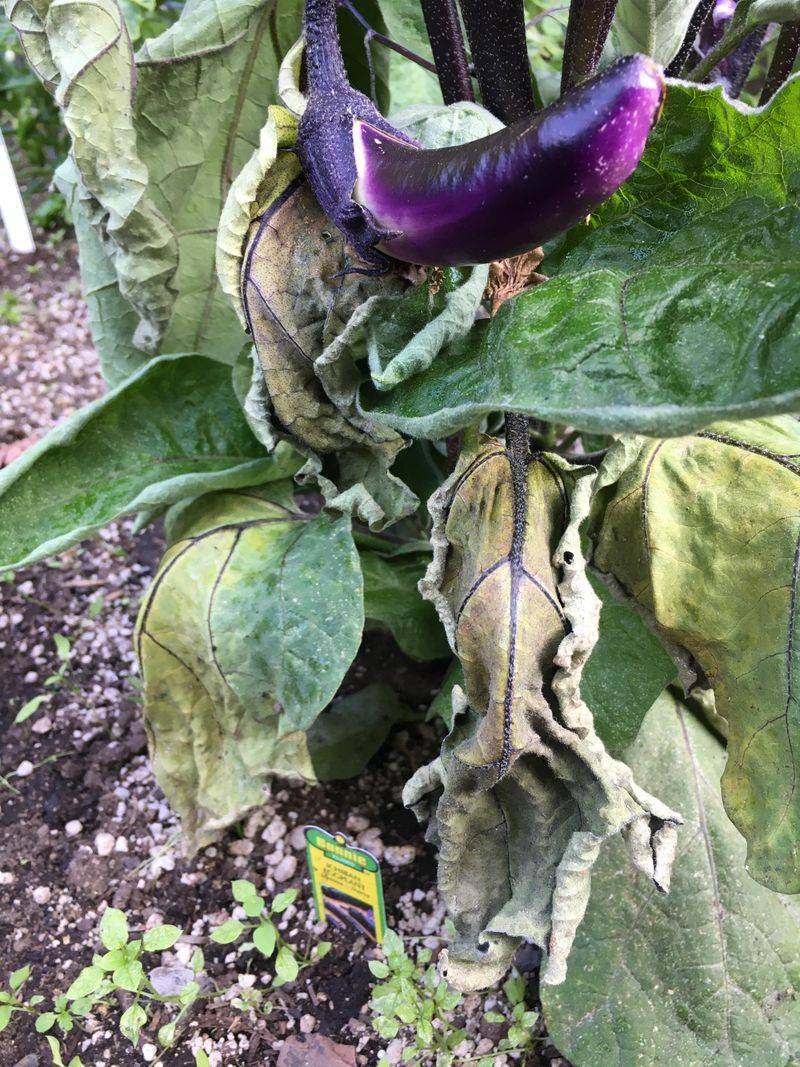
Tiny but surprisingly damaging, root knot nematodes are microscopic roundworms that live in the soil and feed on plant roots.
Eggplant is considered highly susceptible to these pests, and the southern root knot nematode, Meloidogyne incognita, is widespread across North Carolina, particularly in the sandy soils found throughout the Piedmont and Coastal Plain regions.
A plant dealing with a heavy nematode population can look droopy, pale, and unproductive even when the soil around it feels moist and the weather seems fine.
The reason for this is that nematodes disrupt normal root function by causing swollen, knotted growths called galls to form along the roots.
These galls interfere with the root’s ability to absorb water and nutrients efficiently, so the plant ends up struggling even in a well-watered bed.
Above ground, symptoms can include yellowing foliage, stunted overall growth, and fewer fruits than expected for the size of the plant.
Pulling up a struggling plant and examining the roots is one of the most informative steps a gardener can take. Healthy eggplant roots are smooth and white, while roots affected by root knot nematodes show distinctive bumpy swellings that cannot be rubbed off.
This visual check can point you in the right direction before investing more time and resources into a bed that may need a different approach.
North Carolina gardeners can request a soil assay through the NC Department of Agriculture and Consumer Services to confirm nematode presence and population levels.
Planning crop rotation with non-host plants, incorporating resistant cover crops like marigolds, and improving organic matter in the soil are all practical steps that help reduce nematode pressure in future growing seasons.