Pennsylvania Gardeners Are Quietly Securing These Heavy Plants Before Thunderstorms Hit
Pennsylvania thunderstorms have a way of arriving faster and hitting harder than the forecast suggested.
One minute the sky looks manageable, and the next you’re watching the wind pick up and wondering whether everything in your garden is going to make it through the next hour.
For most plants, a summer storm is just part of the season. But for certain heavy container plants and tall garden specimens, an unsecured position going into a storm can mean real damage or loss.
Some Pennsylvania gardeners have learned this lesson the hard way. The plants that are most at risk are often the ones that seem the most established.
Large container plantings that look stable, tall flowering specimens in full bloom, trellised vines at their most lush and wind catching. These are exactly the plants that need attention before a storm, not after.
A few minutes of preparation before a serious thunderstorm rolls through can make the difference between a garden that comes through fine and one that needs significant recovery.
Here’s what Pennsylvania gardeners are securing before storms hit and exactly how they’re doing it.
1. ‘Brandywine’ Tomato (Solanum Lycopersicum ‘Brandywine’)
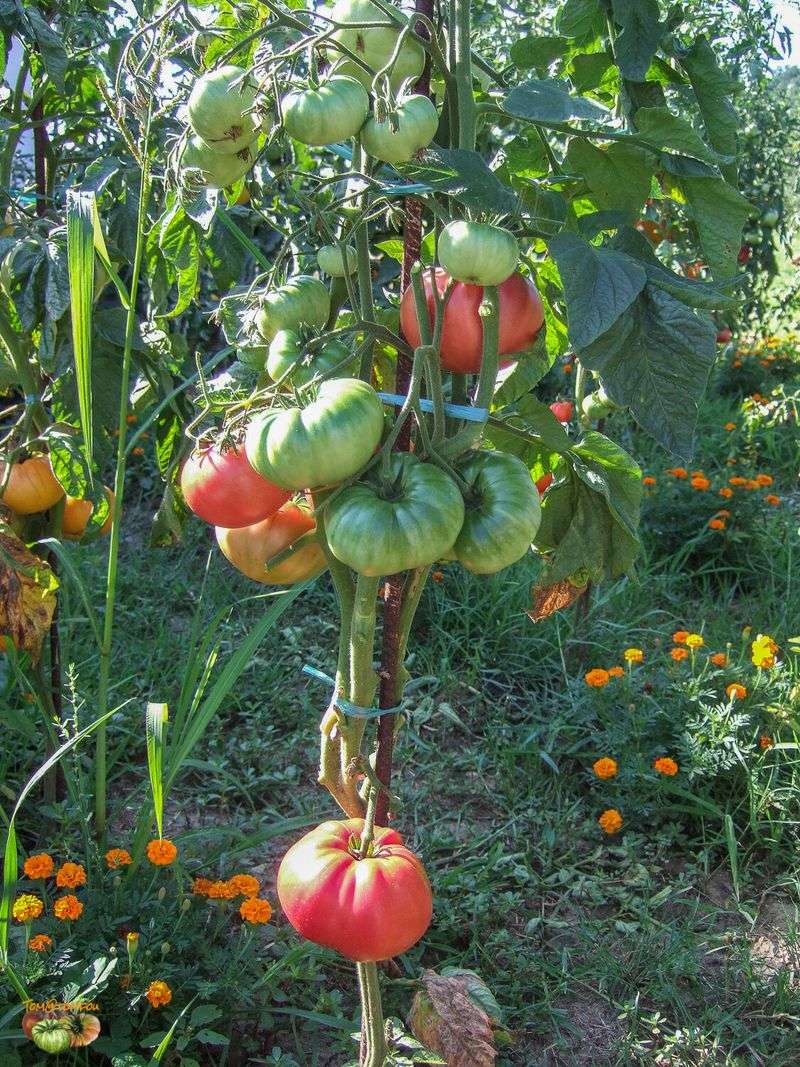
Old-time gardeners have a saying: if your tomatoes are loaded, your stakes better be ready. The Brandywine tomato is one of the most beloved heirloom varieties in Pennsylvania, and for good reason.
Its fruits are massive, meaty, and absolutely packed with flavor. The problem is that all that fruit comes at a cost. When a Brandywine plant is grown in a container and loaded with big tomatoes, it becomes seriously top-heavy.
A strong gust of wind can send the whole thing crashing over in seconds. That is why experienced gardeners always anchor the cage to a deeply driven stake before storm season gets serious.
Drive the stake at least 12 inches into the ground, or even deeper if the soil is loose. Tie the main vine to the stake using soft garden twine or stretchy plant ties that will not cut into the stem. If you are growing in a pot, push the stake through the drainage hole for extra stability.
Some gardeners use two stakes crossed in an X shape for even more support. Others place heavy bricks or stones around the base of the container to lower its center of gravity before a storm rolls in. Both methods work well and cost very little.
Checking your ties every few weeks is also smart because the plant keeps growing and the stem thickens. Loose ties can slip, and tight ones can damage the vine.
A little attention now keeps your Brandywine standing tall through even the rowdiest Pennsylvania thunderstorm.
2. ‘Cafe Au Lait’ Dinner-Plate Dahlia (Dahlia ‘Cafe Au Lait’)
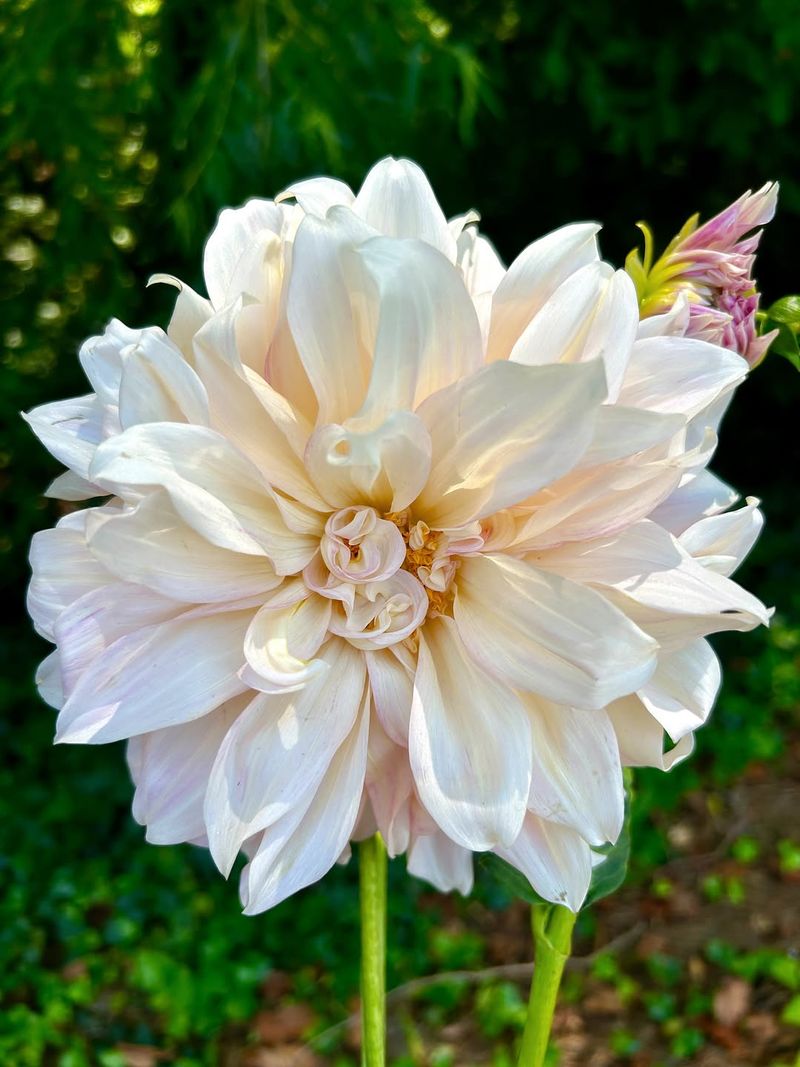
There is something almost dreamy about a Cafe au Lait dahlia in full bloom. The flowers are creamy, blush, and absolutely enormous, often reaching the size of a dinner plate.
But that dreamy look disappears fast when a thunderstorm snaps the stem right off at the base.
This dahlia variety can grow up to four feet tall and produces blooms so large and heavy that the stems genuinely struggle to hold them upright on a calm day. Add in rain and wind, and you have a recipe for a broken plant.
Your Pennsylvania Garden Changes Every Week. Your Plan Should Too.
Gardening in Pennsylvania changes quickly throughout the season. Every Friday you’ll receive a simple weekly plan showing exactly what to plant, prune, fertilize, harvest, and protect so you never miss the right timing.
The Royal Horticultural Society specifically recommends staking taller dahlias, especially those grown in open or exposed garden spots.
The best time to stake a Cafe au Lait dahlia is early, before the plant gets too tall. Push a sturdy bamboo cane or metal stake about a foot into the ground right next to the main stem.
Use soft ties to loosely connect the stem to the stake at several points as the plant grows taller.
Some gardeners use a grid of horizontal stakes and twine around the plant to cradle the stems from all sides. This works especially well when you have several dahlias planted together in a cluster.
The grid holds each stem up without putting all the pressure on one support point. Before a storm, take a quick walk through the garden and double-check every tie. Make sure nothing is sagging or leaning.
A few minutes of checking now can protect weeks of growth and keep those gorgeous blooms looking their absolute best.
3. ‘Annabelle’ Smooth Hydrangea (Hydrangea Arborescens ‘Annabelle’)
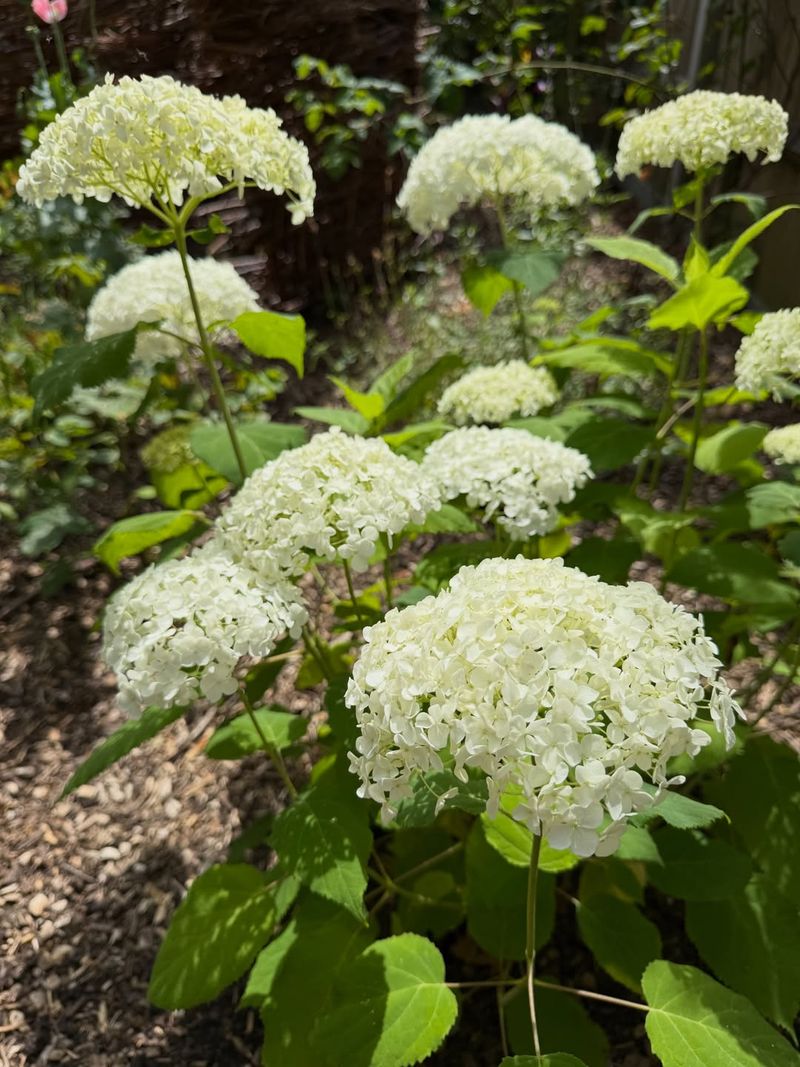
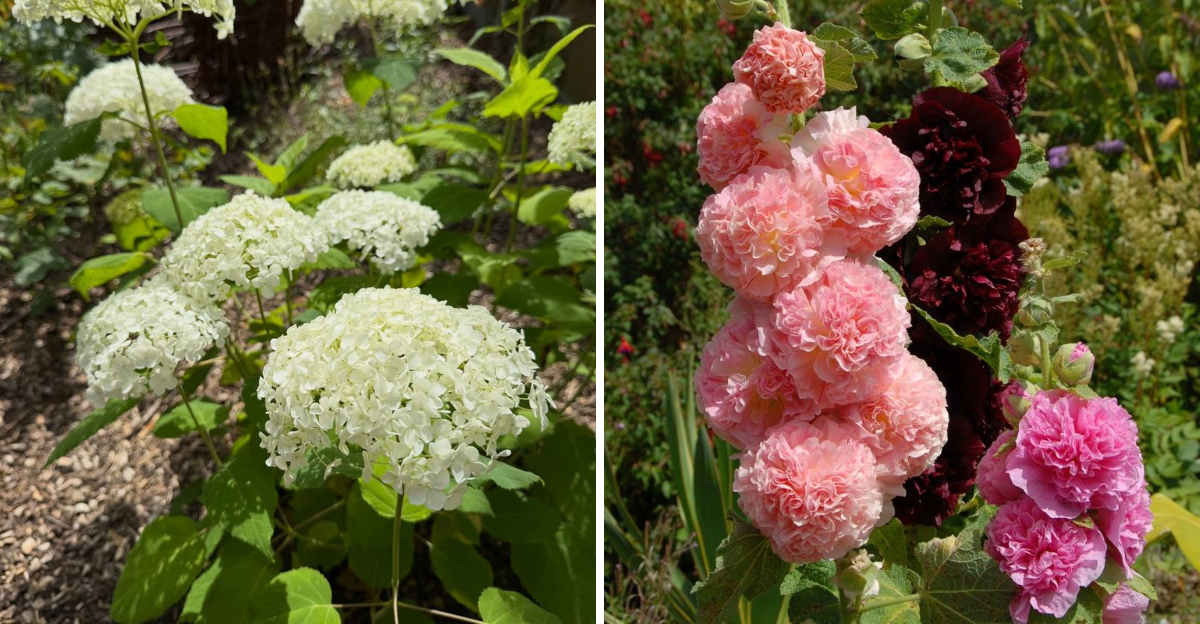
Anyone who has grown an Annabelle hydrangea knows the moment of heartbreak when a summer storm pushes those giant white blooms straight into the mud.
It happens every year to gardeners who skip the support step. The flowers are breathtaking, but they have a serious weakness.
Annabelle produces some of the largest flower heads of any shrub in the American garden. Those big mophead clusters act like sponges during a rainstorm, soaking up water and getting heavier by the minute.
The stems of this variety are naturally a bit weak compared to other hydrangeas, which makes the combination of weight and wind especially dangerous during a Pennsylvania thunderstorm.
A support ring is the most popular fix, and it works really well. You can buy round wire rings that sit on legs pushed into the soil around the plant.
The stems grow up through the ring and lean against it for support. Set it up in spring before the plant fills out, and it practically disappears once the foliage covers it.
Another option is a circle of wooden or metal stakes with garden twine woven between them. This creates a soft corral around the plant that keeps the stems from flopping outward.
Either method gives the shrub the backbone it needs when the rain starts falling hard. Cutting the stems back by about one-third in late winter can also help. Shorter stems are stronger and less likely to bend under the weight of the flowers.
Pair that with a support ring, and your Annabelle will stand up to almost anything Pennsylvania weather throws at it.
4. ‘Sarah Bernhardt’ Peony (Paeonia Lactiflora ‘Sarah Bernhardt’)
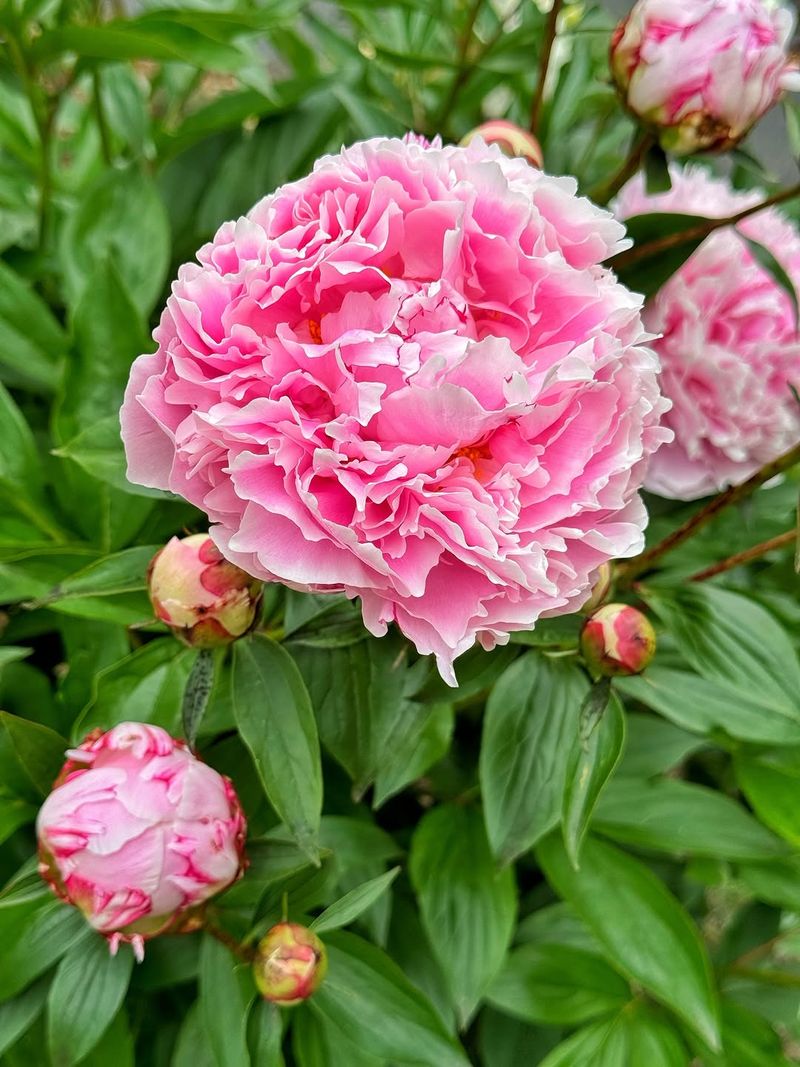
Named after one of the most famous actresses in history, the Sarah Bernhardt peony has a flair for the dramatic that extends well beyond its stunning pink blooms.
When a summer storm rolls in and drenches those big, fluffy flowers, the whole plant can fold over like a curtain call gone wrong.
This is one of the most classic peony varieties grown in Pennsylvania gardens. The flowers are fully double, meaning they are packed with layer after layer of soft pink petals.
That beauty comes with real weight. A wet Sarah Bernhardt bloom can feel surprisingly heavy in your hand, and the stems were simply not built to handle that load on their own.
Penn State Extension guidance points out that double-flowered herbaceous peonies often need support after rain, and Sarah Bernhardt is a perfect example of why. Getting a peony hoop or cage in place early in the season is the smartest move.
These wire supports sit around the plant and let the stems grow up through a grid, which cradles each flower naturally.
Place the support when the shoots are just a few inches tall in spring. By the time the plant blooms, the cage will be hidden inside the foliage and the flowers will have something solid to lean on.
If you missed the early window, you can still push stakes around the plant and tie the stems loosely together before a storm hits.
Watering at the base rather than overhead also helps keep the blooms lighter and less waterlogged during the growing season.
5. Chater’s Double Hollyhock (Alcea Rosea Chater’s Double Group)
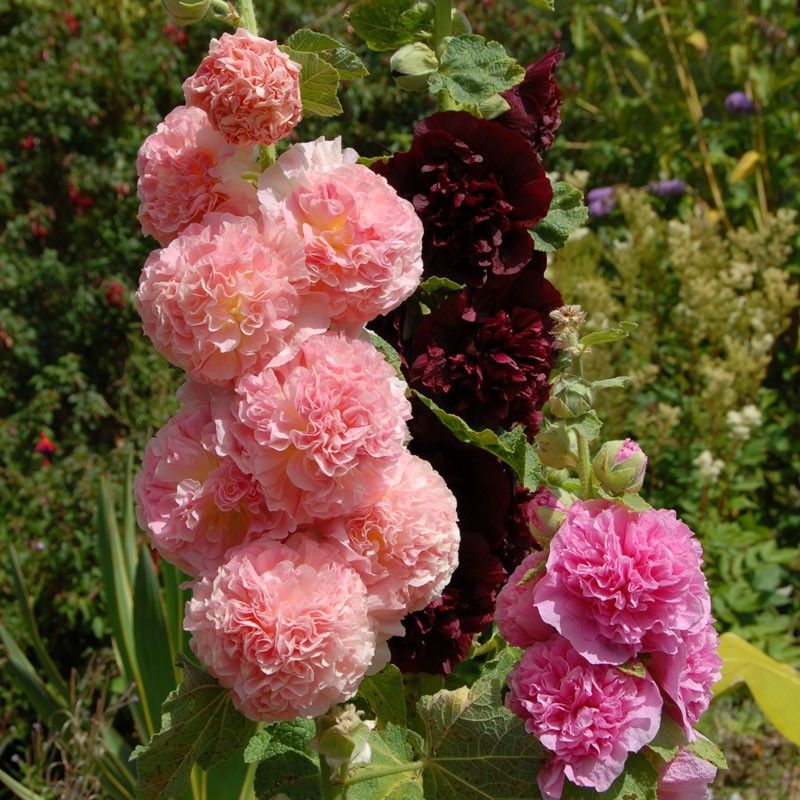
Few plants bring old-fashioned charm to a Pennsylvania garden quite like hollyhocks. Chater’s Double varieties take that charm to another level with their huge, ruffled, pompom-like flowers stacked all the way up a stalk that can easily reach six, seven, or even eight feet tall.
They look incredible. They also act like sails in a windstorm. Because the stalks are so tall and carry heavy double flowers from bottom to top, they catch a tremendous amount of wind during a thunderstorm. Without support, these plants will bend, lean, or snap entirely.
The Royal Horticultural Society specifically notes that hollyhocks growing in exposed garden spots need staking, and most Pennsylvania yards qualify as exposed when a strong storm moves through.
The key with hollyhocks is to stake them at multiple heights rather than just at the base. Use a long bamboo cane or wooden dowel and secure the stalk with soft ties every 18 to 24 inches going up.
This distributes the pressure evenly along the entire length of the plant instead of putting all the stress on one point.
For a row of hollyhocks along a fence or wall, you can run a horizontal line of twine between two end stakes. Loop individual ties from the twine to each stalk.
This keeps the whole row supported without requiring a separate stake for every single plant.
Check the ties after every major storm and re-tie any that have loosened. Hollyhock stalks continue growing taller through summer, so what was snug in June might be too loose by August. Staying on top of it makes a real difference.
6. ‘Mammoth Russian’ Sunflower (Helianthus Annuus ‘Mammoth Russian’)
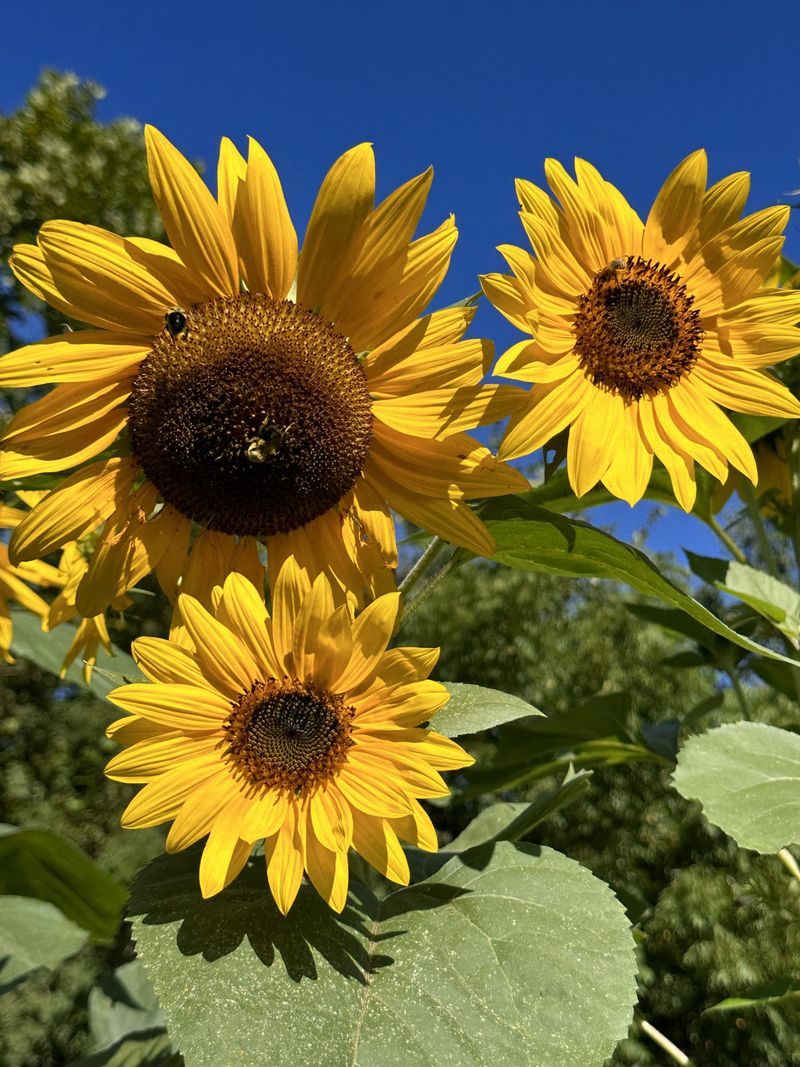
Growing a Mammoth Russian sunflower is like raising a small tree in your backyard. These giants routinely shoot past eight feet and develop flower heads so large and heavy with seeds that the stem can barely keep them upright on a perfectly calm day.
When a thunderstorm rolls through Pennsylvania, they need serious backup. The head of a mature Mammoth Russian sunflower can weigh several pounds, especially once the seeds begin to fill in. That weight sits at the very top of a tall, somewhat flexible stalk.
Wind pushes the head around like a pendulum, and if the stem gives way, the whole plant goes down. Staking these giants is not optional. It is essential.
Use the thickest stake you can find, ideally a wooden post or a heavy-duty metal garden stake. Drive it at least 18 inches into the ground next to the main stem before the plant gets too tall to handle easily.
Tie the stem to the stake in two or three places using wide, soft ties that spread the pressure across a larger surface area.
Planting sunflowers near a fence or solid wall also provides natural windbreak protection. The structure blocks some of the wind before it even reaches the plant.
Many experienced Pennsylvania gardeners use both a stake and a fence together for their largest sunflower varieties.
Watering deeply but less frequently encourages the roots to grow deeper into the soil, which gives the plant a stronger natural anchor. A well-rooted Mammoth Russian sunflower combined with a good stake is a tough combination to knock over.
7. Potted Frangipani Or Plumeria (Plumeria Spp.)
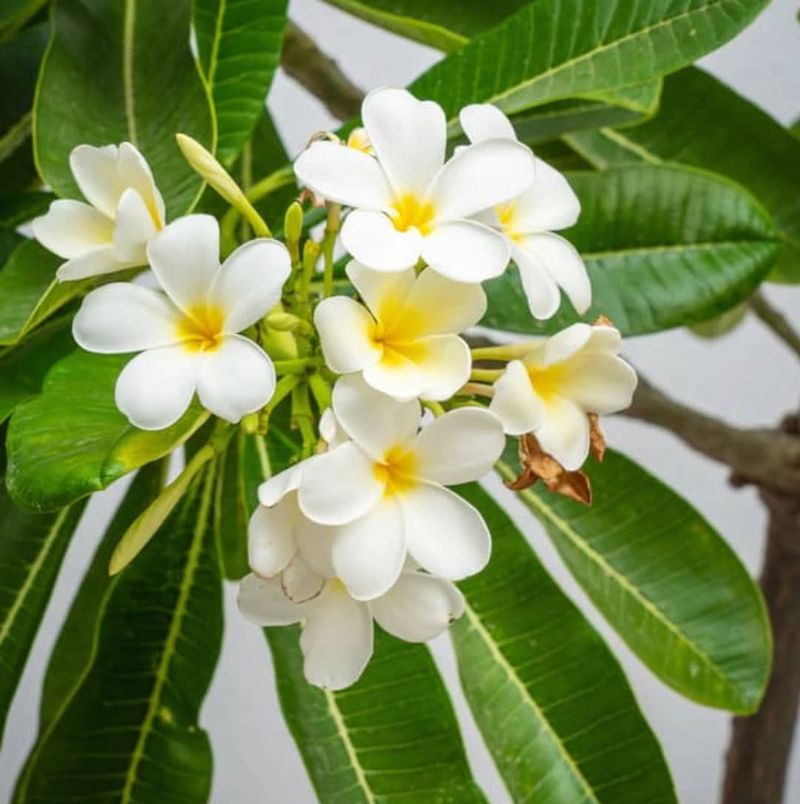
Plumeria in Pennsylvania is a bold gardening choice, and the people who grow it are usually pretty proud of their tropical showpiece.
These plants produce some of the most fragrant, exotic-looking flowers you will ever find outside of a tropical climate. But come thunderstorm season, that pride can quickly turn to panic.
Container-grown plumerias have a set of characteristics that make them especially vulnerable in a storm. Their root systems are shallow because they live in pots.
Their upper growth is thick, heavy, and somewhat top-heavy by nature. Their branches are also brittle and can snap under wind pressure or if the pot tips over and the plant hits the ground.
Penn State guidance recommends moving container plants beneath an overhang or against the side of the house before storms arrive. This is smart advice for plumeria.
Tucking the pot close to a wall blocks wind from most directions and eliminates the risk of the container tipping over on an exposed patio or deck.
If the pot is too heavy to move easily, consider placing it on a wheeled plant caddy at the start of the season. That small investment makes it simple to roll the plant to safety whenever a storm warning pops up on your phone.
Keep the caddy locked in place on calm days using a simple wheel brake. Bringing the plumeria indoors is also an option for smaller plants. A garage, sunroom, or enclosed porch works perfectly.
Even one bad storm can break a branch that took two or three seasons to develop, so moving it early is always worth the effort.