Why Mourning Doves Keep Nesting In Your Minnesota Yard
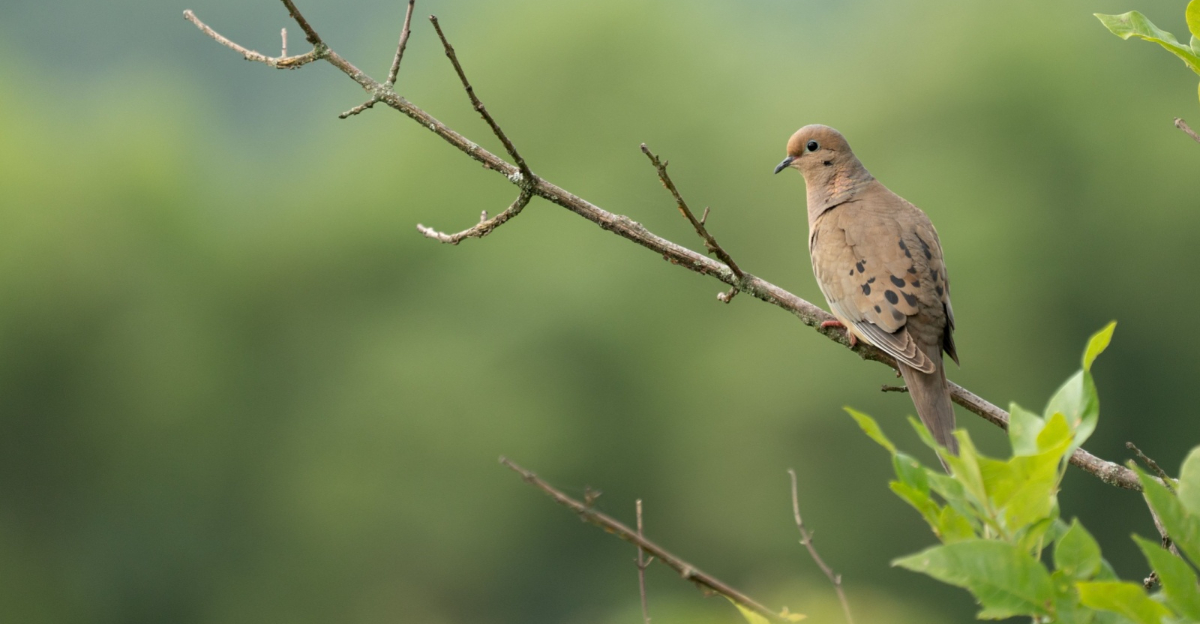
Doves keep choosing your fence line for reasons few people know. Minnesota winters test every bird, yet these doves never leave you. Your pine tree gives them cover no other spot provides.
Safety draws them closer to you than instinct ever could. Predators rarely reach nests hidden this close to your home. Food near your feeder seals their loyalty completely.
Minnesota’s mix of open yards and quiet trees suits you perfectly. Few properties balance shelter and food as well as yours. Their presence actually protects you from larger predators nearby.
Consistency matters more to doves than anything else about you. Returning here isn’t sentiment; it’s a calculated choice about you. Weather, structure, and food all align perfectly at your address.
Nothing about this pattern happens near you by accident. Curiosity about why they picked you deserves a real answer. You’re about to learn exactly why these doves refuse to leave.
1. Offering Dense Evergreen Cover For Shelter
Thick branches overhead feel like a warm blanket to mourning doves. Evergreen trees like spruce, pine, and arborvitae hold their needles all year long.
That constant coverage gives doves a reliable hiding spot no matter the season. When cold winds sweep across the Midwest, these birds need windbreaks that actually work.
Sparse deciduous trees drop their leaves in fall, leaving nests completely exposed. Evergreens stay full and protective even during the harshest winter weeks.
Mourning doves are not picky architects, but they are picky about safety. A nest tucked inside a dense spruce feels far more secure than one balanced on a bare branch.
Backyard evergreens also muffle sound and reduce light exposure. Doves prefer calm, shaded spots where they can incubate eggs without constant disturbance.
Planting a row of arborvitae along your fence line does double duty. It creates a privacy screen for you and a nesting haven for local wildlife.
Spruce trees with wide, layered branches are especially popular with ground-feeding birds. The horizontal structure supports a nest while the canopy hides it from above.
If your yard already has mature evergreens, you have likely created an appealing shelter for nesting birds, and the doves have clearly taken advantage of it.
2. Providing Sturdy Horizontal Branches For Nesting
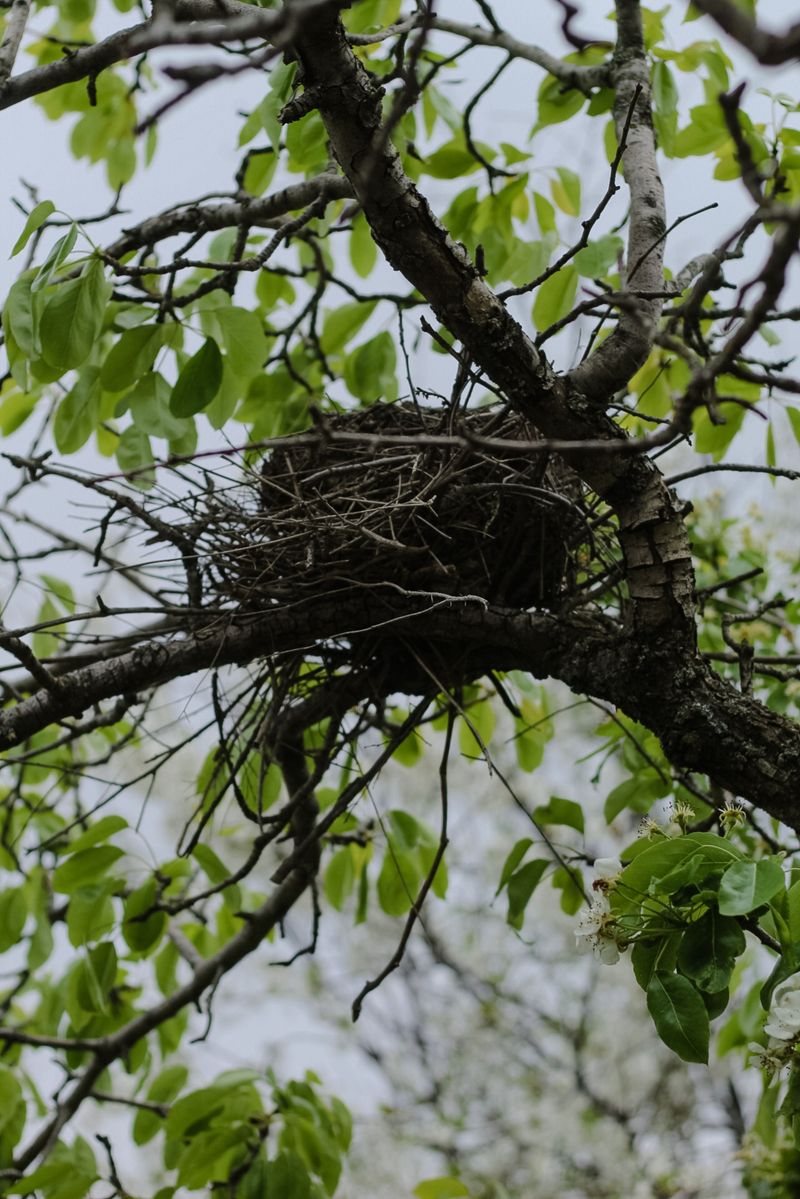
Mourning doves build some of the simplest nests in the bird world. A flat platform of loosely crossed twigs is really all they need.
That simplicity means branch shape matters more than tree species. Wide, sturdy, horizontal limbs give them the perfect foundation for their no-frills home.
Trees like oaks, maples, and elms often grow with broad lateral branches. These horizontal arms are exactly what a nesting dove is shopping for.
Unlike cup-shaped songbird nests, dove nests sit flat and open on top. A horizontal branch provides the level surface that holds that structure together.
Vertical or sharply angled branches simply do not work for their style. The eggs would slide off, and this instinctive behavior helps eggs stay in place.
Your Minnesota Garden Changes Every Week. Your Plan Should Too.
Gardening in Minnesota changes quickly throughout the season. Every Friday you’ll receive a simple weekly plan showing exactly what to plant, prune, fertilize, harvest, and protect so you never miss the right timing.
Mourning doves nesting in your Minnesota yard often return to the same branch repeatedly. Once a spot proves safe, they come back season after season.
You might spot a nest that looks almost comically sparse. A few crossed sticks, maybe some grass, and two white eggs sitting right in the open.
Do not be fooled by that minimalist design. That casual-looking structure works well enough to raise multiple broods per year without issue.
If you want to encourage nesting, avoid heavy pruning of lateral branches in spring. Leaving those wide arms intact gives doves exactly the platform they are searching for every nesting season.
3. Featuring Nearby Open Ground For Feeding
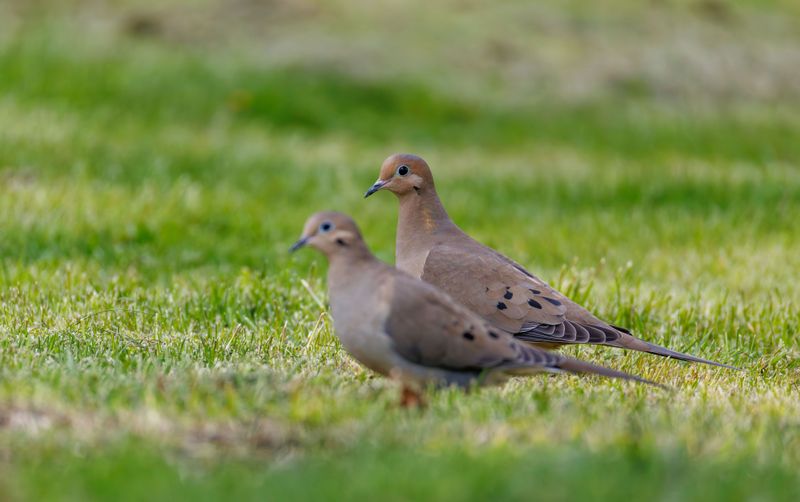
Mourning doves spend most of their day on the ground, not in the trees. They walk slowly across open patches of soil, picking up fallen seeds one by one.
Your yard likely has exactly the kind of terrain they prefer. Thin grass, bare patches near garden beds, and gravel paths are all dove-approved dining spots.
Unlike many birds, doves do not scratch or dig for food. They need seeds that are already sitting on top of the soil, easy to spot and grab.
Open ground makes it easier for them to scan for danger while eating. A bird that can see in every direction feels safe enough to stick around.
Dense ground cover like thick mulch or heavy sod makes foraging harder. Doves gravitate toward areas where movement is easy and seeds are visible.
Lawns with a mix of short grass and bare spots are a reliable feeding area. Fallen seeds from nearby plants and feeders collect in these open zones naturally.
Mourning doves nesting nearby means they also feed nearby. The shorter the commute between nest and food, the more attractive your yard becomes overall.
Mowing your lawn at a moderate height helps keep the ground accessible. Not too short to remove all cover, but not so tall that seeds get buried in grass blades.
Open feeding ground is one of the biggest reasons doves keep returning. Give them a clear runway, and they will take full advantage of it.
4. Supplying Consistent Access To Fresh Water
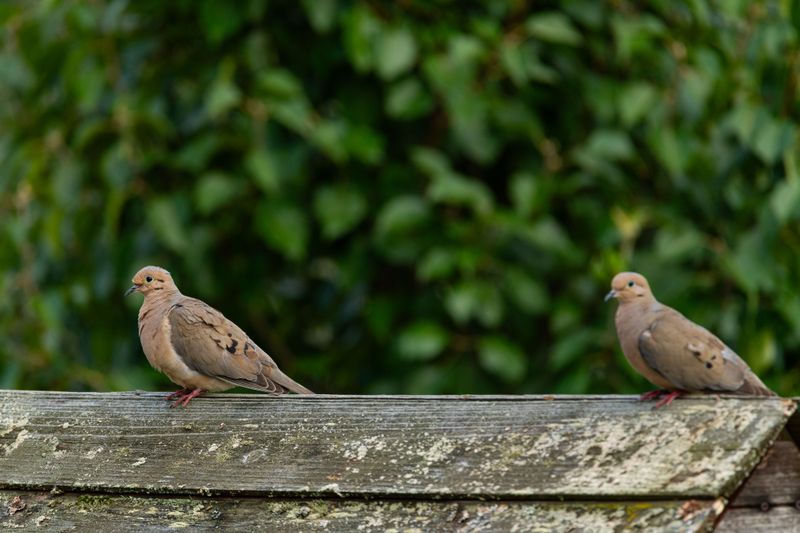
Water is not optional for mourning doves. Like all birds, they need a reliable source to drink from and occasionally bathe in.
A simple birdbath can be one of the biggest reasons doves choose your yard over your neighbor’s. Consistent water availability signals that your space is worth settling into.
Doves tend to drink deeply and all at once, unlike many smaller birds that sip and flutter. They submerge their bill and gulp water in long, steady draws.
That drinking style means they prefer shallow, wide birdbaths over deep or narrow containers. A basin about two inches deep generally works well for their comfort.
Placement matters just as much as depth. Doves feel safer drinking in open spots where they can spot threats from any direction while still at the water source.
Keeping the birdbath clean encourages repeat visits. Dirty or stagnant water sends doves searching elsewhere within just a few days.
In Minnesota winters, a heated birdbath becomes a helpful addition. Open water during frozen months attracts doves that might otherwise struggle to find hydration.
Mourning doves nesting in your yard will visit a birdbath multiple times daily. The nest is never far from the water source they trust most.
Adding a dripper or small fountain creates gentle movement in the water. That ripple catches a dove’s eye from a surprising distance across the yard.
5. Growing Shrubs That Shield Nests From Wind

Wind is one of the most overlooked threats to a dove nest. A loosely built twig platform can fall apart fast when gusts roll through.
Shrubs act as natural windbreaks, slowing the air before it reaches a fragile nest. Dense plantings like lilac, viburnum, and forsythia are especially effective shields.
Mourning doves often tuck nests into the inner branches of thick shrubs. The outer foliage takes the wind while the nest stays calm and protected inside.
Lilac bushes are a particularly popular choice in Midwest yards. Their dense branch structure and spring leaf coverage arrive right when nesting season begins.
A shrub does not need to be enormous to be helpful. Even a medium-sized planting can cut wind speed significantly for a nest tucked within its center.
Shrubs also provide visual cover from above. Hawks and other aerial threats have a much harder time spotting a nest hidden beneath a canopy of leaves.
Planting shrubs in clusters creates layered protection. One shrub offers some defense, but a grouping of three or four creates a well-protected nesting area.
Evergreen shrubs like boxwood or juniper add year-round value. They protect nests even in early spring before deciduous shrubs have leafed out fully.
If you have bare fence lines or open garden edges, adding shrubs there pays off quickly. Mourning doves nesting in your yard will find those windbreaks and use them without hesitation every single time.
6. Managing Common Predators
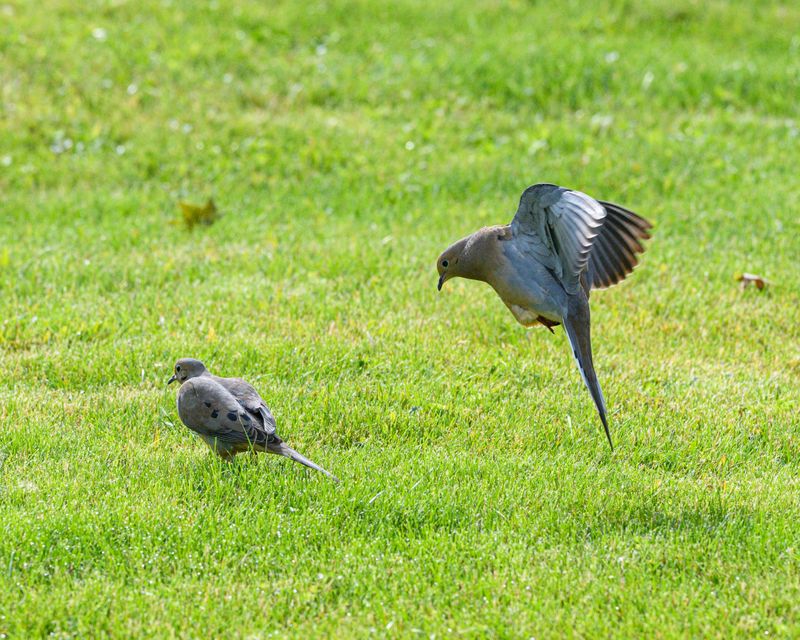
A calm yard is a dove yard, plain and simple. These birds are not fighters, and they will not stay where danger feels constant.
Outdoor cats are the number one threat that sends mourning doves packing. Even one roaming cat can make an entire yard feel unsafe within days.
Dogs that bark aggressively or chase birds also disrupt nesting behavior. Doves need to feel confident enough to sit on a nest for hours at a stretch.
Yards where pets are managed thoughtfully tend to attract more nesting birds overall. A fenced yard with a calm indoor-outdoor dog is very different from a yard with a free-roaming hunter.
Squirrels and crows can raid dove nests if given easy access. Nests placed in shrubs or well-covered branches are harder for these opportunists to reach.
Hawks are a natural part of the ecosystem, and doves have evolved behaviors to avoid them. The real problem is ground-level predators that destroy the sense of safety entirely.
Mourning doves nesting in your Minnesota yard is a sign that your space feels secure. They would not set up a home somewhere that felt consistently threatening.
Removing brush piles where cats like to hide helps a lot. Open sightlines near the nest give doves enough warning time to respond to any approaching threat.
A predator-reduced yard does not require a fortress. Small, thoughtful changes in how you manage your outdoor space make a surprisingly big difference for nesting success.
7. Supplying Loose Nesting Material Within Easy Reach
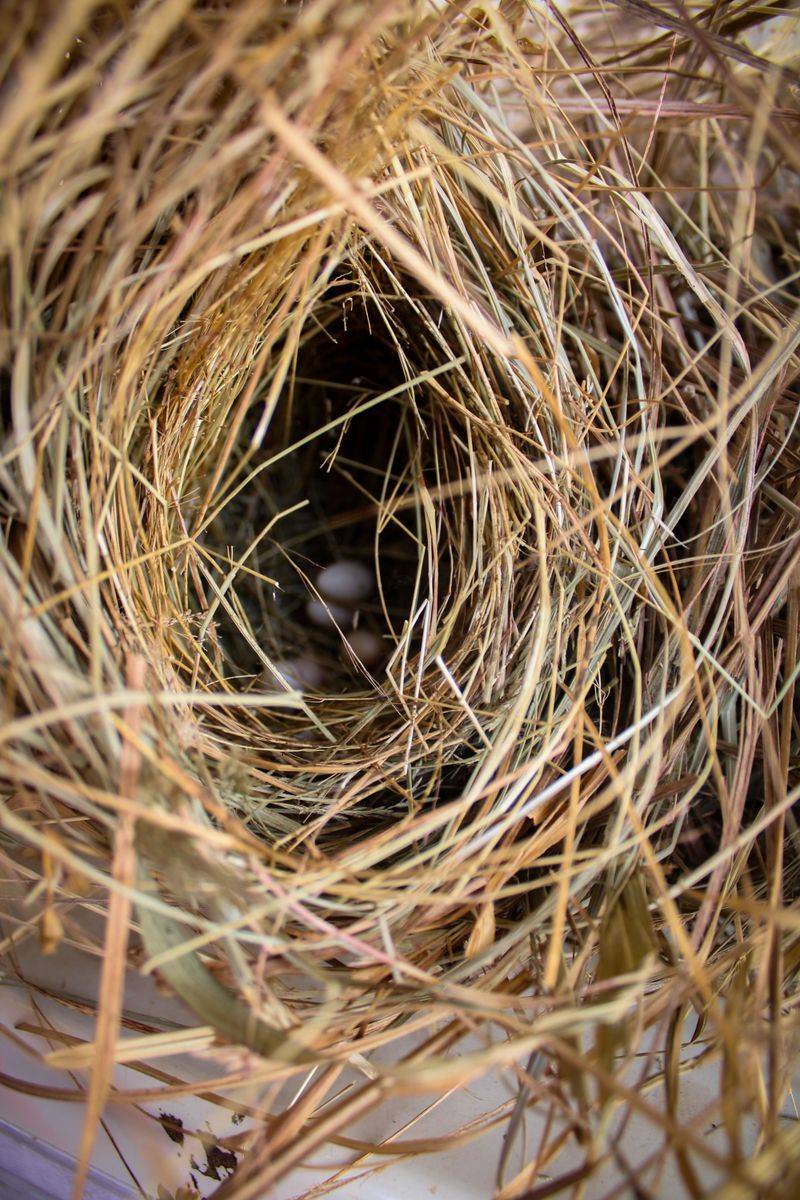
Mourning doves do not carry material from far away. They gather twigs, dry grass, and pine needles from whatever sits closest to the chosen nest site.
That habit means proximity matters more than variety. A yard scattered with fallen twigs and dry grass clippings gives doves everything they need within a short flight.
Unlike species that weave intricate nests, doves simply pile loose material into a rough platform. Speed matters to them, and nearby debris cuts construction time significantly.
Leaving small brush piles or unraked corners of your yard actually works in your favor. What looks like yard waste to you looks like a building supply store to a nesting dove.
Pine needles are especially valued for their flexibility and lightweight structure. A yard with conifers nearby often provides this material without any extra effort from you.
Dry grass clippings left after mowing serve a similar purpose. Doves will collect these blades directly from your lawn during peak nesting weeks in spring and early summer.
Avoid bagging every clipping or clearing every twig immediately. A slightly relaxed approach to yard cleanup can directly support faster, easier nest construction nearby.
Mourning doves nesting in your Minnesota yard often build a new platform in under an hour once material is available. Proximity to loose debris speeds up the entire process considerably.
If you want to help without sacrificing tidiness, leave one small untouched corner. That single spot could become the exact resource a dove needs during a critical nesting window.
8. Providing Grit And Sunlit Perches For Digestion And Warmth
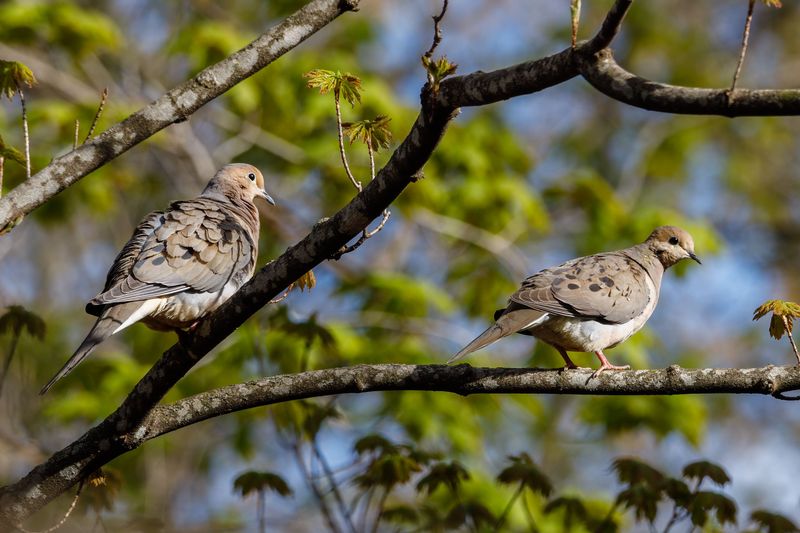
Mourning doves cannot digest seeds the way many animals do. They lack teeth, so they rely on small stones and sand held inside their gizzard to grind food down.
This makes grit just as essential as the seeds themselves. Without access to fine gravel or coarse sand, digestion becomes inefficient and nutrition declines significantly over time.
Driveways, gravel paths, and exposed sandy patches all serve as grit stations for visiting doves. A yard with at least one loose, granular surface gives them exactly what their digestive system requires.
Doves will visit these spots deliberately, picking up small particles before flying back toward the nest or feeding area. This behavior happens almost daily during active feeding periods.
Sunlit perches matter for a different reason entirely. Doves act sluggish in cool air, often choosing exposed branches to absorb morning warmth before becoming active.
A bare limb catching early sunlight becomes a favorite morning stop. Doves will sit motionless there, feathers fluffed, soaking in heat before starting their daily routine.
Minnesota mornings can be sharp even in late spring. That early warmth matters more here than in milder climates, making sunny perches a genuine seasonal advantage.
Trees with open, upper branches positioned toward the east tend to attract this behavior first. Doves seem to favor consistency, returning to the same perch morning after morning.
Mourning doves nesting in your Minnesota yard benefit from both resources working together. Grit supports digestion, while sunlit perches support the energy needed for nesting, feeding, and eventually raising young successfully.