The North Carolina Native Shrubs Worth Hunting Down Because Gardeners Say They’re The Best In Their Yard
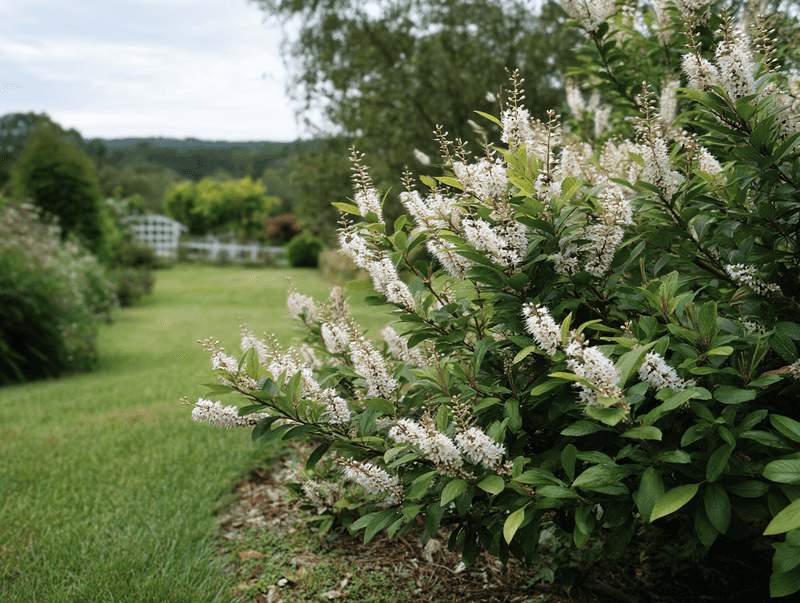
You step out onto the back porch on a sticky July evening, iced tea sweating in your hand, and the corner of the yard looks tired again. The store-bought azaleas are wilting, the Japanese beetles found the roses, and you are tired of babysitting plants that do not want to live here. Here is the good news. North Carolina grew up alongside a whole cast of native shrubs that shrug off our muggy summers, surprise cold snaps, and red clay without complaint, and they feed birds and pollinators while they do it.
These are the ones seasoned NC gardeners keep pointing their neighbors toward.
1. Oakleaf Hydrangea
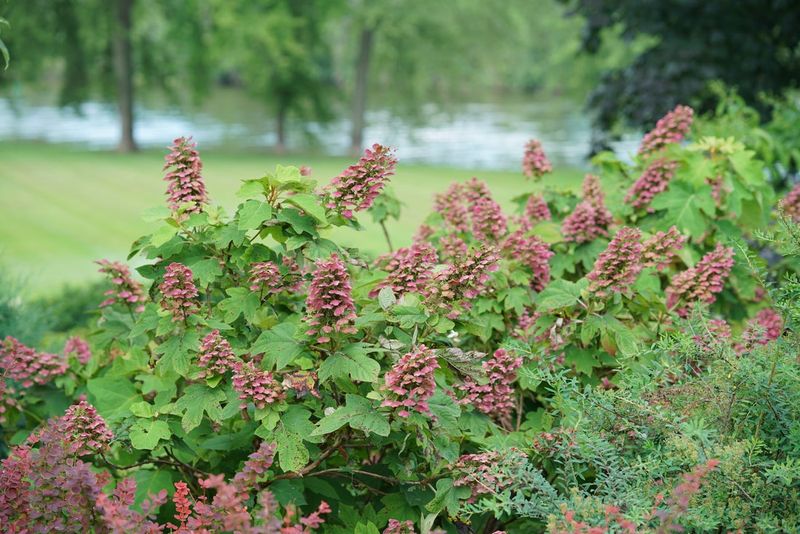
Picture the one shrub that keeps showing off after the party is over. Oakleaf hydrangea (Hydrangea quercifolia) does exactly that, holding cone-shaped white blooms in June that slowly fade to dusty pink, then handing you burgundy fall leaves when the dogwoods start turning.
Most folks assume all hydrangeas beg for water and shade. This native is the exception. It tolerates the Piedmont red clay that drowns other plants, and once it settles in after the first year, it laughs off a dry August spell that would flatten the big blue mophead types.
Give it morning sun and afternoon shade, space plants about 6 feet apart, and plant in fall so the roots grip before summer heat. Skip heavy pruning, because it blooms on old wood, meaning the stems it grew last year. Cut those off and you cut off next summer’s show.
NC State Extension lists it among the toughest hydrangeas for our region, and gardeners genuinely notice fewer pest problems than with imported varieties. It grows 6 to 8 feet tall and just as wide, so it earns its spot at the back of a border. The payoff comes in October, when that peeling cinnamon-colored bark carries the whole corner through winter.
2. Virginia Sweetspire
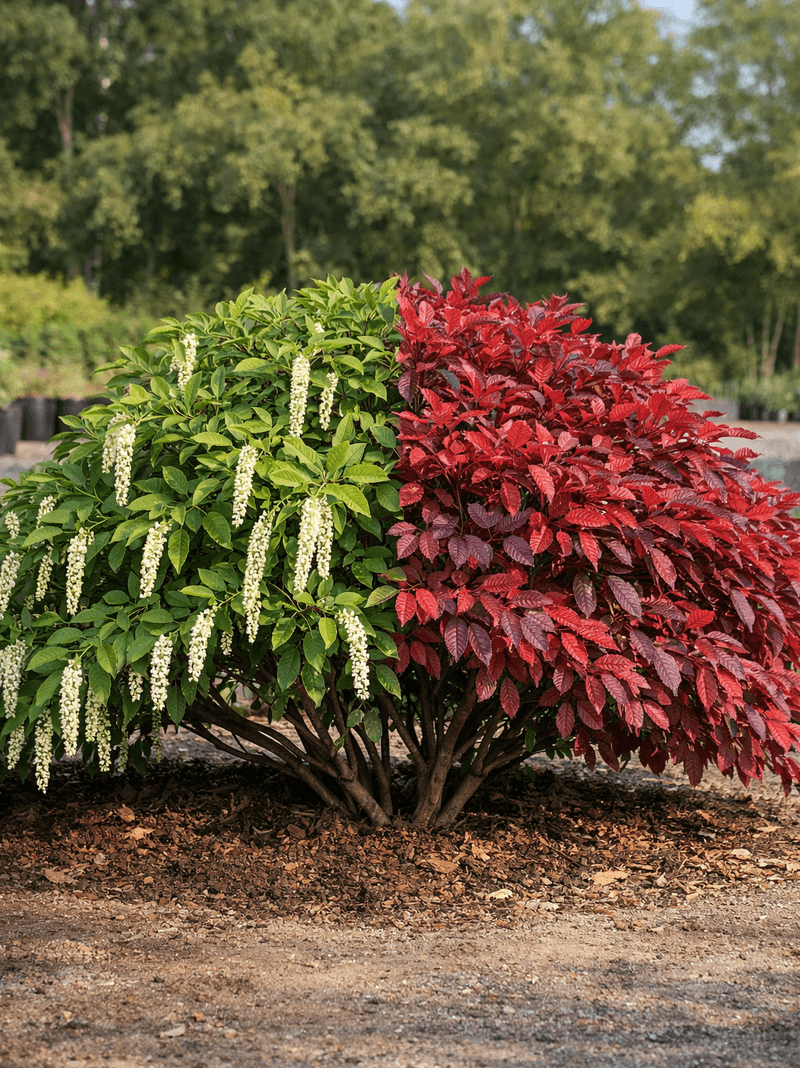
There is a shrub that solves the soggy spot nobody else will touch. Virginia sweetspire (Itea virginica) actually prefers the wet clay low corner where water pools after those afternoon thunderstorms roll through the Piedmont.
In late spring it drips with fragrant white flower spikes, each one about 4 inches long, and the bees find them fast. But the real reason gardeners hunt it down is the fall color, a smoky red and orange that hangs on well into November, later than almost anything else in the yard.
Plant it 4 to 5 feet apart in sun or part shade, and do not fuss over drainage. Sweetspire handles standing water for short stretches, which makes it a quiet hero along a downspout or the edge of a rain garden.
It suckers gently and forms a soft colony over a few years, so it holds a slope and cuts down on erosion after a hard rain. Cut a few of the oldest stems to the ground each late winter if you want to keep it tidy. Otherwise, let it do its thing. It asks for almost nothing and gives back a long, glowing show.
Your North Carolina Garden Changes Every Week. Your Plan Should Too.
Gardening in North Carolina changes quickly throughout the season. Every Friday you’ll receive a simple weekly plan showing exactly what to plant, prune, fertilize, harvest, and protect so you never miss the right timing.
3. American Beautyberry
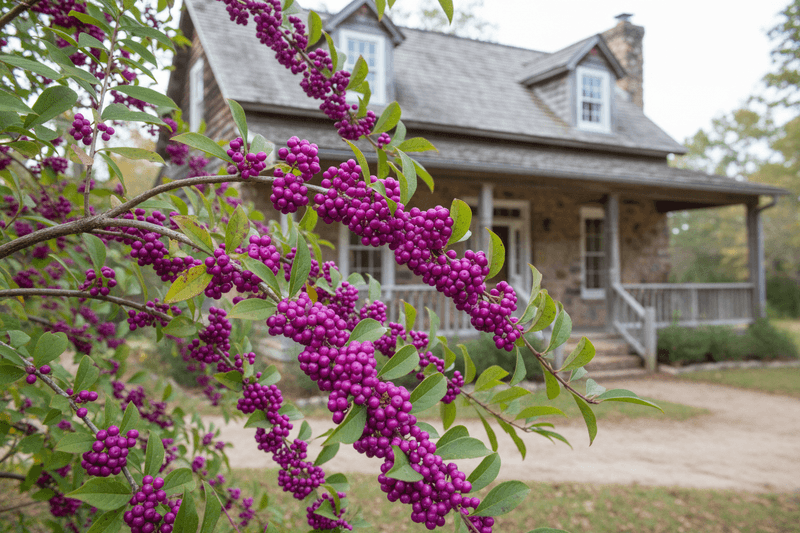
Nothing else in the fall garden stops traffic like a beautyberry loaded with fruit. American beautyberry (Callicarpa americana) lines its arching stems with clusters of berries in a purple so electric it looks fake, showing up right as the mockingbirds and cardinals get hungry in September and October.
Coastal Plain gardeners especially love it because it thrives in that sandy soil where fussier shrubs sulk. It handles part shade under pine trees, and it shrugs off drought once established, which matters when the water bill climbs in a dry stretch.
Set plants about 4 feet apart and cut the whole thing back to a foot tall in late winter. Sounds harsh, but it blooms and fruits on new wood, so a hard cutback means a bushier plant packed with more of those berries.
Here is a bit folks love. The crushed leaves have long been rubbed on skin as an old country bug remedy, and researchers have studied compounds in them that may help repel mosquitoes. Not a magic solution, but a fun thread of NC porch history. Between the birds it feeds and the show it puts on, beautyberry earns its keep by fall.
4. Native Azalea (Piedmont and Flame)
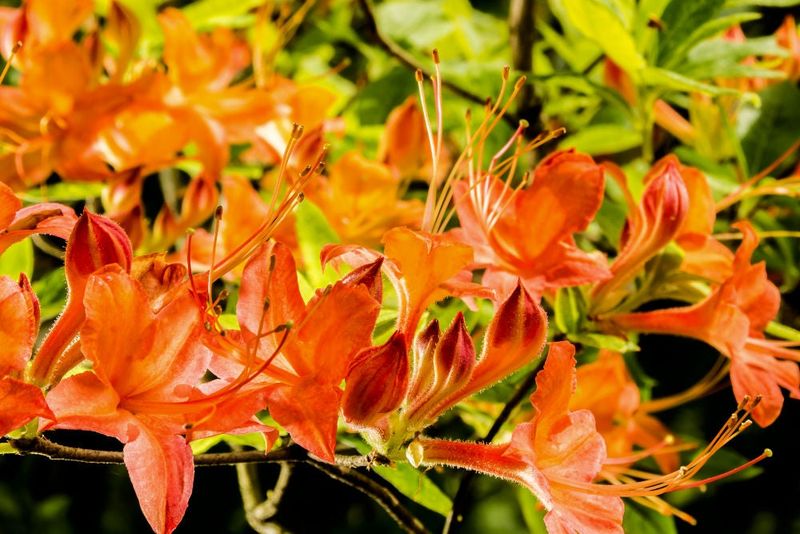
Forget the stiff evergreen azaleas at the big box store for a minute. The wild native azaleas that grow in our mountains and Piedmont woods are a different animal, and once you smell one on a warm April evening you understand the fuss.
Piedmont azalea (Rhododendron canescens) and flame azalea (Rhododendron calendulaceum) drop their leaves each fall, which throws people off. But that is the trade for airy, honeysuckle-scented blooms in pink, white, orange, and gold that pull in early butterflies and native bees.
Flame azalea handles the cooler mountain zones down to 6a, while Piedmont azalea takes the heat across 7b and 8a just fine. Give them dappled shade at a woodland edge, acidic soil, and a 2 to 3 inch mulch layer to keep roots cool through July.
Space them 4 to 6 feet apart and water deeply the first two summers, since their roots sit shallow. After that they settle into the rhythm of the seasons. The reward is a fragrant, glowing pocket of color that feels like the woods walked into your yard.
5. Inkberry Holly
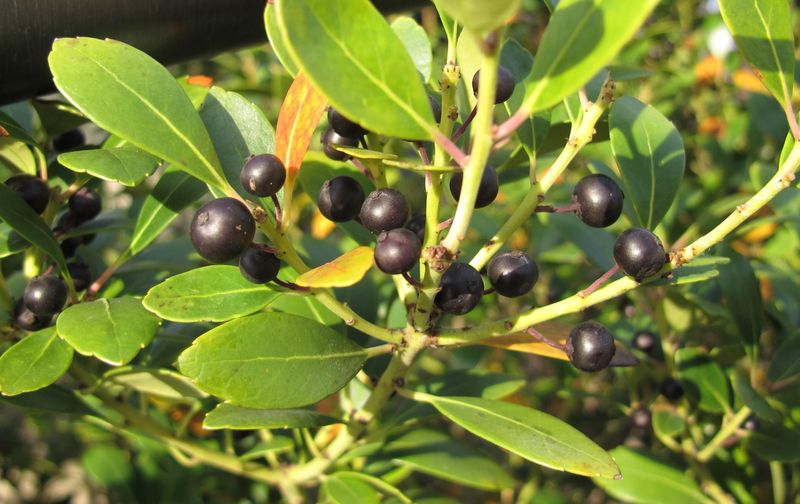
Say you want that neat evergreen boxwood look without the disease headaches that have wrecked boxwoods across the state. Inkberry holly (Ilex glabra) is the swap experienced NC gardeners reach for.
It holds glossy green leaves all winter, takes a shearing like a champ, and shrugs off the boxwood blight and root rot that have gardeners pulling out beds full of dead shrubs. A hedge of inkberry looks tidy year-round and does not turn brown in a surprise February cold snap.
Plant compact varieties about 3 feet apart for a low hedge, in full sun to part shade. It prefers moist, acidic soil, so it fits the Piedmont and Coastal Plain nicely. Give the first summer steady water while roots establish.
The female plants carry small black berries that birds pick through in winter, and the tiny spring flowers feed bees when little else is blooming. Trim once in late spring to shape it. That is genuinely most of the work. You get the formal, clipped look you wanted, minus the constant worry that the whole hedge is about to fail.
6. Buttonbush
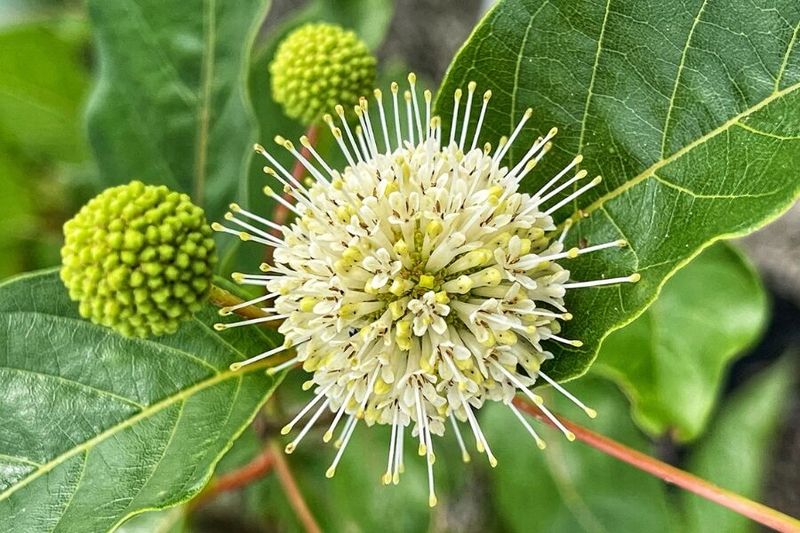
Down at the pond edge or the wet ditch, where you figured nothing pretty could grow, buttonbush (Cephalanthus occidentalis) turns the swamp into a pollinator party. It sends up perfectly round white flower balls in summer, each about an inch across, that look like little fireworks frozen mid-burst.
Butterflies, bees, and even hummingbirds work those blooms hard through the muggy weeks of July. Later, ducks and shorebirds eat the seed heads, which is why it shows up so often in Coastal Plain and Sandhills wetlands.
Water is the whole point here. Buttonbush wants wet feet and will grow in standing water up to a few inches deep, making it the answer for that boggy corner that stays soggy after every storm. Give it full sun for the best flower count.
Space plants 5 to 6 feet apart, since it can reach 6 to 8 feet if left alone. Cut it back hard every couple of winters to keep it dense. It is one of the few native shrubs that turns a drainage problem into the best-visited spot in the yard.
7. Sweetshrub (Carolina Allspice)
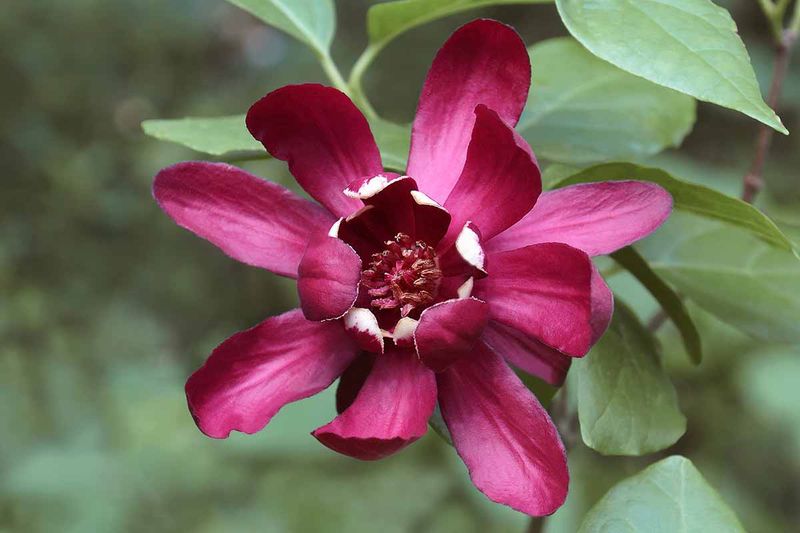
Walk past this one on a warm morning and your nose will stop you before your eyes do. Sweetshrub (Calycanthus floridus), also called Carolina allspice, opens deep maroon flowers in spring that smell like a mix of strawberry, banana, and pineapple depending on the plant.
Old-timers used to tuck the crushed blooms in a handkerchief or a dresser drawer, and the name Carolina allspice comes straight from that spicy fragrance. It carries real NC heritage, growing wild in our woodlands long before anyone planted it on purpose.
It is easygoing about light, taking full sun in the mountains and appreciating afternoon shade in the hot Piedmont. It handles clay, tolerates a range of moisture, and reaches 6 to 9 feet tall over time.
Plant it near a porch, a walkway, or an open window, 5 to 6 feet apart, so you actually catch the scent as you pass. Because fragrance varies plant to plant, buy one in bloom if you can, or sniff before you buy. That way you go home with a keeper instead of a dud.
8. Winterberry Holly
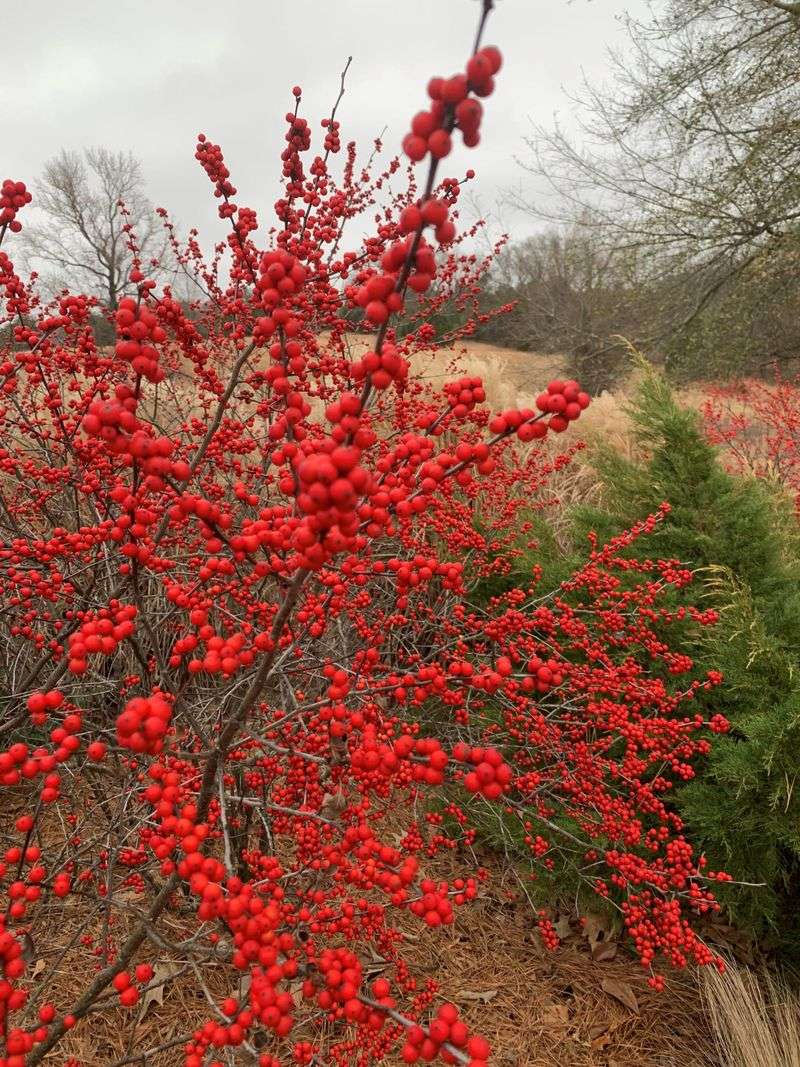
Come December, when the yard has gone gray and bare, one native shrub lights up like a string of red bulbs. Winterberry holly (Ilex verticillata) drops its leaves in fall and leaves behind branches packed with brilliant red berries that hold on through the coldest weeks.
Those berries feed robins, bluebirds, and cedar waxwings deep into winter when food gets scarce, so it does double duty as decoration and bird buffet. Cut a few branches for a holiday arrangement and the birds will not miss the rest.
Here is the catch that trips people up. You need a male plant nearby to pollinate the females, or you get zero berries. One male can cover several females, so plant them within about 40 feet of each other and space plants roughly 5 feet apart.
It loves wet, acidic soil and full sun, and it tolerates the standing water that follows a hurricane-season downpour. Plant in fall across the Piedmont and Coastal Plain. The red-on-snow moment during a rare NC cold snap is the whole reason gardeners chase this one down.
9. Fothergilla
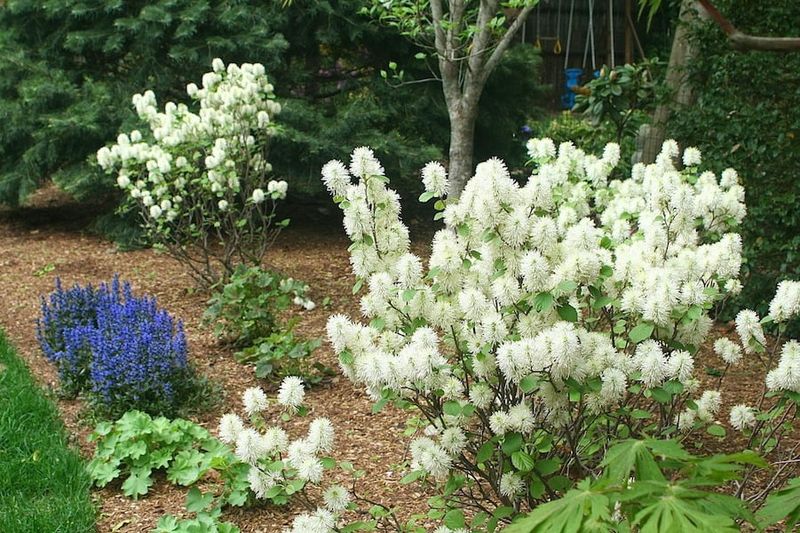
Some shrubs give you one good season. Fothergilla (Fothergilla gardenii) gives you two knockouts and never gets too big for a small yard. In April it puts out fuzzy white bottlebrush blooms with a light honey scent, and in fall it flames into a mix of yellow, orange, and red all on the same bush.
The dwarf types stay around 2 to 3 feet tall, which makes them a smart pick for a foundation bed or a spot under a window where a big shrub would swallow the house. No constant pruning, no crowding the walkway.
Native to the Southeast, it handles Piedmont clay and Coastal Plain sand if the soil stays acidic and does not bake bone-dry. Give it full sun to light shade, more sun meaning better fall color, and space dwarf plants about 3 feet apart.
Water it through the first summer and mulch to hold moisture. After that it is remarkably low fuss. Early bees work those spring blooms, so it feeds pollinators when the yard is just waking up. For a compact spot that needs to earn its keep twice a year, few natives beat it.
10. Yaupon Holly
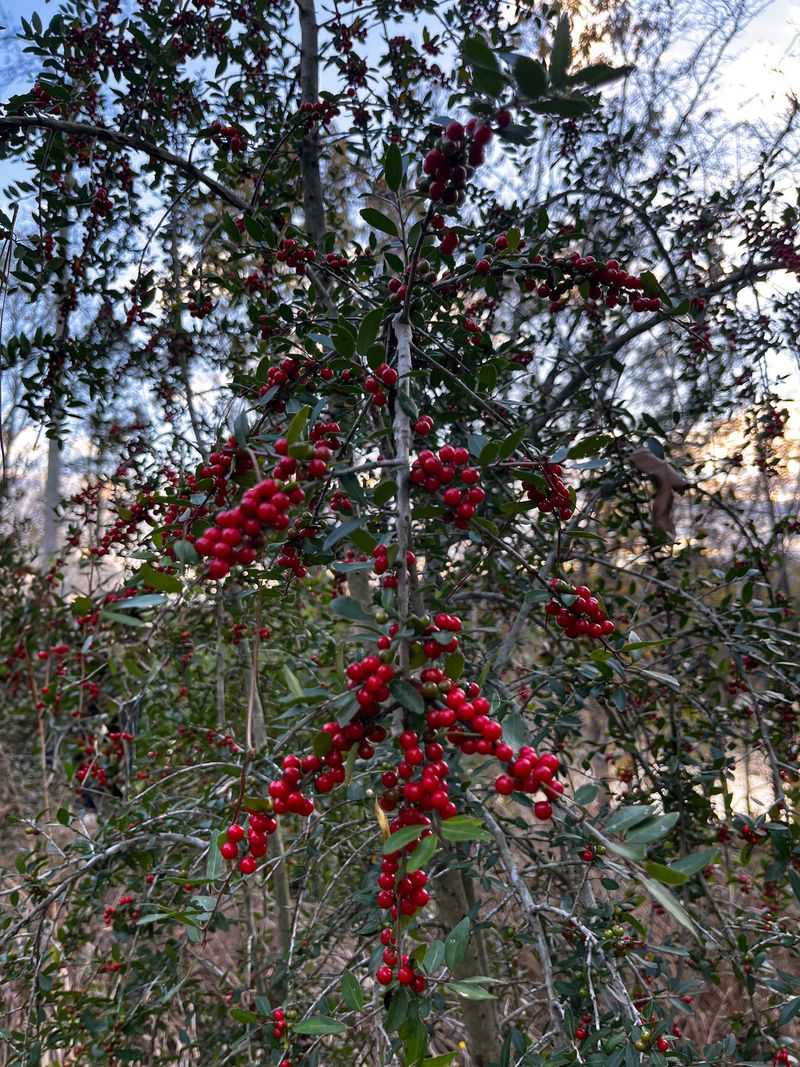
Native to the coast and the only plant in North America that makes real caffeine, yaupon holly (Ilex vomitoria) carries a story most gardeners never hear. Coastal tribes brewed its leaves into a tea long before anyone shipped coffee across the ocean, and you can still make a mild green tea from dried yaupon leaves today.
Beyond the history, it is one tough evergreen. Yaupon takes salt spray, sandy soil, drought, and the wind off a coastal storm without blinking, which is why it holds up in yards from the Sandhills to the barrier islands.
Female plants carry translucent red berries that feed birds through winter, and the small varieties shear into neat hedges while the weeping types make a graceful specimen. Plant in full sun to part shade, space hedge plants about 3 feet apart, and it will handle whatever the coast throws at it.
Water the first season, then step back. It rarely needs anything after that. For a low-water, salt-proof evergreen with a genuine slice of Carolina history baked in, yaupon is hard to top.
11. Mountain Laurel
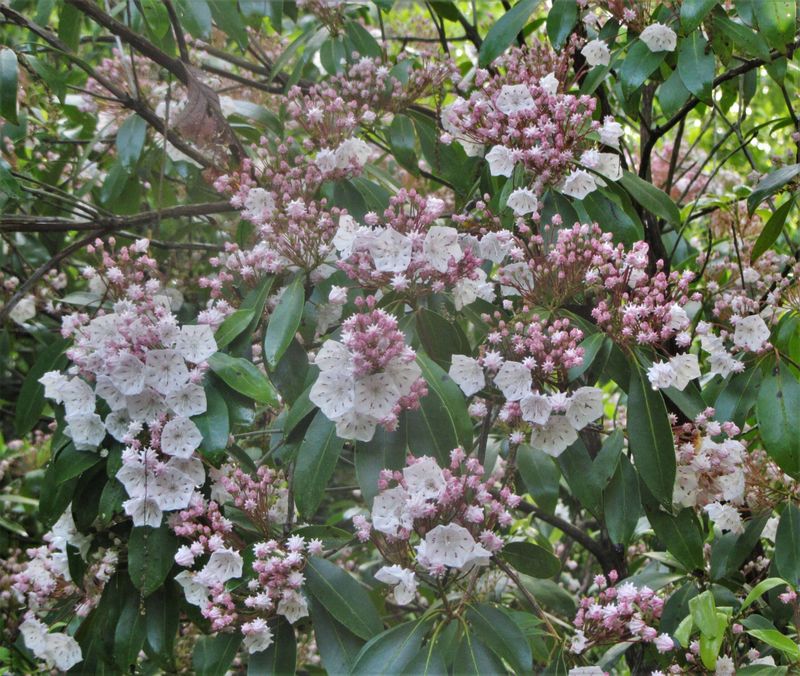
Up in the Blue Ridge, where the trails wind through cool shade, mountain laurel (Kalmia latifolia) puts on one of the prettiest wild shows in the state. In late spring it covers itself in cup-shaped pink and white flowers, each with tiny dark speckles inside, and whole hillsides light up along the parkway.
Bringing that mountain beauty into a yard takes a little care, and honesty helps here. Mountain laurel is happiest in the cooler zones from 6a to 7a and wants cool, moist, acidic, well-drained soil, so it struggles in soggy clay or a hot, dry Piedmont bed.
Give it the shady north side of the house or a spot under high tree cover, space plants 5 to 6 feet apart, and mulch deep to keep roots cool. Good drainage matters most, because it will rot in standing water.
Slow-growing but long-lived, it can reach 7 to 15 feet over many years and rewards patience with an evergreen structure that holds the garden together in winter. Note that the leaves are toxic if eaten, so place it away from where pets or kids graze. Get the site right and you get a piece of the mountains at your back door.
12. Elderberry
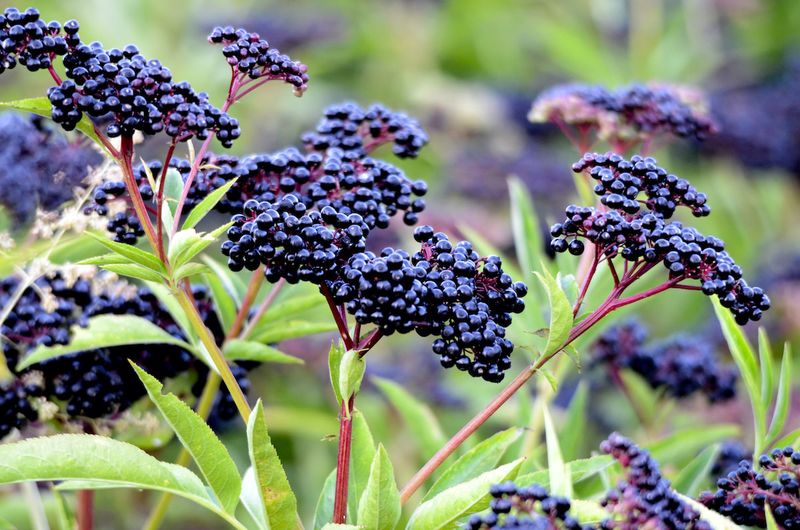
Ask any gardener who cans and cooks, and elderberry (Sambucus canadensis) is the native shrub they wish they had planted years ago. It throws out big flat clusters of creamy white flowers in early summer, then follows with dark purple berries in late summer that folks turn into syrup, jelly, and homemade wine.
The flowers hum with pollinators, and once the berries ripen the birds descend, so you will want to net a branch or two if you plan to harvest for yourself. It grows fast, sometimes 6 feet in a single good season, filling a wet corner in a hurry.
It likes moist soil and full sun, tolerating the damp spots that follow our storm-heavy months from June through November. Plant two different varieties within 50 feet for better fruit set, and space them 6 feet apart to give the canes room.
Cut older canes to the ground each winter to keep it productive and stop it from flopping. One important note, the raw berries and the rest of the plant need cooking before eating, so never nibble them straight off the bush. Done right, it is food, flowers, and a wildlife magnet all in one easy shrub, and it closes out the native lineup as maybe the most generous of the bunch.