What It Really Means When Sphinx Moths Start Visiting Your Michigan Garden At Dusk This Summer
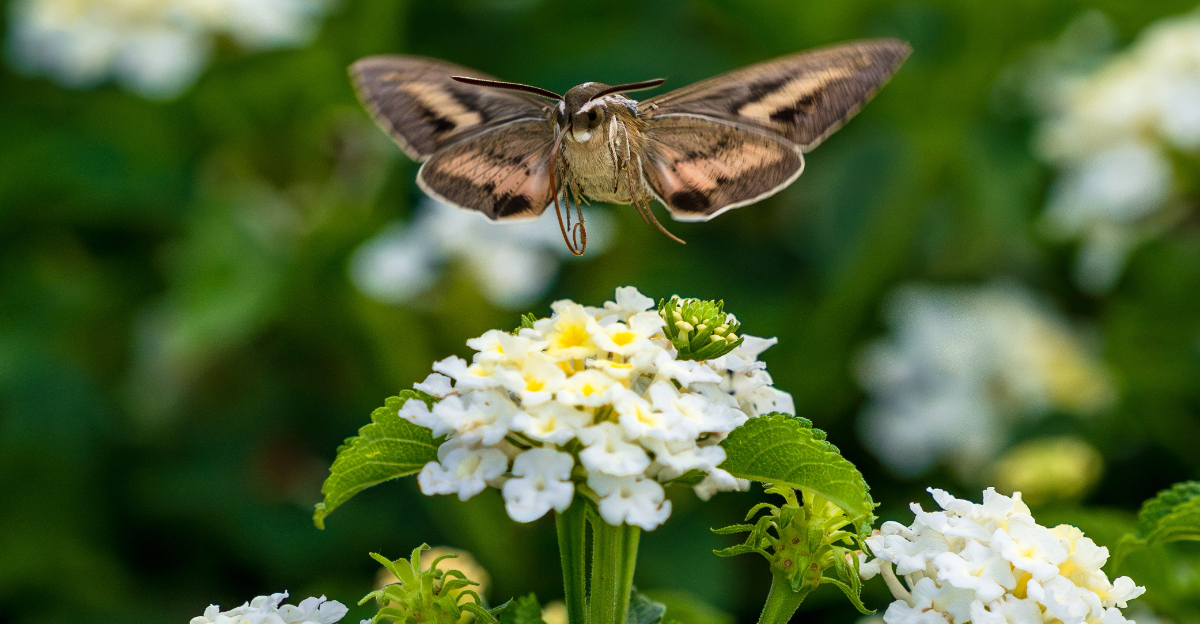
Sphinx moths appearing at dusk are usually a good sign that your Michigan garden is offering exactly what pollinators need this time of year.
These large, fast flying moths are drawn to fragrant, tubular flowers like petunias, moonflowers, and evening primrose.
Their visits often coincide with the exact hours when these flowers release the strongest scent to attract nighttime pollinators. Sphinx moths hover much like hummingbirds, using long, straw like mouthparts to reach deep into blooms for nectar.
Their presence signals a healthy, diverse garden that supports pollinators beyond just daytime bees and butterflies. Avoiding pesticide use in the evening helps protect these beneficial visitors during their most active hours.
Planting more night blooming flowers can encourage even more sphinx moth activity going forward. Spotting one at dusk is a small but meaningful sign your garden ecosystem is thriving.
1. Your Flowers Are Offering Nectar At The Right Hour
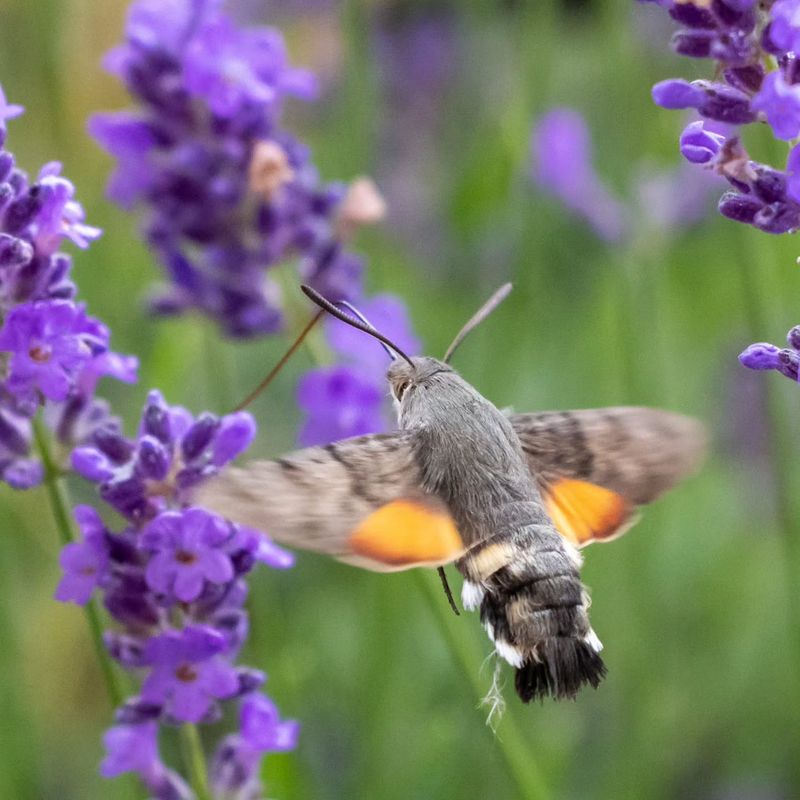
Picture this: the last bit of golden light fades from the sky, and suddenly something is hovering right at your flower bed. Sphinx moths are naturally wired to begin feeding as daylight fades, and that timing is not random at all.
Many species have evolved to become active during the transition from day to night, which is called crepuscular behavior.
When you spot one in your garden at dusk, it means your flowers are producing nectar right on schedule for these evening visitors. Watching a sphinx moth feed is genuinely impressive. It never lands on the flower the way a bee would.
Instead, it hovers in place and unrolls a long, tube-like mouthpart called a proboscis, reaching deep into the blossom to drink.
Some species have proboscises that stretch several inches long, allowing them to access flowers that other pollinators simply cannot reach.
Repeated visits to your garden during the same evening hours usually signal that your plants are dependably productive. The moths are returning because the reward is reliable.
It is also worth knowing that not every sphinx moth species waits for darkness. Some feed during the day, and others prefer later nighttime hours.
Paying attention to exactly when you spot them can actually help you narrow down which species is visiting. If you see them right at dusk, you are likely watching a crepuscular species doing exactly what it is built to do, right in your own backyard.
2. Pale Fragrant Flowers Are Guiding Them In
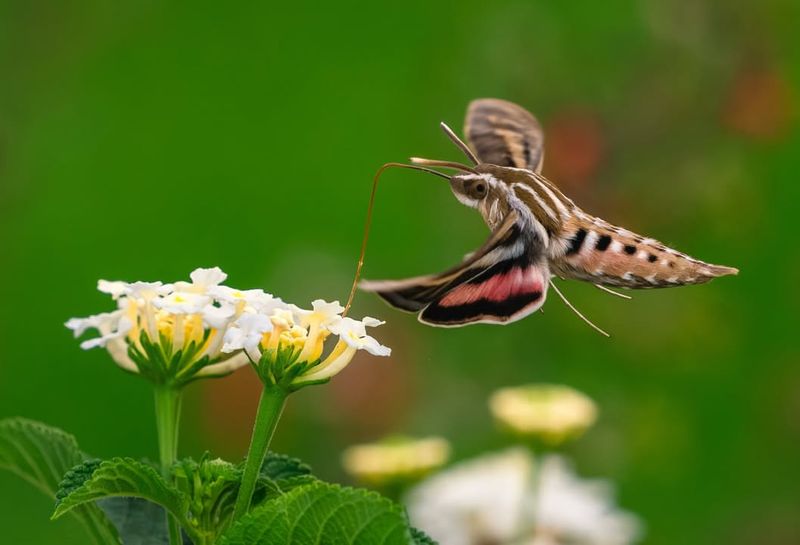
Not every flower gets equal attention from sphinx moths, and the ones that do share something interesting in common. White, cream, pale pink, and other softly colored blossoms stand out more easily in low evening light.
When the sun drops and visibility changes, lighter colors essentially act like natural landing beacons, helping moths find blooms from a distance.
That is why your bright red daytime flowers might go untouched while the white petunias nearby get all the action after sunset.
Fragrance plays an equally important role. Many moth-visited flowers release their strongest scent in the evening, creating a kind of invisible trail that guides visitors right to the source.
Your Michigan Garden Changes Every Week. Your Plan Should Too.
Gardening in Michigan changes quickly throughout the season. Every Friday you’ll receive a simple weekly plan showing exactly what to plant, prune, fertilize, harvest, and protect so you never miss the right timing.
Evening primrose, garden phlox, petunia, honeysuckle, and flowering tobacco are all examples that Michigan gardeners might already have growing, and each one can be genuinely attractive to sphinx moths when conditions are right.
The shape of the flower matters too. Deep, tubular blossoms are a perfect match for the long proboscis that sphinx moths carry.
Short, flat flowers simply do not offer the same access. That said, attraction is never guaranteed.
The specific moth species visiting your yard, the cultivar you planted, how fragrant the bloom actually is, and whether nectar is currently available all factor into whether a moth stops or moves on.
Gardeners who combine pale color, strong evening scent, and tube-shaped blossoms tend to get the most consistent sphinx moth activity, making those plant choices a smart move for evening garden interest.
3. Your Garden Has Become A Late Summer Nectar Station
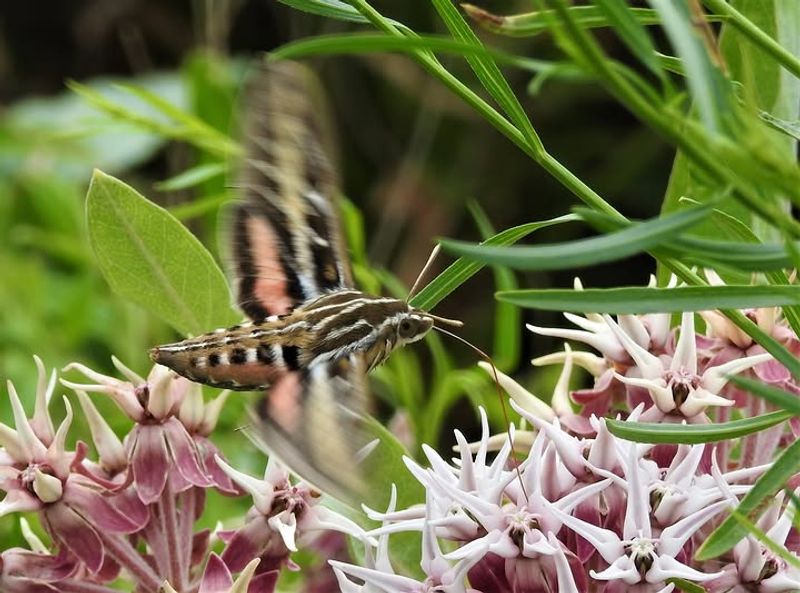
By the time late summer rolls around in Michigan, a lot of the big spring and early summer bloomers have already finished for the season. Bees and butterflies that were everywhere in June may seem harder to find.
But sphinx moths are still out there, actively searching for flowers that are still producing, and a garden with the right plants becomes genuinely valuable during this window.
When several plants bloom together rather than one isolated flower here or there, the feeding opportunities become much more reliable.
Moths can move from blossom to blossom without traveling far, which makes your garden a worthwhile stop rather than a quick flyby.
Sphinx moths are powerful fliers and can cover impressive distances in a single night while searching for nectar. The fact that they keep returning to your yard means you have built something worth coming back to.
A sudden jump in sphinx moth visits can mean several different things at once. New blooms may have just opened in your garden, or a stretch of warm weather has made flying more comfortable.
It could also reflect a wave of adult moths emerging locally or individuals moving through the region as part of their natural range.
Michigan summers can bring a mix of resident and traveling moth species, so a busy evening in your garden might be a sign that your space sits right in the middle of a productive flight corridor.
Either way, it is a genuinely exciting thing to notice and worth paying attention to over time.
4. They Are Pollinating Flowers After Day Visitors Leave
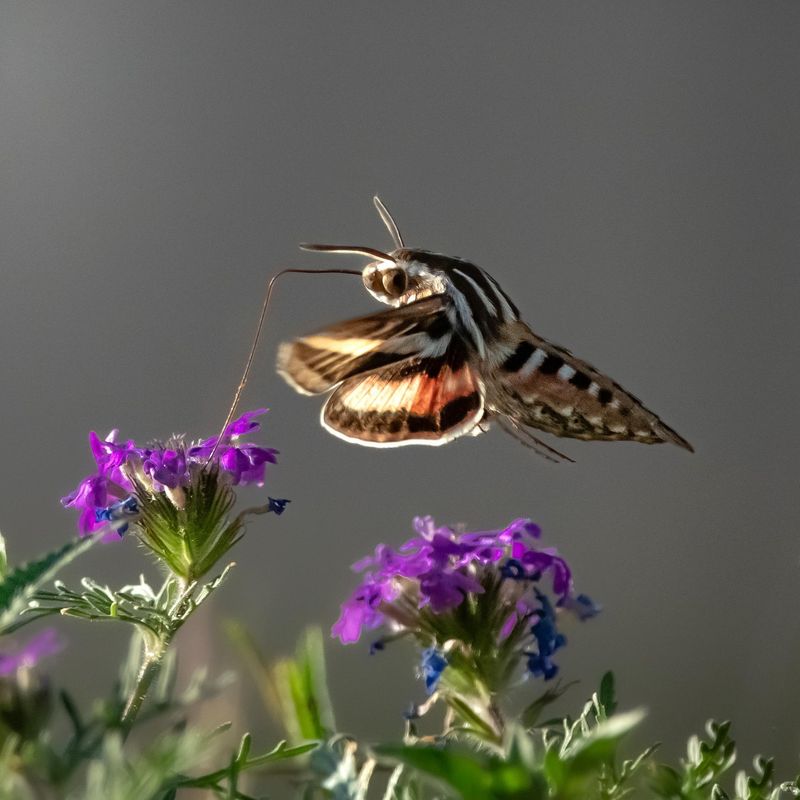
Most people think of bees when they picture pollinators at work, but the pollination story does not end when the bees head home for the evening.
Sphinx moths step into that role after dusk, visiting flowers during hours when most other pollinators are inactive.
As they hover and feed from blossom to blossom, their bodies and even their long proboscis can brush against flower structures, picking up and depositing pollen along the way.
This extends the pollination window well beyond what daytime visitors alone can accomplish. For plants that bloom in the evening or stay open through the night, sphinx moths may be among the most consistent visitors available.
Some flowers have actually evolved alongside moth pollinators, developing pale colors, strong fragrance, and deep tube shapes that specifically match sphinx moth behavior.
It is a relationship that developed over a very long time. That said, not every visit results in successful pollination.
The outcome depends on the specific plant species, the structure of the flower, which moth species is doing the visiting, and whether the right pollen reaches the correct part of the flower.
Pollination is a precise process, and simply seeing a moth at a flower does not guarantee seeds will follow. Still, the overall contribution of sphinx moths to evening pollination in a Michigan garden is real and meaningful.
Encouraging their presence by maintaining suitable flowers gives them more chances to do what they naturally do, and that benefits the garden in ways that are easy to overlook.
5. Warm Calm Evenings Make Them Easier To Notice
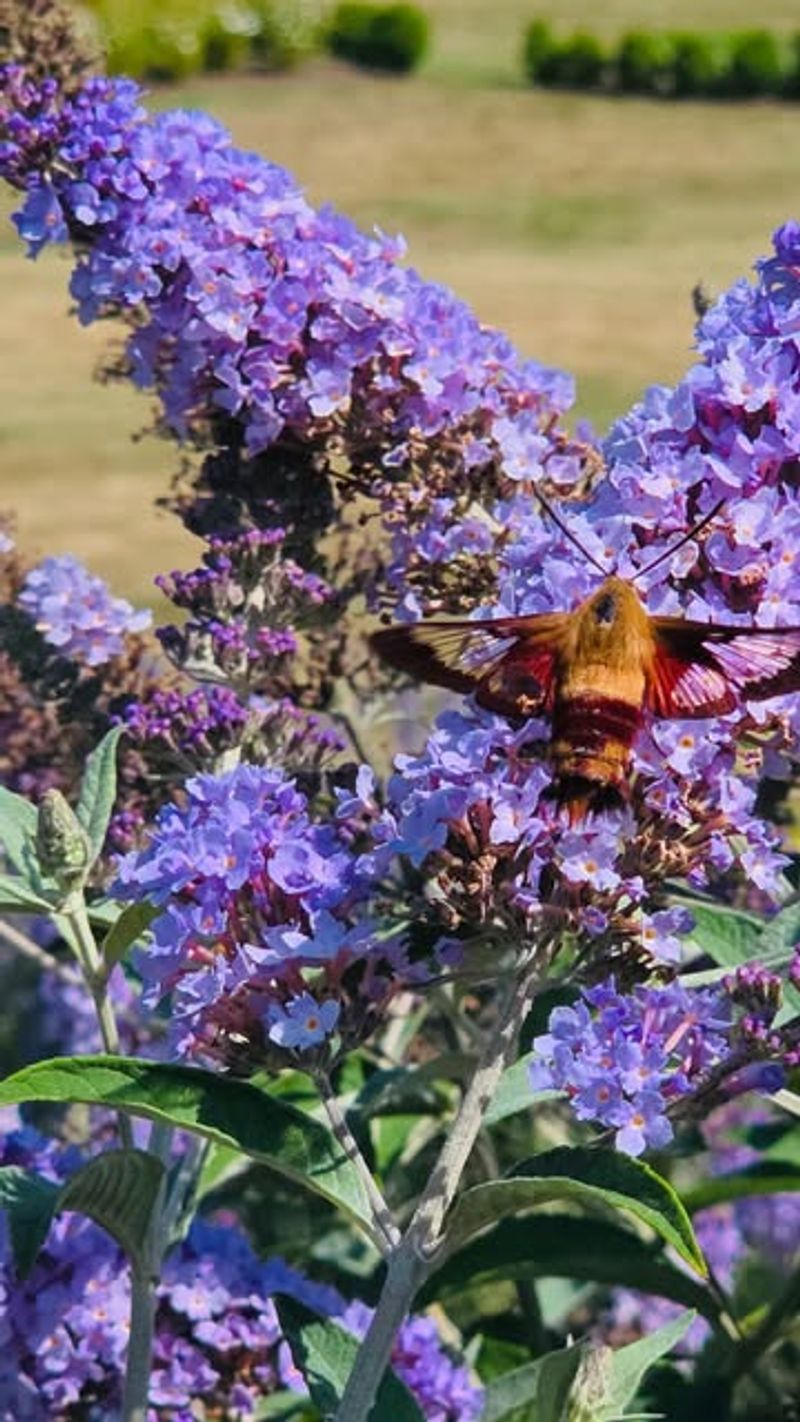
Weather has a bigger influence on sphinx moth activity than most gardeners realize. On a warm, still summer evening in Michigan, conditions line up perfectly for flight.
Moths are cold-blooded, which means air temperature directly affects how well they can move and feed.
Warm evenings allow them to sustain the rapid wing movement needed for hovering, and calm air makes it far easier to navigate precisely around flower clusters.
Gardeners who spend time outside on those comfortable evenings are also simply more likely to notice what is happening. You are not rushing indoors, the light lingers a little longer, and the garden feels inviting.
That combination of good moth conditions and good observer conditions is why warm, calm evenings tend to produce the most memorable sphinx moth sightings.
It is not necessarily that more moths appear, but that everything aligns for you to actually see them.
On the flip side, rain, strong wind, cool temperatures, or a sudden drop in conditions can make sphinx moths much less visible. They may shelter in vegetation, reduce flight activity, or feed in areas more protected from the weather.
If you go outside on a breezy or chilly evening and see nothing, that does not mean the moths have left your garden for good. They are likely nearby, waiting for better conditions.
Checking on the same flowers over several evenings gives you a much more accurate picture of sphinx moth activity than any single observation can provide. Patience and consistency really do pay off here.
6. The Adult Moths Are Not Eating Your Leaves
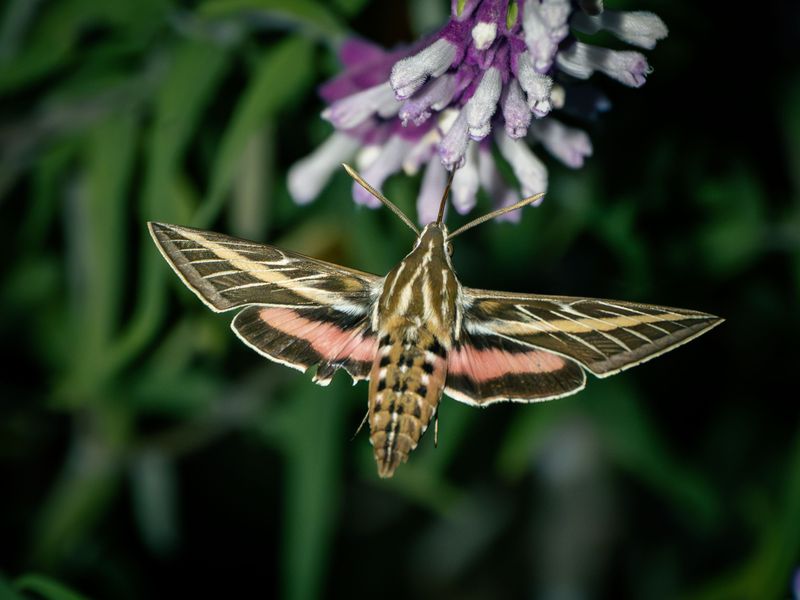
The first time someone sees a sphinx moth up close, the reaction is often alarm. They are large, fast, and can look surprisingly similar to a small hummingbird, which tends to catch people off guard in the fading evening light.
Their size alone can make them seem threatening, even though adult sphinx moths visiting your flowers are completely harmless to people and to your plants. They are there for one reason: nectar.
Adult sphinx moths do not have the chewing mouthparts needed to damage foliage. Their proboscis is built only for drinking liquid nectar from flowers.
So while you might instinctively worry about what a large insect is doing near your plants, the adults are actually working in your garden’s favor as flower visitors. Watching them without interfering is genuinely the best response.
Where things can get confusing is when people assume that any moth near the garden must be causing damage somewhere.
Sphinx moths are not the same as every other moth species, and the damage you might see on nearby plants likely has a completely different cause.
Before reaching for any kind of spray, take a moment to observe and identify what you are actually looking at.
Spraying open flowers can harm sphinx moths along with bees, butterflies, and other beneficial insects that visit during the day.
Identification first, action second is a principle that protects far more than it risks, and it keeps your garden working as a healthy, functioning system rather than a sterile one.
7. Their Presence Does Not Automatically Mean Hornworms
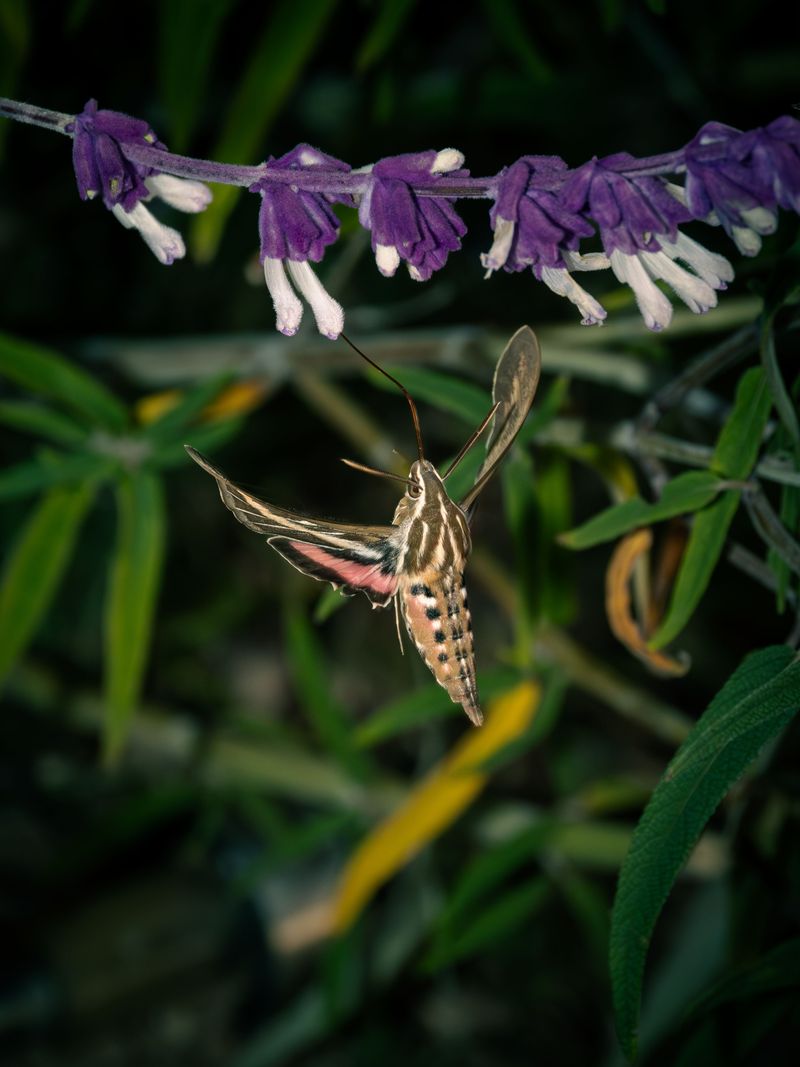
Here is something that surprises a lot of Michigan vegetable gardeners: some of the most familiar garden pest caterpillars actually grow up to become sphinx moths.
The tomato hornworm, that chunky green caterpillar with the red horn at its tail, transforms into the five-spotted hawkmoth.
The tobacco hornworm, which has a black horn instead, becomes the Carolina sphinx moth. Knowing that connection can completely change how you think about the adult moths visiting your flowers.
Hornworm caterpillars do feed on tomatoes, peppers, potatoes, eggplants, and other plants in the same family. They can cause noticeable damage when populations are high, stripping leaves and occasionally chewing into fruit.
That is a real concern for gardeners who put serious effort into their vegetable beds. However, seeing an adult sphinx moth drinking nectar from your flowers does not confirm that eggs have been laid anywhere in your garden.
Adult moths move across wide areas during their lifetimes and may visit your flowers without ever choosing your vegetable plants as a place to reproduce. The smart approach is to treat the two life stages as separate situations.
Inspect your tomato and pepper plants regularly for missing foliage, dark droppings on leaves, chewed fruit, or the large green caterpillars themselves. If you find evidence of feeding, address it then.
Do not assume that a beautiful moth hovering at your phlox is automatically creating a problem in your raised beds. Observation and accurate identification protect both your crops and your beneficial garden visitors.
8. A Moth-Friendly Garden Needs Flowers And Host Plants
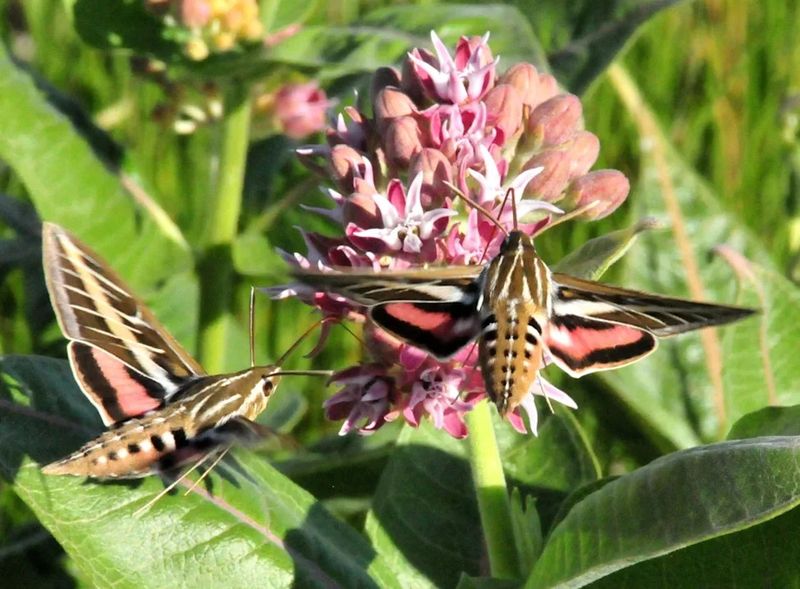
Supporting sphinx moths in a Michigan garden is less complicated than most people expect, and the results are genuinely rewarding.
The most straightforward step is keeping flowers blooming from midsummer into fall, with an emphasis on fragrant evening bloomers.
Native plants that suit your specific growing conditions tend to hold up better and offer more consistent nectar than many cultivated varieties.
Mixing a few reliable evening-scented options into your existing beds can make a noticeable difference in moth activity over time.
Flowers alone are not the whole picture, though. Moth populations also depend on having plants that their caterpillars can actually eat.
Common host plants include wild cherry, viburnum, blueberry, ash, and various other native shrubs and trees that many Michigan gardeners already have nearby.
Allowing minor feeding on healthy, established host plants is part of how a functioning garden habitat works.
A few chewed leaves on a mature shrub is a fair trade for a garden that supports the full moth life cycle.
Reducing unnecessary insecticide use makes a significant difference, especially avoiding sprays on open flowers where moths and other pollinators feed.
Leaving some fallen leaves in place over winter and maintaining areas of undisturbed soil gives overwintering insects a real chance of surviving until spring.
Bright outdoor lights left on all night can disrupt moth navigation and feeding patterns, so keeping nighttime lighting minimal or motion-activated helps considerably.
Balancing these habits with careful monitoring of your vegetable crops gives you a garden that is productive, healthy, and genuinely alive with evening activity worth stepping outside to enjoy.