What Does It Mean When Deer Start Rubbing Bark Off Michigan Trees?
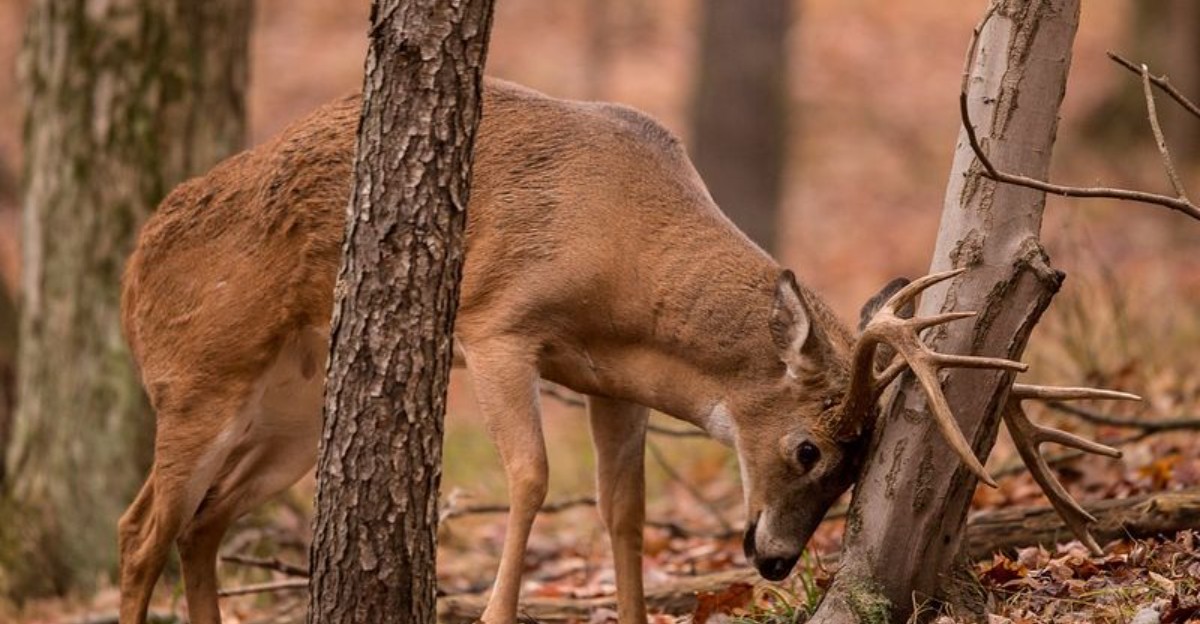
Something in the yard looks off the moment you glance toward the fence line. A skinny tree there seems to have lost its jacket overnight.
Strips of shaggy bark dangle loosely from the trunk. The smooth wood underneath shines pale and wet in the cool September air.
Nobody heard a chainsaw, and the neighbor kids swear they were asleep. Yet the scrape marks sit right at knee to waist height, oddly neat and deliberate.
The smell nearby is musky and earthy, a bit like damp leaves and old gym socks. Something big clearly visited, and it had a strong opinion about that tree.
You lean closer, half expecting a tiny apology note tucked into the bark. Instead, you find muddy hoofprints and one very confused squirrel staring back at you.
A Clear Sign Breeding Season Is Getting Close
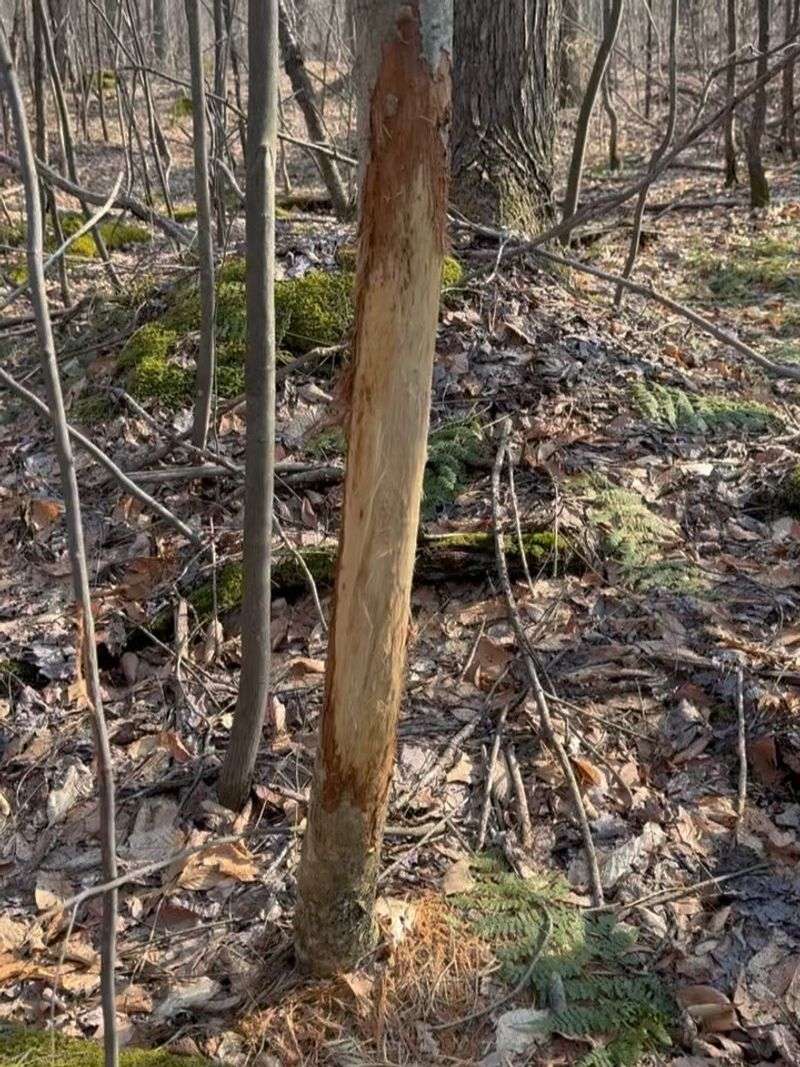
Picture a teenager fixing his hair before a big school dance. Michigan bucks do something similar each fall, only with trees instead of mirrors.
When daylight shrinks in September, a buck’s body starts making more testosterone. That hormone boost pushes him toward the rut, which is the deer breeding season.
Fresh rubs usually show up weeks before the rut peaks in November. So when you spot shiny scraped wood, the calendar is basically ticking for local deer.
Hunters pay close attention to these early marks. A new rub tells them a mature buck is active in that area right now.
Homeowners can learn from rubs too. Seeing them means bucks will likely roam your yard more often over the next two months.
Drivers should take note as well. Deer movement rises sharply during the rut, and Michigan sees many car crashes with deer each fall.
Slow down at dawn and dusk on country roads. Watch ditch lines closely, because where one deer crosses, another often follows right behind.
Fun fact: Michigan has well over a million deer, according to state wildlife estimates. That means plenty of antlers are getting ready for fall action.
Keep a simple notebook of where and when rubs appear. Over a few years, you will notice patterns that repeat almost like clockwork.
Those notes can help you protect trees, plan hunts, or simply enjoy watching nature follow its rhythm. Every fresh scrape is a small seasonal message worth reading.
Velvet Removal From Newly Grown Antlers
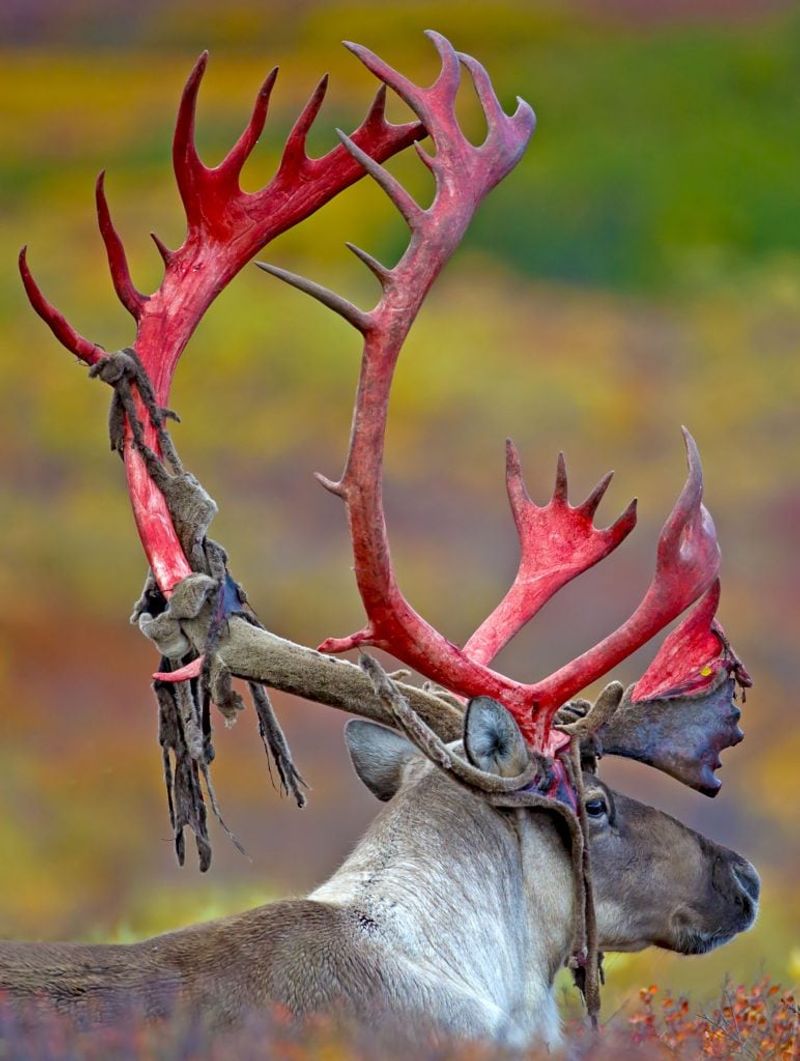
Believe it or not, antlers are among the fastest growing tissues of any mammal. A buck can grow a full rack in just a few summer months.
During that growth, antlers are covered in soft, fuzzy skin called velvet. Velvet carries blood and nutrients that help the bone build quickly.
By late August or early September, the antlers harden. The velvet dries up, starts to itch, and no longer serves any purpose.
That is when bucks head for the nearest sturdy tree.They rub and twist their heads until the velvet peels away in ragged strips.
It may look messy, but it does not hurt the deer. Think of it like peeling off a scab that was ready to come loose.
Your Michigan Garden Changes Every Week. Your Plan Should Too.
Gardening in Michigan changes quickly throughout the season. Every Friday you’ll receive a simple weekly plan showing exactly what to plant, prune, fertilize, harvest, and protect so you never miss the right timing.
You might even find shreds of velvet hanging from branches. Sometimes the antlers look pinkish at first, then darken as tree sap stains them.
Here is a neat detail: antler color comes partly from the bark a buck rubs. Pine and cedar can leave antlers looking darker brown.
If you spot velvet rubs in early September, you know bucks have finished their summer growth. The big boys are officially dressed for fall.
Grab a camera if you have trail cams set up nearby. Catching a buck mid-shed makes for an amazing photo and a great story.
Scent Marks Left Along Buck Travel Routes
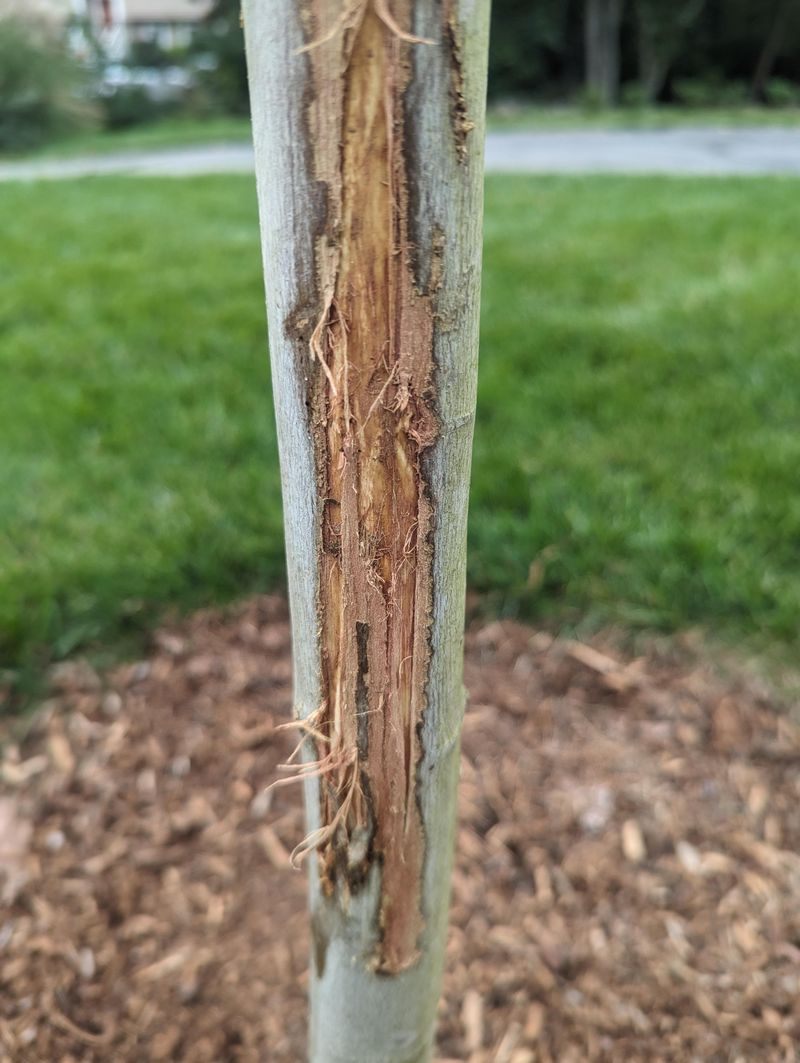
Deer cannot text each other, so they leave smelly notes instead. A rub works like a signpost that says a certain buck passed here.
Bucks have scent glands on their foreheads and near their eyes. As they rub, they smear that personal odor onto the bare wood.
Other deer sniff those spots carefully. Does learn which bucks are nearby, and rival bucks figure out who might be tough competition.
Rubs often appear in lines along trails, field edges, and creek bottoms. Hunters call these rub lines, and they reveal favorite travel paths.
Want to read one yourself? Notice which side of the tree has the scraped face.
Hunters often use the rubbed side as a rough clue to the direction the buck was traveling, though it’s not a hard rule. Follow several rubs, and you can trace his route like a detective.
Some bucks return to the same rubs year after year. Big trees with old scars may have served generations of deer as message boards.
You might also find scrapes on the ground nearby. Those are pawed bare patches under low branches, another spot where bucks leave scent.
If deer use your yard as a hallway, expect repeat visits. Knowing their route helps you decide where protection or fencing matters most.
Treat each rub like a clue in a mystery novel. The more you notice, the clearer the story of your neighborhood deer becomes.
Tree Species Michigan Bucks Prefer For Rubbing
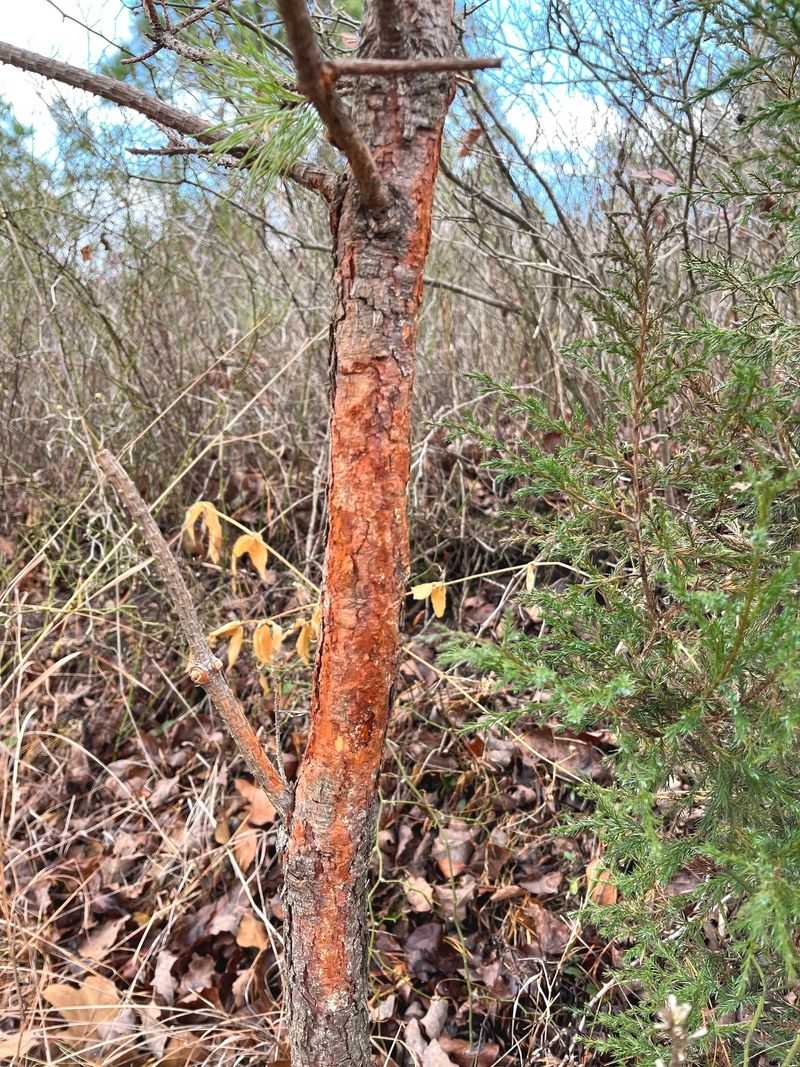
Deer are surprisingly picky shoppers when it comes to rubbing trees. Not every trunk in the forest makes their favorites list.
Bucks tend to choose trees about one to four inches across. Those sizes feel sturdy but still bend enough to wrestle with.
In Michigan, aromatic trees rank high. Eastern red cedar, white cedar, pines, and tamarack often get chosen because their scent seems appealing.
Smooth-barked trees are popular too. Red maple, aspen, cherry, and sumac show up often in rub surveys across the Great Lakes region.
Why smooth bark? It peels easily and leaves a bright, visible mark that other deer can spot from a distance.
Yard trees are not safe either. Ornamental trees like young apple, linden, and Japanese maple sometimes become targets near woods.
Big old oaks usually escape serious harm. Their thick, rough bark handles a little antler scraping without much trouble at all.
Here is a helpful tip for planting season. If you live near deer habitat, protect cedars and fruit trees first, since they attract the most attention.
Walking your property with this list can save you money. Mark the high-risk trees and plan to guard them before October arrives.
Curious gardeners sometimes plant a sacrifice tree, like a cheap cedar at the woods edge. Bucks may rub it instead of your prized saplings.
Bark Damage Young Trees Can Face After A Rub
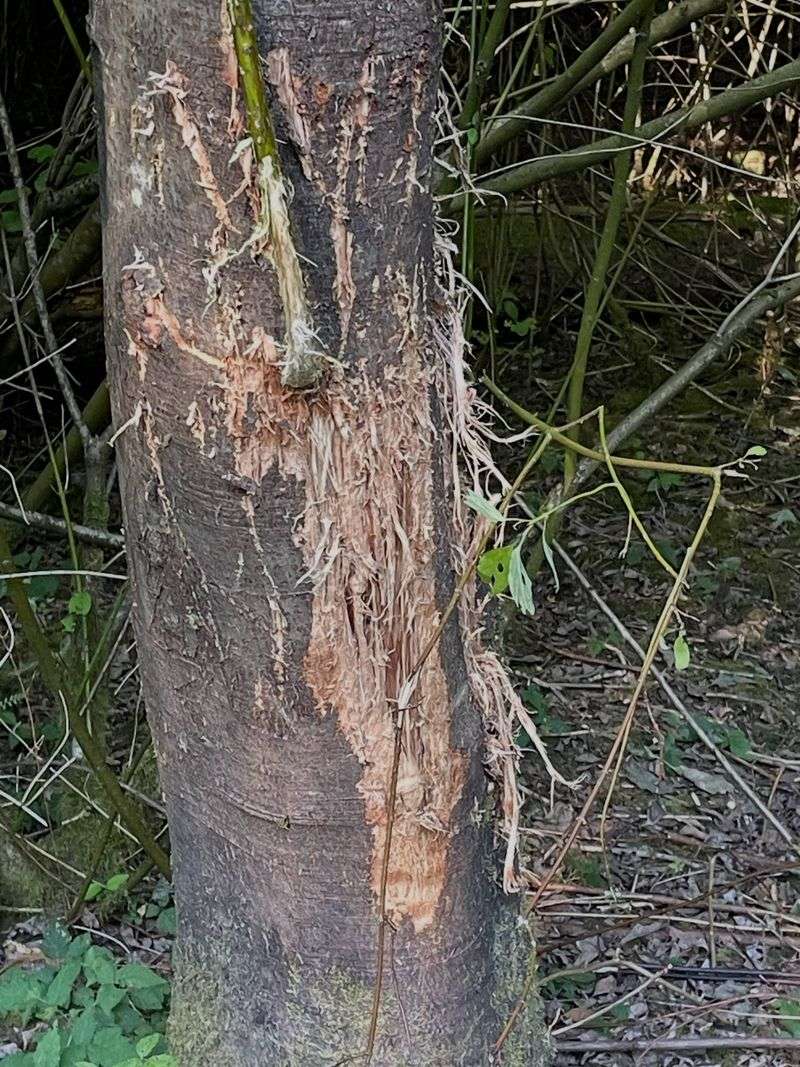
Honestly, it can feel heartbreaking to find your new maple scraped raw. You planted it with care, and now it looks badly bruised.
The real trouble lies just under the bark. A thin green layer called the cambium carries food and water through the tree.
When antlers tear that layer, the tree struggles to move nutrients. If a rub circles the whole trunk, the top often fails.
Partial rubs are less serious. A tree can usually heal if at least half of the trunk bark stays in place.
Broken branches and snapped leaders are common too. Aggressive bucks sometimes twist young trees until the main stem cracks.
Open wounds also invite insects and fungus. Borers and rot organisms can move in while the tree tries to recover.
So what should you do? Skip wound paint, since experts say it often traps moisture and slows healing.
Instead, trim ragged bark edges neatly with a clean knife. Smooth edges help the tree form a healing callus more quickly.
Water deeply during dry fall weeks, and add mulch around the base. Keep mulch a few inches away from the trunk itself.
Check the tree again next spring. If leaves appear above the wound, your little fighter is on its way back.
Tree Guards That Keep Bucks Away From Saplings
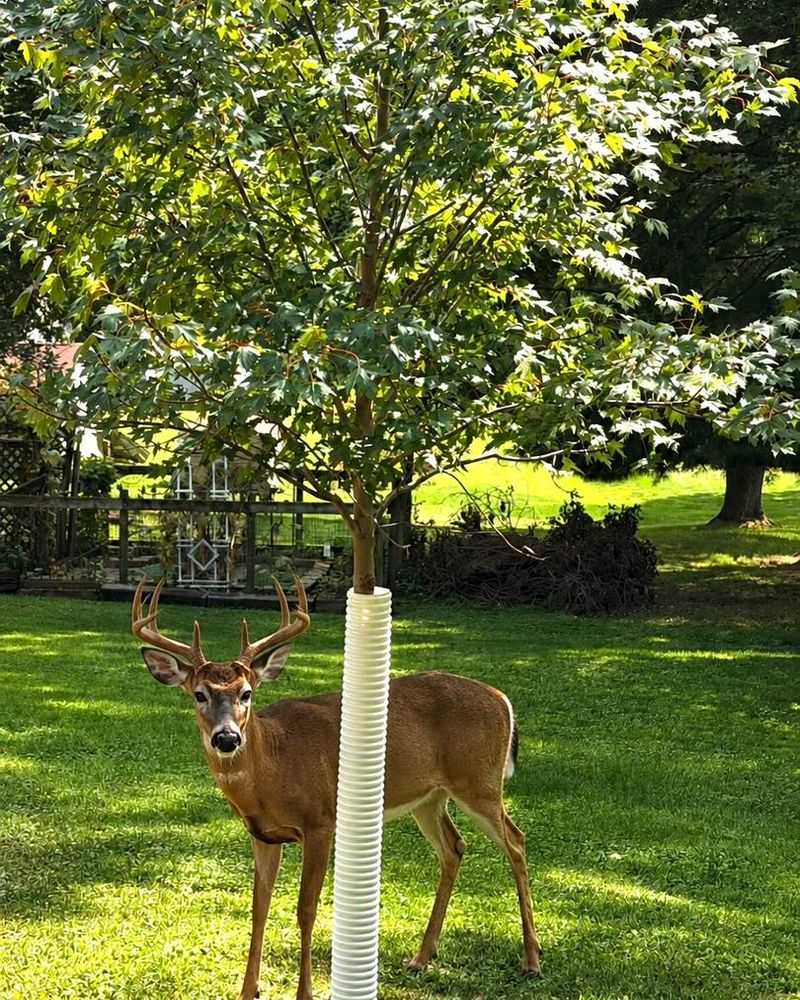
A few simple tools can outsmart even a stubborn buck. You do not need a giant fence to protect your young trees.
Wire mesh cages work best for most yards. Circle each sapling with welded wire or hardware cloth at least four feet tall.
Leave a few inches of space between the cage and trunk. Bucks cannot reach the bark if the wire stands away from it.
Plastic spiral wraps and tubes are cheaper options. They slip around the trunk and block antlers from scraping the tender bark.
Remove plastic wraps in spring, though. Left on too long, they can trap moisture and invite bugs.
Some people add sturdy stakes around a tree in a triangle. Bucks find it awkward to squeeze between posts and usually move on.
Scent repellents may help for short periods. Rain washes them away quickly, so reapply often during the busy fall weeks.
Timing matters most here in Michigan. Install guards by early September, before velvet rubbing and rut activity really heat up.
Keep protection on until trunks grow thicker than about five inches. By then, bark toughens up and deer often lose interest.
A weekend of work now can save years of growth. Your future shade trees will thank you every summer to come.