The Best Time Of Day To Prune Hydrangeas In Michigan Without Stressing The Plant
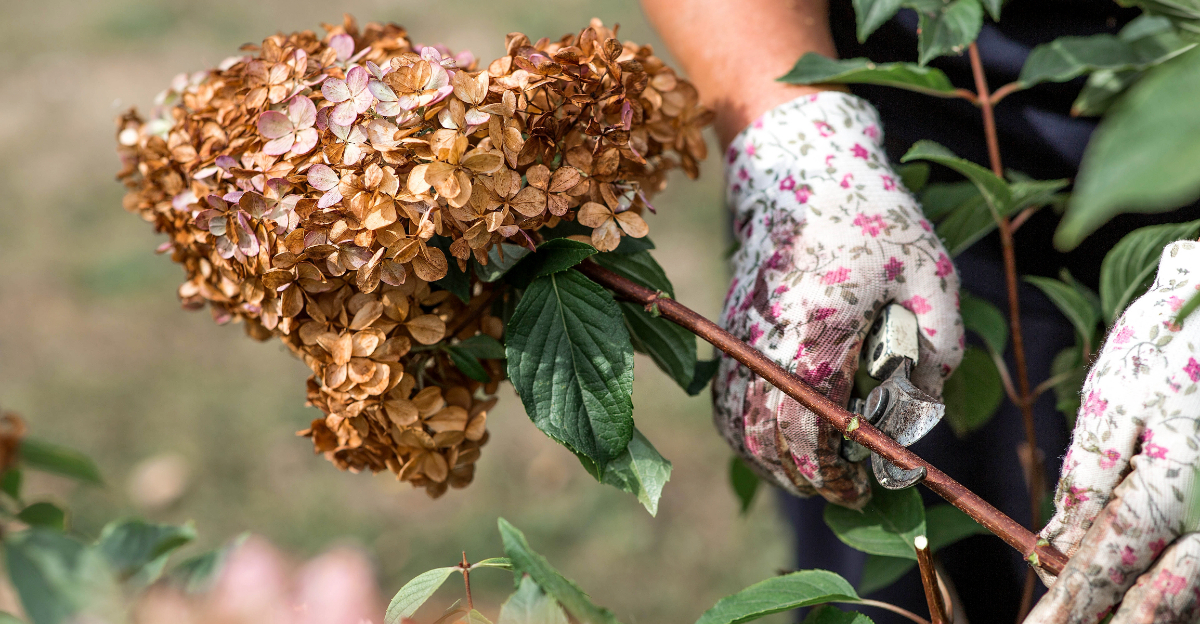
Early morning pruning tends to be the gentlest option for hydrangeas growing in Michigan gardens, especially during warmer summer stretches.
Cooler morning temperatures reduce stress on the plant, allowing cut stems to heal before the heat of the day sets in.
Pruning during peak afternoon heat can cause additional moisture loss right at the cut, slowing recovery significantly. Cloudy or overcast days also work well if morning pruning isn’t possible, since lower light reduces overall plant stress.
Using clean, sharp tools helps create smooth cuts that heal faster and reduce the risk of disease entering the plant. Watering hydrangeas the day before pruning ensures they’re well hydrated and better able to handle the process.
Avoiding pruning during extreme heat waves protects the plant from unnecessary added stress. Choosing the right time of day makes a noticeable difference in how quickly hydrangeas bounce back.
1. Late Morning Is The Best Summer Pruning Window
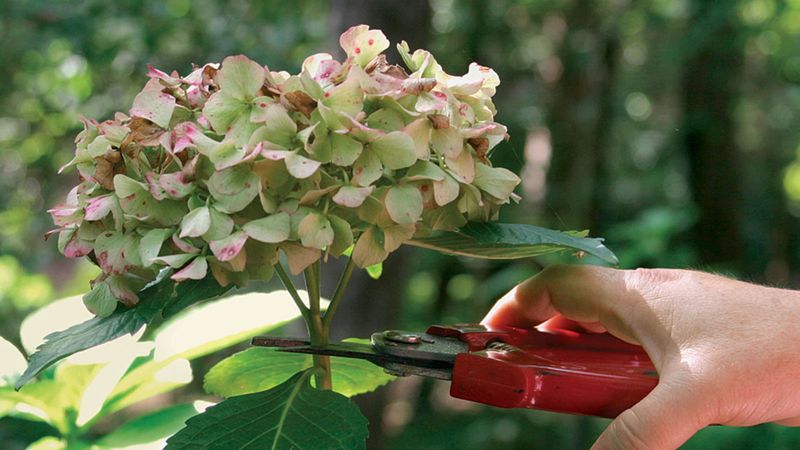
Timing your pruning cuts to the late morning hours is one of the smartest habits a Michigan hydrangea grower can develop.
Once the sun has been up for a couple of hours, overnight dew and surface moisture on the leaves and stems have fully evaporated.
Dry foliage means your pruning tools glide cleanly across stems without dragging moisture from one cut surface to another, which helps keep the plant healthier overall.
Working between roughly 9 a.m. and 11 a.m. gives you a comfortable window before the afternoon heat peaks.
Michigan summers can push temperatures well above 85 degrees by early afternoon, and pruning during that window puts extra strain on the shrub right when it is already working hard to stay cool.
A late morning session lets you finish your work while temperatures are still manageable and the plant is not yet under maximum heat pressure.
Dry stems are also much easier to inspect. You can clearly see which growth looks healthy, which stems appear damaged, and where the best bud sites are located. That visual clarity helps you make smarter cuts and avoid removing more than necessary.
Keep in mind that the exact hour matters far less than choosing the right season and knowing your hydrangea variety. Late morning pruning during the wrong time of year can still reduce flowering significantly.
Think of the timing as one helpful layer of a larger strategy, not the single answer to keeping your hydrangeas happy and productive throughout the growing season.
2. Avoid Pruning During Intense Afternoon Heat
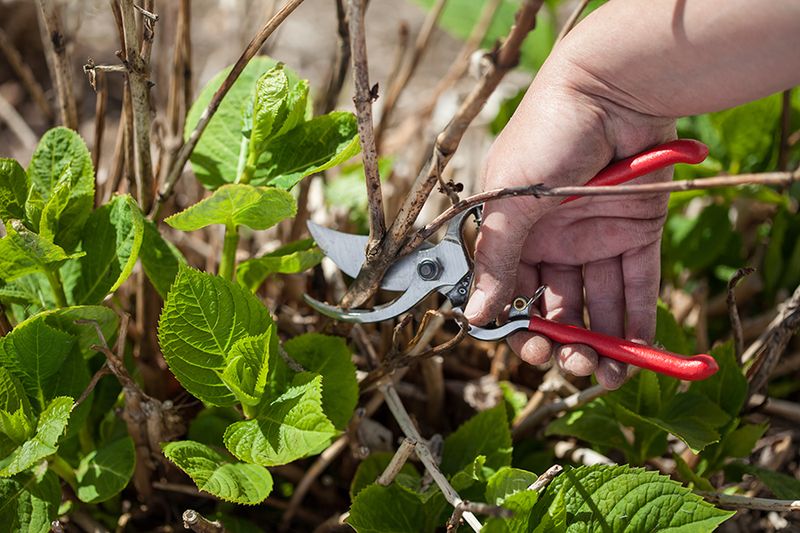
Midafternoon in a Michigan summer can feel brutal, and your hydrangeas feel it too. Between roughly noon and 4 p.m., air temperatures peak, sunlight is most intense, and wind can pull moisture out of leaves faster than roots can replace it.
The shrub is already working at full capacity just to maintain itself during those hours, and that is exactly the wrong moment to add the extra challenge of pruning.
Removing healthy foliage during peak heat reduces the total leaf surface available for photosynthesis. Leaves are essentially the plant’s solar panels, capturing energy to fuel root growth, stem development, and flower production.
Your Michigan Garden Changes Every Week. Your Plan Should Too.
Gardening in Michigan changes quickly throughout the season. Every Friday you’ll receive a simple weekly plan showing exactly what to plant, prune, fertilize, harvest, and protect so you never miss the right timing.
Taking away a meaningful portion of that leaf area while the plant is already stressed can slow its recovery noticeably, sometimes affecting how well it flowers in the weeks that follow.
Bright afternoon sunlight can also cause freshly cut stem ends to dry out more quickly than they would in cooler conditions.
While hydrangeas are resilient shrubs, unnecessary stress stacks up over a season, and repeated afternoon pruning sessions can gradually weaken even an established plant.
The simplest fix is to postpone any optional pruning until the following morning. If you notice a branch that genuinely needs attention, mark it with a piece of bright garden twine and return when temperatures drop.
Waiting one day rarely harms the plant, but pruning at the wrong time repeatedly across a season can reduce its overall strength. Choosing cooler morning conditions is a small adjustment that pays off noticeably over time.
3. Wait Until Rain And Dew Have Dried
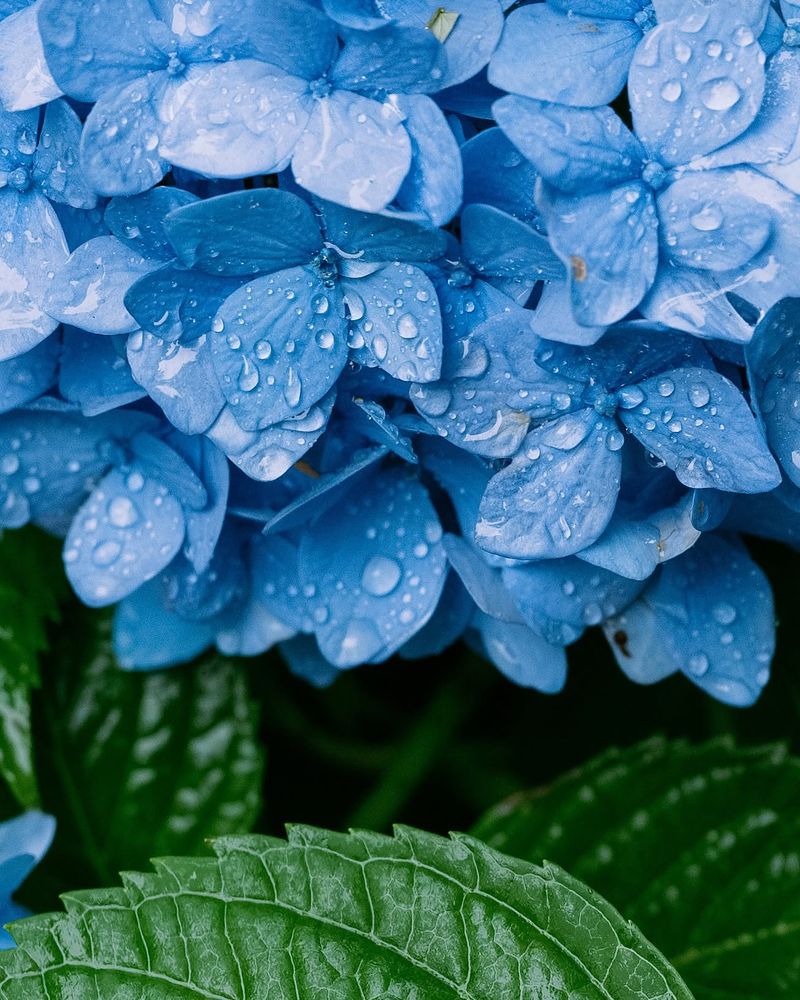
Wet plant surfaces and pruning tools are a combination worth avoiding in any garden. When moisture sits on leaves and stems, it can carry spores or other unwanted materials from one part of the shrub to another with every snip of your pruners.
Waiting until morning dew has fully evaporated before you begin is a straightforward habit that supports healthier cuts and cleaner results.
After prolonged rain, Michigan gardeners should give hydrangeas extra time to dry out completely before pruning.
A light overnight shower might mean waiting only an hour or two into the morning, but several days of heavy rain can leave stems and leaf surfaces damp well into the late morning.
Running your hand gently along a few stems before you begin is a quick way to confirm that the plant surface is actually dry and ready.
Tool cleanliness matters just as much as plant surface dryness. Wiping pruner blades with a clean cloth and using a diluted household disinfectant before you start helps prevent transferring anything problematic from one plant to another.
If you remove a stem that looks discolored, swollen, or unusual, clean your tools again before continuing to the next cut.
Pruning right before a heavy rain is also worth avoiding when possible. Fresh cuts exposed to prolonged wet conditions can create entry points for problems you did not intend to introduce.
Checking the weather forecast before scheduling a pruning session is a small step that can make a noticeable difference in how smoothly your hydrangeas recover and continue growing through the season.
4. Water Dry Soil Before Necessary Pruning
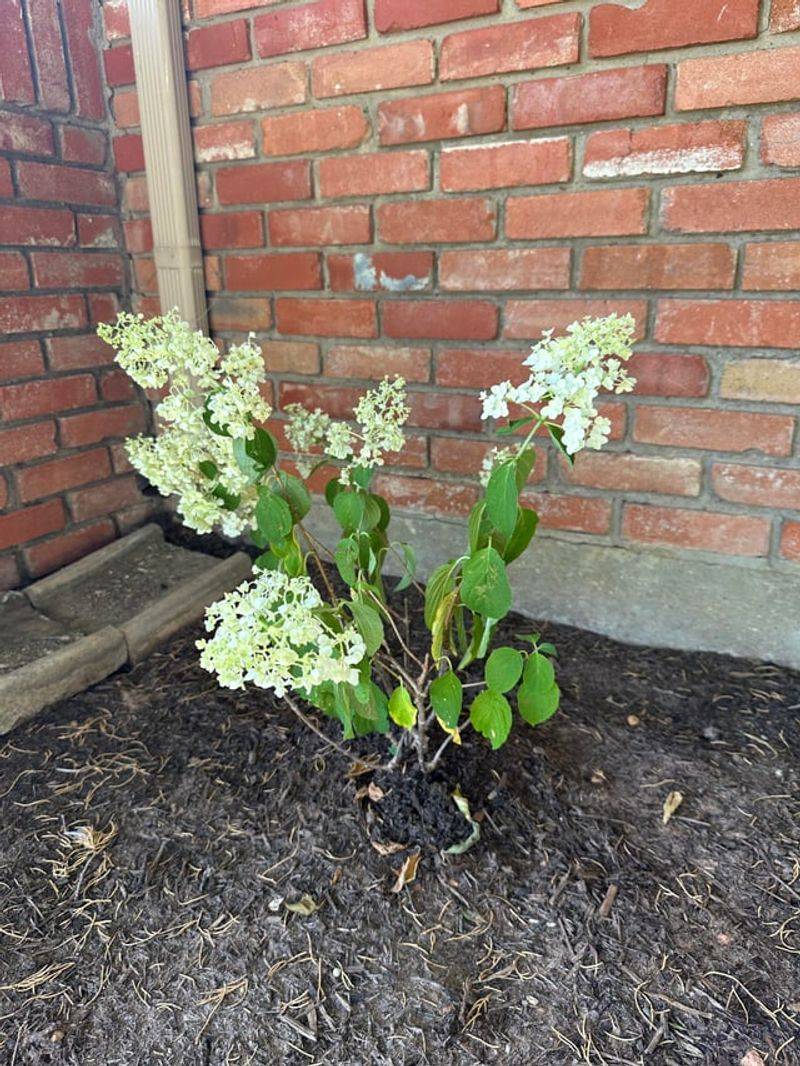
Soil moisture is one of the most overlooked factors when preparing a hydrangea for a pruning session.
Many gardeners look at wilted leaves and assume the plant is desperately thirsty, but afternoon wilting during a hot Michigan summer can happen even when the root zone holds plenty of moisture.
The plant temporarily closes its leaf pores to reduce water loss during peak heat, and by evening it often perks back up on its own without any additional watering.
Before adding water or reaching for your pruners, check the soil a few inches below the surface. Push your finger or a thin wooden dowel several inches into the ground near the drip line of the shrub.
If the soil feels moist and cool at that depth, the plant likely has enough water and simply needs time to recover from the heat of the day. Watering when the root zone is already saturated can create its own set of problems over time.
When the soil genuinely feels dry several inches down, water the root zone slowly and thoroughly before scheduling any optional pruning. Allow the moisture to penetrate deeply rather than just wetting the surface.
Then give the plant a full day to absorb that moisture and show signs of recovery before you make any cuts.
Pruning a genuinely moisture-stressed hydrangea removes leaf area the plant needs to support its own recovery.
A well-hydrated shrub bounces back from pruning cuts far more efficiently, produces new growth more quickly, and maintains a stronger overall appearance through the remainder of the Michigan growing season.
5. Identify The Hydrangea Before Cutting
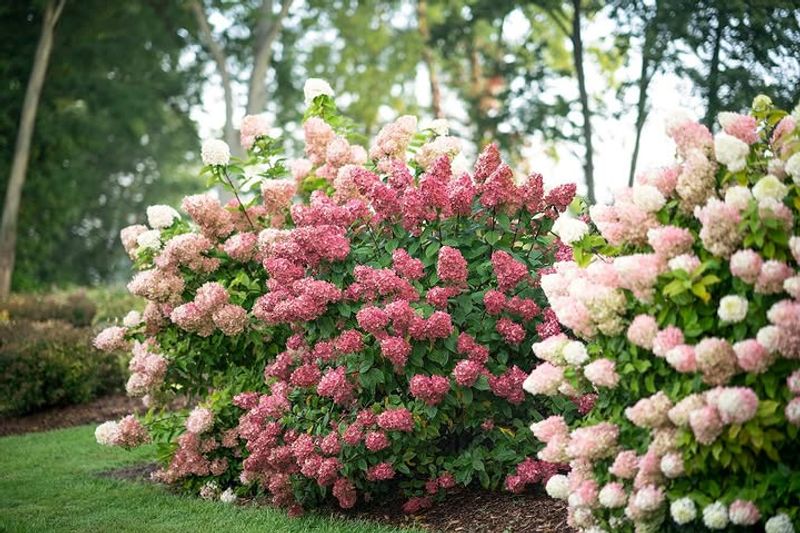
No matter how perfect your timing is, pruning at the wrong point in the season can cancel out every other smart decision you make.
The single most important step before removing any healthy stems is knowing exactly which type of hydrangea you are working with.
Michigan gardens commonly contain smooth, panicle, bigleaf, mountain, oakleaf, and climbing hydrangeas, and each one has its own flowering schedule tied to a specific age of wood.
Bigleaf and mountain hydrangeas, for example, set many of their flower buds on stems that grew during the previous summer.
Cutting those stems back in early spring feels logical to many gardeners, but it removes the buds that would have opened a few months later.
Panicle and smooth types work the opposite way, producing flowers on fresh growth from the current season, so late winter pruning actually encourages stronger flowering for them.
Identifying your hydrangea is easier than it sounds. The plant label from the nursery is the most reliable source if you still have it.
Comparing your shrub’s flower shape and leaf texture to reference photos from a trusted gardening resource also works well.
Bigleaf types have large, rounded flower clusters and glossy leaves, while panicle types produce elongated cone-shaped flower heads. Oakleaf hydrangeas have distinctly lobed leaves that resemble oak foliage.
Michigan State University Extension offices are a genuinely helpful resource when identification feels uncertain. Sending a clear photo of the flowers, leaves, and overall plant shape can get you a reliable answer quickly.
Getting the identification right before making substantial cuts saves you from accidentally removing an entire season of potential blooms.
6. Prune Smooth And Panicle Types Before Spring Growth
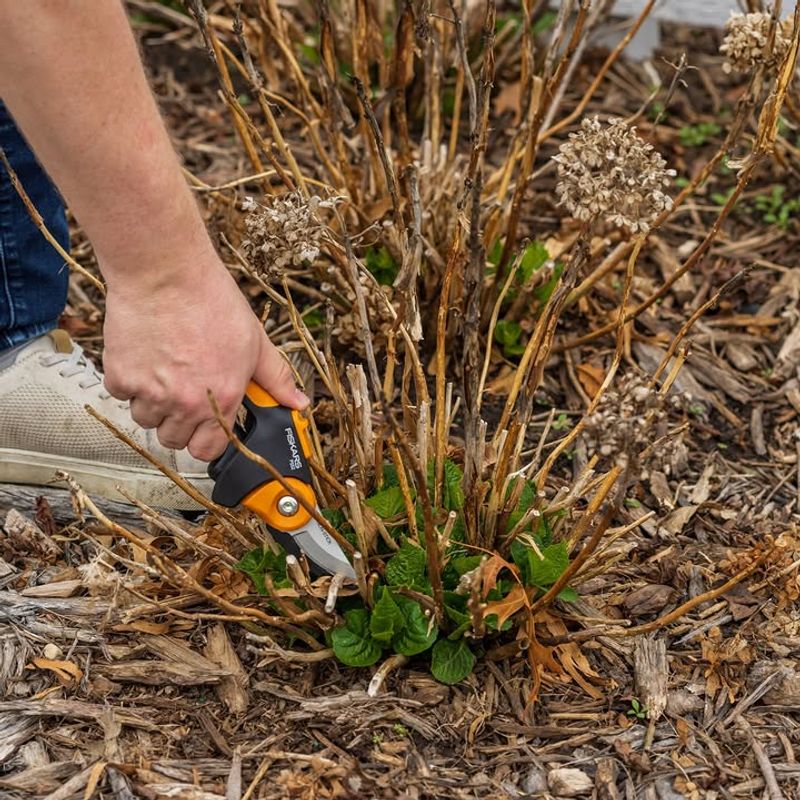
Smooth hydrangeas, including the beloved Annabelle and Incrediball varieties, along with all panicle types such as Limelight and Quick Fire, share a very useful trait for Michigan gardeners.
Both groups produce their flowers entirely on new growth that emerges during the current growing season.
That means you can cut them back substantially in late winter or early spring without sacrificing a single bloom from the upcoming summer.
Late February through mid-March is the typical window for this type of pruning in most Michigan locations, right before the soil fully thaws and new buds begin to swell.
Cutting smooth hydrangeas back to within a foot or two of the ground encourages vigorous new stems that support larger, more upright flower clusters through summer.
Panicle types respond well to selective shaping and removal of older, weaker stems during the same period. Summer pruning for these varieties should stay minimal and purposeful.
Snipping off a faded flower cluster, removing a stem that is blocking a walkway, or cutting back a branch that was bent by a summer storm are all reasonable reasons to reach for your pruners after spring.
Removing large amounts of healthy foliage during the growing season reduces the leaf area the plant uses to fuel root development and flower bud formation for the following year.
Keeping summer cuts small and selective protects the current season’s display while still allowing you to maintain the shape and size of the shrub.
A little patience in late winter rewards you with a full, dramatic flowering display from mid-summer right through the first Michigan frost.
7. Prune Older Stem Flowering Types Soon After Bloom
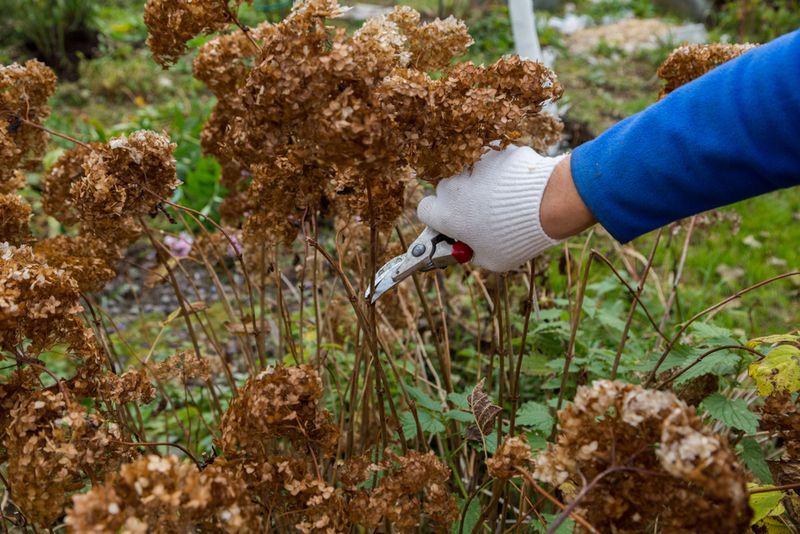
Bigleaf hydrangeas, the classic mophead and lacecap types with their stunning blue, pink, and purple flower clusters, are among the most popular shrubs in Michigan gardens.
Mountain hydrangeas and oakleaf hydrangeas belong to this same general category when it comes to pruning timing.
What they all share is a tendency to form a significant portion of their flower buds on stems that grew during the previous summer, which completely changes when you should be reaching for your pruners.
The ideal window for pruning these types is shortly after their flowers begin to fade, typically sometime in July or early August depending on the specific cultivar and your location in Michigan.
Pruning during this window allows the plant to spend the rest of the growing season producing new stems, and those new stems spend late summer and fall quietly forming the buds that will open the following year.
It is a process that unfolds slowly and invisibly, which is exactly why late-season pruning can be so damaging.
Waiting until August or September to do major reshaping on these types risks cutting off buds that are already forming for next year.
By that point in the Michigan season, the plant has been preparing for the following summer for weeks, and removing that growth sets the flowering back by a full year rather than just a few months.
Reblooming cultivars like Endless Summer can produce flowers on both old and new wood, which gives you a little more flexibility.
Even so, careless late-season pruning on these types can noticeably reduce how many blooms appear and how impressive the overall display looks the following summer.
8. Use Clean Cuts And Remove Only What Is Necessary
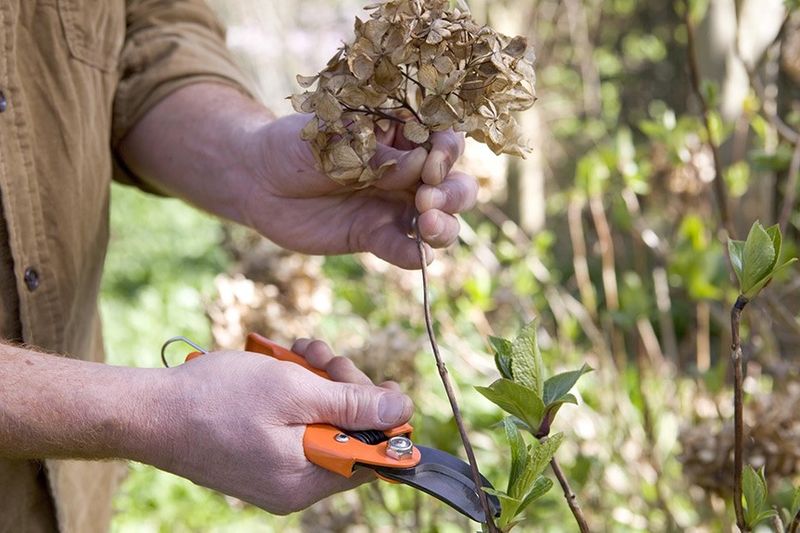
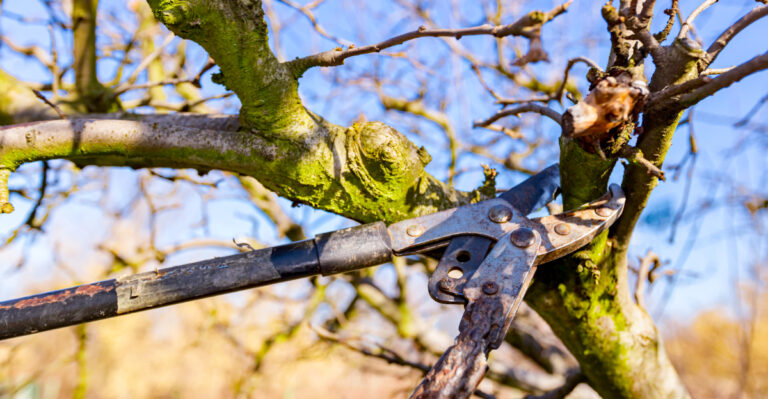
Sharp tools make a bigger difference than most gardeners expect. A quality pair of bypass pruners with clean, sharp blades slices through a hydrangea stem smoothly, leaving a flat, even cut surface that heals efficiently.
Dull blades or anvil-style pruners can crush stem tissue instead of cutting through it cleanly, and that crushed area takes longer to seal over and can create entry points for problems down the line.
Selective pruning is almost always better than shearing the entire shrub into a uniform shape.
Removing damaged stems, crossing branches that rub against each other, weak or spindly growth near the base, and poorly positioned shoots gives the plant a cleaner structure without sacrificing unnecessary healthy foliage.
Every healthy leaf that remains on the shrub continues to capture sunlight and support the root system, so keeping as many as possible is genuinely beneficial.
Make each cut just above a healthy bud or just outside a branch connection, leaving a short stub that protects the bud without creating a long section of stem with nothing growing from it.
Long stubs tend to dry back toward the main stem over time and do not serve any useful purpose for the plant.
After finishing your pruning session, wipe your pruner blades clean with a dry cloth and store them properly so they stay sharp for the next use.
Keep a close eye on soil moisture during the week following any pruning session, since the plant may need a little extra support as it directs energy toward new growth.
A well-executed pruning session, done with care and the right tools, leaves your Michigan hydrangea looking better and growing stronger all season long.