The Best Native Groundcovers To Plant In Michigan Gardens
Bare soil in a Michigan garden is basically an open invitation, and weeds are very good at RSVPing.
Leave a patch of open ground under a tree or along a dry sunny bank and something will move in fast, and it is rarely anything you actually wanted there.
Native groundcovers are the smarter answer to that problem. These are plants that already know how to live in Michigan conditions without being coddled, watered obsessively, or replanted every few years.
They cover soil, crowd out weeds, and add genuine seasonal interest while you find better things to do with your weekends.
The trick is matching the right plant to the right spot, because shady, dry, and moist sites each need something completely different.
1. Canadian Ginger Creates A Lush Woodland Carpet
Bare patches beneath large oak or maple trees are one of the most common frustrations Michigan gardeners face. Grass struggles there, sun-loving annuals fade out quickly, and the soil stays dry and root-filled.
Canadian wild ginger, known botanically as Asarum canadense, fills that kind of difficult space with surprising confidence.
It works especially well for gardeners who want a native groundcover that looks full and settled rather than thin or patchy in dry shade.
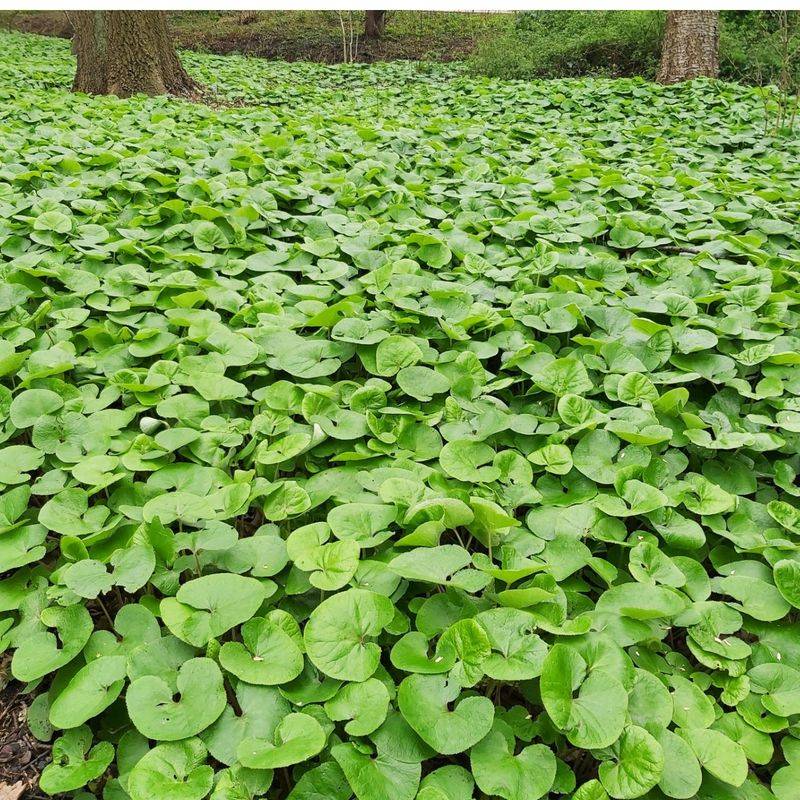
The leaves are broad, heart-shaped, and a rich dark green that holds up well through the growing season.
Once established, the plants spread slowly through underground rhizomes, gradually knitting together into a dense, weed-suppressing mat that looks right at home under Michigan’s native hardwoods.
The spreading pace is steady rather than aggressive, so it rarely causes problems in a managed garden setting.
Canadian ginger grows best in part to full shade with moist, organically rich soil. A good layer of leaf mulch mimics the woodland floor conditions it naturally prefers, and gardens with mature tree canopies often provide exactly that kind of environment.
It handles dry shade better than many other woodland plants once it gets established, which makes it more versatile than it might seem at first.
One detail that surprises many gardeners is the small, reddish-brown flower that hides beneath the leaves in spring. It is easy to miss, but worth looking for.
Canadian ginger is not a flashy plant, but its reliable coverage, low maintenance needs, and deep connection to Michigan’s native woodland ecology make it one of the most rewarding groundcovers you can add to a shaded garden bed.
2. Bearberry Spreads Through Sunny Dry Spaces
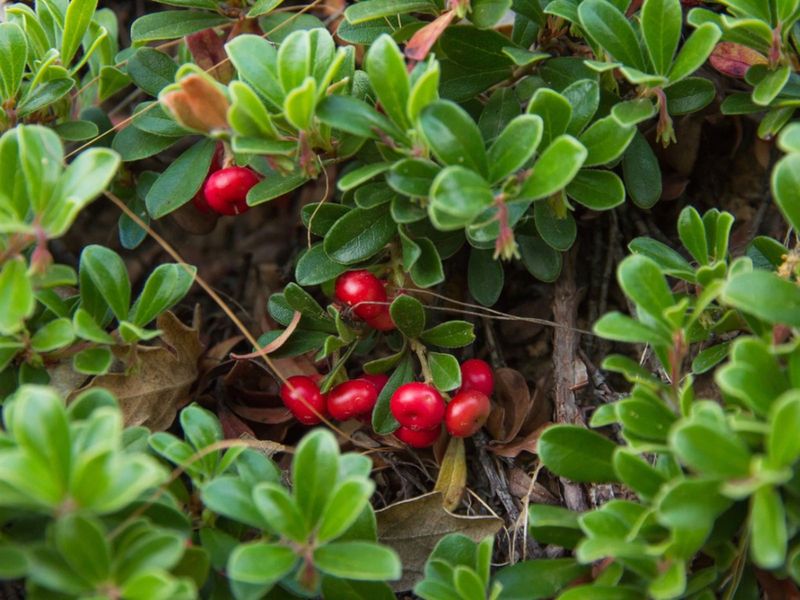
Sandy, sun-baked ground in Michigan can be tricky to plant.
Many groundcovers want moisture and shade, and they simply struggle when asked to perform on a dry, open bank or a south-facing slope where the soil drains fast and the sun beats down for most of the day.
Bearberry, or Arctostaphylos uva-ursi, is a native option that actually thrives in those conditions.
It is one of the better native choices for Michigan gardeners who need groundcover in lean, dry soil rather than a richer woodland setting.
This low-growing, woody plant spreads along the ground with trailing stems that root as they go, forming a dense mat that can reach several feet wide over time.
Your Michigan Garden Changes Every Week. Your Plan Should Too.
Gardening in Michigan changes quickly throughout the season. Every Friday you’ll receive a simple weekly plan showing exactly what to plant, prune, fertilize, harvest, and protect so you never miss the right timing.
The small, glossy leaves stay green well into the season, and the plant produces small pinkish-white flowers in spring followed by bright red berries that birds find attractive.
That combination of seasonal interest and wildlife value adds real appeal for gardeners who want more from a groundcover than just soil coverage.
Bearberry is native to sandy and rocky regions of Michigan, including areas near the Great Lakes shoreline, and it performs best in lean, well-drained soils. Rich, amended garden soil can actually work against it by encouraging soft, weak growth.
It prefers full sun to light shade and does not do well in consistently moist or clay-heavy ground.
Patience matters with bearberry. It establishes slowly and may not look impressive in its first season or two.
But once it settles in, it spreads reliably and handles drought with ease, making it a genuinely low-maintenance choice for dry, open Michigan sites where other plants tend to struggle.
3. Wild Strawberry Covers Ground With Runners And Flowers
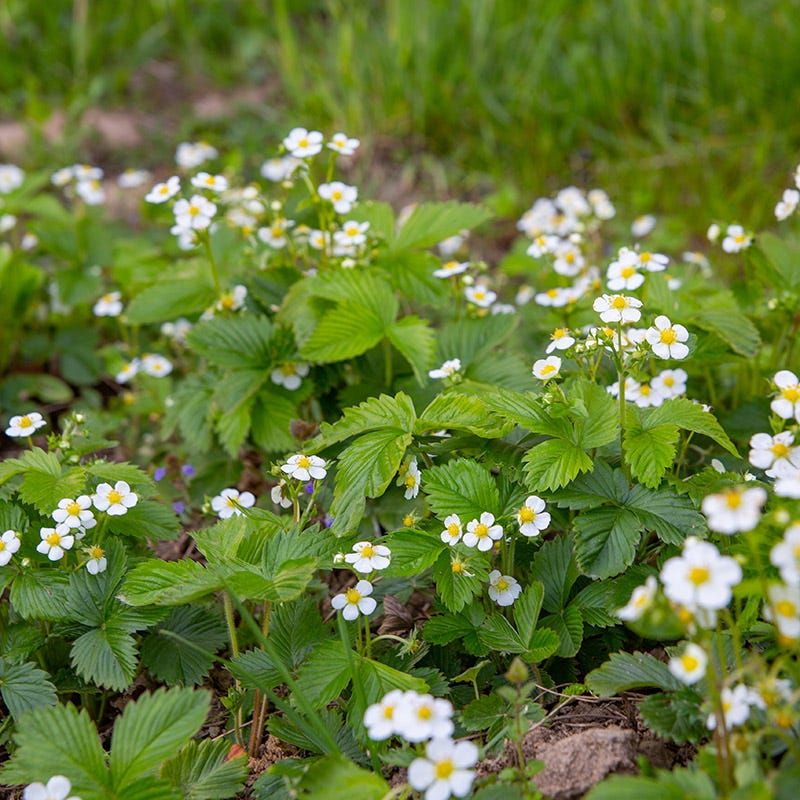
Few native groundcovers offer as much visual reward as wild strawberry, and Michigan gardeners who give it a little room to move are rarely disappointed.
Fragaria virginiana sends out horizontal runners that root where they touch the ground, gradually filling in open areas with a fresh, low-growing carpet of trifoliate leaves that looks tidy without requiring much attention.
The white flowers appear in spring and carry a simple, cheerful quality that works well in naturalistic garden settings.
Small red fruits follow in early summer, and while they are much smaller than grocery store strawberries, they are genuinely sweet and attract birds, chipmunks, and other wildlife.
That kind of ecological connection is part of what makes wild strawberry feel like a natural fit for Michigan gardens rather than just another planting.
Wild strawberry adapts to a wider range of conditions than some other native groundcovers.
It grows in full sun to part shade and handles average garden soil reasonably well, though it tends to spread more vigorously when it has decent moisture and some sunlight.
Open woodland edges, meadow borders, and semi-shaded lawn areas are all places where it can establish comfortably.
One thing to keep in mind is that the runners can spread into areas where you may not want them, so a little light management once or twice a season helps keep it contained. That said, the spreading habit is also what makes it effective as a groundcover.
Wild strawberry is an approachable, rewarding native plant that earns its place in a wide range of garden settings.
4. Bunchberry Fits Cool Woodland Gardens Best
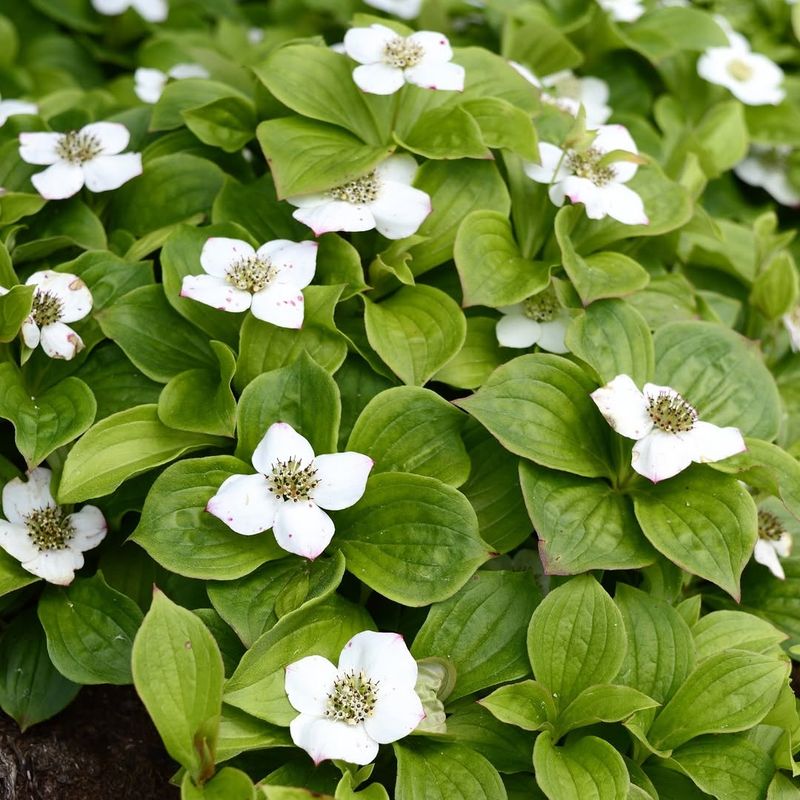
Not every native groundcover is a flexible, plant-it-anywhere solution, and bunchberry is a good example of a species that performs beautifully in the right spot but struggles when conditions are off.
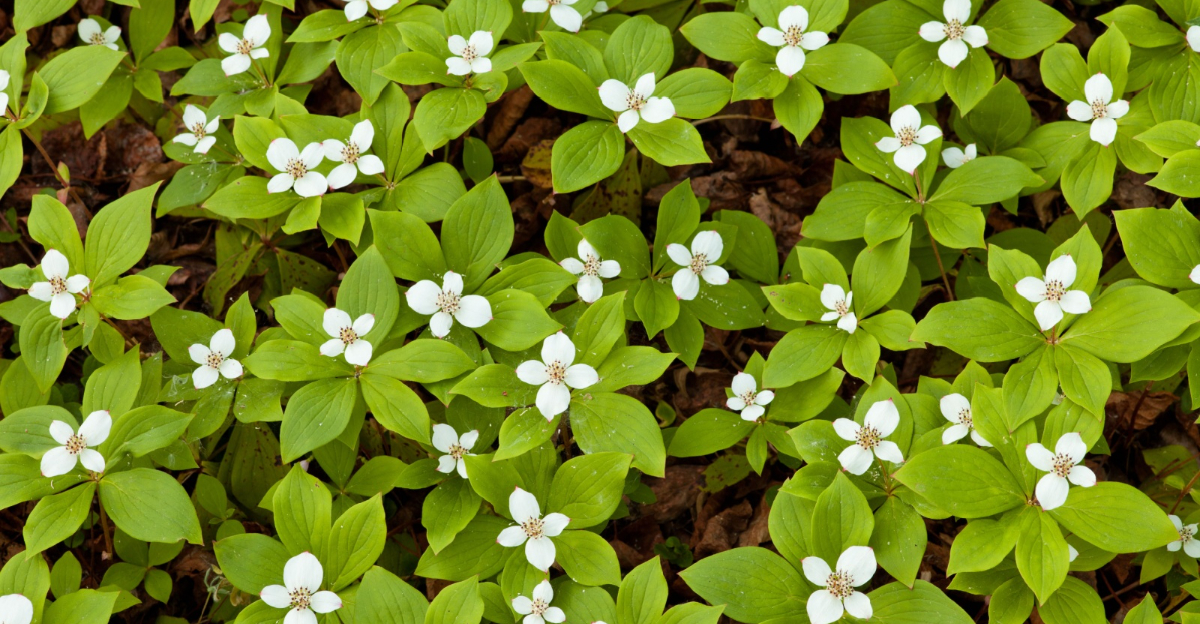
Cornus canadensis, commonly called bunchberry, is a low-growing relative of flowering dogwood that reaches only a few inches in height and spreads gradually through underground stems in cool, moist woodland settings.
That makes it less of a general-purpose groundcover and more of a specialized choice for gardeners who can match its natural habitat.
The plant produces small, four-petaled white flowers in late spring that look remarkably like miniature dogwood blooms.
By late summer, clusters of bright red berries form at the center of the whorled leaves, adding a vivid pop of color to the shaded garden floor.
That combination of spring flowers and fall fruit gives bunchberry a longer season of visual interest than many other low-growing woodland plants.
In Michigan, bunchberry tends to perform best in the northern part of the state and in sites that stay cool and moist through the growing season. It prefers acidic, humus-rich soil and consistent shade.
Warm, dry summers in southern Michigan can make establishment more difficult, and it generally does not tolerate heat and drought the way some other natives do.
Gardeners who have the right conditions, think cool woodland edges, shaded ravines, or north-facing beds with rich organic soil, will find bunchberry a genuinely rewarding groundcover. It rewards careful site selection rather than trial and error.
If your garden has a spot that stays naturally cool and moist beneath a canopy of conifers or mixed hardwoods, bunchberry is well worth considering.
5. Moss Softens Shady Michigan Corners Naturally
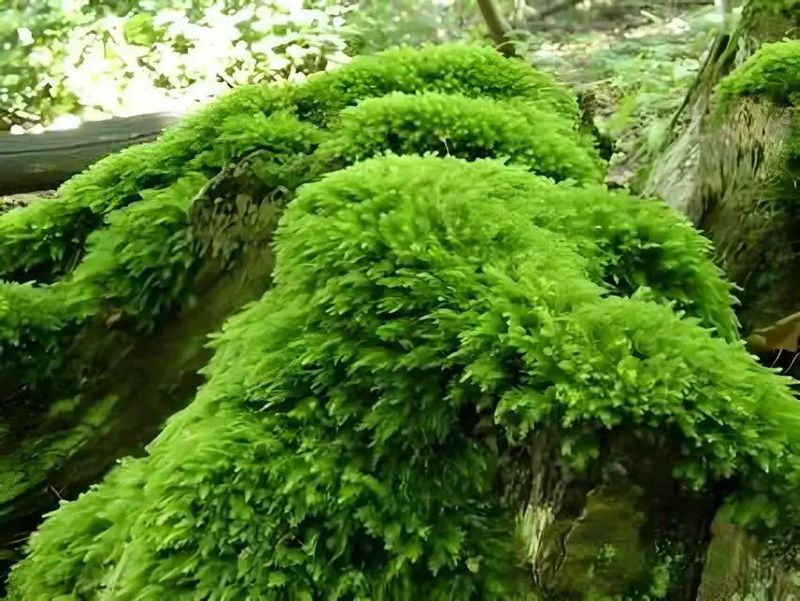
Shady corners where nothing else seems to grow are a familiar sight in Michigan yards, especially in older neighborhoods with large, established trees. Grass thins out, bare soil shows through, and most groundcover plants struggle to get a foothold.
Moss is one of the few options that genuinely thrives in those conditions, and Michigan’s climate, with its moisture and shade, suits many native moss species quite well.
Moss does not work the same way as other groundcovers. It does not spread through runners or rhizomes in the traditional sense, and it does not fill a bed quickly after planting.
Instead, it colonizes surfaces gradually, softening stone pathways, covering bare soil under dense shade, and creating a quiet, textured look that feels more like a natural forest floor than a planted garden bed.
That aesthetic quality is part of what makes it appealing for gardeners who want a more naturalistic yard.
Moss grows best where soil stays consistently moist, light is low, and foot traffic is minimal. Compacted, acidic soil under large trees, the kind of site where almost nothing else establishes well, can actually be a good candidate for moss.
It does not need fertilizer, rarely needs watering once established in the right spot, and asks very little in return for consistent coverage.
The key is matching the right moss to your specific conditions rather than assuming any moss will work anywhere. Some Michigan native mosses handle drier shade better than others.
Observing where moss already grows naturally in your yard is one of the best ways to identify where it will perform well with minimal encouragement.