Stop Ignoring Solitary Oak Leafminer Damage On Swamp White Oaks In Ohio
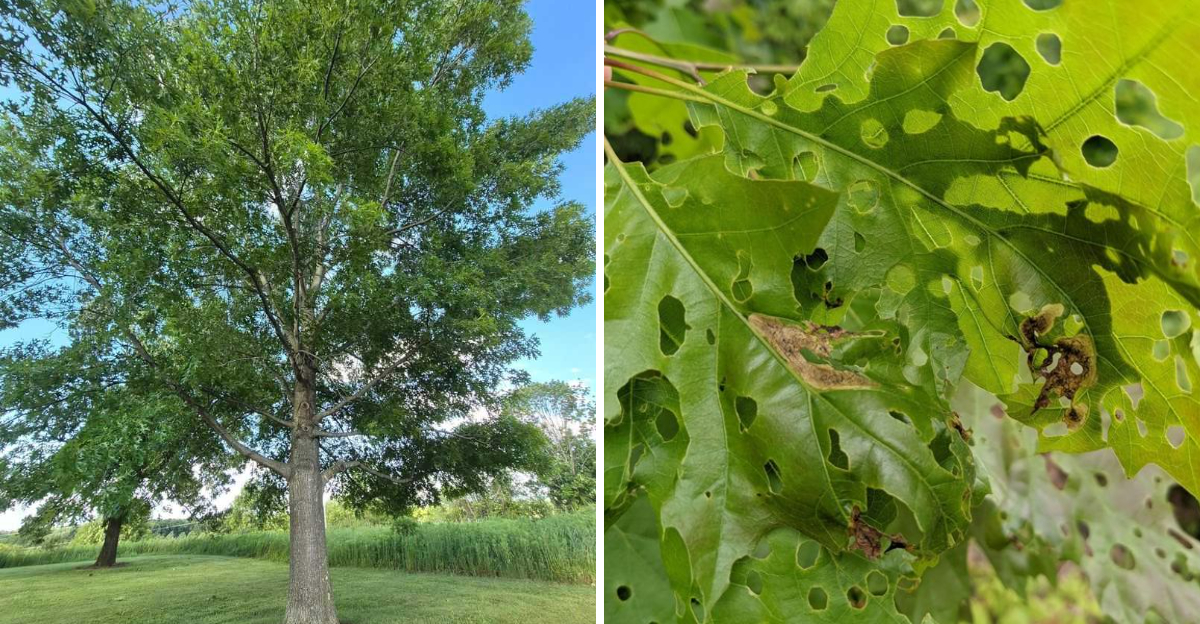
Swamp white oaks are tough trees. They handle Ohio’s clay soil, its wet springs, its unpredictable summers, and they do it with a reliability that makes them one of the more dependable native choices for Ohio landscapes.
That toughness is exactly why oak leafminer damage gets ignored for as long as it does. The leaves look bad.
Blotchy, discolored, mapped with pale trails that make a healthy tree look like something has gone seriously wrong. Homeowners see it, assume it is cosmetic, and move on.
Sometimes that is the right call. Other times it is the start of a pattern that compounds quietly over several seasons.
Solitary oak leafminer is specific to certain oak species. Swamp white oaks attract it consistently.
That damage deserves more attention than it usually gets from homeowners standing underneath and wondering what to do. That wondering deserves a real answer.
1. Spot The Blotches Before Leaves Look Burned
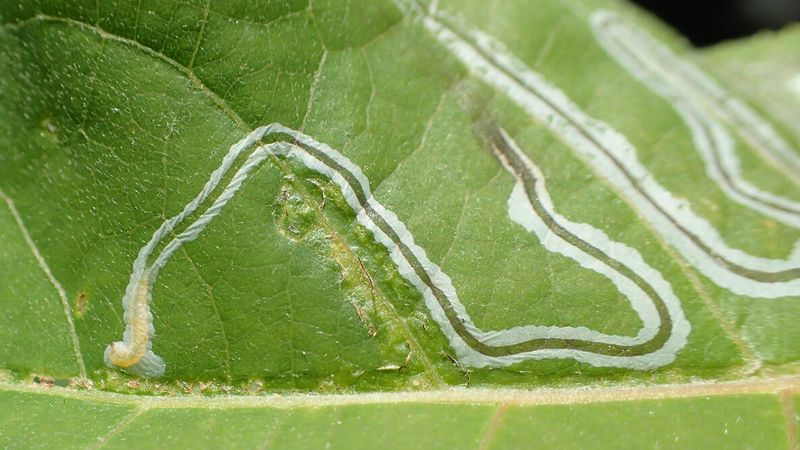
A tan blotch on a summer leaf is easy to dismiss as heat stress or a watering problem. But when those pale, irregular patches appear across multiple leaves on a swamp white oak, solitary oak leafminer is worth putting at the top of your suspect list.
Cameraria hamadryadella larvae feed between the upper and lower surfaces of the leaf, consuming internal tissue and leaving behind a discolored blotch mine.
Ohio university extension entomology resources describe these mines as irregular, papery, and often brownish or pale tan in appearance.
From a distance, a heavily mined canopy can look scorched or burned, which is exactly why careful inspection matters. Get close to the tree and examine several leaves from different branches.
Compare damaged leaves to healthy ones nearby. Notice whether the blotchy areas feel papery or dried out compared to the surrounding green tissue.
Damage scattered across individual leaves is different from widespread browning that moves through branches or the whole crown.
Not every brown blotch is a leafminer mine. Surface feeding, scorch, and fungal spots can look similar.
Checking multiple leaves and noting the mine pattern helps you build a clearer picture before drawing any conclusions about what is hurting the tree.
2. Know Why White Oaks Get Hit First
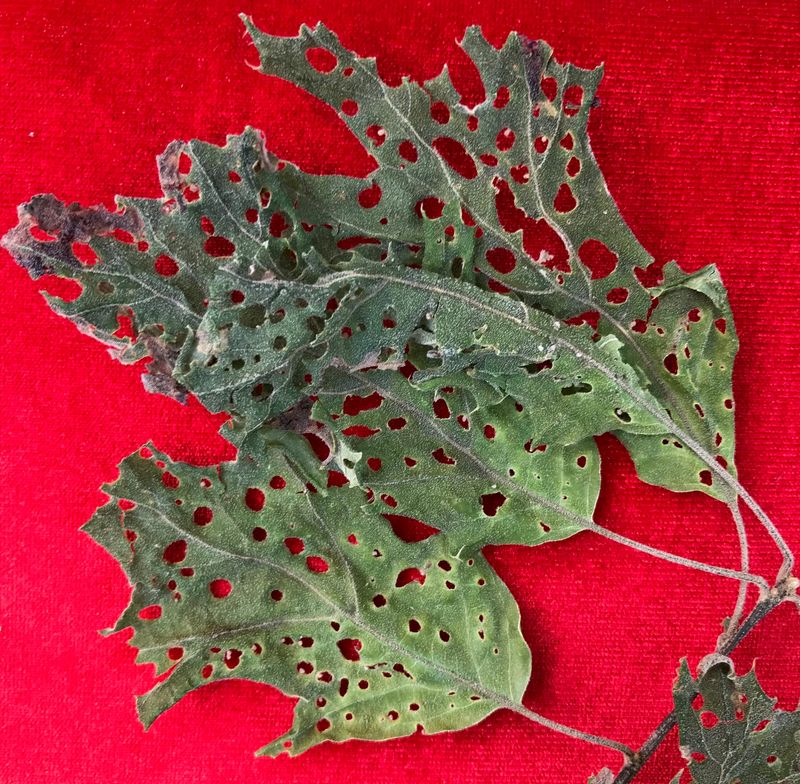
Bark that peels in papery curls near the upper trunk is one of the easiest ways to recognize a swamp white oak before you ever look at the leaves.
Quercus bicolor has a distinctive two-toned appearance, with rough, blocky bark near the base and flaky, lighter bark higher up.
Knowing your tree matters because host identification is the first step in understanding any pest problem correctly.
Solitary oak leafminer is associated with oaks in the white oak group, and university extension entomology resources confirm that white oaks are among its known hosts. Swamp white oak falls within that group.
That helps explain why Ohio homeowners in low-lying yards, floodplain edges, and moist central or northern regions may notice mines on this species. That said, not every white oak in every yard will show heavy damage every year.
Your Ohio Garden Changes Every Week. Your Plan Should Too.
Gardening in Ohio changes quickly throughout the season. Every Friday you’ll receive a simple weekly plan showing exactly what to plant, prune, fertilize, harvest, and protect so you never miss the right timing.
Pest pressure varies with local conditions, tree stress, and natural predator populations.
Before blaming the insect, confirm you are actually looking at a swamp white oak. Check the leaf shape, which tends to have a wider upper half and a narrowed base.
Look at the site conditions too, since this species naturally prefers moist, low-lying areas. Correct identification saves time and avoids treating the wrong tree entirely.
3. Check Swamp White Oak Leaves From Below
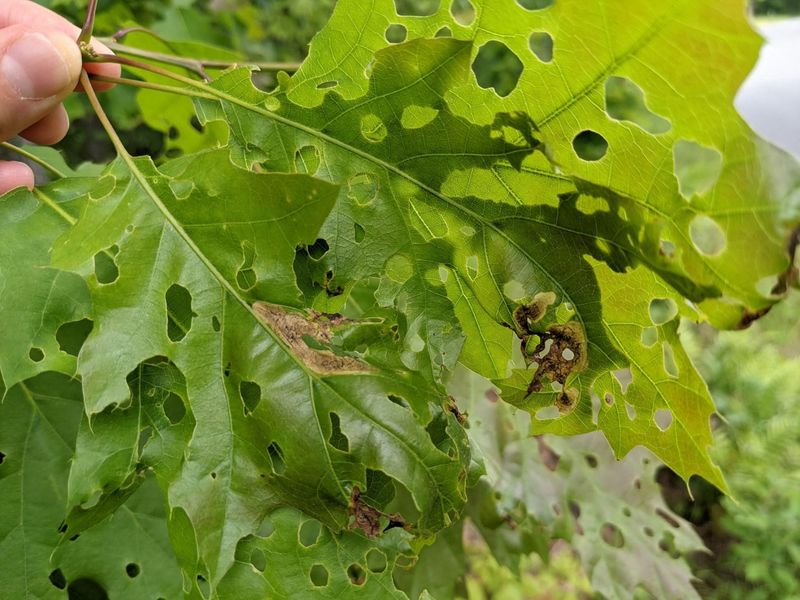
Flipping a leaf over sounds simple, but it changes everything you see. Leafminer damage on swamp white oak can appear different depending on which side of the leaf you examine.
Mines created by Cameraria hamadryadella larvae are internal, meaning the larva feeds within the leaf tissue rather than chewing holes from the outside.
OSU Extension and university extension entomology resources note that this internal feeding creates the characteristic blotch appearance visible on the leaf surface.
Start your inspection on lower branches, which are the easiest to reach safely from the ground. Hold a leaf up to natural light and look for the papery, translucent quality of a mined area.
A small hand lens can help you spot fine details, including the outline of a mine or frass left inside the tissue. Photographing the damage with a smartphone camera is a smart move.
This is especially useful if you plan to share photos with OSU Extension or a certified arborist.
Keep inspection ground-based and safe. There is no need to climb or use a ladder to evaluate leafminer damage.
Focus on leaves you can reach and handle gently. Internal mines will not have the ragged edges you see from caterpillar chewing.
That distinction is an important clue when sorting out what is happening in the canopy.
4. Do Not Confuse Mines With Oak Wilt
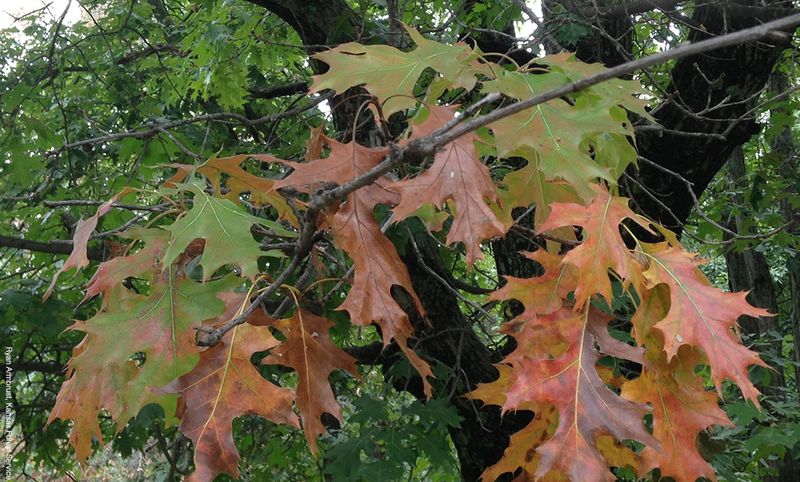
Oak wilt is one of the most serious tree diseases in the Midwest, and it spreads quickly through root grafts and beetle activity. Solitary oak leafminer damage is a completely different issue, but the two can look confusingly similar to an untrained eye.
Both can cause brown or discolored areas on oak leaves, which is exactly why careful observation matters before drawing any conclusions.
Plant diagnostic resources and OSU Extension guidance are clear on this point. Oak wilt typically causes wilting and browning that starts at the leaf margins and moves inward.
It can also cause rapid canopy decline that spreads through branches or whole sections of the crown. Leafminer damage appears as scattered blotchy mines on individual leaves.
It does not show the rapid progression, branch decline, or wilting pattern linked to oak wilt. The speed of symptom spread is one of the most important differences to watch.
If you notice branch decline, rapid browning moving through the canopy, or symptoms that seem to spread faster than leaf mines could explain, stop and get expert help. Contact OSU Extension, a certified arborist, or a plant diagnostic lab before taking any action.
Oak wilt requires professional diagnosis and should never be assumed from leaf blotches alone. Getting it right early can make a real difference for the tree and for nearby oaks in the neighborhood.
5. Skip Panic Sprays For Cosmetic Leaf Damage
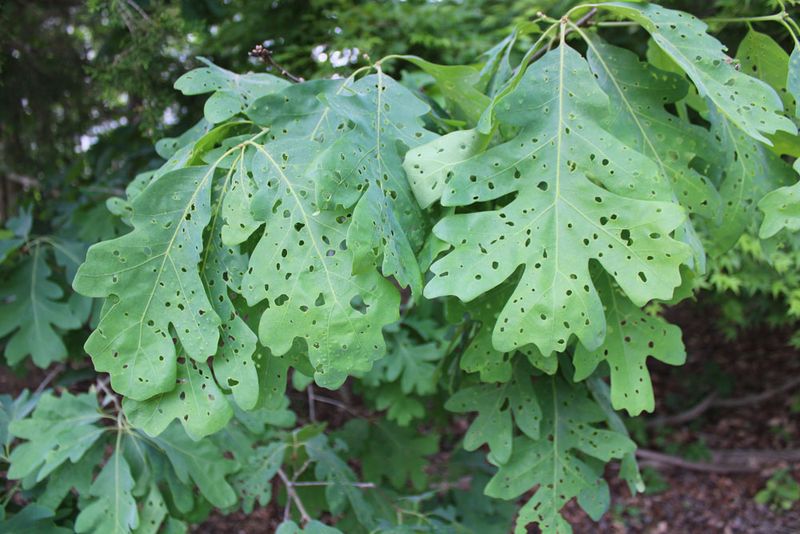
Reaching for an insecticide the moment you spot leaf damage is a natural reaction, but it is often not the right one.
OSU Extension and university extension entomology resources generally describe solitary oak leafminer injury as mostly cosmetic on healthy, established trees.
The larvae are already inside the leaf by the time most Ohio homeowners notice the damage. Contact sprays applied to the leaf surface after mining begins have limited effectiveness.
Unnecessary pesticide applications carry real costs. They can harm beneficial insects, including parasitic wasps that naturally help keep leafminer populations in check.
Pollinators working nearby trees and shrubs can also be affected. Arboriculture guidance consistently recommends confirming the pest and evaluating overall tree health before deciding whether any treatment is truly needed.
If you genuinely believe management is necessary after consulting reliable resources, follow OSU Extension guidance and read pesticide labels carefully. Timing matters more than product choice for leafminers, and label directions exist for good reason.
A certified arborist can help you evaluate whether treatment is warranted and what approach makes the most sense for your specific tree.
For most healthy, mature swamp white oaks showing scattered mine damage, watchful waiting and good tree care often serve the tree better than a spray program.
6. Rake Fallen Leaves Where Mines Are Heavy
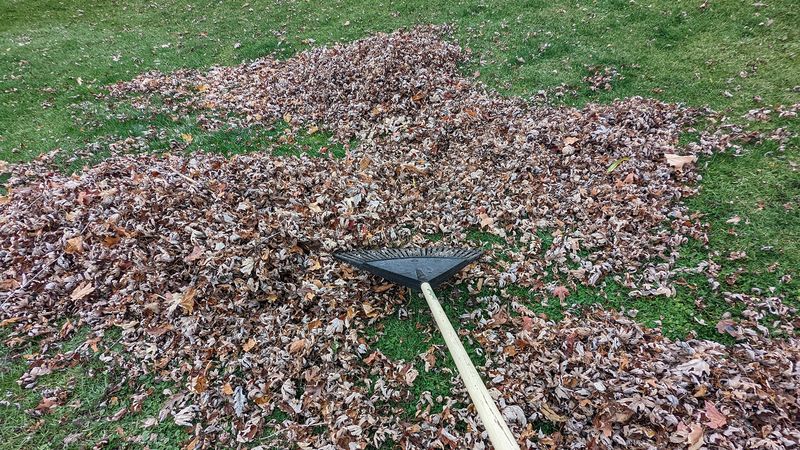
Fallen leaves under a swamp white oak tell part of the story. When leafminer damage has been heavy through the season, those mined leaves drop and sit on the ground, where overwintering life stages of the insect may be present.
Some extension resources suggest removing and disposing of heavily mined fallen leaves. This can help reduce local pest pressure as part of general sanitation, though it will not eliminate the pest from your yard.
Think of leaf cleanup less as a cure and more as a monitoring habit. Collecting fallen leaves in high-use areas keeps the yard tidy.
These areas include patios, play areas, and landscape beds. Cleanup also helps you observe how much damage occurred over the season.
That information is useful when deciding whether to seek professional advice the following year.
Keep leaves out of storm drains, and handle yard debris according to Ohio local guidance, since some municipalities have specific rules about leaf disposal or composting. Do not expect raking to solve the problem on its own.
A single tree can receive leafminer adults from surrounding woodlots or neighboring yards regardless of how carefully you clean up.
Sanitation is a supportive step, not a standalone fix, and pairing it with good tree care gives you the strongest foundation for a healthy swamp white oak.
7. Support Stressed Trees Through Heat And Drought
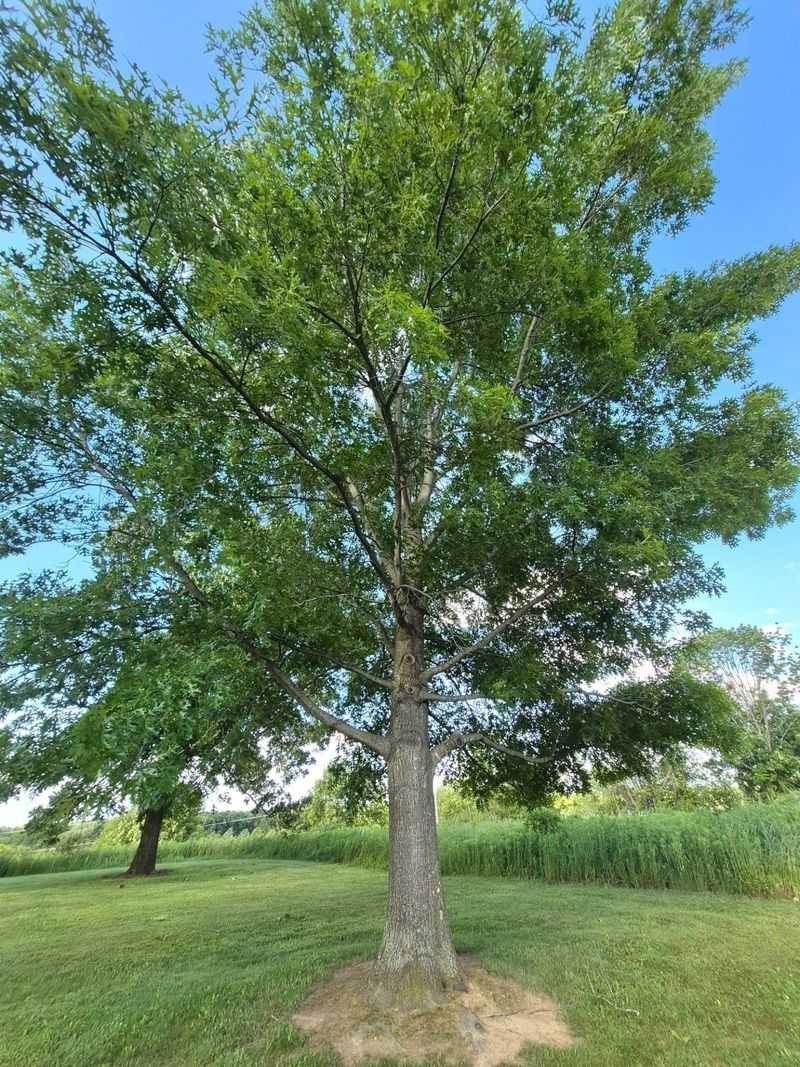
A healthy swamp white oak growing in good conditions is far more likely to shrug off a season of leafminer damage without long-term harm.
Trees dealing with drought, heat stress, compacted soil, root damage, or construction disturbance have fewer resources to draw on.
That makes any additional stress more concerning. Arboriculture guidance in Ohio consistently points to overall tree vigor as one of the most important factors in pest and disease tolerance.
During dry spells, water deeply and infrequently rather than giving the tree a light sprinkle every day. Deep watering encourages roots to grow downward and outward, building a stronger support system.
Aim for the area beneath the canopy, known as the drip line, rather than soaking right at the trunk base. A two- to four-inch layer of wood chip mulch helps retain soil moisture and moderate root zone temperature.
Keep it a few inches away from the trunk to avoid volcano mulching.
Skip fertilizing a stressed tree unless a soil test gives you a specific reason to add nutrients. Adding fertilizer without knowing what the soil actually needs can do more harm than good.
Protecting roots from soil compaction, avoiding heavy equipment near the tree, and giving the tree room to breathe are all practical steps that pay off over time.
Watering will not undo leafminer damage already present, but it builds the resilience the tree needs to recover well.
8. Call An Arborist When Decline Looks Bigger
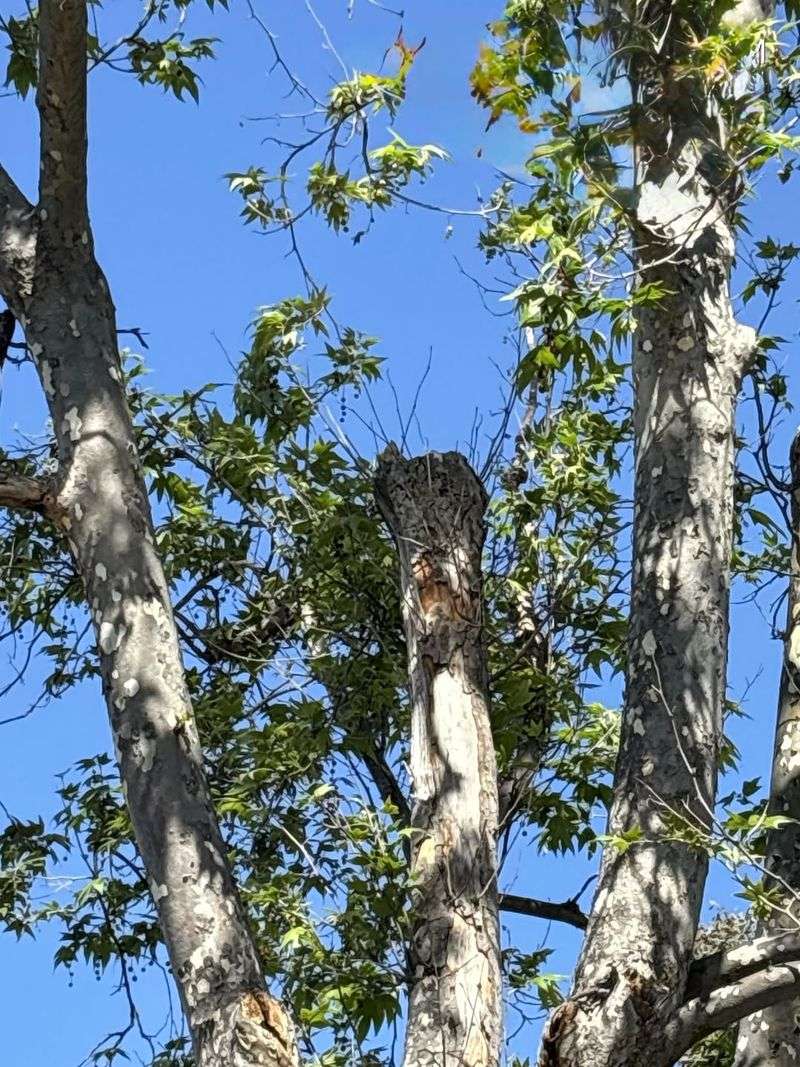
Scattered leaf mines on a swamp white oak are one thing. Rapid canopy thinning, branch decline, repeated heavy defoliation across seasons, or symptoms spreading beyond individual mined leaves are something else entirely.
Knowing when to escalate from careful observation to professional help is one of the most practical skills an Ohio homeowner can develop.
Certified arborists are trained to evaluate tree health from the roots up. They can distinguish leafminer damage from more serious problems like oak wilt, bacterial leaf scorch, or structural decline.
OSU Extension plant diagnostic labs can also analyze samples and provide reliable identification when symptoms are unclear. These resources exist precisely because tree problems are not always what they look like from the sidewalk.
Large trees near homes deserve a professional set of eyes. So do trees with construction-related root damage, major canopy loss, or signs of rapid decline.
Do not wait until a tree is severely compromised before making that call. The goal is not to panic over a few blotchy leaves, but to stay genuinely informed about what those leaves are telling you.
Solitary oak leafminer damage is often manageable and mostly cosmetic, yet it is still worth understanding. Learn what the canopy is showing you, and let that knowledge guide your next step rather than fear or guesswork.