Ohio Wet Spots Do Not Have To Look Like A Mud Problem With These Native Plants
If you have a soggy corner in your Ohio yard that turns into a muddy mess every time it rains, you are not alone.
Many Ohio homeowners deal with low spots, slow-draining soil, or areas that stay wet long after a storm passes.
Many people respond by ignoring the problem, throwing down gravel, or repeatedly attempting plants that struggle and fail season after season.
There is a better approach, and it starts with working with the water rather than against it.
Native plants can turn those problem areas into something that actually looks like it belongs there. These plants are naturally suited to Ohio’s wet conditions, and they bring color, height, and wildlife value without a lot of fuss.
Some of Ohio’s most spectacular wildflowers and grasses evolved specifically in wet prairies, floodplains, and stream edges. They do not merely tolerate soggy soil. They prefer it.
The wet corner that has been frustrating you for years is not a flaw in your yard. It is an opportunity waiting for the right plants.
These eight Ohio natives thrive in wet soil and make your yard look like you planned it that way all along.
1. Cardinal Flower
A hummingbird hovering over a flash of scarlet red in a rain-soaked corner of your yard.
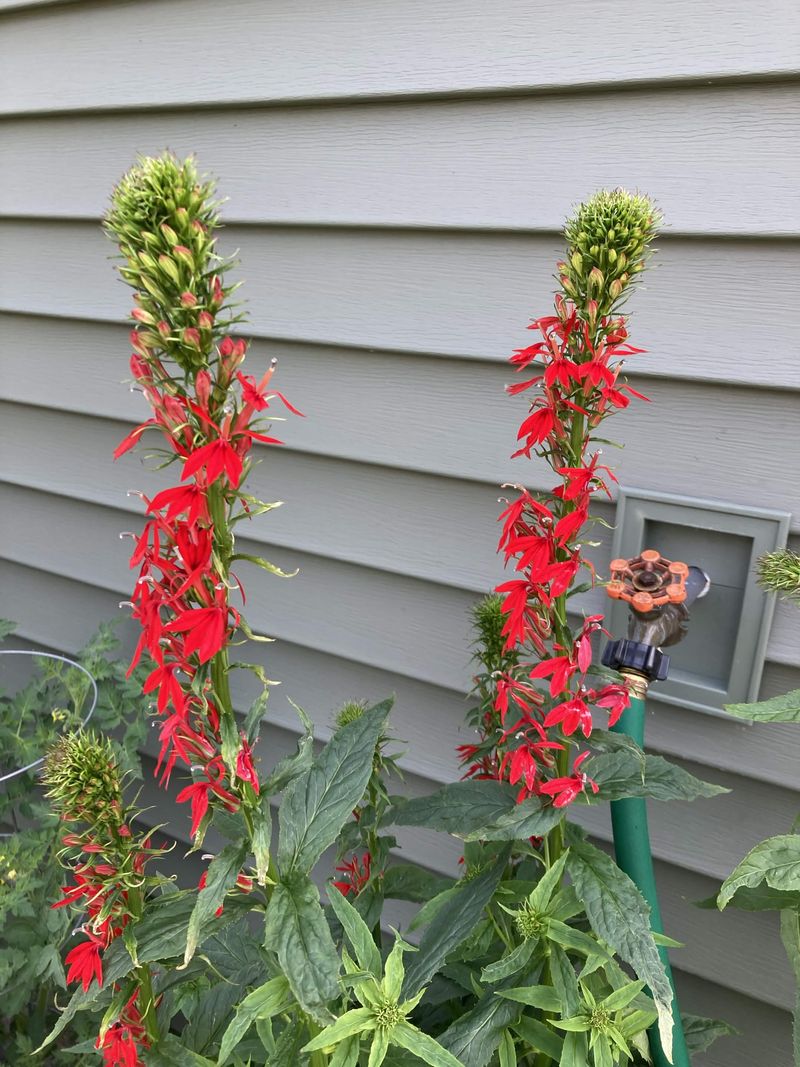
That is exactly what cardinal flower delivers every summer in Ohio. Lobelia cardinalis is one of the most striking native plants you can grow in consistently moist or wet soil, and it earns every bit of attention it gets.
Cardinal flower grows naturally along Ohio stream banks and pond edges, which means soggy ground is its comfort zone.
It grows two to four feet tall and blooms from mid-summer into early fall. The blooms are a deep, vivid red that almost seems to glow against green foliage.
Hummingbirds are absolutely enthusiastic about this plant.
The long tubular flowers are perfectly shaped for a hummingbird’s beak, and you will likely see them visiting your yard within days of the flowers opening. Swallowtail butterflies also stop by regularly.
Plant cardinal flower in full sun to part shade.
It does well along rain garden edges, wet drainage swales, or any low spot that collects runoff. It is a short-lived perennial, but it self-seeds readily, so you will usually get new plants each year without replanting.
Ohio State University Extension lists cardinal flower as one of the top native plants for supporting pollinators in wet areas, and any yard that has grown it once tends to keep growing it.
2. Swamp Milkweed
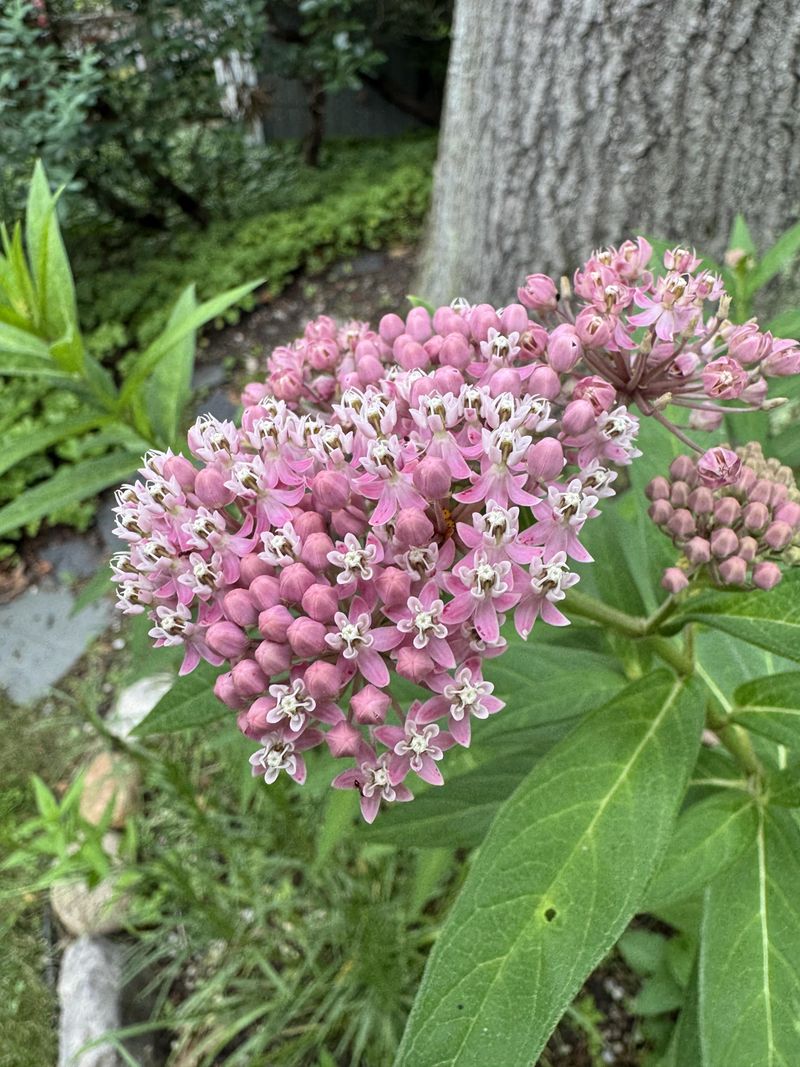
Every monarch butterfly needs milkweed to complete its life cycle, and swamp milkweed is the version built for Ohio’s wettest garden corners.
Asclepias incarnata grows naturally in wet meadows, marshes, and along stream banks across Ohio, making it a perfect fit for low spots that stay damp through the summer growing season.
This plant grows three to five feet tall with upright stems and clusters of rosy pink flowers that bloom from June through August.
The blooms smell faintly sweet and attract not just monarchs, but also bees, skippers, and many other beneficial insects. If you want your wet spot to buzz with life, this is one of the best plants to start with.
Your Ohio Garden Changes Every Week. Your Plan Should Too.
Gardening in Ohio changes quickly throughout the season. Every Friday you’ll receive a simple weekly plan showing exactly what to plant, prune, fertilize, harvest, and protect so you never miss the right timing.
Beyond monarch support, swamp milkweed is genuinely tough.
It handles clay soil, periodic flooding, and Ohio’s unpredictable spring weather without complaint. Once established, it spreads slowly by rhizome and can fill a rain garden edge beautifully over a few seasons.
Plant it in full sun for best flowering, though it tolerates light shade.
It pairs well with Joe Pye weed, blue flag iris, and switchgrass for a layered, natural look. The seed pods that form in fall add visual interest even after the blooms are gone, and birds find them worth investigating through winter.
3. Blue Flag Iris
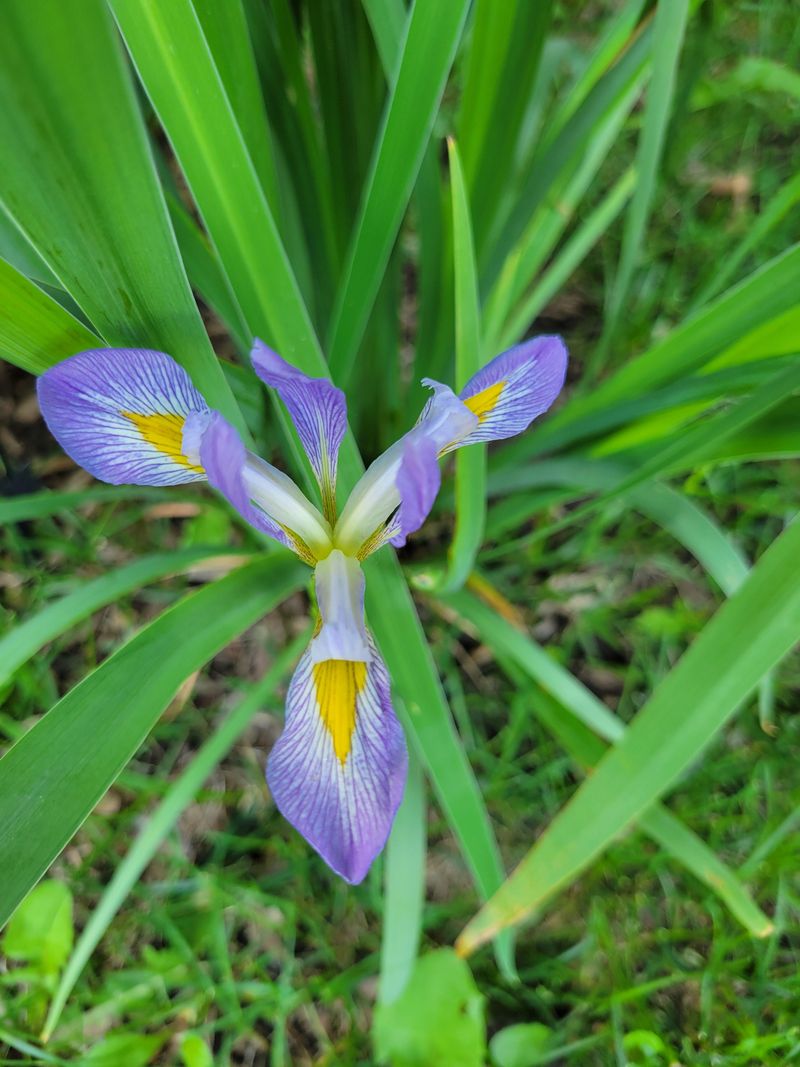
There is something almost elegant about blue flag iris standing tall along a wet garden edge.
Iris virginica brings the kind of refined beauty to soggy spots that makes visitors think you hired a landscape designer. The truth is, this plant is simply doing what it was born to do in Ohio’s naturally wet areas.
Blue flag iris produces stunning violet-blue flowers in late spring, usually May into early June.
The blooms have a classic iris shape with deep purple veining and a yellow patch at the center that guides pollinators straight to the nectar. Native bees and larger bumblebees are especially fond of it.
The foliage is just as useful as the flowers.
The tall, sword-like leaves grow two to three feet high and create a bold vertical line that gives structure to rain gardens, pond edges, and wet drainage areas. Even after blooming, the green leaves look tidy and intentional through the growing season.
Blue flag iris handles standing water better than most native plants.
It can grow directly at the water’s edge or in soil that stays saturated for extended periods. Plant it in full sun to part shade, and give it room to clump up naturally over time.
It works especially well as a border plant along the wet edge of a rain garden or bioswale, softening the line between wet and dry zones and making the whole planting look polished.
4. Joe Pye Weed
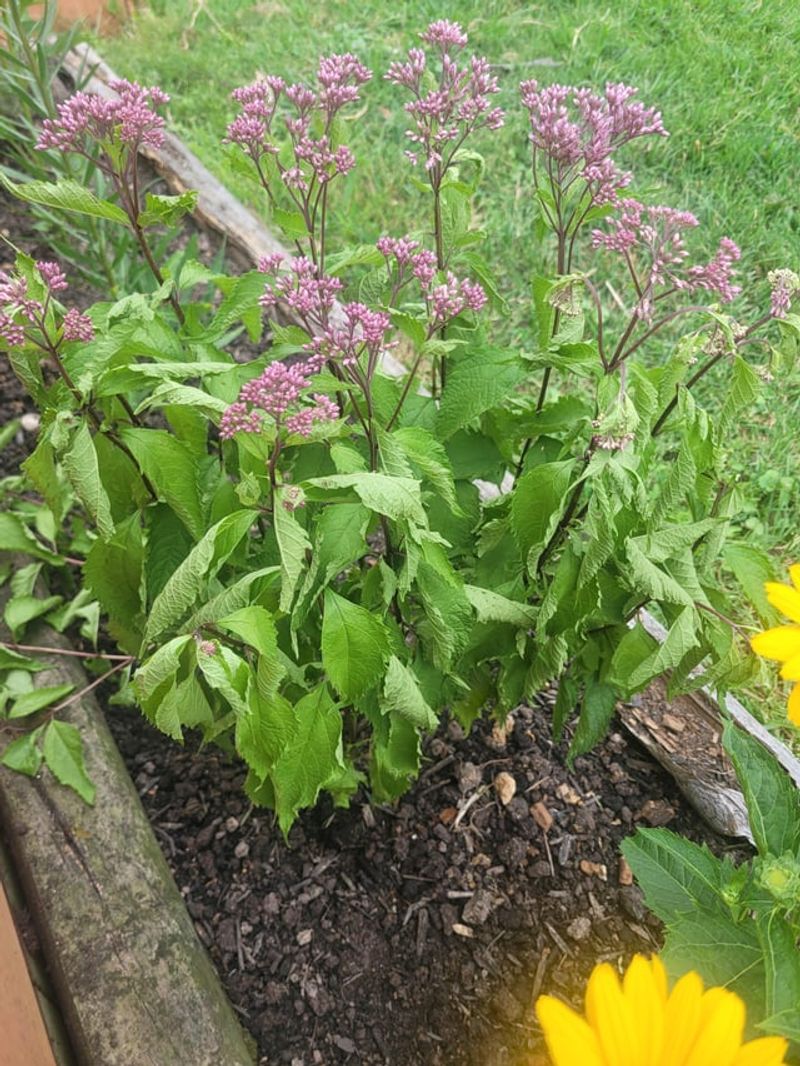
When late summer rolls around and most garden plants are starting to look tired, Joe Pye weed is just hitting its stride.
This tall, bold native is one of the best choices for wet Ohio yards that need height, late-season color, and serious pollinator appeal all at once.
Eutrochium purpureum grows five to eight feet tall in moist to wet soil.
The large, dome-shaped flower heads are a soft mauve-pink and bloom from July through September.
Swallowtails, monarchs, skippers, and bumblebees swarm this plant during peak bloom, making it a genuine wildlife magnet in any wet garden corner.
Despite its impressive size, Joe Pye weed is surprisingly low-maintenance.
It tolerates Ohio’s clay-heavy, wet soils well and does not need staking in most cases. Once established, it spreads slowly and reliably fills in a wet area without becoming aggressive or taking over neighboring plants.
Plant it at the back of a wet border or in the center of a rain garden where height is welcome.
It pairs beautifully with swamp milkweed, switchgrass, and cardinal flower for a layered, naturalistic planting. The dried seed heads also provide winter bird interest, so there is no need to cut it back too early in the season.
Ohio Extension resources consistently list Joe Pye weed among the top native plants for rain gardens and wet meadow restorations.
5. Turtlehead
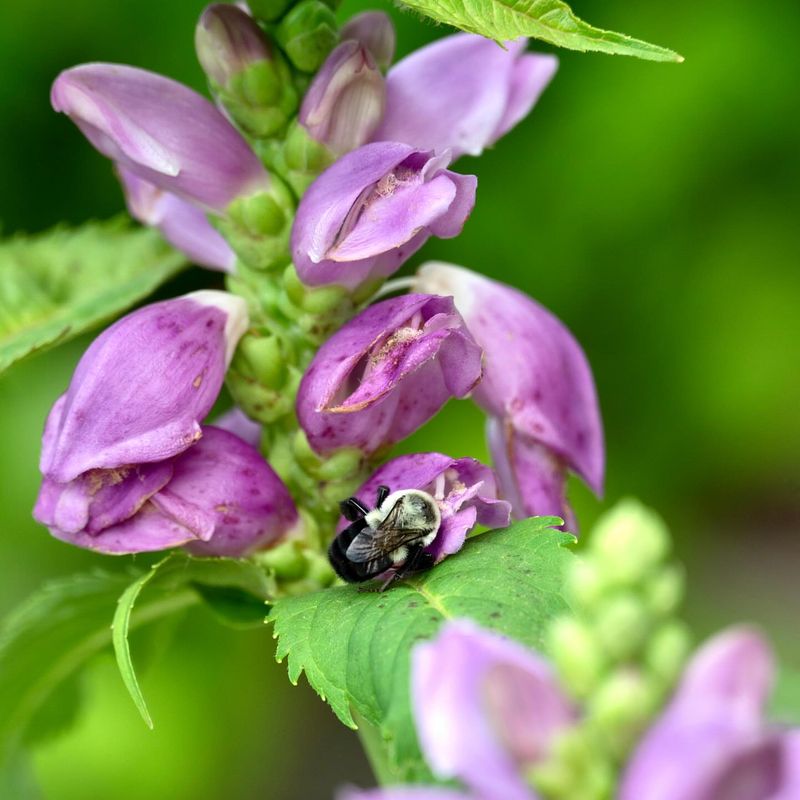
Shady, damp corners that seem impossible to plant are exactly where turtlehead thrives.
Chelone glabra is one of those quiet overachievers in the native plant world. It does not demand attention, but once it blooms in late summer, gardeners always stop to take a closer look.
The flowers are unusual and charming.
Each bloom looks like a small turtle’s head peeking out of a shell, which is exactly where the name comes from.
The white to pale pink flowers bloom in August and September, filling a season gap when many other native plants have already finished.
Baltimore checkerspot butterflies, which are native to Ohio, depend on turtlehead as a host plant for their caterpillars.
Turtlehead grows one to three feet tall and does best in partial to full shade with consistently moist or wet soil.
It is a great choice for shaded rain garden areas, wet woodland edges, or low spots under trees where other plants struggle. The glossy dark green leaves look attractive all season, even before the flowers appear.
Plant turtlehead in groups of three or more for the best visual impact.
It spreads slowly by rhizome and forms tidy clumps over time. It does not need much fertilizer and actually performs better in lean, moist soil than in heavily amended beds.
For Ohio gardeners dealing with wet shade, turtlehead is genuinely hard to beat, checking every box: native, wildlife-friendly, low-maintenance, and uniquely beautiful in a spot where most plants simply refuse to cooperate.
6. Rose Mallow
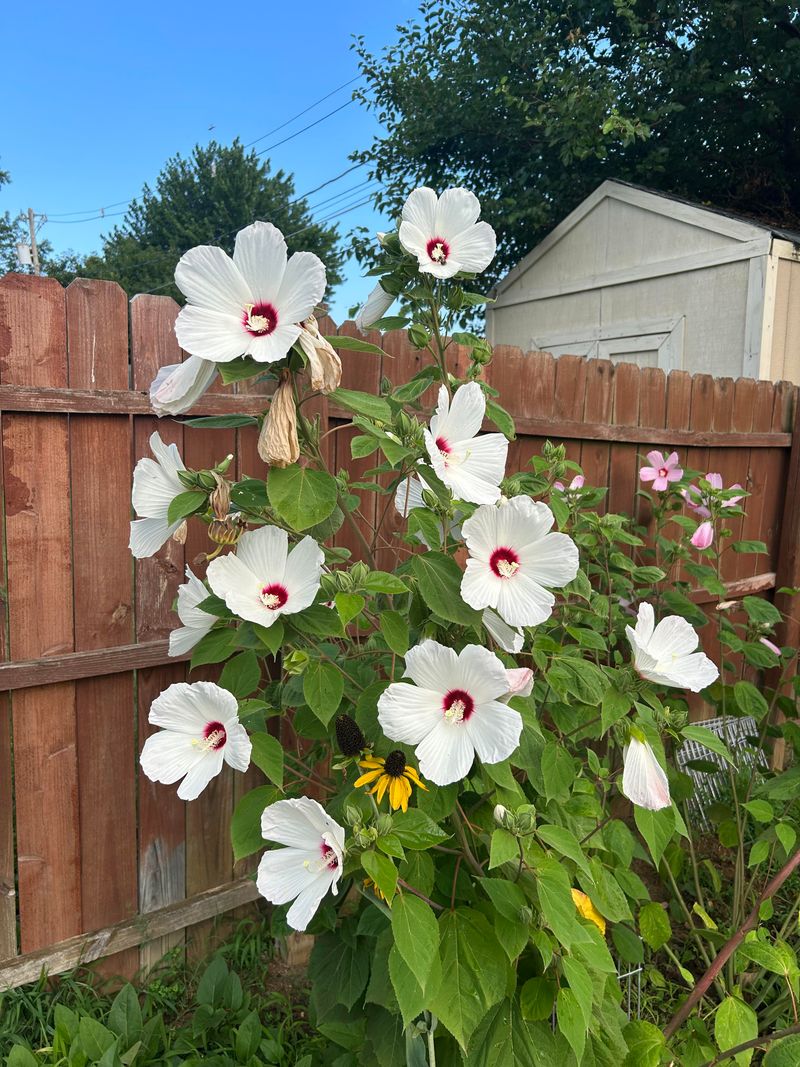
Nothing in the native plant world quite prepares you for the first time you see rose mallow in full bloom.
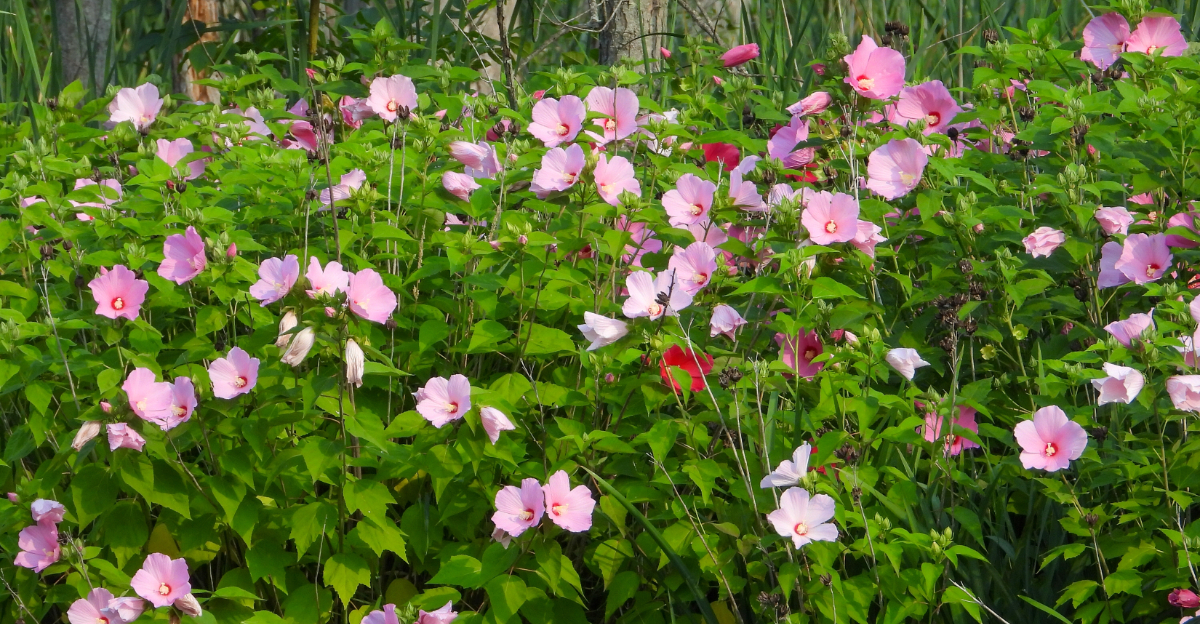
The flowers on Hibiscus moscheutos can reach ten to twelve inches across, making them some of the largest blooms of any plant growing in Ohio’s wet areas.
It is the kind of plant that stops neighborhood foot traffic and prompts questions from people who did not know Ohio had anything like this growing in it.
Rose mallow is a native hibiscus that grows naturally in Ohio’s marshes, wet meadows, and floodplains.
It grows four to six feet tall and produces those enormous flowers in shades of white, pink, rose, and deep red from July through September. Each flower only lasts one day, but new blooms open daily throughout the long flowering season.
The plant loves full sun and consistently wet to moist soil.
It handles periodic flooding and heavy clay, which makes it a standout performer in Ohio rain gardens and low spots that collect runoff after storms. Bumblebees and hummingbirds visit the flowers regularly.
Rose mallow is slow to emerge in spring, so do not assume it has not survived the winter.
Mark its location and be patient. Once it appears, it grows quickly and puts on a show that is genuinely hard to match in a wet area garden.
Pair it with Joe Pye weed, switchgrass, and swamp milkweed for a bold, layered planting that looks anything but accidental.
7. Soft Sedge
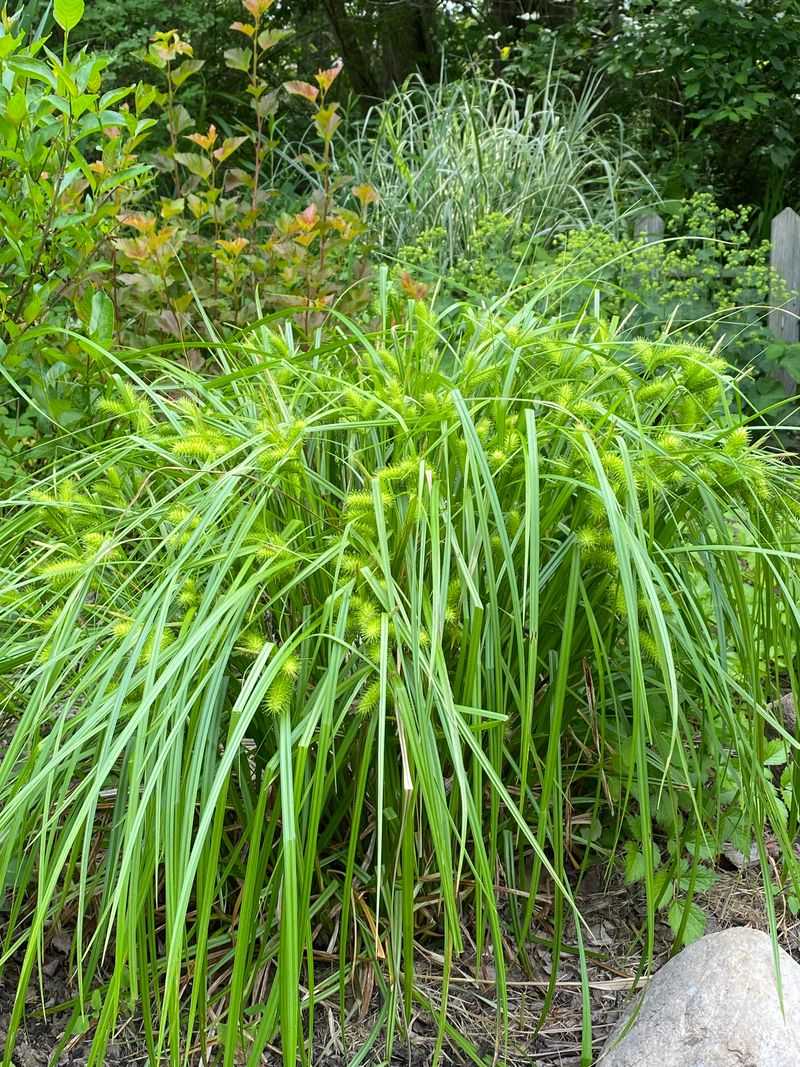
A rain garden or wet spot without an edge plant often looks unfinished, like a painting without a frame.
Soft sedge, specifically Carex lurida or other native Ohio sedges, solves that problem quietly and effectively. It is not a flashy plant, but it does one of the most important design jobs in a wet garden.
Native sedges are grass-like plants that form dense, arching clumps of narrow green leaves.
They grow naturally in wet ditches, floodplains, and stream banks all across Ohio.
In a garden setting, they soften the transition between wet and dry areas, giving the whole planting a natural, intentional look that reads as designed rather than neglected.
Soft sedge stays relatively low, typically one to two feet tall, which makes it ideal for front borders, rain garden edges, and wet areas near walkways.
It stays green well into fall and sometimes through mild Ohio winters. The texture it adds contrasts nicely with the bold leaves of iris or the tall stems of Joe Pye weed.
Plant sedges in full sun to full shade.
They are among the most adaptable native plants for wet Ohio soils and tolerate both periodic flooding and short dry spells once established.
They also provide important cover and nesting material for ground-nesting birds and small beneficial insects.
Soft sedge is the finishing touch your wet area planting needs, pulling the whole design together and making a soggy corner look like it was always meant to be a garden feature rather than a drainage headache.
8. Switchgrass
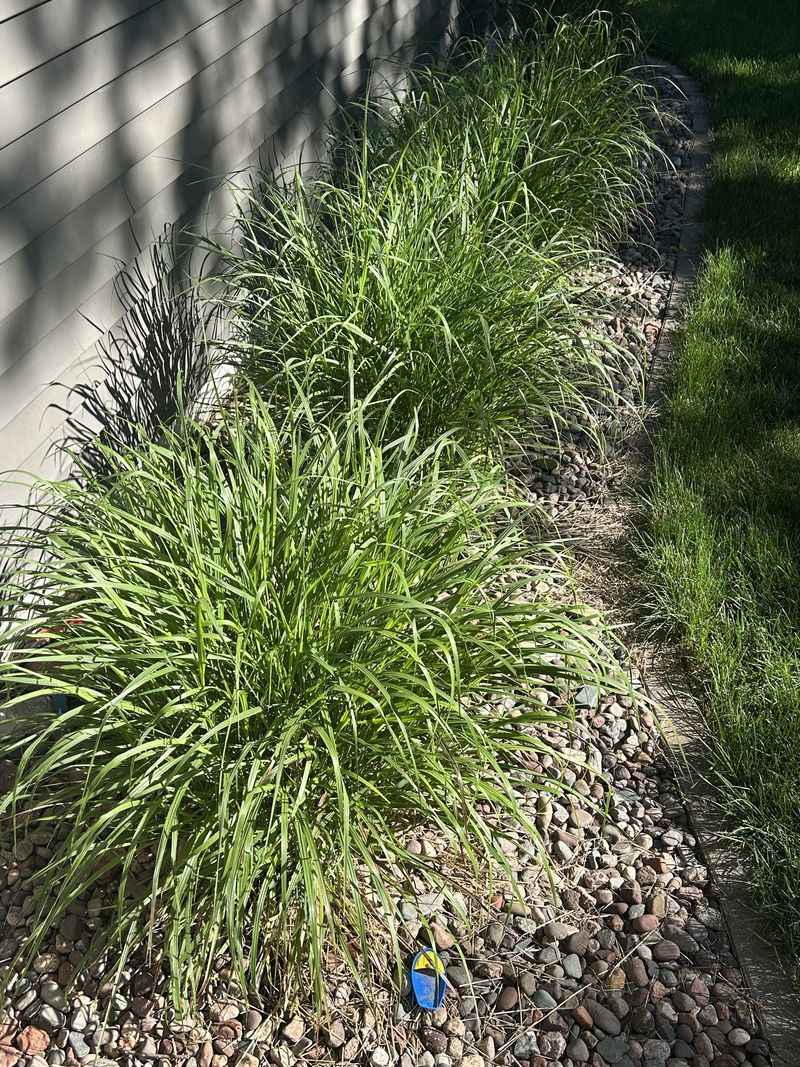
Every well-designed rain garden or wet area planting needs a structural anchor, and switchgrass fills that role better than almost anything else native to Ohio.
Panicum virgatum is a warm-season grass that grows naturally in wet prairies, floodplains, and stream edges across the state. In a garden, it is the plant that makes everything around it look more intentional.
Switchgrass grows three to six feet tall depending on the variety and produces airy, cloud-like seed heads in late summer that catch the light beautifully.
The foliage often turns shades of gold, orange, or deep red in fall, giving the wet area a second season of visual interest long after summer bloomers have faded. Birds feed on the seeds throughout winter.
The root system is where switchgrass really earns its place.
It develops deep, fibrous roots that hold soil in place, absorb water quickly, and reduce runoff from rain events.
Ohio watershed and rain garden resources consistently recommend it as a foundational plant for wet area plantings because of how effectively it manages water at the root level.
Plant switchgrass in full sun for the best color and density.
It tolerates wet, clay-heavy Ohio soils without complaint and handles both flooding and brief dry periods once established. Space plants two to three feet apart and let them fill in naturally over two to three seasons.
Pair it with rose mallow, Joe Pye weed, and swamp milkweed for a planting that has structure, color, and wildlife value from spring through winter.
Switchgrass is the backbone that holds the whole wet garden together, and Ohio yards with soggy spots are considerably better for having it.