Never Prune Tomato Foliage During This Oregon Heatwave
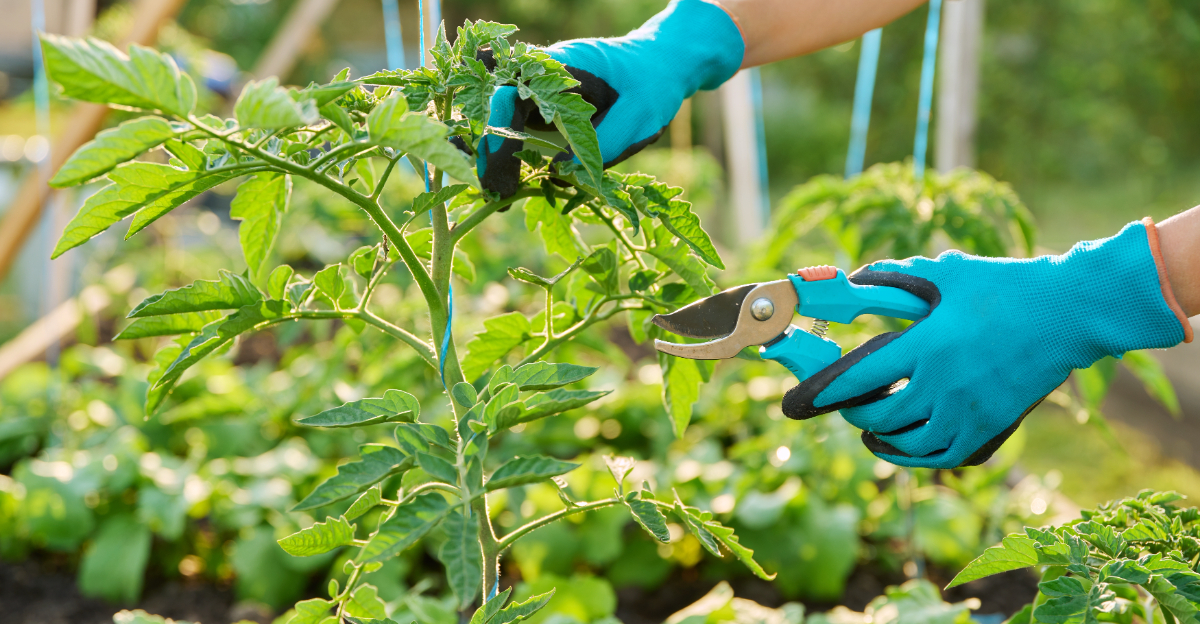
Pacific Northwest gardens are baking under a sun that shows no mercy. Tomato plants sit in the middle of it, leaves curling, stems stressed, roots working overtime just to keep the plant upright.
Reaching for pruning shears feels productive, like you’re helping the plant breathe. That instinct works against you the moment temperatures climb past what tomatoes consider tolerable.
Foliage isn’t clutter during a heatwave. Every leaf acts as a shield, blocking direct sun from scorching stems and fruit that have no natural defense once exposed.
Oregon gardeners watching their tomatoes struggle right now face a simple choice. Put the shears down, let the leaves do their job, and give your harvest a real shot at surviving this stretch of extreme heat.
Cutting Back Leaves Right Now Does More Harm Than Good
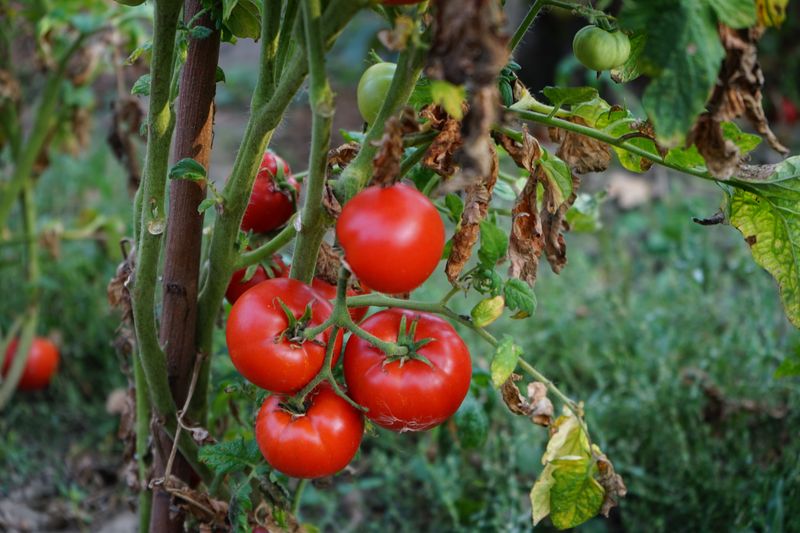
Pruning tomato foliage during a heatwave can do more damage than good.
When temperatures climb past 90 degrees, tomato plants shift into survival mode. Every leaf becomes a critical tool for managing heat and moisture.
Cutting foliage forces the plant to spend energy healing wounds instead of protecting fruit. That energy trade-off is costly when the plant is already stressed by extreme heat.
Open cuts on stems can also lose moisture in hot, dry air, adding extra strain when roots are already working to keep up.
Think of each leaf as a tiny solar panel and cooling vent rolled into one. Removing panels mid-crisis makes an already struggling system collapse faster.
Pruning also signals stress to the plant. It can redirect energy away from fruit production as a result.
Pruning during heat events can lead to visible wilting soon after. That wilting is not just from heat, it is from the compounded shock of cuts and high temperatures together.
Skip pruning tomato foliage during an Oregon heatwave if you want to protect your fruit. Patience now means a bigger, better harvest once temperatures finally drop back to normal.
Foliage Acts As A Natural Shade Layer For Developing Fruit
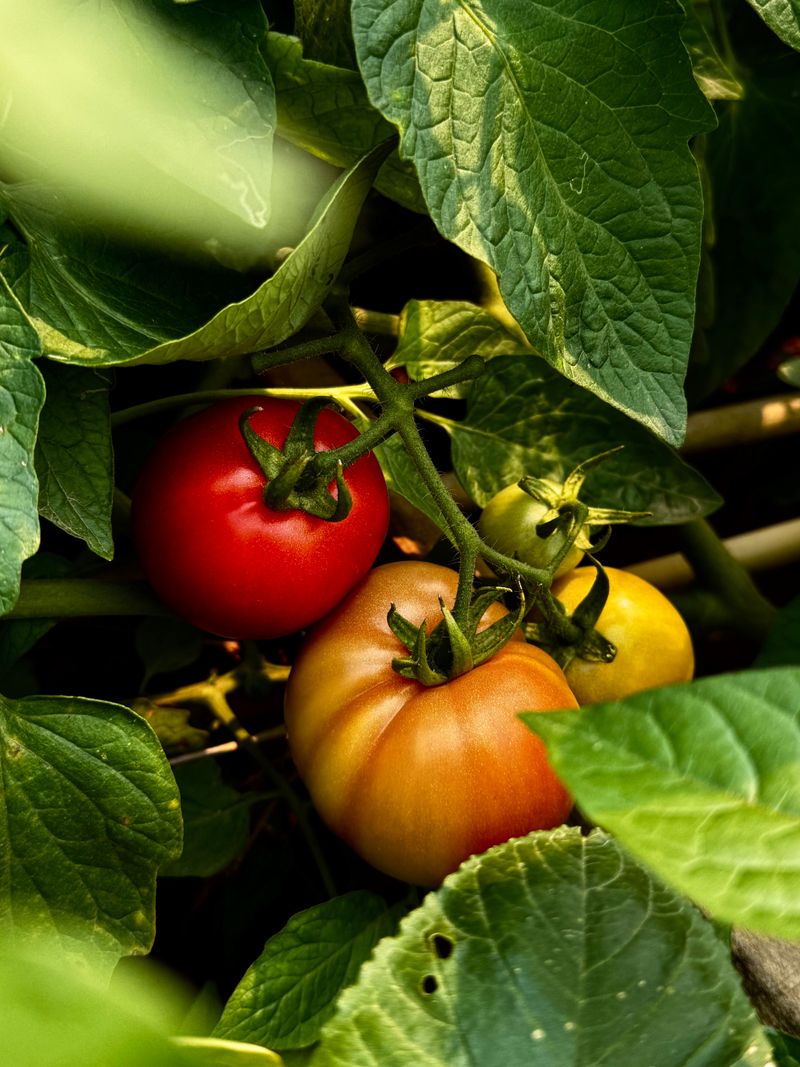
Picture a beach umbrella on a scorching July afternoon, that is exactly what tomato leaves do for developing fruit. Without that canopy, everything underneath gets cooked.
Tomato leaves create a layered microclimate beneath the plant. That shaded zone stays noticeably cooler than the exposed air around it.
Developing tomatoes are mostly water and delicate tissue. Direct sun during extreme heat can break down those tissues faster than the fruit can recover or ripen properly.
The broad, overlapping leaves are not random, they evolved to shield vulnerable growth below. Mother Nature designed this system long before gardeners started second-guessing it.
Fruit that stays shaded during extreme heat retains its cellular structure and flavor compounds. Exposed fruit often turns mealy, bland, or develops hard spots that ruin texture.
Removing foliage during an Oregon heatwave strips away that built-in protection instantly. The fruit goes from shaded and safe to sunburned and stressed within a single afternoon.
Many gardeners do not realize how fast damage sets in. One hot afternoon with bare fruit can undo weeks of careful watering and feeding.
Your Oregon Garden Changes Every Week. Your Plan Should Too.
Gardening in Oregon changes quickly throughout the season. Every Friday you’ll receive a simple weekly plan showing exactly what to plant, prune, fertilize, harvest, and protect so you never miss the right timing.
Keeping leaves intact is the simplest, most effective way to protect your crop right now. Let the plant do what it was designed to do, and step back until cooler days return.
Removing Leaves Exposes Fruit To Sunscald Within Hours
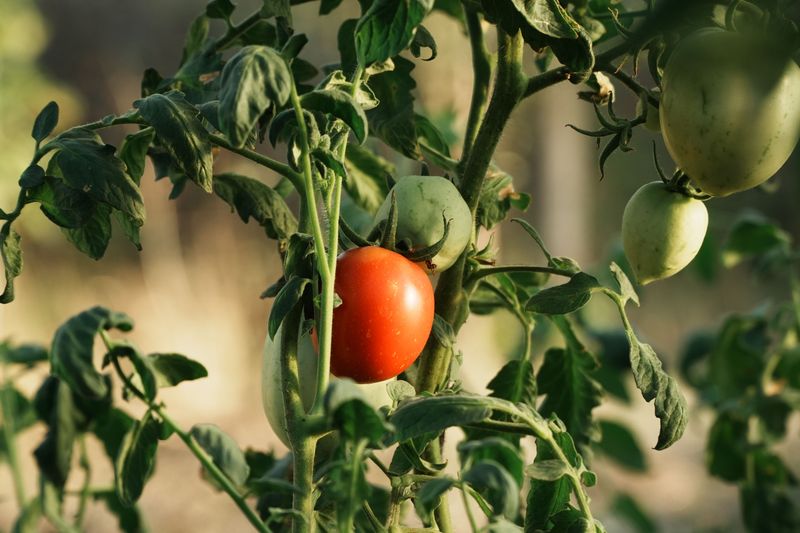
Sunscald sounds dramatic, and for Oregon tomato growers right now, it absolutely is. It happens fast, it looks awful, and it makes your tomatoes nearly inedible in the worst cases.
When fruit is suddenly exposed to intense direct sunlight, the skin overheats and the tissue beneath it breaks down. A pale, papery white or yellow patch appears, that is sunscald doing its damage.
This damage can show up within the same day the fruit is exposed. By the time you notice it, the harm is already done and cannot be reversed.
Affected areas become entry points for mold, bacteria, and rot. What starts as a small white spot can spread into a soggy, ruined section that takes the whole tomato down with it.
Green tomatoes are especially vulnerable because their skin has not yet toughened through the ripening process. They burn faster and show damage more severely than nearly-ripe fruit.
Sunscald is one of the most preventable problems in summer gardening. Keeping foliage in place costs you nothing and prevents a loss that no amount of watering can fix after the fact.
Some gardeners try to cover exposed fruit with cloth after pruning, but that is just solving a problem you created. Leaving the leaves alone in the first place is smarter and easier.
Skip pruning tomato foliage during a heatwave if protecting your fruit matters to you. Sunscald is permanent and largely avoidable with one simple decision.
Only Dry Or Diseased Leaves Should Come Off Right Now
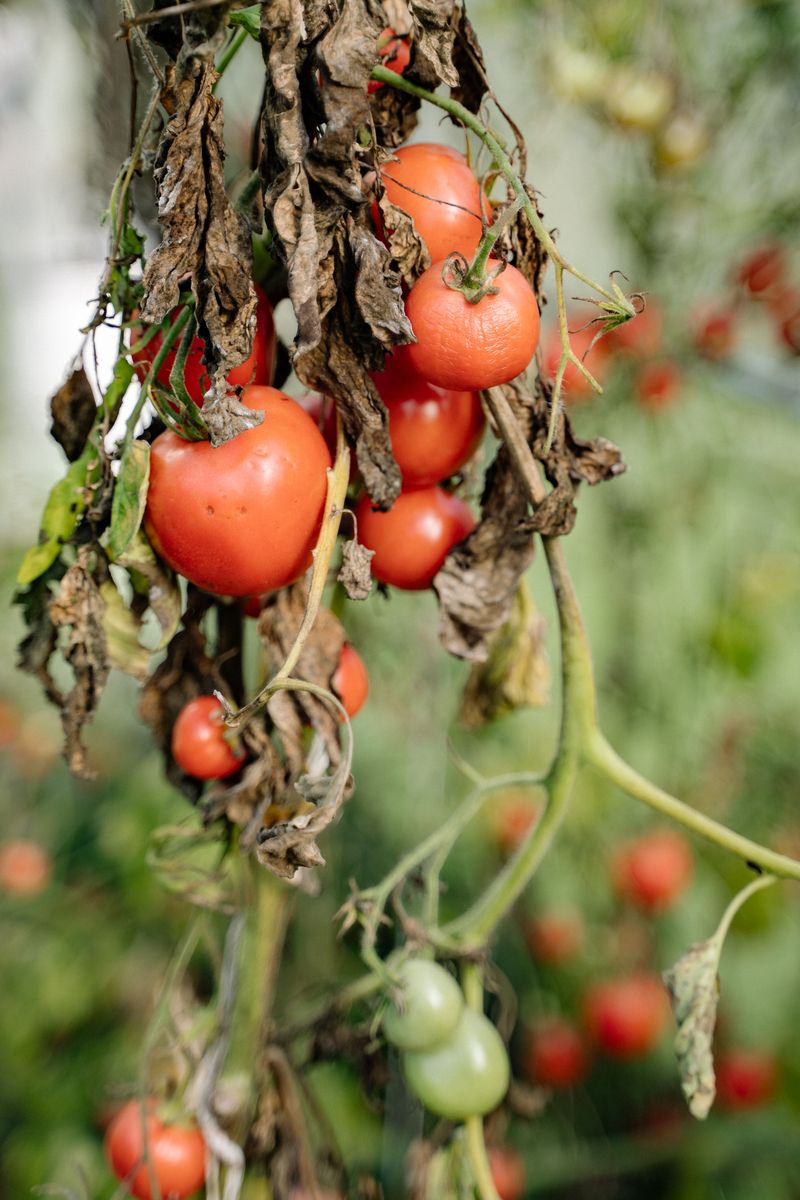
Not every leaf on your Oregon tomato plant deserves to stay, some truly do need to go. The key is knowing exactly which ones fall into that category during extreme heat.
Yellow, brown, or visibly diseased leaves are no longer contributing to the plant’s health. Leaving them attached can spread fungal issues or bacterial infections to otherwise healthy growth nearby.
Dry leaves also trap moisture against stems overnight, which creates ideal conditions for blight and mold. Removing them is a targeted action, not a general pruning session.
The rule is simple: if a leaf is green and attached, leave it alone right now. If it is brown, crispy, spotted with disease, or fully yellow, it is safe to remove carefully.
Use clean, sharp scissors rather than pulling leaves off by hand. Tearing creates larger wounds that take longer to heal and invite more stress during peak heat hours.
Work in the early morning when temperatures are still manageable. Removing leaves in midday heat adds stress on top of stress, which the plant does not need right now.
Limit yourself to removing only what is clearly dry or infected. Resist the urge to clean up healthy-looking foliage just because the plant looks messy or overgrown to you.
Selective removal is not the same as pruning, it is triage. Treat it that way and your tomato plant will reward you with fruit once the heatwave finally breaks.
Shade Cloth Offers Better Protection Than Cutting Foliage
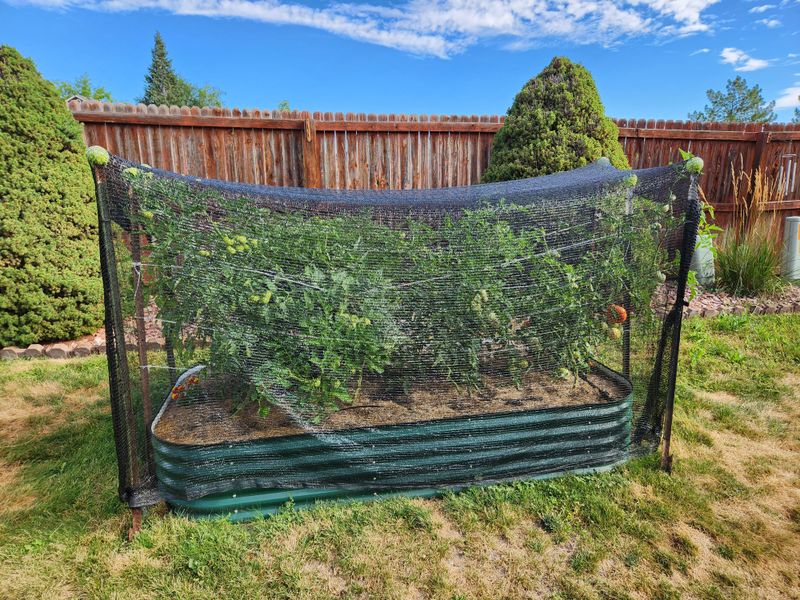
If you are worried about your tomatoes roasting, shade cloth is the upgrade your Oregon garden needs right now. It is affordable, reusable, and does not stress the plant at all.
Shade cloth blocks 30 to 50 percent of direct sunlight while still allowing airflow and moisture to move through. That balance keeps fruit cool without trapping humidity that leads to disease.
Pruning foliage to cool the plant is like cutting off a sunscreen to reduce sunburn, it solves nothing and creates new problems. Shade cloth adds protection without removing anything the plant needs.
Oregon gardeners can find shade cloth at most garden centers or order it online for quick delivery. Look for a 30 to 50 percent shade rating for tomatoes, heavier ratings block too much light for healthy growth.
Set it up on stakes or a simple PVC frame above the plants. You want airflow between the cloth and the leaves, not a tight wrap that traps heat underneath.
On the hottest days, shade cloth can meaningfully lower fruit surface temperature. That difference is the gap between a thriving plant and a scorched one.
Remove the cloth in the evening so plants get full light during cooler morning hours. This on-and-off approach keeps photosynthesis strong while protecting fruit during the harshest part of the day.
Shade cloth is the practical, low-effort solution that beats any pruning shortcut. Your tomatoes will thank you when harvest time finally arrives.
When It’s Safe To Resume Normal Pruning
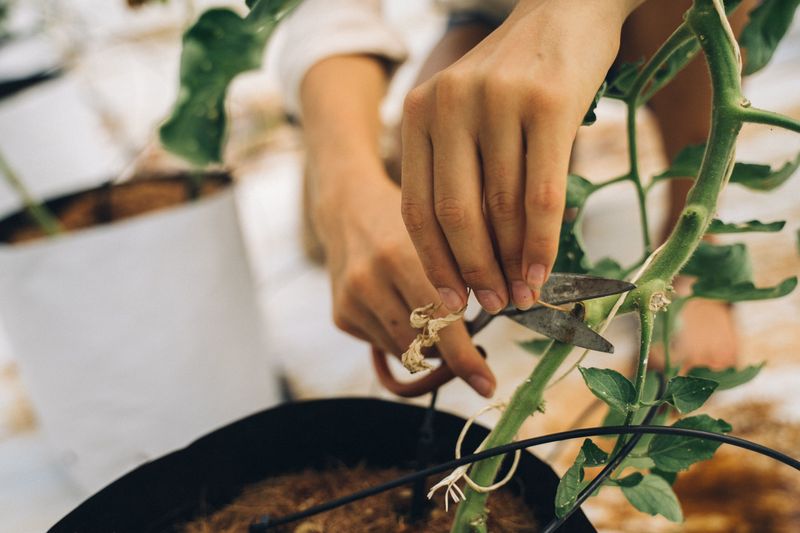
The heatwave will not last forever, and when it breaks, your pruning schedule can get back on track. Knowing exactly when to start again matters just as much as knowing when to stop.
Wait until daytime highs drop consistently below 85 degrees for at least two to three days in a row. One cooler afternoon is not enough, the plant needs sustained relief before it can handle any cuts.
Morning pruning is generally the safest choice, regardless of season. Cuts made before 9 a.m. have the entire cool part of the day to begin healing before afternoon heat arrives.
Start with sucker removal before moving on to larger foliage cuts. Suckers are small and the wounds are minor, making them the perfect reintroduction to regular maintenance after a break.
Check the five-day forecast before scheduling any significant pruning session. If another heat event is predicted within 48 hours, hold off and let the plant stay fully leafed out a little longer.
Healthy plants rebound quickly when pruning resumes under normal conditions, often showing new growth within days and a noticeable boost in airflow and fruit visibility shortly after.
Do not try to make up for lost time by pruning aggressively all at once. Spread sessions out over several days to give the plant time to adjust between each round of cuts.
Hold off on pruning tomato foliage during peak heat, but once the cool returns, your Oregon garden is ready to thrive again.