What Oregon Homeowners Should Know Before Planting Along A Shared Fence
A shared fence can seem like the perfect place to add plants, but it deserves a little extra thought first.
In Oregon, wet weather and fast spring growth can turn a simple border planting into a neighbor issue if the plants spread too far. Roots may cross the line. Branches can lean into the other yard.
Vines can grip the fence and make maintenance harder later. The right plant in the right spot can add privacy and beauty without causing tension.
The wrong one can create years of trimming, cleanup, or awkward conversations. Before planting, it helps to think about mature size, fence access, and who will care for growth on each side.
A little planning now can keep the fence line looking good and the neighbor relationship much easier.
1. Know Exactly Where The Property Line Runs
Before a single shovel hits the ground, you need to know exactly where your property ends and your neighbor’s begins.
Many homeowners assume the fence marks the legal boundary, but that is not always true. Fences are sometimes built a few inches or even a few feet off the actual property line.
Getting this wrong can lead to serious problems. If you plant on your neighbor’s land, even by accident, they have the right to ask you to remove those plants.
That means pulling out established roots, losing money on plants, and potentially damaging the lawn in the process.
The safest move is to pull your property survey from your county records. Most counties in Oregon keep these on file and they are often available online.
If you cannot find one, hiring a licensed land surveyor is worth the cost. A survey gives you a legal, precise measurement of where your line falls.
Once you know the line, mark it clearly before you plant. Use stakes or flags so you can see exactly where your space ends.
Planting a few inches inside your own line gives you a buffer that protects both you and your neighbor. It also leaves room for fence posts, maintenance, and future adjustments.
Starting with accurate information is the smartest thing you can do before any planting project near a shared boundary.
2. Find Out Whether The Fence Is Shared
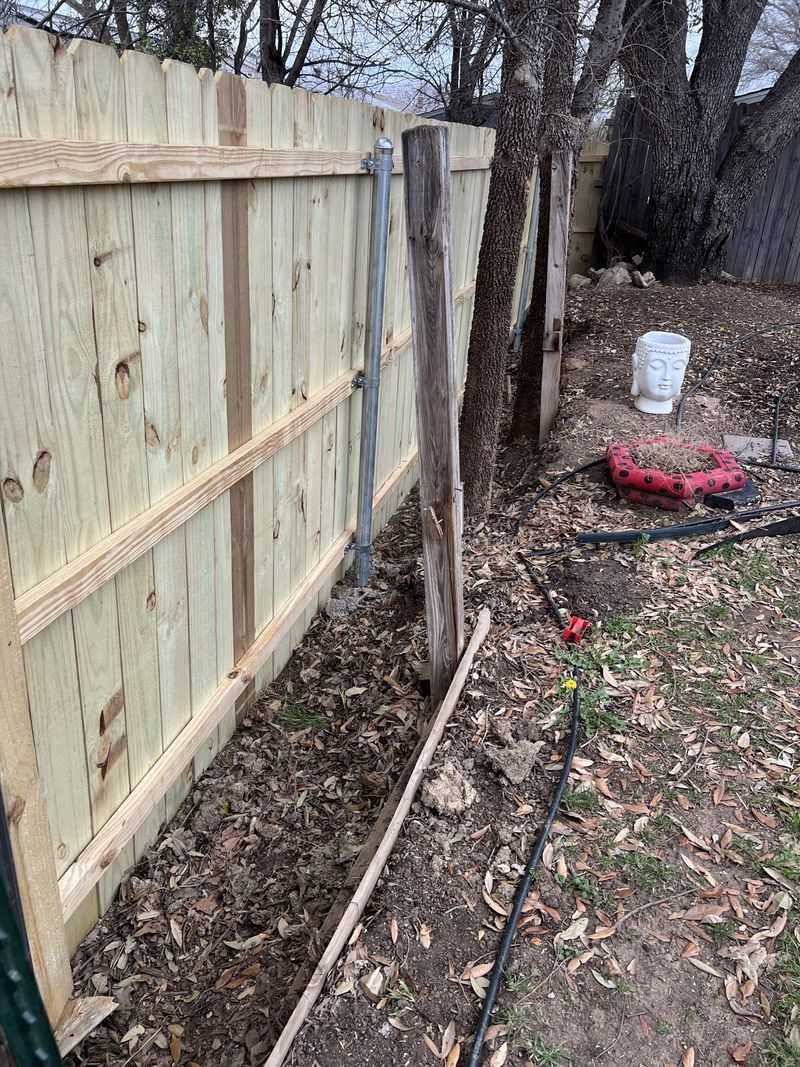
Not every fence between two yards is automatically shared. Ownership depends on where it was built, who paid for it, and what is written in your property records or any existing neighbor agreements.
In many cases, one person owns the fence outright, but in others, both neighbors share equal responsibility for it.
Oregon has specific rules about fence ownership and maintenance. Oregon Revised Statute 91.770 addresses partition fences, which are fences that sit on or near a shared boundary.
Under this law, adjoining landowners may share the cost and responsibility of maintaining a common fence. But the details matter, and local rules can vary.
Before you plant anything close to the fence, have a direct conversation with your neighbor. Ask who owns the fence and how maintenance decisions are made.
Your Oregon Garden Changes Every Week. Your Plan Should Too.
Gardening in Oregon changes quickly throughout the season. Every Friday you’ll receive a simple weekly plan showing exactly what to plant, prune, fertilize, harvest, and protect so you never miss the right timing.
This one conversation can prevent a lot of confusion later. If there is a written agreement about the fence, review it carefully.
Planting along a fence you do not fully own creates extra responsibility. Your plants could damage the structure, and if repairs are needed, things can get complicated fast.
Knowing the ownership situation ahead of time lets you plan your planting with clear boundaries in mind. A friendly, informed conversation now is far better than a formal dispute later.
Shared fences work best when both neighbors stay on the same page from the start.
3. Leave Space For Fence Repairs And Airflow
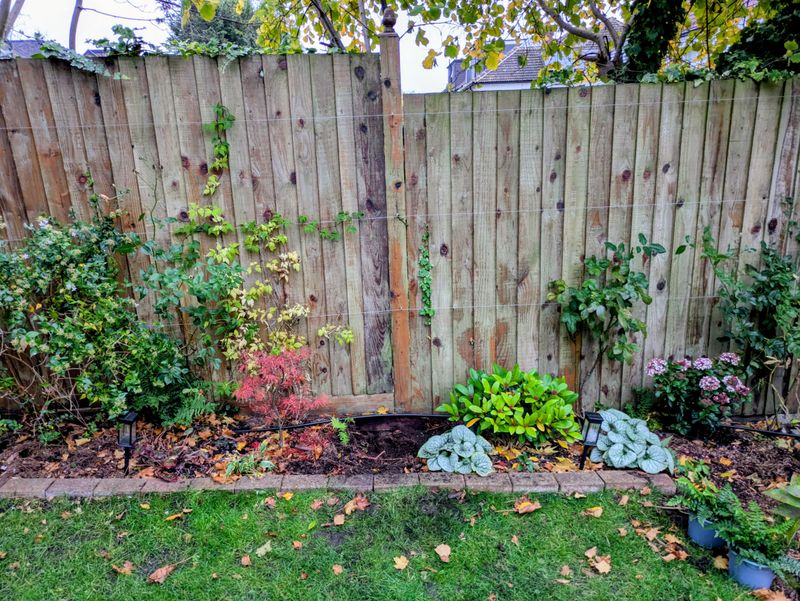
Planting too close to a fence is one of the most common mistakes homeowners make. It might look tidy at first, but dense plantings pressed right against fence boards trap moisture, block airflow, and speed up wood rot.
That means a fence that could last twenty years might start breaking down in ten.
Good airflow around a fence keeps the wood dry between rain showers, which is especially important here in the Pacific Northwest where rainfall is frequent.
When plants crowd the boards, water sits against the wood and creates the perfect conditions for mold, mildew, and decay.
Even vinyl and metal fences benefit from open space because roots and stems can warp or push against them over time.
Leaving at least eighteen to twenty-four inches between your plants and the fence gives repair crews room to work without trampling your garden. If a board needs replacing or a post needs resetting, that space makes the job much easier and cheaper.
Without it, a simple repair turns into a major project that may require removing plants entirely.
Think of the gap as part of the design, not wasted space. Low ground covers or mulch can fill that zone without blocking airflow or pressing against the fence.
Planning for access from the start protects both your investment in the fence and your plants. A little breathing room goes a long way in keeping everything looking good for years.
4. Avoid Vines That Pull On Fence Boards
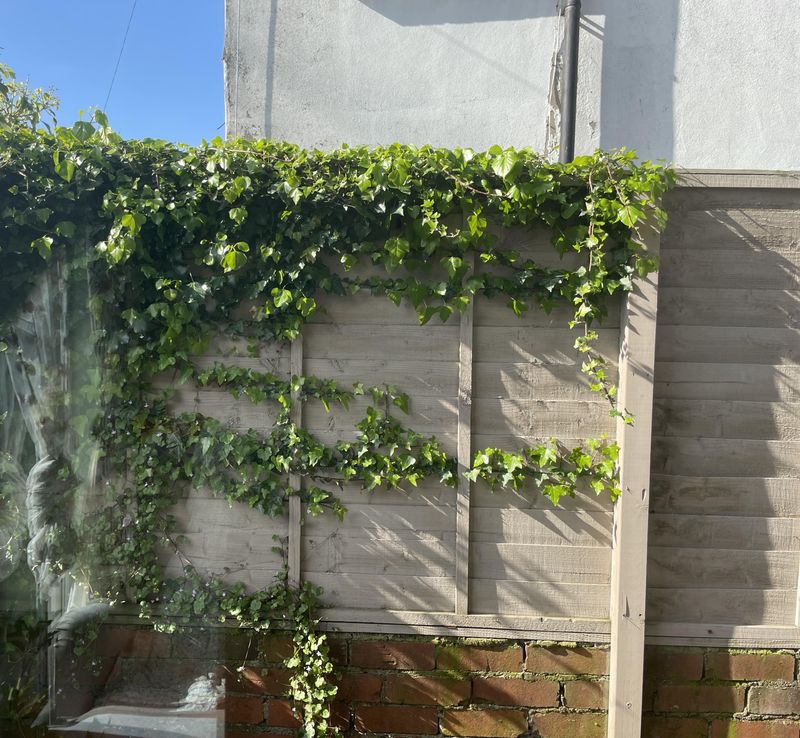
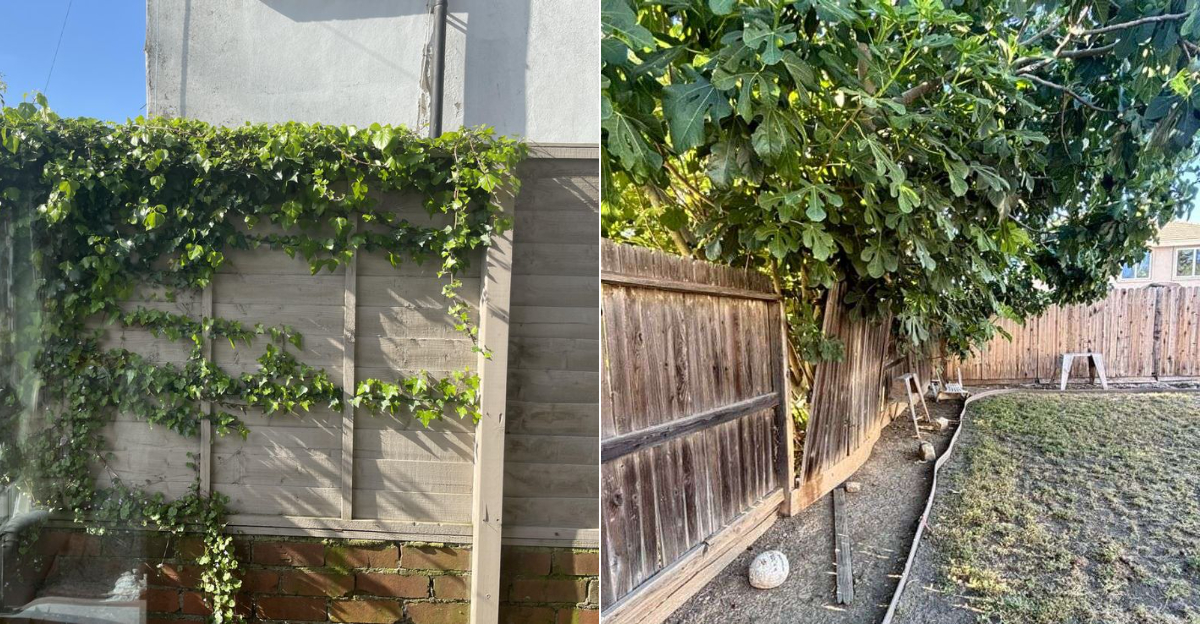
Vines look beautiful draped over a fence, but some of them are incredibly destructive.
Certain fast-growing varieties attach themselves to wood with strong tendrils or adhesive pads, and over time they pull boards away from posts, force gaps in the structure, and hold moisture against the wood surface.
English ivy is a prime example of a vine to avoid near fences. It spreads aggressively, clings with remarkable force, and is listed as an invasive species in Oregon.
Once it takes hold of fence boards, removing it without causing damage is nearly impossible. Wisteria is another one that looks stunning but grows with enough strength to pull apart even well-built fences over a few seasons.
If you love the look of vines, choose lighter, less aggressive options and give them a separate trellis or support structure that stands away from the fence. That way, the vine has something to climb without attaching itself to the fence boards.
A freestanding trellis set a foot or two in front of the fence gives you the visual effect without the structural risk.
Always research a vine’s growth habit before planting it. Look for information on how it attaches, how fast it spreads, and how heavy it gets at maturity.
A vine that seems manageable in its first year can become a serious problem by year three or four.
Choosing wisely from the beginning saves you from having to remove an established vine later, which is a tough and messy job.
5. Do Not Plant Roots That Will Push Into The Fence
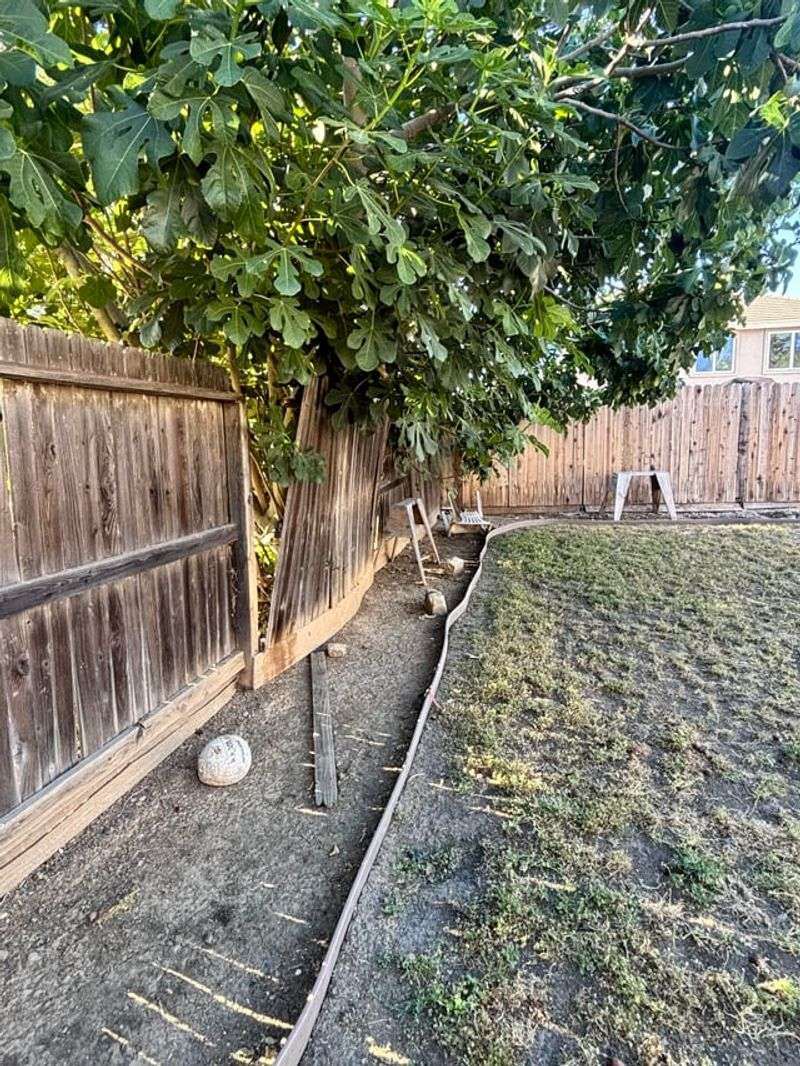
What you see above ground is only part of the story. Some plants have root systems that spread far and wide underground, and those roots do not stop when they reach a fence post.
They push through soil, wrap around posts, and can lift or crack concrete footings over time. Choosing the wrong plant near a fence can cause serious structural damage that is expensive to fix.
Trees are the biggest concern. Willows, silver maples, and large poplars are known for their aggressive root systems.
Even fruit trees can cause problems if planted too close. As a general rule, plant trees at a distance equal to at least half their expected mature height away from any fence or structure.
Bamboo is another major offender. Running bamboo spreads through underground rhizomes that can travel several feet in a single season.
Once it reaches a fence, it pushes between boards and under posts. Removing it is a long, difficult process that can take years.
If you love bamboo, choose clumping varieties and install a root barrier that extends at least eighteen inches deep.
Shrubs with woody, expanding root systems can also cause problems over time. Forsythia, lilac, and some rose varieties send out roots that widen with each passing year.
Research the root behavior of any plant before placing it near a fence. Knowing what happens underground is just as important as knowing how tall something will grow above it.
6. Keep Thorns Away From The Neighbor’s Side
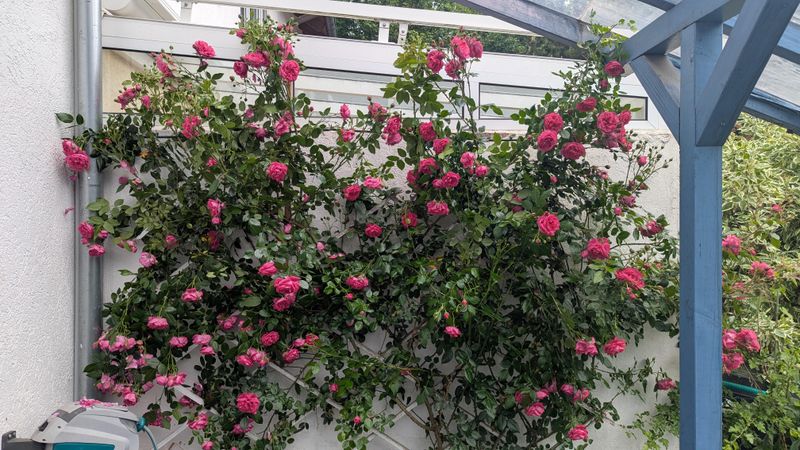
Thorny plants along a fence line can quickly become a neighbor relations problem. Roses, hawthorns, pyracantha, and blackberries all produce sharp thorns or spines that cause real injury.
When branches grow over the fence line, your neighbor has every right to trim them back, but they should not have to deal with scratches and punctures just to use their own yard.
Wild blackberries are especially common in Oregon, and they spread with surprising speed. What starts as a small cane on your side of the fence can become a sprawling thicket that crosses the boundary within a season or two.
The thorns are sharp and the canes are tough to remove once they get established. Keeping them trimmed back regularly is the only way to manage them near a fence.
If you want thorny plants for privacy or security, place them away from the fence and angle your pruning so growth stays on your side.
Training roses and other thorny shrubs toward your yard takes a bit of effort but makes a big difference for the people next door.
Your neighbor should not have to navigate a wall of spines every time they walk near the fence.
Being thoughtful about plant placement shows genuine respect for your neighbor’s comfort and safety.
A rose hedge can be stunning and practical, but only when it is managed in a way that keeps the thorns where they belong.
Regular trimming keeps everything looking neat and avoids the kind of tension that is hard to walk back once it starts.
7. Choose Plants You Can Maintain From Your Yard
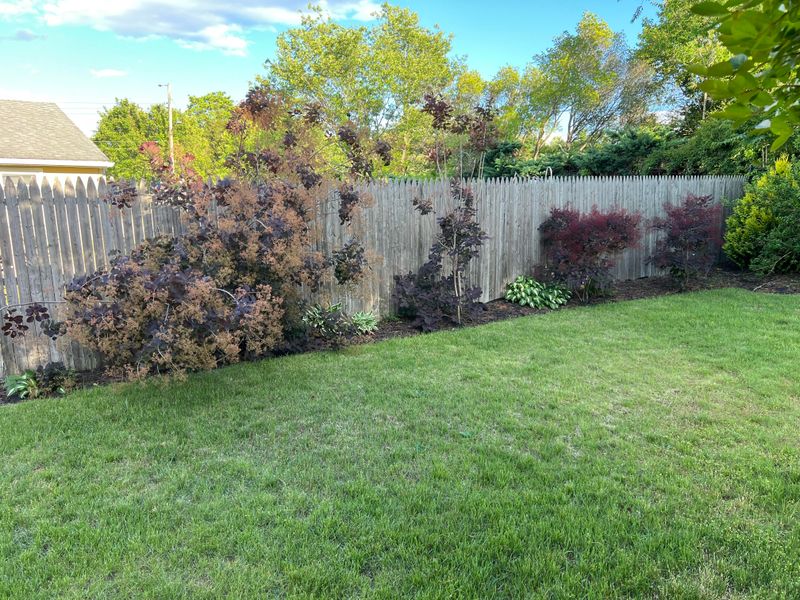
One of the most practical rules for planting near a shared fence is simple: only plant what you can fully maintain from your own side.
If pruning, trimming, or harvesting requires stepping into your neighbor’s yard, you are setting yourself up for problems.
Even the most patient neighbor will eventually get tired of people coming through their gate to manage plants they did not choose.
Think about how the plant will look at full maturity. Will branches hang over the fence?
Will the canopy extend past the boundary line? Will roots or suckers appear on the other side?
These are questions worth answering before you plant, not after the shrub has been growing for three years. Mature size matters far more than the size of the plant when you buy it at the nursery.
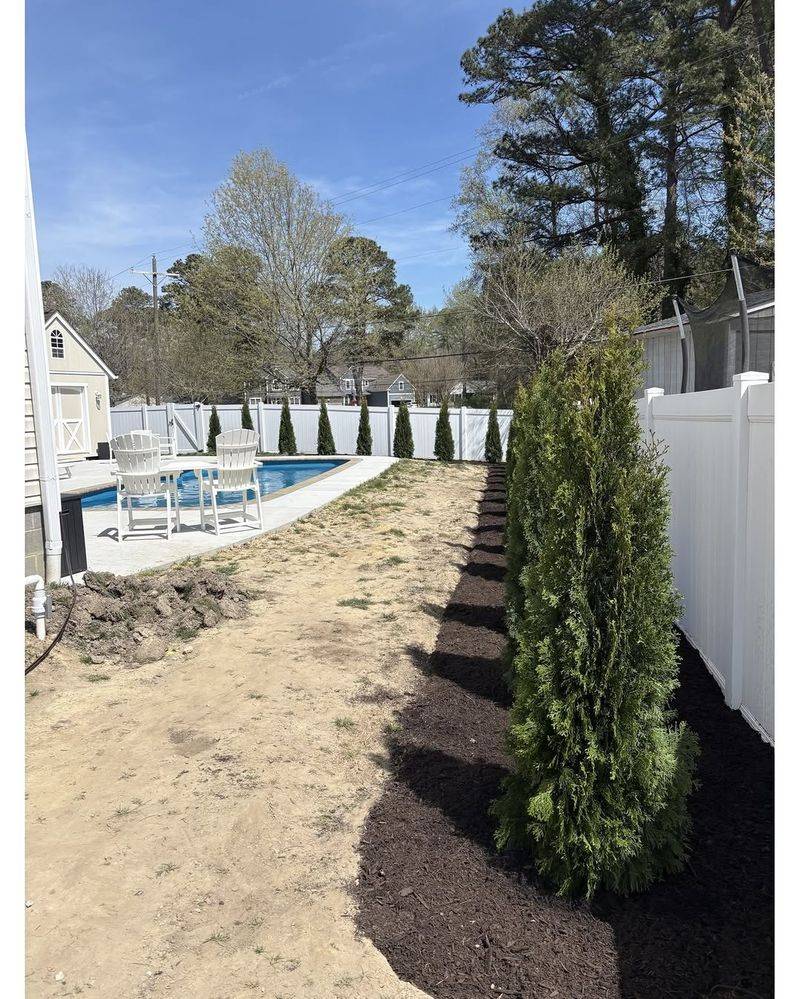
Compact or columnar varieties are great choices for tight spaces near fences. They grow upward rather than outward, which makes them much easier to manage in a narrow planting strip.
Columnar arborvitae, upright junipers, and dwarf fruit trees trained to a fence all offer privacy and beauty without sprawling into the neighbor’s space.
Regular maintenance is part of the deal when you plant near a shared boundary. Set a schedule for trimming and stick to it.
Letting plants go unchecked for a season or two makes the job much harder and can lead to overgrowth that crosses the line.
Plants that are easy to manage from your own yard keep everything tidy and keep the peace with your neighbors.
8. Watch For Invasive Spread Across The Line
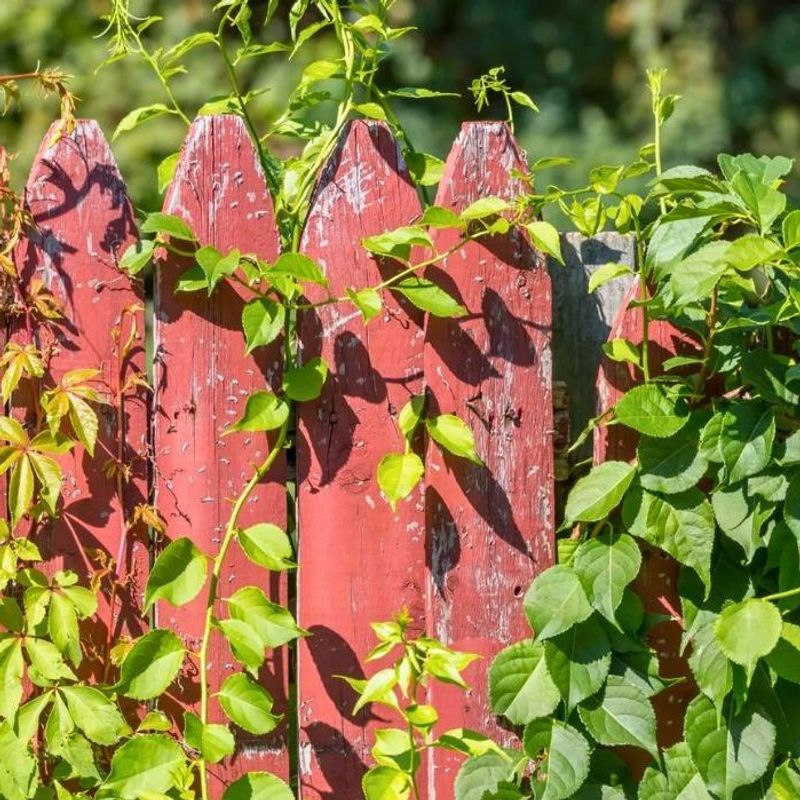
Some plants are simply too aggressive to place near a shared fence. They spread by runners, rhizomes, seeds, or underground stems, and they do not recognize property lines.
Once they cross over, your neighbor inherits a weed problem they never asked for, and that can create real tension between households.
Oregon has a list of noxious weeds and invasive plants that are either restricted or prohibited.
Yellow archangel, Armenian blackberry, and Japanese knotweed are a few examples that show up in Oregon yards and cause enormous problems once established.
Planting any of these near a fence, even unintentionally, can lead to complaints, fines, or legal disputes depending on the circumstances.
Even plants that are not officially listed as invasive can become nuisances when they spread aggressively. Mint, for example, travels fast through underground runners.
Creeping Jenny, trumpet vine, and some ornamental grasses can do the same. What stays manageable in a container or raised bed becomes a problem when planted directly in the ground near a fence with no barrier.
Before planting anything along the fence line, check whether it has a reputation for spreading. Local extension offices offer free advice on plant selection and invasive species.
Installing a physical root barrier along the fence line adds an extra layer of protection. Being proactive about invasive spread is not just good practice for your yard.
It is also a sign of genuine respect for your neighbor’s property and their time.
9. Use Containers Where Space Is Too Tight
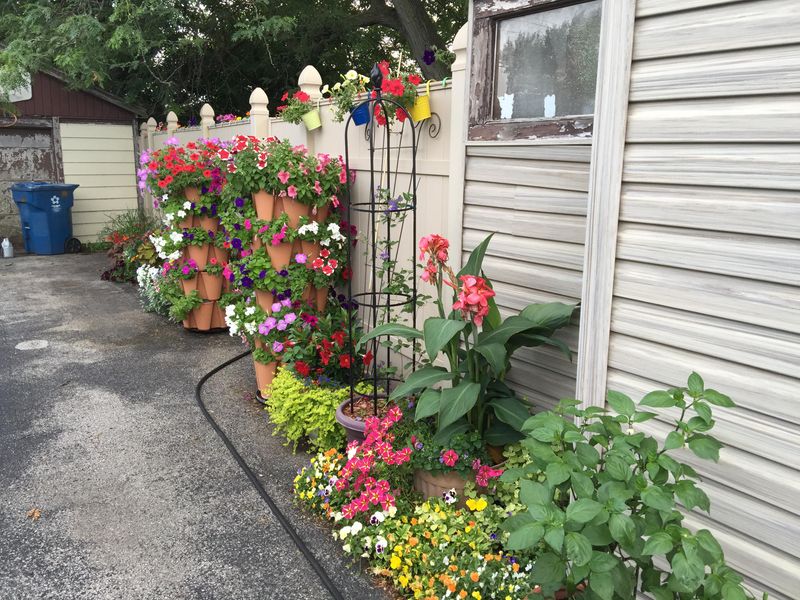
Sometimes the space between your home and the fence is just too narrow for in-ground planting. Trying to force plants into a tight strip can cause more problems than it solves.
Roots run out of room, water pools against the fence, and maintenance becomes nearly impossible. That is where containers come in as a genuinely smart solution.
Large planters and raised containers let you add greenery and privacy without putting roots in the ground at all.
You can move them if the fence needs repairs, adjust the arrangement whenever you like, and replace plants easily if something is not working.
For renters or homeowners who are not sure about their long-term plans, containers offer flexibility that in-ground planting simply cannot match.
Tall ornamental grasses, bamboo in self-contained pots, and columnar evergreens all work well in large containers along a fence.
Just make sure the containers have good drainage so water does not pool and sit against the fence boards.
Elevating pots slightly with feet or risers improves airflow underneath and helps the fence stay dry.
Container gardening along a fence also gives you the freedom to change things up with the seasons. Swap in flowering annuals for summer color, or bring in potted evergreens for year-round structure.
In northern and coastal parts of Oregon, containers can be moved to protected spots during harsh weather.
It is a practical, flexible, and neighbor-friendly way to make the most of a tight space without creating lasting problems.