What It Means When A Bobcat Shows Up In Your Texas Yard
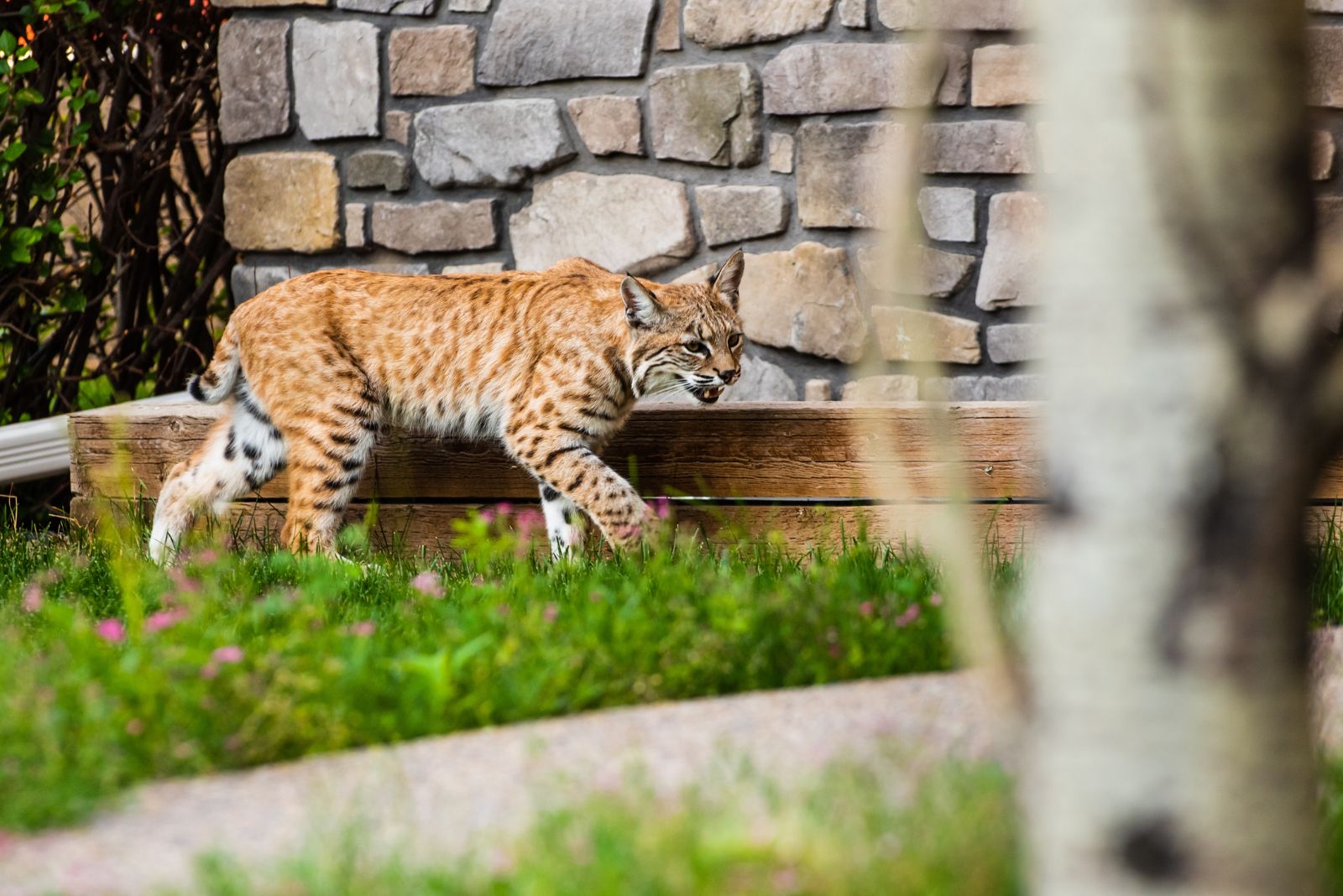
A bobcat in your Texas yard is one of those wildlife encounters that stops everything.
Whether you spot it moving along the fence line at dusk, crossing the yard with that fluid, unhurried stride, or simply sitting in the open staring back at you with those pale, unsettling eyes, the presence of a bobcat demands attention in a way that most other backyard visitors simply don’t.
And if one has shown up on your property, you’re probably wondering what it means. Bobcats don’t wander into residential yards randomly.
These are territorial, highly aware predators that move through an area in response to specific conditions your property is providing.
Their presence tells you something real about the local prey population, the habitat around your yard, and the broader wildlife activity happening in your neighborhood.
Beyond the ecological significance, bobcats carry deep cultural and symbolic meaning across many of the communities that have long called Texas home, and a sighting tends to prompt reflection in ways that few other encounters do.
1. Your Neighborhood Provides Suitable Urban Wildlife Habitat
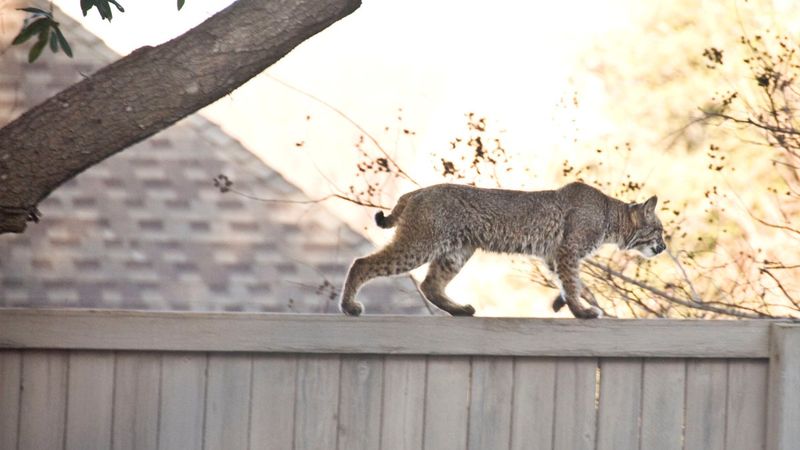
Not every wild animal needs deep wilderness to survive. Bobcats are remarkably adaptable creatures, and many Texas neighborhoods actually offer everything they need to feel right at home.
If your yard backs up to a creek, a greenbelt, a wooded lot, or even a brushy fence line, you may be sitting right along a bobcat’s regular travel route.
Texas has seen rapid growth in suburban areas over the past few decades. As neighborhoods expand into formerly open land, wildlife corridors get squeezed into narrower strips of natural space.
Bobcats learn to use these corridors, moving between parks, drainage channels, and undeveloped edges to find food, mates, and shelter.
A bobcat does not need a large forest to survive. It just needs enough cover, enough prey, and enough space to move around without constant human interference.
Neighborhoods near the Texas Hill Country, the Piney Woods, or the coastal plains are especially likely to have bobcats passing through regularly.
If you have seen one in your yard, take a moment to look around. Is there a creek nearby? A patch of dense brush? A wooded lot down the street?
These features act like highways for wildlife. Your yard may simply be a convenient rest stop along the animal’s well-worn path.
That is actually a sign that your area still supports healthy native habitat, which is something worth appreciating. Knowing this can help you feel less alarmed and more curious about the natural world thriving right outside your door.
2. Rabbits And Rodents Are Probably Available Nearby
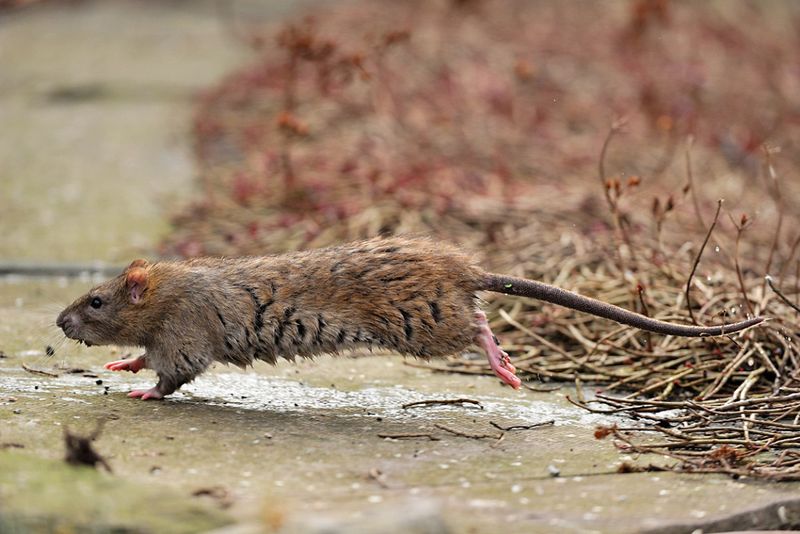
Bobcats are hunters, plain and simple. Their diet is built almost entirely around small animals like cottontail rabbits, mice, rats, ground squirrels, and the occasional bird.
So when one shows up in your yard, there is a very practical reason behind that visit. Your property is likely serving up a buffet.
Think about what might be attracting prey animals to your space. Bird feeders are a big one.
Your Texas Garden Changes Every Week. Your Plan Should Too.
Gardening in Texas changes quickly throughout the season. Every Friday you’ll receive a simple weekly plan showing exactly what to plant, prune, fertilize, harvest, and protect so you never miss the right timing.
Spilled seed on the ground draws mice and rats like a magnet. Gardens with dense vegetation offer rabbits excellent hiding spots.
Sheds, wood piles, and cluttered corners give rodents a safe place to nest and breed. Where prey animals gather, predators follow. It is a natural chain reaction.
This is actually useful information for homeowners. If you want to reduce the chances of a bobcat hanging around, start by making your yard less attractive to its prey. Clean up spilled birdseed regularly. Store trash in sealed containers.
Clear away brush piles and clutter where rodents like to hide. These steps will not just discourage bobcats. They will also help you manage a rodent problem before it gets out of hand.
Interestingly, bobcats provide a natural pest control service that most people do not think about. A single bobcat can consume hundreds of rodents over the course of a year.
In areas where rodent populations are high, having a bobcat passing through is not necessarily a bad thing. It is just nature doing what it has always done, keeping populations balanced in a way that benefits the whole ecosystem around your home.
3. It Is More Likely Passing Through Than Moving Into Your Yard
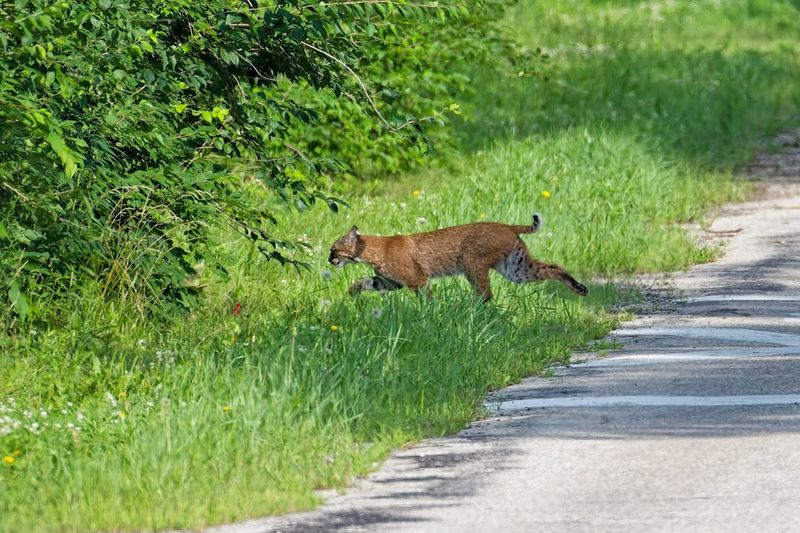
Seeing a bobcat in your yard can feel alarming, like it has chosen your property as its new home base. But most of the time, that is simply not what is happening.
Bobcats are solitary animals with large home ranges. A male bobcat can roam across 25 to 30 square miles or more, while females typically cover a smaller but still impressive territory.
Your yard is just one tiny piece of that vast puzzle. The bobcat you spotted was most likely moving from one area to another, following a route it has used many times before.
It may pass through every few days, or only once in a while, depending on where prey is concentrated and whether it has found better hunting grounds elsewhere.
A single sighting does not mean the animal has set up a den under your porch or plans to stick around. Unless you are seeing it repeatedly, or finding signs like tracks, fur, or leftover prey in the same spot over and over, it is probably just passing through.
Trail cameras are a fun way to monitor wildlife activity in your yard if you want to know more about what is visiting at night.
Understanding how bobcats use space can help ease a lot of worry. These are not territorial animals that will stake a claim on your backyard and refuse to leave.
They are constantly on the move, following food and instinct across a wide landscape. Your yard just happened to be in the right place at the right time. Give it some space, and it will almost certainly move on without any trouble at all.
4. A Daytime Sighting Does Not Automatically Mean Something Is Wrong
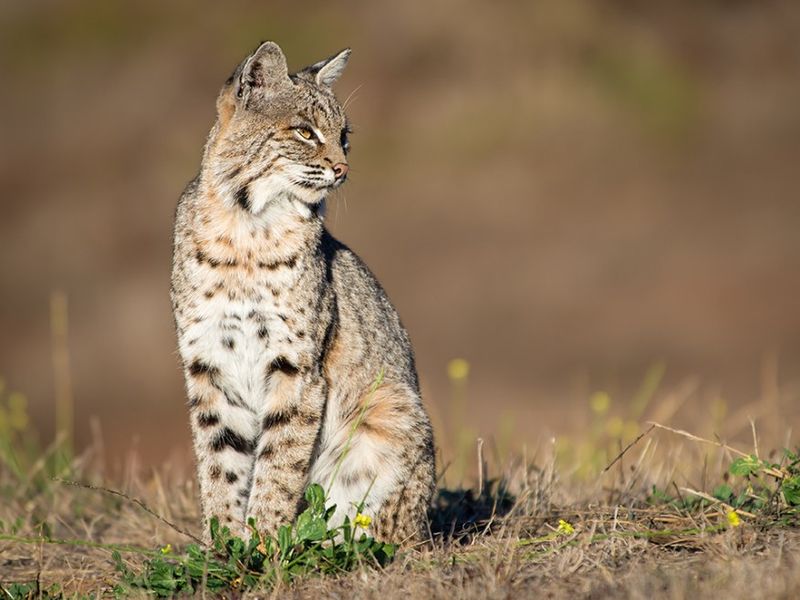
Most people assume that if a wild animal is out during the day, something must be wrong with it. That assumption is understandable, but it is not always accurate when it comes to bobcats.
While these cats are most active around dawn, dusk, and through the night, they are not strictly nocturnal. They are what wildlife experts call crepuscular, meaning they peak around low-light hours, but they can and do move around during daylight hours too.
A bobcat might be out during the day because it is hungry and prey was available. It may have been disturbed from a resting spot and is simply relocating.
Female bobcats raising kittens often need to hunt more frequently, which can push them into daytime activity. None of these reasons point to illness or aggression. They are just normal animal behaviors driven by survival needs.
The signs that actually suggest something is wrong look quite different. A bobcat that is stumbling, moving in circles, acting disoriented, or approaching people without hesitation is worth reporting.
Unusual vocalizations, an inability to move normally, or a complete lack of fear around humans are all red flags. Those behaviors can sometimes indicate illness, and they warrant a call to local animal control or Texas Parks and Wildlife.
But a bobcat simply trotting through your yard at noon? That is not an emergency. Watch it from a safe distance. Enjoy the rare glimpse of a wild animal in its element.
Make some noise to encourage it to move along if you feel more comfortable. Then give yourself a moment to appreciate just how remarkable that encounter really was.
5. Small Pets And Backyard Poultry Need Closer Supervision
Here is a truth that every Texas pet owner and backyard farmer needs to hear. Bobcats generally want nothing to do with people.
They are shy, reclusive animals that prefer to avoid human contact at almost every turn. But a small unattended pet or a free-ranging chicken?
That is a completely different story. To a hungry bobcat, those animals look a lot like the prey it hunts every day.
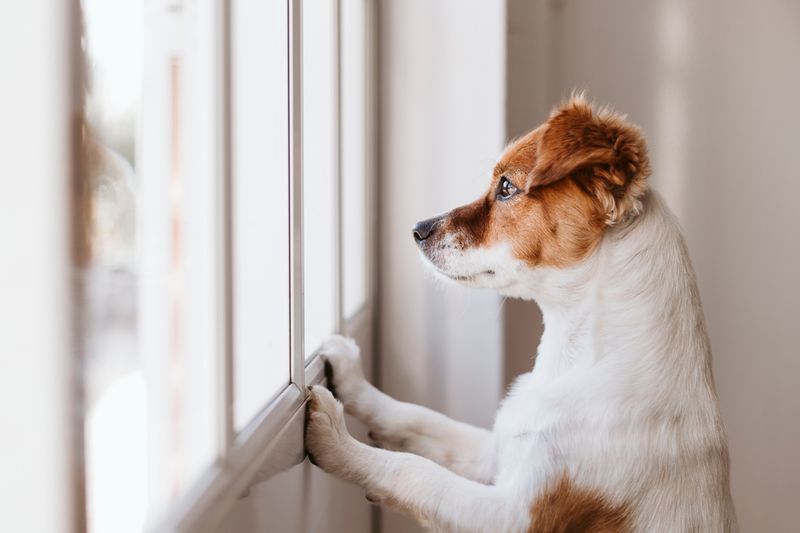
Cats allowed to roam outdoors unsupervised are at real risk in bobcat country. Small dogs, especially those under 20 pounds, can also be vulnerable if left alone in a yard without proper fencing or supervision.
The risk is highest at dawn, dusk, and overnight, which lines up perfectly with peak bobcat activity. Keeping your small pets indoors during those windows is one of the simplest and most effective things you can do.
Backyard poultry owners need to take extra precautions. Chickens, ducks, and rabbits should be secured inside a fully enclosed, predator-resistant coop every night without exception.
Wire mesh should be sturdy and buried slightly into the ground to prevent digging. Flimsy chicken wire alone is often not enough.
Hardware cloth with small openings is a much stronger option that works better against determined predators.
Supervising small dogs when they go outside, especially in the evening, is a straightforward habit that can prevent a heartbreaking situation. Accompany them rather than just opening the door and waiting inside.
A little extra attention goes a long way toward keeping your animals safe while still allowing wildlife to move through the area naturally and without conflict.
6. Repeated Bold Behavior Means Attractants Should Be Removed
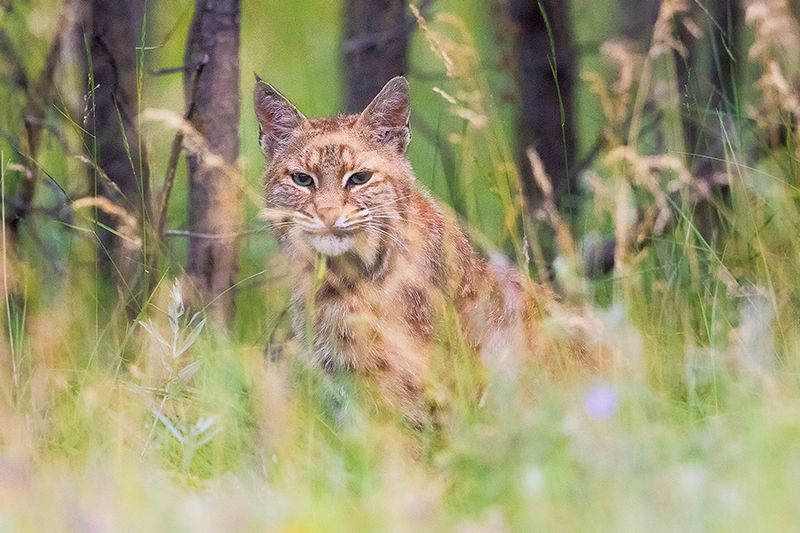
A bobcat that shows up once is a wildlife sighting. A bobcat that keeps coming back, especially one that lingers near the house or seems unbothered by human presence, is sending a message worth listening to.
Something on your property is drawing it in repeatedly. Figuring out what that is and removing it quickly is the smartest move you can make.
Pet food left outside is one of the most common culprits. It attracts rodents, and rodents attract bobcats.
Birdseed spilled under feeders creates the same chain reaction. Unsecured trash, compost bins, and outdoor grills with food residue can all pull in small animals that then pull in predators.
Even dense brush piles or low decks that offer shelter can encourage a bobcat to linger longer than it otherwise would.
Start by walking your property with fresh eyes. Look for anything that might be feeding or sheltering small prey animals.
Bring pet food inside every evening without fail. Clean up under bird feeders regularly. Seal gaps under sheds and decks. Trim back overgrown vegetation along fence lines and property edges.
These changes do not have to be drastic. Small consistent improvements add up fast. If a bobcat approaches you directly, make yourself large and loud. Wave your arms, shout, and give it a clear path to leave.
Never corner the animal or try to touch it. Do not feed it under any circumstances, even if it looks thin or tired.
If bold or disoriented behavior continues despite removing attractants, contact your local animal control office or Texas Parks and Wildlife Department. They have the tools and training to assess the situation safely and respond appropriately.