The Right Way To Water Hanging Baskets For Healthier Blooms
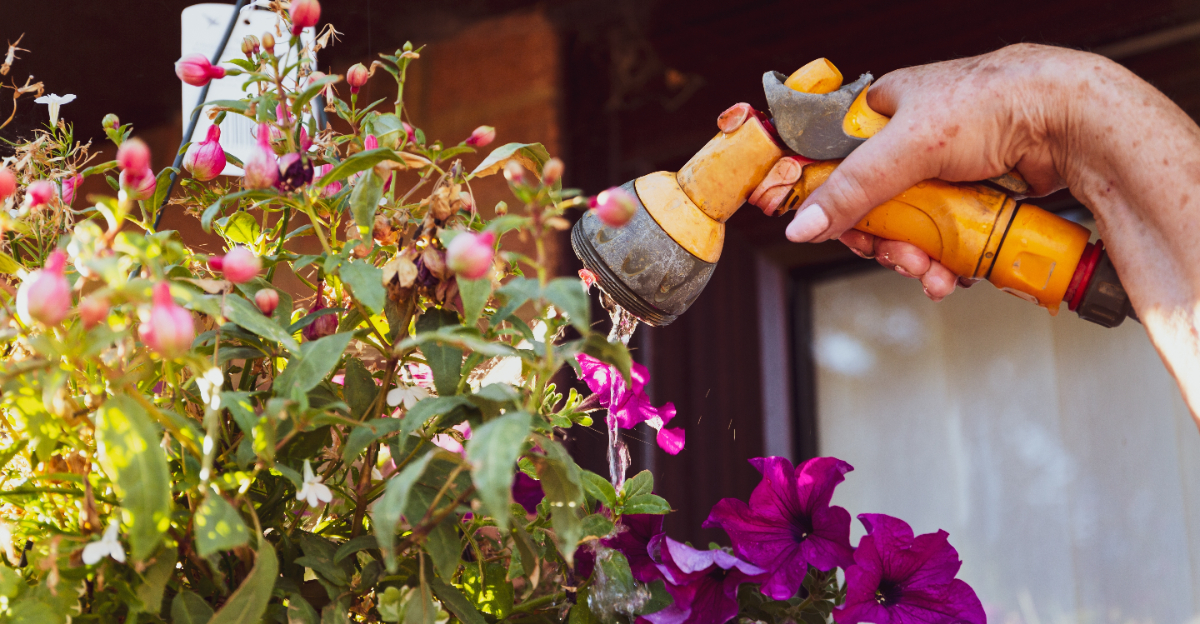
Hanging baskets look effortless from the porch railing, but their watering needs run on a completely different clock than anything planted in soil. Gravity pulls moisture straight through the container in minutes.
Wind dries the surface before roots ever get a sip. Heat radiates from every angle, including underneath, where ground plants rarely feel it.
Skip a day and your blooms droop by noon, your soil pulls away from the container walls. Master the timing these baskets actually need, though, and you get thick, non-stop color all season.
The trick starts with treating your basket like the exposed, airborne system it is, not a smaller version of a garden bed. Sun angle, pot material, and basket size all change how fast that soil dries out.
One Small Change Makes Hanging Basket Watering Far More Effective
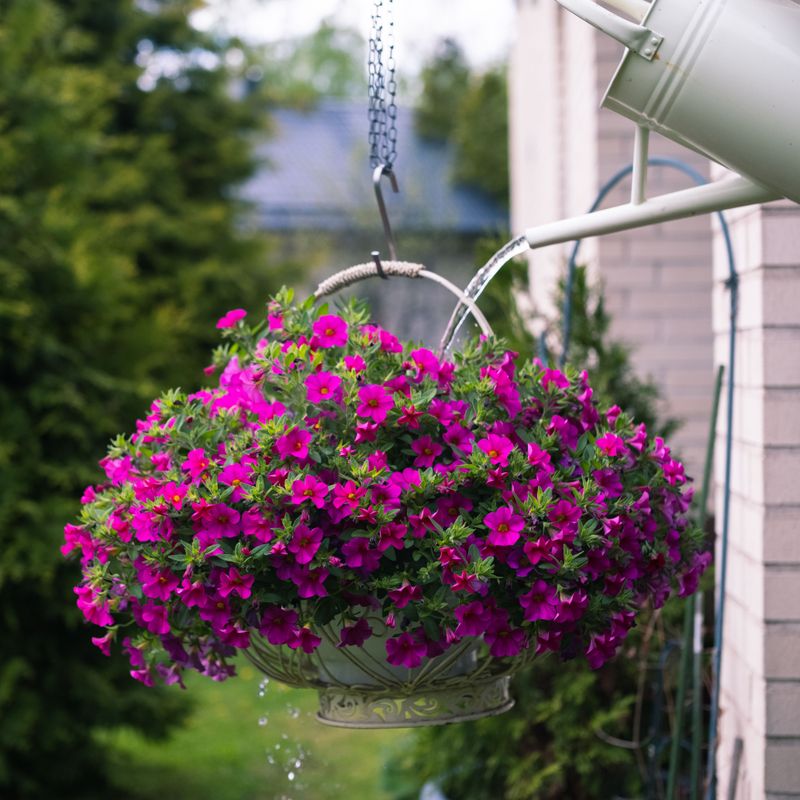
Slow down and watch the water pool.
Most people rush through watering hanging baskets like it is a chore to finish quickly. That fast splash approach leaves the top inch wet while the roots below stay bone dry.
The right way to water hanging baskets is to pour slowly and pause between passes. Give the water time to absorb before adding more.
A long-neck watering can gives you real control over flow speed. Aim for the soil surface, not the flowers or leaves.
One pass rarely does the job with hanging baskets. You need at least two or three slow rounds to fully saturate the root zone.
Think of it like watering a dry sponge. The first pass barely penetrates, but the second and third passes reach deep where roots actually grow.
This single adjustment transforms how your baskets perform. Plants that once looked tired and droopy often perk up within a week of switching to this slower method.
Consistent deep watering also trains roots to grow downward instead of hovering near the surface. Deeper roots mean stronger plants that handle heat waves far better.
Set a timer if you need to slow yourself down. Even 30 extra seconds per basket helps the water penetrate deeper.
Your blooms will be fuller, your soil will stay moist longer, and your baskets will need less rescue watering on hot afternoons. One small habit shift makes a real difference in bloom quality.
Hanging Baskets Dry Out Faster Than Ground-Level Containers
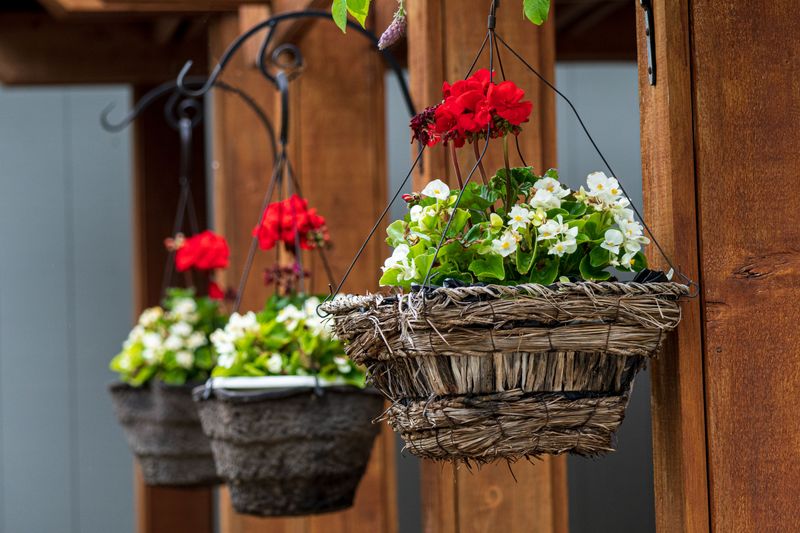
Feel the soil right now and prepare to be surprised.
Hanging baskets lose moisture at a rate that surprises most gardeners. Exposure to wind, direct sun, and warm air on all sides accelerates evaporation dramatically compared to pots sitting on the ground.
A basket hanging in full afternoon sun can dry out within four to six hours during a hot summer stretch. Ground-level containers stay cooler because the surrounding ground moderates temperature and blocks wind on more sides.
Hanging baskets rarely get that same protection since air circulates freely around the entire container. Wind is the sneaky villain here.
Even a gentle breeze pulls moisture from the soil surface and from leaf surfaces far faster than still air would. Dark-colored baskets absorb more heat from the sun, speeding up moisture loss even further.
Light-colored or lined baskets hold moisture noticeably longer on blazing hot days. Checking your baskets daily is not optional during summer.
Stick your finger one inch into the soil to test moisture before assuming the basket is fine. Weight is another reliable indicator.
Lift the basket gently with one hand and feel how heavy it is after watering. A light basket is almost always a thirsty basket.
Once you learn that weight difference, watering becomes far less of a guessing game. Understanding this faster drying cycle is the first step toward keeping your blooms healthy all season long.
Watering From The Bottom Encourages Deeper Root Growth
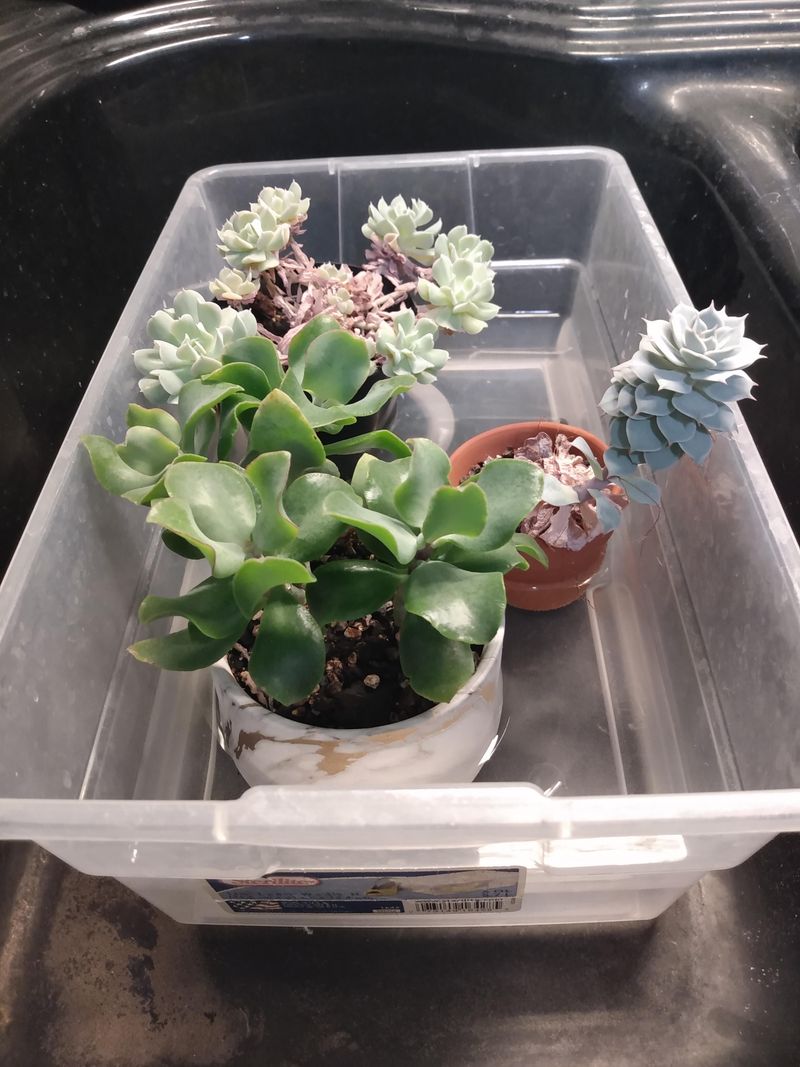
Roots follow water, and that shapes how your whole plant grows.
When you consistently water from the top, roots learn to cluster near the surface where moisture lands first. Bottom watering flips that pattern and pulls roots downward toward a deeper water source.
Deeper roots anchor the plant more securely and reach moisture that lasts longer. Surface roots dry out within hours, but deep roots tap into reserves that keep plants hydrated far longer between watering sessions.
To bottom water a hanging basket, lower it into a bucket or wide tray filled with two to three inches of water. Let it soak for 20 to 30 minutes until the topsoil feels moist.
This method works especially well for moss-lined or coco fiber baskets. Water wicks upward evenly through the entire root zone without washing away nutrients from the top.
Not every basket style is easy to bottom water, but you can alternate methods throughout the week. Top water on busy mornings and bottom soak on weekends when you have more time.
Plants watered this way tend to develop stronger, thicker stems over time. Strong stems support heavier blooms and resist wind damage better than weak, shallow-rooted plants.
Bottom watering also keeps foliage dry, which reduces the risk of fungal issues that thrive on wet leaves. Dry leaves mean fewer spots, fewer problems, and cleaner-looking plants.
Try this approach once a week and your baskets should look fuller within a few weeks.
Ice Cubes And Slow-Drip Methods Prevent Overwatering
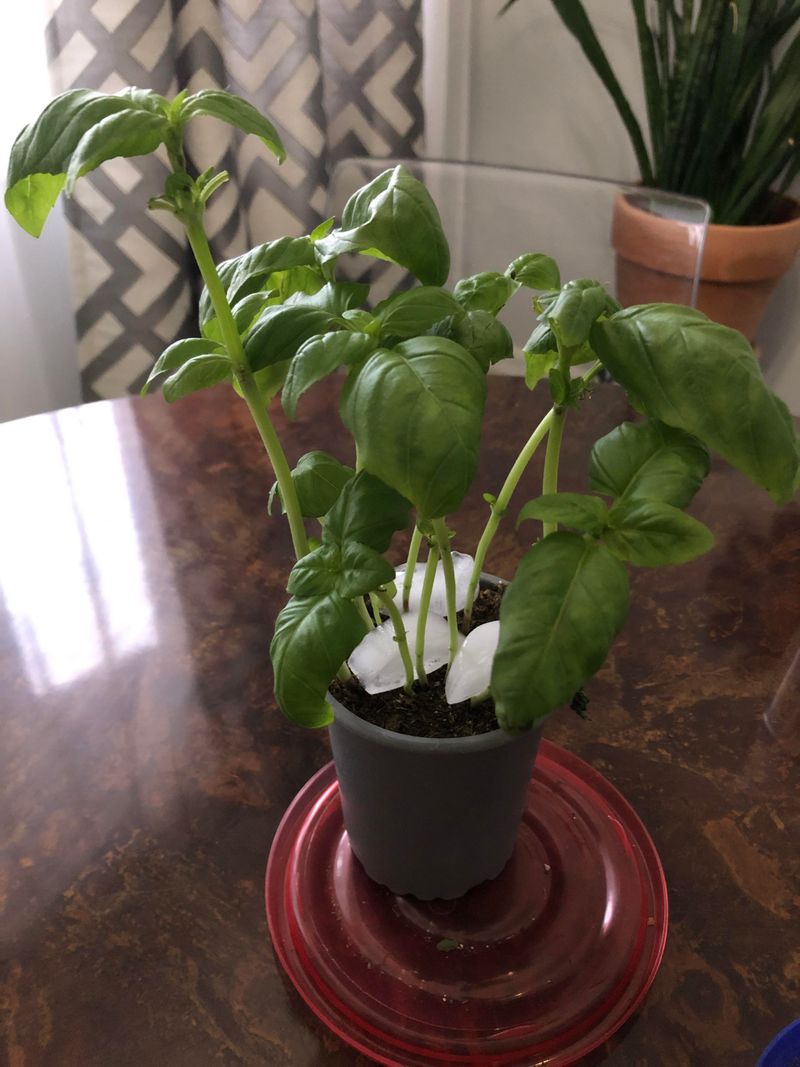
Ice cubes in a flower basket sounds unusual, but the method works well.
Overwatering is just as harmful as underwatering for hanging baskets. When soil stays soggy too long, roots lose access to oxygen and the plant declines fast.
The ice cube method delivers water slowly as the cubes melt, giving the soil time to absorb moisture without becoming waterlogged. Place three to five cubes on the soil surface and let them do the work.
This trick is best known for orchids; results with petunias, begonias, and fuchsias can vary, so watch for cold shock on tender stems. The slow melt mimics a gentle, steady rain rather than a sudden flood.
Slow-drip systems offer a more automated version of the same idea. Small drip emitters attached to a timer deliver a trickle of water throughout the day instead of one large dose.
Drip systems are especially useful for gardeners who travel or forget to water consistently. Your baskets stay evenly moist without you standing there holding a watering can every single morning.
Overwatered baskets often show yellowing lower leaves and a musty smell from the soil. If you notice those signs, hold off on watering and let the basket dry out for a day or two.
Checking drainage holes regularly keeps things flowing properly. Blocked holes trap water at the bottom and create exactly the soggy conditions roots hate most.
Slow, consistent watering is what keeps hanging baskets healthy.
Soil Mix And Liners Affect How Often You Need To Water
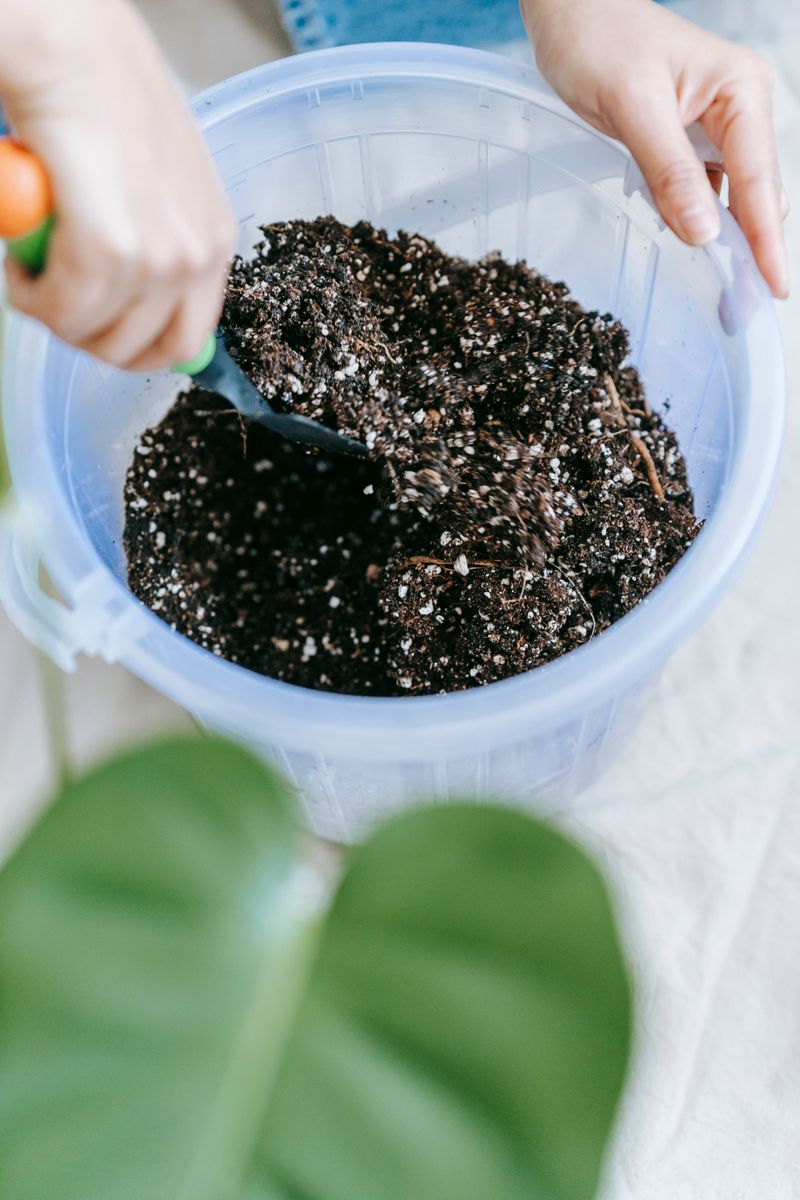
Not all potting soil is created equal, and your basket knows the difference.
Standard garden soil compacts quickly in hanging baskets, blocking drainage and starving roots of oxygen. A high-quality potting mix designed for containers stays loose, drains well, and holds just enough moisture between watering sessions.
Adding perlite to your potting mix improves drainage and aeration significantly. A ratio of about 20 percent perlite to 80 percent potting mix keeps the soil structure open and root-friendly all season.
Moisture-retaining crystals or granules mixed into the soil can also extend the time between waterings. These tiny crystals absorb water and release it slowly as surrounding soil dries out.
Basket liners play an equally important role in moisture management. Coco coir liners retain moisture better than plain wire frames, while moss liners offer a natural, breathable option that many gardeners prefer.
Plastic-lined baskets hold water the longest but can lead to overwatering if you are not careful. Porous liners like moss or coco fiber allow better airflow, which reduces fungal risk and promotes healthier roots.
Replacing old, compacted soil at the start of each season gives your plants a fresh start. Old soil loses its structure and stops draining properly, making it much harder to water correctly.
Matching your soil mix and liner choice to your local climate makes a big difference. Gardeners in hot, dry regions benefit from moisture-retaining mixes, while those in humid areas need faster-draining options.
The right foundation means less guesswork and more glorious color all season.
Signs Your Basket Is Getting Too Much Or Too Little Water
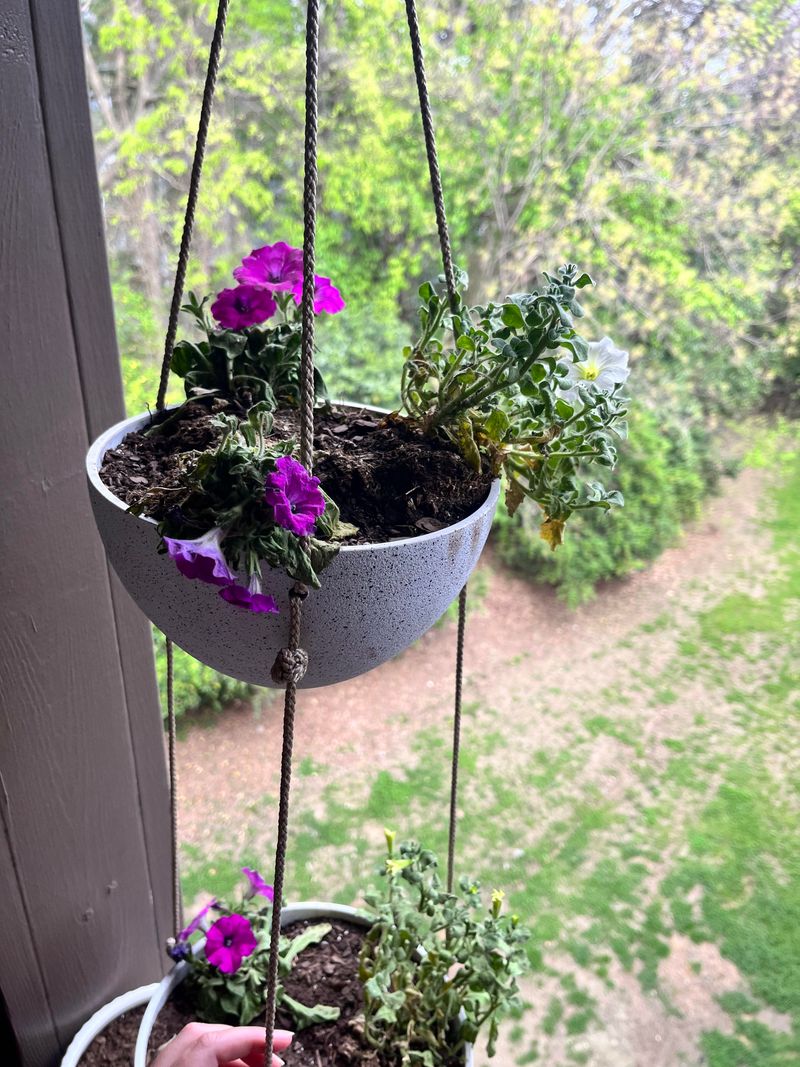
Your plants are always talking, and wilting is not the only thing they say.
Underwatered hanging baskets show dry, crispy leaf edges and flowers that fade or drop prematurely. The soil pulls away from the basket edges, leaving visible gaps between the liner and the root ball.
Overwatered baskets tell a different story. Leaves turn yellow, especially the lower ones, and the soil smells sour or earthy in an unpleasant way.
Both problems feel frustrating, but they are usually fixable once you know what to look for. Catching the signs early prevents permanent damage and keeps your plants bouncing back quickly.
Stem softness is a red flag for overwatering. Healthy stems feel firm, while waterlogged stems feel mushy near the base where they meet the soil.
For underwatered plants, a thorough deep soak often revives them within a few hours. Place the basket in a bucket of water for 20 minutes to fully rehydrate the root ball.
Flower drop without visible wilting can signal inconsistent watering. Plants stressed by unpredictable moisture cycles shed blooms as a survival response.
Keeping a simple watering log helps you spot patterns over time. Note the date, weather conditions, and how the soil felt before and after watering each session.
Healthy baskets have firm green stems, vibrant blooms, and moist but never soggy soil. Mastering the right way to water hanging baskets means reading these signals and responding with confidence.