Warning Signs Palo Verde Root Borers Are Attacking Your Arizona Desert Trees
Arizona monsoon season has a talent for bringing strange things out of the ground.
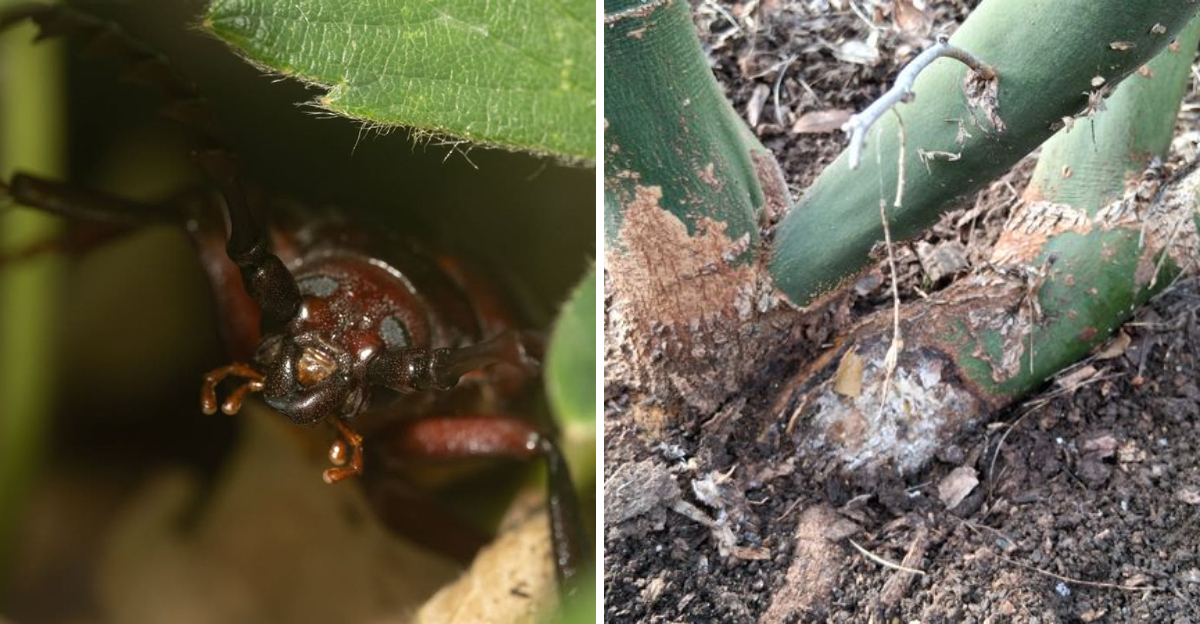
One evening, the yard is quiet. The next, a huge dark beetle is crawling near the porch light, waving spiny antennae like it owns the patio. It looks alarming enough above ground, but the bigger story usually starts below it.
Palo verde root borers spend most of their lives underground. Their larvae feed on roots for years before adults emerge during summer rains.
By the time homeowners notice beetles, exit holes, thinning canopy, or weak branches, the tree may have been dealing with root stress for several seasons.
That is what makes this pest tricky.
The damage is not always loud at first. A desert tree may simply look thinner, less vigorous, or less able to handle heat.
In Arizona, where drought, compacted soil, and poor watering can already stress palo verde and mesquite trees, root borer activity can be easy to miss.
So what warning signs should Arizona homeowners watch for?
Start with the ground around the tree, then look up into the canopy. The clues often appear in small pieces before the pattern becomes obvious.
1. Giant Beetles Appear At Night
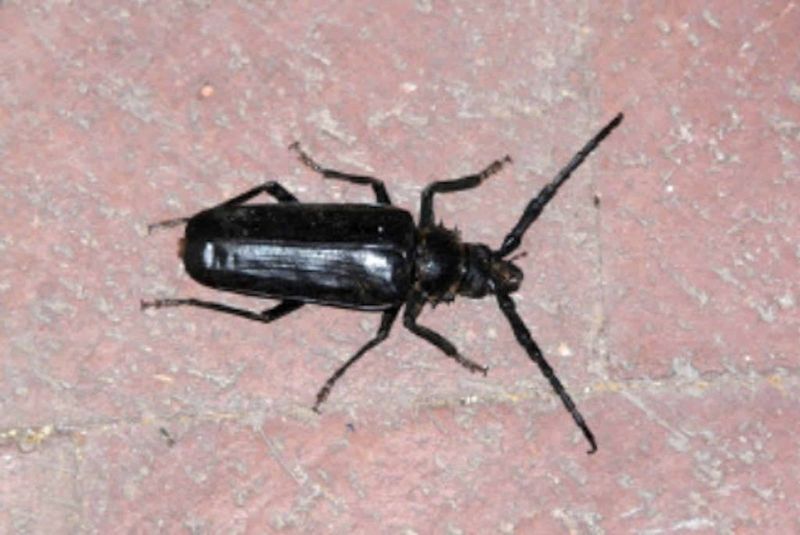
A beetle near the porch light can be the first clue.
Adult palo verde root borers are hard to ignore. They are large, dark brown to black, and equipped with long, spiny antennae that make them look much more dangerous than they actually are to people.
They usually appear during monsoon season.
In Arizona, adults often emerge from late June through August, especially after humidity rises and summer rains soften the soil. They are most active at night and are strongly drawn to lights around patios, garages, and entryways.
One adult does not mean panic.
These beetles live above ground for only a short time. Their main job is to mate and lay eggs near the root zones of suitable host trees.
Seeing one in the yard may simply mean you live in the Sonoran Desert, where these insects are part of the summer cycle.
Repeated sightings matter more.
Several beetles near the same tree, especially year after year, deserve closer attention. Females lay eggs in soil near roots, and the larvae can remain underground feeding for years.
Look for patterns.
A beetle by the porch is interesting. Beetles emerging near the same palo verde, mesquite, or desert tree over multiple summers are a stronger signal that the root zone may be involved.
Do not waste time swatting at the adult and ignoring the tree.
The beetle is only the announcement. The real story may be under the soil.
2. Fresh Holes Show Near Roots
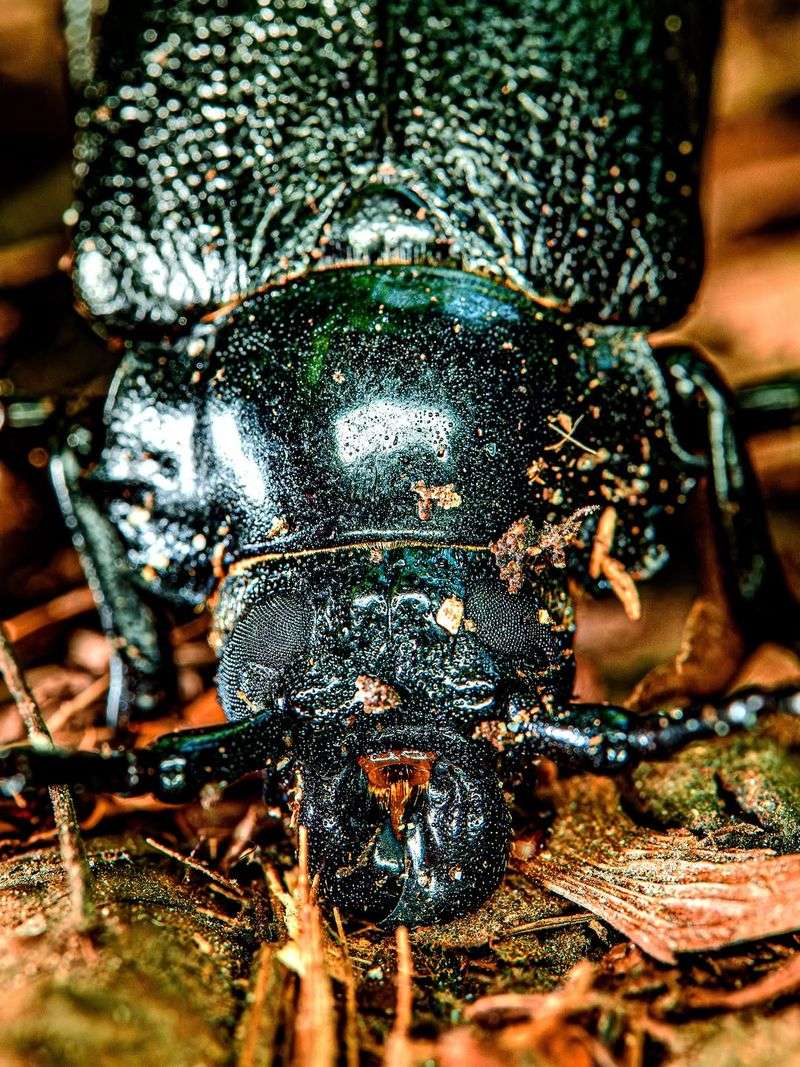
A clean round hole near the trunk is worth noticing.
When adult beetles finish developing underground, they chew their way up and leave through the soil. That exit can look like a round opening near the base of a tree or within the drip line.
The holes can be surprisingly large. Many are around one to two inches across, sometimes with loose, raw-looking soil around the edge.
Your Arizona Garden Changes Every Week. Your Plan Should Too.
Gardening in Arizona changes quickly throughout the season. Every Friday you’ll receive a simple weekly plan showing exactly what to plant, prune, fertilize, harvest, and protect so you never miss the right timing.
They often appear after monsoon moisture softens the ground, which makes early summer and midsummer inspections especially useful.
Do not confuse every hole with beetle activity.
Rodents, irrigation leaks, soil settling, and other insects can also disturb the ground. Palo verde borer exit holes tend to sit close to the root zone and may look cleaner and more vertical than scattered animal digging.
Clusters are more concerning.
One hole is a clue. Several holes within a few feet of the same tree suggest multiple adults have emerged from that root zone. That points to longer-term underground activity rather than a random beetle passing through.
Check after rain.
Walk around the tree slowly and look beneath the canopy, especially near the trunk flare and major roots. Fresh soil disturbance is easier to spot when the surrounding ground has been smoothed by rain.
Avoid digging aggressively.
Poking around too much can damage already stressed roots. Mark the area, take photos, and bring in a certified arborist familiar with desert trees.
The hole is an exit sign.
It tells you something has already completed a long underground chapter.
3. Soil Looks Disturbed Nearby
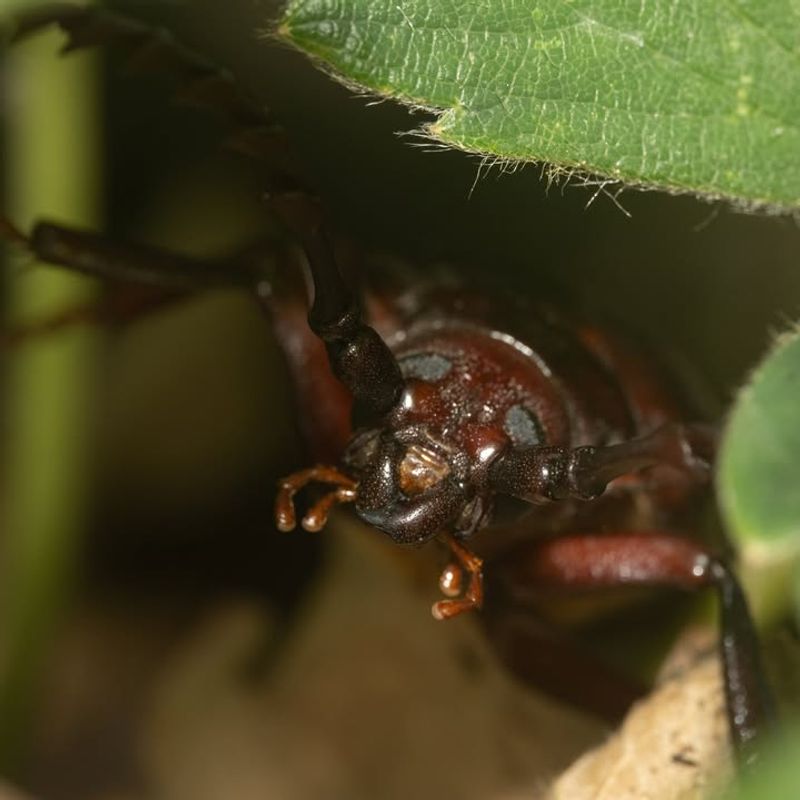
The ground may look wrong before the tree looks weak.
Loose patches, small mounds, soft depressions, or crumbly areas around a palo verde or mesquite can point to activity below the surface. Root borer larvae are large, and their movement through the root zone can disturb soil in subtle ways.
This sign is easy to overlook.
Arizona yards already deal with monsoon runoff, irrigation changes, pets, rodents, and shifting dry soil. But disturbed ground close to a tree’s root zone deserves a second look, especially during summer beetle season.
Use location as a clue.
Soil disruption near the trunk, under the canopy, or around larger roots matters more than random disturbance several yards away. Root borers are tied to host roots, so the activity usually relates to that zone.
Look for combinations.
Disturbed soil alone does not confirm palo verde root borers. Disturbed soil plus adult beetles, exit holes, canopy thinning, or branch decline creates a much stronger case.
Stay gentle around roots.
Use a gloved hand or small tool to inspect the surface lightly. Avoid deep digging near the trunk. Feeder roots and larger structural roots can already be stressed.
Photos help.
Take a picture of the disturbed spot, then another a week later. Changes over time can help an arborist understand the pattern.
The soil around a desert tree is not empty space.
It is the tree’s support system, water source, and warning panel. When that area starts shifting without a clear reason, it is worth paying attention.
4. Canopy Thins Without Clear Cause
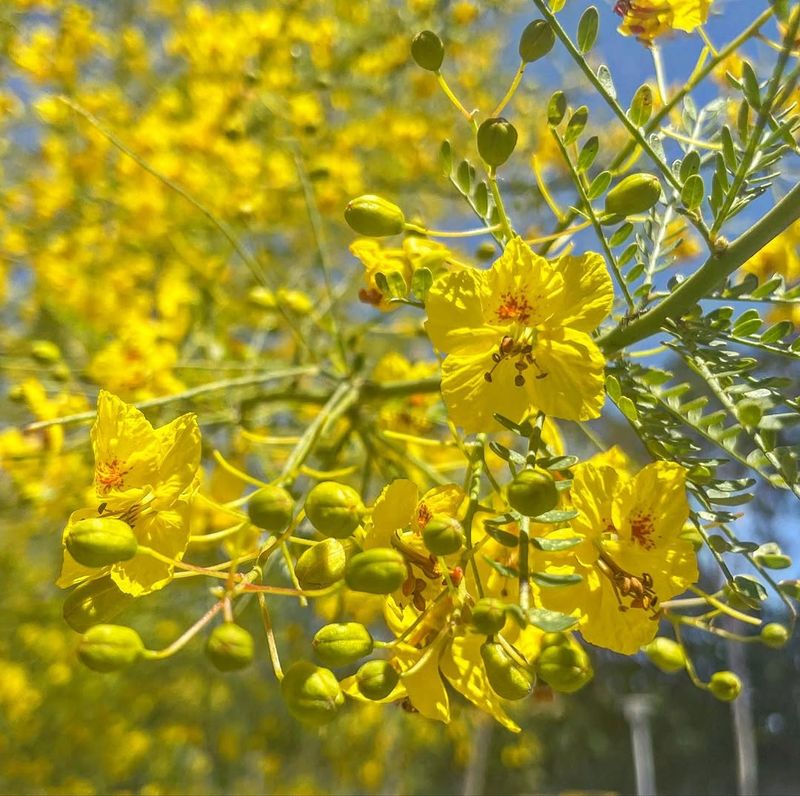
A sparse canopy can be the tree’s quiet distress signal.
Palo verde trees naturally have an open, airy look, but there is a difference between graceful desert structure and a canopy that keeps getting thinner. When foliage looks patchy, uneven, or weaker year after year, root health belongs on the suspect list.
Root borers interfere below ground.
Larvae feed on woody root tissue, which can reduce the tree’s ability to move water and nutrients upward. The canopy may respond by losing density, producing less new growth, or looking tired during the hottest part of the season.
The pattern may be uneven.
One side of the tree might look thinner than the other. Outer branches may carry fewer leaves. A tree that once cast light shade may suddenly look more skeletal than usual.
Do not blame heat automatically.
Arizona summers are harsh, but a healthy, properly watered desert tree should still show reasonable vigor. Ongoing canopy thinning, especially over multiple seasons, deserves more investigation than a shrug.
Compare with nearby trees.
A palo verde thinning while similar trees in the same area look strong may be dealing with a specific root problem, irrigation issue, soil compaction, or pest pressure.
Track it with photos.
Take pictures from the same angle every month or two. Gradual decline becomes much easier to see with a record.
Canopy thinning is not proof by itself.
It is a signal to look down, check the soil, inspect watering patterns, and call in a professional before the tree loses more strength.
5. Branches Lose Strength Slowly
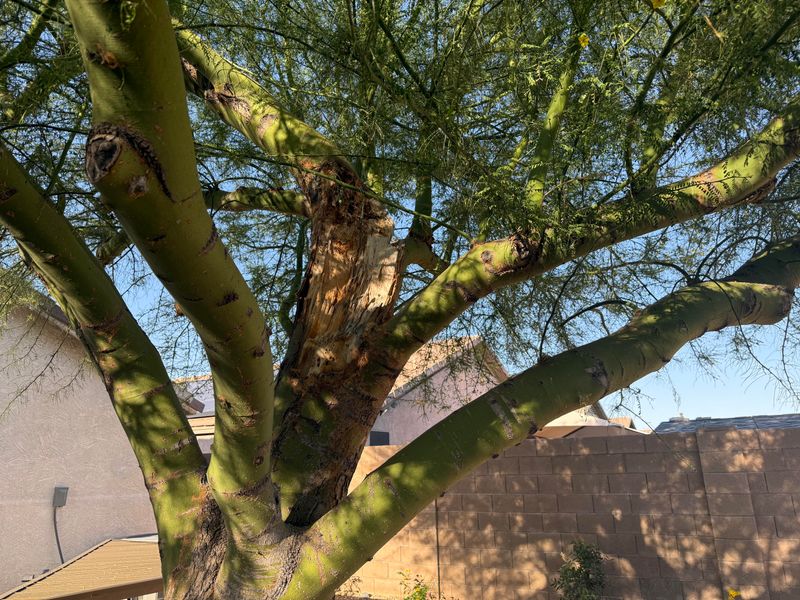
Weak branches often tell a root story.
A palo verde or mesquite with stressed roots may stop supporting parts of its canopy well. Branches can become brittle, sparse, dull-colored, or slow to produce new growth during the season when they should be responding to warmth and rain.
The decline is usually gradual.
A limb may look slightly thinner one summer, then more tired the next. Smaller twigs may become brittle. Branch tips may fail to push fresh growth after monsoon moisture arrives.
That slow change matters.
Root borer larvae feed underground over several years, so above-ground symptoms may creep in rather than appear all at once.
By the time branches start showing weakness, the tree may have been managing reduced root function for a while.
Test gently.
A healthy smaller branch should have some flexibility. A stressed one may snap with little pressure or look dry and faded compared with the rest of the tree. Avoid yanking or bending major limbs.
Look for spread.
One weak branch can come from sun exposure, breakage, or old damage. Weakness spreading through several parts of the canopy points toward a larger stress problem.
Do not prune hard in response.
Heavy pruning can remove live canopy the tree still needs for energy. Take out only clearly compromised growth, and get an arborist’s guidance before making major cuts.
Branch decline is not just a top-of-tree problem.
In desert trees, the weakness above often reflects trouble below. The branches are simply where the root stress becomes visible.
6. Stress Makes Trees More Inviting
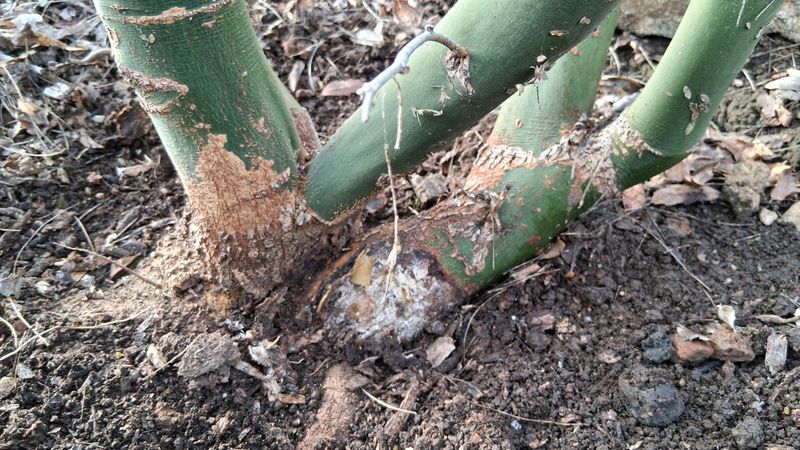
A struggling tree is easier for pests to exploit.
Palo verde root borers can be part of the desert ecosystem, but trees already under stress may have a harder time tolerating root feeding. Drought, poor watering, compacted soil, construction damage, and harsh pruning can all lower a tree’s resilience.
Drought stress is a major factor.
Desert trees are adapted to dry climates, but established does not mean invincible. Long dry stretches, especially before monsoon season, can drain energy reserves and leave roots less able to recover from damage.
Root disturbance adds pressure.
Trenching, digging, paving, grade changes, and heavy traffic near the tree can damage roots or compact soil. A tree may look fine at first, then show canopy decline later when heat and pests add more strain.
Over-pruning can make things worse.
Removing too much canopy reduces the tree’s ability to produce energy. It can also expose branches and trunks to intense sun, creating another layer of stress.
Healthy trees tolerate problems better.
A vigorous tree with appropriate watering, protected roots, and a stable canopy has more resources to manage pest pressure. A stressed tree has fewer reserves and fewer options.
Look at the whole site.
Concrete close to the trunk, dry compacted soil, shallow irrigation, recent construction, or repeated pruning can all explain why one tree seems more vulnerable than another.
The goal is not just chasing beetles.
It is strengthening the tree so it becomes less inviting and more capable of handling Arizona’s roughest months.
7. Watering Patterns Need Checking
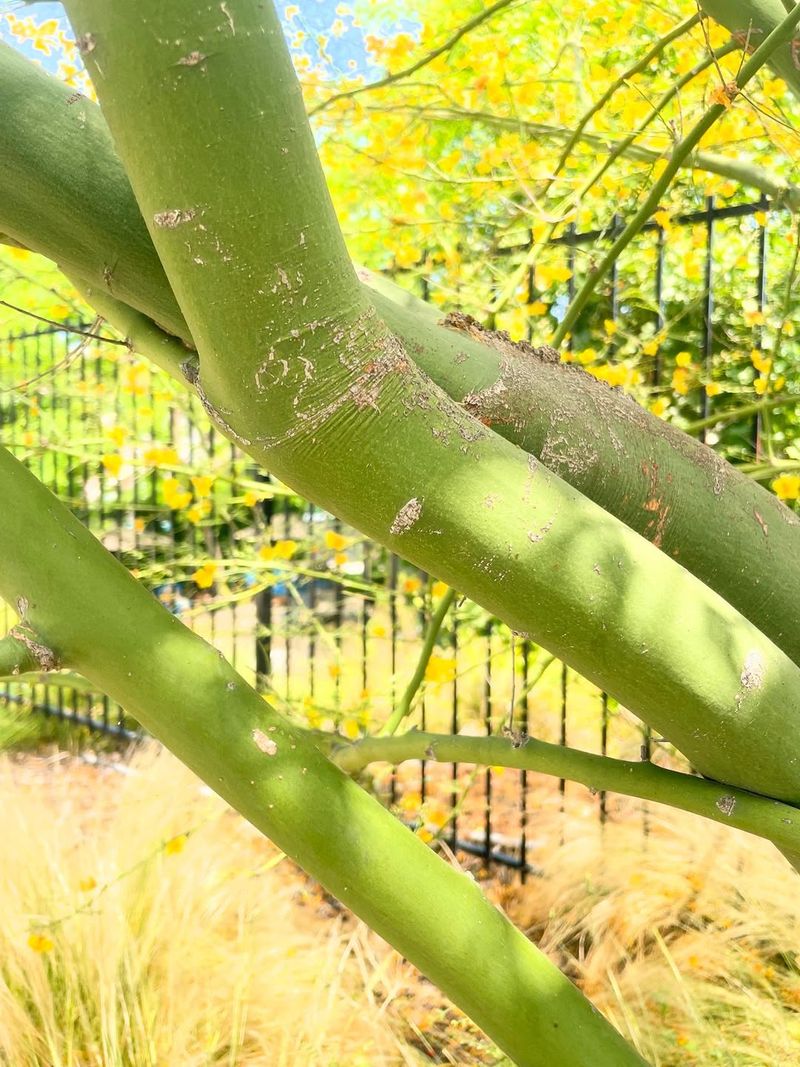
Watering mistakes can leave roots vulnerable.
Palo verde and mesquite trees are desert-adapted, but their roots still benefit from deep, occasional moisture during long dry periods. The problem is that many homeowners water too shallowly, too close to the trunk, or too often in small amounts.
Shallow watering creates shallow roots.
A quick sprinkle near the base encourages roots to stay close to the surface, where soil heats fast and dries quickly. Those roots are more exposed to stress and less useful during extreme heat.
Water should move outward.
For established desert trees, irrigation is usually best placed near the drip line and beyond, not piled against the trunk. That encourages roots to spread into a healthier, wider zone.
Deep and infrequent is the better rhythm.
During dry months before monsoon rains, many desert trees benefit from a slow soak every few weeks, depending on soil, tree size, and weather. The goal is moisture that reaches deeper roots, not a wet crust on top.
Check emitters carefully.
A tiny drip emitter meant for a young shrub will not support a mature tree with a broad root zone. Clogged lines, misplaced emitters, and runoff can leave a tree much drier than the irrigation schedule suggests.
Avoid pooling at the trunk.
Constant moisture against bark can create separate problems and weaken the root flare. Water the root zone, not the trunk.
Better watering will not erase larvae already underground.
But it can improve tree vigor, reduce stress, and give your palo verde or mesquite a stronger chance of holding its canopy through summer.
In Arizona, resilience starts at the roots.