What It Really Means When Your North Carolina Marigold Leaves Turn Bronze In July
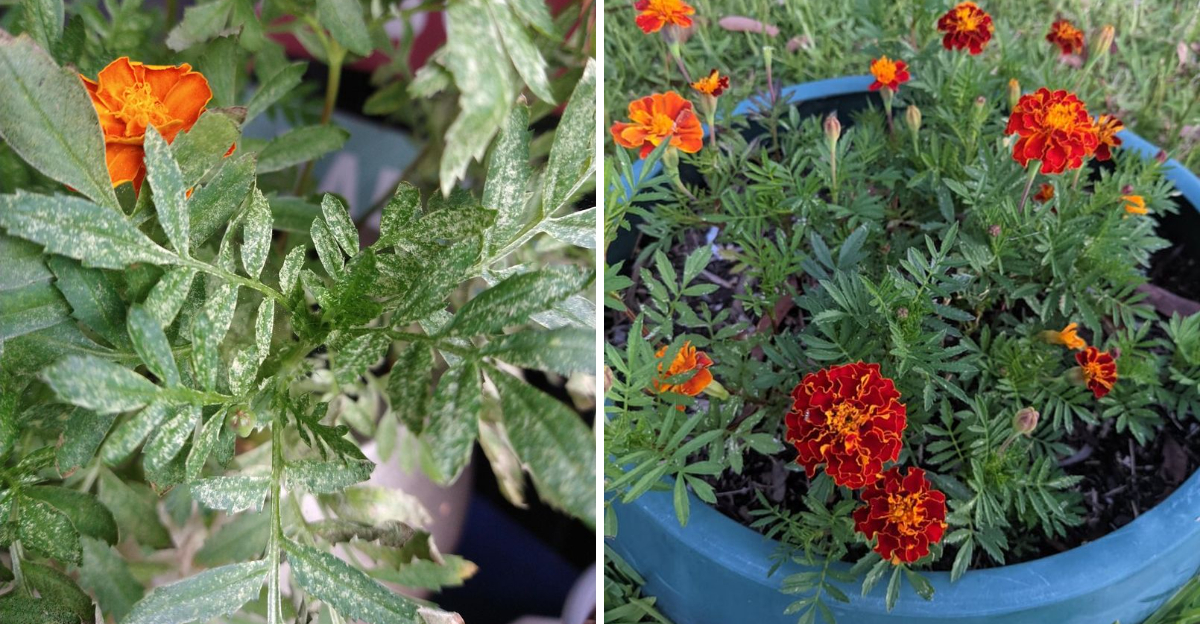
Bronze colored marigold leaves in July often catch North Carolina gardeners off guard, though the cause is usually simpler than it seems.
Intense summer heat combined with strong sun exposure can cause leaves to develop a bronze tint as a natural stress response.
This is especially common in plants that received inconsistent watering during particularly hot, dry stretches. Spider mites can also cause similar bronzing, so checking the undersides of leaves for tiny webbing is worth doing.
Nutrient imbalances, particularly with potassium, may contribute as well, though this cause tends to be less common. Consistent watering during peak heat helps marigolds maintain healthier leaf color overall.
Providing light afternoon shade can also reduce stress during the harshest part of the day. In most cases, this bronzing fades once temperatures cool slightly later in the season.
1. Bronze Leaves Most Often Point To Spider Mites
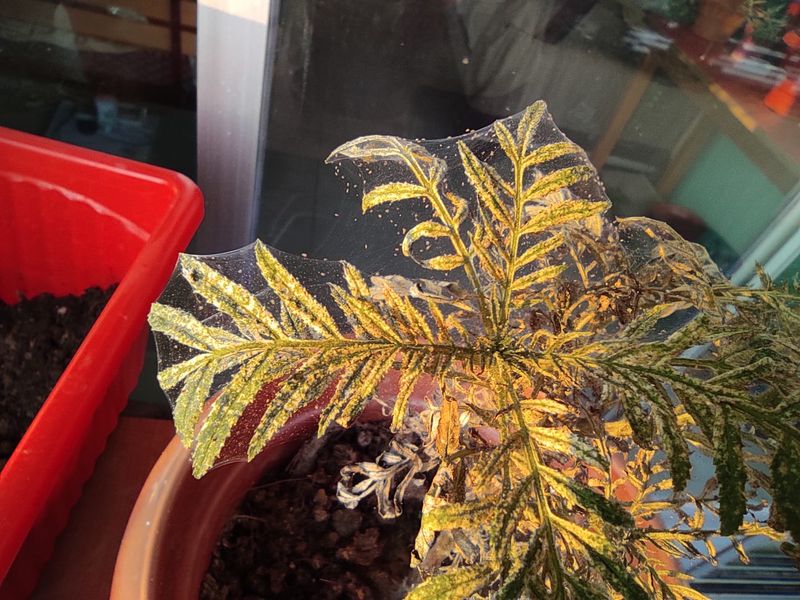
Spider mites are tiny, but the damage they cause is anything but small. Twospotted spider mites are the most common culprits behind bronze marigold leaves during hot July weather in North Carolina.
These microscopic pests pierce individual leaf cells and drain their contents, leaving behind countless pale dots that slowly merge into yellow, rusty, or bronze-colored patches across the foliage.
Both French and African marigold varieties are vulnerable to spider mite attacks, so no type is completely safe from this problem. The damage tends to start on older, lower leaves before spreading upward as the population grows.
Understanding this pattern helps gardeners catch the problem earlier rather than waiting until the whole plant looks affected.
Bronze coloring alone is not enough to confirm a spider mite diagnosis, though. Several other issues can produce similar discoloration, which is why a close-up inspection of the foliage is always the smartest first move.
Jumping straight to a treatment without confirming the cause can waste time and money while the real problem continues unchecked.
Grabbing a magnifying glass and spending a few minutes examining your plants can save you a lot of headaches down the road. Check the undersides of leaves carefully, because that is where mites tend to gather and feed.
Once you have confirmed what you are dealing with, choosing the right response becomes much more straightforward and effective for your garden.
2. Fine Pale Stippling Usually Appears First
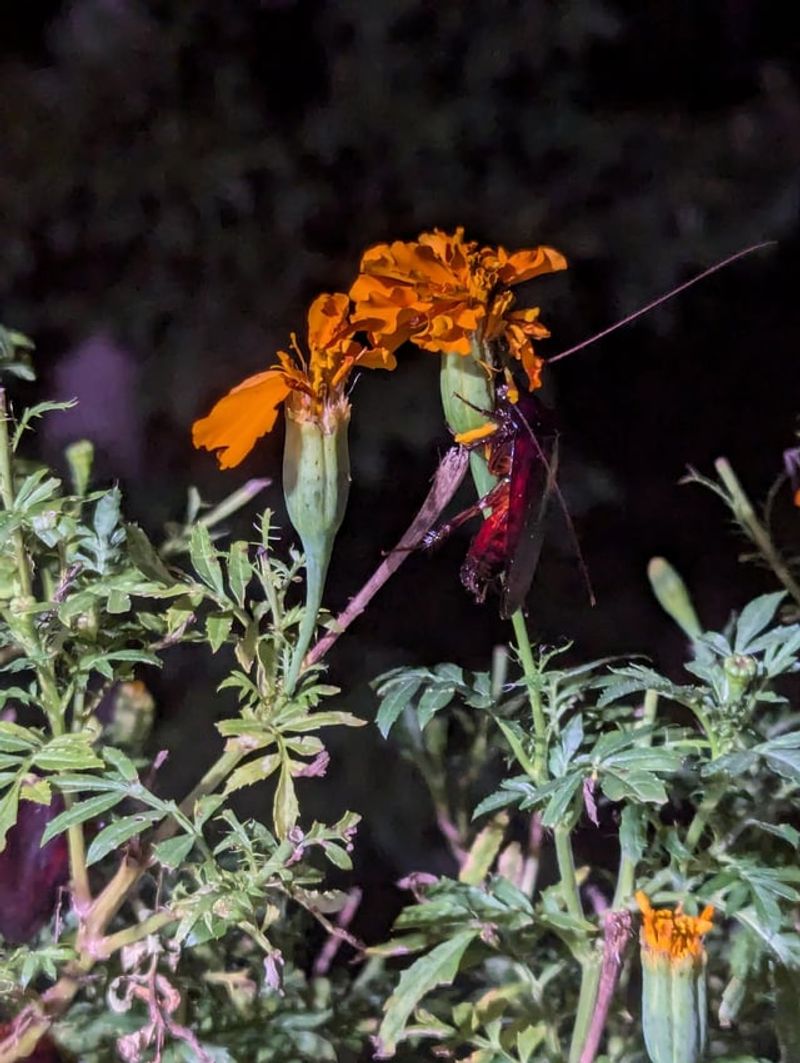
Before bronze patches ever appear, your marigold leaves send an earlier warning sign that many gardeners miss.
Fine pale stippling, which looks like hundreds of tiny white or yellow pinpricks scattered across the leaf surface, is usually the first clue that spider mites have moved in.
At first glance, a lightly damaged leaf might simply look dusty, dull, or slightly off in color.
As feeding increases over several days, those tiny dots multiply and begin running together. The leaf gradually takes on a faded, gray-green, or bronze tone that becomes harder to ignore.
Catching the stippling stage early gives you a real advantage because mite populations are still small and much easier to manage before they explode in July heat.
Your North Carolina Garden Changes Every Week. Your Plan Should Too.
Gardening in North Carolina changes quickly throughout the season. Every Friday you’ll receive a simple weekly plan showing exactly what to plant, prune, fertilize, harvest, and protect so you never miss the right timing.
This stippling pattern is also useful because it looks different from other common leaf problems. A nutrient deficiency tends to affect the entire leaf more evenly or follows a predictable pattern related to the veins.
A fungal leaf spot, by contrast, usually creates distinct circular or irregular lesions with clear edges rather than a scattered dusty appearance.
North Carolina gardeners should inspect several leaves from the lower and middle sections of each plant rather than judging the whole situation from one damaged leaf.
Sampling multiple leaves gives a much more accurate picture of what is actually happening. Taking that extra minute to look carefully at different parts of the plant can completely change how you respond and how quickly your marigolds recover.
3. The Strongest Clues Are Beneath The Leaves
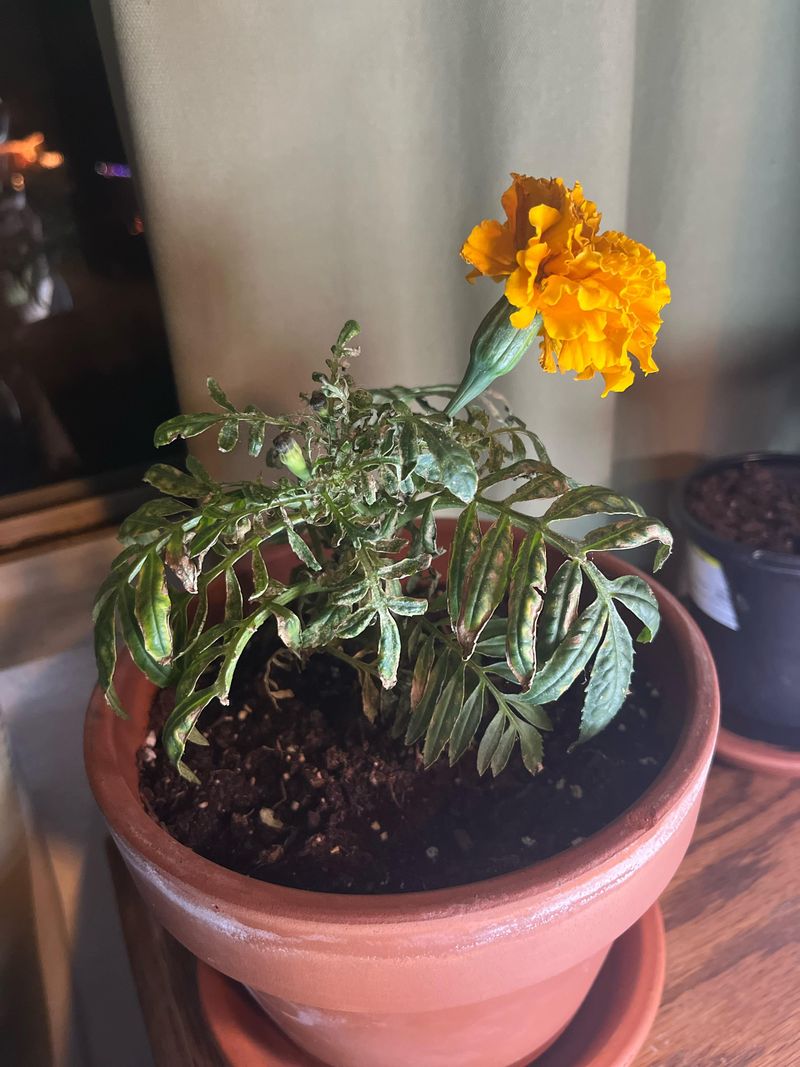
Flipping a leaf over might be the most important move a marigold gardener can make in July. The underside of a bronzing leaf holds the strongest evidence of a spider mite infestation, and most people never think to look there.
Extremely small moving dots, pale eggs, cast skins, and delicate webbing near the veins or tucked between leaves are all telltale signs that mites have made your plant their home.
One of the easiest tricks for spotting mites is the white paper test. Hold a sheet of plain white paper beneath a suspicious branch and give the plant a gentle tap.
Any mites present will fall onto the paper and show up as tiny moving specks against the white background. It sounds simple, but this method works surprisingly well even for gardeners without a magnifying glass.
A hand lens with at least ten times magnification provides an even more reliable view of what is happening on the leaf surface. Mites are so small that the naked eye can miss them entirely, especially in early infestations when populations are still building.
Investing in an inexpensive hand lens is genuinely one of the most practical tools a home gardener can own.
Checking nearby marigolds right away is also a smart habit. Infestations often begin on one plant and then spread to neighbors through wind, contact, or movement in the garden.
Catching the spread early keeps a small problem from turning into a garden-wide situation that takes much longer to address.
4. July Heat Can Make The Damage Increase Quickly
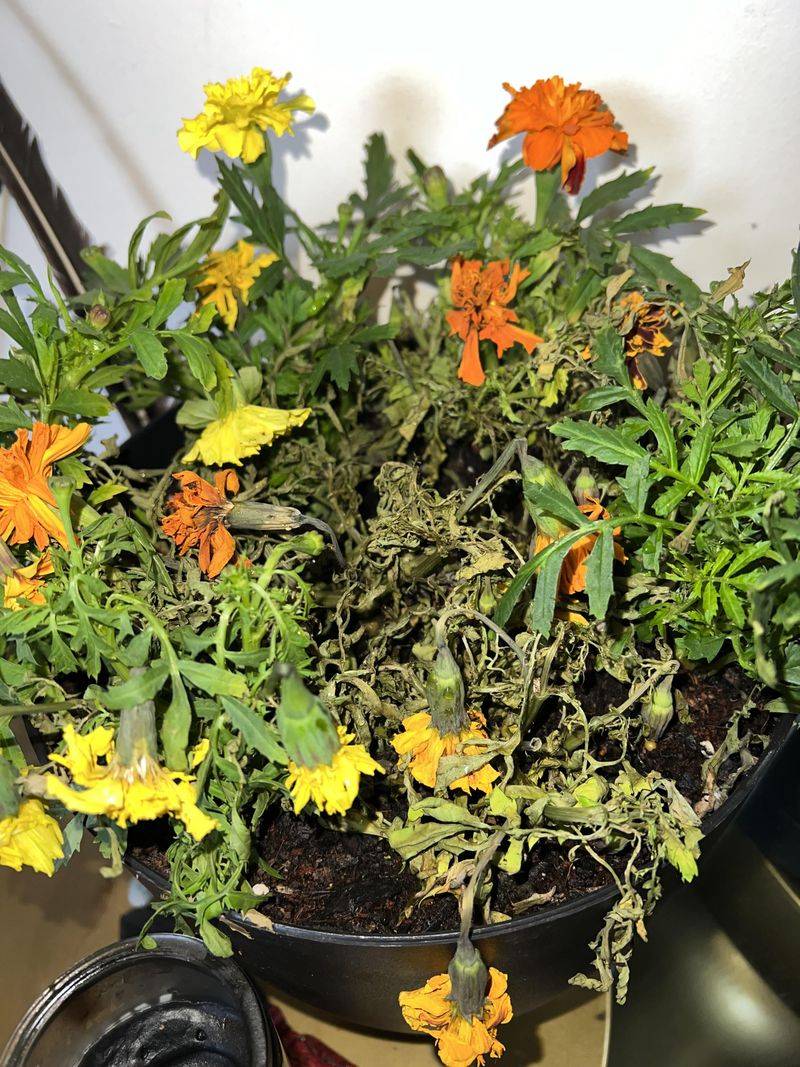
July in North Carolina can feel relentless, and spider mites absolutely thrive in that kind of heat. Hot, dry conditions allow mite populations to double every few days, meaning a small unnoticed infestation can turn into a serious problem within a single week.
At the same time, drought-stressed marigolds become less capable of tolerating the feeding damage, so the visible impact on leaves grows faster than it would on a well-watered plant.
Certain garden spots tend to produce problems earlier than others. Plants growing near brick walls, concrete pavement, air conditioning units, or reflective surfaces absorb extra heat that pushes temperatures even higher around the foliage.
Container marigolds are also particularly vulnerable because their small soil volume dries out quickly, leaving roots stressed and the plant less resilient against pest pressure.
Keeping soil moisture consistent is one of the most practical defenses available to North Carolina gardeners during the summer months.
Checking soil moisture regularly, rather than watering on a fixed schedule, helps ensure plants stay hydrated without becoming waterlogged.
A plant that is neither stressed from drought nor drowning from overwatering is simply better equipped to handle whatever July throws at it.
Early leaf inspection matters just as much as watering, though. Mites must already be present on the plant before heat causes populations to surge, so the heat itself is not the origin of the problem.
Checking foliage at least once a week throughout July gives you the best chance of spotting trouble before it escalates into widespread bronze damage across your entire marigold bed.
5. Silver Bronze Growth May Indicate Thrips
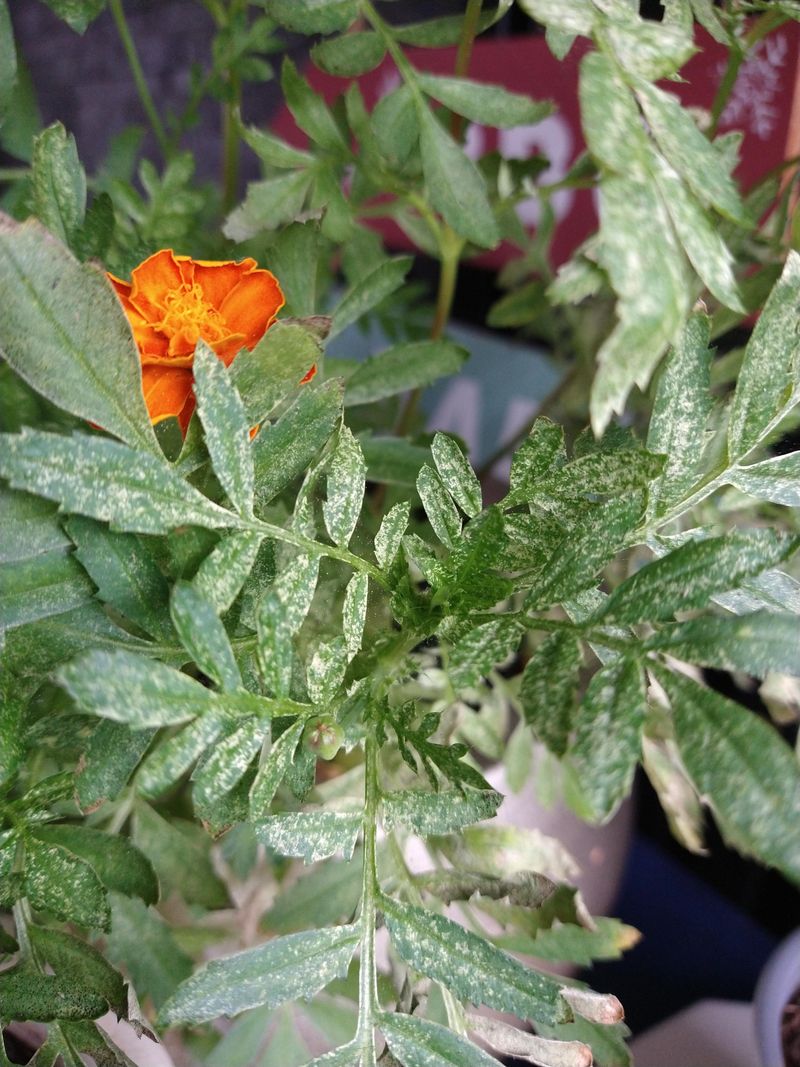
Not every bronzing problem on marigolds comes from spider mites. Thrips are another common insect that can produce silver, tan, or bronze discoloration on both the foliage and flowers of marigold plants.
These slender, fast-moving insects scrape the surface of tender plant tissue and consume the fluids released, leaving behind a characteristic silvery or bronze sheen that is easy to confuse with mite damage at first glance.
Thrips leave behind a few specific clues that set them apart from mites. Distorted young leaves, scarred or streaked petals, damaged or closed buds, and tiny dark specks of waste material on the leaf surface are all signs pointing toward a thrips infestation.
Finding these clues together paints a pretty clear picture of what is going on in your garden.
The location of the damage on the plant also helps with identification. Thrips tend to concentrate their feeding around new growth, flower buds, and open blooms because that tender tissue is easier to scrape.
Spider mite damage, by contrast, usually starts as fine stippling across older leaves lower on the plant before working its way upward as the population expands.
Confirming which insect is actually present before applying any product is genuinely important.
A treatment effective against mites will not necessarily address a thrips problem, and using the wrong approach wastes time while the infestation continues growing.
Taking a careful look with a hand lens, or even bringing a damaged leaf to your local North Carolina Cooperative Extension office, gives you a reliable answer before you act.
6. Crispy Leaf Edges Suggest Heat And Moisture Stress
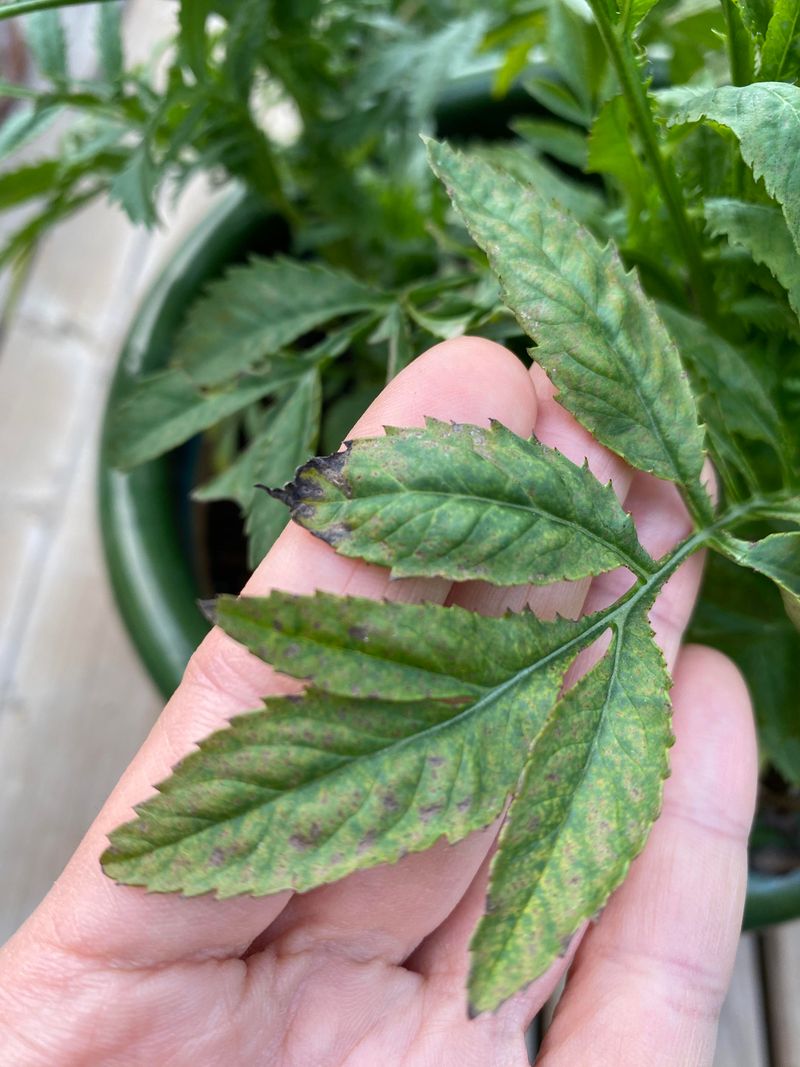
Sometimes the problem has nothing to do with insects at all.
Intense summer sun combined with insufficient moisture at the root zone can give marigold leaves a bronze, scorched, or crispy appearance that looks alarming but has a straightforward fix.
North Carolina July afternoons can push temperatures well above 90 degrees, and marigolds growing in full sun without adequate water simply cannot keep up with that kind of demand.
The clues that point toward heat and moisture stress are pretty distinct once you know what to look for.
Dry brown margins along the leaf edges, leaves that curl inward, afternoon wilting that recovers by morning, and soil that feels hot and dry several inches below the surface are all signs that water stress is the main issue.
Crucially, there will be no webbing, no tiny moving specks, and no fine stippling on the leaf surface.
One mistake many gardeners make is checking only the very top layer of soil. The surface can feel slightly moist from morning dew or a light watering while the deeper root zone remains completely dry.
Pushing a finger two to three inches into the soil gives a much more accurate picture of whether the roots are actually getting the moisture they need to function well.
Thorough morning watering, when the sun is not yet intense, allows moisture to soak deeply into the root zone before the heat of the day begins.
Adding a light layer of organic mulch around the base of the plants, kept away from the stems, helps the soil hold onto that moisture longer and keeps root temperatures more stable through the hottest parts of the afternoon.
7. Wet Soil Can Cause A Different Kind Of Bronzing
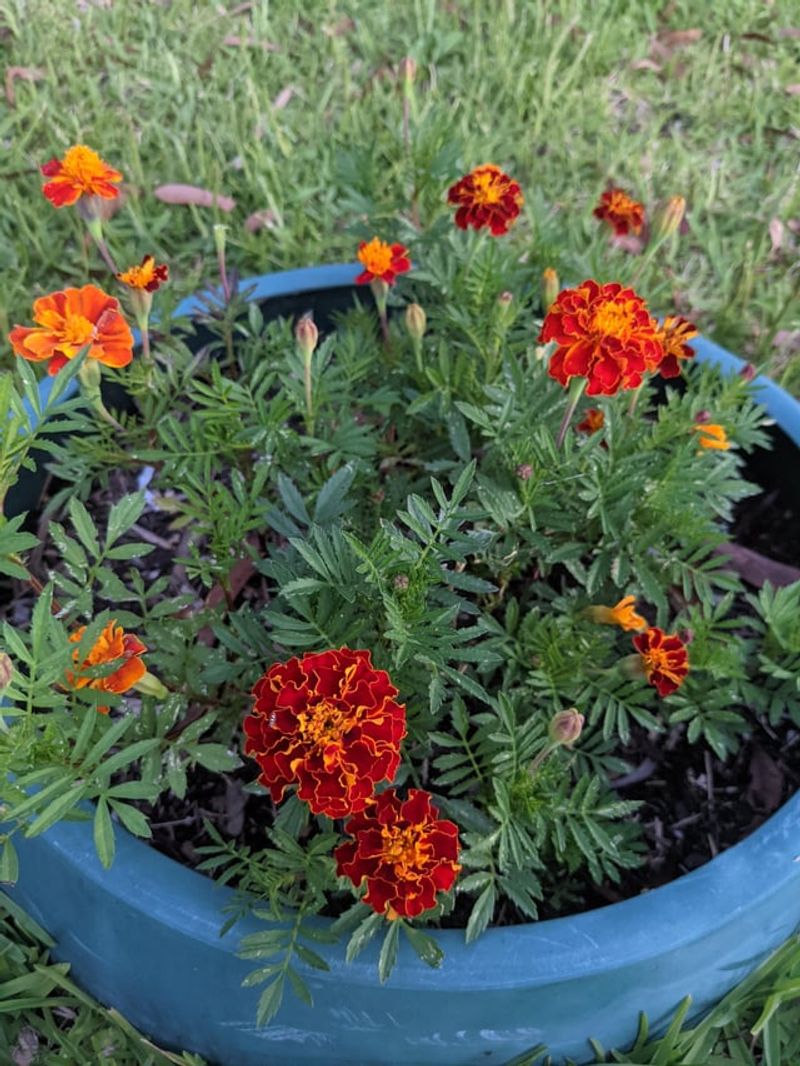
Here is something that surprises a lot of gardeners: too much water can produce bronze leaves just as easily as too little.
When soil stays saturated for extended periods, oxygen cannot reach the roots, and the plant begins to struggle in ways that show up clearly in the foliage.
North Carolina summers can deliver heavy rainfall in short bursts, and certain garden spots simply do not drain fast enough to keep marigold roots happy.
Frequent fixed irrigation, dense clay soil, poorly draining containers, and natural garden low spots all trap excess moisture around plant roots. These conditions force roots to sit in standing water far longer than they can safely tolerate.
The plant responds by showing dull foliage, general yellowing or bronzing, weak new growth, and stems that feel soft near the soil line.
One of the trickiest parts of diagnosing overwatering is that the symptoms can look similar to underwatering at first glance. A wilting, bronze-leafed marigold might seem like it needs more water when the opposite is actually true.
Checking the soil carefully and observing drainage patterns after rain or irrigation helps separate the two problems before you accidentally make things worse. Improving drainage is the most effective long-term solution for this situation.
Mixing organic matter into heavy clay soil, raising planting beds, repositioning containers, or simply adjusting the watering schedule to allow the root zone to begin drying between sessions can all make a significant difference.
Adding more water to an already saturated plant will only deepen the problem.
8. Sudden Uniform Bronzing May Be Spray Injury
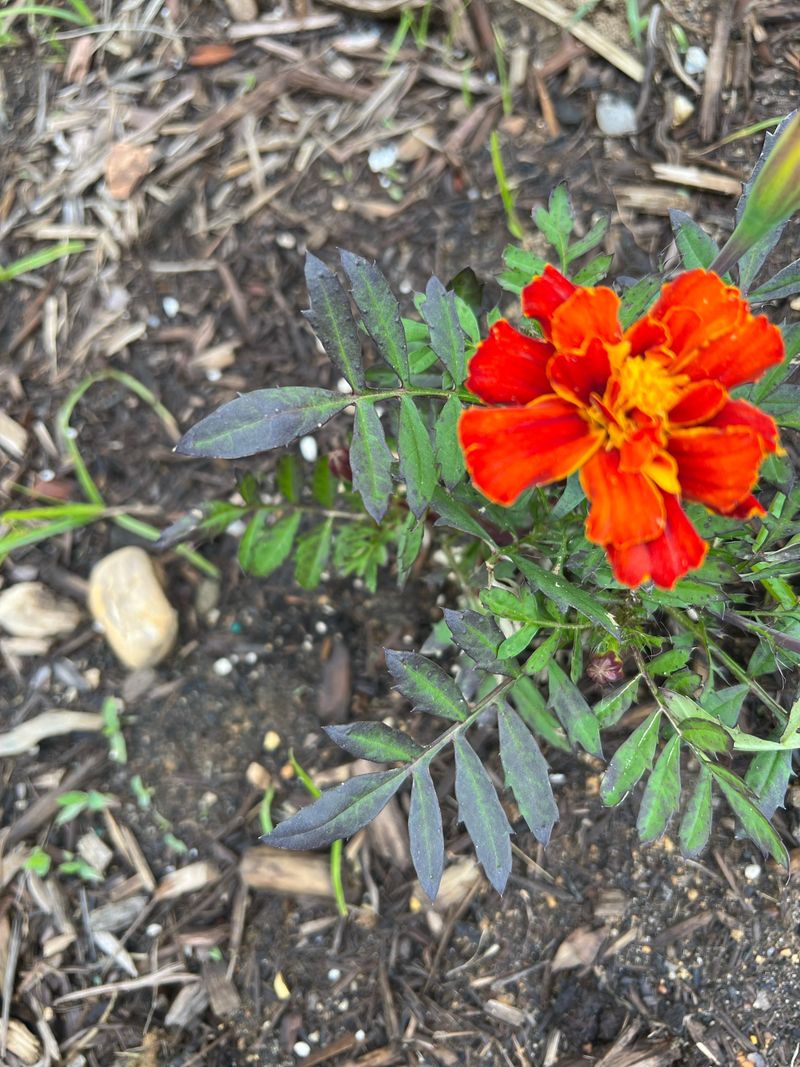
When bronze damage appears almost overnight and seems to affect exposed leaves all at once, spray injury moves to the top of the suspect list.
Herbicide drift from a nearby lawn treatment, fertilizer applied at too high a concentration, insect sprays used at the wrong rate, or homemade mixtures applied without proper dilution can all scorch marigold foliage quickly and dramatically.
The sudden, uniform nature of this damage is what sets it apart from pest or moisture problems that develop gradually.
The pattern of the damage often tells the story clearly. Injury that appears mainly on the side of the plant facing a recently treated lawn or garden bed, or on leaves that were directly exposed during an application, points strongly toward chemical contact.
Damage that shows up within a day or two of a spraying session in or around the garden is another strong indicator worth taking seriously.
Reviewing everything applied to the garden or surrounding yard during the previous several days is a smart first step when spray injury is suspected.
If accidental contact is discovered, rinsing the foliage gently with clean water right away can help reduce further damage.
Avoiding sprays during intense afternoon heat is also important because high temperatures make plants more sensitive to chemical exposure and increase the chance of injury even from products used at the correct rate.
A clear diagnostic order makes troubleshooting bronze marigold leaves much less stressful.
Start by checking for mites and other insects on the leaf undersides, then assess soil moisture and root health, look for distinct leaf spot patterns, and finally review any recent chemical applications in or around the garden.
Working through that order systematically almost always leads you to the right answer.