Why Earthworms Show Up On Georgia Driveways After Summer Rain
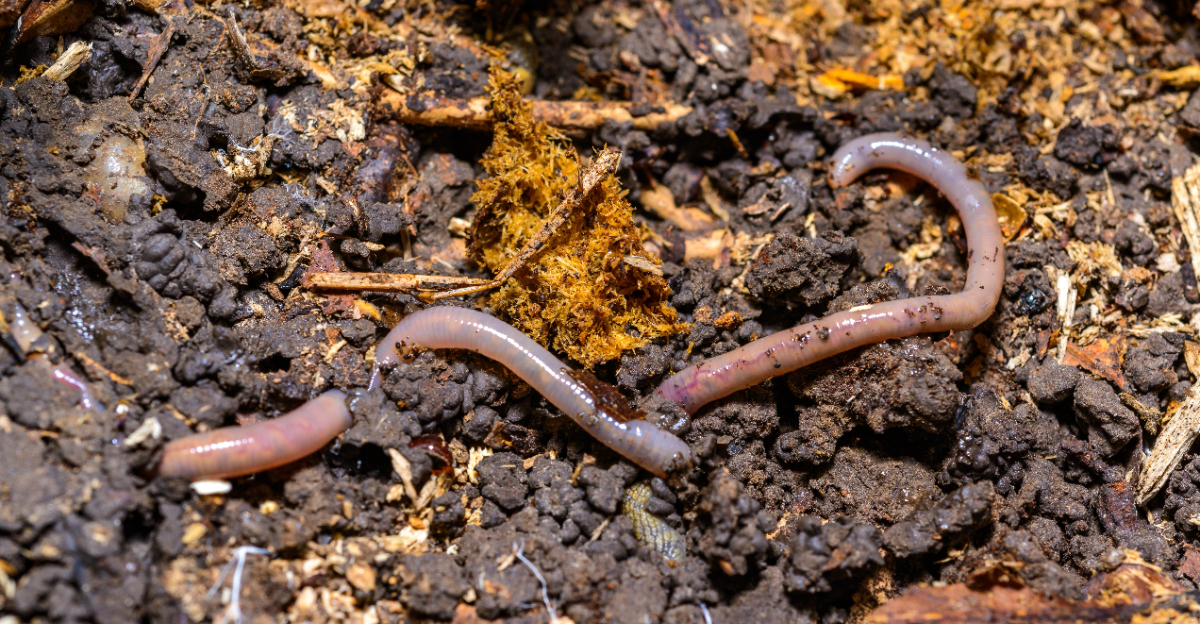
Step outside after a summer storm and the driveway looks like a worm convention. Dozens of them squirm across the hot concrete, heading nowhere fast.
In Georgia, this scene feels like a summer tradition, something locals half expect once the thunder fades. Earthworms surfacing on driveways and sidewalks tell a bigger story about how these small underground creatures cope when their home turns into a swamp.
Rain does not harm worms directly, but it flips the rules underground. Soil fills with water, oxygen disappears, and worms push upward searching for air their flooded burrows can no longer provide.
Concrete becomes a trap the moment the sun comes out. Their skin dries out fast, often before they find their way back to soft, breathable ground.
It’s An Escape Response, Not A Struggle For Air
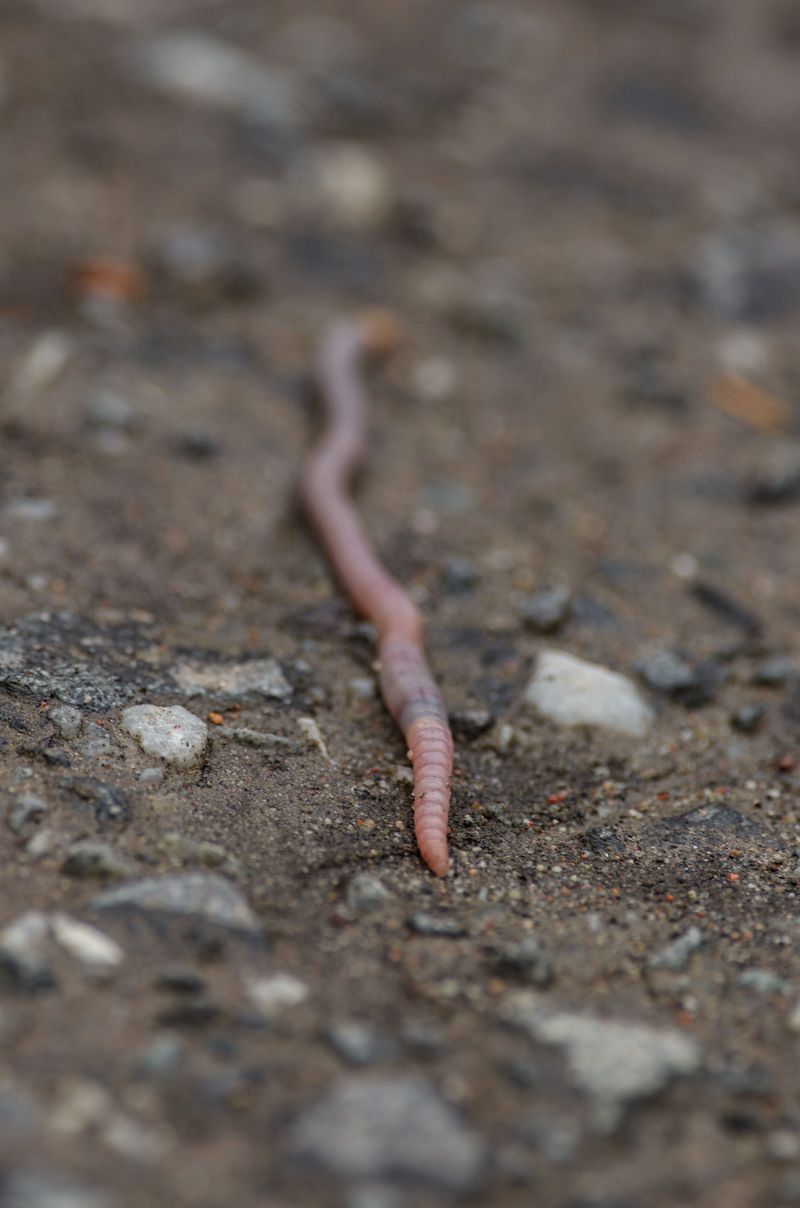
Soggy soil pushes worms up fast. When summer rain floods the ground, earthworms feel the water filling their tunnels and react immediately.
Soil holds oxygen in tiny air pockets between particles. Heavy rain collapses those pockets, replacing air with water.
Earthworms breathe through their skin, so losing that oxygen supply signals real danger. Crawling upward is the fastest escape route available.
Scientists once assumed worms surfaced because they were losing oxygen underwater. Newer research shows the response is more complex than a simple reaction to low air.
Worms can actually survive underwater for hours in some conditions. The escape instinct appears to be triggered by chemical signals in flooded soil, not just oxygen loss alone.
Think of it like a smoke alarm going off before flames arrive. The worm does not wait to confirm the worst before moving.
Georgia summers bring sudden, intense downpours that saturate red clay soil quickly. Clay drains slowly, so worms get the flooding signal faster here than in sandier soils.
Once above ground, worms face a whole new set of challenges. The driveway feels safer than a flooded tunnel, but that trade-off comes with serious risks attached.
Knowing this escape response is instinctive helps explain why worms appear even during light rain. Their internal alarm system is sensitive, tuned over millions of years of underground life.
Rain Turns The Surface Into Safer Ground
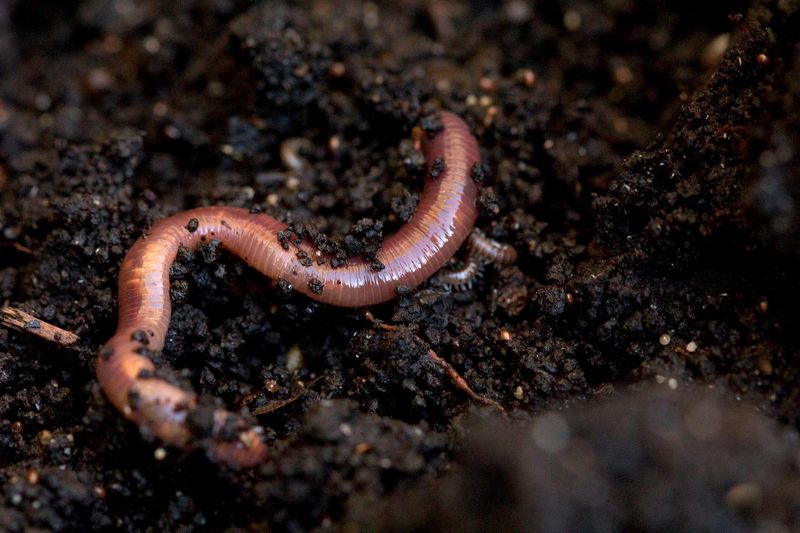
Wet pavement actually feels welcoming to a worm. Rain coats the concrete with a thin film of moisture that lets worms breathe and move freely.
Dry concrete is dangerous for them because it pulls moisture straight out of their skin. A damp surface changes that equation completely.
During a Georgia summer storm, the air itself gets humid and heavy. That moisture helps worms stay hydrated even while exposed above ground.
Worms navigate by sensing moisture gradients in their environment. They move toward wetter conditions, which is why the driveway becomes an attractive path during a downpour.
It sounds backwards, but the hard surface offers something the flooded lawn cannot. Open space means no collapsing soil walls, no rising water, and room to move in any direction.
Earthworms also move faster on smooth, wet surfaces than through packed, waterlogged clay. Speed matters when your home just turned into a swamp.
Your Georgia Garden Changes Every Week. Your Plan Should Too.
Gardening in Georgia changes quickly throughout the season. Every Friday you’ll receive a simple weekly plan showing exactly what to plant, prune, fertilize, harvest, and protect so you never miss the right timing.
Gardeners sometimes notice worms heading toward flower beds or mulched areas after crossing pavement. Those spots offer fresh oxygen, loose soil, and a soft landing after the storm passes.
The surface journey is not random wandering. Worms are actively searching for the next safe patch of ground with the right conditions for survival.
After the rain stops, the driveway dries out fast under Georgia heat. What felt like a safe crossing quickly becomes a race against the sun, and timing decides whether each worm makes it across.
The Vibration Theory That Changed What Scientists Thought
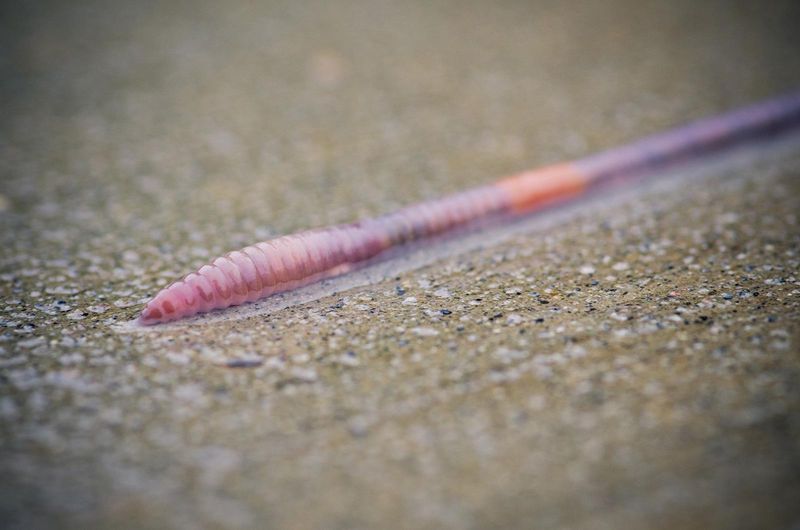
Rain sounds like footsteps to a worm. That discovery flipped the scientific understanding of why worms surface during storms.
Researchers found that worms respond to vibrations traveling through soil. Raindrops hitting the ground create a drumming pattern that mimics the movement of a mole or other predator.
A mole digging through soil produces vibrations at a similar frequency to steady rainfall. Worms evolved to flee from that specific pattern over millions of years.
Scientists confirmed this by placing vibrating stakes in dry ground. Worms surfaced in large numbers even without any water present at all.
This experiment, called worm grunting, has been practiced by bait fishermen in the American South for generations. They stomp or rub sticks in the ground and worms appear like magic.
The American South has a long tradition of worm grunting for fishing bait. Local fishermen knew the trick worked long before researchers explained the science behind it.
The vibration response adds another layer to why earthworms show up on Georgia driveways after summer rain. It is not just the water doing the work.
Rain, runoff hitting the driveway, and thunder all create vibrations that trigger the worm’s flight response simultaneously. Multiple alarms go off at once.
Understanding this means the worm is not confused or lost when it appears on your concrete. It is running from what its nervous system interprets as a genuine underground threat.
Mating And Migration Send Worms Above Ground Too
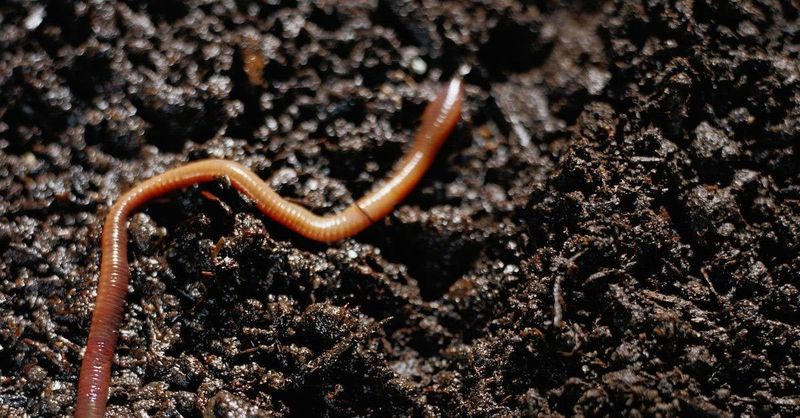
Not every worm on your driveway is fleeing danger. Some of them are out there on purpose, looking for company.
Earthworms are hermaphrodites, meaning each one has both male and female reproductive parts. Even so, they still need a partner to mate successfully.
Above-ground travel makes it easier to find mates from different tunnels and patches of soil. Rain creates the perfect cover for that kind of open movement.
Worms typically move at night to avoid drying out, but summer storms give them a rare daytime window to travel safely. The moisture and cloud cover lower the risk significantly.
Migration also plays a role beyond mating. Young worms often spread out after hatching to establish new territory in fresh soil.
A rainstorm provides the ideal moment to cover more ground without the usual threat of dehydration stopping them short. Your driveway sits right in the middle of their travel route.
Earthworm populations in Georgia can be surprisingly dense in healthy lawns. A single square yard of good garden soil can hold a surprising number of individuals living in separate tunnel systems.
When rain sends everyone above ground at once, the driveway becomes a busy intersection. Worms from multiple colonies cross paths in ways that underground life simply does not allow.
Watching them move with what looks like purpose is not your imagination. These creatures are driven by biological signals just as strong as hunger or thirst.
Georgia Heat Turns This Into A Trap
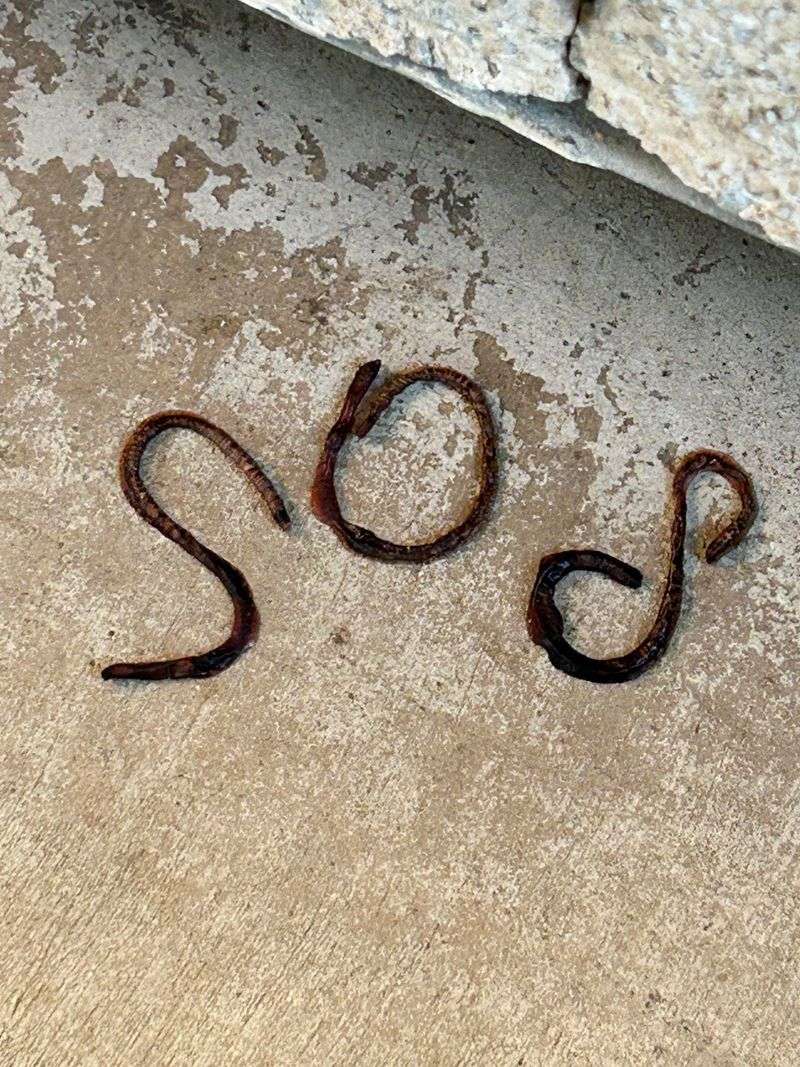
The sun comes back out, and the clock starts ticking. Georgia summers run hot, and concrete absorbs heat faster than almost any natural surface.
Surface temperatures on a Georgia driveway can spike to 140 degrees Fahrenheit or higher on a sunny afternoon. That is far beyond what any worm can survive for long.
Moisture evaporates from the concrete within minutes after rain stops. The same wet film that made the surface safe turns into a dry trap almost instantly.
Worms lose body moisture rapidly in those conditions. Without water in their skin, they cannot breathe, move, or escape the heat building beneath them.
Red clay soil in Georgia holds heat differently than the sandy loam found in other states. The ground stays warmer longer, which means even retreating back to the lawn can be dangerous if the soil dried out fast.
This explains why dried, curled worms often appear on driveways after a summer storm. They made it out of the flooded tunnel but could not complete the crossing in time.
Timing matters enormously for worm survival above ground. A worm that surfaces at dusk during a long evening rain has a much better chance than one that appears at noon.
Georgia’s unpredictable summer storms often arrive mid-afternoon and clear up quickly. That timing works against the worm at almost every step of the journey.
The heat factor is a key reason earthworms show up on Georgia driveways after summer rain, and it shapes whether each one makes it back underground.
Ways To Help Them Survive The Trip Across Concrete
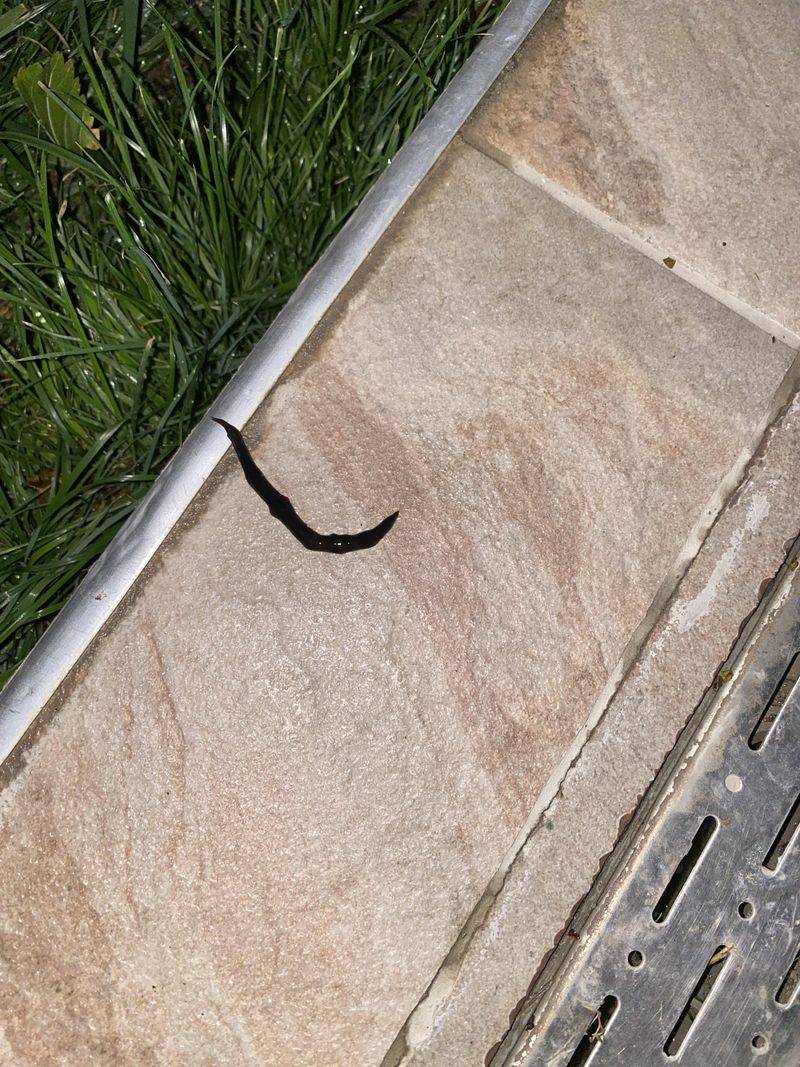
You can actually make a difference here. A few simple actions can help worms complete their journey safely across your driveway.
Grab a stick, a shovel, or even a piece of cardboard to gently scoop worms off the pavement. Moving them to a shaded garden bed or lawn edge takes less than a minute.
Avoid picking them up with dry hands because your skin pulls moisture from theirs. Wet your hands first or use a tool to keep the contact gentle and safe.
If moving them one by one feels like too much, try rinsing the driveway with a hose. A light spray keeps the surface wet longer, giving worms more time to cross on their own.
Shaded driveways under trees give worms a much better survival window. If you have the option to park or position things to block afternoon sun, that small change helps the local population over time.
Healthy worm populations benefit your lawn and garden directly. Worms aerate soil, break down organic matter, and improve drainage in Georgia’s notoriously dense clay.
Protecting them after a storm is an investment in your yard, not just an act of kindness. Every worm that makes it back underground keeps doing the work your soil needs.
Spreading mulch near driveway edges gives worms a softer landing zone after crossing. It also stays cooler and wetter longer than bare soil or concrete.
Next time summer rain sends earthworms onto your Georgia driveway, you will know exactly what is happening and exactly how to help.