Why Ohio Pepper Skins Get Tough In August Heat (And How To Fix It)
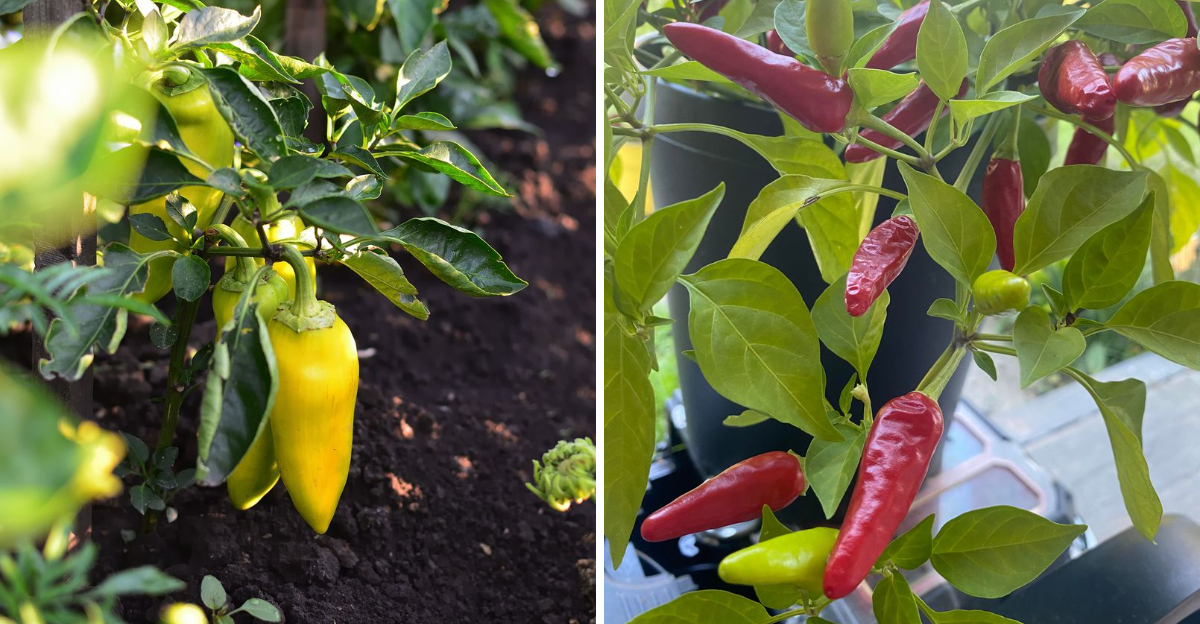
Ohio peppers can look perfect right before they disappoint you.
The color is there. The shine is there. The size looks right. Then one bite tells the truth: the skin is thick, chewy, and more leathery than crisp. That is not exactly the garden snack anyone waited all summer for.
August is usually the turning point.
Hot afternoons, dry spells, sudden storms, shallow watering, bare soil, and late picking all put stress on pepper plants. The plant responds by protecting the fruit, and that protection often shows up as tougher skin.
The tricky part is that several problems can create the same texture.
A pepper can toughen because heat slowed ripening, because water kept swinging from dry to soaked, because roots stayed too shallow, or because fruit sat on the plant too long after reaching peak quality.
So what is really making Ohio pepper skins tough in August?
Start with heat and moisture stress, then look at the soil, harvest timing, sun exposure, and the way water reaches the roots.
1. Heat Slows Ripening
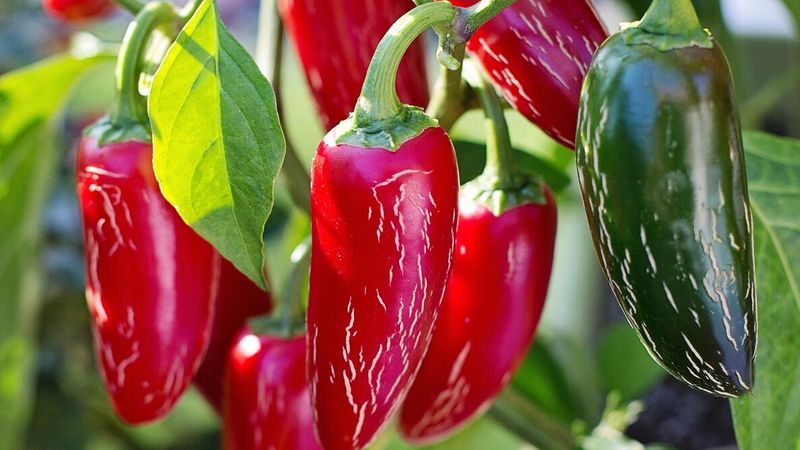
A glossy pepper can still be struggling.
During hot Ohio August weather, pepper plants may slow fruit development even while the fruit looks close to ready.
The plant shifts energy toward handling heat, and the pepper can build a thicker outer layer before the inside reaches its best texture.
That outer layer is protective.
Pepper skin includes a waxy cuticle that helps reduce moisture loss. During intense heat, the plant may thicken that layer as a defense. It is useful for survival, but not always great for eating.
Days above 90 degrees are especially stressful.
Peppers like warmth, but long stretches of high heat can interfere with normal ripening. The fruit may color unevenly, stay firm longer than expected, or develop a tougher bite.
Afternoon shade can help.
A light shade cloth over the bed during the hottest part of the day can reduce stress without blocking the light plants need. Aim for filtered relief, not deep shade.
Container peppers need extra attention.
Pots heat faster than garden beds, and fruit on container plants can toughen quickly during sunny, dry spells. Move pots where they get morning sun and a little afternoon protection.
Do not force the plant with extra fertilizer during heat.
The pepper does not need more pressure. It needs steadier conditions.
Heat-stressed peppers are trying to protect themselves.
Your job is to make August feel a little less punishing.
2. Water Swings Toughen Skin
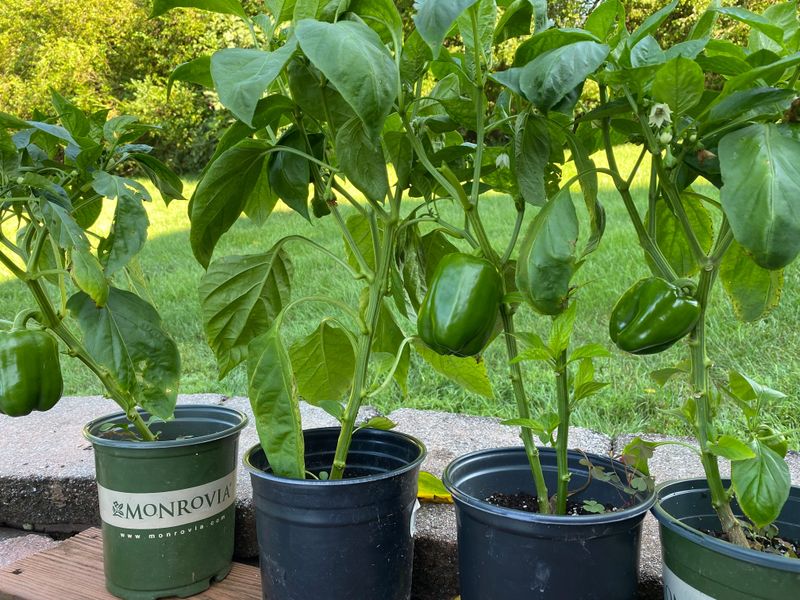
A dry bed followed by a soaking storm can ruin texture fast.
Pepper plants do not like moisture whiplash. When soil dries hard, the fruit loses steady water support. When rain or heavy watering suddenly returns, the plant absorbs moisture unevenly.
That cycle stresses the skin.
Fruit tissues tighten during dry periods, then swell after water returns. Repeated swings can make the skin thicker, tougher, and less pleasant to eat.
Ohio weather makes this easy.
One week can bring hot dry days, and the next afternoon can drop a hard storm that floods the bed. A gardener relying only on rainfall may be giving peppers an accidental roller coaster.
Your Ohio Garden Changes Every Week. Your Plan Should Too.
Gardening in Ohio changes quickly throughout the season. Every Friday you’ll receive a simple weekly plan showing exactly what to plant, prune, fertilize, harvest, and protect so you never miss the right timing.
Check soil before watering.
Push a finger two inches down near the plants. Dry soil at that depth means water is needed. Damp soil means wait. Surface dryness alone does not tell the whole story.
Steady moisture is the goal.
Peppers generally do best with consistent water through fruit development. A soaker hose or drip line makes this much easier than hand watering whenever the plants look stressed.
Avoid dramatic catch-up watering.
A bed that has gone very dry needs slow rehydration, not one harsh blast from the hose. Water gently, pause, then water again so moisture can sink instead of running off.
Pepper skins often toughen because the plant never gets a steady rhythm.
Give the roots consistency, and the fruit usually gets better.
3. Shallow Roots Add Stress
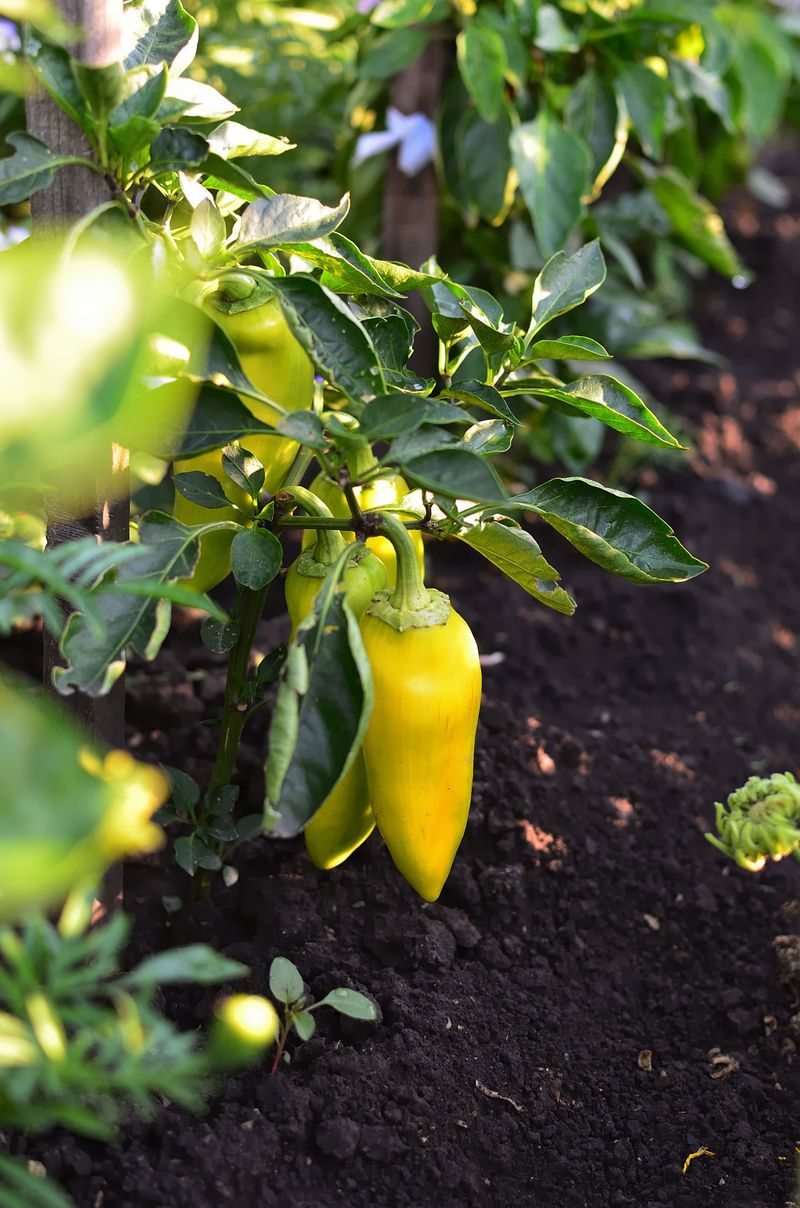
A quick daily sprinkle can create a weak root system.
Pepper roots follow moisture. When water only wets the top inch or two of soil, roots stay close to the surface. That is exactly where Ohio August heat dries the bed fastest.
Surface roots run out of options.
During hot spells, the upper soil layer can dry in hours. A plant with shallow roots cannot reach cooler, moister soil below, so the fruit starts showing stress.
Tough skin is one possible result.
The plant tries to conserve moisture and protect developing peppers. That can mean thicker skin, slower ripening, smaller fruit, and more uneven texture.
Deep watering fixes the pattern.
Water slowly enough for moisture to reach six to eight inches down. That encourages roots to grow deeper, where conditions stay steadier during heat.
Test after watering.
Push a wooden skewer, soil probe, or long screwdriver into the bed. It should move easily through moist soil several inches down. Resistance near the surface means water did not reach far enough.
Less frequent watering can be better.
A deep soak every few days during dry weather usually supports stronger roots than a light sprinkle every morning. Adjust for rainfall, soil type, and plant size.
Mulch helps hold that deeper moisture.
Once roots find a cooler zone, keeping it from drying too fast becomes much easier.
Peppers with deeper roots handle August with more confidence.
The fruit can tell the difference.
4. Sunscald Leaves Leathery Patches
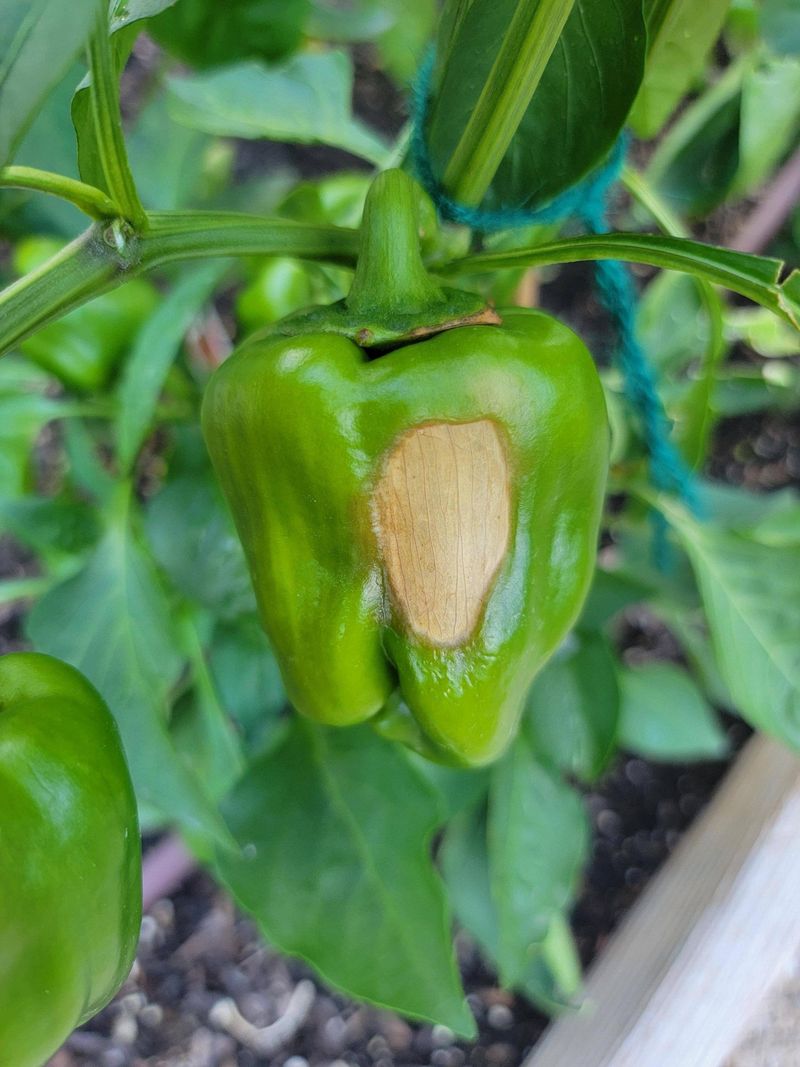
Pale patches on pepper skin are a sun warning.
Sunscald happens when fruit gets too much direct exposure during intense heat. The affected area may look white, tan, papery, or bleached, and the skin there often turns tough and dry.
This usually starts with canopy loss.
Leaves are the pepper’s natural sunscreen. When plants lose foliage from drought, disease, pests, or over-pruning, fruit that once had shade suddenly sits in full afternoon sun.
A few hot days can be enough.
Ohio August sun can be intense, especially in open beds with no taller plants or nearby shade. Fruit facing south or west often shows the worst damage.
Do not over-prune peppers.
Removing too many leaves may improve visibility, but it also exposes fruit. Take off damaged or diseased foliage when needed, but keep healthy leaves in place.
Protect thinned plants quickly.
A light shade cloth during peak afternoon heat can prevent more fruit from scalding. Even temporary protection helps during a heat wave.
Harvest damaged fruit early.
Sunscalded patches will not turn tender again. The rest of the pepper may still be usable, but the leathery area should be trimmed away in the kitchen.
A full canopy is more than greenery.
It is the plant’s built-in umbrella, and August peppers need every bit of shade those leaves can give.
5. Overripe Peppers Toughen Fast
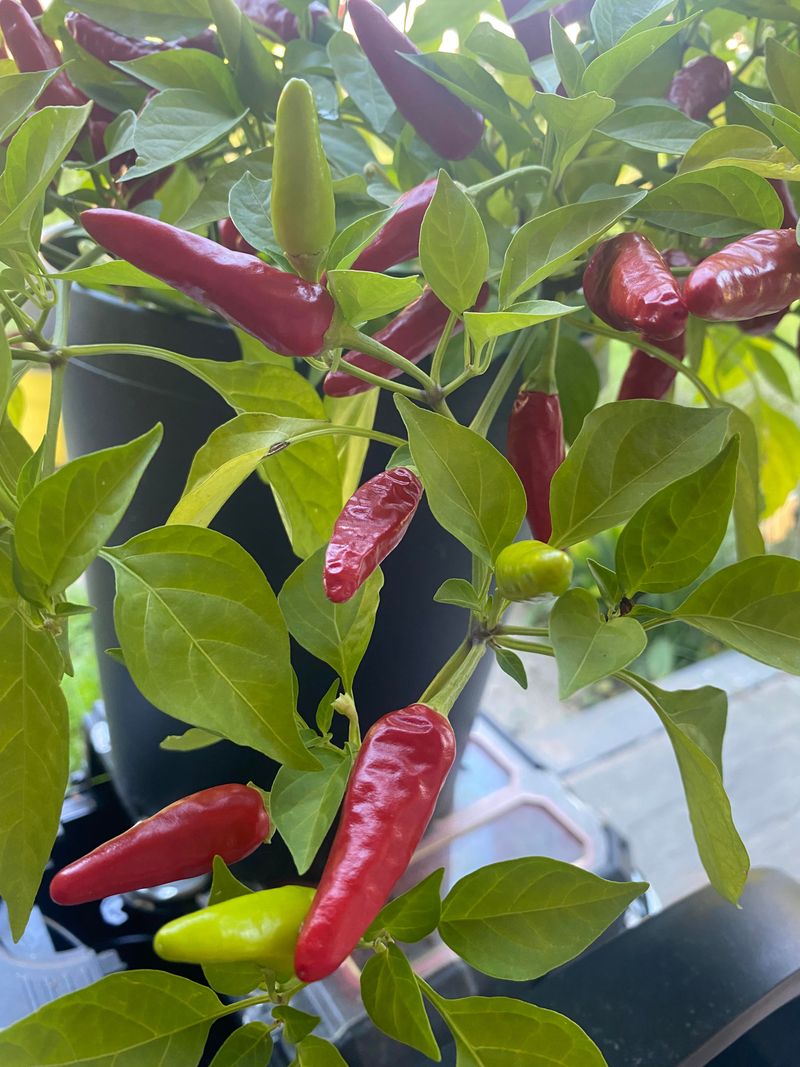
Waiting too long can turn a good pepper chewy.
Once a pepper reaches full size and mature color, its best eating window can pass quickly in August heat. The skin continues thickening, the flesh can soften, and that fresh snap starts slipping away.
This happens faster during hot spells.
A pepper that looked almost perfect on Monday may feel noticeably tougher by Thursday. Heat speeds ripening, then pushes fruit beyond peak quality.
Color is only one clue.
A ripe pepper should feel firm, glossy, and heavy for its size. Fruit that looks dull, feels slightly soft, or sits too long after coloring may already be moving past its best texture.
Check plants often.
During August, look every two to three days. Peppers hide under leaves, and one missed harvest can leave fruit sitting too long in the heat.
Pick slightly early when needed.
Peppers do not have to reach showroom perfection on the plant. Harvesting when they are full-sized and just beginning to color can give better texture, especially during extreme heat.
Regular picking helps the plant too.
Removing mature fruit encourages the plant to keep producing rather than spending energy maintaining peppers that are already finished.
Use scissors or pruners.
Pulling can damage stems and stress the plant. A clean snip keeps everything tidier.
A perfect-looking pepper can already be past its prime.
August rewards gardeners who harvest before the skin gets stubborn.
6. Mulch Keeps Moisture Steady
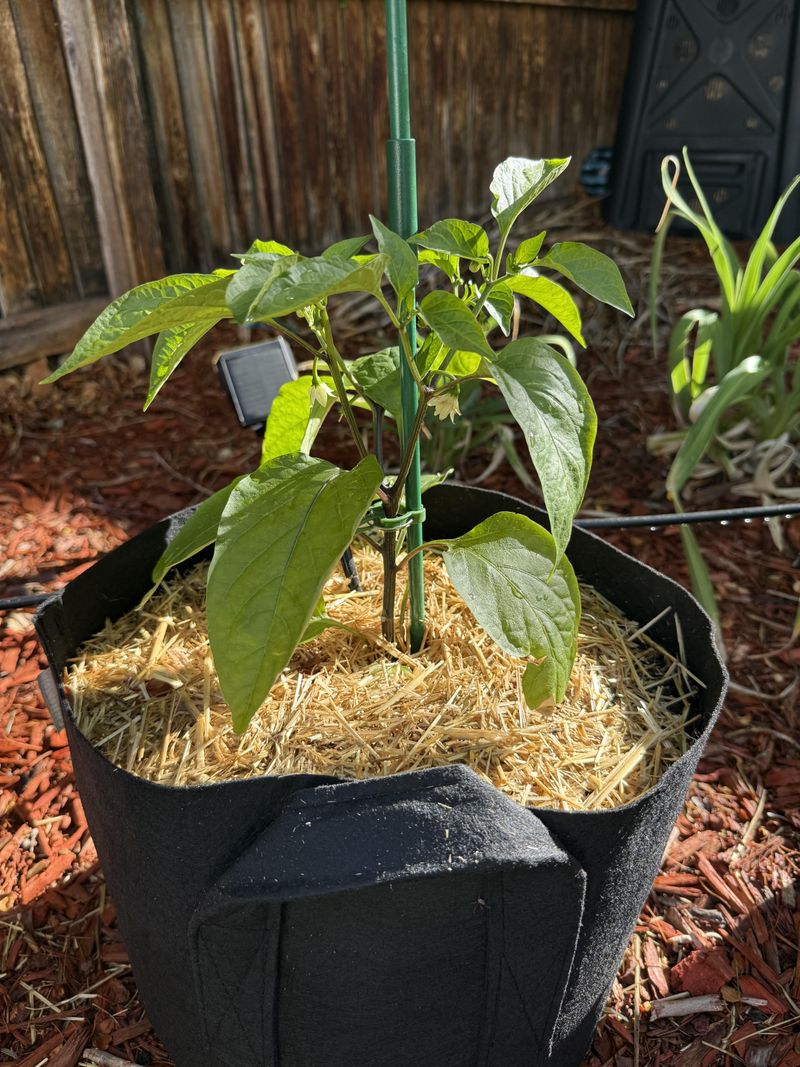
Bare soil makes pepper plants work harder.
Without mulch, Ohio summer sun heats the soil, dries the surface, and exposes roots to bigger temperature and moisture swings. Those swings can show up later as tough-skinned fruit.
Mulch calms the root zone.
Straw, shredded leaves, untreated grass clippings, or fine wood chips help hold moisture and keep soil cooler. A steadier root zone means less stress moving into the fruit.
Depth matters.
A layer around three inches deep is usually enough to make a real difference. Too thin, and it dries out quickly. Too thick or packed tightly, and it can hold too much moisture against stems.
Keep mulch away from the main stem.
Leave a little breathing room around each plant so moisture does not sit directly against the base. The roots need coverage. The stem needs air.
Mulch after watering.
A deep soak first, then mulch, locks in better moisture. Adding mulch over dry soil does not solve the problem underneath.
Straw is especially handy in vegetable beds.
It is light, easy to move, and simple to tuck around pepper plants without burying them. Shredded leaves work well too when spread loosely.
Mulch does not just make beds look neat.
It protects the conditions that keep pepper skin smoother, thinner, and better for fresh eating.
7. Pick Before Heat Hardens Them
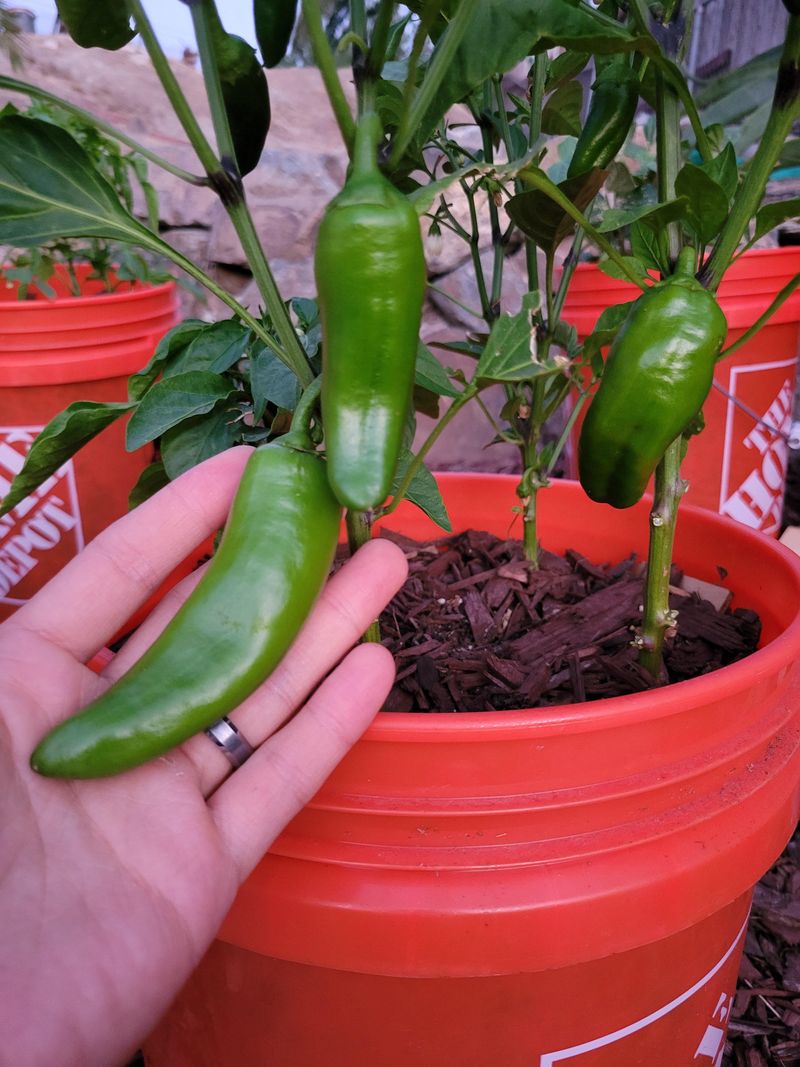
Morning harvests give peppers their best shot.
Fruit picked early in the day is usually cooler, firmer, and less stressed than fruit harvested after hours of direct August sun. By afternoon, peppers may have lost moisture and absorbed more heat.
That affects texture.
A pepper sitting in full sun all day can feel tougher than one picked before the hottest stretch. The difference may seem small at first, but it adds up during a long heat spell.
Set a harvest routine.
Check plants before 9 or 10 a.m. when possible. Bring a basket and pruners, then remove fruit that is full-sized, firm, and at the stage you prefer.
Do not wait for every pepper to color fully.
Green peppers are usable earlier, and partially colored peppers often have better texture during hot weather than ones left too long for full color. Ripe peppers are wonderful, but August heat shortens the window.
Handle fruit gently.
Bruised peppers lose quality faster after picking. Snip with a short stem attached rather than twisting them off the plant.
Harvesting often reduces plant stress.
A plant carrying fewer mature peppers can put more energy into new fruit, roots, and heat survival.
Morning picking is a small habit with a big payoff.
It gets peppers out of the heat before the day starts toughening the skins and testing everyone’s patience.
8. Water Deep To Restore Quality
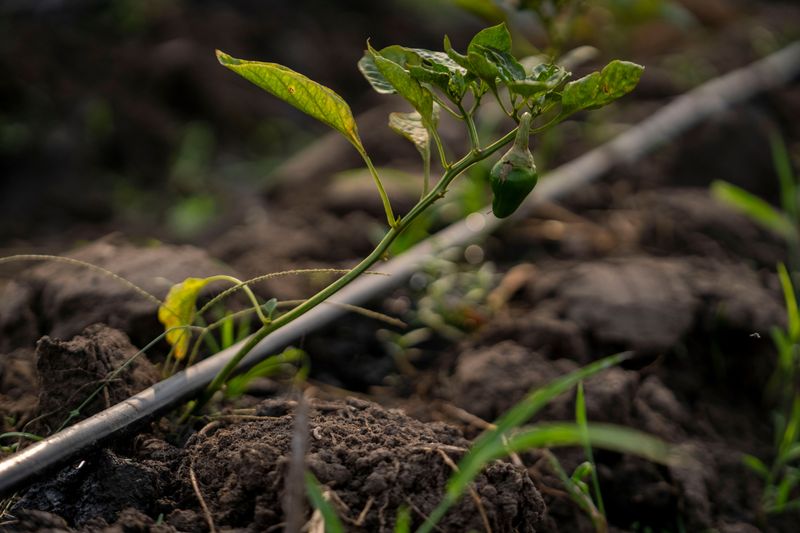
A stressed pepper plant needs water where roots can use it.
Surface sprays and five-minute sprinkler runs rarely reach deep enough during August. They may wet the leaves, darken the soil, and make the garden look watered, but the active root zone can still be dry.
Deep watering is the repair step.
Moisture should reach six to eight inches down. That gives roots access to a larger, cooler reservoir and helps the plant recover from heat stress more effectively.
Use slow delivery.
Drip irrigation, a soaker hose, or a watering wand held close to the soil works better than a hard spray. Water that lands too fast can run off, especially when soil has dried and hardened.
Dry soil may need a reset.
Water gently, pause for several minutes, then water again. Repeating the cycle helps moisture soak in instead of sliding across the surface.
Focus on the base, not the leaves.
Wet foliage in humid Ohio weather can invite disease issues. The roots need the water, so aim low.
Existing tough fruit may not fully improve.
Peppers already thickened by heat and stress will not become perfectly tender again. New fruit forming after better watering usually shows the biggest improvement.
Track the change.
After a week or two of steady deep moisture, new peppers should develop with smoother texture and better overall quality.
The fix is not complicated.
Water slowly, water deeply, mulch well, and harvest before August turns your peppers into garden leather.