This Fly-Repelling Plant Belongs On Every Kentucky Porch
Flies own your porch before you even sit down. Kentucky humidity practically invites them onto your steps. Nothing ruins a quiet evening faster than wings near your face.
Buzzing interrupts every conversation, every bite, every sip of tea. Chemical sprays leave residue you don’t want near your food. Something quiet changes that equation entirely, without poison or noise.
Grandmothers across Kentucky have known this secret for generations. A single plant overwhelms a fly’s delicate senses instantly. Their tiny receptors panic, confused, desperate to escape the scent.
Suddenly your porch smells fresh instead of like trouble. Sitting outside stops feeling like a gamble against pests. This green answer does more work than any spray ever could.
Cost barely matters when the payoff arrives this fast. Momentum builds toward something you never expected from your own garden. Relief arrives faster than most repellents ever promise. You will not want to stop here.
Why Flies Are A Constant Problem On Kentucky Porches
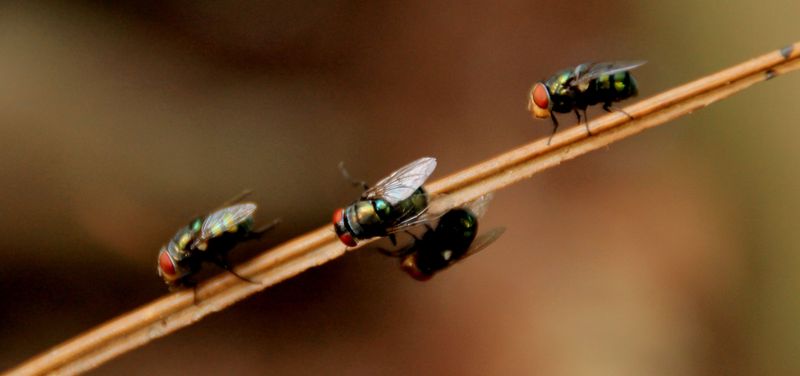
Flies do not show up randomly. They follow food, heat, and humidity like a GPS. Kentucky summers check every single one of those boxes.
The warm, muggy air that settles over porches from June through September is practically a fly invitation. Add in nearby livestock, gardens, or even just a trash can, and you have a strong attractant for flies.
Houseflies and bottle flies are the most common culprits in this region. They breed fast, travel far, and readily land on food and people.
What makes porches especially vulnerable is the combination of shade, human activity, and food smells. Flies sense carbon dioxide from your breath and heat from your skin, so just sitting outside puts you on their radar.
Screen doors help, but they do not solve the problem once you step outside. Chemical sprays work short-term but leave residue on surfaces where kids and pets play.
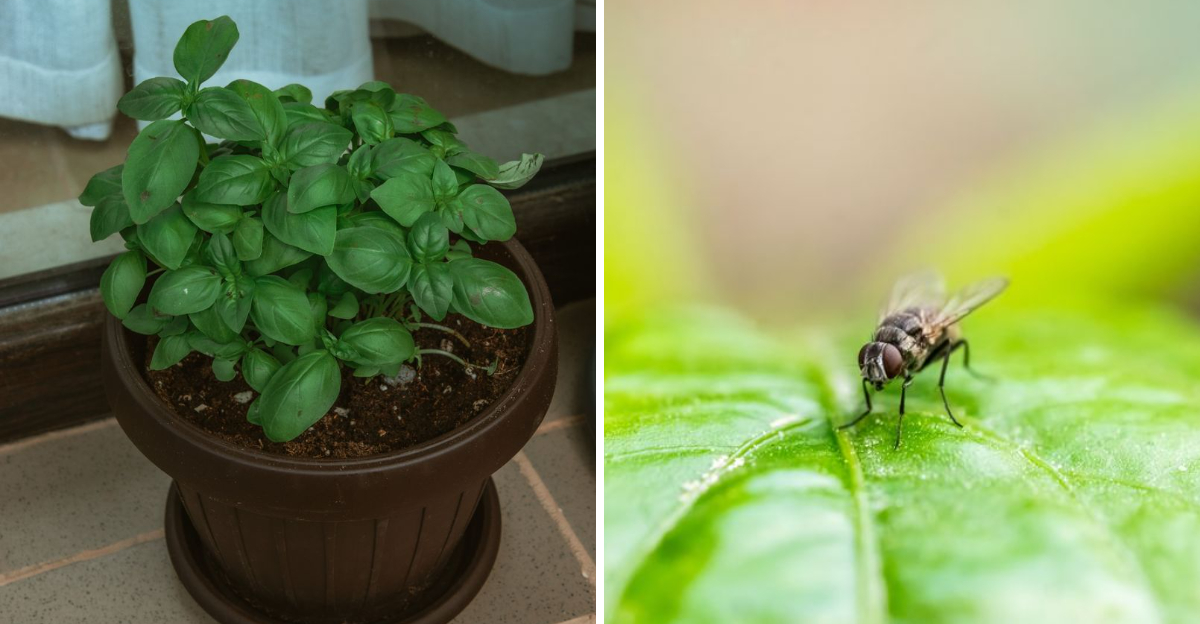
That is exactly why a natural, plant-based solution makes so much sense here. A fly-repelling plant like basil works around the clock without any effort from you.
It does not require batteries, refills, or a trip to the hardware store every two weeks. It just sits there, smells amazing, and quietly does its job all season long.
Porches are meant to be enjoyed, not abandoned the moment the sun comes out. Understanding why flies love your space is the first step to taking it back.
Basil Naturally Makes Your Porch Less Appealing To Flies
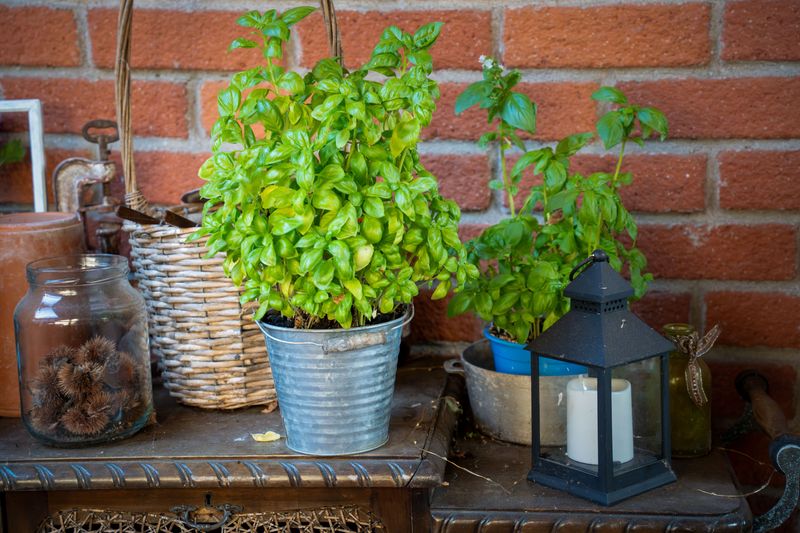
Picture basil as a natural barrier standing between your porch and every fly outside. The oils inside basil leaves release a continuous scent that flies find overwhelming and unpleasant.
Unlike humans, who find basil pleasant, flies find its scent unpleasant and disorienting. This fly-repelling plant works passively, meaning you do not have to do anything once it is in place. No spraying, no swatting, no expensive gadgets plugged into your outlet.
Gardeners and pest-control experts have long relied on basil near entry points to discourage flies from settling in. Positioning a pot near your door or seating area creates a scent barrier flies are reluctant to cross.
Your Kentucky Garden Changes Every Week. Your Plan Should Too.
Gardening in Kentucky changes quickly throughout the season. Every Friday you’ll receive a simple weekly plan showing exactly what to plant, prune, fertilize, harvest, and protect so you never miss the right timing.
The effect is strongest on warm days when the sun heats the leaves and releases more of those aromatic oils. That means basil actually works harder on the hottest, most fly-prone days of the year.
Many gardeners also plant basil to help keep mosquitoes at a distance during those thick summer evenings.
The best part is that basil is not toxic to children or pets, making it a genuinely safe option for family porches. You are not trading one hazard for another.
Your porch should feel like a retreat, not a constant struggle. Basil helps you reclaim that space without any chemical compromise.
The Science Behind Basil’s Fly-Repelling Scent
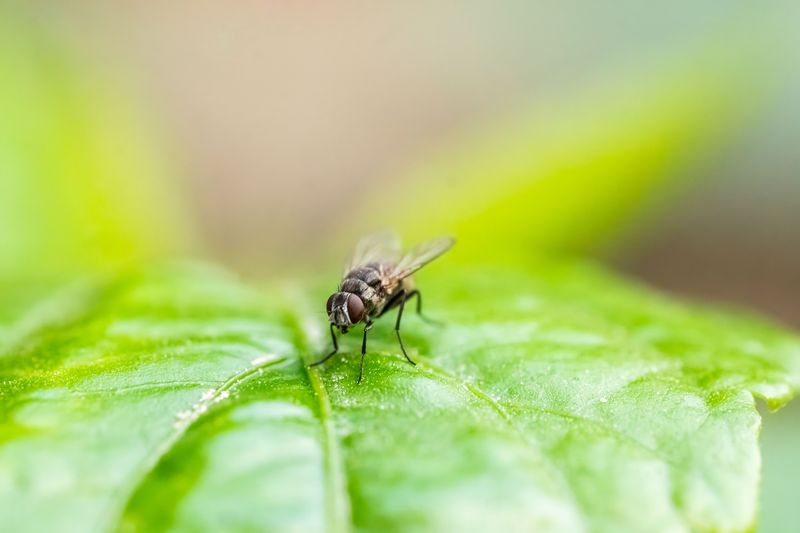
Basil’s secret weapon is not magic. It is chemistry. The leaves are packed with volatile compounds called linalool, eugenol, and estragole.
These compounds evaporate into the air at room temperature, creating an invisible scent cloud around the plant. Flies have highly sensitive olfactory receptors, and these specific compounds essentially overload them.
Think of it like walking into a room where someone sprayed an entire bottle of perfume. You would want to leave immediately, and so do flies.
Linalool, one of basil’s key aromatic compounds, is known to interfere with how flies detect food and landing spots. It does not harm them physically. It just makes the area feel wrong to their senses.
Eugenol, also found in cloves, has similar repellent properties and adds another layer of protection. The combination of multiple compounds is what makes basil more effective than single-ingredient sprays.
Crushing or lightly rubbing the leaves releases an even stronger burst of these oils. Doing this before guests arrive gives your porch an extra boost of fly-free coverage.
Temperature plays a role too, since warmer air accelerates the release of these volatile oils. A sun-warmed basil pot on a hot afternoon is essentially working at full power.
Knowing the science helps you use the plant more strategically. When you understand what is actually happening, you stop seeing basil as just a herb and start seeing it as a precision tool.
How To Plant And Position Basil For Best Results
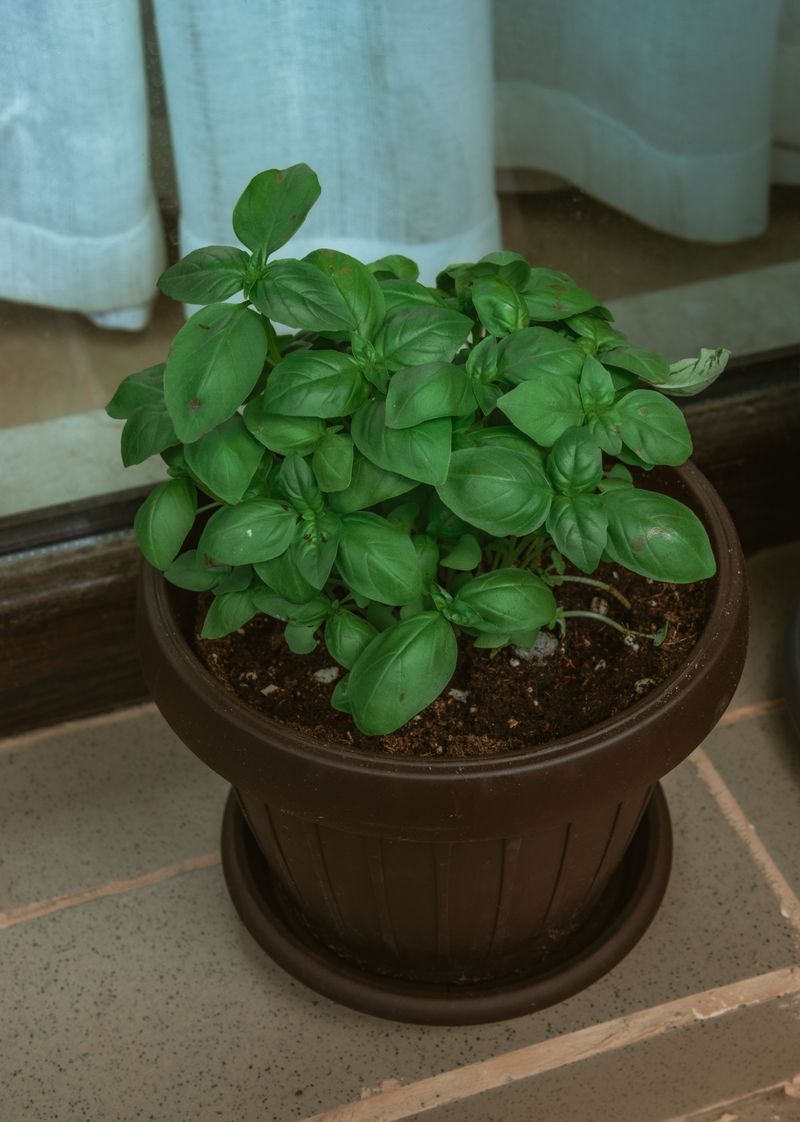
Placement matters more than most people realize when using basil as a natural fly deterrent. Sticking it in a corner and forgetting about it will not give you the full effect.
Start by putting one pot right beside your porch door, on the side guests enter from. This creates an immediate scent barrier that flies encounter before they even reach your seating area.
Add a second pot near where you eat or gather most often. Flies are drawn to food smells, so having basil close to that zone gives you targeted protection right where you need it.
Use containers at least eight inches wide so the roots have room to spread and the plant stays healthy. A stressed or root-bound basil plant produces fewer oils and loses its repellent power quickly.
Water your basil at the base, not the leaves, and let the soil dry slightly between waterings. Overwatering is the fastest way to damage the plant and lose all its benefits.
Basil loves full sun, so a south or west-facing porch is ideal for keeping it thriving all season. If your porch is mostly shaded, look for a spot that gets at least six hours of direct light each day.
Pinch off any flowers that form, since flowering causes the plant to slow oil production. Keeping it in a leafy, vegetative state means it keeps repelling flies at maximum strength.
A well-placed, well-tended basil plant is not just decoration. It is a consistent, low-maintenance deterrent.
Best Basil Varieties For Kentucky Porches
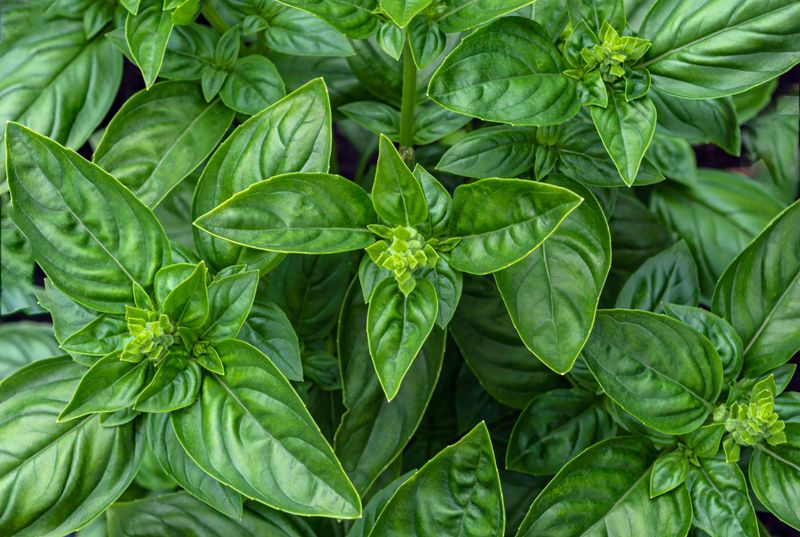
Not all basil is created equal when it comes to repelling flies. Some varieties pack a stronger aromatic punch than others.
Genovese basil is the classic choice and one of the most effective options for pest control. Its large, oil-rich leaves release a bold scent that carries well across an open porch area.
Lemon basil is another strong contender, adding a citrusy twist that flies particularly dislike. The combination of traditional basil oils and citrus compounds creates a scent profile that is doubly uninviting to pests.
Thai basil has a spicier, anise-like aroma that works differently on fly receptors than sweet basil does. Using a mix of Thai and Genovese basil together gives you broader scent coverage.
Purple basil, often called Dark Opal, is a visually stunning option that also performs well as a repellent. It adds a pop of color to your porch while still doing the aromatic heavy lifting.
Cinnamon basil smells exactly like its name suggests, and flies are not fans of that warm, spicy fragrance either. It is a great pick if you want your porch to smell like a cozy bakery while keeping pests at bay.
Mixing two or three varieties in a window box or grouped pots amplifies the effect. Each variety contributes different compounds, and together they create a more complex and powerful repellent barrier.
Choosing the right variety for your porch setup can make the difference between mild relief and a genuinely fly-free outdoor space all summer long.
Common Mistakes That Reduce Basil’s Effectiveness

Basil is forgiving, but there are a few mistakes that quietly drain its fly-repelling power without you even noticing. Avoiding them keeps your porch protected all season.
The most common error is planting basil in too small a pot. A cramped root system stresses the plant, slows growth, and cuts oil production, which means less scent and fewer deterrent benefits.
Placing it in deep shade is another big misstep. Basil needs sun to thrive, and a shaded plant produces far fewer of the aromatic oils that make it effective against flies.
Letting the plant flower sounds harmless, but it actually signals the plant to stop producing flavorful, oil-rich leaves. Pinch those flower buds off the moment you spot them to keep the plant working at full strength.
Overwatering drowns the roots and causes yellowing leaves that have almost no scent. Check the soil before watering, if the top inch is still moist, wait another day.
Planting basil too far from where you actually sit is a mistake that makes the whole effort pointless. The repellent effect is strongest within a few feet of the plant, so proximity to your seating area matters.
Ignoring pest damage on the basil itself is another oversight. Aphids and spider mites can weaken the plant quickly, reducing both its health and its aromatic output.
Treat your basil like the hardworking fly-repelling plant it is, and it will reward you with a fresher, more peaceful porch from the first warm day to the last.