Early August Care Kentucky Container Plants Need to Bounce Back From July Heat
Kentucky’s July sun doesn’t just warm containers, it punishes them, baking soil until it feels closer to a kiln than a garden bed. Roots take the worst of the punishment, and by the time August rolls around, plenty of pots look nowhere near their spring form.
Blooms fade first, then leaves start curling at the edges, quietly signaling that something under the surface has gone wrong. It’s easy to write the season off at this point, but that would be a mistake.
Early August holds more promise than most gardeners give it credit for, a narrow window where stressed containers can still turn things around. The plants haven’t given up, they’re just waiting for the right nudge.
1. Trim Back Heat Stressed Growth First
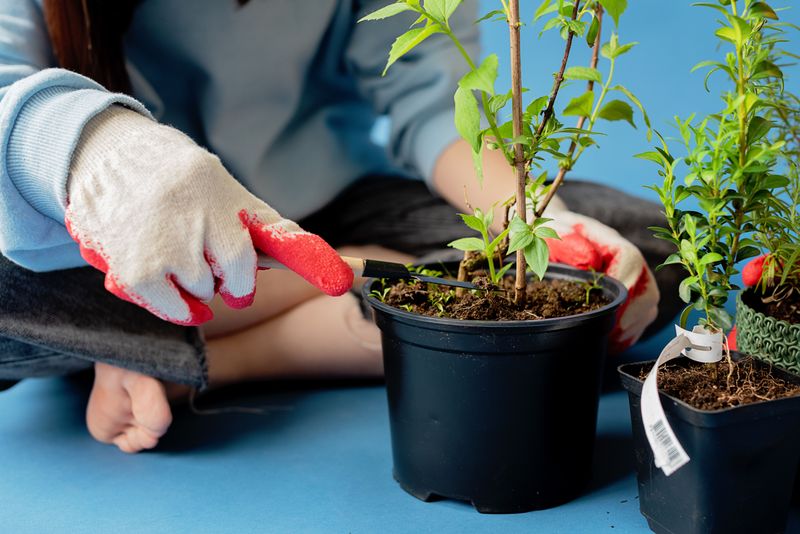
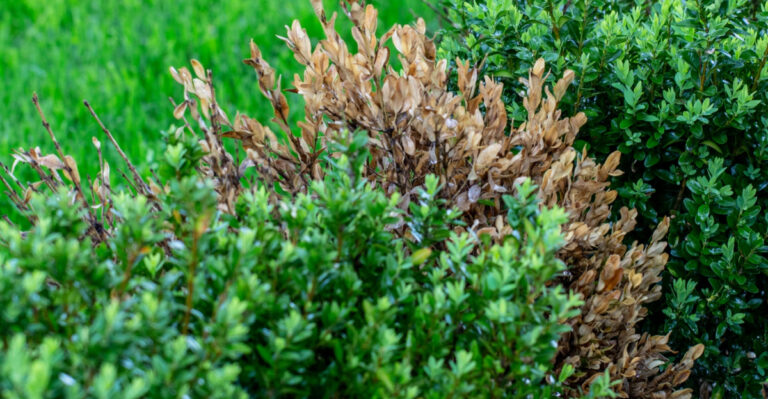
Brown tips, shriveled stems, and crispy leaves are not a good look. Early August container care in Kentucky starts with a clean trim to remove all that heat-damaged growth.
Cutting back stressed stems signals your plant to push fresh, new growth. Think of it like a haircut after a rough summer.
Start with any stems that look brown more than halfway up. Snip them back to a healthy node, which is the little bump where a leaf or branch meets the stem.
Don’t be afraid to cut aggressively. Most container plants bounce back fast once the spent, exhausted growth is gone.
Use clean, sharp scissors or pruning shears. Dirty blades can spread disease from one plant to another.
Wipe your blades with a disinfectant wipe between plants. This one small step protects your whole container garden.
After trimming, check the plant’s center for airflow. Dense, tangled growth traps moisture and invites mold.
Open up the middle of the plant a bit. Good air circulation helps prevent fungal issues as humidity rises in late summer.
Toss the clippings in the trash, not the compost, if they look diseased. Diseased material in compost can cause problems later.
Trimming is the first step, but it works best when paired with the other care steps ahead. Your plants are tougher than they look, and a good pruning session sets the stage for a strong recovery.
2. Refresh Depleted Potting Soil Nutrients
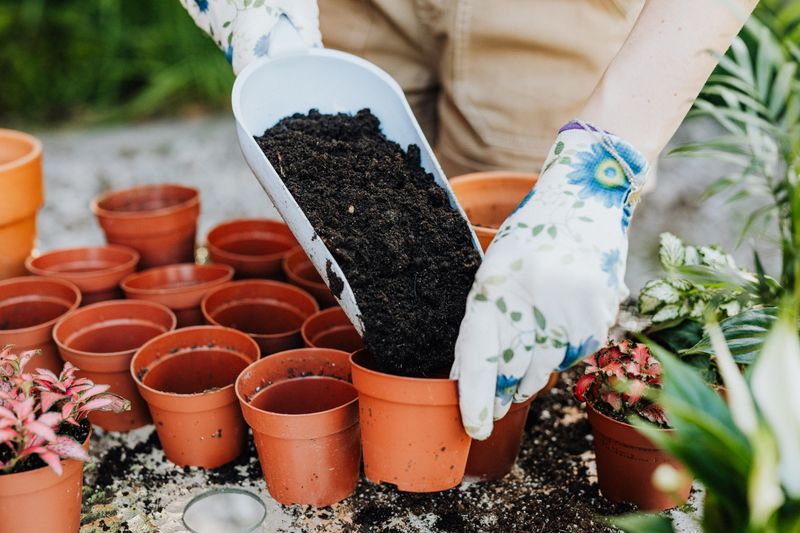
Potting soil is basically a sponge with a short memory. By late July, most containers have been watered so many times that nutrients have mostly flushed out.
Early August is the right moment to refresh what the soil has lost. Your plants are running low on fuel, even if they are still standing.
Start by gently loosening the top two inches of soil with a hand fork. This breaks up any crusty, compacted surface that is blocking water from soaking in.
Mix in a few handfuls of fresh potting mix right at the surface. This adds back some organic matter and a little structure to tired, depleted soil.
If the soil has pulled away from the pot’s edges, that is a sign it has shrunk from drying out. Push fresh mix into those gaps so water stops running straight down the sides.
Your Kentucky Garden Changes Every Week. Your Plan Should Too.
Gardening in Kentucky changes quickly throughout the season. Every Friday you’ll receive a simple weekly plan showing exactly what to plant, prune, fertilize, harvest, and protect so you never miss the right timing.
Check if the soil smells sour or musty. That smell means there may be root rot hiding underneath, and you will want to address that before adding anything new.
A layer of fresh compost on top works like a slow, steady meal for your plant. Rain and watering will carry those nutrients down to the roots over time.
Avoid piling soil too high against the plant’s stem. That can cause rot right where the stem meets the soil.
Refreshing the soil is a key step in early August container care. Healthy soil means healthier roots, and healthier roots mean a stronger plant all the way through fall.
3. Adjust Watering Schedule For Cooler Nights
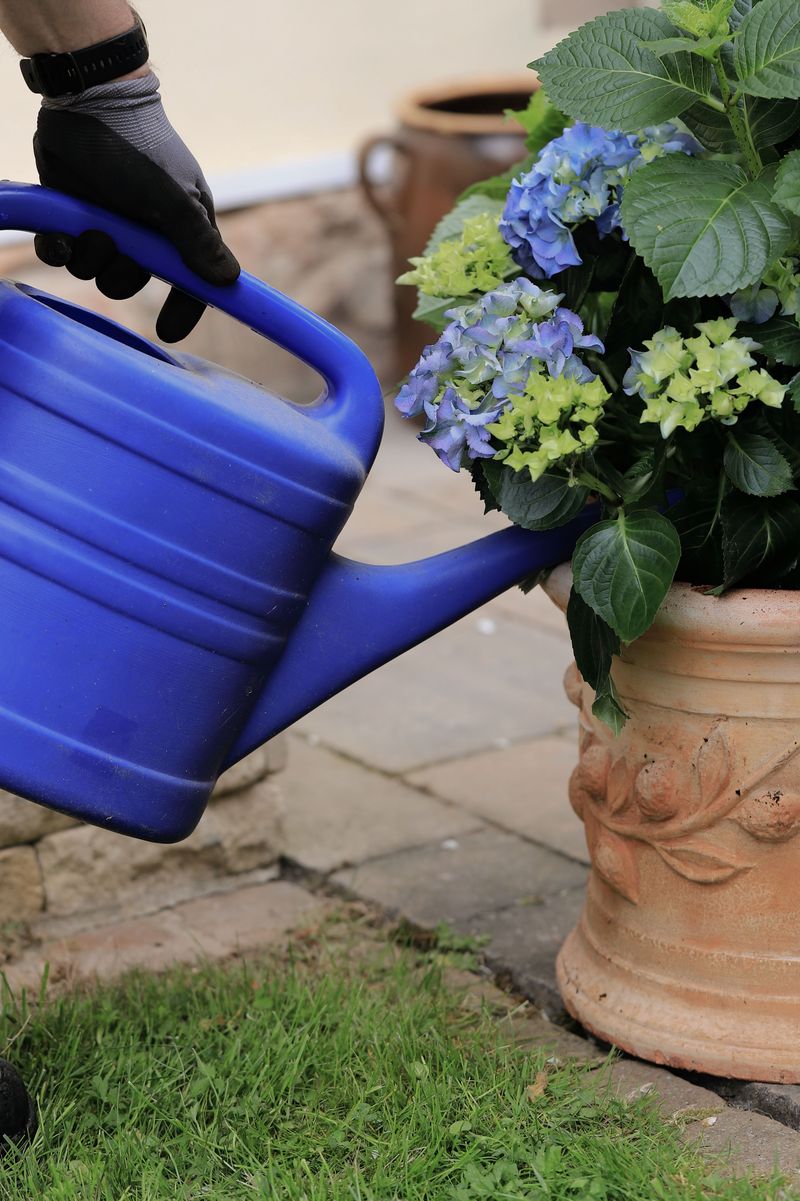
August nights in Kentucky start to cool down just a little. That small shift changes how your container plants handle water.
During peak July heat, you may have been watering every single day. Now that nights are slightly cooler, the soil holds moisture just a bit longer.
Overwatering in early August is a real risk. Roots that are already stressed from summer heat do not need to sit in soggy soil overnight.
Shift your watering to early morning if you have not already. Morning watering lets the plant absorb moisture before the day heats up, and the surface dries before evening.
Stick your finger one inch into the soil before reaching for the hose. If the soil still feels damp at that depth, skip the watering for that day.
Thin plastic pots hold moisture longer than porous clay ones. Adjust your schedule based on the pot material, not just the plant type.
Larger containers also dry out more slowly than small ones. A tiny four-inch pot in full sun may still need daily water, even in August.
Watch the leaves for clues. Drooping in the morning means the plant is thirsty, but drooping only in the afternoon heat is normal and not a watering signal.
Getting the watering rhythm right in early August sets your plants up for a smooth transition into fall. A consistent schedule reduces stress and gives roots the steady environment they need to push new growth.
4. Move Containers Away From Reflected Heat
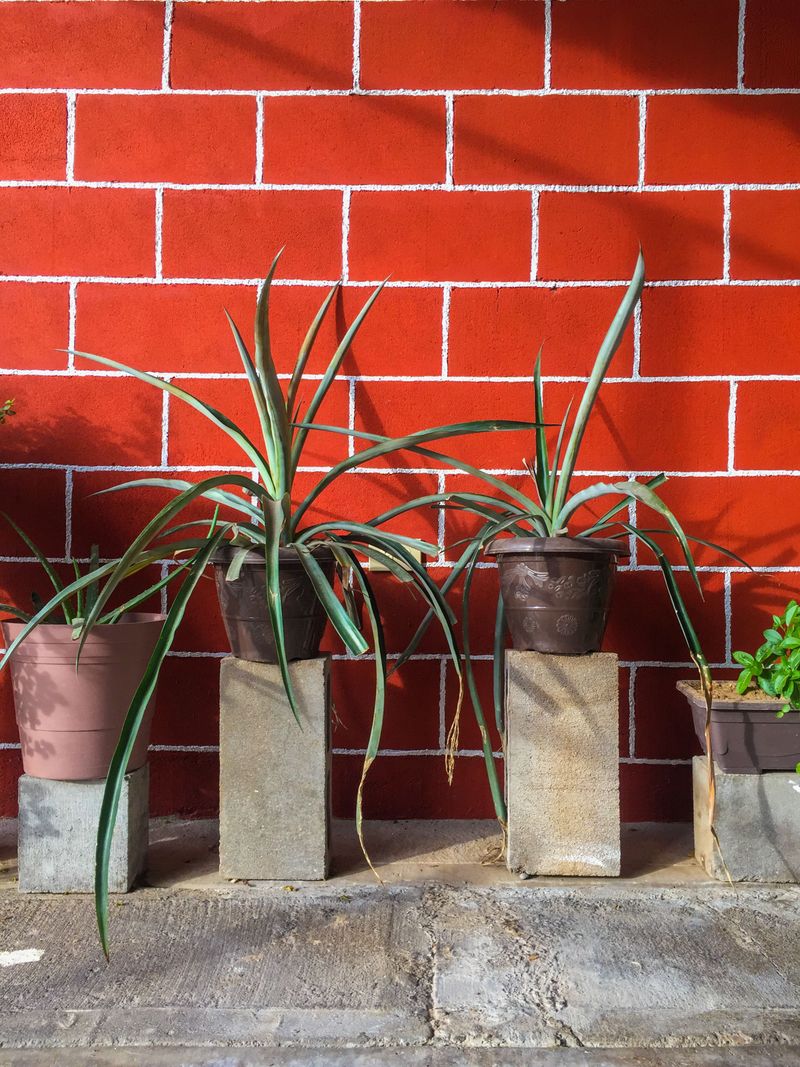
Brick walls, concrete patios, and dark fences are heat traps. They absorb sun all day and radiate that stored heat right back onto your containers through the evening.
If your pots are sitting against a south-facing wall, they are getting hit twice: once from the sun and once from the reflected heat. That is a tough spot for any plant.
Early August is a smart time to rethink your container layout. Even moving a pot two feet away from a wall can drop the temperature around it by several degrees.
Look for spots that get morning sun but afternoon shade. That combination gives plants the light they need without the brutal midday and afternoon heat exposure.
Dark-colored pots absorb and hold heat much more than light-colored ones. If you have black or dark green containers, consider wrapping them loosely with burlap to reflect some of that heat away.
Elevating pots slightly on pot feet or small risers also helps. Air can circulate under the container, keeping the root zone from overheating from below.
Concrete and asphalt surfaces get scorching hot by mid-afternoon. Setting a pot on a wooden board or a layer of gravel creates a small buffer from that surface heat.
Check the temperature of your pot surfaces with your hand on a hot afternoon. If the pot is too hot to touch comfortably, your roots are likely suffering.
Repositioning containers is free, fast, and a smart step in early August container care for Kentucky gardeners.
5. Check Roots For Summer Damage
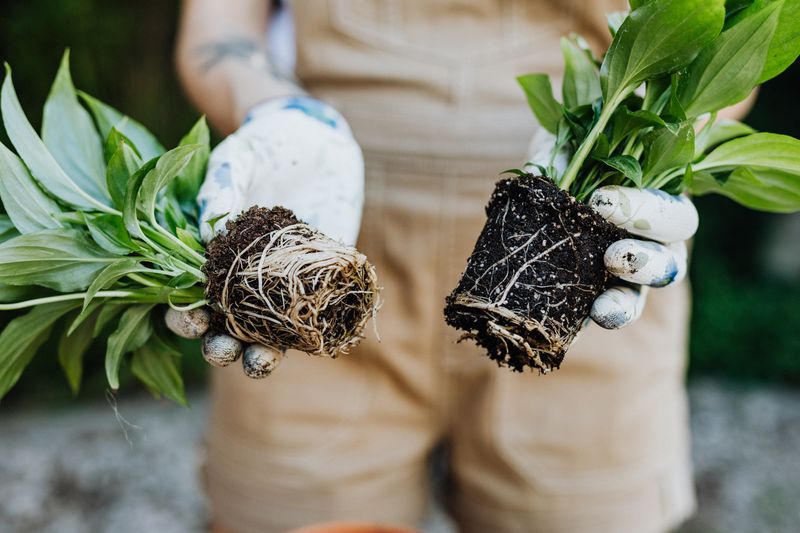
Roots are the part of the plant you almost never see, but they reveal a lot about your summer. Pulling a plant out of its pot in early August can confirm what’s really going on.
Healthy roots should look white or light tan and feel firm. Brown, mushy, or slimy roots are a sign of rot from overwatering or extreme heat stress.
Gently tip the plant out of its container onto a surface. Support the root ball with both hands so it does not crack apart.
If the roots are tightly circling the bottom of the pot, your plant is root-bound. That means the roots have run out of room and the plant has been struggling to feed itself.
Trim off any dark, soft, or rotten roots with clean scissors. Cut back to where the root tissue looks healthy and firm.
Roots that are bone dry and brittle mean the plant has been severely underwatered at some point. Soaking the root ball in a bucket of water for twenty minutes can help rehydrate it.
After inspecting and trimming, repot the plant into fresh mix if needed. Going up one pot size gives stressed roots fresh space to expand into.
Do not skip this step just because the plant looks okay from the outside. Surface appearances can be misleading when the real trouble is happening underground.
Catching root damage early in August gives your plant enough time to recover and push healthy new growth before cooler fall weather arrives.
6. Feed Plants To Support New Growth
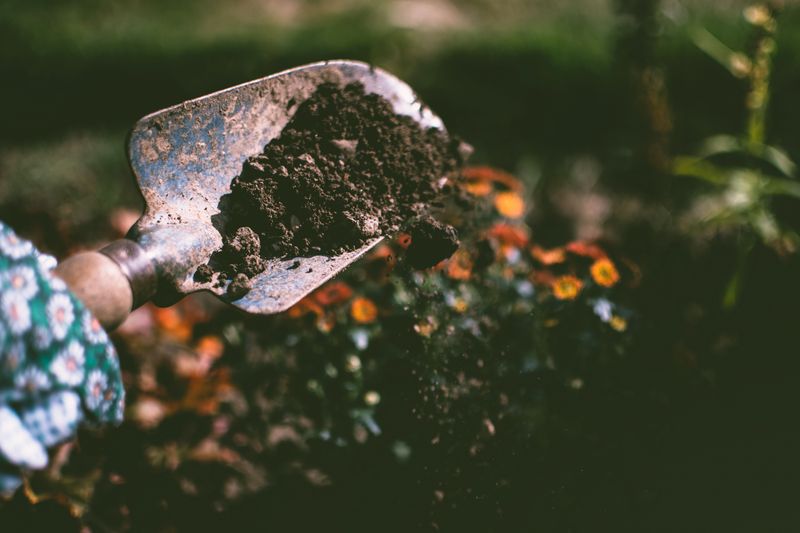
After a demanding July, your container plants have little energy left. Feeding them in early August gives them the fuel to push out fresh stems, leaves, and blooms before fall.
Choose a balanced, slow-release granular fertilizer for most flowering containers. Something labeled 10-10-10 or similar works well for general use.
Sprinkle the granules on top of the soil according to the package directions. Water them in well so the nutrients start moving down toward the roots right away.
For a faster response, liquid fertilizer diluted in water gets to the roots within a day or two. This is a good option if your plants look especially weak or pale.
Avoid high-nitrogen fertilizers in August. Too much nitrogen pushes leafy green growth, which can be tender and vulnerable when cooler nights start arriving.
Look for a fertilizer with a slightly higher middle number, like 5-10-5. That middle number is phosphorus, which supports root development and flower production.
Feed in the morning after watering. Applying fertilizer to dry soil can burn roots that are already stressed from summer.
Do not over-fertilize thinking more is better. Too much fertilizer in a small container can actually damage roots and make recovery harder.
Flowering plants like petunias, zinnias, and begonias respond especially well to a mid-summer feeding boost. You may see new buds forming within just a week or two of that first August feeding.
Feeding your plants now is a valuable step in early August container care for Kentucky gardens.
7. Group Containers For Shared Humidity
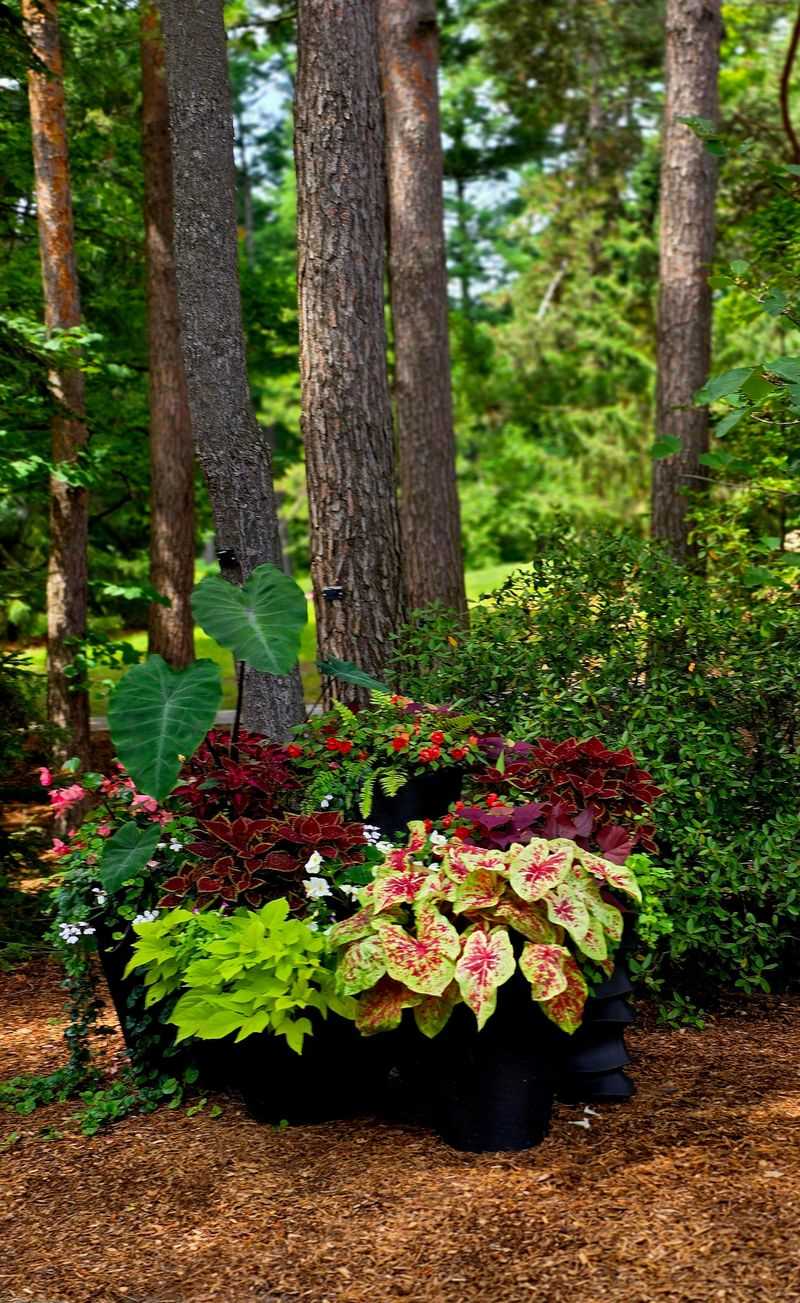
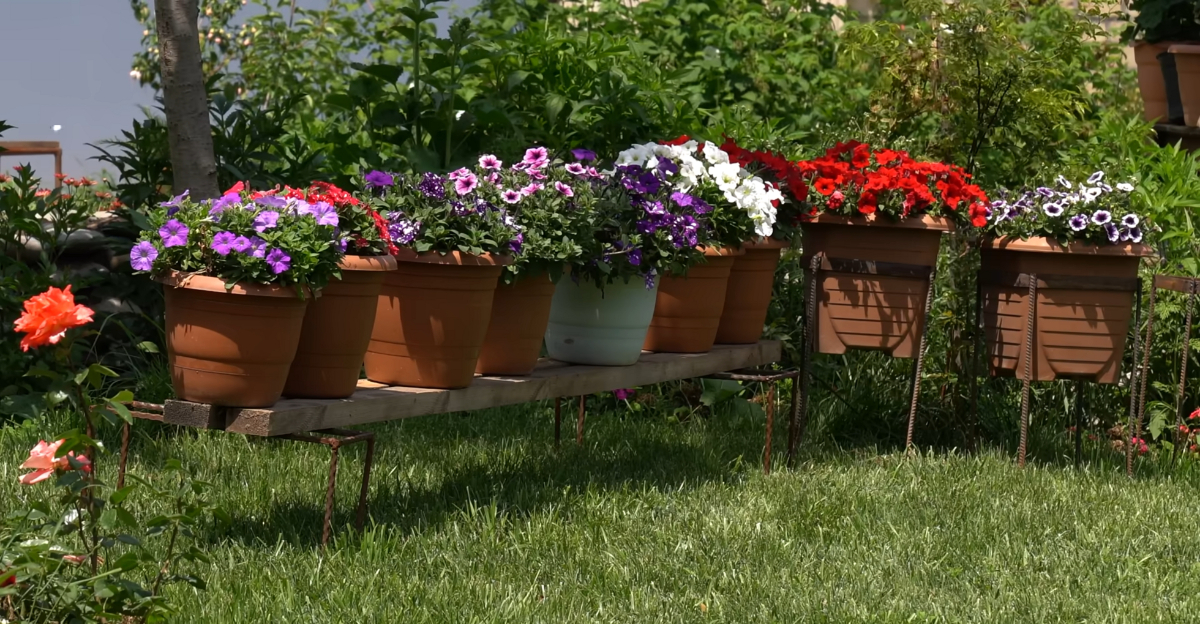
Plants respond to their surroundings in subtle ways. When you cluster containers together, they create a small pocket of shared humidity that benefits every pot in the group.
As plants transpire, they release moisture into the air around them. A group of containers can raise the local humidity by a noticeable amount, especially in a sheltered spot.
After a dry, blazing July, that extra humidity brings real relief to stressed plants. It reduces moisture loss through leaves and helps plants stay hydrated between waterings.
Arrange your containers so they are close but not touching. A few inches of space between pots allows air to move freely and prevents fungal problems.
Put your most moisture-loving plants in the center of the group. They benefit most from the humidity that collects in the middle of the cluster.
Drought-tolerant plants like succulents should stay on the outer edges or in a separate spot. Too much humidity around their roots can cause issues for them.
Adding a shallow tray of water and pebbles near the group also boosts humidity. As the water evaporates, it drifts up into the plant canopy.
Grouping containers also makes watering faster and easier. You can work through the whole cluster quickly instead of chasing pots scattered around the yard.
This strategy works especially well for ferns, impatiens, and tropical-style container plants that crave humidity. Grouping them together is a simple, no-cost way to support their recovery from the summer heat.
8. Watch For Late Summer Pest Rebounds
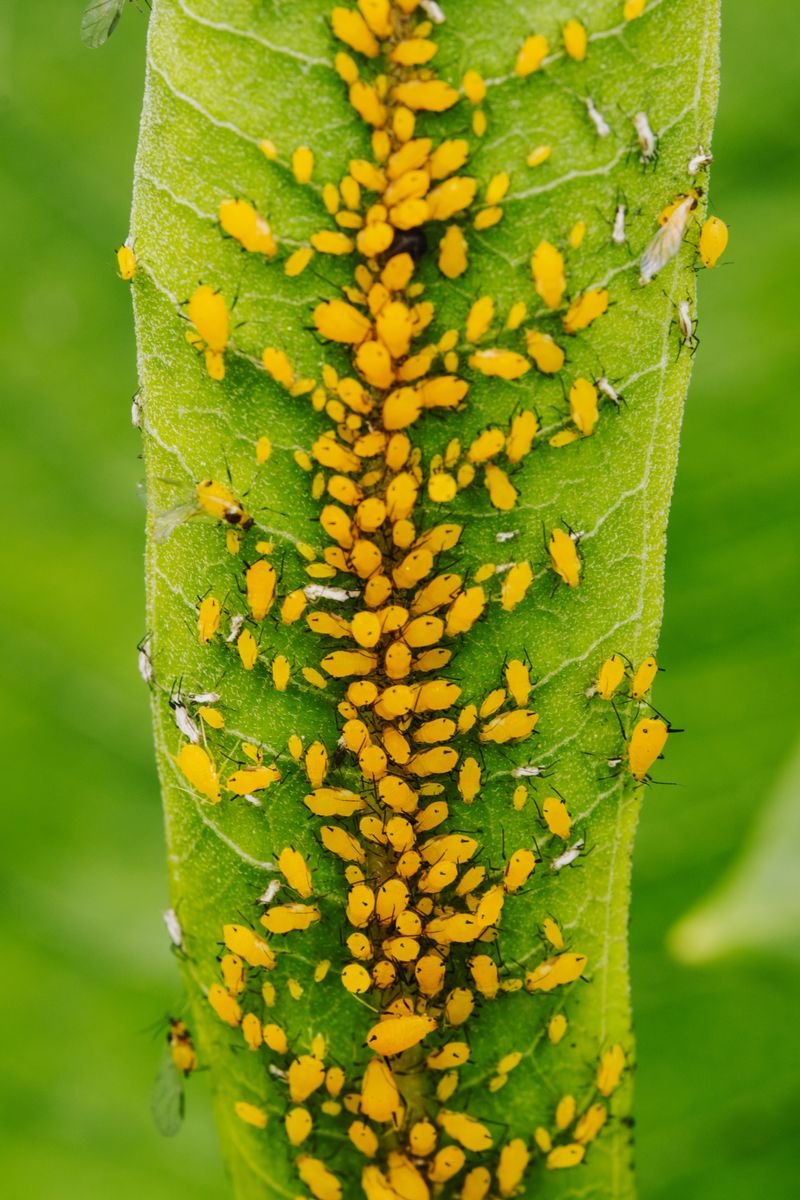
Pests rarely disappear completely during summer, they just wait for the right moment to surge back. Early August is prime time for spider mites, aphids, and whiteflies to make a comeback on stressed container plants.
Heat-stressed plants are weaker and more vulnerable to pest attacks. Stressed plants release chemical signals that attract insects, making them targets first.
Check the undersides of leaves every few days through August. That is where most soft-bodied pests hide, feed, and lay their eggs.
Spider mites leave tiny yellow speckles on leaves and fine webbing between stems. A strong spray of water from the hose can knock them off and disrupt their colonies.
Aphids cluster on new growth and tender shoot tips. They are small, soft, and come in green, black, or yellow, depending on the species.
Insecticidal soap spray handles both spider mites and aphids without harsh chemicals. Mix it according to the label and apply in the early morning or evening to avoid leaf burn.
Whiteflies flutter up in a cloud when you brush the plant. Yellow sticky traps placed near your containers can help catch and monitor them.
Early August container care in Kentucky means staying ahead of pest pressure, not reacting after the damage is done. Catching an infestation early keeps it manageable.
Check new growth especially closely, since fresh stems are the first target for most summer pests. Staying watchful now protects all the hard recovery work you have put in this month.