The Hidden Soil Pest Wilting Arizona Desert Plants This July
A desert plant can look thirsty even when water is not the problem.
The soil feels moist. The drip line is working. You water again, and the leaves still droop in the July heat like the plant cannot take up a single drop.
That is the moment Arizona gardeners need to stop looking at the foliage and start thinking underground.
The culprit may be root knot nematodes.
These microscopic soil pests attack roots, creating swollen knots that block the plant’s ability to move water and nutrients upward.
Above ground, the plant looks drought-stressed. Below ground, the root system is struggling to do its job.
July makes everything worse. Extreme heat pushes plants hard, and roots already damaged by nematodes cannot keep up.
Vegetables, ornamentals, containers, and even tough desert-adapted plants can decline quickly once the root zone is compromised.
So what does it really mean when Arizona desert plants wilt even though the soil is moist?
Start with the roots, not the hose. The hidden clue may be swollen galls beneath the surface.
Root Knot Nematodes Are The Pest
A tiny soil pest can cause a very visible garden problem.
Root knot nematodes are microscopic roundworms that live in soil and feed on plant roots. They are far too small to notice while working in the garden, but their damage can show up clearly once plants begin to wilt, yellow, or stall.
They do not chew leaves.
That is what makes them tricky. The plant may have no holes, no obvious insects, and no visible pest activity above ground. The problem stays hidden in the root system.
The damage starts when nematodes enter root tissue.
As they feed, they trigger the plant to form swollen growths called galls. Those galls interrupt the normal movement of water and nutrients from the soil into the plant.
The plant becomes cut off from its own supply.
Moist soil may surround the roots, but damaged roots cannot absorb and move that moisture efficiently.
Arizona conditions favor the problem.
Warm soil, sandy beds, stressed plants, and long growing seasons can all help nematode populations build. By July, the damage may finally become impossible to ignore.
Vegetables are common targets.
Tomatoes, peppers, squash, cucumbers, okra, melons, and many ornamentals can all struggle when root knot nematodes are active in the bed.
The pest may be hidden, but the pattern is not.
A plant that wilts in moist soil is asking you to check what is happening below the surface.
Wilting Appears Despite Water
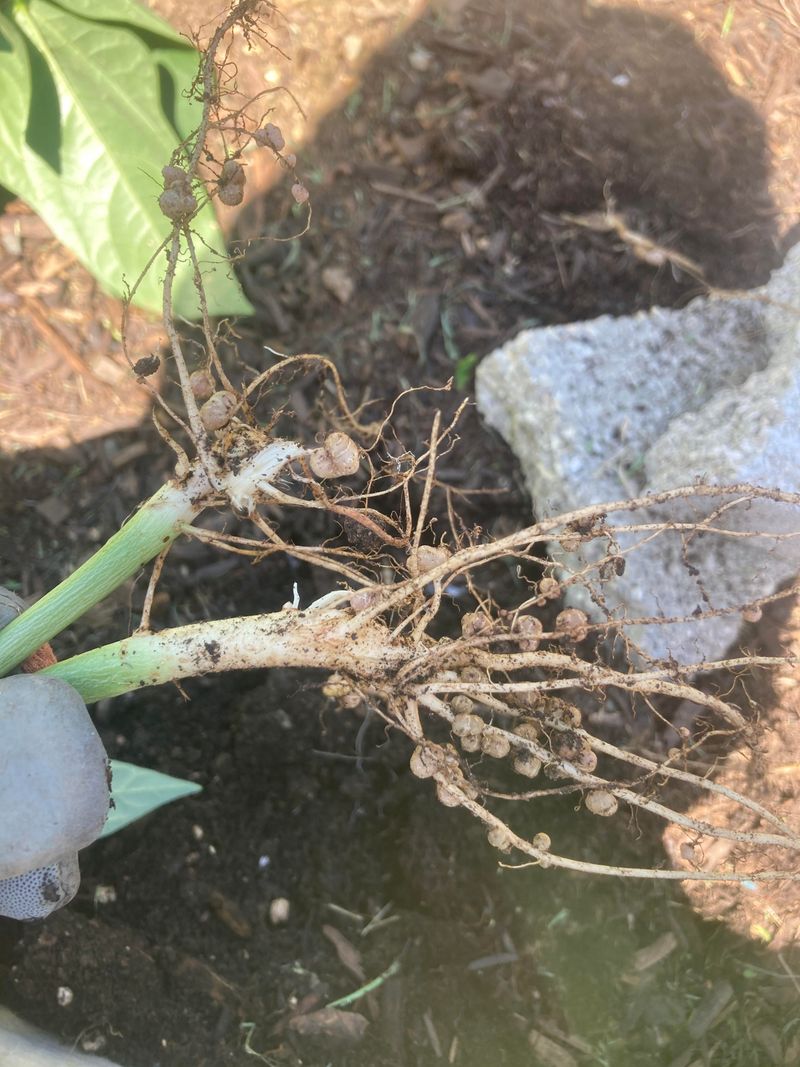
Moist soil with drooping leaves is the big warning sign.
Most gardeners see wilt and reach for the hose. That makes sense during an Arizona summer, but root knot nematodes create a different kind of stress. The water may be there, yet the plant cannot use it well.
Healthy roots act like a drinking network.
They pull moisture and nutrients from the soil and send them upward. When galls form, that network gets blocked, distorted, and weakened.
The plant starts behaving thirsty.
Your Arizona Garden Changes Every Week. Your Plan Should Too.
Gardening in Arizona changes quickly throughout the season. Every Friday you’ll receive a simple weekly plan showing exactly what to plant, prune, fertilize, harvest, and protect so you never miss the right timing.
Leaves droop. Growth slows. Color fades. The plant may look exhausted by morning, even before the hottest part of the day arrives.
Extra water does not fix blocked roots.
Flooding the bed can make things worse by reducing oxygen in the soil and adding another layer of root stress. The issue is uptake, not supply.
Look for uneven growth.
One tomato or desert flower may struggle while a nearby plant looks fine. Root knot nematodes often create patchy symptoms because soil populations vary across the bed.
Yellowing may linger.
Leaves may pale or lose vigor without recovering overnight. That separates the problem from temporary afternoon wilt that improves once the day cools.
Check irrigation first, then stop guessing.
A working drip line and moist root zone mean the next step is root inspection, not another round of watering.
When water does not solve wilt, the roots deserve the blame check.
Roots Show Swollen Knots
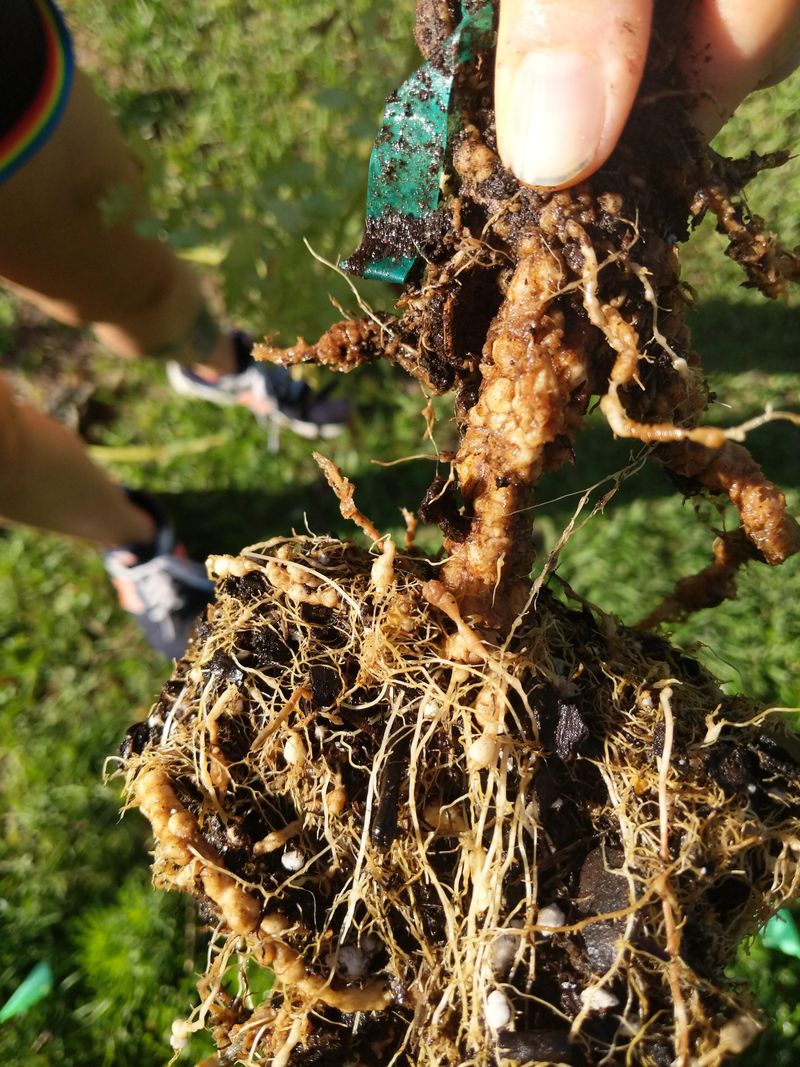
The most reliable clue is buried.
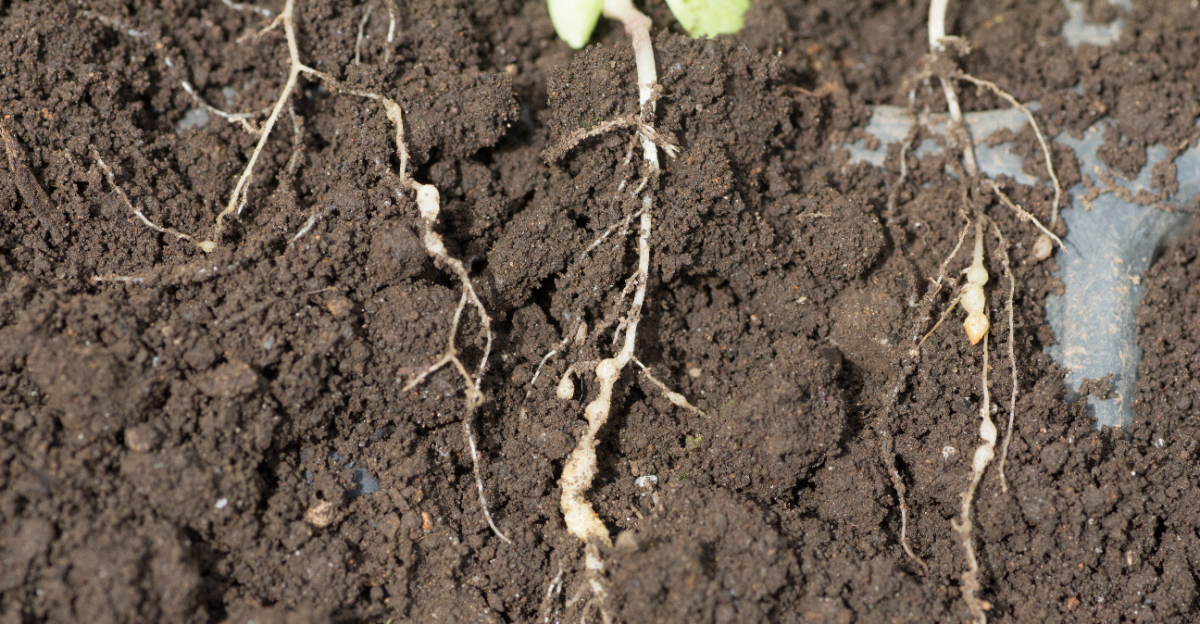
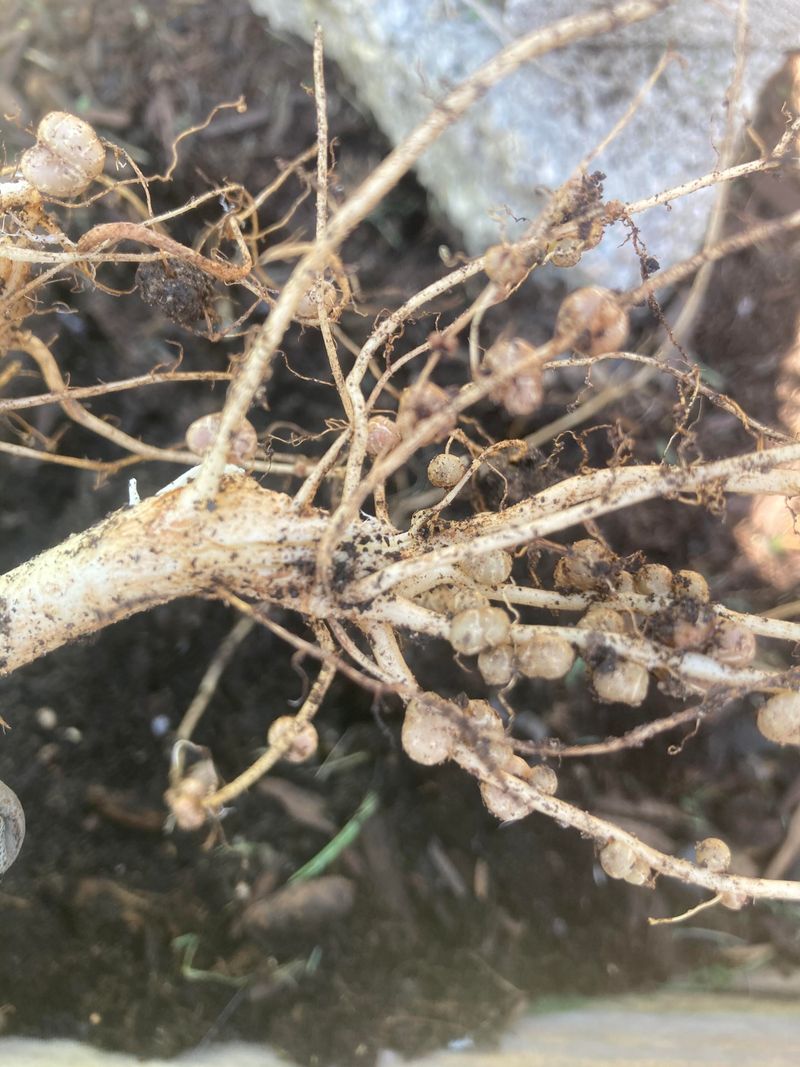
Root knot nematode damage shows up as swollen lumps on the roots. These galls are fused into the root tissue, not stuck on the outside like something you can brush away.
Healthy roots should look smoother.
They may branch heavily, but they should not look beaded, knotted, or swollen into irregular bumps. A damaged root system often looks distorted and weaker than expected.
The galls can vary in size.
Some are tiny and easy to miss. Others become larger, uneven swellings that make the root look like a string of knots.
Do not confuse them with legume nodules.
Beans, peas, and other legumes can form beneficial nitrogen nodules. Those are usually rounder and can often be rubbed or snapped off. Nematode galls are part of the root itself.
Feeder roots may be missing.
The fine roots that absorb water and nutrients often decline when nematode pressure is heavy. That leaves the plant with fewer working roots during the hottest month of the year.
Rinse roots gently.
Soil can hide the signs. Wash the root ball carefully with water so the root surface is easier to inspect.
Take photos before tossing the plant.
Clear pictures help compare symptoms later or share with a local diagnostic office if confirmation is needed.
The leaves may tell you something is wrong.
The roots tell you what kind of wrong it is.
Hot Soil Speeds The Stress
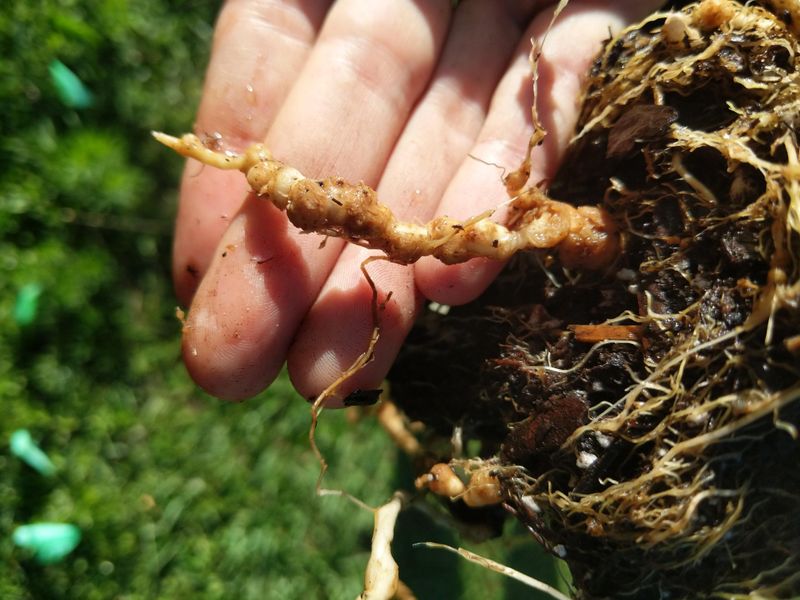
July heat makes root damage harder to survive.
Arizona soil can become brutally hot, especially in raised beds, sandy areas, containers, and exposed garden rows. A healthy root system struggles during that kind of heat. A damaged one struggles even faster.
Hot soil increases plant demand.
Leaves lose moisture quickly, and the plant needs roots to replace it. When nematodes have already disrupted the root system, the plant cannot keep pace.
Nematodes also like warmth.
In warm soil, root knot nematodes can reproduce faster. That means populations may build through late spring and summer, then show their worst effects during July.
Containers are especially vulnerable.
Pots heat from the sides as well as the top. Roots have nowhere cooler to move, and nematode-damaged plants can wilt rapidly in container soil.
Bare soil adds pressure.
Exposed soil heats more sharply and dries faster between irrigations. That stresses roots already dealing with galls.
Mulch can help the plant cope.
A two to three inch layer of organic mulch shades the soil, reduces temperature swings, and slows evaporation. Keep it pulled back slightly from the stem.
Light-colored containers help too.
They absorb less heat than dark pots. Elevating containers slightly can also improve airflow around the base.
Mulch will not remove nematodes.
But cooler soil can help stressed plants hold on while you plan a longer-term fix.
Pull Roots For Diagnosis
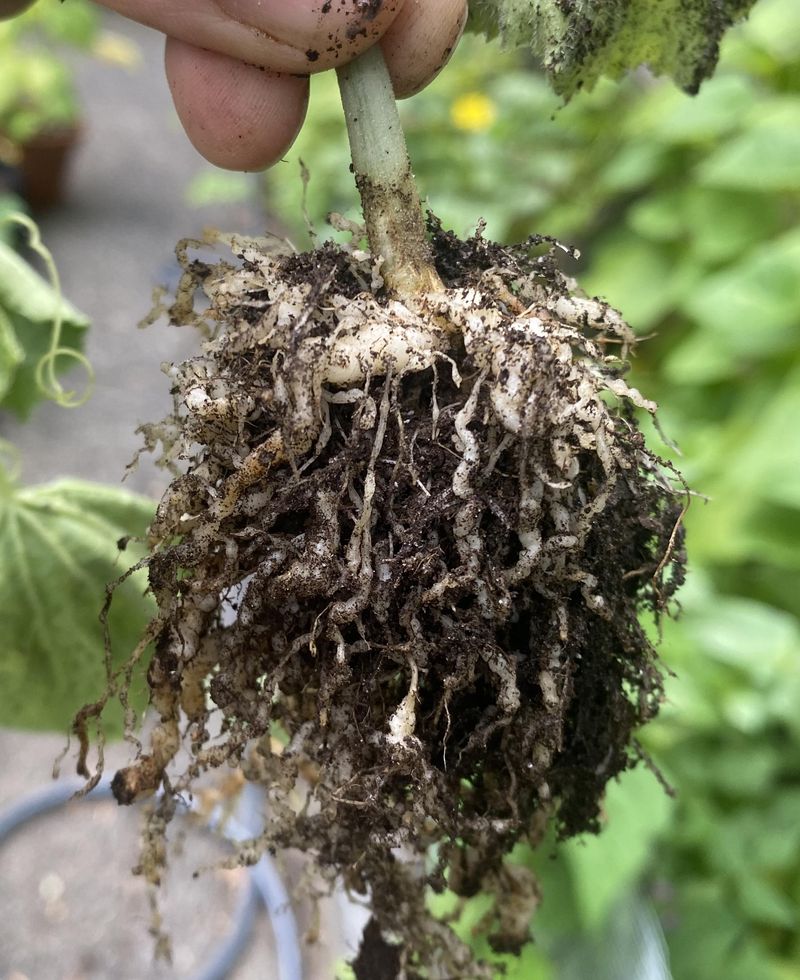
The answer is not always visible from above.
Wilted leaves, pale growth, and slow plants can come from heat, irrigation trouble, poor drainage, disease, salt buildup, or root knot nematodes. Guessing from the top of the plant can lead to the wrong fix.
Choose a declining plant.
Do not sacrifice the healthiest one first. Select a plant that is already struggling and has not improved with proper watering.
Loosen the soil carefully.
Use a hand trowel several inches away from the stem so you keep as much of the root system intact as possible. Pulling too hard can tear away the evidence you need.
Lift the root ball slowly.
Shake off loose soil, then rinse the roots gently. A bucket of water or soft hose stream can reveal the root surface without shredding fine roots.
Look for firm swollen galls.
Smooth, white, branching roots suggest another issue may be involved. Knotted, beaded, lumpy roots strongly point toward root knot nematodes.
Compare nearby plants.
A healthy plant from the same bed may show smoother roots, while the struggling one shows galls. That comparison can make the diagnosis clearer.
Do not replant the same crop immediately.
Nematodes remain in the soil. Pulling one plant confirms the problem, but future planting choices and soil management decide whether it keeps returning.
A root check takes only a few minutes.
In an Arizona July garden, those few minutes can keep you from wasting water, fertilizer, and time on a problem the hose was never going to solve.
Remove Infested Roots Carefully
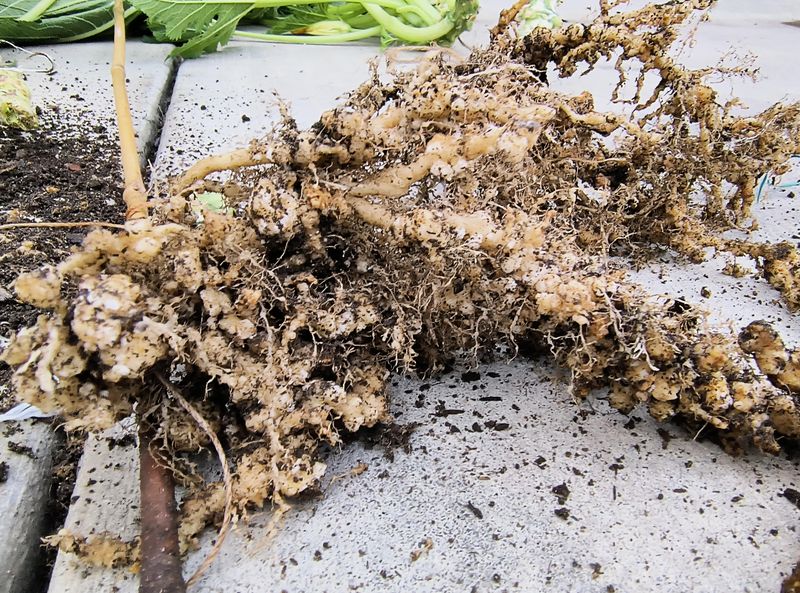
A confirmed plant should not go back into the bed.
Once roots show clear galls, that plant is no longer just struggling. It is also carrying nematodes in and around the damaged root tissue.
Pull the whole root system.
Try to remove as many roots as possible, including smaller feeder roots left in the soil. Those pieces can continue supporting nematode activity as they break down.
Do not compost the roots.
Home compost piles may not get hot enough to handle infected plant material safely. Bag the roots and discard them instead.
Clean tools afterward.
Soil clinging to a trowel, pruners, or shovel can move nematodes to another container or bed. Wash tools well before using them elsewhere.
Avoid shaking soil everywhere.
Lift the plant gently and contain the root ball as much as possible. The goal is to remove the problem, not scatter it through the planting area.
Leave the soil open for a plan.
That spot may need solarization, resistant crops, organic matter, or a non-host planting before another vulnerable plant goes in.
Mark the area.
A small stake or garden note helps you remember where symptoms showed up. Root knot nematodes often return in the same warm patches.
Removing one plant can feel frustrating.
But getting infested roots out now helps protect the rest of the bed from becoming next month’s wilt story.