The One Native North Carolina Perennial That Keeps Blooming In Deep Shade While Everything Else Sulks
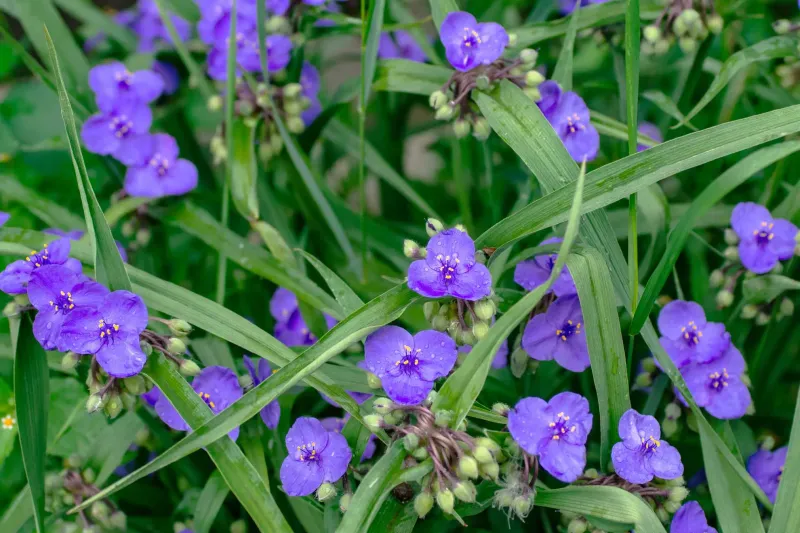
Most North Carolina gardeners have at least one corner that stays gloomy all day, under a big oak or along a shady foundation, where nothing seems to flower no matter what gets planted there. Virginia spiderwort, Tradescantia virginiana, is a native perennial that genuinely holds its own in those spots, producing fresh blooms from spring into early July and sometimes again in late summer. It is not a miracle plant, and it does need moisture to perform well, but for a deeply shaded North Carolina bed, it is one of the strongest native options available.
Virginia Spiderwort Fits The Difficult Shade Corner
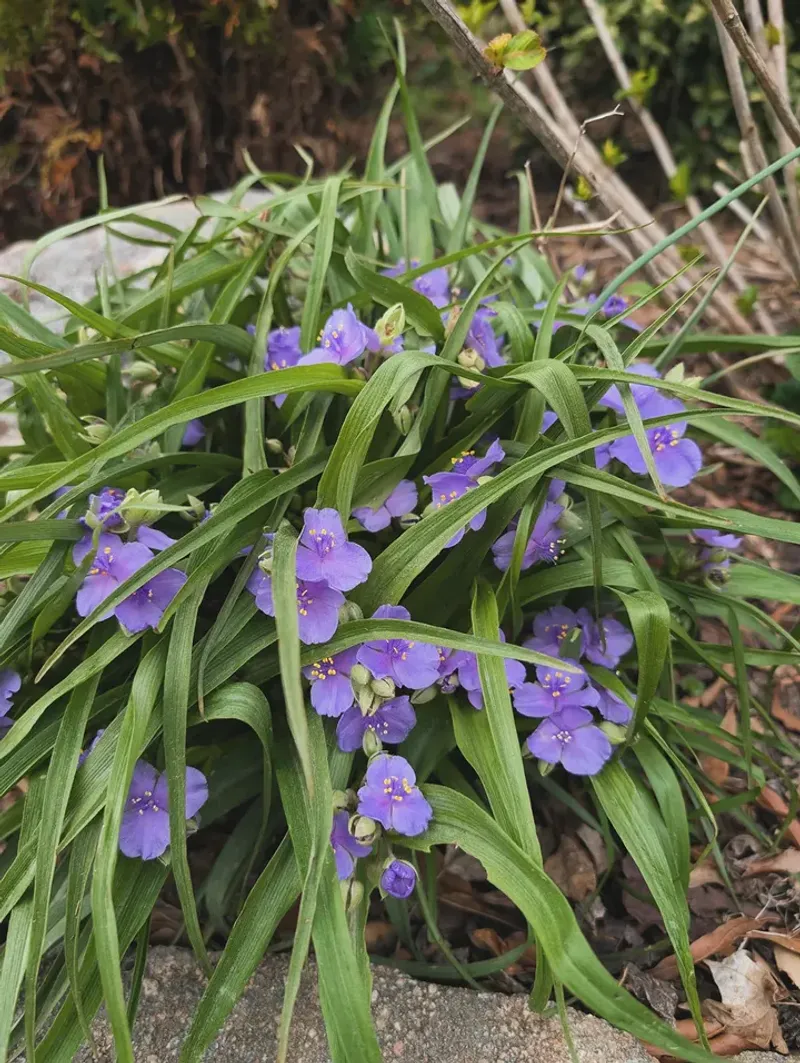
That gloomy strip along the back fence, the dry-looking patch under the big white oak, the foundation bed that never sees direct sun after nine in the morning. Many North Carolina gardeners have written those spots off entirely, convinced that nothing with a flower will survive there. Virginia spiderwort, Tradescantia virginiana, is worth reconsidering for exactly those locations, and NC State Extension lists it as tolerant of deep shade, partial shade, and full sun, which is genuinely unusual for a flowering perennial.
NC State defines deep shade as less than 2 hours of direct sunlight, and the NC State Extension Gardener Handbook on herbaceous ornamentals notes that few flowering plants perform reliably in those conditions. Spiderwort is not proof that light levels no longer matter, but it is one of the more tolerant candidates in the native plant toolkit for North Carolina gardeners.
The plant grows naturally across the state, from the Coastal Plain to the Piedmont to the mountains, and NC State lists it as hardy through zones 4a to 9b, which covers every major North Carolina gardening region. In the wild it turns up in fertile woodlands, along stream banks, and on moist hillsides, which tells you something useful about where it performs best at home.
Mature plants reach roughly 1.5 to 3 feet tall and 1 to 1.5 feet wide, according to the NC State Extension Plant Toolbox entry for Virginia spiderwort. That is a manageable clump for a shaded foundation bed or a woodland edge planting. The flowers come in blue, purple, pink, or white, and the display can run for weeks, though how that actually works is worth understanding before you plant.
One-Day Flowers Build A Long Display
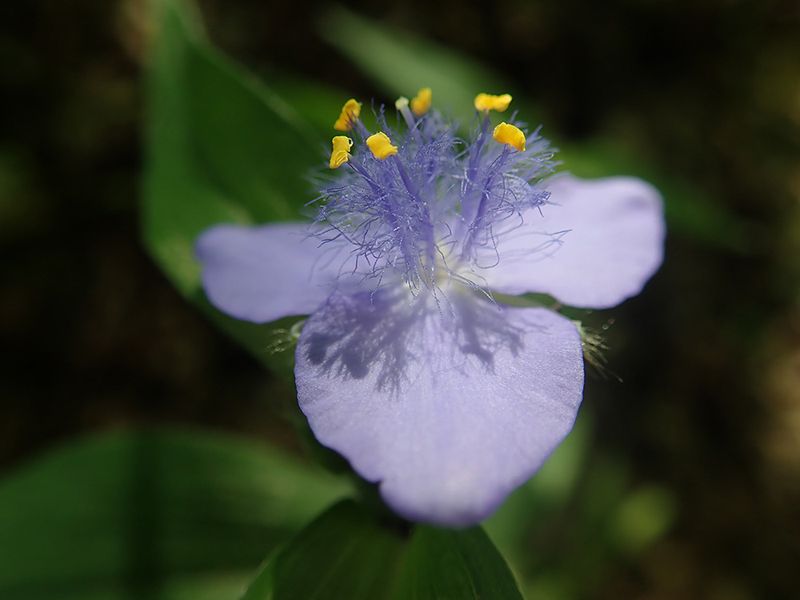
Here is where spiderwort surprises most gardeners. Each individual flower opens in the morning and closes by afternoon, lasting only part of a single day. You might assume that means a forgettable display, a few blooms and then nothing for months. What actually happens is that new flowers keep opening in succession from the same terminal clusters, day after day, so the plant looks as though it is continuously blooming even though no single flower sticks around for long.
That succession is what gives Virginia spiderwort an unusually long run for a deeply shaded native. NC State’s Plant Toolbox lists the main bloom period from March through early July, though the exact timing shifts across North Carolina. Mountain gardens around Asheville will generally run two to four weeks later than warmer Coastal Plain sites near Wilmington, so your calendar may look a little different depending on where you garden.
Your North Carolina Garden Changes Every Week. Your Plan Should Too.
Gardening in North Carolina changes quickly throughout the season. Every Friday you’ll receive a simple weekly plan showing exactly what to plant, prune, fertilize, harvest, and protect so you never miss the right timing.
After that first flush fades, the plant does not simply keep going on its own through fall. Cutting back the finished stems and removing spent flowers can reduce seed production and may encourage a second round of blooms in late summer, according to NC State. That late-summer rebloom is not guaranteed, but many Piedmont gardeners find that a hard cutback in July, paired with a good drink of water, brings fresh growth and a modest second show before frost.
The honest framing is this: spiderwort offers an extended flowering display for a deep-shade site, not uninterrupted spring-through-fall color. NC State’s common spiderwort entry confirms the late-summer rebloom potential after cutting back, and that detail is worth keeping in your back pocket when you plan the bed.
Moisture Matters As Much As Shade
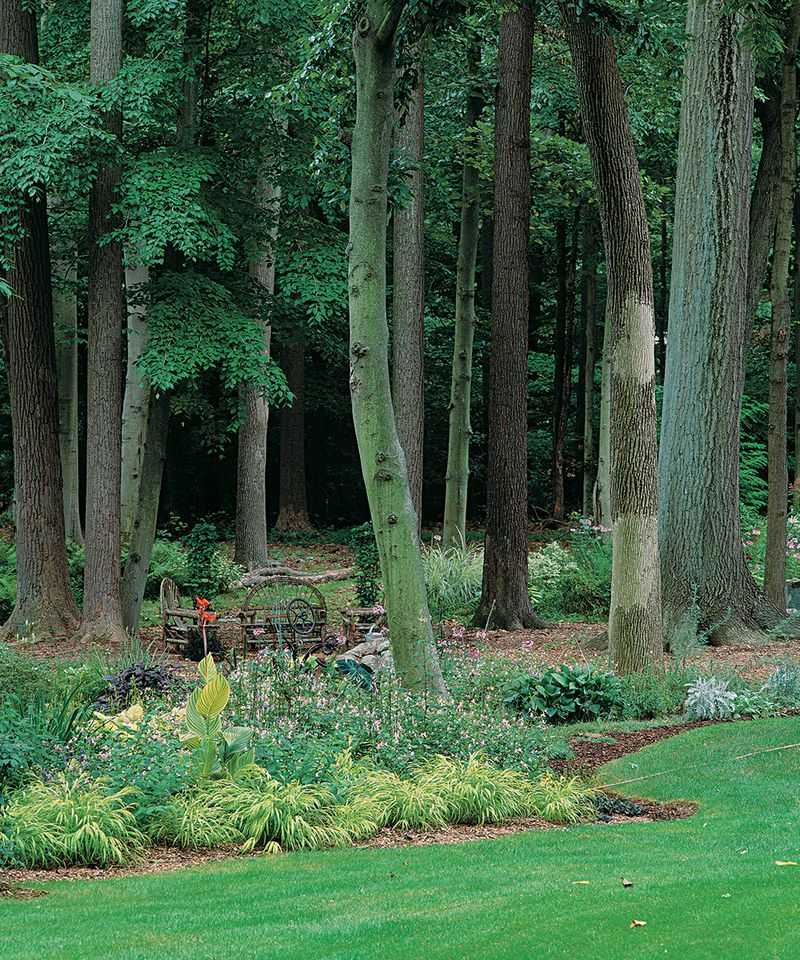
Shade alone will not carry this plant. A lot of North Carolina gardeners discover that the hard way after tucking something into a dark corner and assuming the lack of sun means the soil stays moist. Under a mature willow oak or a dense Leyland cypress hedge, the roots are so thick and competitive that the soil can be bone dry even on a rainy week in April.
Virginia spiderwort prefers moist to wet, fertile sites and can adapt to average garden soil, but NC State recommends providing additional water during dry periods, especially during establishment. That recommendation carries extra weight beneath mature trees, where dense surface roots pull moisture away from anything you plant nearby. A shaded woodland bed that catches runoff from a downspout or stays naturally damp is a much better fit than a dry strip under a roof overhang that never sees rain.
The NC State Extension Gardener Handbook makes clear that deep shade is not a uniform condition. A spot under a high canopy that still receives indirect daylight and natural rainfall is genuinely different from a sealed, rainless gap between a foundation wall and a concrete walkway. Spiderwort wants the first kind of dark, not the second.
Before you plant, check whether the soil in your chosen spot holds any moisture after a rain or dries out within a day or two. If it dries fast, plan to water during North Carolina’s inevitable summer dry spells, which can stretch for two to three weeks even in a normal year. Amending with compost at planting will help the soil hold moisture longer without turning the bed into a swamp.
Give The Clumps Room To Grow
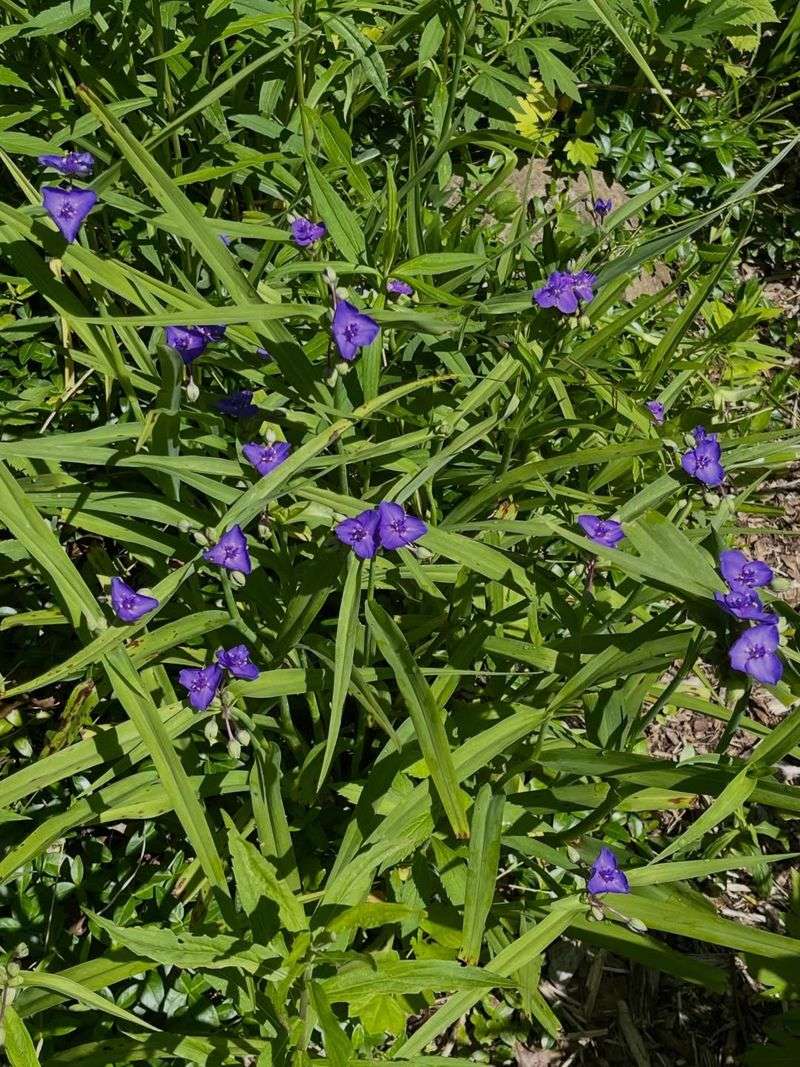
Spacing matters more than most gardeners expect with a plant that spreads by seed and fills in steadily over a few seasons. Virginia spiderwort matures at roughly 1.5 to 3 feet tall and 1 to 1.5 feet wide, so a practical starting spacing of about 12 to 18 inches gives each clump room to develop without immediately crowding its neighbors. Tighter spacing will fill a bed faster, which looks satisfying in year one, but it can reduce airflow and make the planting harder to manage once the clumps start competing.
Performance will not be identical across North Carolina. A planting in the moist, humus-rich soil of a western Piedmont woodland edge will likely establish faster and flower more freely than one tucked into sandy Coastal Plain soil under a dense canopy. Match the plant to the actual light and moisture conditions at your site rather than expecting uniform results across the state.
One recommendation from NC State’s spiderwort guidance deserves special attention: buy nursery-propagated plants rather than digging specimens from the woods. Virginia spiderwort has become less common in the Carolinas because of habitat loss and collection from the wild. Taking plants from a natural area to fill a garden bed puts pressure on wild populations that are already declining.
NC State’s native plants handbook recommends using locally appropriate propagated material, and many native plant nurseries across North Carolina now carry spiderwort reliably in spring. The NC State Plant Toolbox entry confirms the plant’s North Carolina native status and its range across the Coastal Plain, Piedmont, and mountains, so finding a regional source should not require a long search.
Plan For A Looser Summer Habit
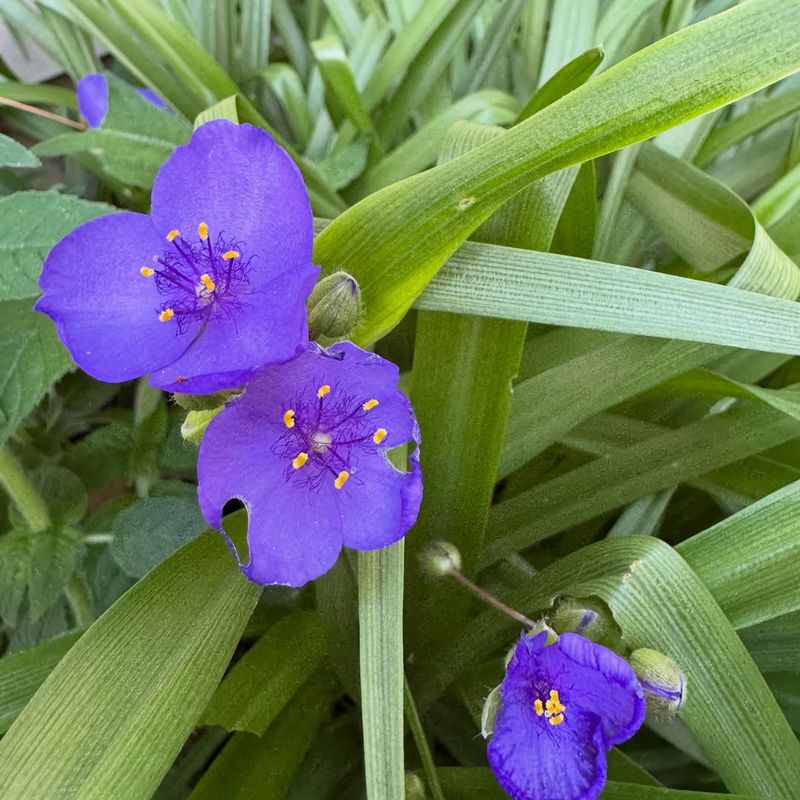
After the main bloom flush wraps up, usually sometime in July across much of North Carolina, spiderwort stops looking tidy. The foliage can sprawl outward, yellow at the tips, or die back almost completely during a stretch of summer heat. Gardeners who expect a neat, compact mound through August are often disappointed, and that is worth knowing before the plant goes in.
The practical fix is a hard cutback. Once flowering slows and the stems start to look ragged, cut the whole plant back to a few inches above the ground. NC State notes that foliage may die back during summer heat, then return in late summer to fall and sometimes rebloom. That cutback also gives you a choice about seed: remove the spent flower heads before they ripen if you want to limit how freely the plant spreads, or leave a few to naturalize across a looser woodland planting.
Neither choice is wrong. A tightly managed shaded border benefits from deadheading, which keeps the plant from popping up in unexpected spots and may nudge it toward that late-summer rebloom. A naturalistic woodland edge, the kind of planting that looks intentionally wild along a back property line, can actually gain character from a few self-sown seedlings filling gaps between ferns and hostas.
Neighboring plants do a lot of work here. Foamflower, ferns, or even a low groundcover of creamy violet can hide the tired spiderwort foliage during its midsummer slump, so the bed does not look abandoned between July and September. NC State’s spider lily entry acknowledges the sprawling summer habit, and NC State’s native plants guidance reinforces that even tough native perennials reward some basic seasonal attention.
Pair Its Pollinator Value With Safe Handling
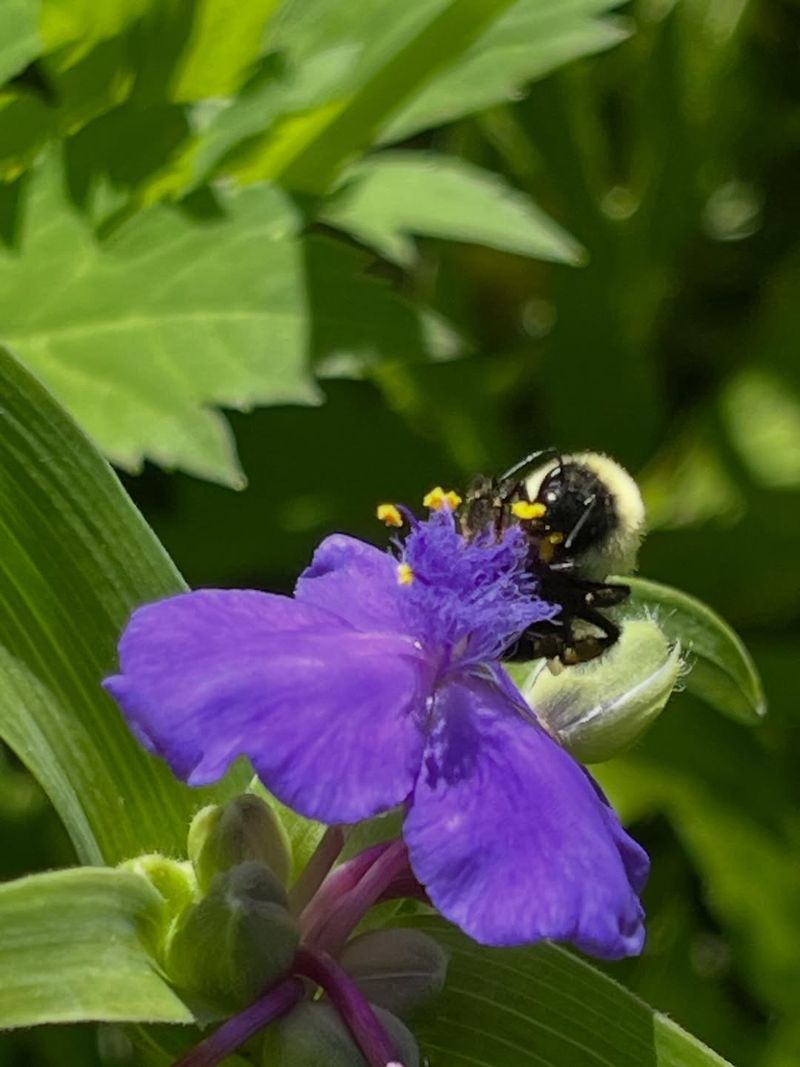
A shaded bed that produces flowers from March into July is already doing something most dark corners never manage. Add the fact that Virginia spiderwort draws bees, bumblebees, butterflies, and other pollinators, and the plant starts looking like a genuine asset rather than just a gap-filler. NC State’s Plant Toolbox confirms its pollinator appeal, making it a useful native nectar source for a woodland edge or a shaded rain-garden planting where sunny pollinator plants cannot survive.
That value comes with one practical caution about handling. Tradescantia species can irritate skin, so wear gloves when you are cutting back stems, dividing clumps, or pulling seedlings. The sap is the issue, and it is easy to forget about when you are elbow-deep in a garden bed on a warm Piedmont afternoon.
Eating the plant is a different matter entirely. NC State lists conflicting reports of edibility and poisonous effects for Virginia spiderwort, along with a low-severity toxicity rating. That is not a green light. Do not recommend or attempt to eat any part of the plant, and keep it away from children and pets that tend to chew on things in the garden.
The uncertainty in the sources is itself a reason for caution.
On sourcing, the pollinator story only holds up if the plant came from a nursery rather than a wild population. Wild-collected spiderwort pulled from a streambank or woodland trail is one less plant supporting the native insects that depend on it in that location. Buy propagated stock from a reputable native plant nursery, plant it in a moist shaded bed, and the pollinator connection takes care of itself from the first spring bloom onward.
Choose Alternatives By Light And Bloom Timing
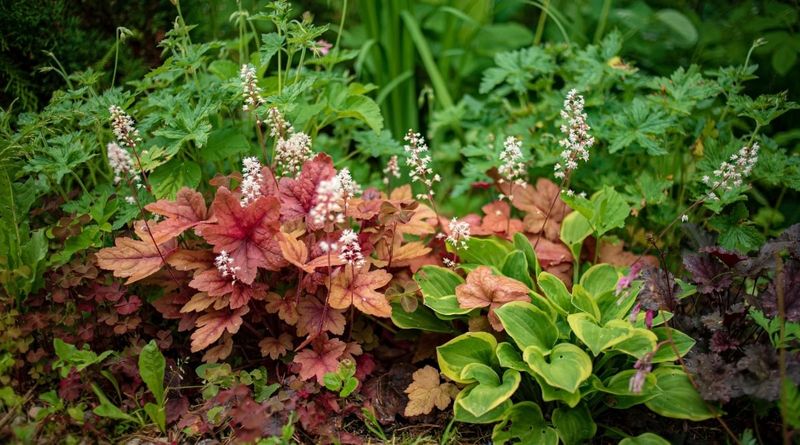
Virginia spiderwort is a strong choice for a deeply shaded North Carolina bed, but it is not the only native perennial worth knowing. The right pick depends on your actual light level, how much moisture the site holds, and what time of year you most want color. A few honest comparisons help narrow that down.
Hairy alumroot, Heuchera villosa, has an impressive flowering window. NC State lists hairy alumroot blooming from June through October, which is a longer run than spiderwort manages. The catch is light: NC State recommends dappled sunlight or partial shade for hairy alumroot, generally 2 to 6 hours of direct sun. If your spot genuinely gets less than 2 hours, alumroot is not the better answer, it is a different plant for a brighter shade situation.
Indian pink, Spigelia marilandica, actually tolerates deep shade and attracts hummingbirds with its red tubular flowers. NC State documents Indian pink’s main bloom period as May and June, so it supports the deep-shade case but not a long summer display. It is also poisonous if eaten, which matters for yards with curious children or dogs.
Foamflower, Tiarella cordifolia, thrives in heavy shade and moist, humus-rich soil. NC State lists foamflower as an April-through-June bloomer, so it is better framed as a spring groundcover and foliage plant than as a source of extended summer color. Planted beside spiderwort, it covers the ground beautifully while spiderwort handles the vertical flower show.
Creamy violet, Viola striata, spreads willingly across a woodland floor and supports fritillary butterfly larvae. NC State gives creamy violet a March-through-June bloom window, which makes it a good early-season companion rather than a midsummer performer. The NC State Herbaceous Ornamentals Handbook reminds gardeners that matching plant to site conditions, light, moisture, and soil fertility, matters more than picking any single recommended species. Stack a few of these natives together and that gloomy corner starts doing real ecological work, season after season.