Those Giant Wasps Paralyzing Insects In Your Texas Garden Are Not A Threat To You
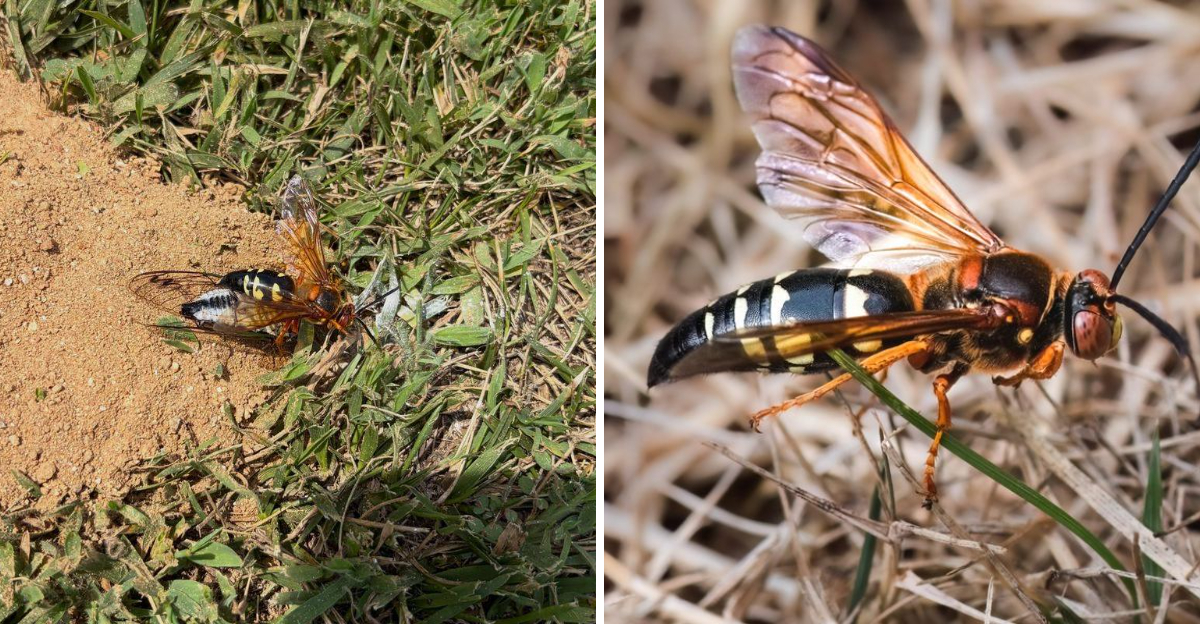
Spotting a large wasp in your Texas garden carrying what appears to be a paralyzed insect is one of those encounters that makes most people take a very quick step backward. Everything about the scene looks alarming.
The size of the wasp, the deliberate way it moves, the prey it’s transporting with unsettling efficiency.
The instinct to retreat and look up pest control options is completely understandable. But before you do anything, there’s something important to know.
Those giant wasps paralyzing insects in your Texas garden are almost certainly not a threat to you or anyone in your household.
What looks like aggressive predatory behavior directed at your garden is actually one of the most fascinating and ecologically valuable wildlife interactions you’re likely to witness in a residential yard.
These wasps are not interested in people. They’re focused entirely on the task they evolved to do, and that task is happening in your garden for very specific reasons that are worth understanding.
Here’s what these wasps actually are, what they’re doing, and why your garden is better for having them.
They Are Cicada Wasps
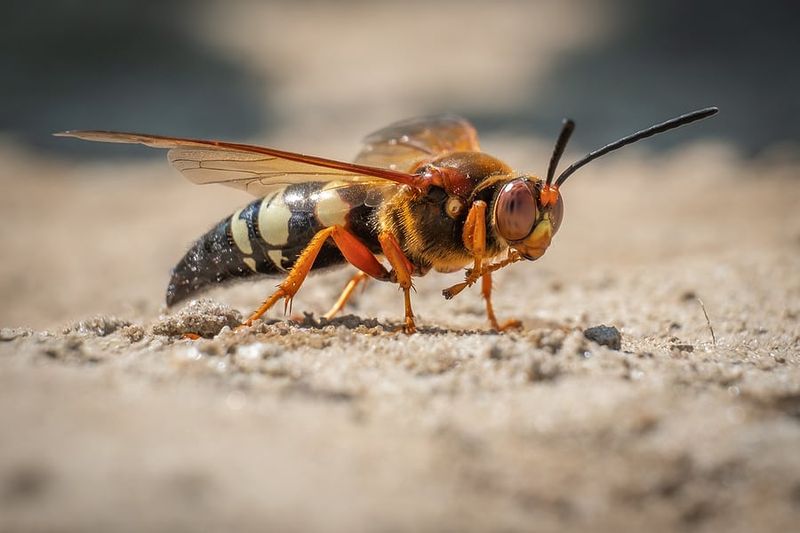
Spotting a wasp nearly two inches long hovering near your garden beds is enough to make anyone back away slowly. Most of the time, that giant insect is an eastern cicada wasp, known scientifically as Sphecius speciosus.
These are large, native, solitary wasps that live across much of the eastern and central United States, including all of Texas.
At first glance, they look a lot like hornets or yellowjackets. Their black abdomens are marked with uneven, bright yellow bands, and their wings carry a reddish-brown tint.
Combined with their impressive size, that coloring gives them a look that screams danger to most people. However, looks can be deceiving. Cicada wasps are not social insects.
They do not build paper nests hanging from eaves or tucked inside wall voids. Each female lives and works on her own, without a colony backing her up.
Yellowjackets and hornets are social wasps that will swarm and sting repeatedly when they feel their nest is threatened. Cicada wasps simply do not behave that way. A single solitary wasp has no group to protect and no reason to come after you.
Many homeowners call pest control companies convinced they have a hornet problem, only to learn they are dealing with cicada wasps.
The confusion is completely understandable given how similar they look. Knowing the difference helps you respond calmly instead of panicking.
Cicada wasps have been part of Texas ecosystems for a very long time. They are a normal and expected part of summer in the region, and their presence usually signals a healthy local environment worth protecting.
Females Paralyze Cicadas To Feed Their Young
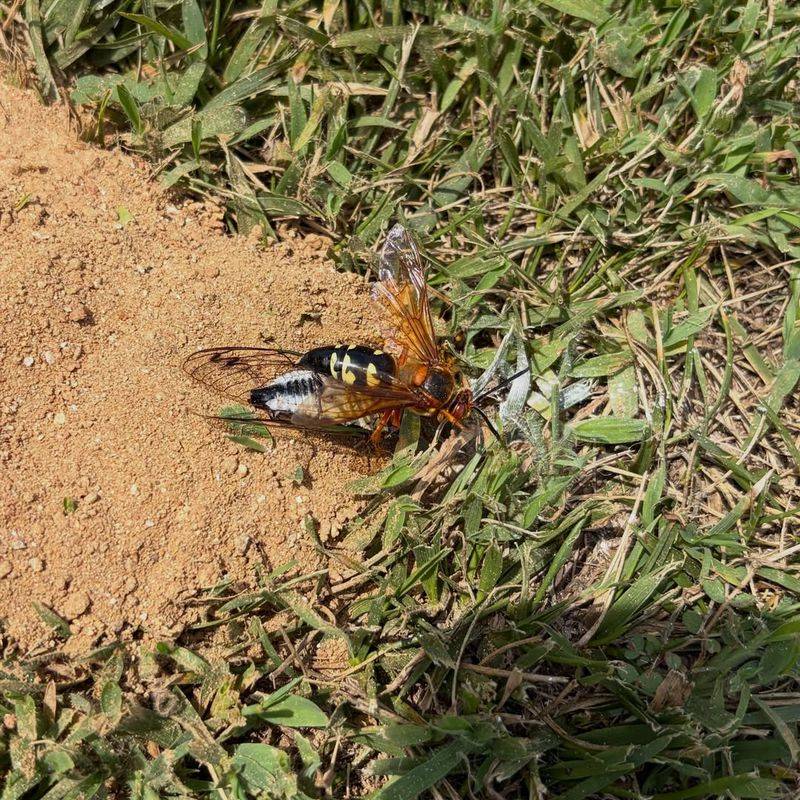
Here is where things get genuinely fascinating. A female cicada wasp spends her summer doing one very specific job: hunting cicadas to feed her future offspring.
She tracks down a cicada, usually while it is resting in a tree, and delivers a precise sting loaded with paralyzing venom.
Your Texas Garden Changes Every Week. Your Plan Should Too.
Gardening in Texas changes quickly throughout the season. Every Friday you’ll receive a simple weekly plan showing exactly what to plant, prune, fertilize, harvest, and protect so you never miss the right timing.
That venom does not end the cicada right away. Instead, it immobilizes the insect completely, leaving it alive but unable to move.
This is actually intentional. A fresh, living food source stays in better condition for the developing wasp larva than something that has already started to decay.
After stinging the cicada, the female faces her next challenge: getting her prize back to the nest. Cicadas are heavy, sometimes weighing more than the wasp herself.
She may drag it across the ground or use bursts of flight to carry it back. Watching this process is genuinely remarkable.
Once she reaches her underground burrow, she places the paralyzed cicada inside a specially prepared chamber. She then lays a single egg on or near the cicada and seals the chamber. Her work for that particular cell is done.
When the egg hatches, the larva has a ready food supply waiting. It feeds on the stored cicada as it grows through its early stages of development.
The whole system is an elegant example of how nature provides for the next generation without wasting resources.
Female cicada wasps typically provision multiple chambers over the course of the summer. Each one gets its own cicada or sometimes two, depending on whether the egg is fertilized or unfertilized.
The Holes In The Lawn Are Individual Burrows
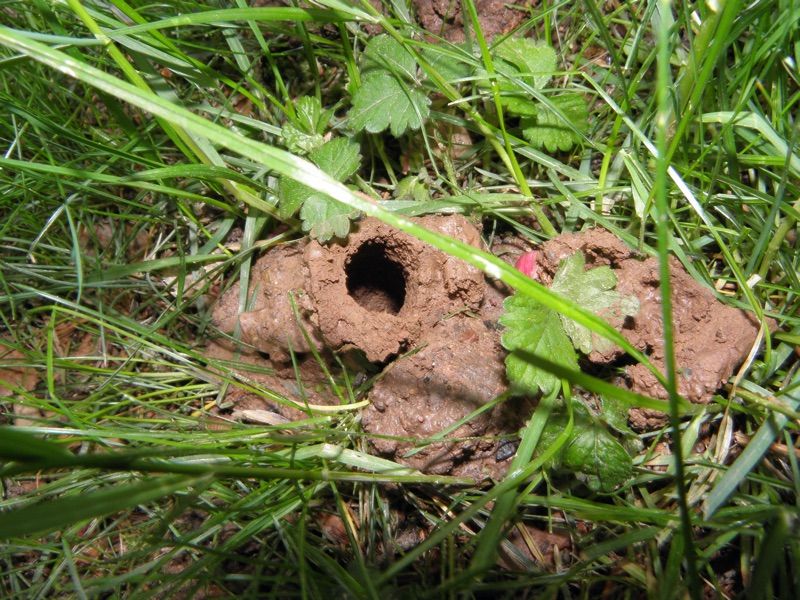
Walking outside one morning to find a section of your lawn riddled with small dirt mounds and holes can feel alarming. It looks like something moved in overnight and set up a whole operation under your grass.
Before calling anyone, take a breath. What you are most likely seeing is a cluster of individual cicada wasp burrows.
Female cicada wasps prefer sunny spots with dry, loose, or sandy soil. Bare patches near sidewalks, patios, garden beds, and sparse lawn areas are especially appealing to them.
The soil is easier to dig, and the sun keeps the burrow warm, which benefits the developing larvae inside.
Each female digs her own tunnel completely on her own. She is not cooperating with the other females nearby.
It just happens that many females independently choose the same stretch of favorable soil, which makes the area look like one big communal nest when it is actually a loose neighborhood of solo operations.
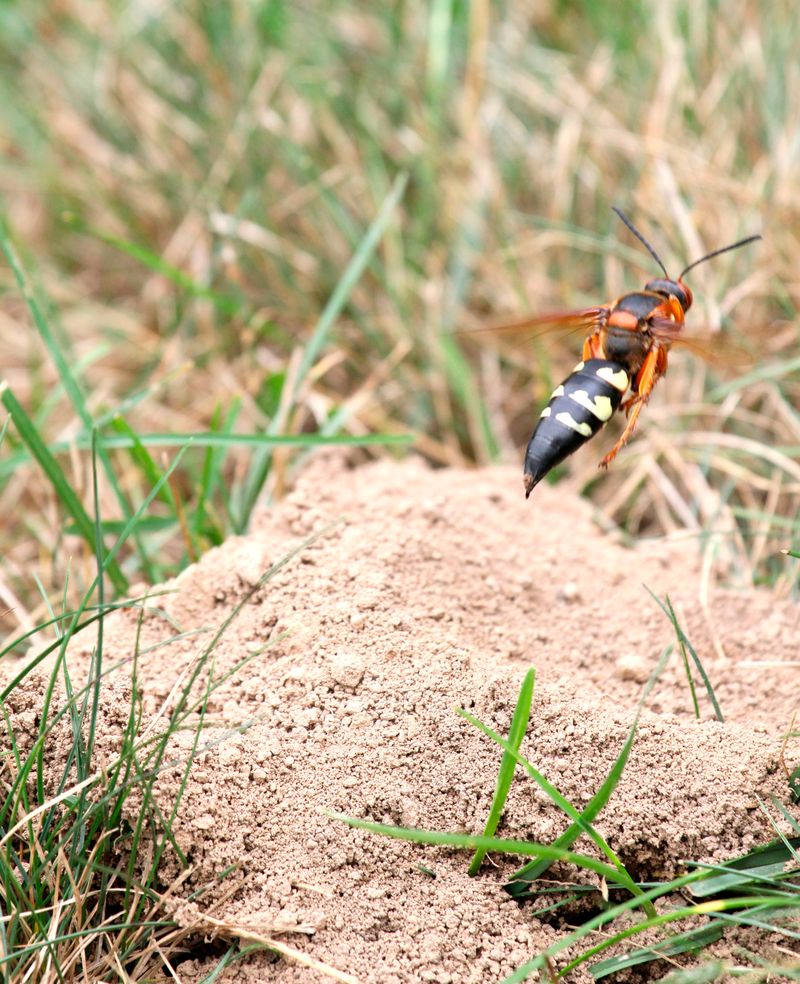
The small mounds of displaced soil around each hole are simply the byproduct of excavation. A female pushes loose dirt out as she digs deeper.
Some tunnels can reach a foot or more underground, with several branching chambers at the end where the cicadas will be stored.
Unless the burrows are in a spot that causes real problems, the holes themselves are not harmful to your lawn. The soil disturbance is minor, and in some cases the digging can actually help aerate compacted ground.
Activity at the burrow site typically winds down as summer ends. The adults are gone, but their offspring are safely underground, waiting out the cooler months before emerging the following year.
The Wasps Flying Toward People Are Often Stingless Males
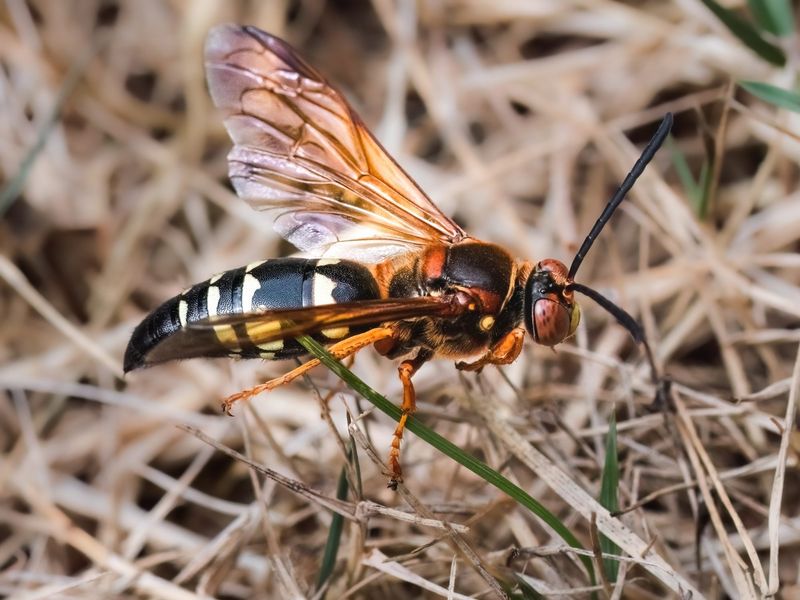
Nothing gets the heart racing faster than a large wasp flying straight at your face. If that has happened to you near a cicada wasp nesting area, the wasp you encountered was almost certainly a male, and males cannot sting you at all.
Male cicada wasps spend their days patrolling the nesting area, looking for females to mate with. They are territorial with other males and will chase off rivals that enter their zone.
When a person, pet, or lawnmower rolls through, a male may investigate or even buzz aggressively around the intruder. That behavior looks threatening. It feels threatening.
But without a stinger, the male is all bluster and no bite. He cannot hurt you no matter how close he gets. His intimidating flight pattern is just a bluff backed up by nothing.
Females are a different story, but only slightly. A female cicada wasp does have a stinger, and her venom is potent enough to paralyze a cicada many times her own weight. She is capable of stinging a person in theory.
In practice, females are focused entirely on their nesting work. They are not guarding a colony, so they have no reason to sting defensively unless they feel directly threatened.
Picking one up, stepping on one barefoot, or trapping one accidentally are the most common ways people get stung.
Giving females space while they go about their business is all it takes to avoid any trouble. They are not hunting you.
They are busy with a very specific mission that has nothing to do with humans wandering nearby.
Most Texas Gardens Do Not Need Treatment
Many people assume that any wasp nesting in the yard automatically needs to be removed. With cicada wasps, that assumption leads to unnecessary work and the loss of a genuinely helpful native species.
Texas Master Gardener guidance is clear: in most situations, no treatment is needed at all. Cicada wasps are native predators, and that matters. They evolved alongside Texas ecosystems and fill a natural role.
By hunting cicadas, they help keep those populations from getting out of hand. Cicadas can cause noticeable damage to trees and shrubs when their numbers are very high, so having a natural check on the population is a real benefit.
Their activity is also seasonal. Adults appear in summer when cicadas are active and loud, then fade away as temperatures cool in late summer or early fall. The whole cycle is time-limited and self-resolving without any human intervention.
The larvae spend the rest of the year underground, developing quietly through fall, winter, and spring. They will not be visible or bothersome during that time. The following summer, new adults emerge and the cycle starts again.
Applying pesticides to eliminate cicada wasps removes a beneficial insect, risks harming other native species in the soil, and often does not work well anyway since the wasps keep returning to favorable nesting sites.
Treating the symptom without addressing the underlying soil conditions rarely produces lasting results.
For most Texas homeowners with cicada wasps in a back corner of the lawn or along a garden edge, the smartest move is simply to leave them alone. They will handle their business, and then they will be gone before you know it.
Intervention May Be Justified In High-Traffic Areas
Even though cicada wasps are generally harmless, there are real situations where taking some action makes sense. The key is knowing when the location of the burrows creates a genuine concern rather than just an aesthetic one.
Burrows dug right beside a front door, along a heavily used walkway, near a children’s playground, or in a sandbox area put people and pets in frequent close contact with the wasps.
In those spots, the chance of someone accidentally disturbing a female goes up significantly, and that increases the small but real risk of a sting.
If you decide some intervention is warranted, do it carefully. Never block an occupied burrow with your bare hands, and avoid grabbing or swatting at the wasps directly.
Pets that snap at flying insects can also end up stung, so keeping dogs away from active nesting areas during peak season is a smart precaution.
One of the most effective long-term strategies is making the area less attractive for nesting in the first place. Cicada wasps strongly prefer bare, dry, sandy soil in full sun.
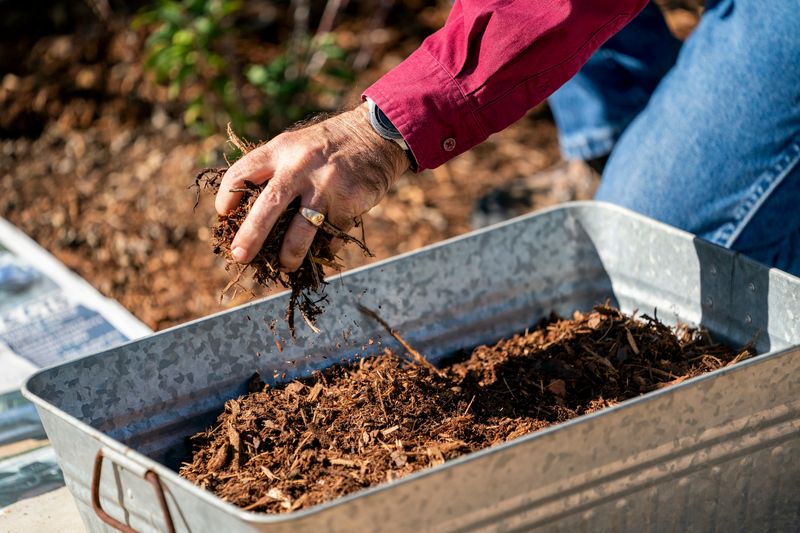
Improving thin turf by overseeding, adding mulch to exposed garden beds, or increasing irrigation slightly can make those spots less appealing for future nesting seasons.
If the infestation is concentrated in a truly problematic spot and habitat modification is not practical, a licensed pest control professional can apply targeted treatments to the burrow entrances at night when activity is low.
This is more effective and less disruptive than broad spraying. Choosing targeted action over a full-yard treatment protects the surrounding garden ecosystem while still addressing the specific area causing concern.