What Fire Ant Mounds In Your North Carolina Garden Beds Are Actually Telling You About The Soil
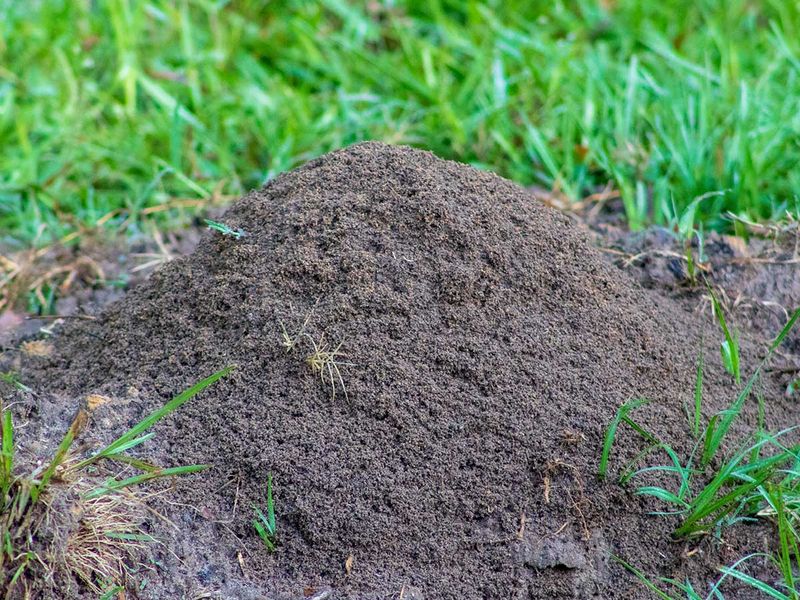
You walk out to check on your tomatoes one morning and there it is, a fresh dome of loose dirt right in the middle of your garden bed. That mound did not appear because your soil is bad or because your yard is failing, it appeared because fire ants found something they liked about that exact spot. Understanding what they actually found, and what they did not find, changes how you handle the whole situation. North Carolina gardeners who read the clue correctly can skip a lot of unnecessary digging, amending, and guessing.
Read the Mound as a Clue, Not a Diagnosis
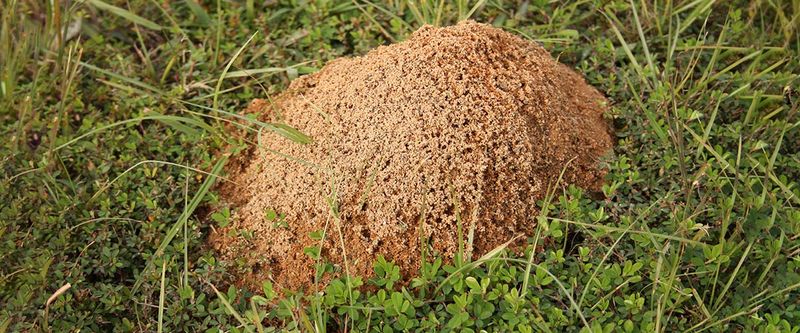
A fire ant mound sitting in your garden bed is a signal, not a verdict. It tells you that a particular spot offered something the colony needed, but it cannot tell you whether the surrounding soil is healthy, poorly drained, compacted, or ready for planting. That distinction matters, because many North Carolina gardeners waste time amending soil or ripping out plants based on a single mound, when the real job is simply to observe.
What draws a colony to one location over another usually comes down to a combination of factors working together. Open sun warms the soil faster. Usable moisture, not standing water but workable dampness, helps the colony establish. Low foot traffic and minimal disturbance let the colony develop without being scattered.
NC State Extension guidance on arthropod pests of North Carolina turf notes that fire ants commonly establish near sidewalks, driveways, and other heat-absorbing surfaces, which points to warmth and exposure as real contributors to mound placement.
Rain plays a role too, but not the one most people assume. Heavy rainfall or temporarily rising groundwater can prompt ants to build upward or can make a small, previously invisible colony suddenly noticeable. That does not mean the surrounding bed is waterlogged or poorly suited for plants. It means conditions shifted enough to push the colony into view.
The practical move after spotting a mound is to inspect the bed from a safe distance, keeping children and pets away, and to look at the whole site before drawing any conclusions. NC State Extension’s fire ant resource reinforces that site conditions, not soil quality alone, shape where colonies appear. One mound is the beginning of an observation, not the end of one.
Confirm the Ant Before Interpreting the Soil
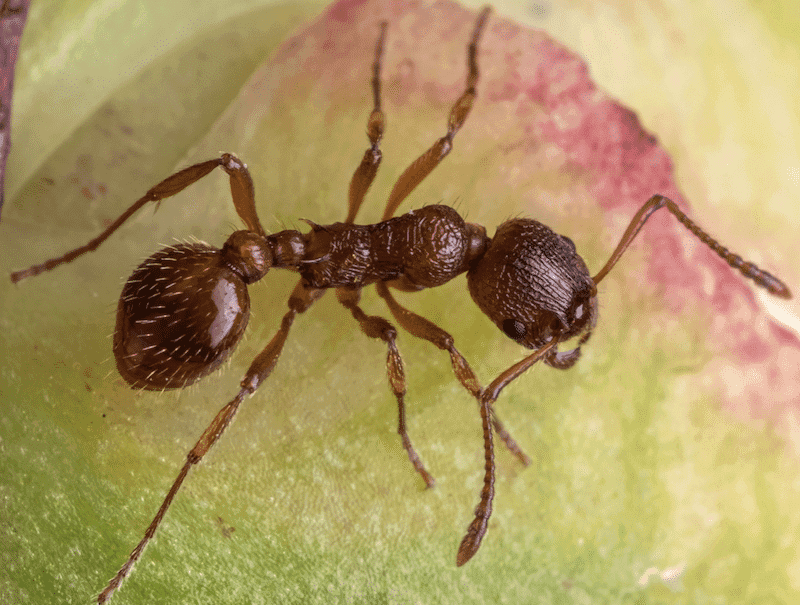
Before you interpret anything about your soil or reach for a control product, you need to know what ant you are actually dealing with. North Carolina has several ant species that build soil mounds, and assuming the worst without confirmation can lead to unnecessary treatment and missed identification of a harmless native species.
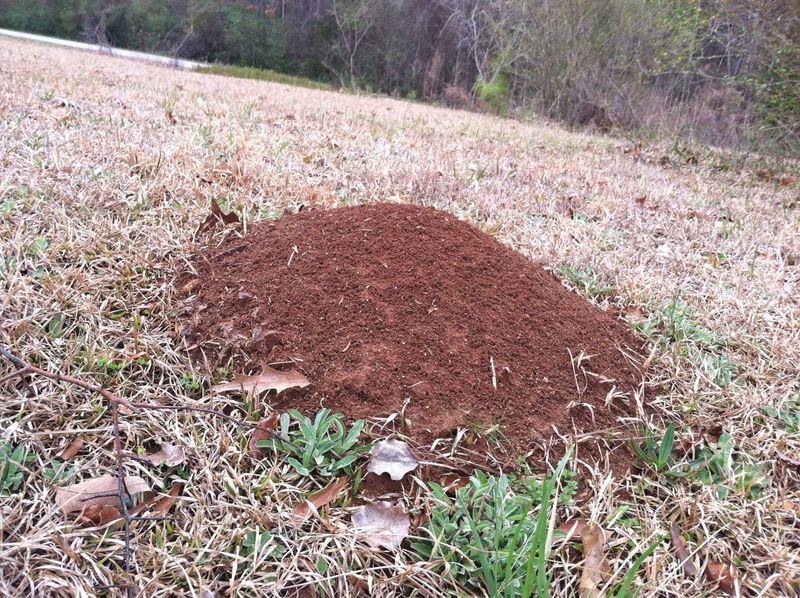
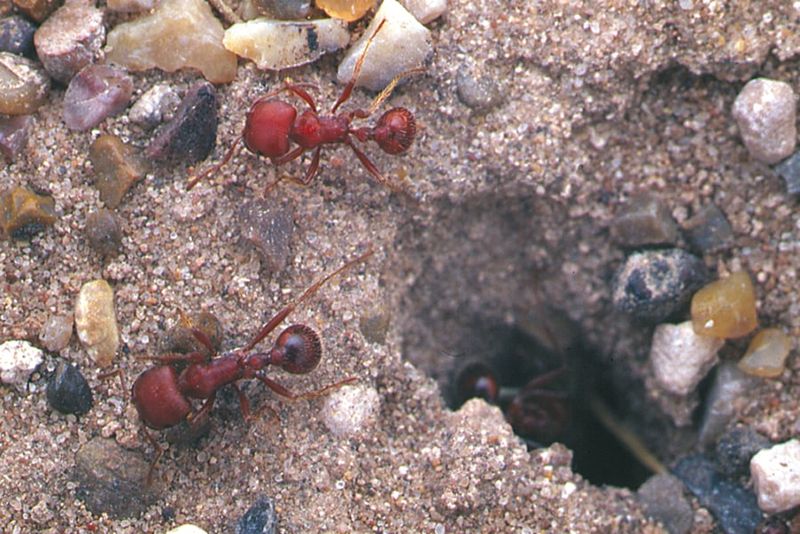
Red imported fire ant workers are roughly 1/8 to 1/4 inch long with reddish-brown bodies and noticeably darker abdomens. A key physical detail is the two bumps, called nodes, located between the thorax and abdomen. The mounds they build are dome-shaped and have no central opening on top, which sets them apart from many other mound-building ants. When a mound is disturbed, workers swarm rapidly and aggressively, and pale, cream-colored brood may appear near the surface.
Your North Carolina Garden Changes Every Week. Your Plan Should Too.
Gardening in North Carolina changes quickly throughout the season. Every Friday you’ll receive a simple weekly plan showing exactly what to plant, prune, fertilize, harvest, and protect so you never miss the right timing.
Soil texture can change what a mound looks like, which is another reason shape alone is not reliable for identification. NC State Extension’s red imported fire ant publication explains that mounds in clay soils tend to be more symmetrical and dome-shaped, while those in sandy Coastal Plain soils can be irregular or flatter. A mound in Piedmont red clay and a mound in a sandy Sandhills bed may look quite different even if the same species built both.
The safest way to observe is from a distance, without poking, raking, shoveling, or flooding the mound. Disturbing an active colony can trigger aggressive swarming and may move the colony rather than eliminate it. NC State’s integrated pest management guidance recommends positive identification through a county Extension office or NC State’s insect clinic when you are uncertain about the species. That one step can save you from treating the wrong ant entirely.
Rain Can Reveal a Wet-Dry Contrast
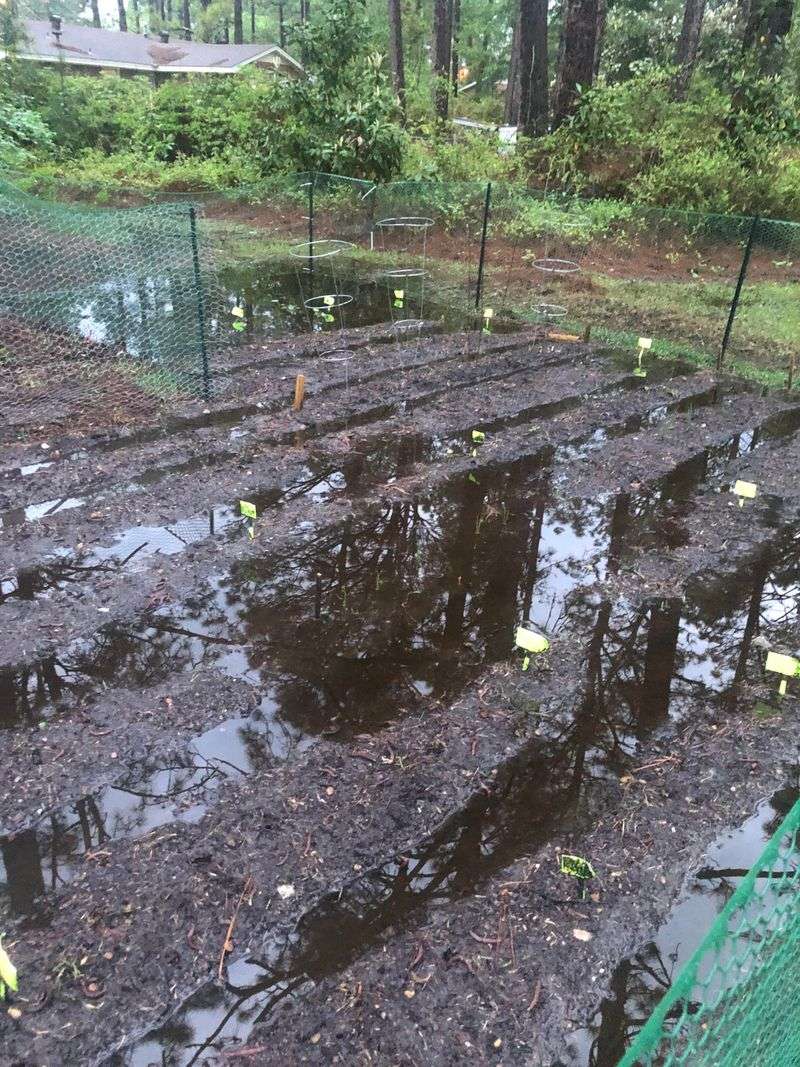
Many Piedmont gardeners first notice a fire ant mound the morning after a heavy summer storm. That timing is not a coincidence, but what it means is more nuanced than most people think. NC State Extension’s turfgrass pest guide observes that small colonies can become visible after heavy rainfall as ants build upward to escape accumulating groundwater. The mound you see may have been there in some form for weeks, just not obvious until the rain forced activity to the surface.
What happens inside that mound after rain is genuinely interesting. Research published in Geoderma on the structure and hydrology of imported fire ant mounds in the southeastern United States found that the porous tunnel network can actually take in more water than the soil immediately surrounding it, then drain faster and become drier than adjacent soil within a short period. The mound itself creates a local wet-dry contrast that does not reflect the moisture conditions of your wider garden bed.
That means a mound after a storm is not proof that your bed drains poorly. It may simply mean rain fell, the colony responded, and the mound’s engineered structure handled water differently than the soil around it. Recent rainfall, temporarily rising groundwater, warm soil, nearby hard surfaces, and soil texture can all contribute to when and where a mound becomes visible.
After any storm, observe the surrounding bed from a safe distance without approaching or disturbing the mound. Look for water standing more than a few hours after rain stops, low spots that collect runoff, downspout discharge landing in the bed, irrigation lines that drip between cycles, or a bed edge that stays persistently wet. Those are the real drainage clues, and they are worth noting separately from whatever the ants are doing.
Sun and Hardscape Can Help Choose the Location
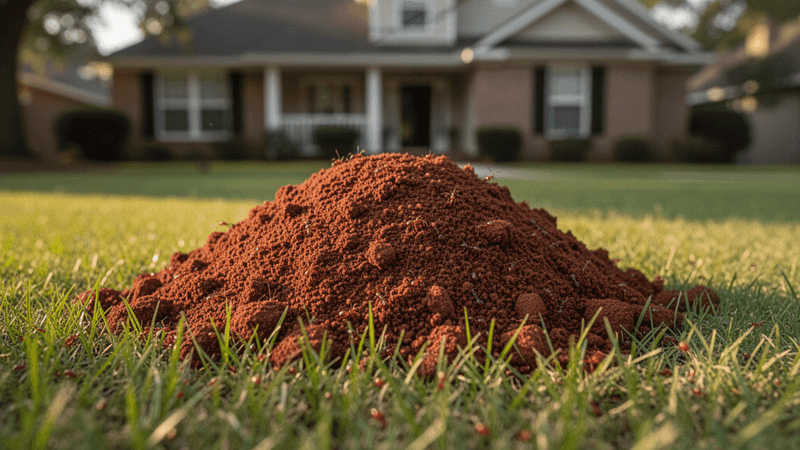
Warmth is one of the most consistent factors in where fire ants decide to establish. A garden bed that catches full afternoon sun in the North Carolina Piedmont can have soil temperatures several degrees warmer than a shaded bed just a few feet away, and that difference matters to a colony looking for a place to raise brood efficiently.
NC State Extension’s arthropod pest guide specifically notes that fire ants commonly mound near sidewalks, driveways, and other heat-absorbing hard surfaces. A garden bed tucked against a south-facing brick wall, bordered by concrete edging, or backed by a dark mulch surface can offer a noticeably warmer microhabitat than the surrounding yard, especially in spring when colonies are actively building.
This is where it gets tricky for soil interpretation. A mound near your patio edge does not mean the soil under that bed is uniquely fertile or uniquely damaged. It may simply mean that corner warms up faster in March and April, stays above 70 degrees Fahrenheit longer into the evening, and offers both sun exposure and low foot traffic. Those conditions suit the colony regardless of what your soil test would show.
When you inspect the bed, compare sun exposure at several points rather than focusing only on the mound location. Note whether a wall, stone edging, pavement, or dark mulch sits within a foot or two of the mound. Check whether that corner gets afternoon sun while the rest of the bed stays partly shaded. Warmth, exposure, moisture, and recent weather all work together, so the location provides useful context but not a standalone answer about soil quality or plant suitability.
Mound Soil Does Not Prove Fertility

A persistent myth among gardeners is that fire ant mounds signal rich, fertile soil. The thinking goes that ants would only settle somewhere the soil is thriving, so the mound must mark a good spot. That reasoning sounds plausible but does not hold up when you look at what research actually found.
USDA Agricultural Research Service studies on fire ant mound soil chemistry did find changes in organic matter and in elements including phosphorus, potassium, zinc, and sodium in mound soil compared to surrounding soil. But the direction and persistence of those changes varied with soil type, season, and habitat. In some cases nutrients were elevated, in others they were not, and the pattern was not consistent enough to use as a fertility indicator. The altered chemistry is local, concentrated in and immediately around the mound, and does not represent the condition of your wider garden bed.
Spreading mound soil around vegetables, shrubs, or native plants as a kind of free amendment is not a practice with reliable support. The nutrients present may be unevenly distributed, seasonally variable, or simply not the ones your specific plants need. For a Coastal Plain vegetable bed or a Piedmont herb garden, that kind of guessing can lead to over-application of some minerals and gaps in others.
The correct replacement for mound-soil interpretation is a North Carolina soil test. NC State Extension’s guidance on soil, plots, and planters recommends improving garden soil with compost, lime, and fertilizer based on actual soil test results. The NC Department of Agriculture and Consumer Services offers low-cost soil testing that tells you exactly what your bed needs, and that information is far more useful than anything a fire ant mound can suggest.
Inspect the Whole Bed, Not Just the Mound
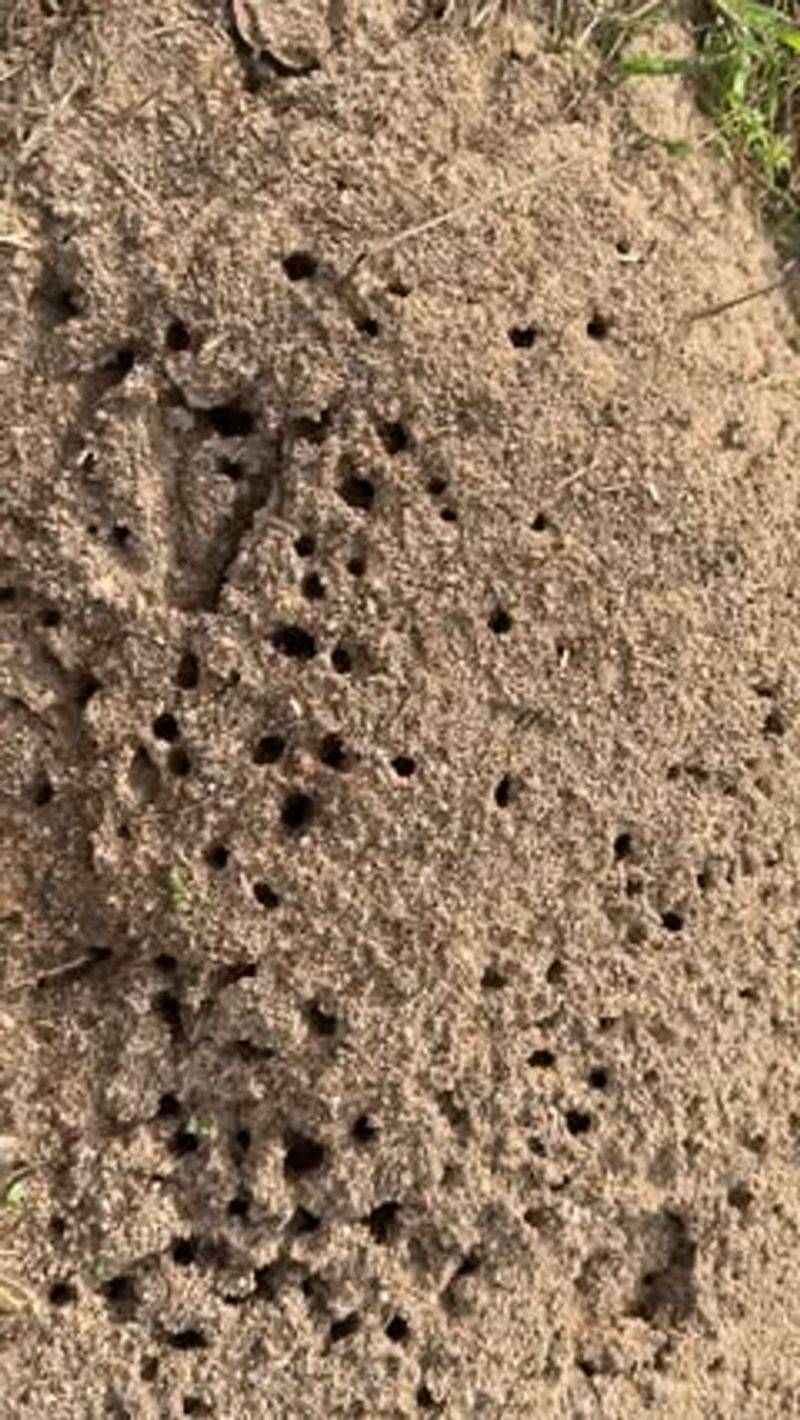
One mound in one corner of a bed tells you something about that corner. It does not tell you much about the other eight feet of the same bed, and treating the whole space based on a single mound location leads to a lot of unnecessary work. The better move is to use the mound as a starting point for a broader observation pass.
From a safe distance, away from the mound and with children and pets kept back, look at the full bed at several points. Check whether water pools anywhere after a rain. Look for a downspout that discharges near the bed, an irrigation head that drips between cycles, or a low edge that stays darker and wetter than the rest. Also look for the opposite: spots where soil looks pale and dry, where mulch has blown thin, or where plants show stress that could point to compaction or drought.
NC State Extension’s turf pest guide is a useful reminder that site conditions, not a single soil feature, shape where colonies establish.
Keep in mind that fire ants can forage into a bed from a colony located outside it entirely. NC State Extension’s fire ant resource for strawberry growers notes that young colonies may not have produced a visible mound yet, and workers can range well beyond the colony’s actual location. A mound-free bed is not necessarily fire-ant-free, and a mound in your bed does not always mean the colony’s core is there.
If your inspection turns up a genuine moisture or drainage problem, that is worth correcting on its own terms. NC State Extension’s planting and soil guidance presents raised beds as a conditional option for situations where native soil is compacted, contaminated, easily flooded, or poorly drained, not as a default response to any mound. Fix what you actually find, not what the mound implies.
Manage the Colony Separately and Legally
Once you have identified the ant and assessed the bed, the colony itself becomes a separate task. How you handle it depends on where the mound sits, what is growing nearby, and which products are actually legal for that site. Getting those details right matters more than acting fast.
Individual mound treatments generally use less insecticide than broadcasting a product across the entire bed, and they reduce exposure to non-target ground insects including beetles and native ants that contribute to healthy soil. Baits work differently: workers carry the bait back to the colony, which means results take longer, sometimes two weeks or more, but baits can be effective when ants are actively foraging. NC State Extension’s red imported fire ant publication recommends treating when ants are actively foraging and notes that late spring and early fall are generally the most effective windows in North Carolina, when soil temperatures favor foraging activity.
Temperature matters for mound drenches. NC State references a favorable range of roughly 70 to 85 degrees Fahrenheit for drench applications. Current product labels commonly specify similar ranges and recommend early morning or late evening to avoid heat and to catch foraging workers. Always follow the specific product label for temperature windows, application rates, watering instructions, and timing, because those details vary by product and the label is the legal use instruction.
Food garden safety deserves its own sentence. NC State Extension’s landscape fire ant guide is explicit that lawn and ornamental products are not automatically legal around edible crops. Some EPA-approved labels permit use near specific vegetables or herbs, others prohibit food crops entirely. Check the label for the exact site, crop, and restrictions before applying anything near tomatoes, peppers, herbs, or fruit.
NC State Extension’s community food garden troubleshooting resource warns that blanket insecticide applications across a bed can reduce populations of beneficial ground insects and recommends an integrated approach. Skip the folk remedies too. Grits and cornmeal do not reduce colony numbers, as laboratory studies confirmed. Boiling water can burn the gardener and nearby roots, and NC State characterizes it as temporary and limited at best.
Flooding, raking, or knocking down a mound can move the colony rather than eliminate it. EPA guidance on reading pesticide labels reinforces that homemade mixtures and off-label applications carry real risks to plants, beneficial insects, and water quality, and the product label is the legal guide for every application decision.
Use the Clue Without Letting It Make the Diagnosis
Working through a fire ant mound in your garden bed comes down to a short sequence of steps, and keeping them in order prevents the most common mistakes. Identify the ant safely from a distance without disturbing the mound. Observe the surrounding bed at several points, looking at drainage, sun, hardscape, and plant condition. Check recent weather and note whether a storm or dry stretch preceded the mound’s appearance.
Run a North Carolina soil test before adding any amendments, and correct only the moisture or drainage problems you actually confirm, not the ones the mound seemed to imply.
When management is necessary, choose a product labeled for the specific site and crop. Keep children, pets, and anyone with a sting allergy away from the treatment area and follow the label for timing, rate, and watering. NC State Extension’s fire ant publication is a reliable starting point for current control options and timing guidance in North Carolina.
If you plan to move soil, plants, sod, hay, straw, or soil-covered equipment out of your property, quarantine rules apply. North Carolina has an active imported fire ant quarantine, and the boundaries change. As of a January 2026 NCDA&CS quarantine expansion, coverage reached portions or all of 81 counties, but quarantine boundaries are time-sensitive. Verify current rules with NCDA&CS and USDA APHIS’s imported fire ant program before moving any regulated material.
One mound is worth a careful look, but it is the observation that follows, not the mound itself, that tells you what your garden actually needs.